Updated on May 2, 2026
Weekend Trip to Los Angeles
I spent a weekend in Los Angeles in early 2026. This post covers the flights there and back, along with a museum visit and a hike I enjoyed over the course of the weekend.
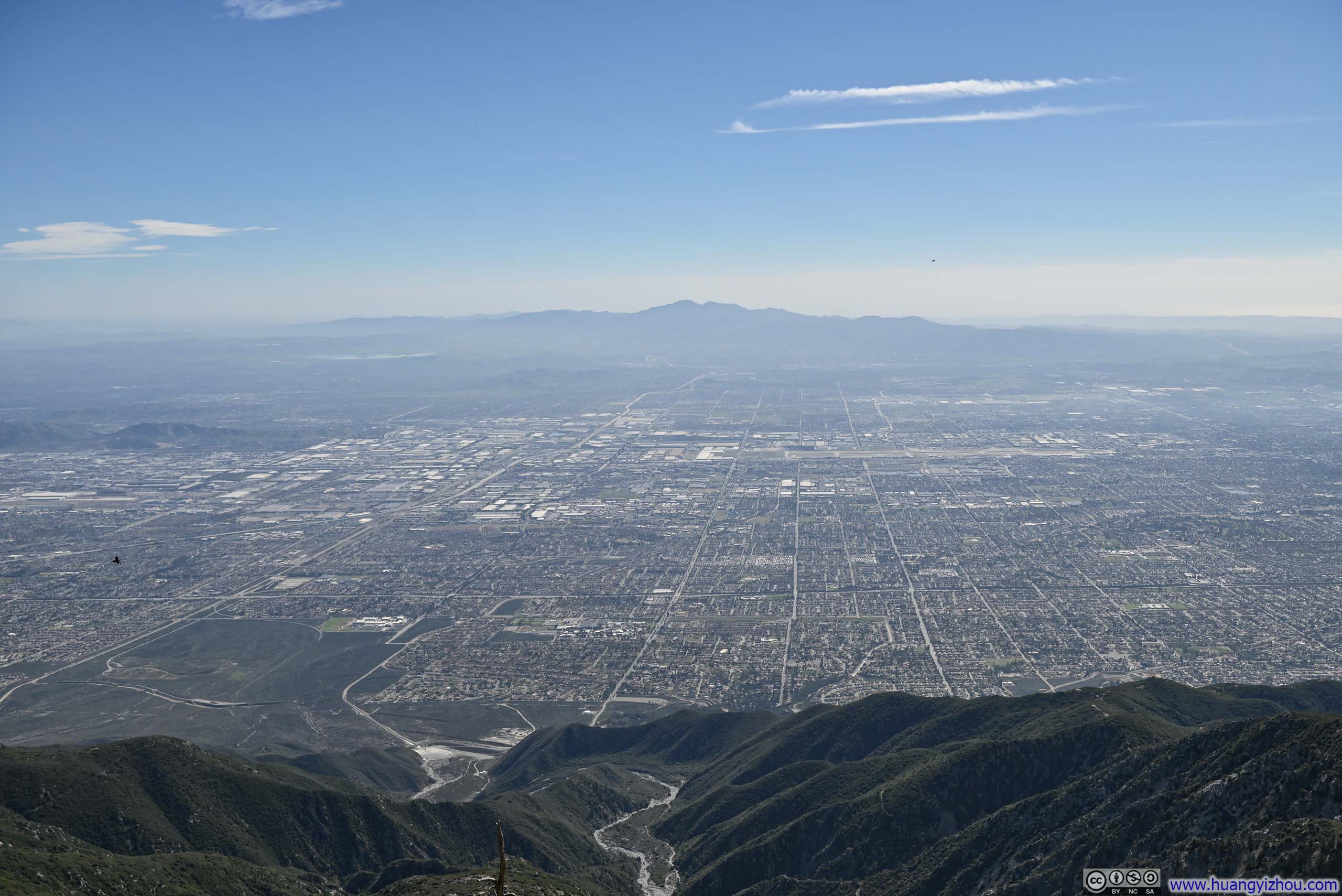
Cucamonga Valley
Ticketing
This trip came together much like most of my weekend getaways over the past year — the product of cheap flights, expiring free night certificates, or, in this case, both. Toward the end of 2025, I stumbled upon roundtrip flights from Boston to Los Angeles for under $200 for early 2026. It was an opportunity too good to pass up.
American Airlines Flight 1243 from Boston to Los Angeles
The timing of this flight suited me perfectly: departing Boston at 8am meant no ungodly early wake-up, while arriving in Los Angeles before noon left me with an entire afternoon to spare.
There was a small episode on my way to the airport. Checking the live subway timing, I found the next train was delayed by over ten minutes, so I made a dash for the station and slipped onto an earlier train just as the doors were closing.
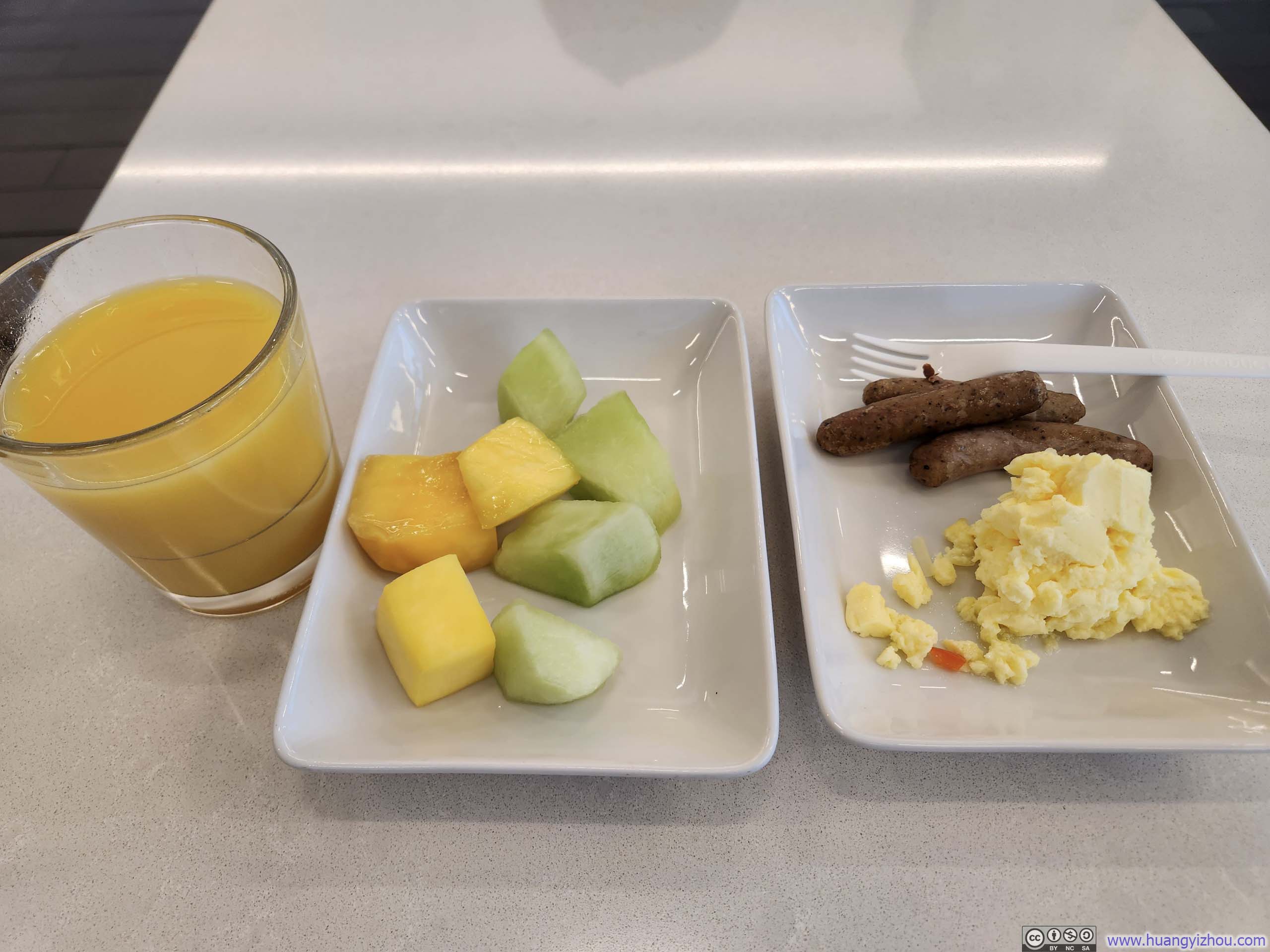
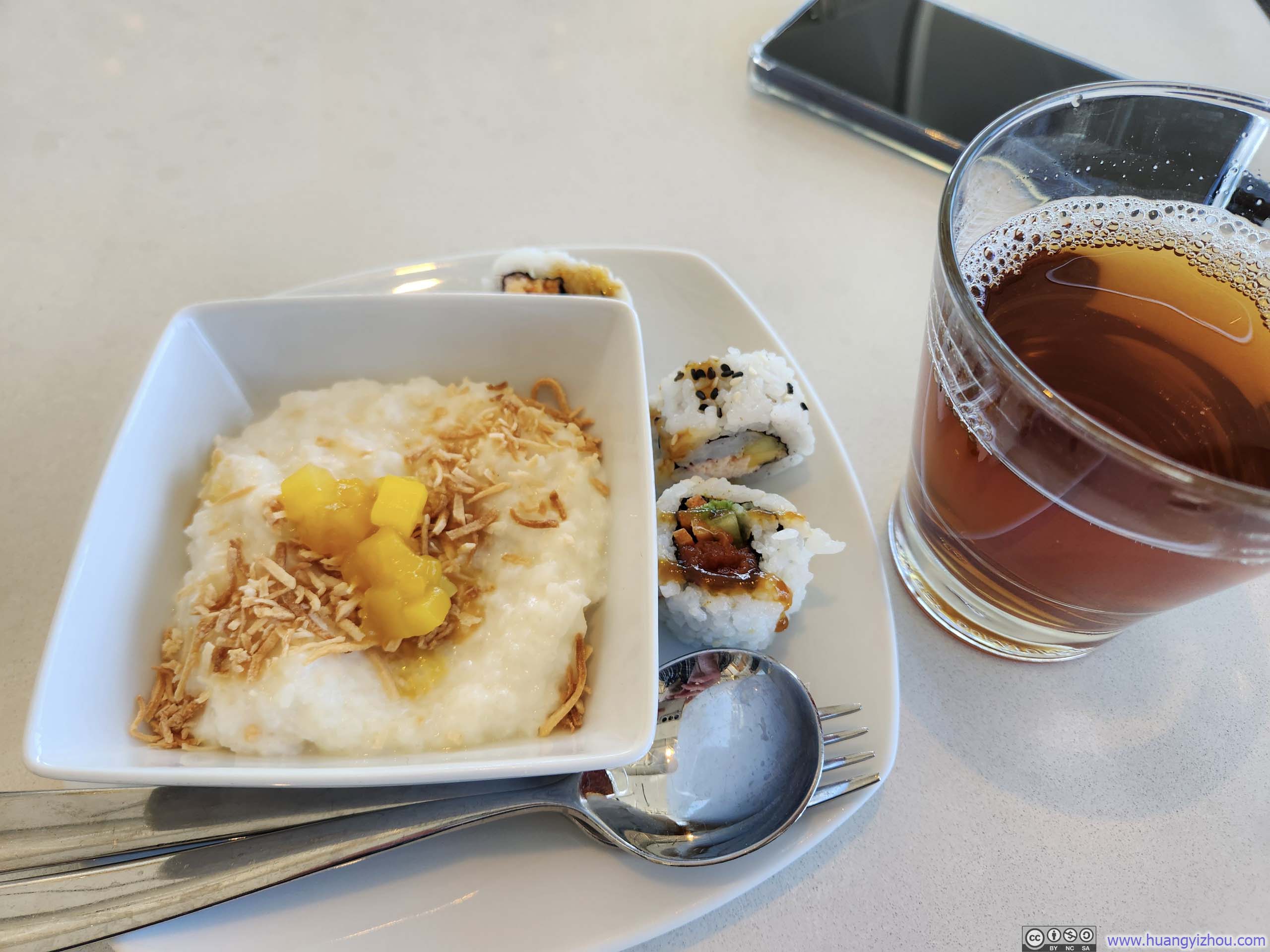
My upgrade cleared about an hour before departure. Since BOS-LAX was one of American Airlines’ premium transcontinental routes, I could pay a visit to the Admiral Club. On a Saturday morning, the lounge was pleasantly quiet. I helped myself to some breakfast (p1 below), roughly on par with the average of Hyatt Place breakfast in the US, and, somewhat surprisingly, not far off from what was served onboard (the next slideshow).
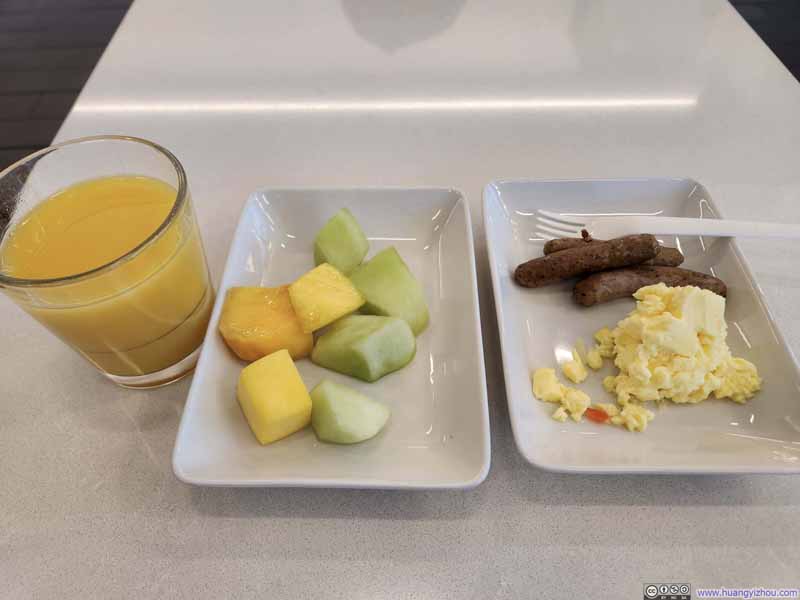 Breakfast from BOS Admiral Club
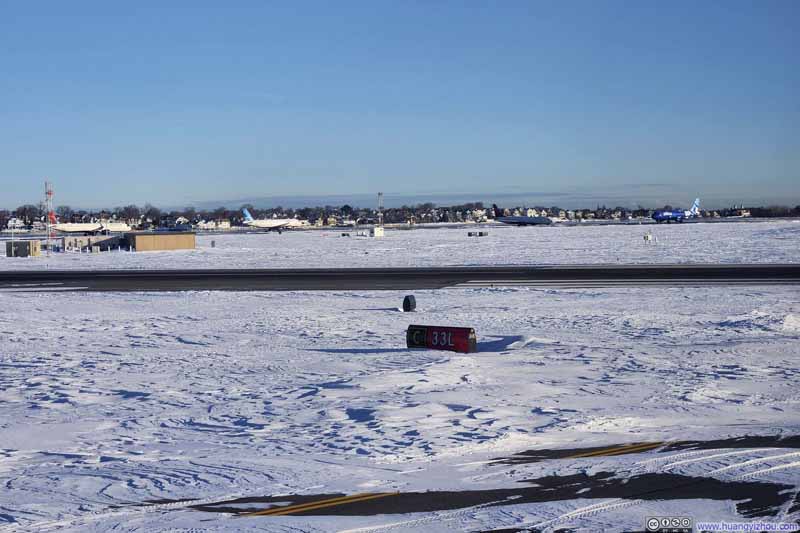 Planes in Line for Takeoff
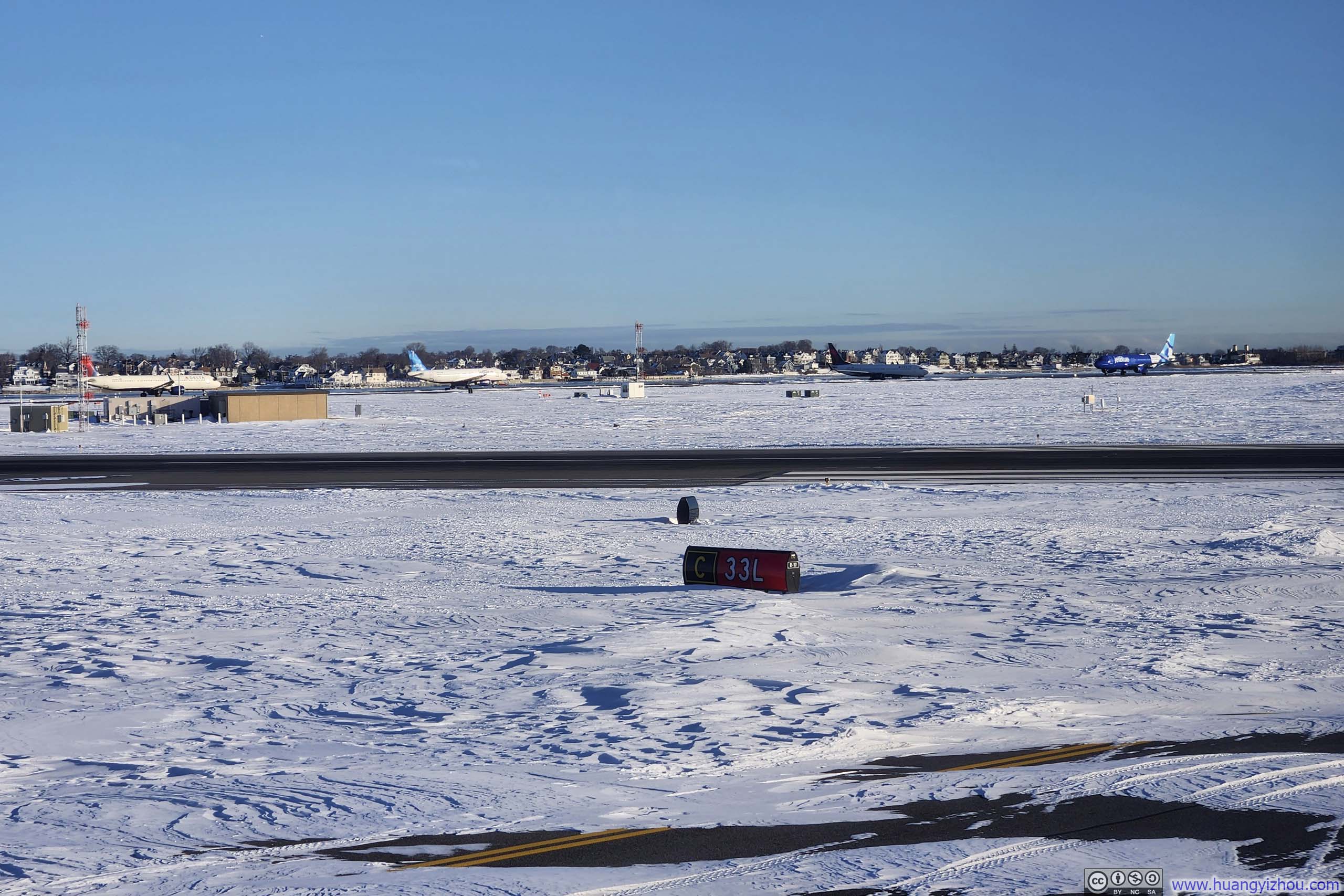
4 planes in this shot lining up for takeoff from runway 27. That morning BOS used both runway 27 and 33L for takeoff. It’s likely that runway 33L was also used for landing, that we were held just short of it for about 8 minutes for our turn. Some snow drifted their way onto the taxiway.
Planes in Line for Takeoff
4 planes in this shot lining up for takeoff from runway 27. That morning BOS used both runway 27 and 33L for takeoff. It’s likely that runway 33L was also used for landing, that we were held just short of it for about 8 minutes for our turn. Some snow drifted their way onto the taxiway.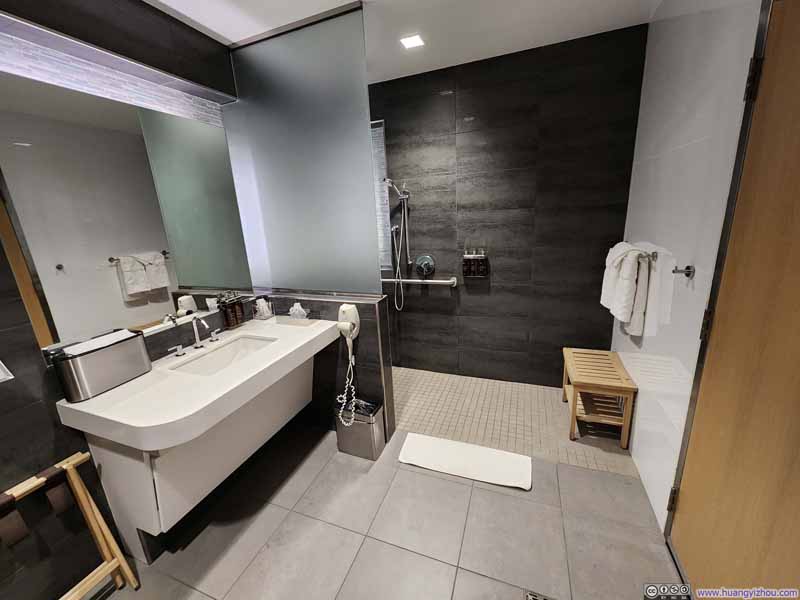 Shower Room at BOS Admiral Club
This shower room was the savor of the day upon landing in Boston Monday morning, allowing me to head straight to work.
Shower Room at BOS Admiral Club
This shower room was the savor of the day upon landing in Boston Monday morning, allowing me to head straight to work.


Click here to display photos of the slideshow
Breakfast from BOS Admiral Club
Planes in Line for Takeoff
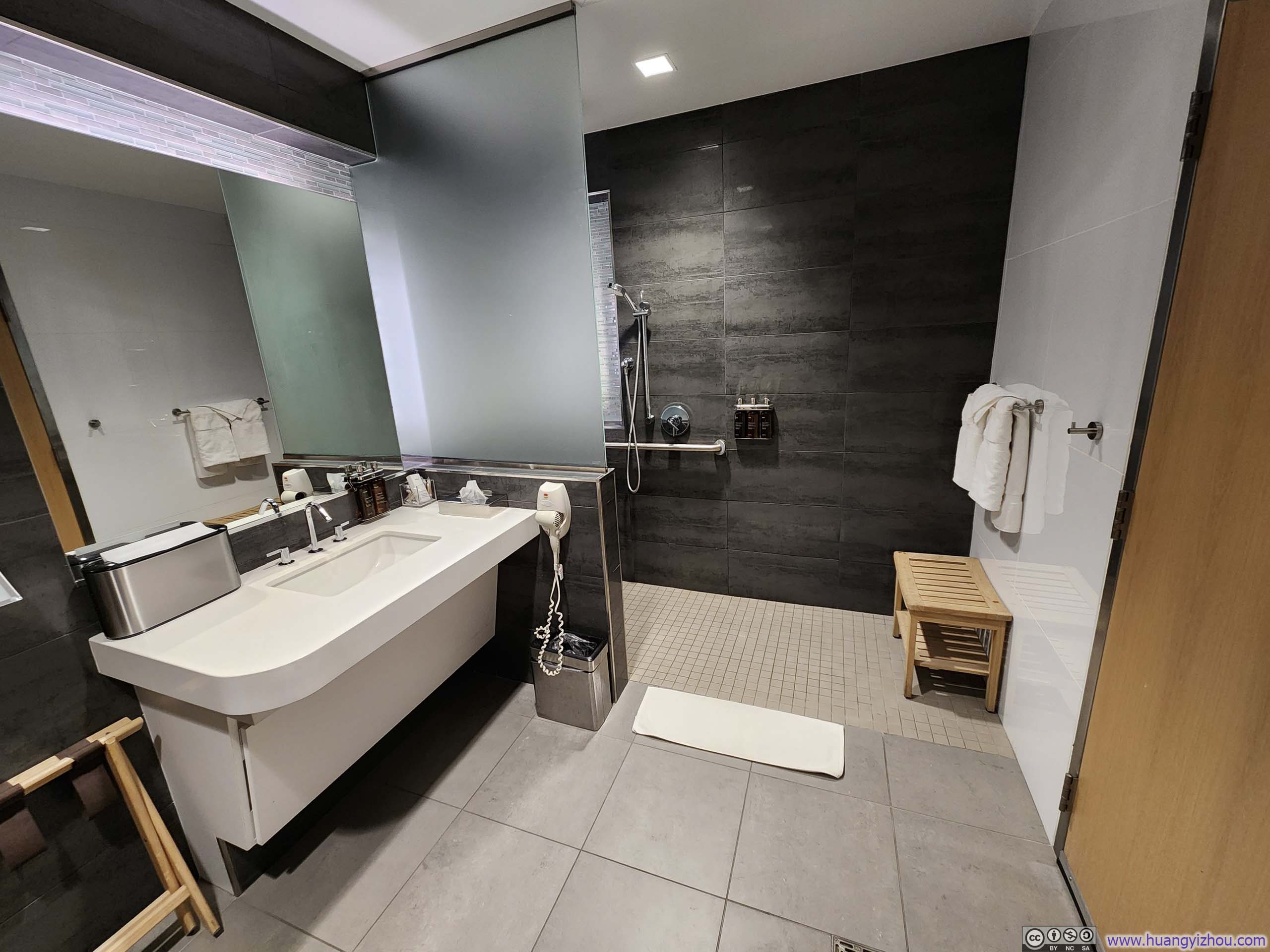
Shower Room at BOS Admiral Club
American Airlines 1243
Boston, MA (BOS) – Los Angeles, CA (LAX)
Airbus A321 (N101NN)
Seat 9A
Scheduled Departure – 8:00am
Actual Departure – 8:23am
Scheduled Arrival – 11:40am
Actual Arrival – 10:53am
5 hours and 30 minutes
Here’s GPS tracking:
Here’s a video of the takeoff:
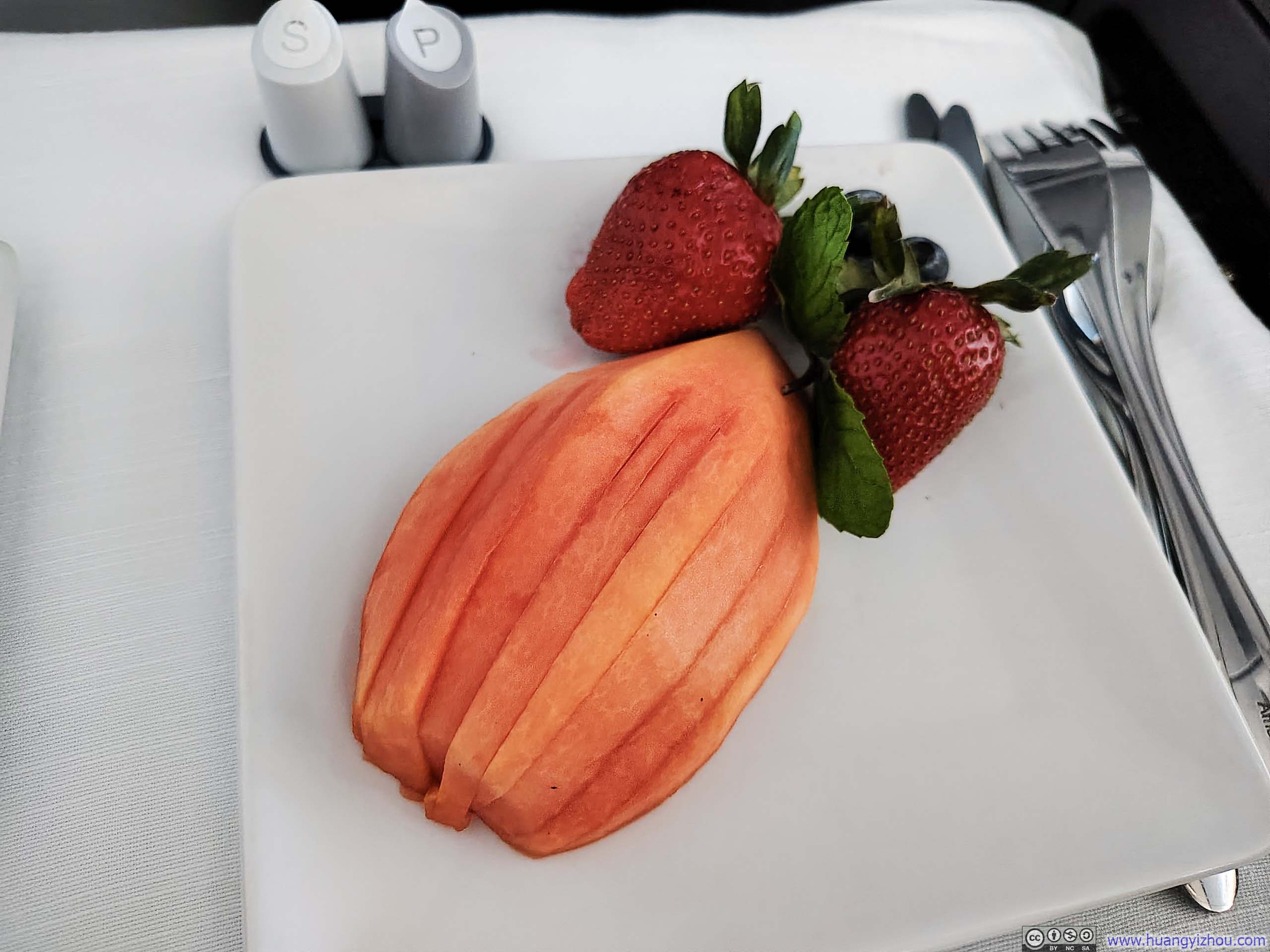
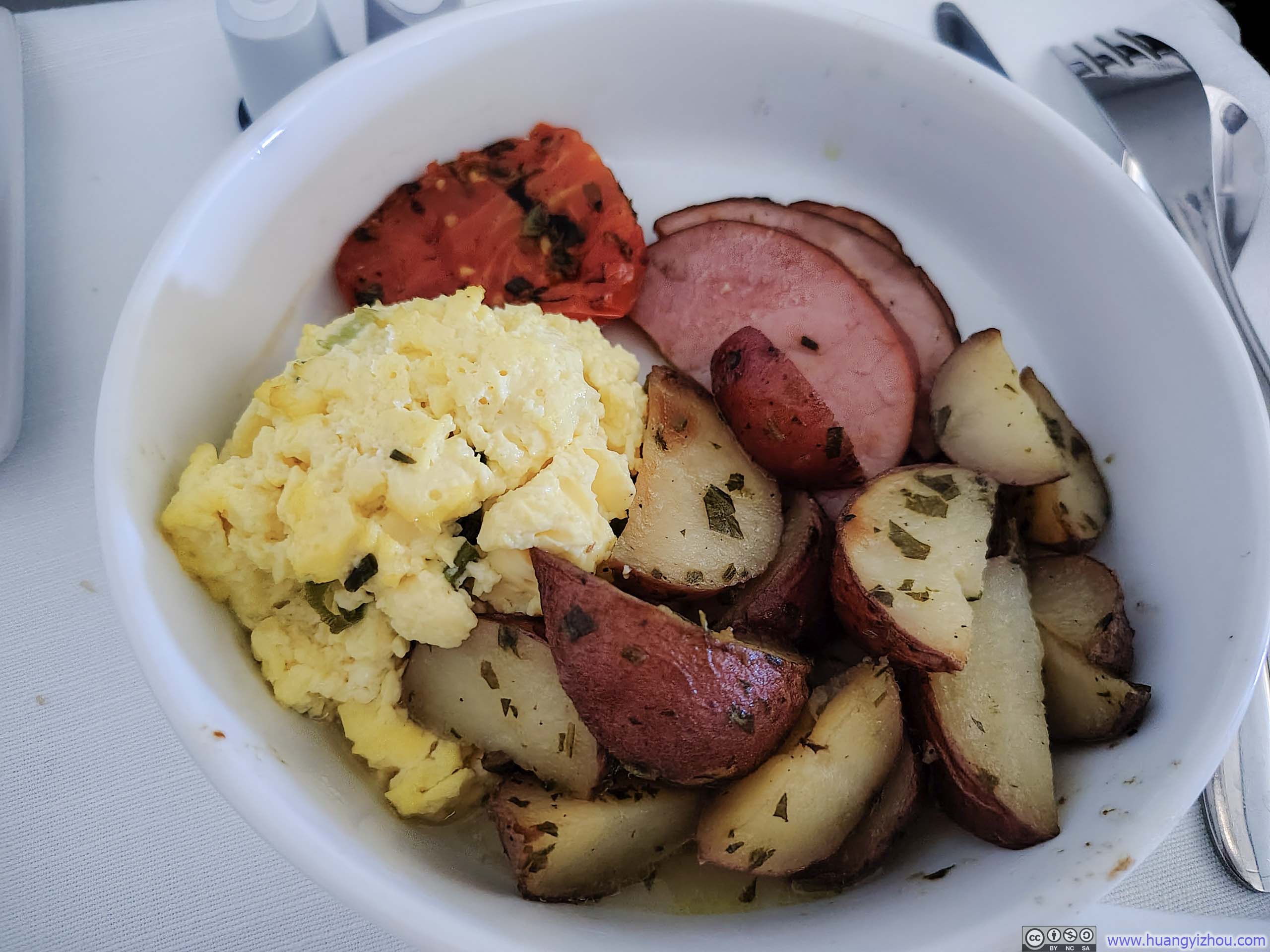
As for the flight itself, American Airlines must have felt the need to distinguish their “Flagship” product from standard domestic first class, so the breakfast was served in a multi-course fashion, though I found it difficult to see how the actual content represented any meaningful step up. Additionally, the seats were certainly not cleaned in a “flagship” standard, as I found nuts from the previous flight sitting in the tray underneath the armrest.
Beyond that, with a long day ahead, I spent most of the flight trying to catch some rest. There isn’t much else to report.
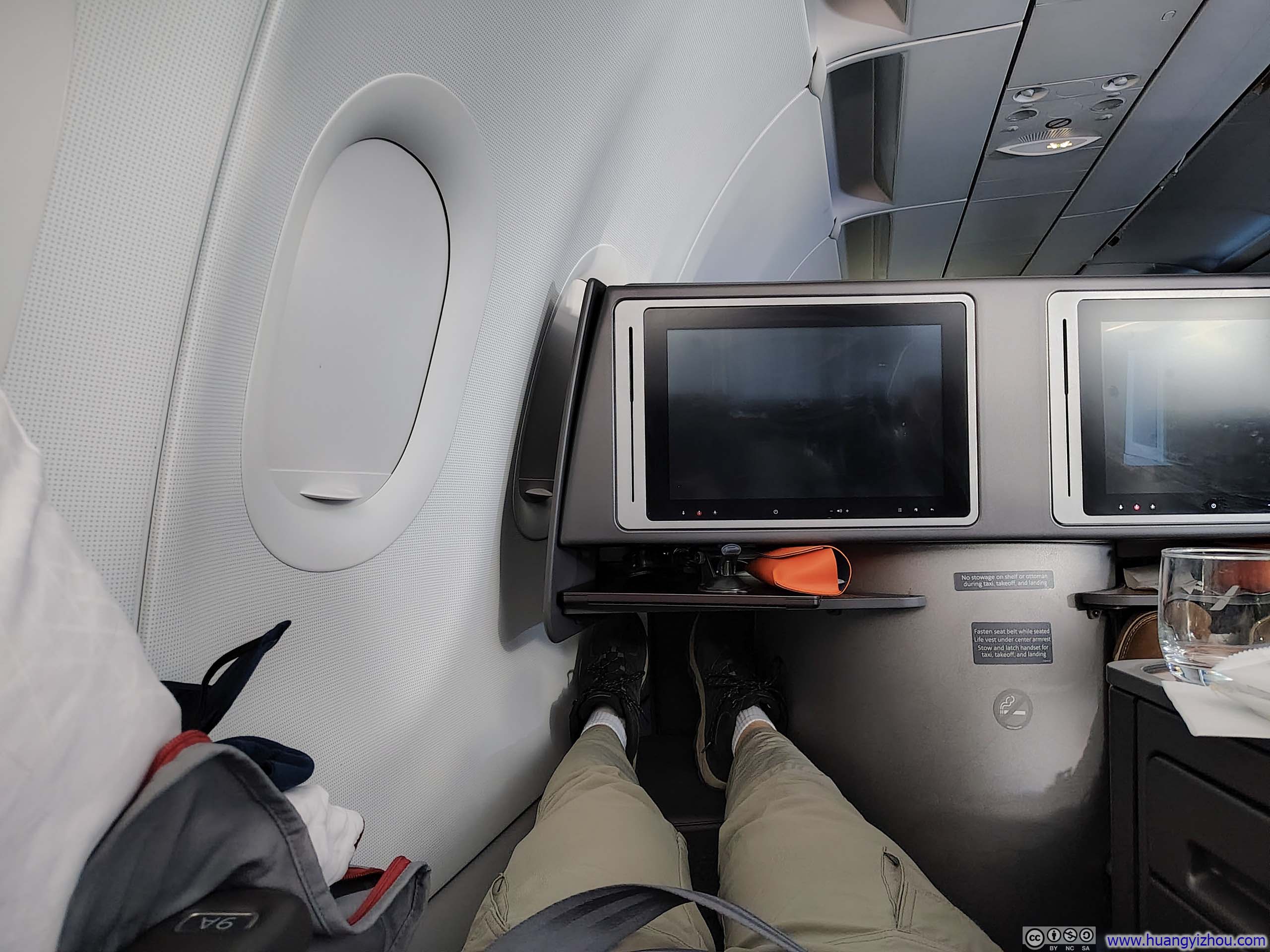
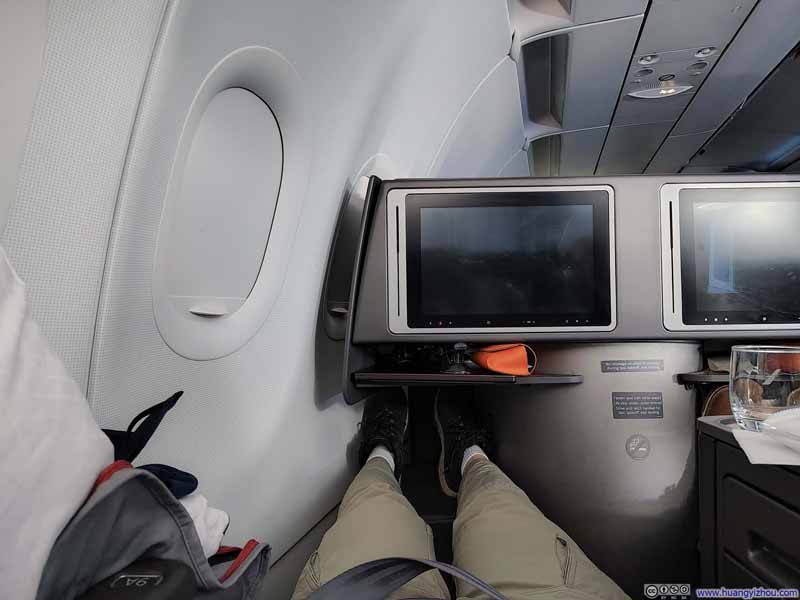 Flagship Business Class Seat on American Airlines A321T
Collins Aerospace Parallel Diamond. Somewhat disappointedly, in “full flat” mode, I still found the seats above the waist to be slightly angled. As a result, I struggled to lie on my side (though it didn’t affect lying on my back).
Flagship Business Class Seat on American Airlines A321T
Collins Aerospace Parallel Diamond. Somewhat disappointedly, in “full flat” mode, I still found the seats above the waist to be slightly angled. As a result, I struggled to lie on my side (though it didn’t affect lying on my back).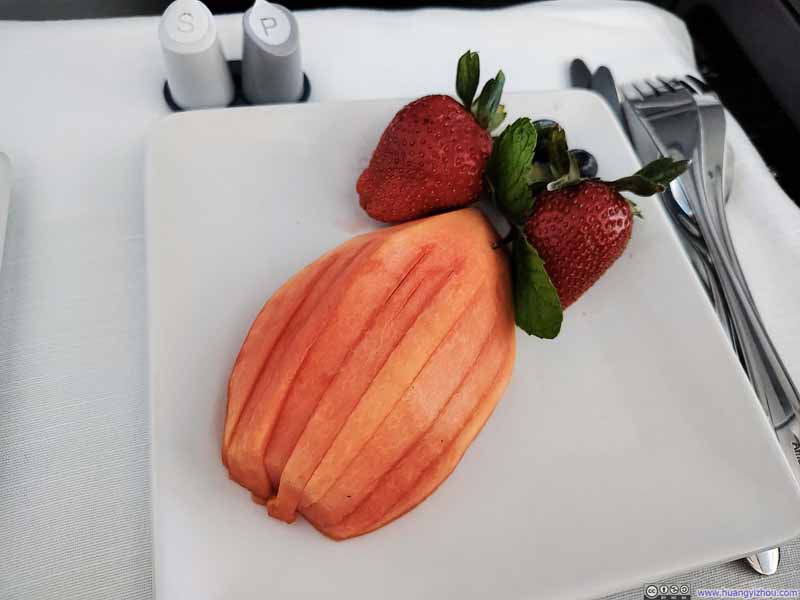 Fruit Plate Onboard
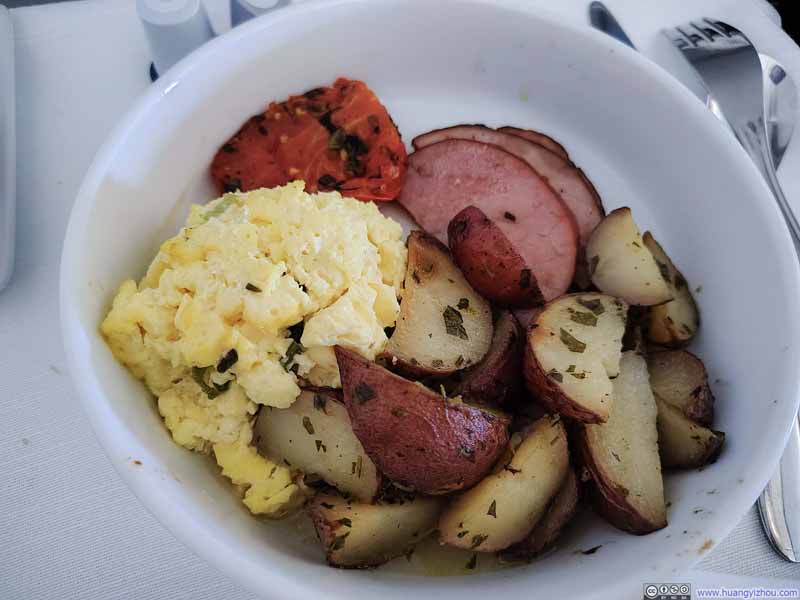 Breakfast OnboardScrambled eggs and potatoes, tasted okay-ish.
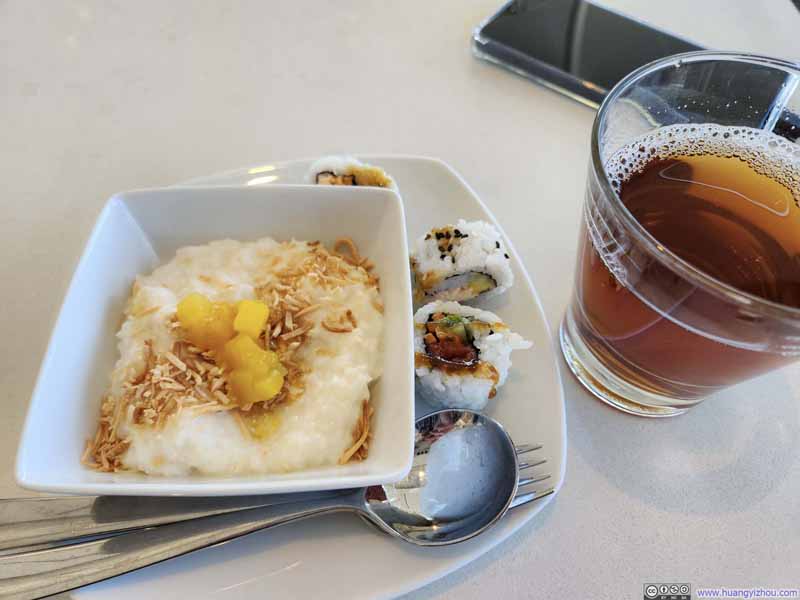 Lunch from LAX Flagship Lounge
I was somewhat addicted to the coconut thing in the left of this photo, tasted especially great without calorie labels.
Lunch from LAX Flagship Lounge
I was somewhat addicted to the coconut thing in the left of this photo, tasted especially great without calorie labels.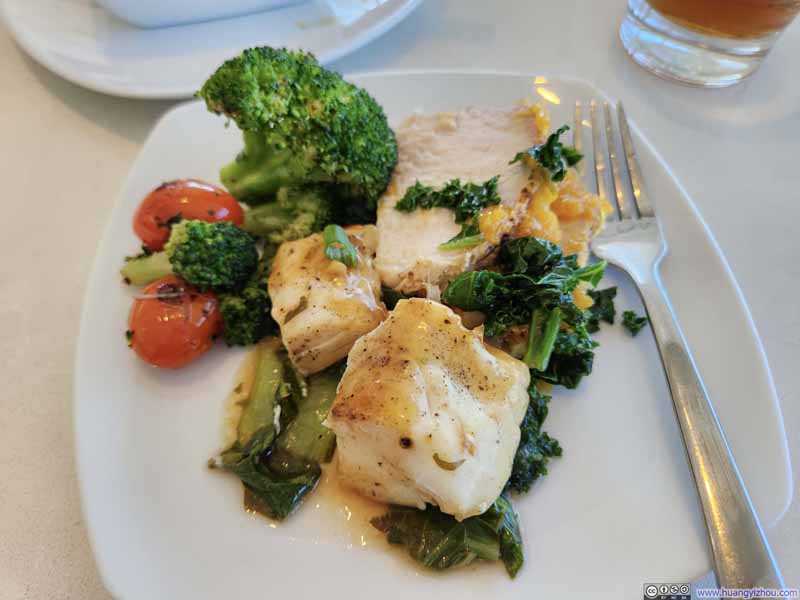 Lunch from LAX Flagship LoungeA mixture of cod, pork, kale and broccoli in this shot.


Click here to display photos of the slideshow
Flagship Business Class Seat on American Airlines A321T
Fruit Plate Onboard
Breakfast OnboardScrambled eggs and potatoes, tasted okay-ish.
Lunch from LAX Flagship Lounge
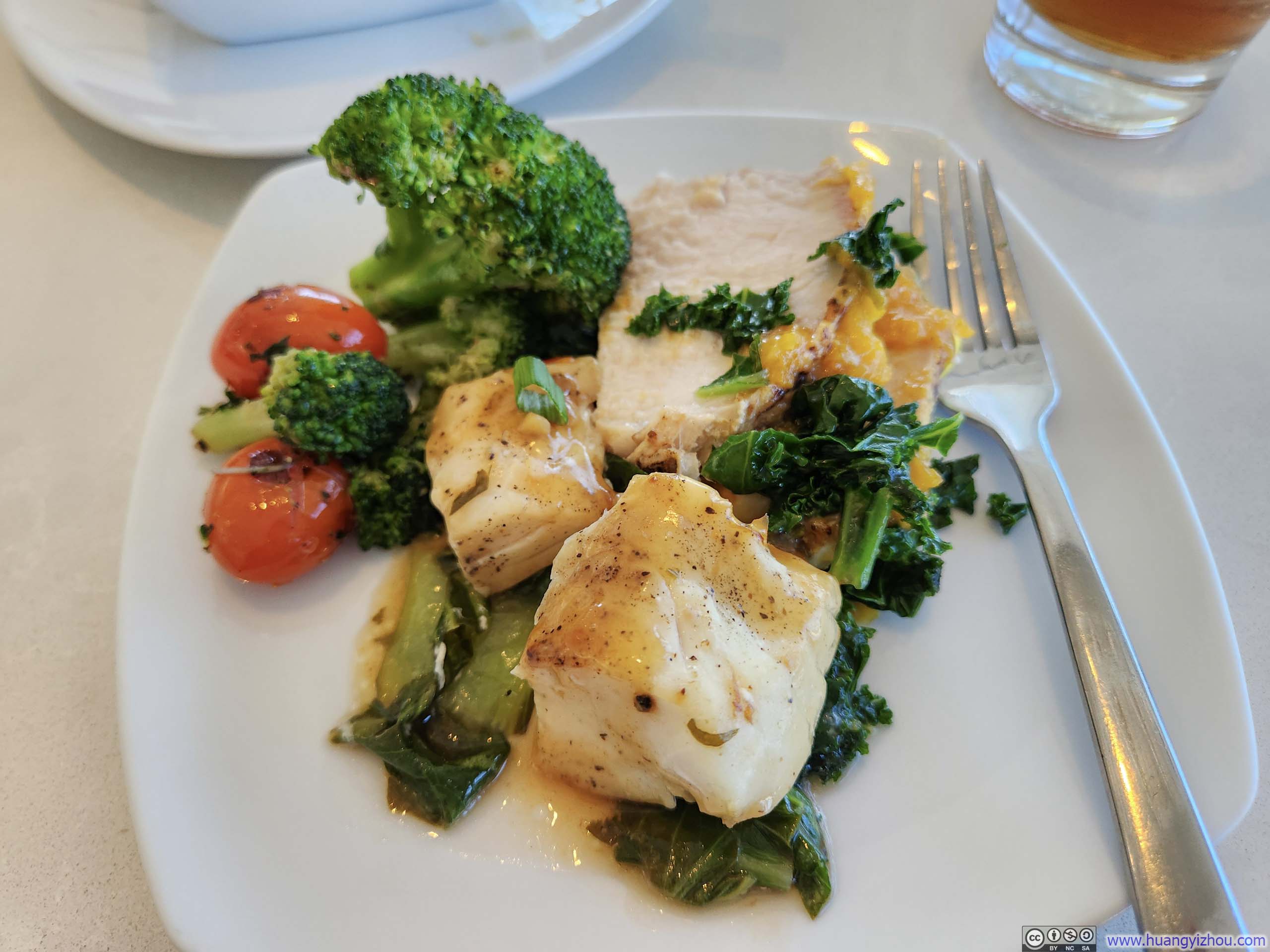
Lunch from LAX Flagship LoungeA mixture of cod, pork, kale and broccoli in this shot.
Likely due to weaker-than-expected headwind, the flight passed surprisingly quickly, as we landed more than 45 minutes early in Los Angeles. (Those same gentle headwinds, it should be noted, also probably made for a bumpier ride than usual.)
Here’s a video of the landing:
My plan after landing was to visit Getty Villa, which operated on a timed-reservation basis. Since I had booked my slot based on the flight’s scheduled arrival time (plus some buffer), I found myself with time to spare, which I whiled away at American Airlines’ Flagship Lounge at LAX. Like other US carriers, American extends lounge access upon arrival for passengers on its premium transcontinental routes. It was immediately apparent that the Flagship Lounge was more than a notch above the Admiral Club in Boston, at least where the food was concerned.
Getty Villa
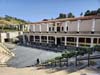
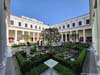
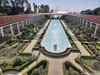
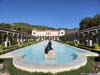
This is a museum in Pacific Palisades designed as a meticulous re‑creation of an ancient Roman seaside villa, housing an extensive collection of Greek, Roman, and Etruscan antiquities and offers tranquil gardens and immersive architecture that evokes the ancient Mediterranean world. It had long been on my bucket list, and this was finally the moment I got around to it.
The name “villa,” combined with the pictures I had seen online, which looked every bit like a proper private estate, had led me to assume this was once the residence of the oil magnate Getty himself. No, it’s just a museum, one that nonetheless featured fancy gardens and pools.
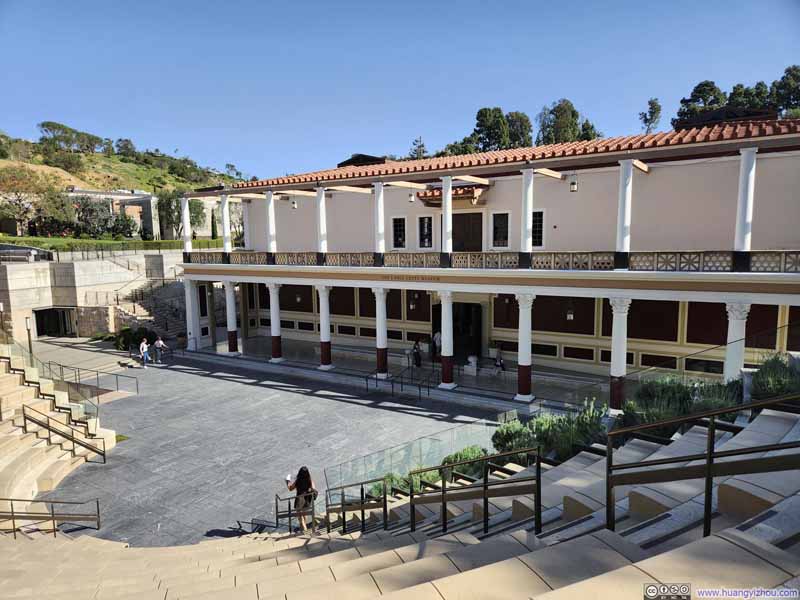 Amphitheater at Villa Entrance
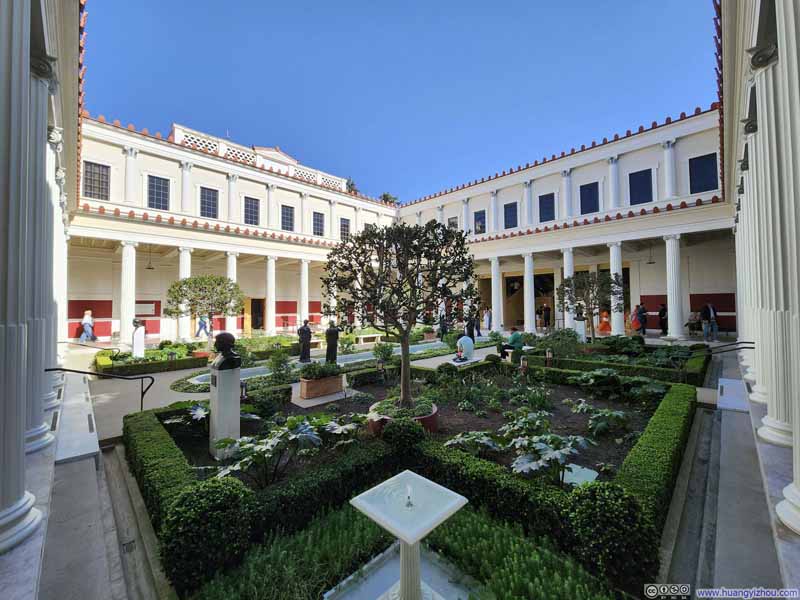 Courtyard
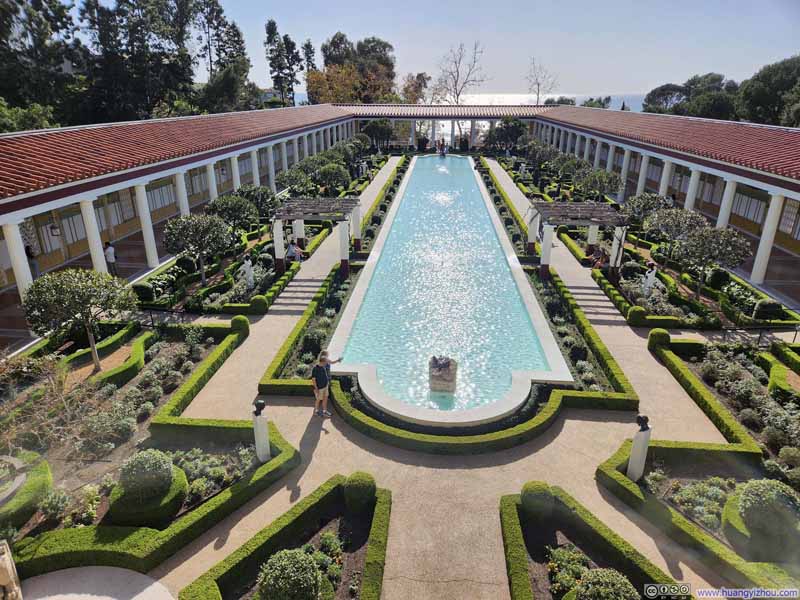 Overlooking Garden
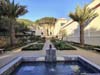
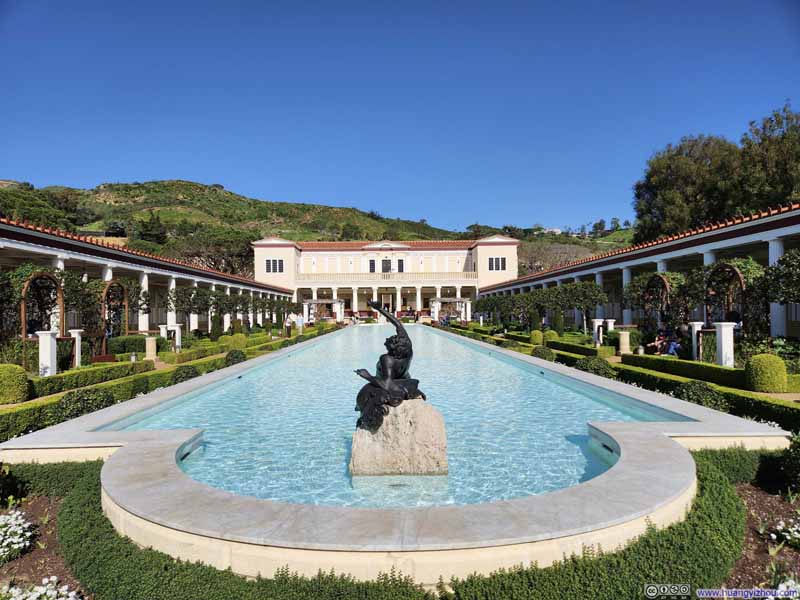 Pool
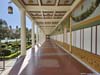
Pool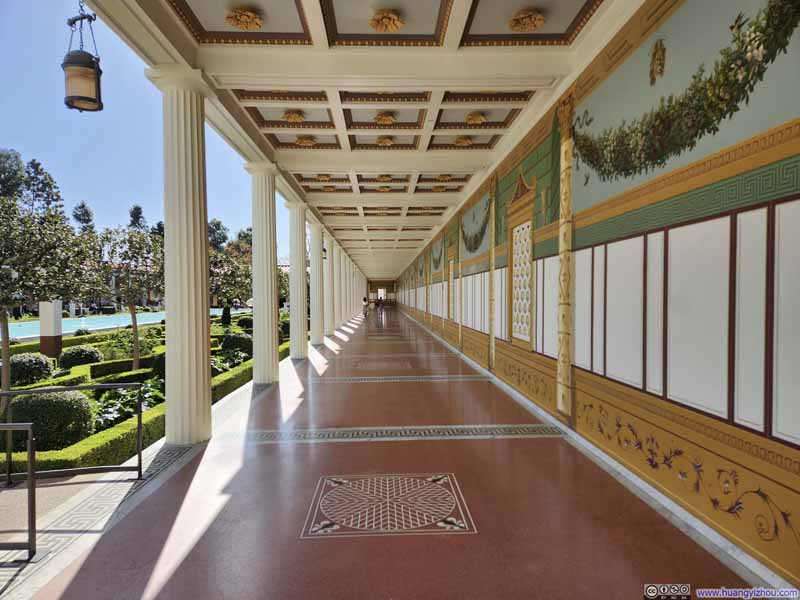 Passage along GardenWalls painted with fruits and columns.
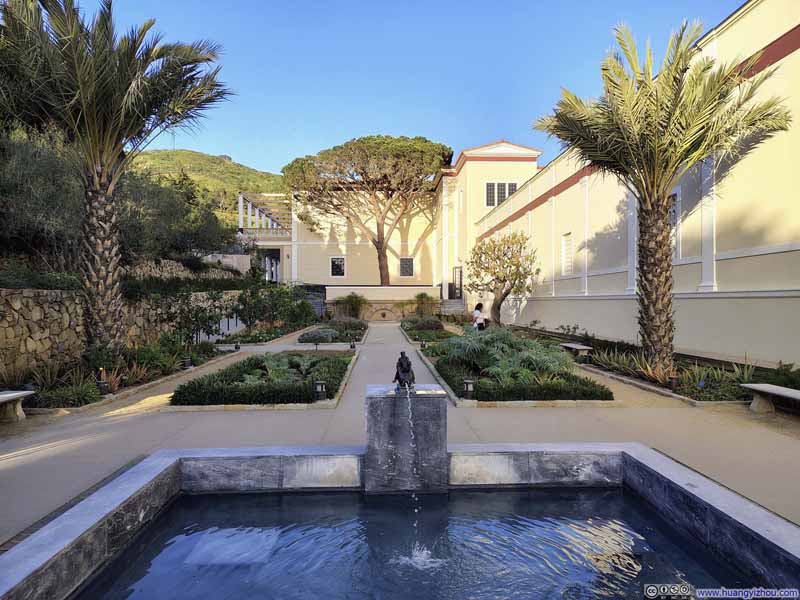 Herb Garden
Click here to display photos of the slideshow
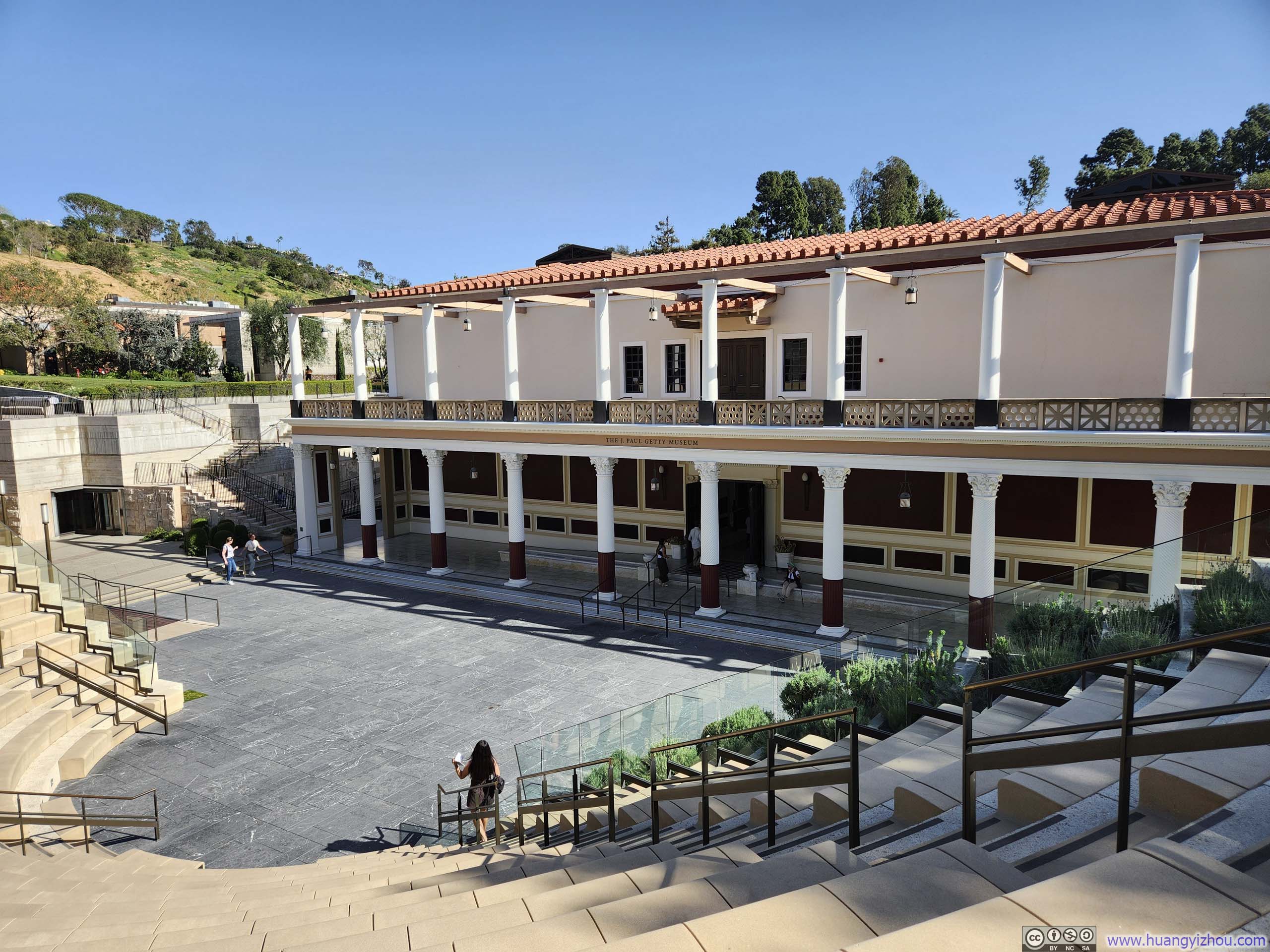
Amphitheater at Villa Entrance
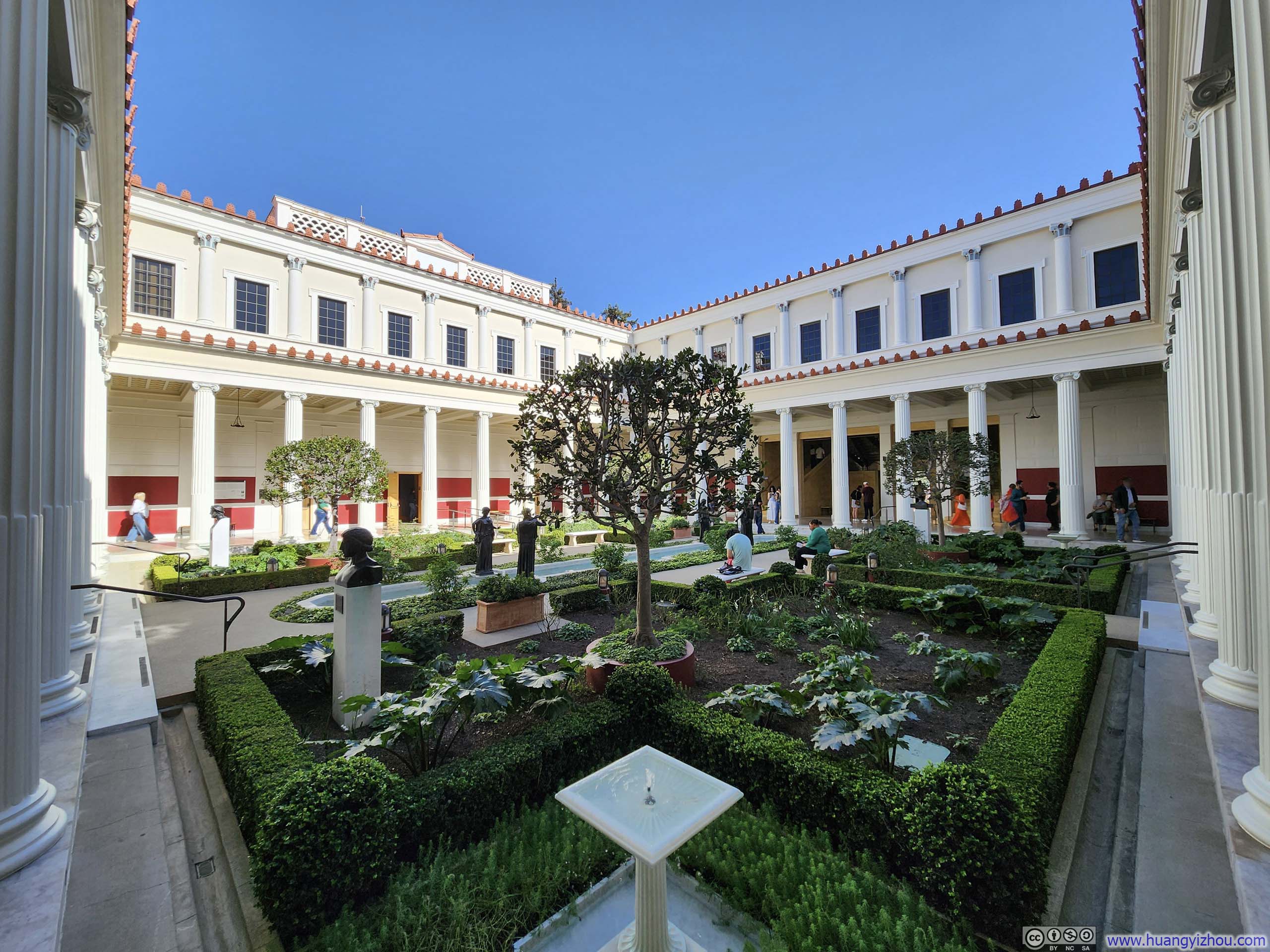
Courtyard
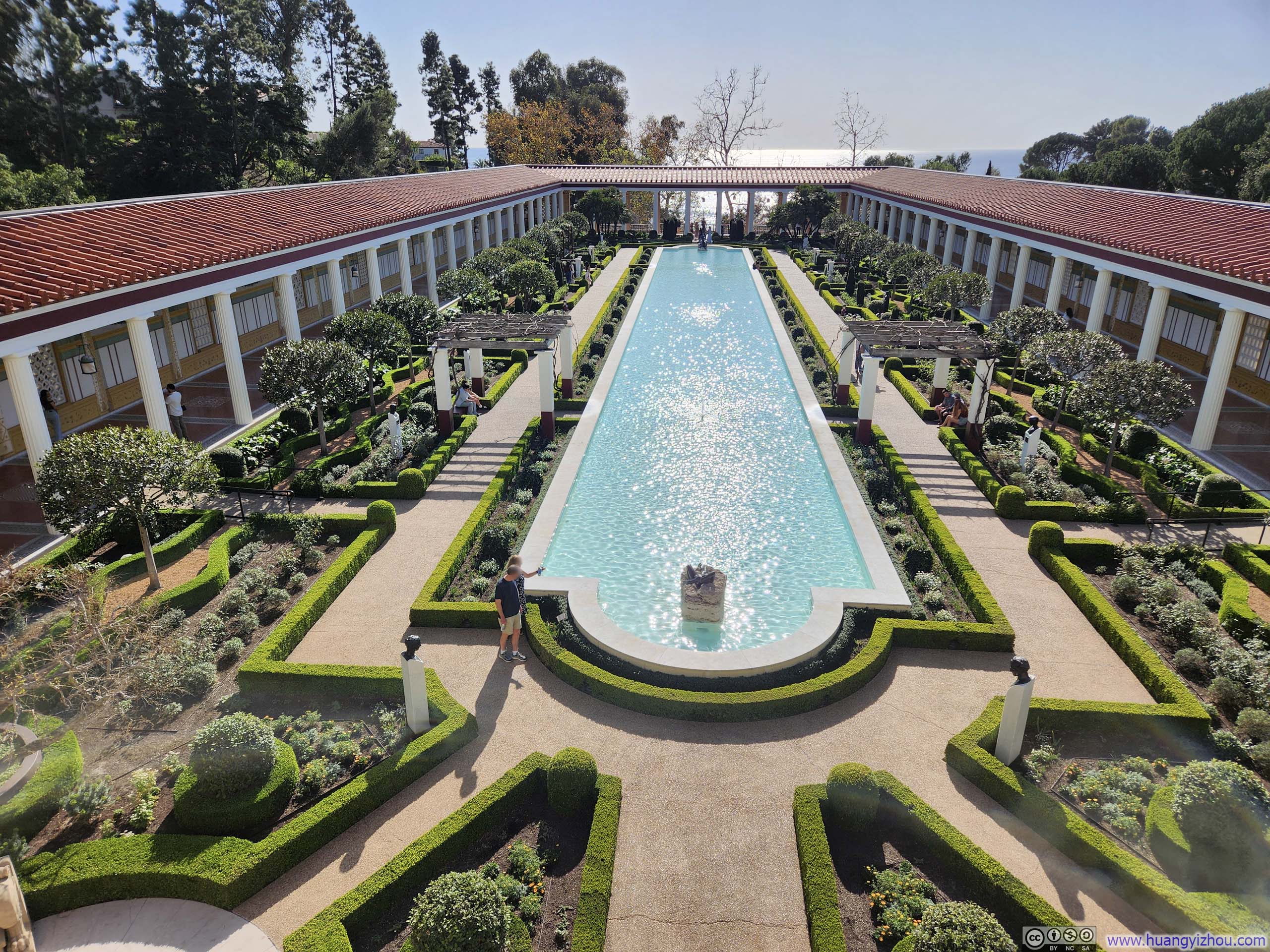
Overlooking Garden
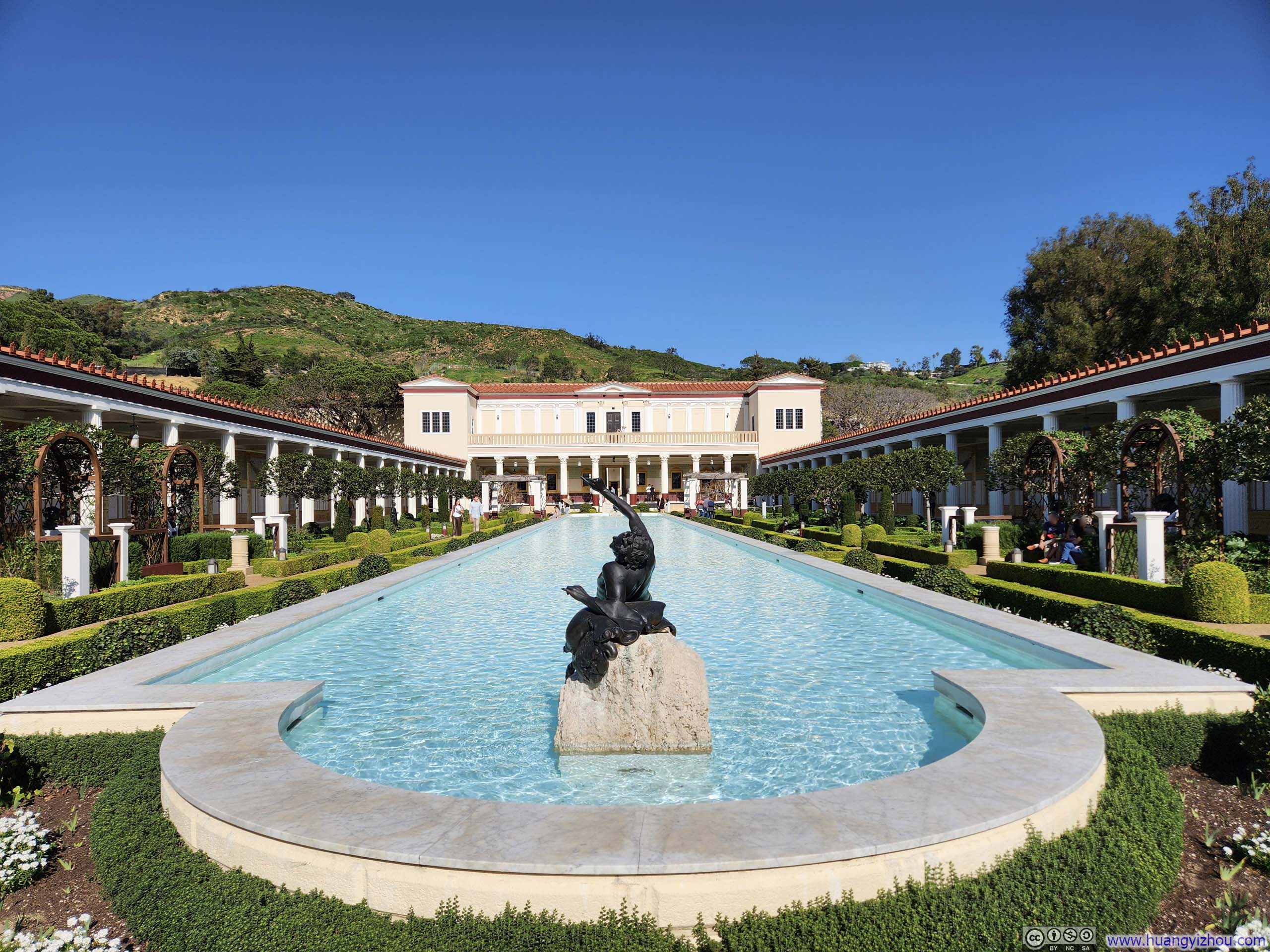
Pool
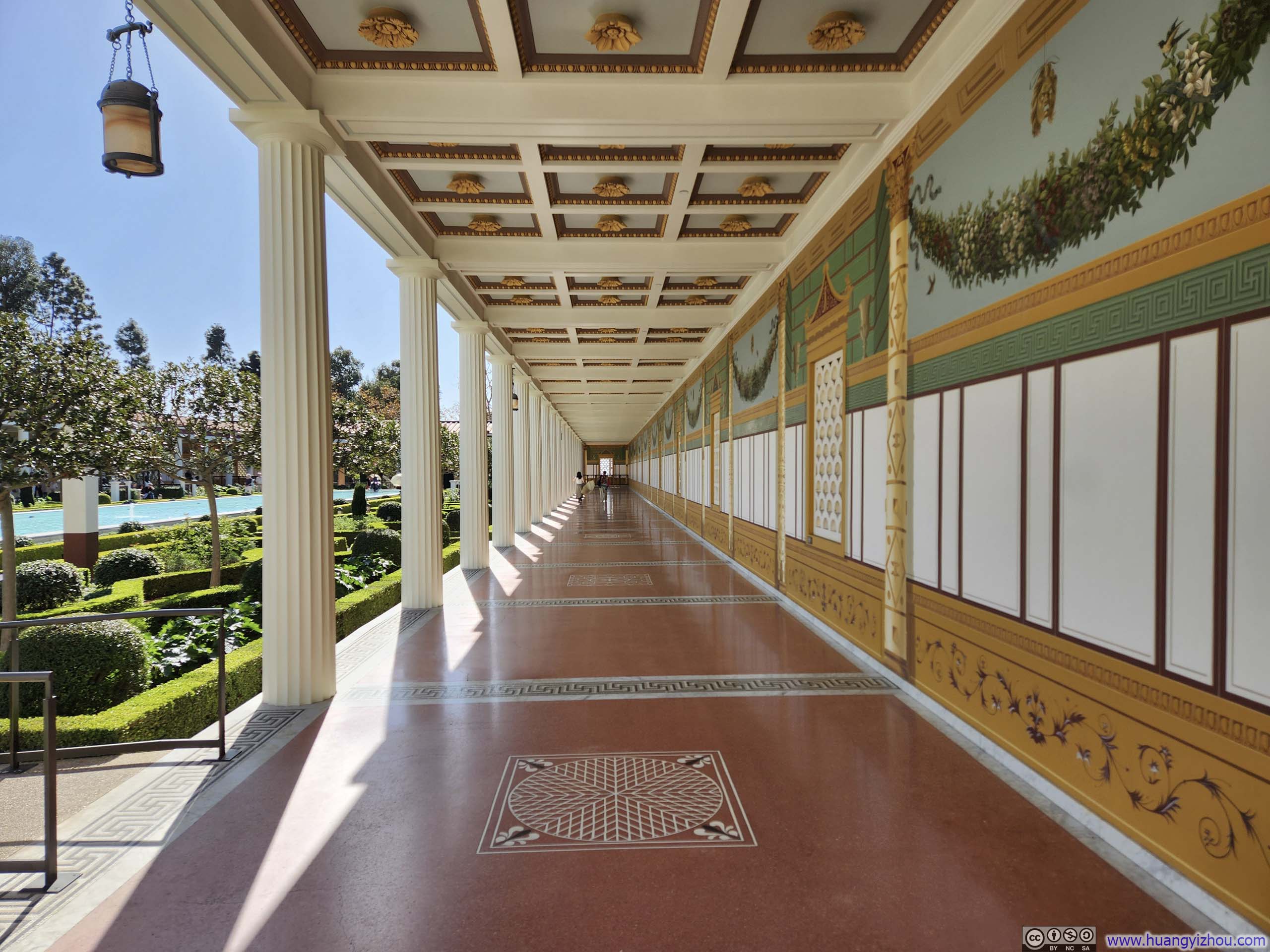
Passage along GardenWalls painted with fruits and columns.
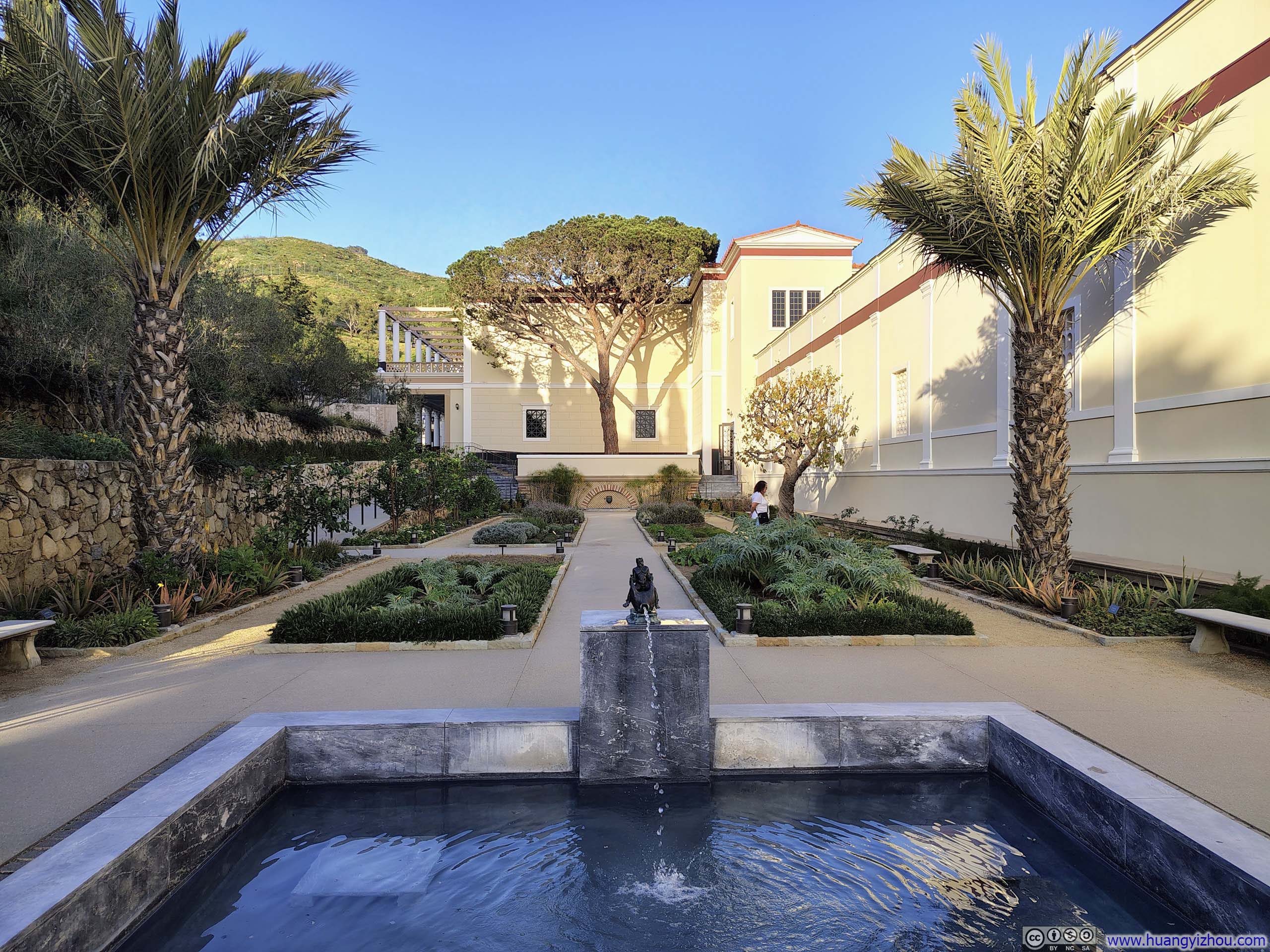
Herb Garden
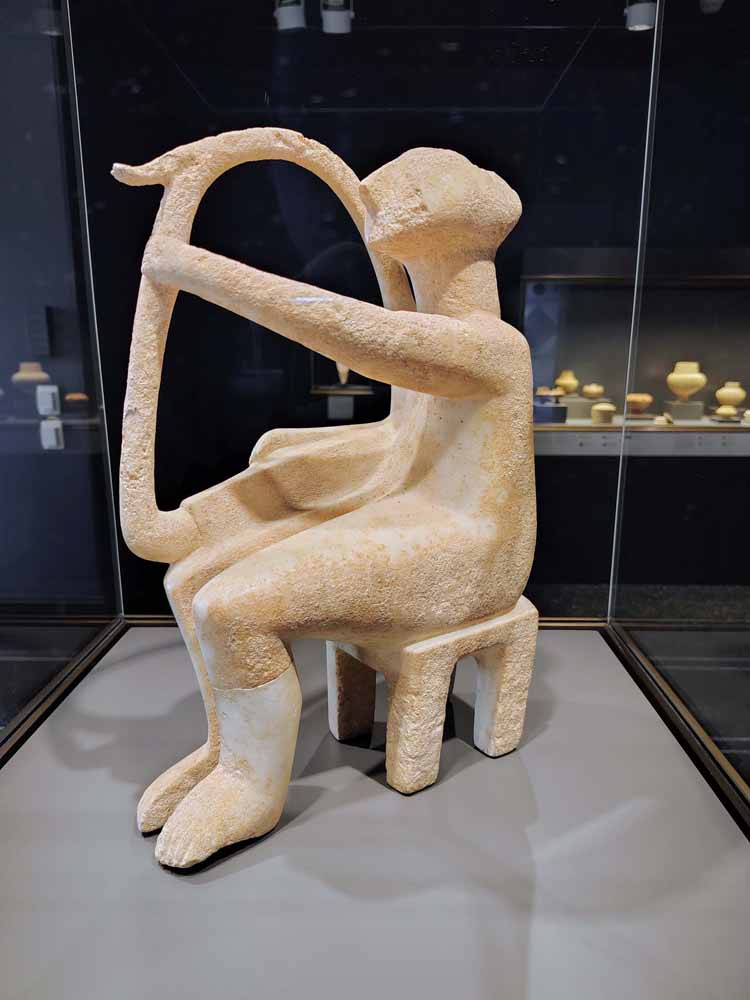 Harp Player
Cycladic, 2700-2300 BC. Marble. With his face lifted in song, this man plays a frame harp, a stringed instrument that originated in the Near East. He rests his right hand on its sound box. The sculpture is a remarkable artistic achievement, skillfully shaped from a block of solid marble and then ground down with pumice and emery, locally available abrasives. It is also one of the few known representations of a musical performance in Cycladic art.
Harp Player
Cycladic, 2700-2300 BC. Marble. With his face lifted in song, this man plays a frame harp, a stringed instrument that originated in the Near East. He rests his right hand on its sound box. The sculpture is a remarkable artistic achievement, skillfully shaped from a block of solid marble and then ground down with pumice and emery, locally available abrasives. It is also one of the few known representations of a musical performance in Cycladic art.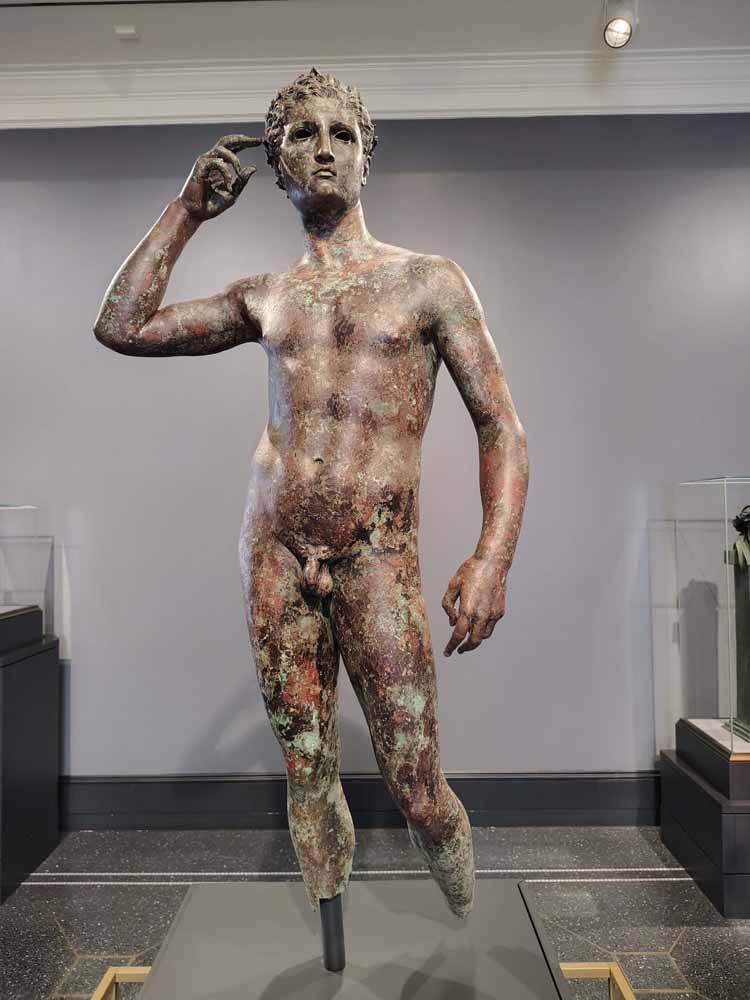 Victorious Athlete (The Getty Bronze)
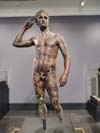
Greek, 300-100 BC. Bronze and copper. Standing in the conventional pose of a victorious athlete, this nude youth is about to remove his wreath and dedicate it to the gods in gratitude. The rendering of the body, with its softly rounded form, is a subtle portrayal of a young man in late adolescence. The bronze surface, now a mottled green and brown, was once golden in color, with inlaid red-copper nipples and eyes made of stone or glass. His olive wreath suggests Olympia was the site of his victory and the original location of the statue. After the sculpture was removed, probably in Roman times, it was shipwrecked en route to Italy.
Victorious Athlete (The Getty Bronze)
Greek, 300-100 BC. Bronze and copper. Standing in the conventional pose of a victorious athlete, this nude youth is about to remove his wreath and dedicate it to the gods in gratitude. The rendering of the body, with its softly rounded form, is a subtle portrayal of a young man in late adolescence. The bronze surface, now a mottled green and brown, was once golden in color, with inlaid red-copper nipples and eyes made of stone or glass. His olive wreath suggests Olympia was the site of his victory and the original location of the statue. After the sculpture was removed, probably in Roman times, it was shipwrecked en route to Italy.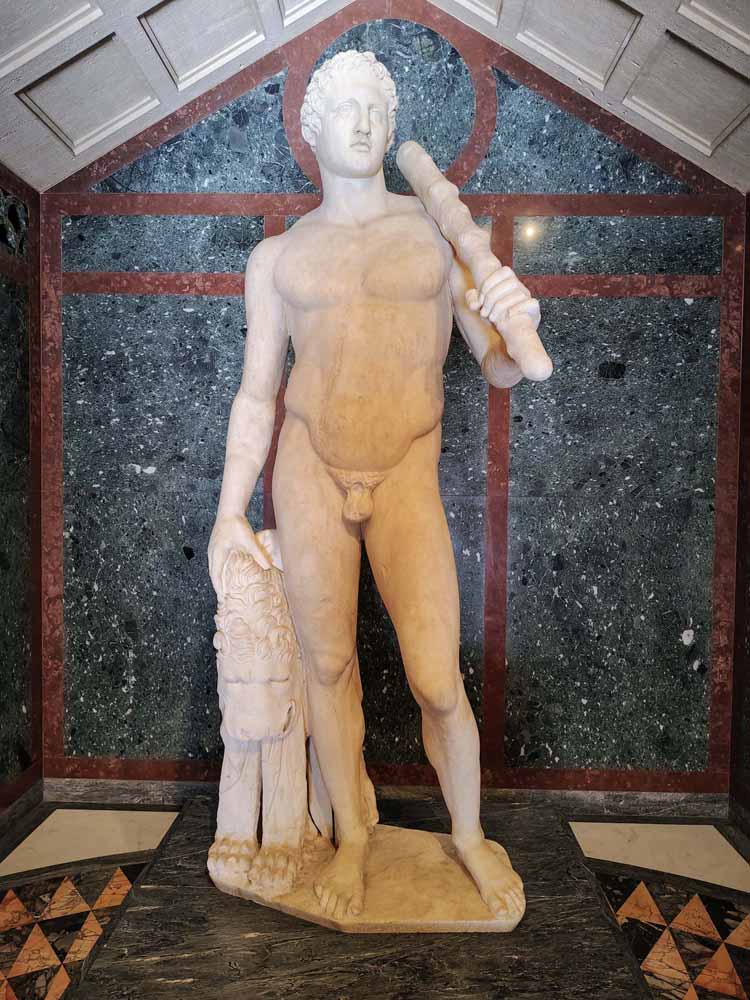 The Lansdowne Hercules
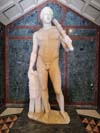
Roman, about AD 125.Marble.One of J. Paul Getty’s most prized possessions, this sculpture contributed to his decision to build a museum in the style of an ancient Roman villa. The statue represents the hero Hercules with his trademark lionskin and club. It was unearthed in 1790 near the villa of the Roman emperor Hadrian (ruled AD 117-138) at Tivoli, east of Rome. Shortly after its discovery, the statue was reworked in Rome, probably by Carlo Albacini (active 1780-1807), a prominent restorer.
The Lansdowne Hercules
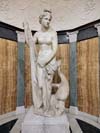
Roman, about AD 125.Marble.One of J. Paul Getty’s most prized possessions, this sculpture contributed to his decision to build a museum in the style of an ancient Roman villa. The statue represents the hero Hercules with his trademark lionskin and club. It was unearthed in 1790 near the villa of the Roman emperor Hadrian (ruled AD 117-138) at Tivoli, east of Rome. Shortly after its discovery, the statue was reworked in Rome, probably by Carlo Albacini (active 1780-1807), a prominent restorer.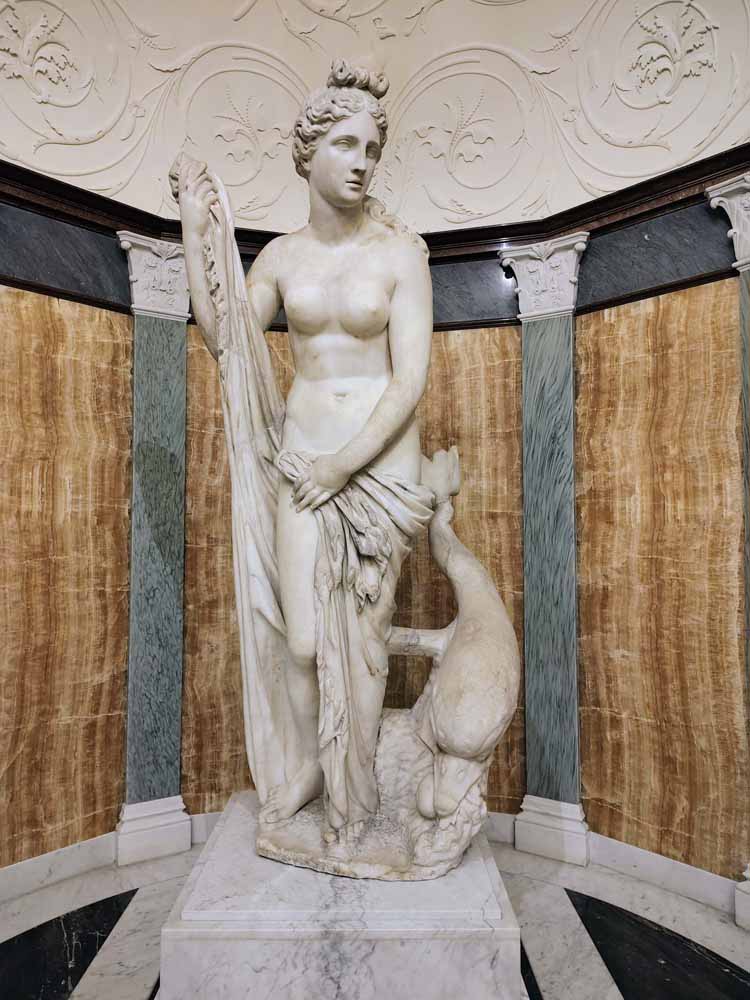 Statue of VenusAround 100-200 AD. A dolphin accompanies the deity, alluding to her birth from the sea.
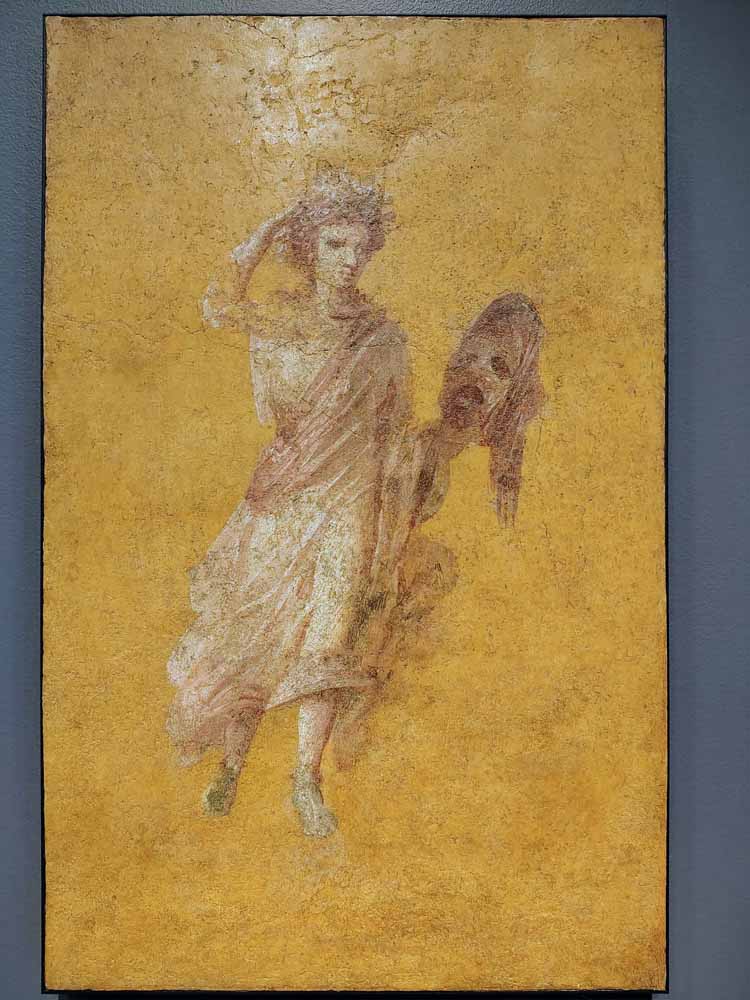 Fresco with a Muse
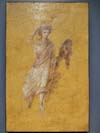
Roman, AD 1-79. Plaster and pigment. A Muse, one of the goddesses of the arts and sciences, carries a tragic theater mask and reaches up to adjust the wreath on her head. She is probably Melpomene, the Muse of Tragedy. She appears to float on a monochromatic background, a typical artistic device in wall paintings of the first century AD.
Fresco with a Muse
Roman, AD 1-79. Plaster and pigment. A Muse, one of the goddesses of the arts and sciences, carries a tragic theater mask and reaches up to adjust the wreath on her head. She is probably Melpomene, the Muse of Tragedy. She appears to float on a monochromatic background, a typical artistic device in wall paintings of the first century AD.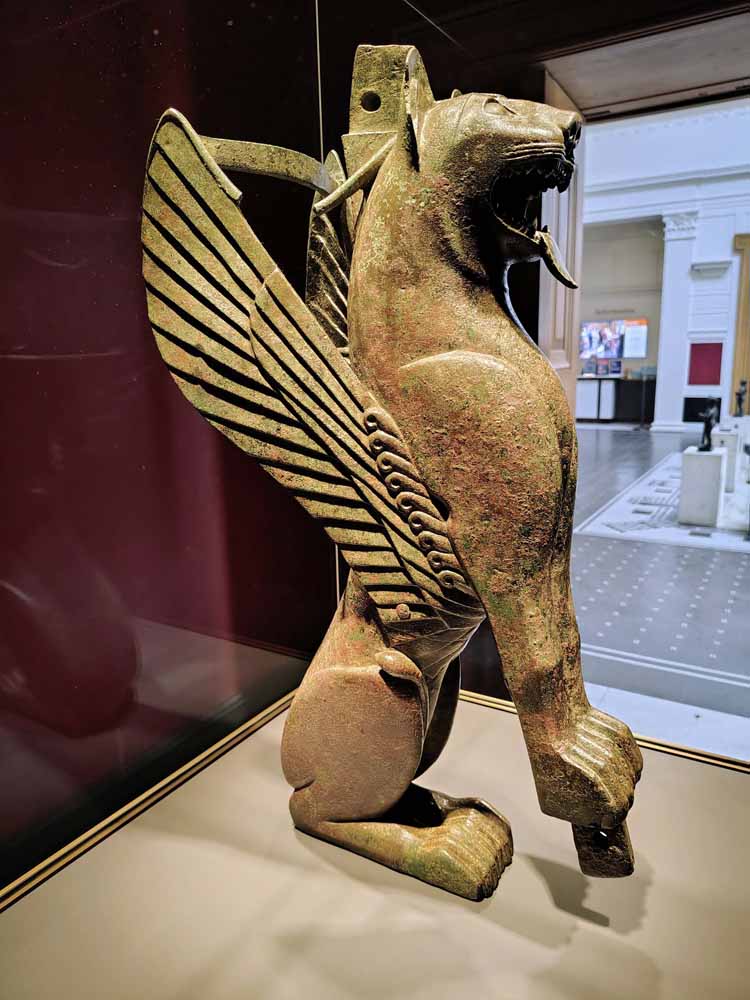 Winged Lion
Iberian, 500-400 BC. Bronze. Style and technique suggest that this remarkable winged lion was made in Iberia, a region where bronze sculptures were produced in large numbers. Struts behind the head show that it supported a three-sided object, possibly a ceremonial tripod. The mythical creature was likely introduced to Iberia by the Phoenicians, who founded settlements in the region to exploit the deposits of precious tin and silver. The mixture of local features, such as the stylized ears and teeth, with the traditional Phoenician treatment of wing feathers demonstrates the influence of immigrant craftsmen on a native Iberian workshop.
Winged Lion
Iberian, 500-400 BC. Bronze. Style and technique suggest that this remarkable winged lion was made in Iberia, a region where bronze sculptures were produced in large numbers. Struts behind the head show that it supported a three-sided object, possibly a ceremonial tripod. The mythical creature was likely introduced to Iberia by the Phoenicians, who founded settlements in the region to exploit the deposits of precious tin and silver. The mixture of local features, such as the stylized ears and teeth, with the traditional Phoenician treatment of wing feathers demonstrates the influence of immigrant craftsmen on a native Iberian workshop.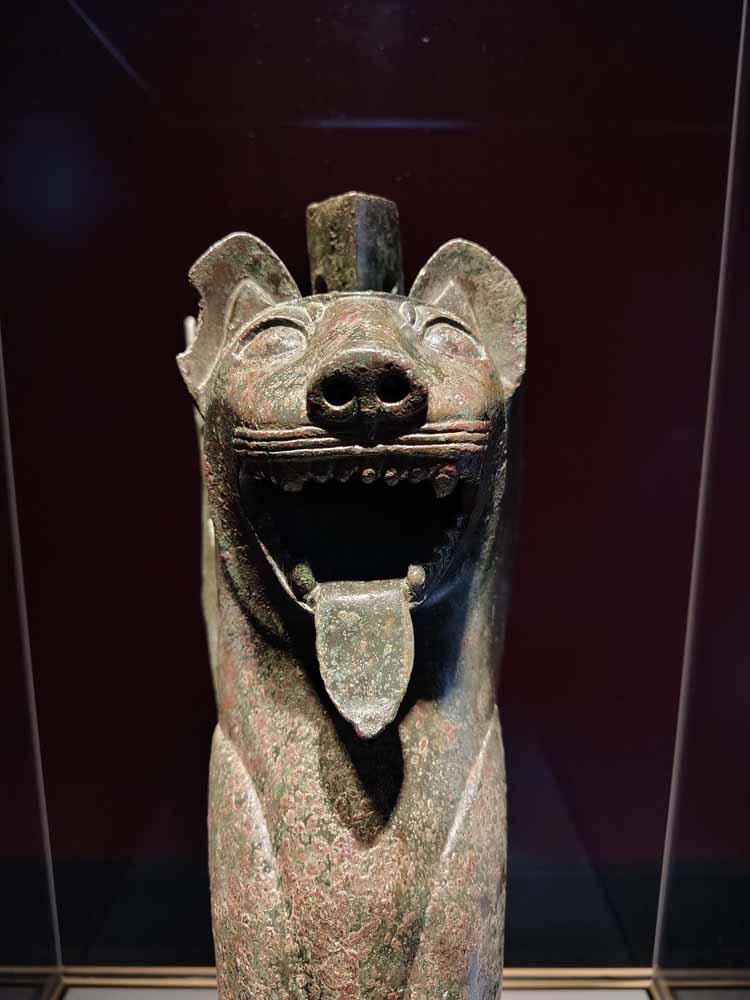 Winged LionThis face looked pretty funny.
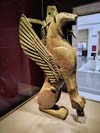
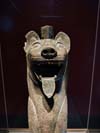
Click here to display photos of some of the exhibits in Getty Villa.
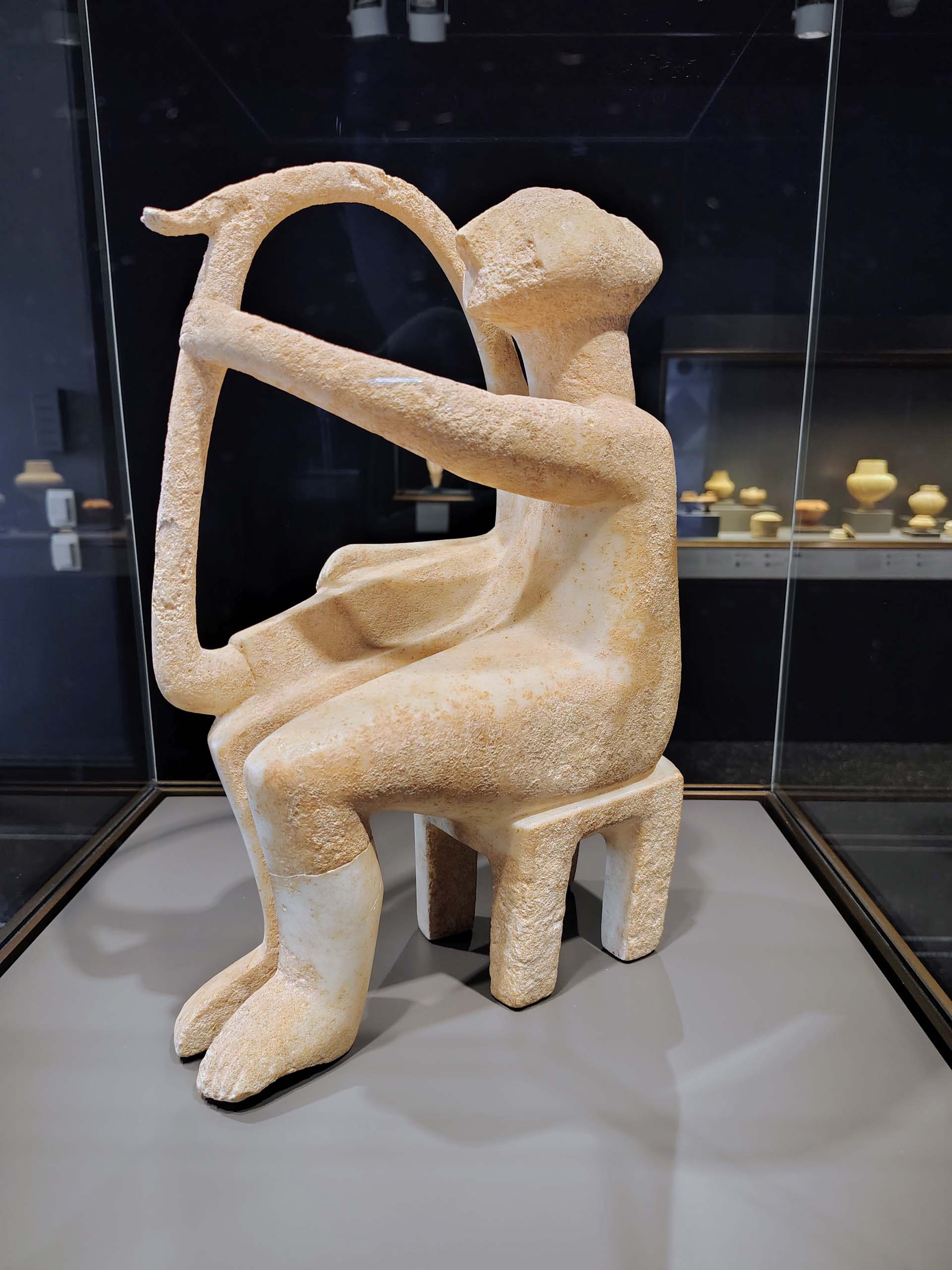
Harp Player
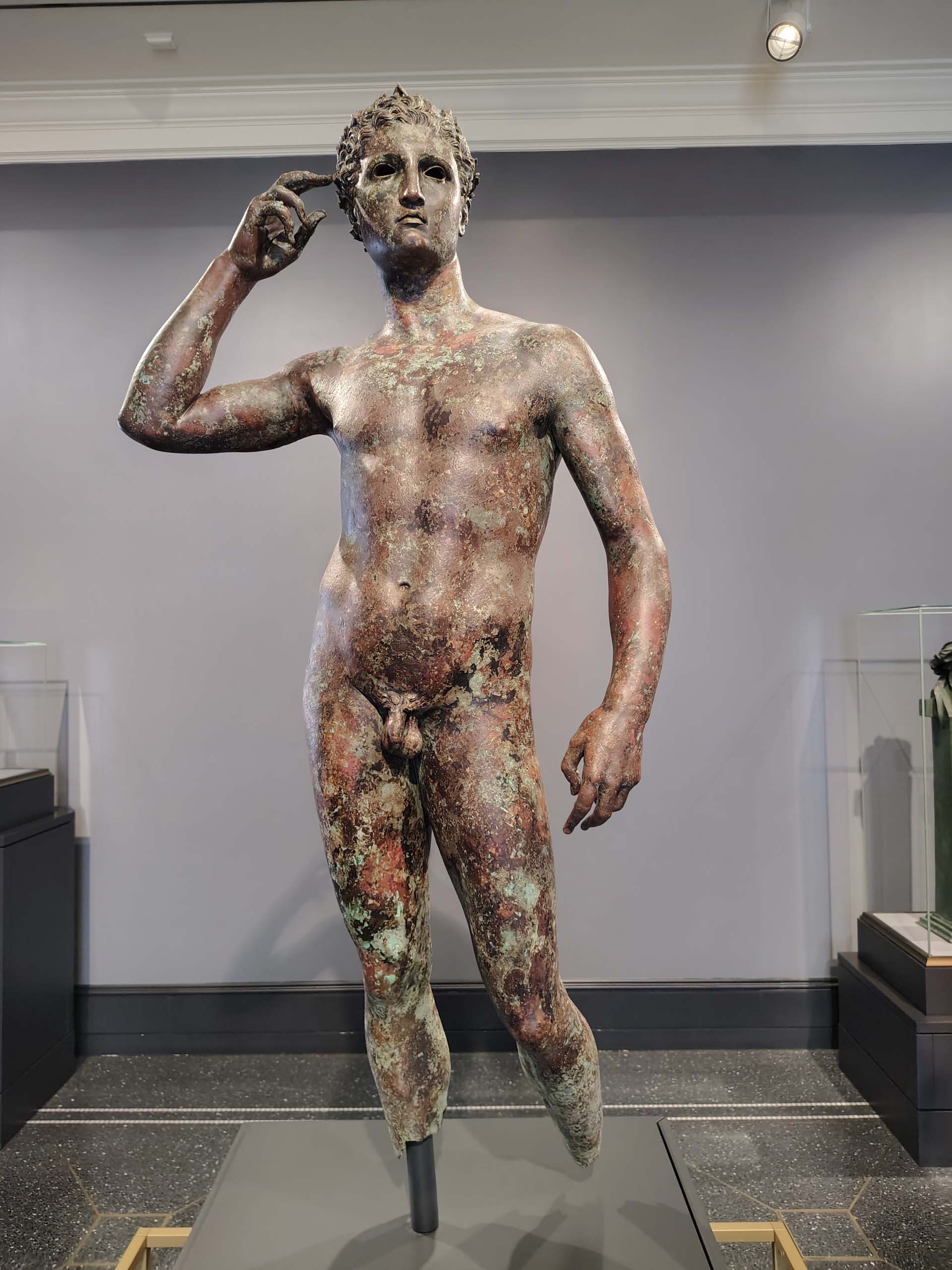
Victorious Athlete (The Getty Bronze)
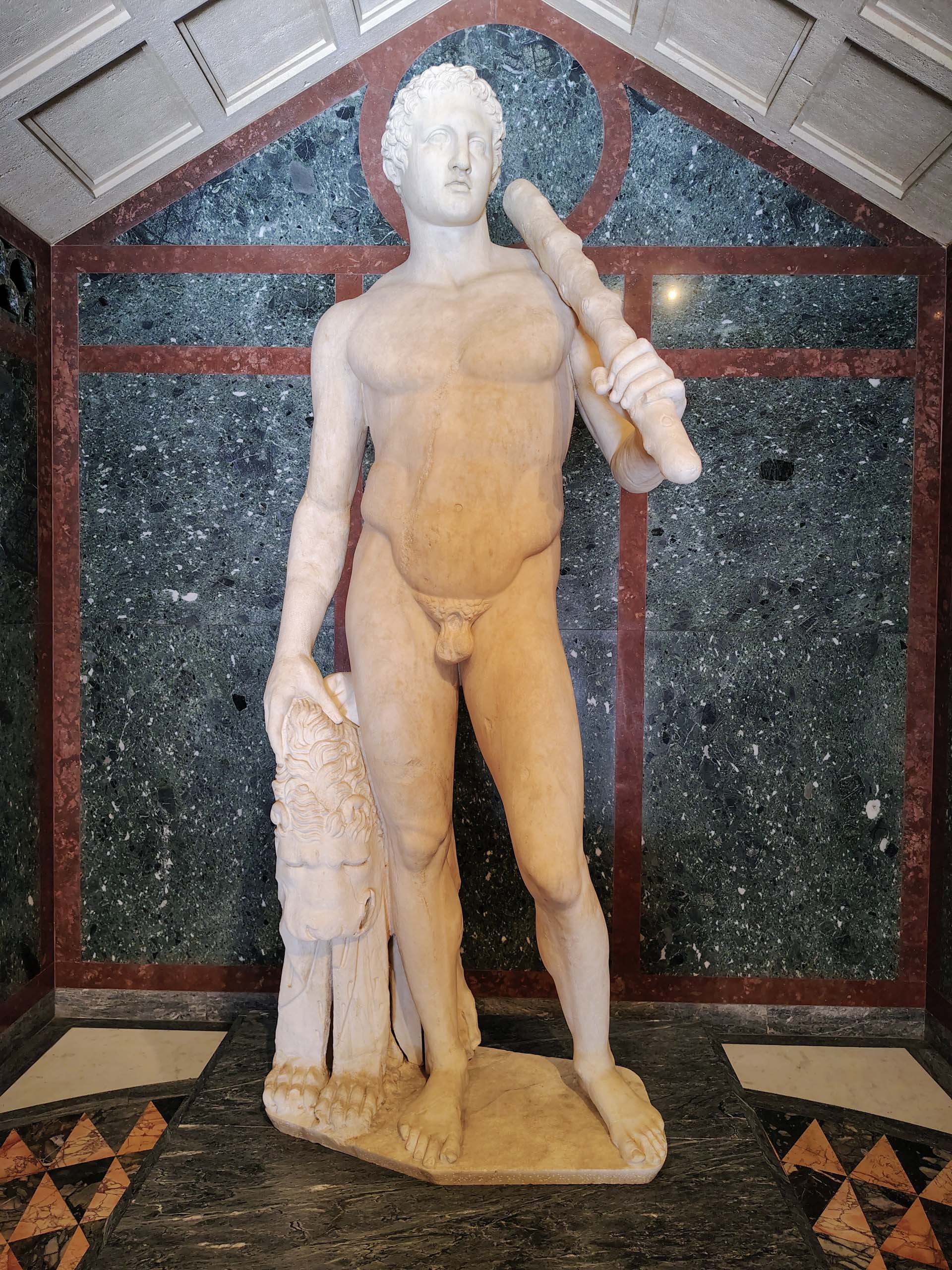
The Lansdowne Hercules
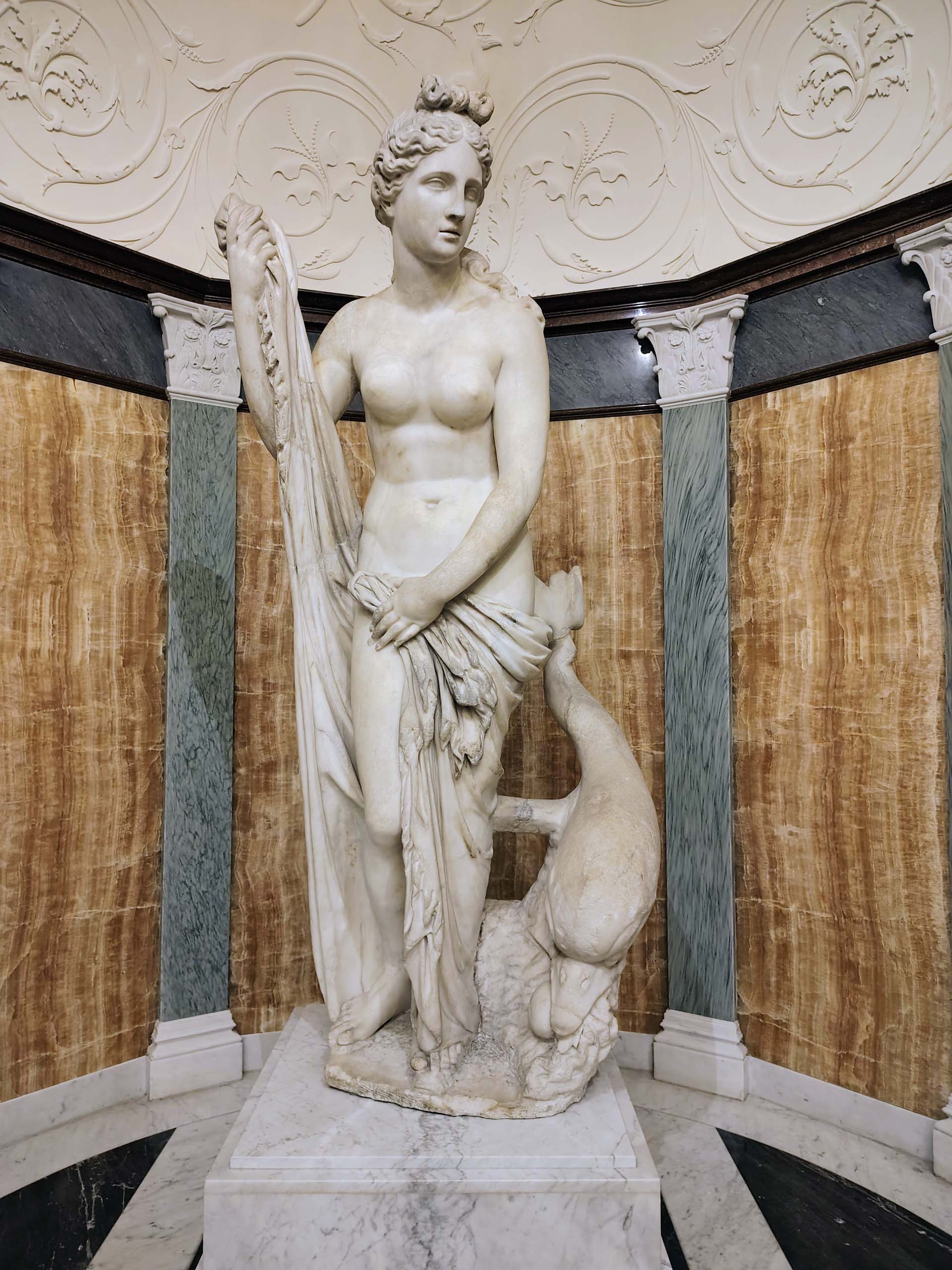
Statue of VenusAround 100-200 AD. A dolphin accompanies the deity, alluding to her birth from the sea.
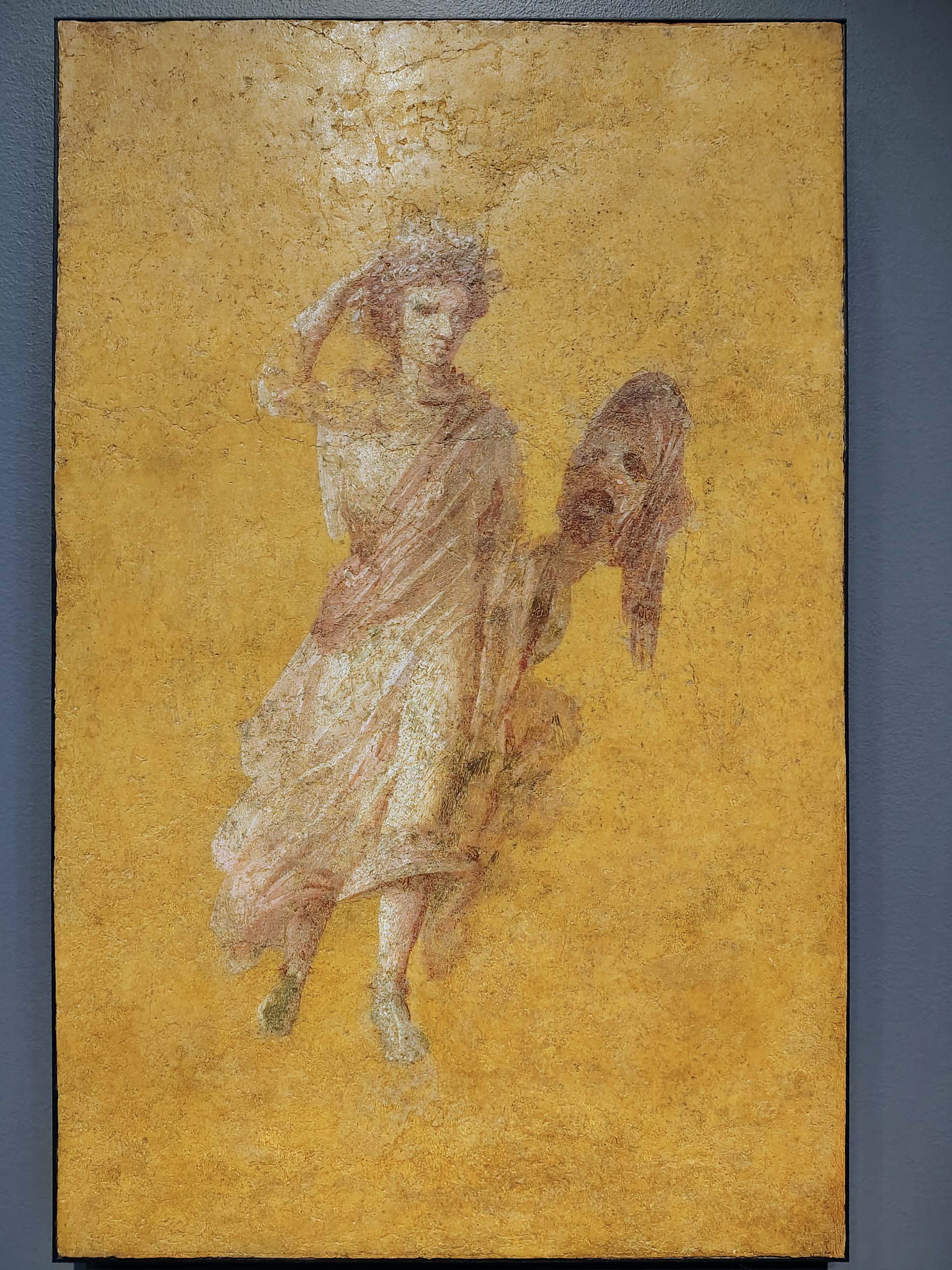
Fresco with a Muse
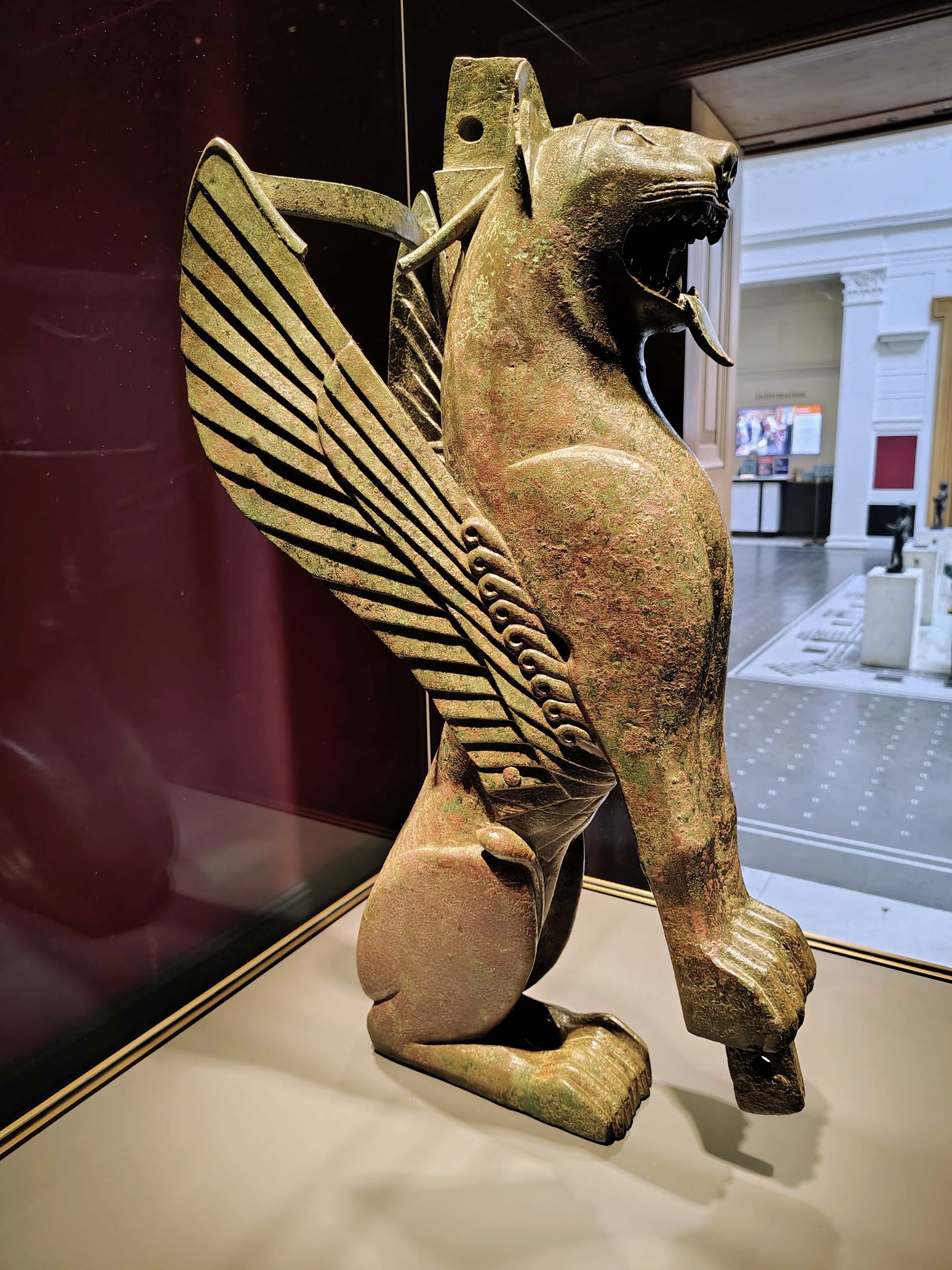
Winged Lion
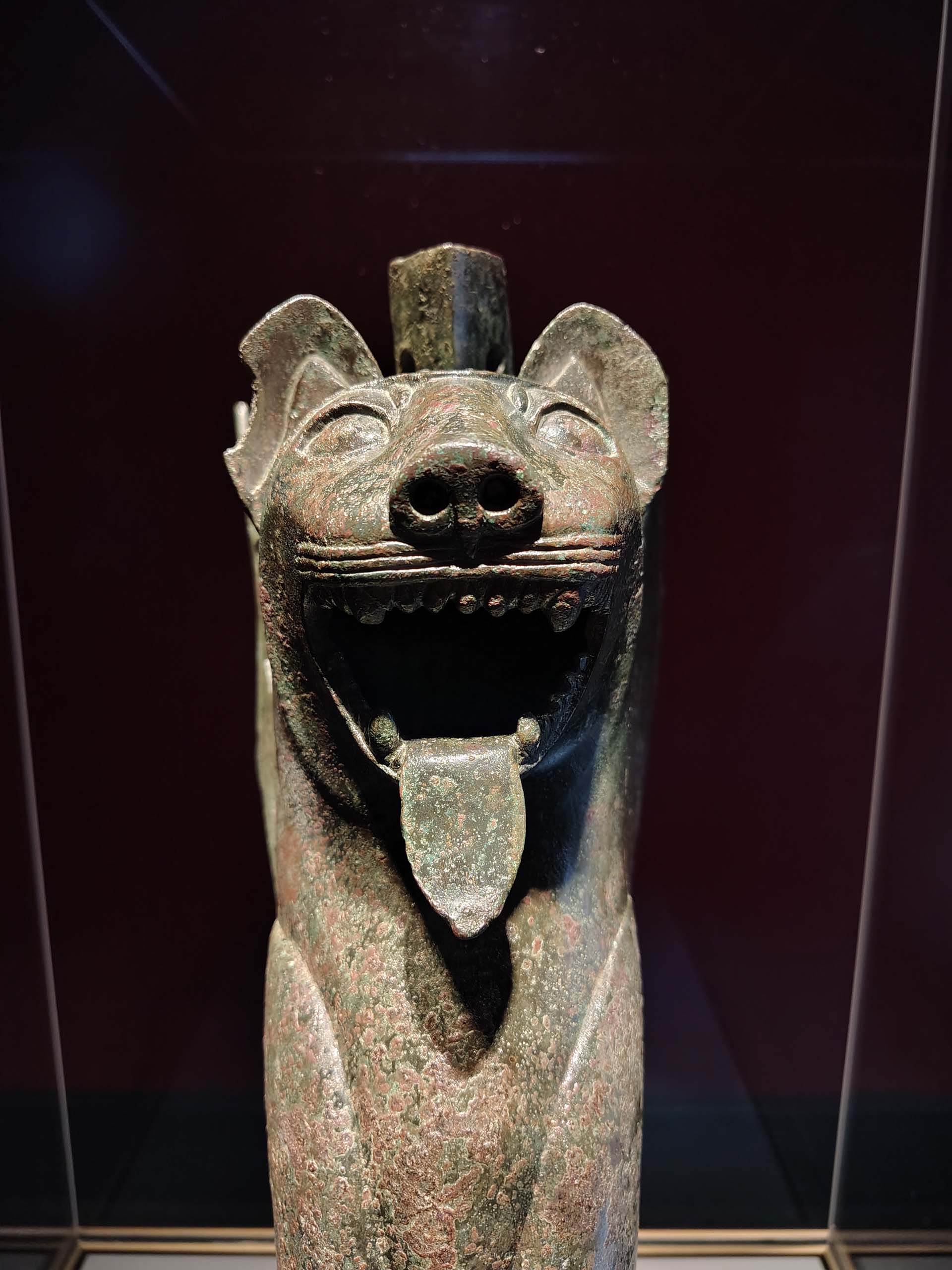
Winged LionThis face looked pretty funny.
As for the collection itself, it was predominantly Greek and Roman in character. I picked up Handel’s Choices of Hercules last year, so I found it pleasantly familiar in encountering Hercules rendered in various forms — whether cast as a statue or painted onto ancient storage jars.
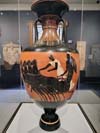
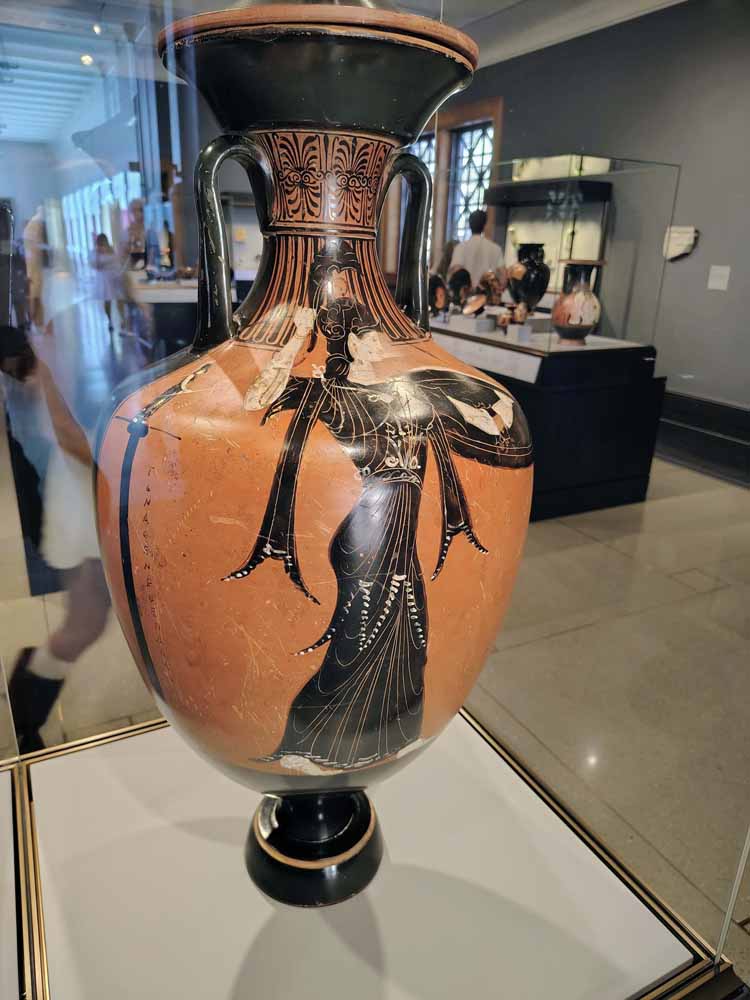 Prize Vessel from the Athenian Games
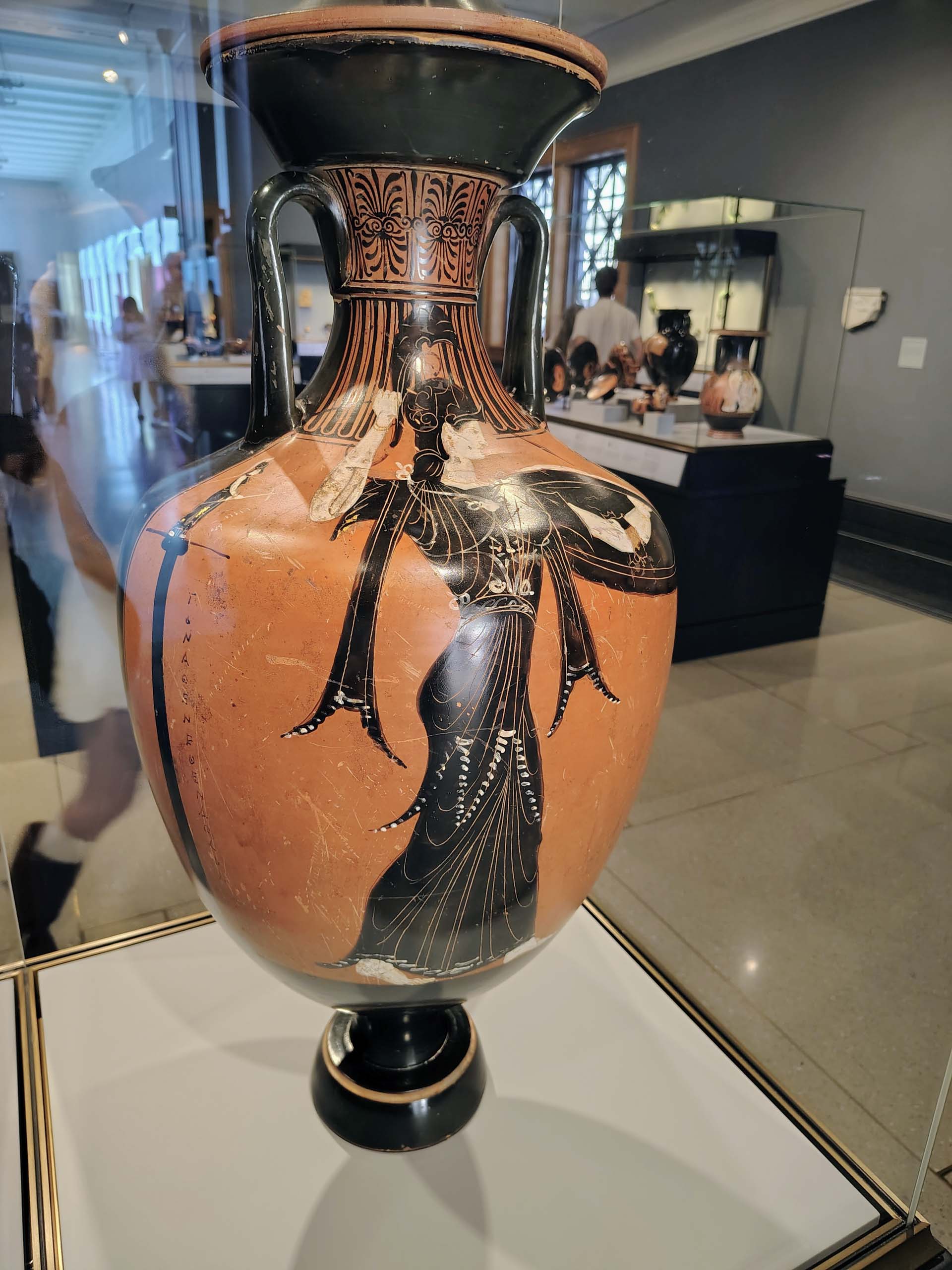
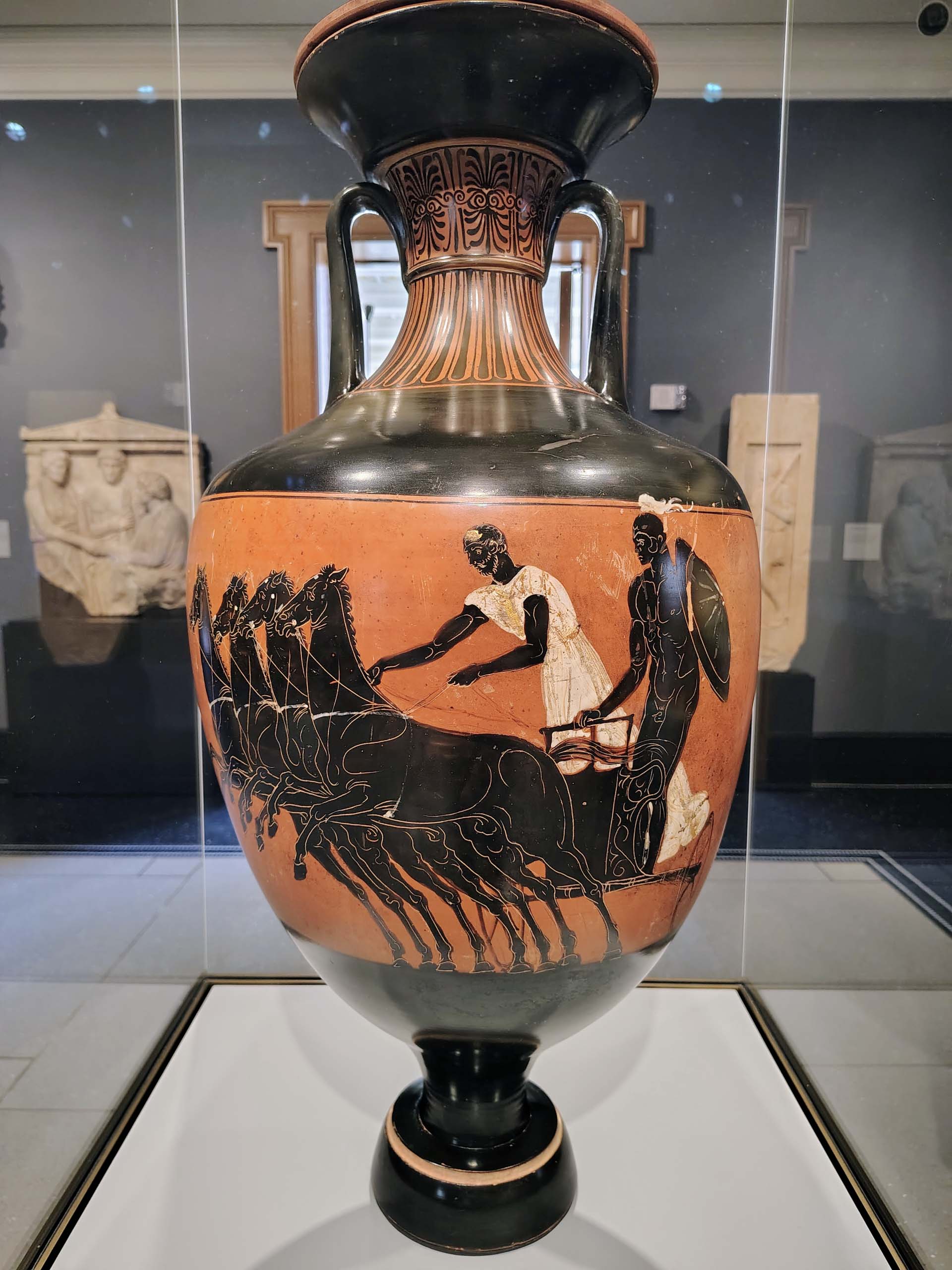
Greek, made in Athens, 340-339 BC. Terracotta. Black-figure Panathenaic amphora attributed to the Marsyas Painter. The Athenians honored Athena, goddess of wisdom and warfare, at an annual festival called the Panathenaia. Every fourth year, musical and athletic contests were held at the festival, and prizewinners took home quantities of olive oil from Athena’s sacred grove. Vessels such as this one serve as containers for the oil and were decorated with an athletic event on one side, the goddess on the other. Although details, such as the rendering of her drapery, may vary, Athena always strides forward between two columns, holding her shield. .The inscriptions—“Of the prizes from Athens” (left) and “Theophrastos archon” (right)—mark this as an official Panathenaic prize vessel. The oil would have been collected in the year in which Theophrastos was archon, an annually appointee civic official. This in turn provides a date for the vase.
Prize Vessel from the Athenian Games
Greek, made in Athens, 340-339 BC. Terracotta. Black-figure Panathenaic amphora attributed to the Marsyas Painter. The Athenians honored Athena, goddess of wisdom and warfare, at an annual festival called the Panathenaia. Every fourth year, musical and athletic contests were held at the festival, and prizewinners took home quantities of olive oil from Athena’s sacred grove. Vessels such as this one serve as containers for the oil and were decorated with an athletic event on one side, the goddess on the other. Although details, such as the rendering of her drapery, may vary, Athena always strides forward between two columns, holding her shield. .The inscriptions—“Of the prizes from Athens” (left) and “Theophrastos archon” (right)—mark this as an official Panathenaic prize vessel. The oil would have been collected in the year in which Theophrastos was archon, an annually appointee civic official. This in turn provides a date for the vase.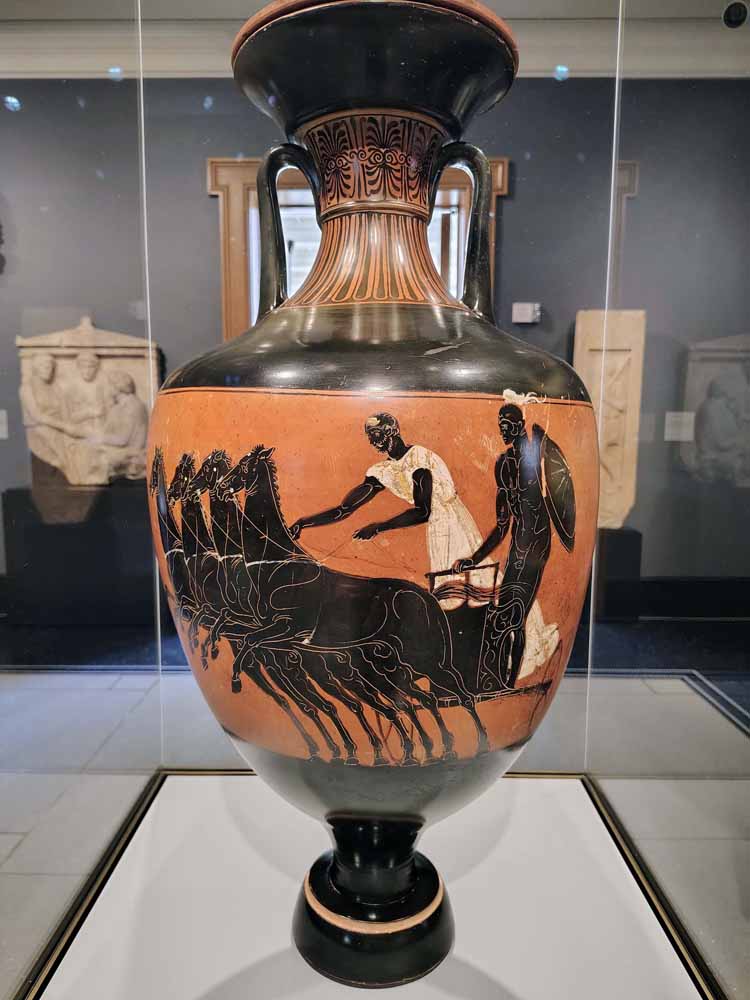 Prize Vessel from the Athenian Games
Greek, made in Athens, 340-339 BC. Terracotta. Black-figure Panathenaic amphora attributed to the Marsyas Painter. The Athenians honored Athena, goddess of wisdom and warfare, at an annual festival called the Panathenaia. Every fourth year, musical and athletic contests were held at the festival, and prizewinners took home quantities of olive oil from Athena’s sacred grove. Vessels such as this one serve as containers for the oil and were decorated with an athletic event on one side, the goddess on the other. Although details, such as the rendering of her drapery, may vary, Athena always strides forward between two columns, holding her shield. .The inscriptions—“Of the prizes from Athens” (left) and “Theophrastos archon” (right)—mark this as an official Panathenaic prize vessel. The oil would have been collected in the year in which Theophrastos was archon, an annually appointee civic official. This in turn provides a date for the vase.
Prize Vessel from the Athenian Games
Greek, made in Athens, 340-339 BC. Terracotta. Black-figure Panathenaic amphora attributed to the Marsyas Painter. The Athenians honored Athena, goddess of wisdom and warfare, at an annual festival called the Panathenaia. Every fourth year, musical and athletic contests were held at the festival, and prizewinners took home quantities of olive oil from Athena’s sacred grove. Vessels such as this one serve as containers for the oil and were decorated with an athletic event on one side, the goddess on the other. Although details, such as the rendering of her drapery, may vary, Athena always strides forward between two columns, holding her shield. .The inscriptions—“Of the prizes from Athens” (left) and “Theophrastos archon” (right)—mark this as an official Panathenaic prize vessel. The oil would have been collected in the year in which Theophrastos was archon, an annually appointee civic official. This in turn provides a date for the vase.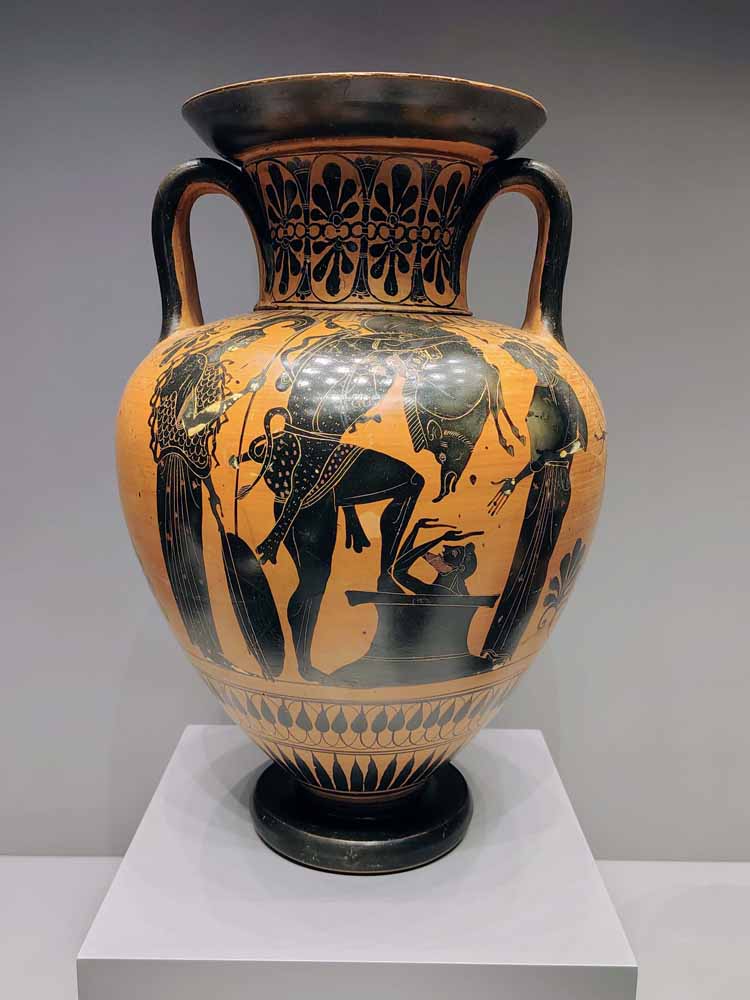 Storage Jar with Herakles Carrying the Erymanthian Boar
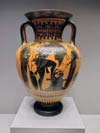
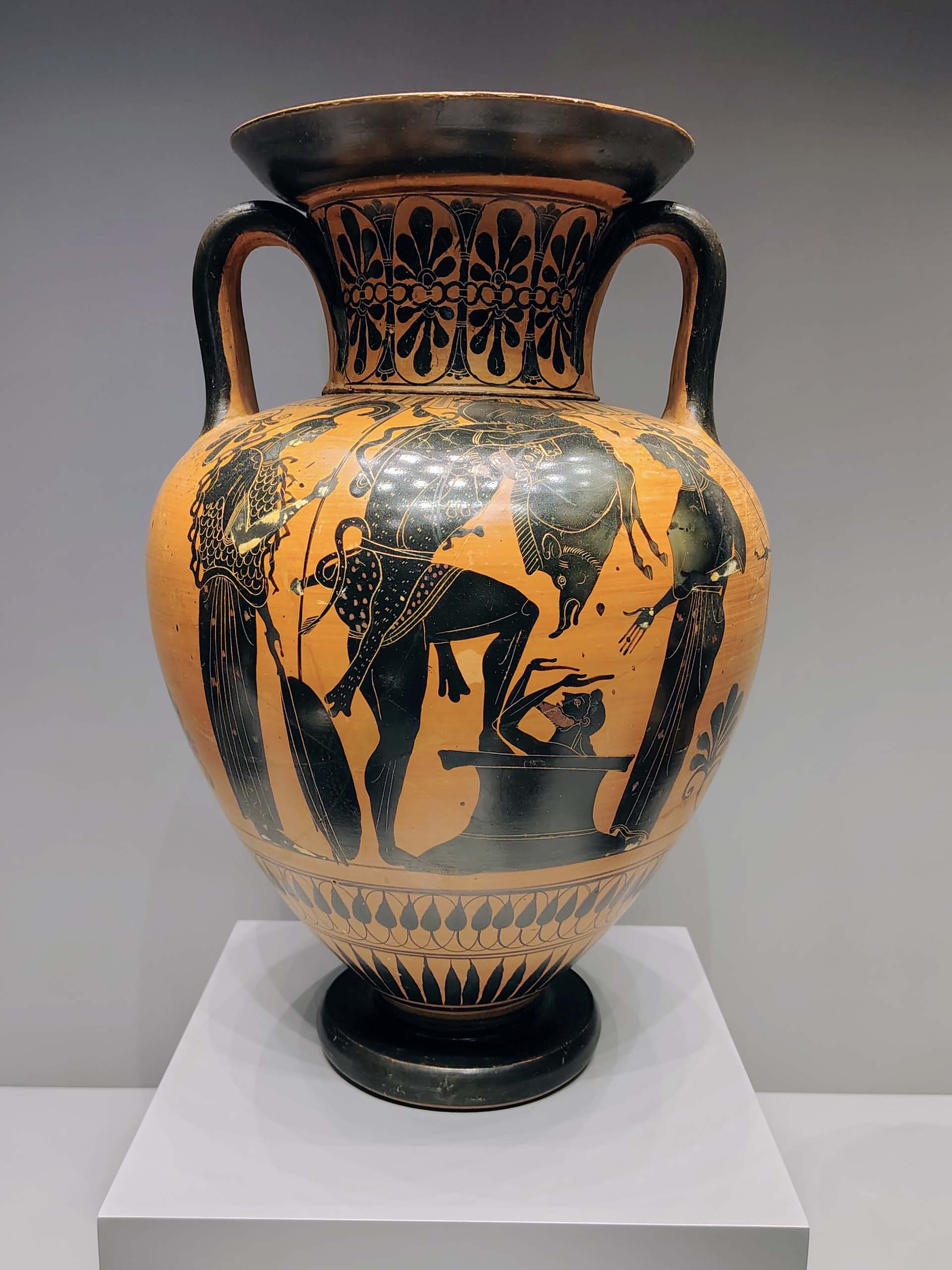
Greek, made in Athens, about 510 BC. Terracotta. Black-figure neck amphora attributed to the Leagros Group as painter.Herakles was enslaved to King Eurystheus, who devised the twelve labors. In one instance, the hero had to capture a huge boar that was ravaging the countryside around Mount Erymanthos, in the northwestern Peloponnese. Here he presents the creature to the king, who cowers feebly in a jar.
Storage Jar with Herakles Carrying the Erymanthian Boar
Greek, made in Athens, about 510 BC. Terracotta. Black-figure neck amphora attributed to the Leagros Group as painter.Herakles was enslaved to King Eurystheus, who devised the twelve labors. In one instance, the hero had to capture a huge boar that was ravaging the countryside around Mount Erymanthos, in the northwestern Peloponnese. Here he presents the creature to the king, who cowers feebly in a jar.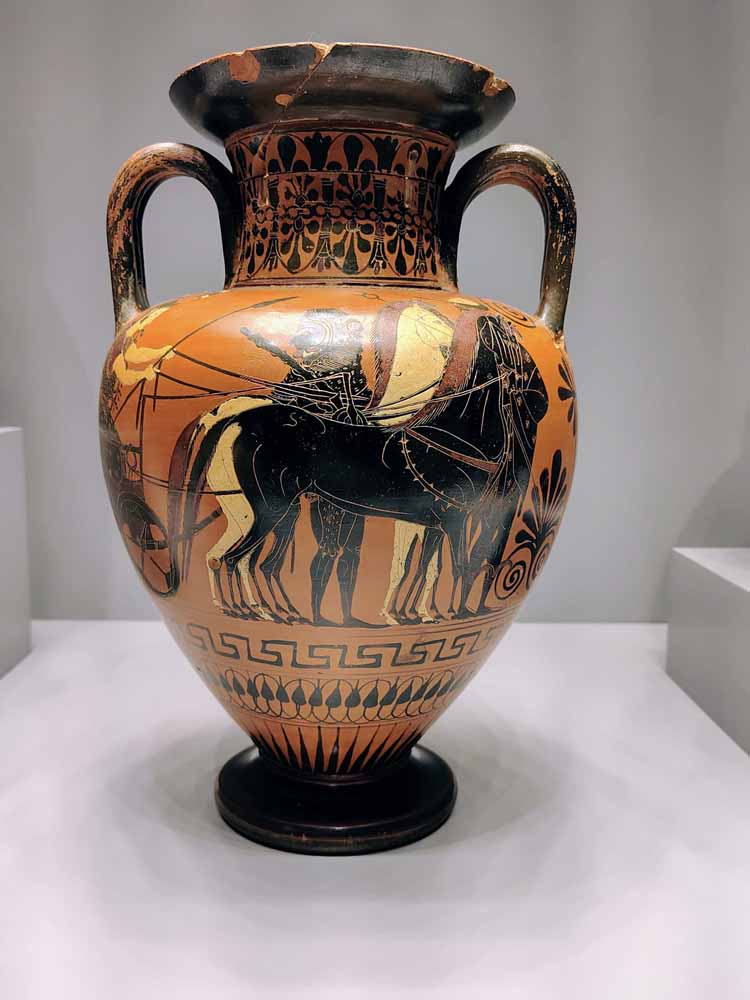 Storage Jar with Athena Bringing Herakles to Mount Olympus
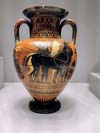
Creek, made in Athens, 530-520 BC. Terracotta. Black-figure neck amphora attributed to the Bareiss Painter.After prevailing over many fierce opponents, Herakles met his demise when his wife unknowingly gave him a poisoned tunic. As the son of Zeus, the hero was able to transcend death and join the gods. Vase painters often depicted this transition by showing Athena escorting Herakles in a chariot.
Storage Jar with Athena Bringing Herakles to Mount Olympus
Creek, made in Athens, 530-520 BC. Terracotta. Black-figure neck amphora attributed to the Bareiss Painter.After prevailing over many fierce opponents, Herakles met his demise when his wife unknowingly gave him a poisoned tunic. As the son of Zeus, the hero was able to transcend death and join the gods. Vase painters often depicted this transition by showing Athena escorting Herakles in a chariot.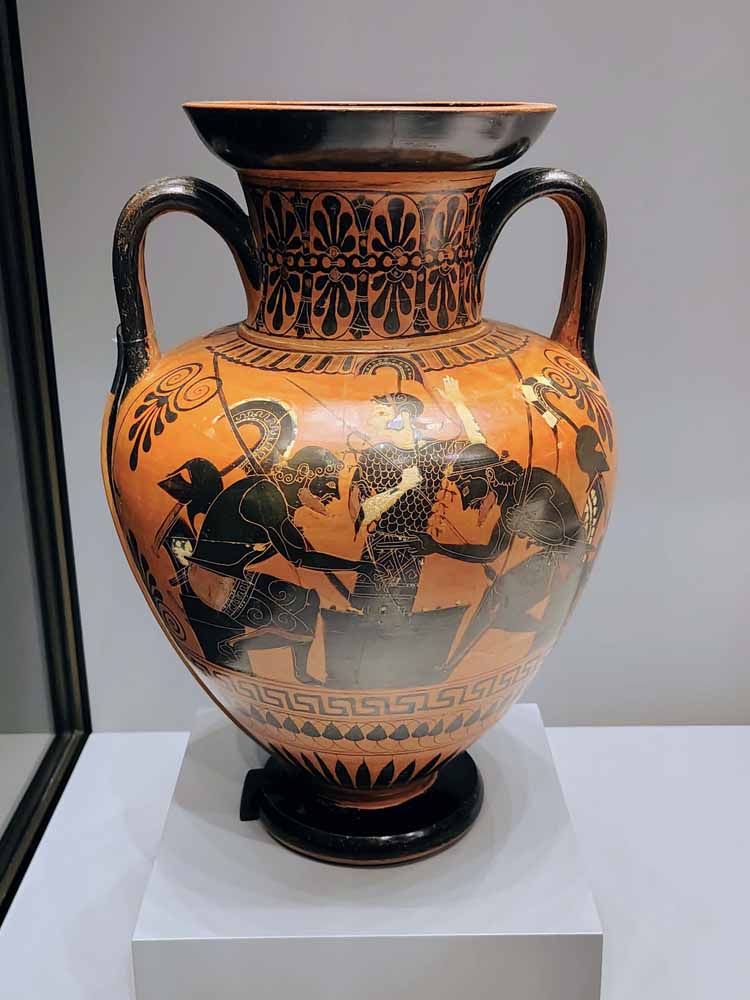 Storage Jar with Achilles and Ajax Playing a Board Game
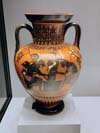
Greek, made in Athens, about 510 BC. Terracotta. Black-figure neck amphora attributed to the Medea Group as painter.Ajax was second only to Achilles in the Greek camp. Here the heroes pass time with a board game during a quiet moment at Troy, watched over by the warrior goddess Athena. No literary account of this game survives, but the scene was popular in Athenian art of the late sixth century BC.
Storage Jar with Achilles and Ajax Playing a Board Game
Greek, made in Athens, about 510 BC. Terracotta. Black-figure neck amphora attributed to the Medea Group as painter.Ajax was second only to Achilles in the Greek camp. Here the heroes pass time with a board game during a quiet moment at Troy, watched over by the warrior goddess Athena. No literary account of this game survives, but the scene was popular in Athenian art of the late sixth century BC.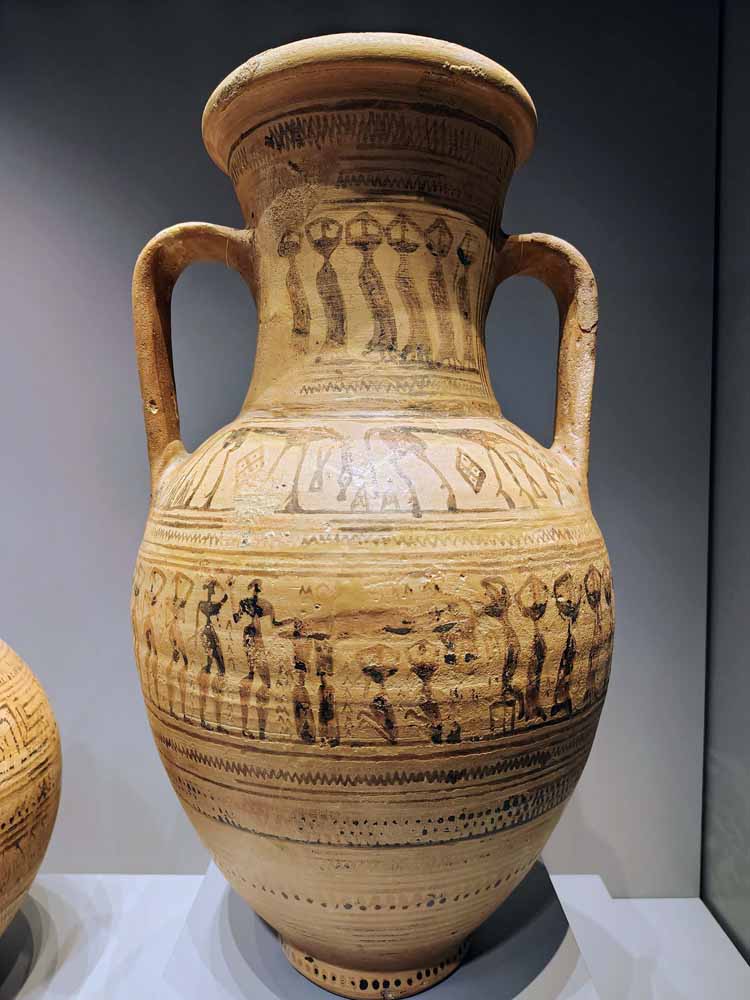 Storage Jar with a Funerary Scene
Greek, made in Athens, 710-700 BC.Terracotta.Attributed to the Painter of Paris CA 3283. The main scene on this funerary vessel shows a prothesis—the ritual of displaying the body of the deceased on a bier. A procession of men and women on both sides raise their hands in a gesture of lamentation.
Storage Jar with a Funerary Scene
Greek, made in Athens, 710-700 BC.Terracotta.Attributed to the Painter of Paris CA 3283. The main scene on this funerary vessel shows a prothesis—the ritual of displaying the body of the deceased on a bier. A procession of men and women on both sides raise their hands in a gesture of lamentation.
Click here to display photos of some of the exhibits in Getty Villa.
Prize Vessel from the Athenian Games
Prize Vessel from the Athenian Games
Storage Jar with Herakles Carrying the Erymanthian Boar
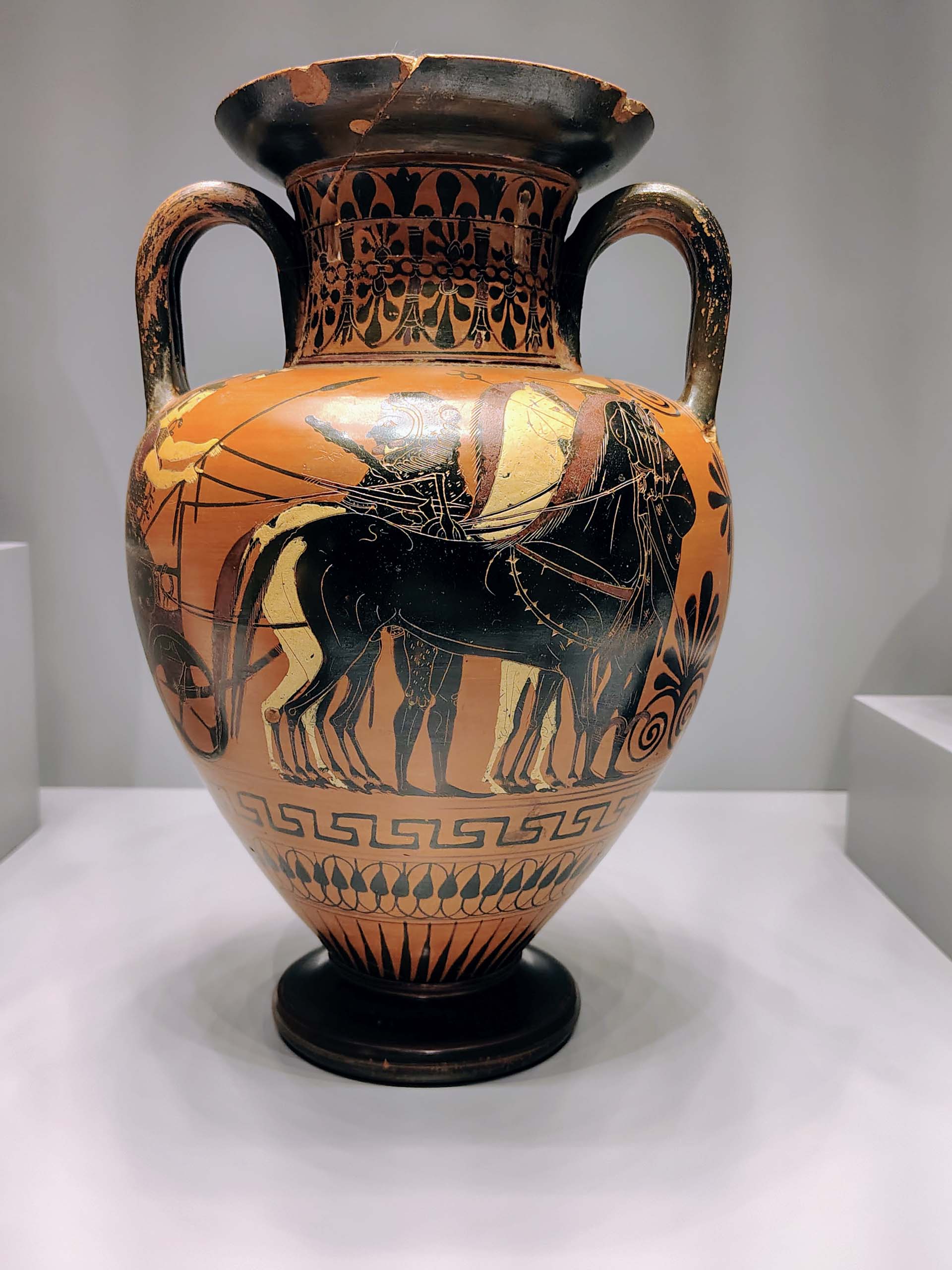
Storage Jar with Athena Bringing Herakles to Mount Olympus
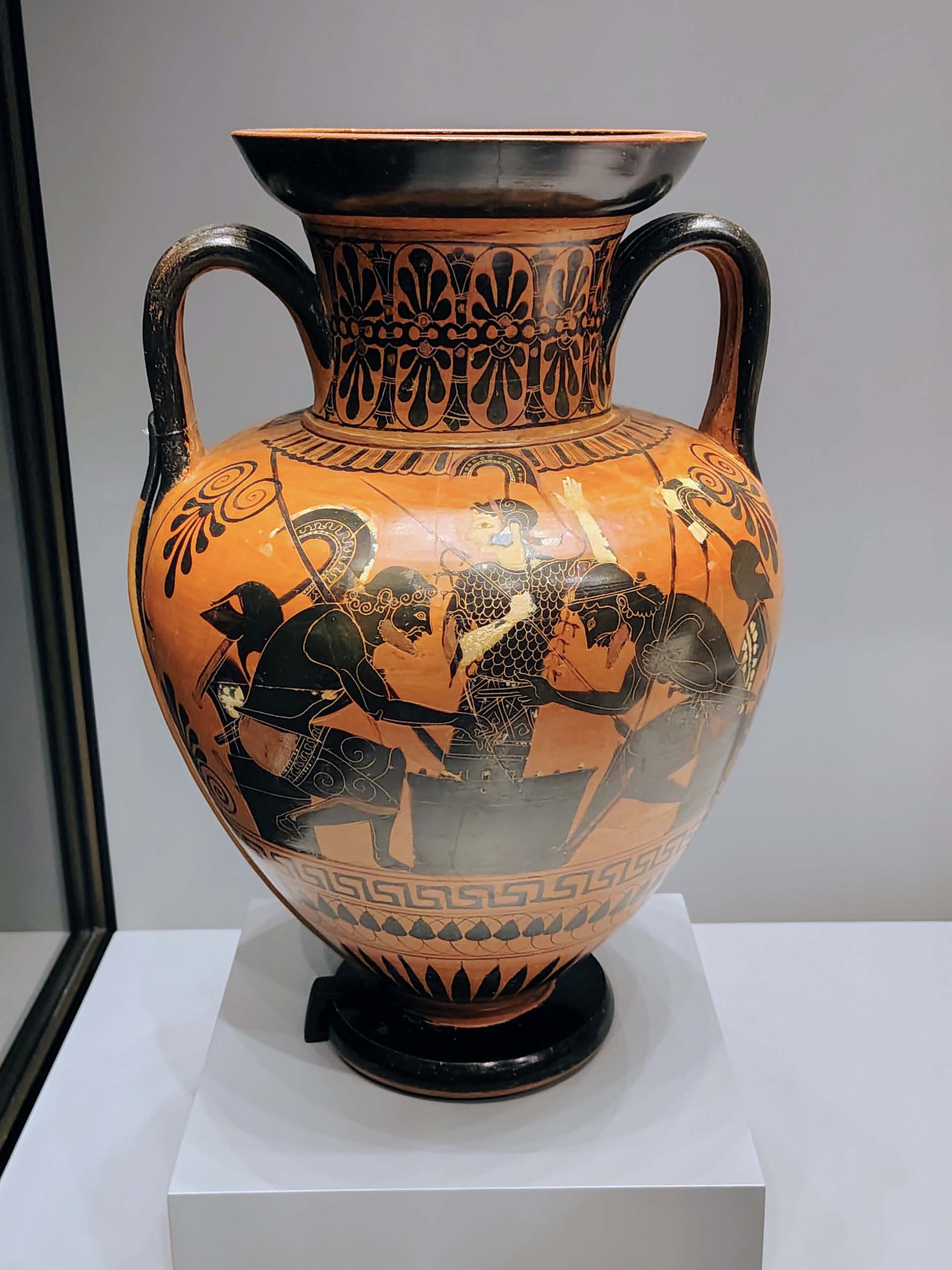
Storage Jar with Achilles and Ajax Playing a Board Game
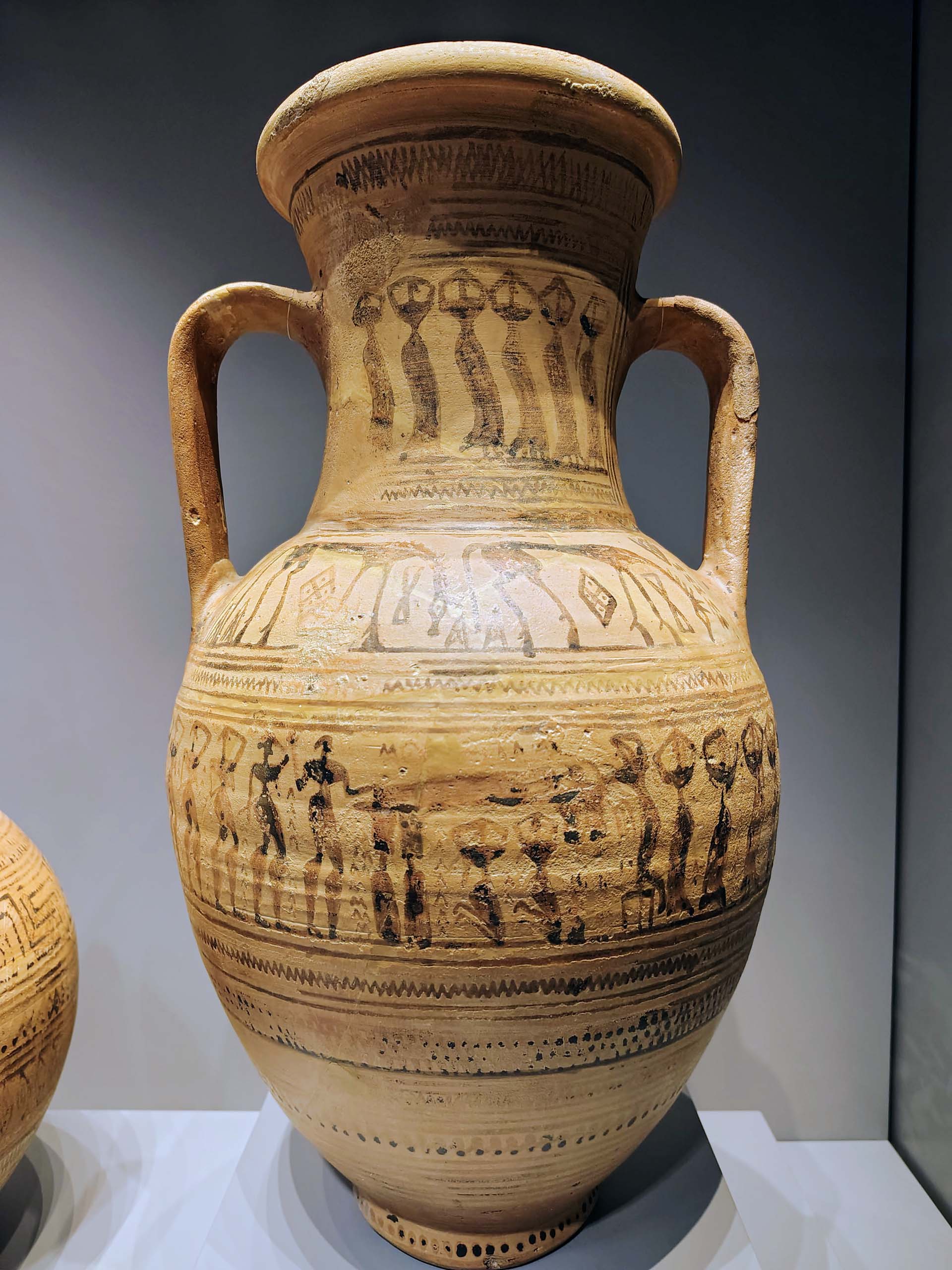
Storage Jar with a Funerary Scene
Saturday, Jan 31 proved to be an unseasonably warm outlier for Los Angeles, and having dressed more for a mountain hike the following day than for downtown LA, I found the heat rather uncomfortable upon arriving at Getty Villa just past noon. By the time I left that afternoon, however, the weather had turned perfect.
After Getty Villa, I headed into Los Angeles for dinner and a long, lively catch-up with a friend. The evening concluded with a spirited drive along CA-110 into Pasadena, where I would spend the night.
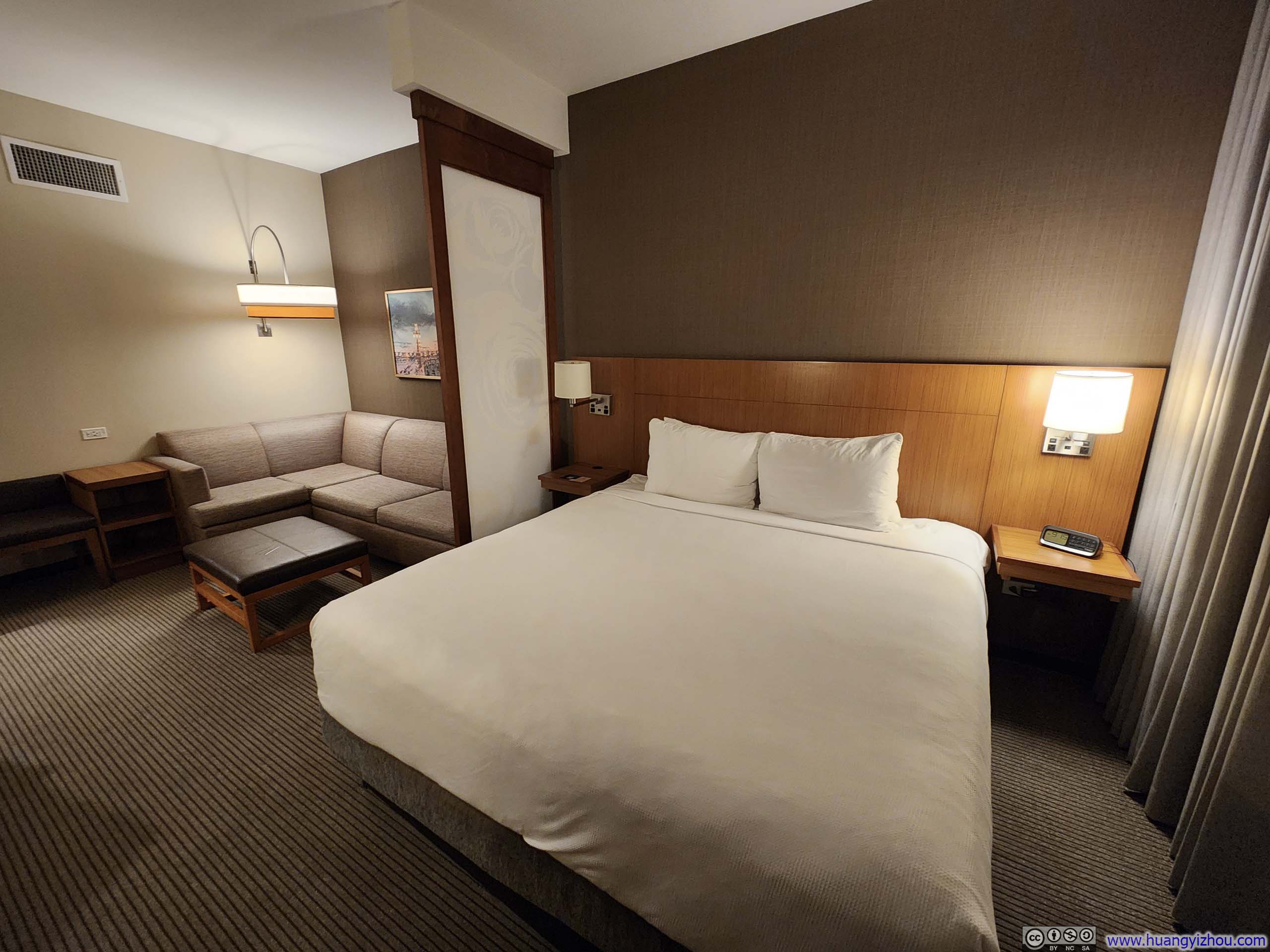
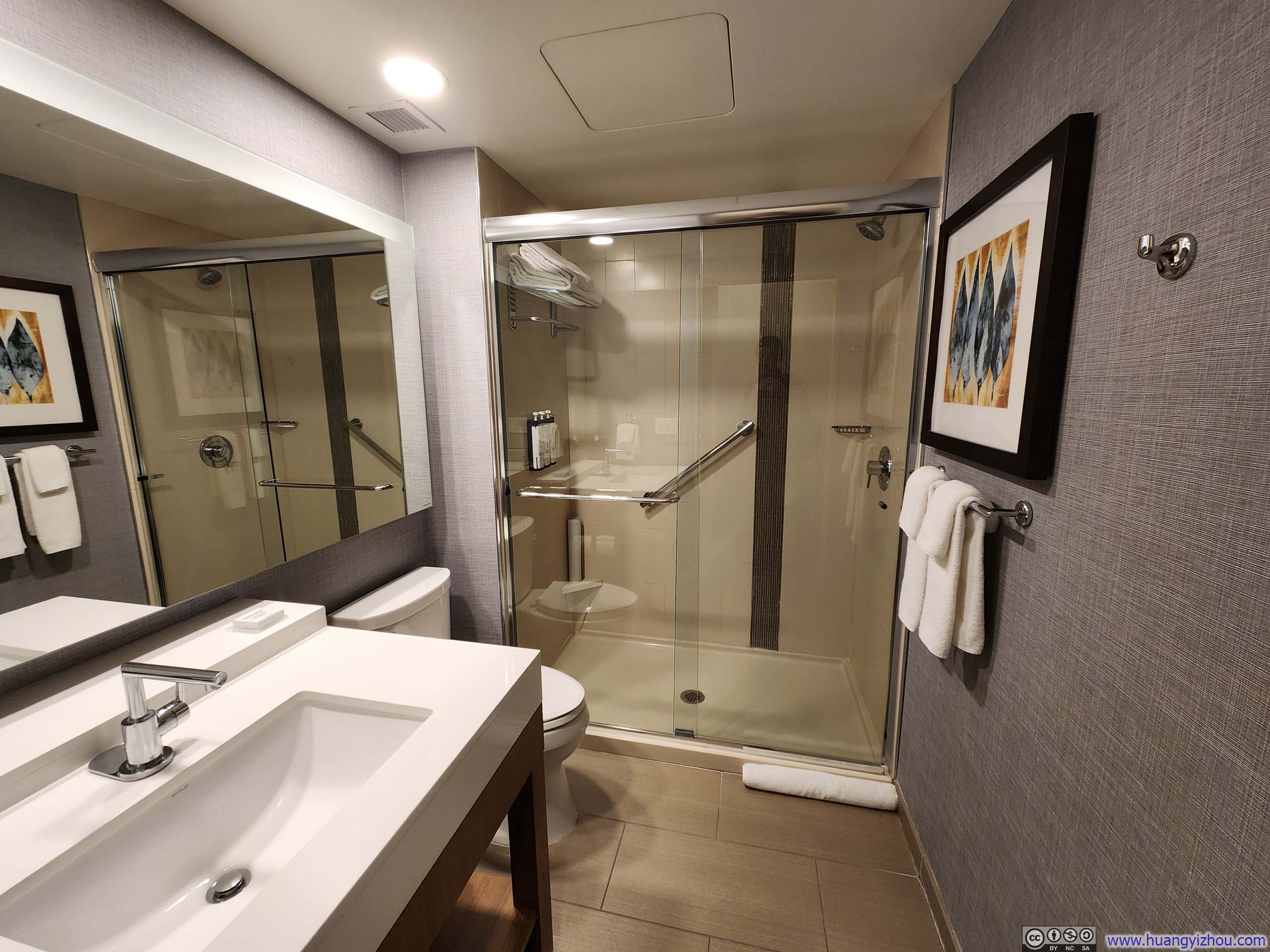
Hotel: Hyatt Place Pasadena
A fairly typical Hyatt Place, situated in the heart of downtown Pasadena — though I arrived too late to do any exploring. I picked it because it sat neatly along the route between Los Angeles, where I had spent the previous day, and Cucamonga Valley, my destination for the next.
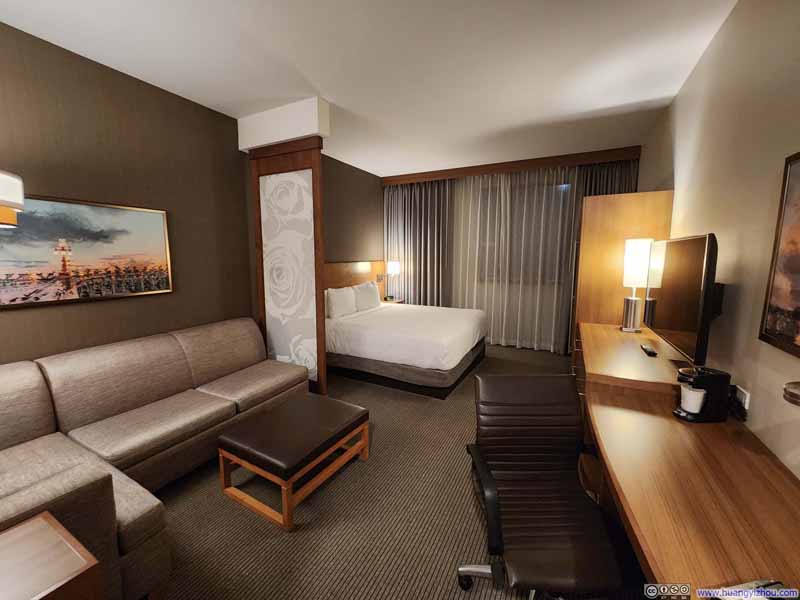 Hotel Room
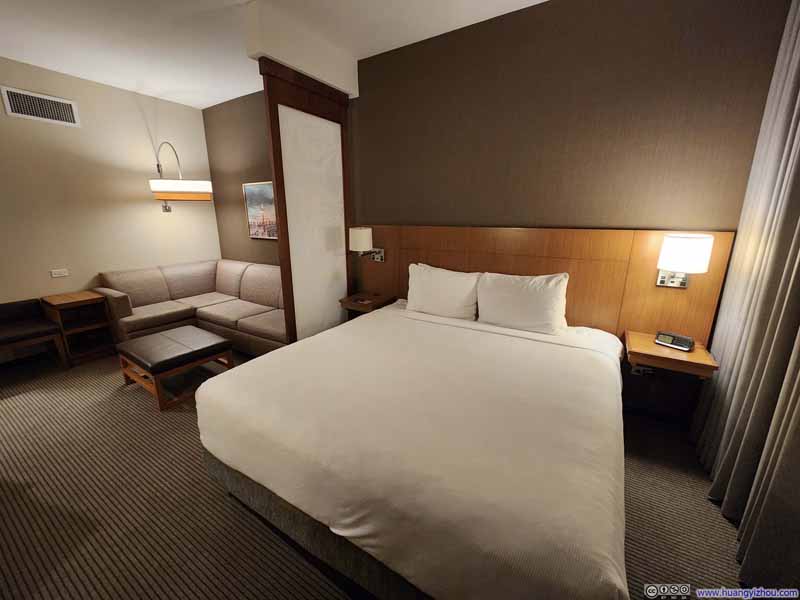 Hotel Room
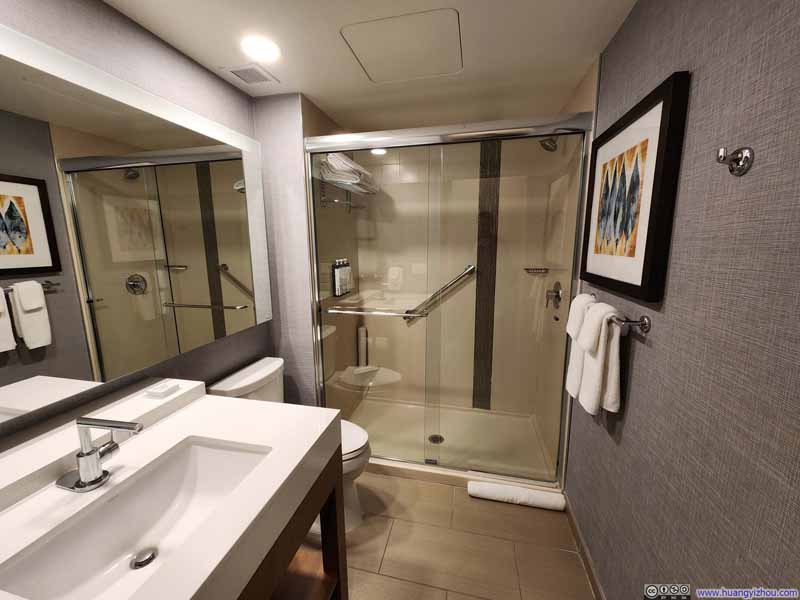 Bathroom


Click here to display photos of the slideshow
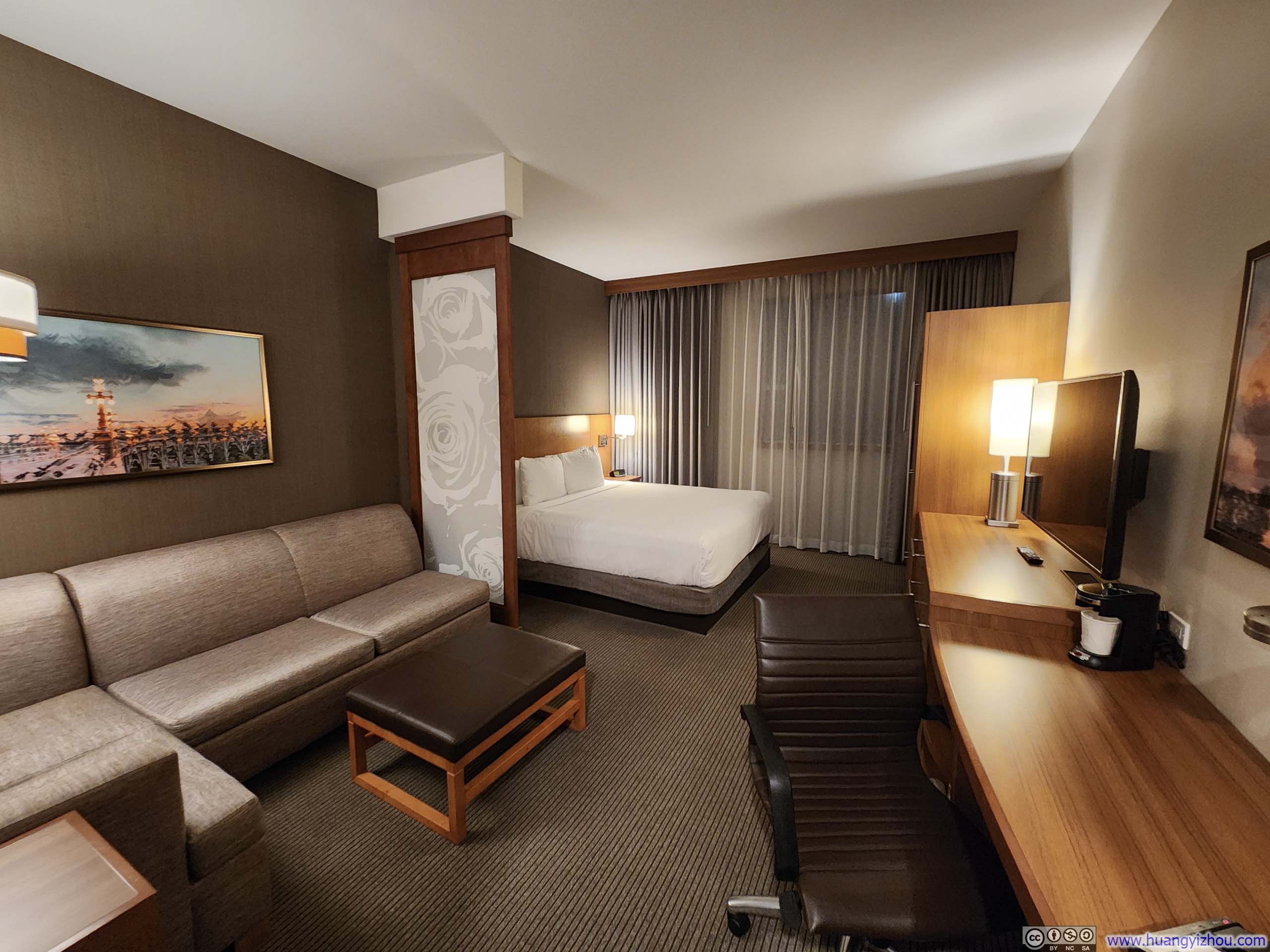
Hotel Room
Hotel Room
Bathroom
Hike of Cucamonga Peak
On Sunday, February 1st, I set out to hike Cucamonga Peak, a prominent summit in the San Gabriel Mountains outside Los Angeles. I had hoped to hike it during my visit to LA five years ago, unfortunately back then I was too tired for it. Now, at last, my chance had come.
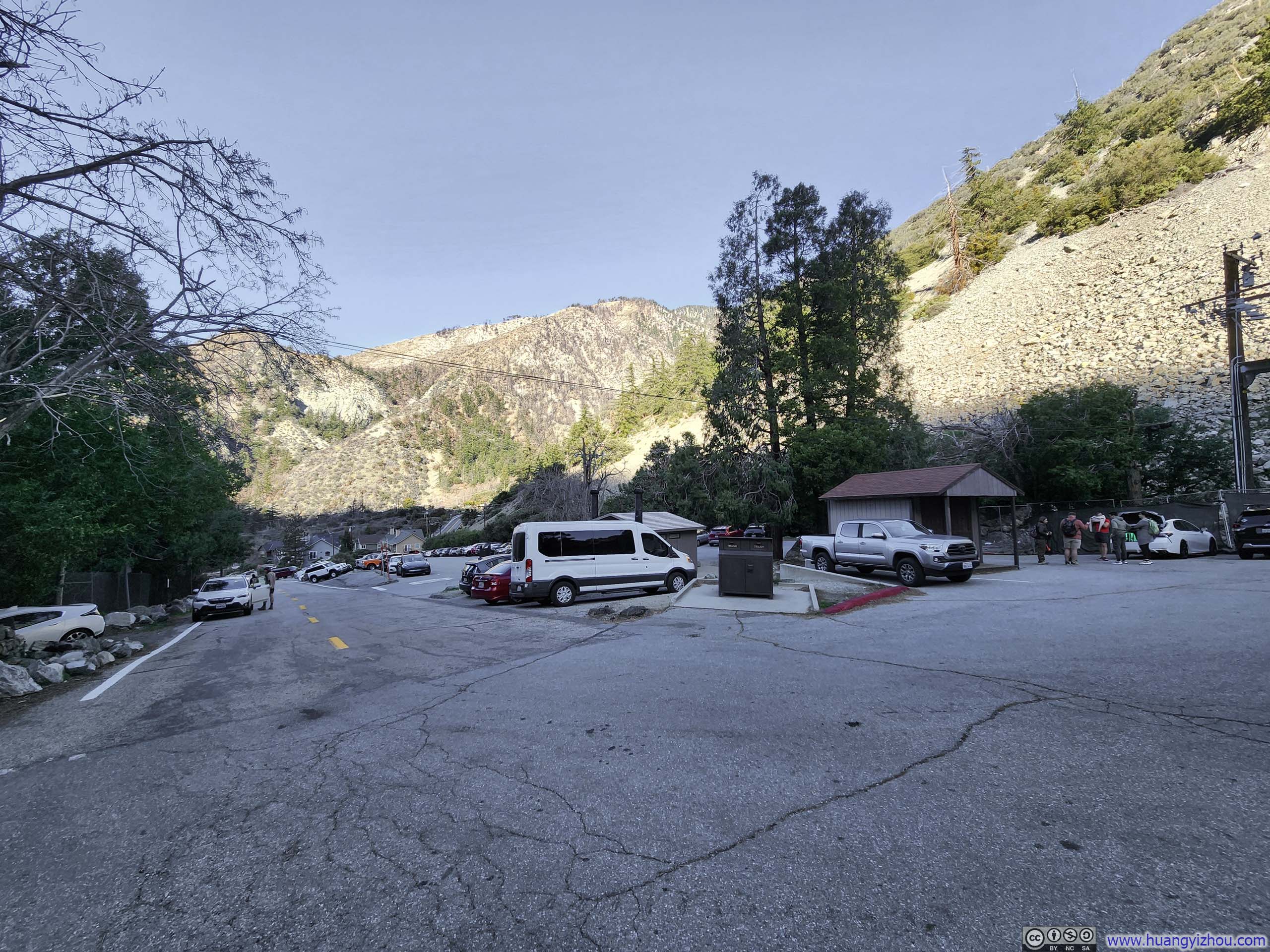
Trailhead Parking Area
Here’s GPS tracking:
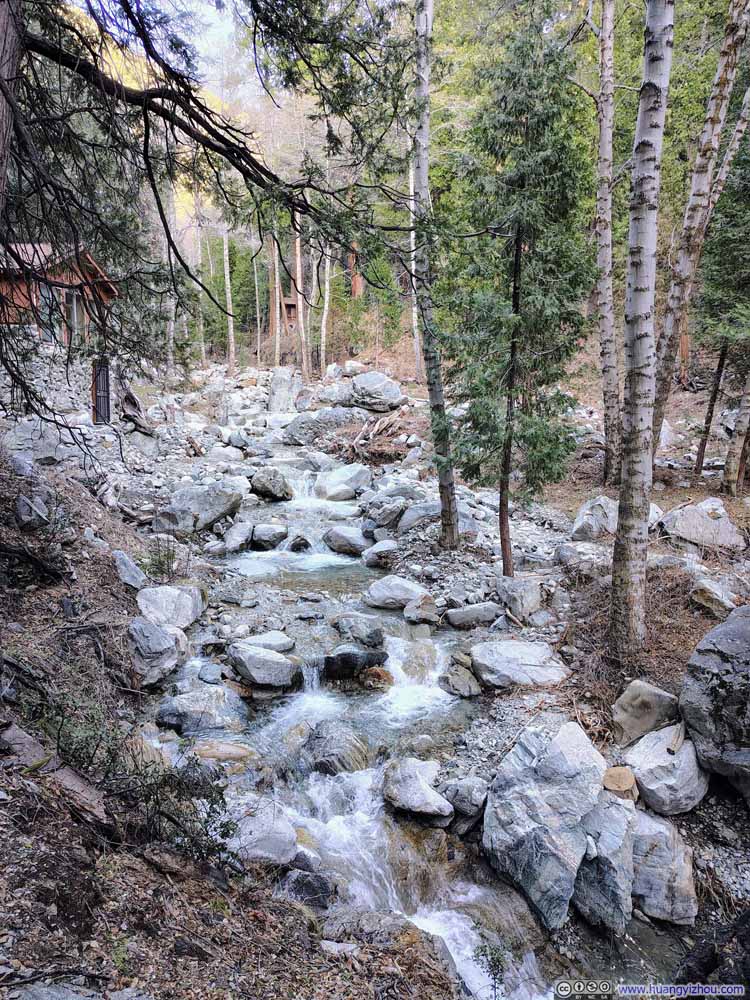
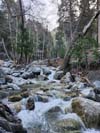
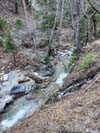
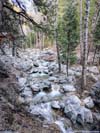
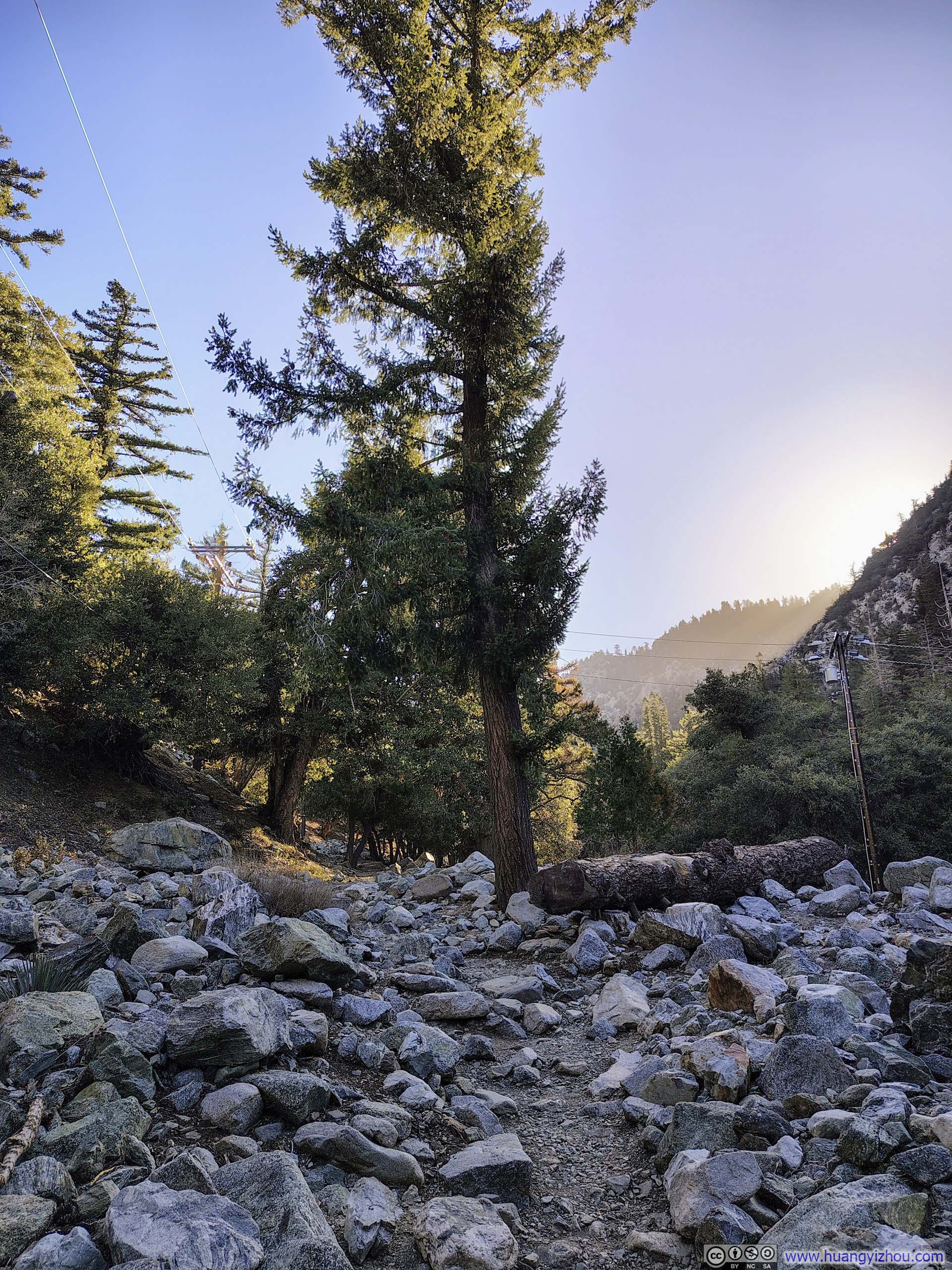
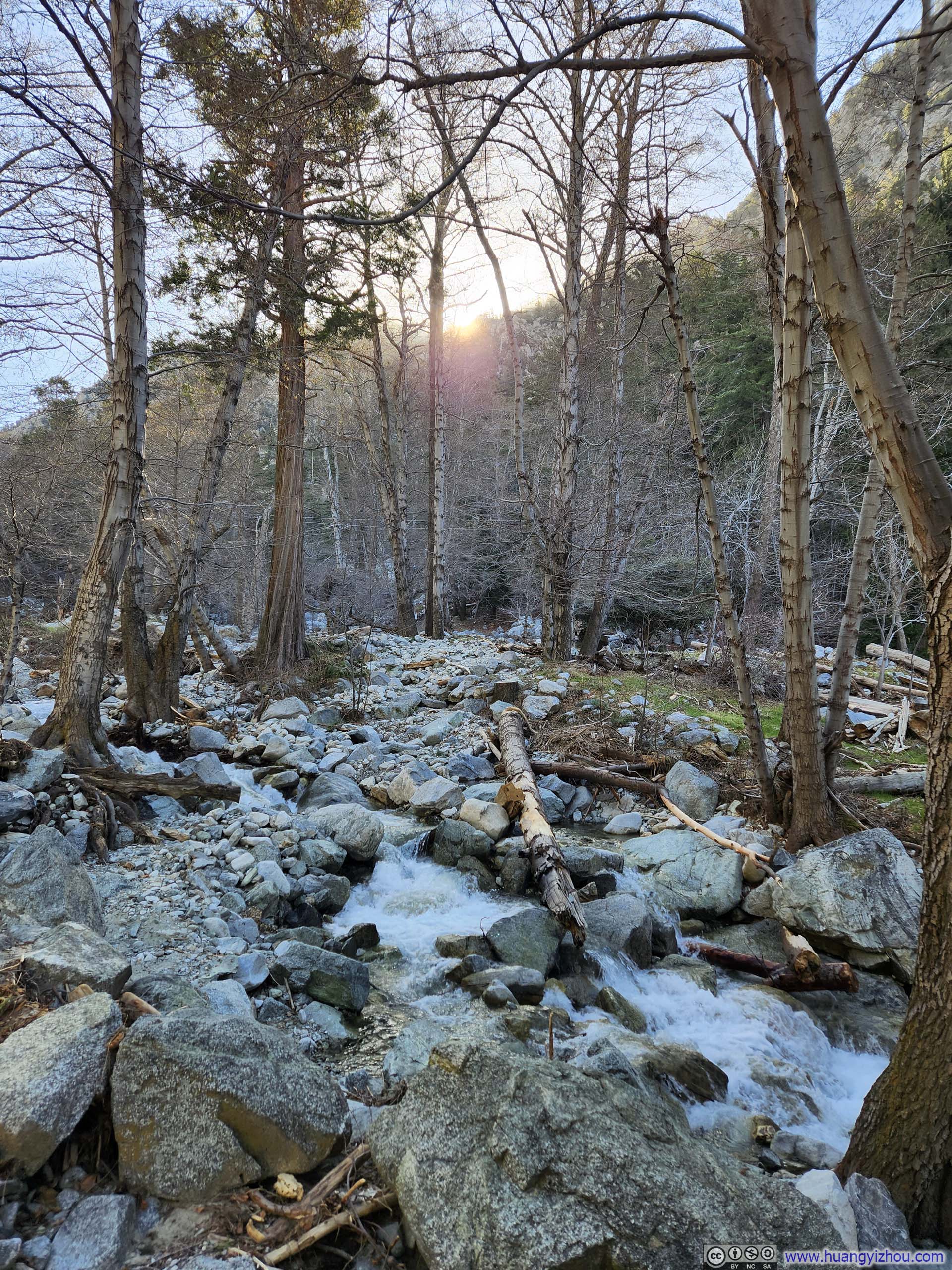
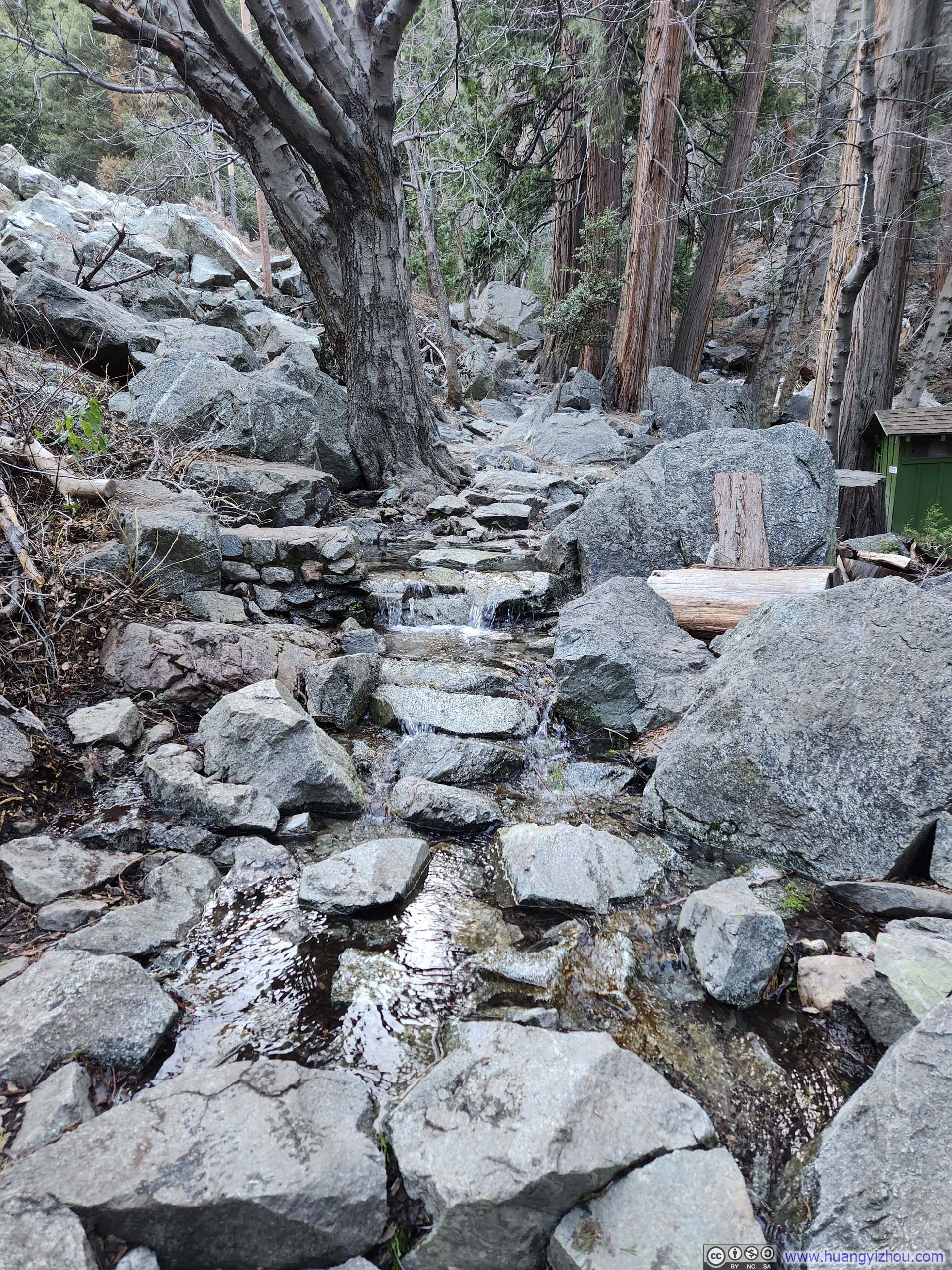
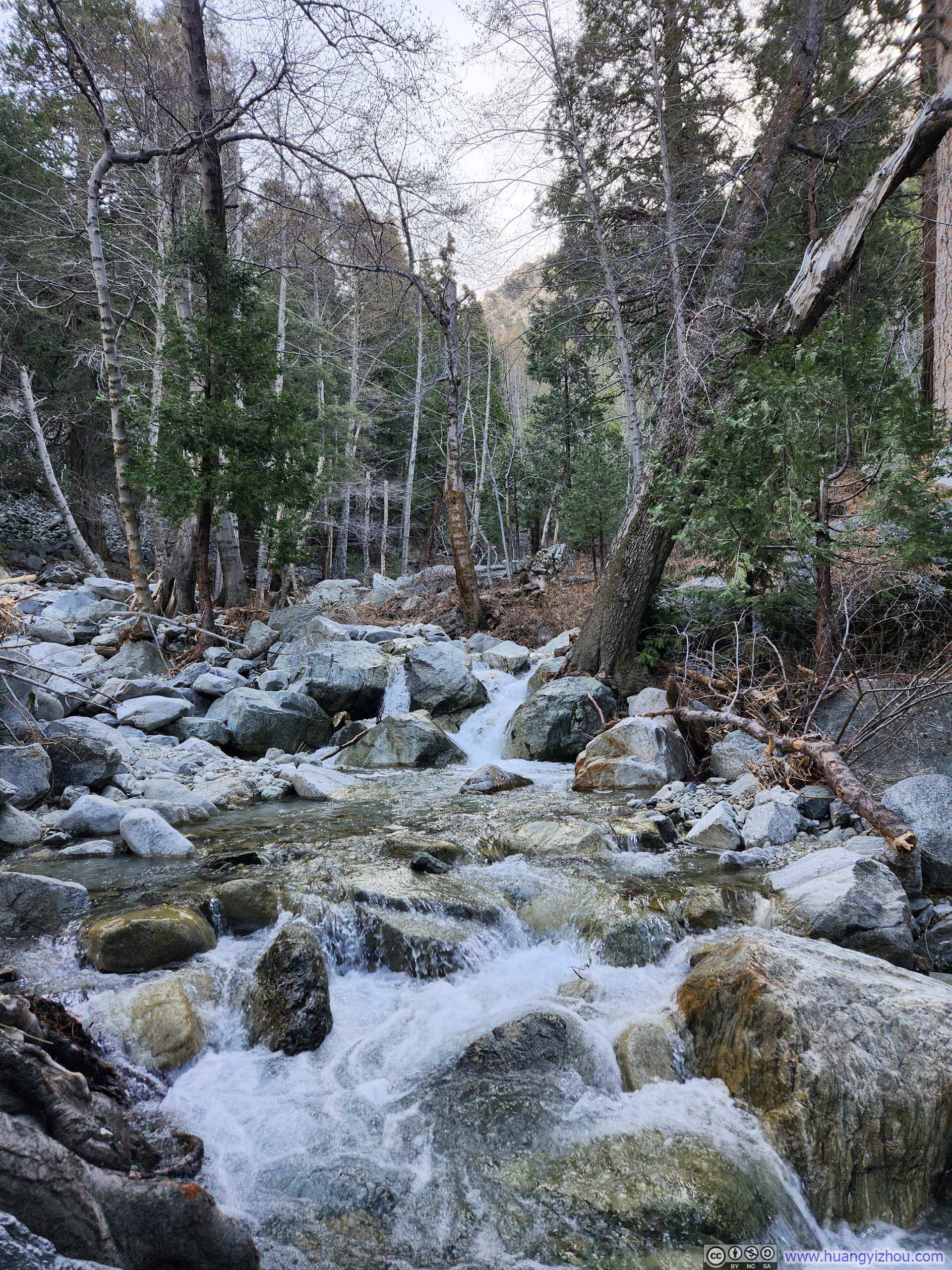
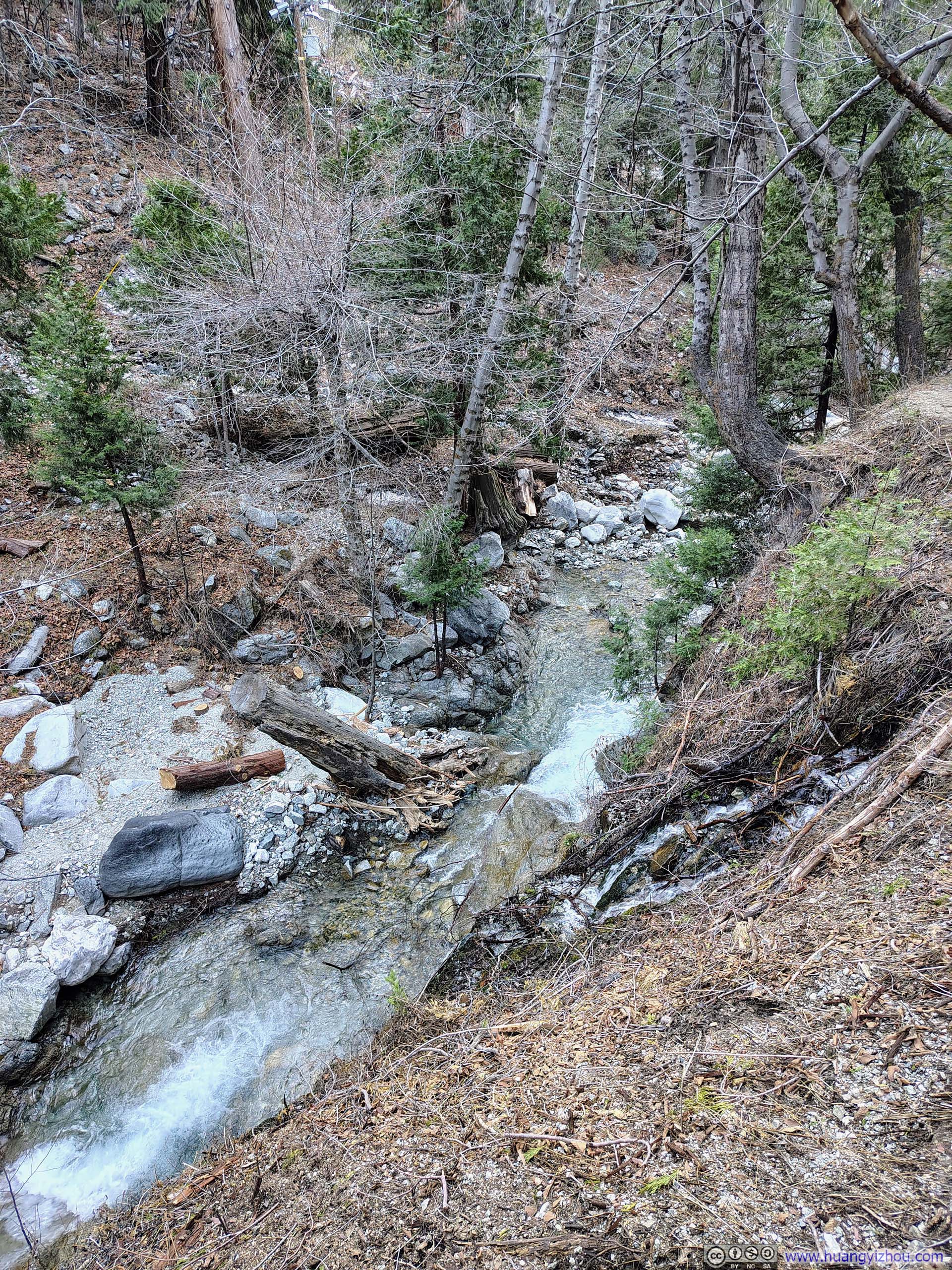
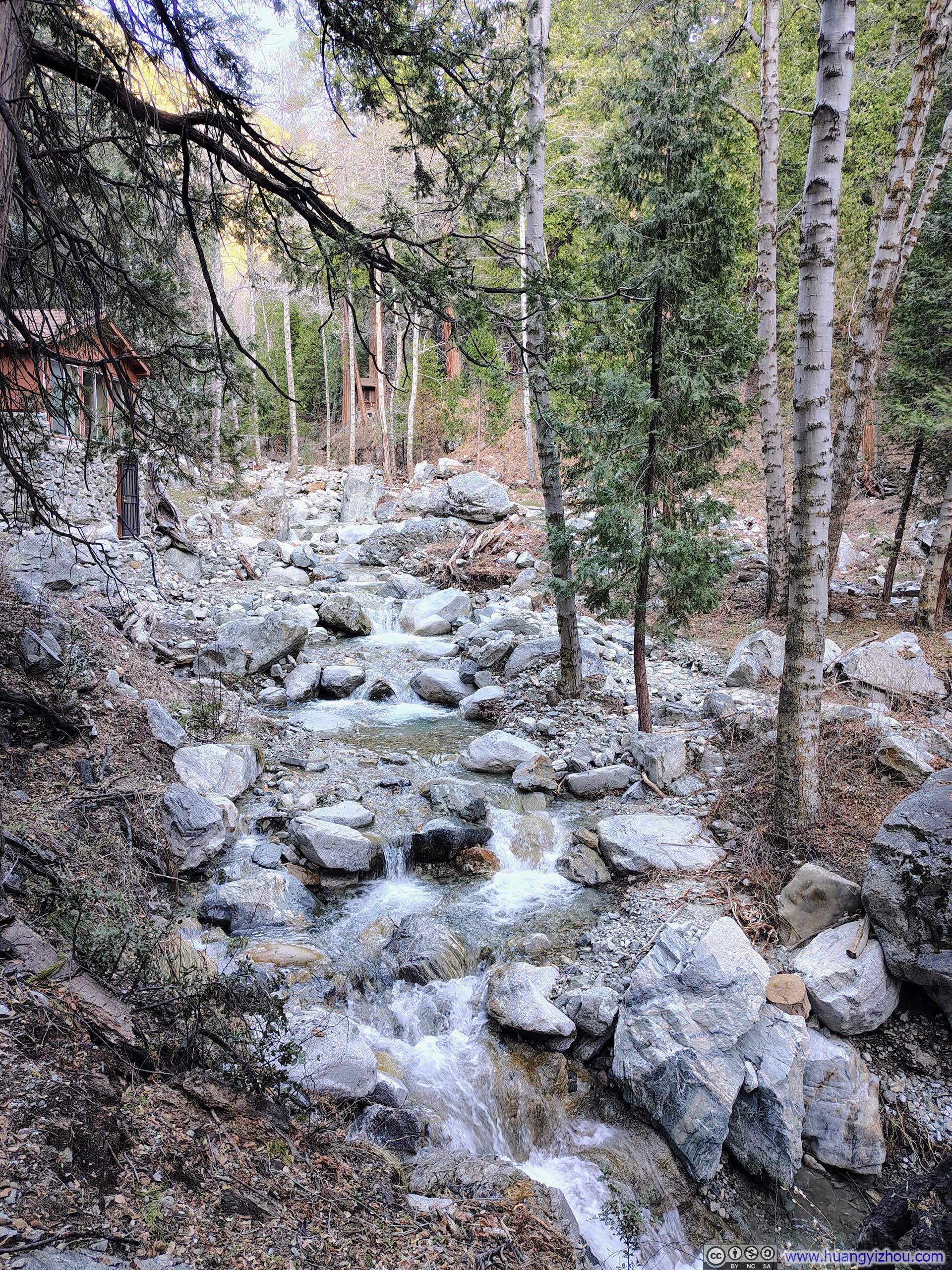
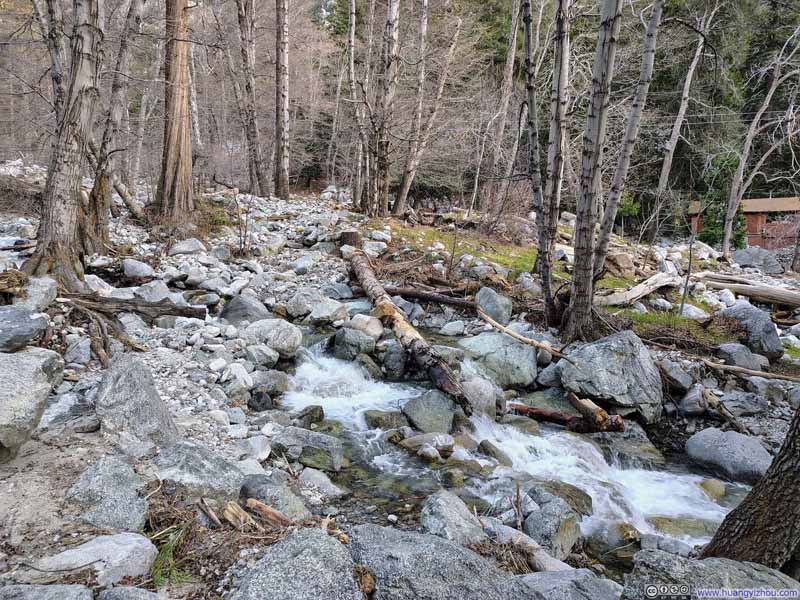
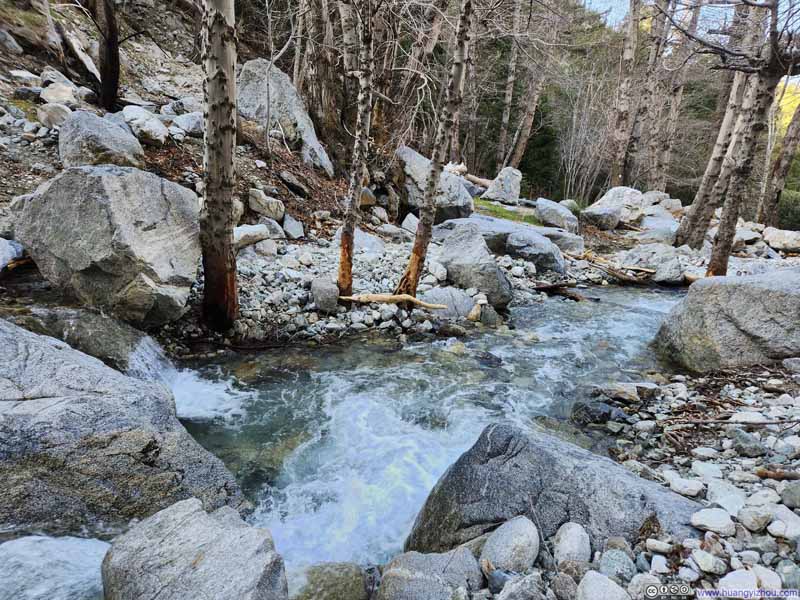
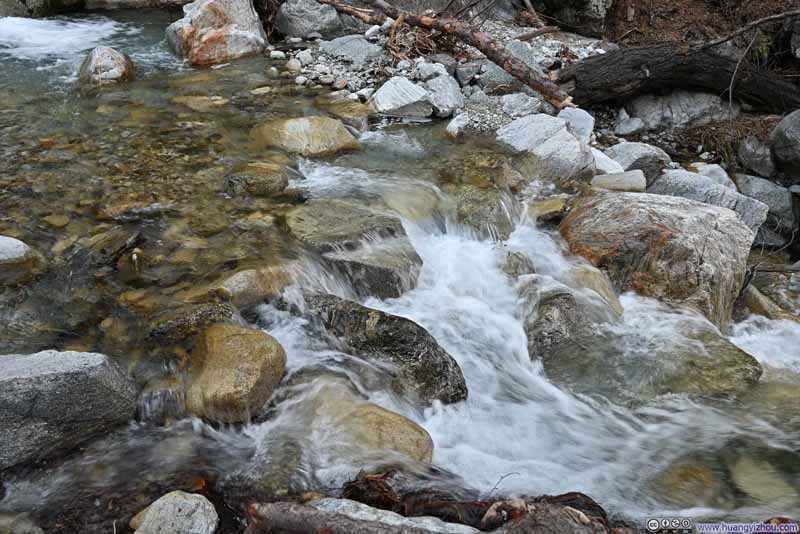
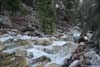
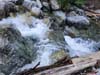
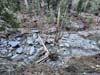
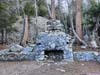
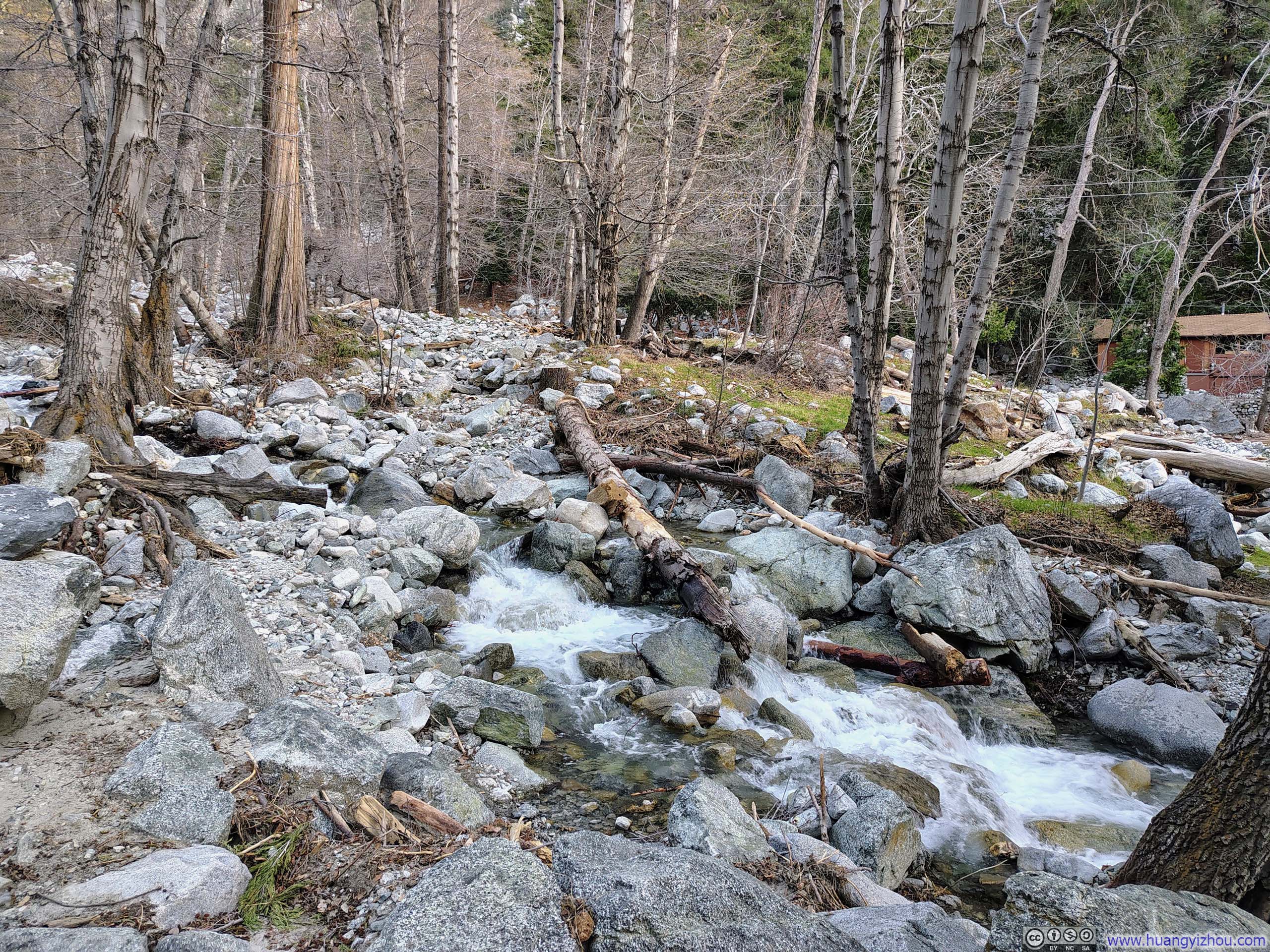
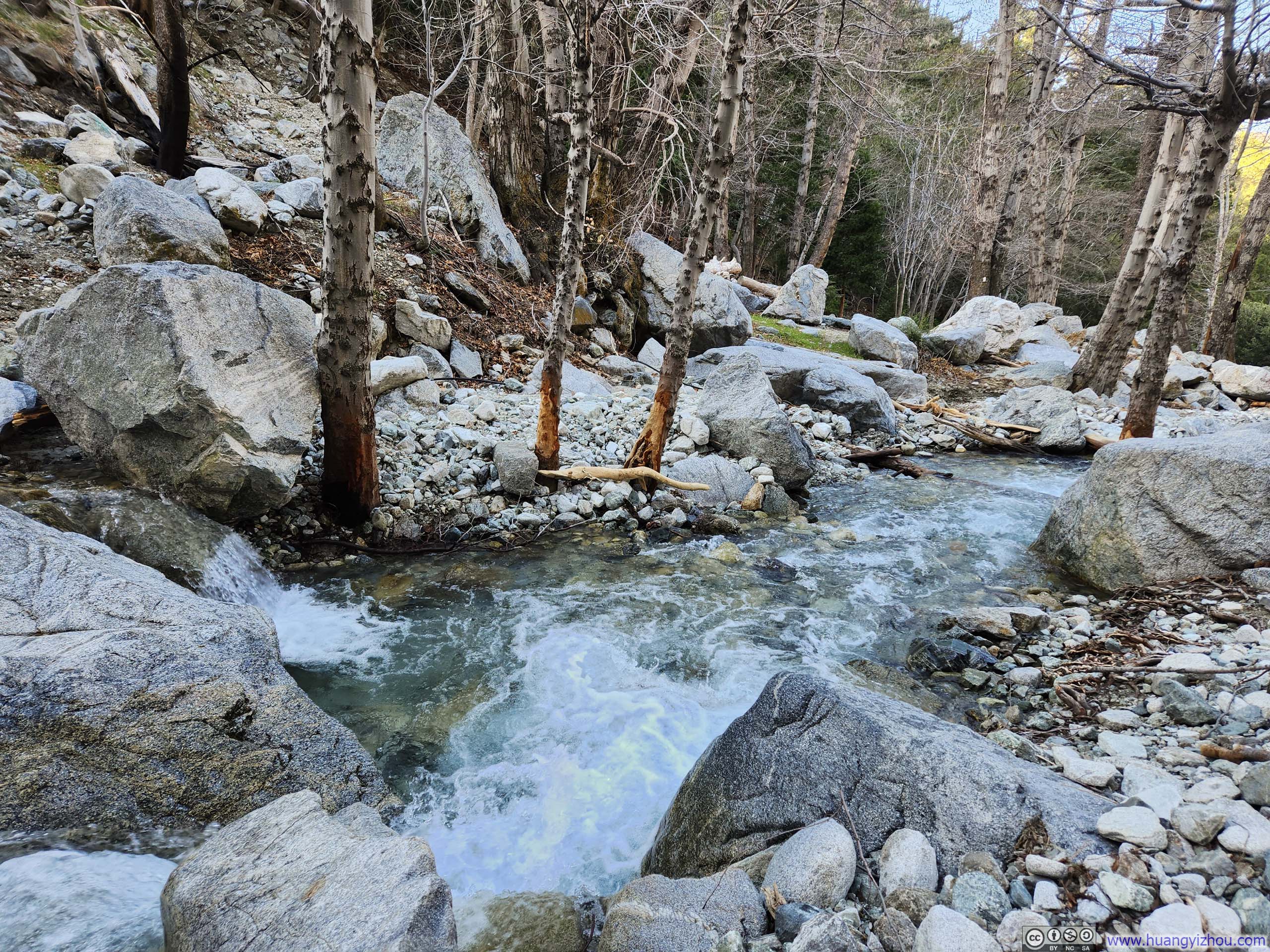
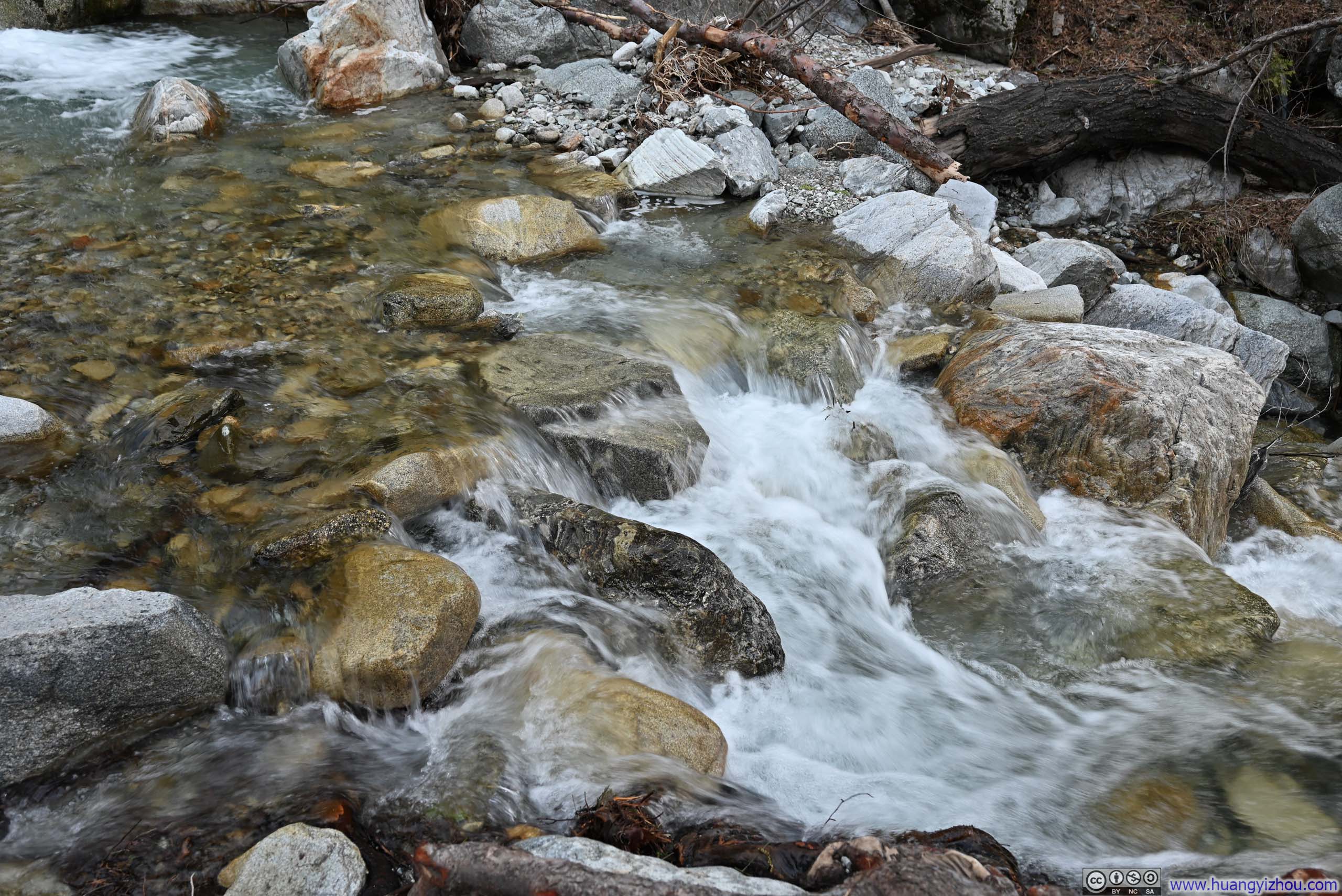
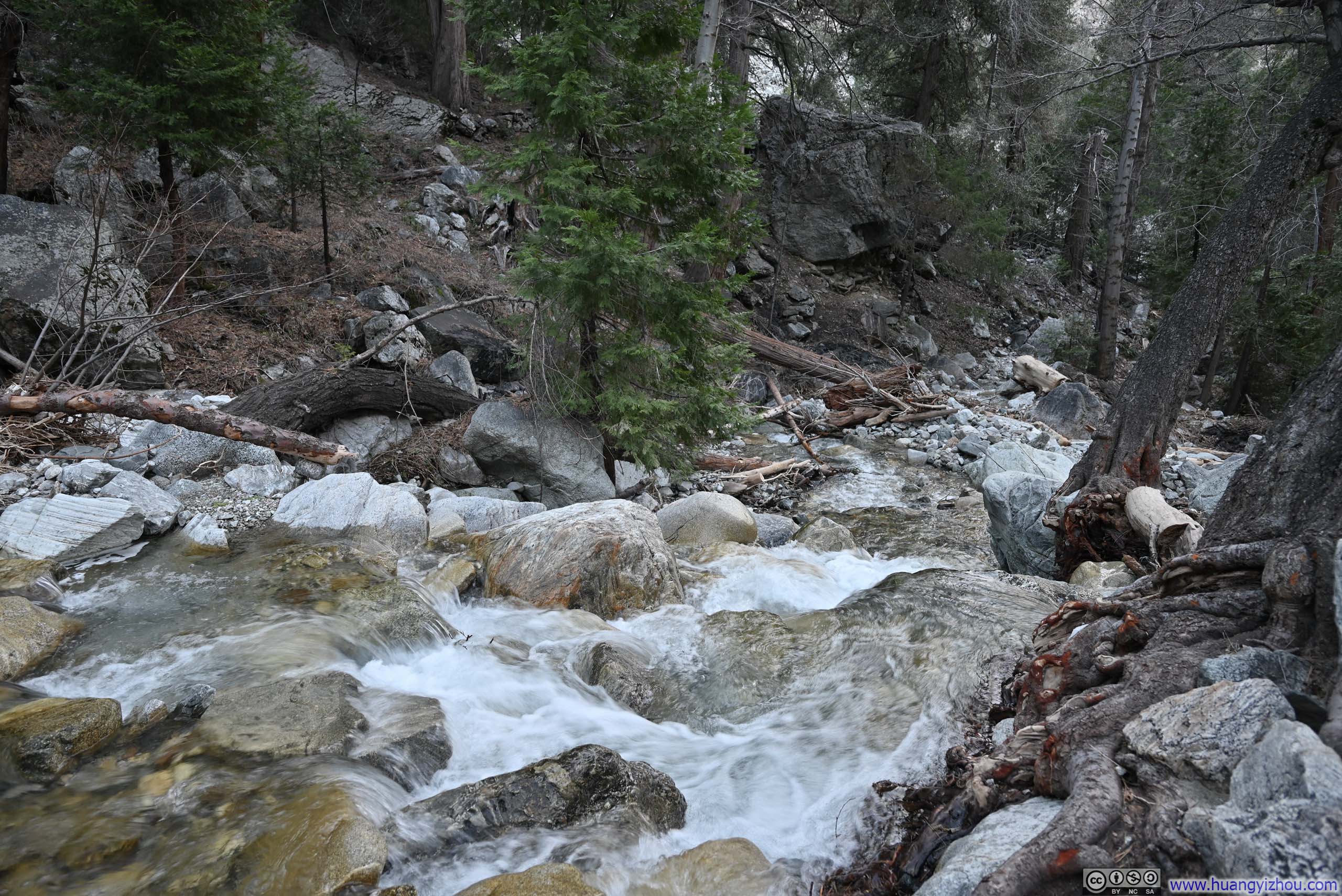
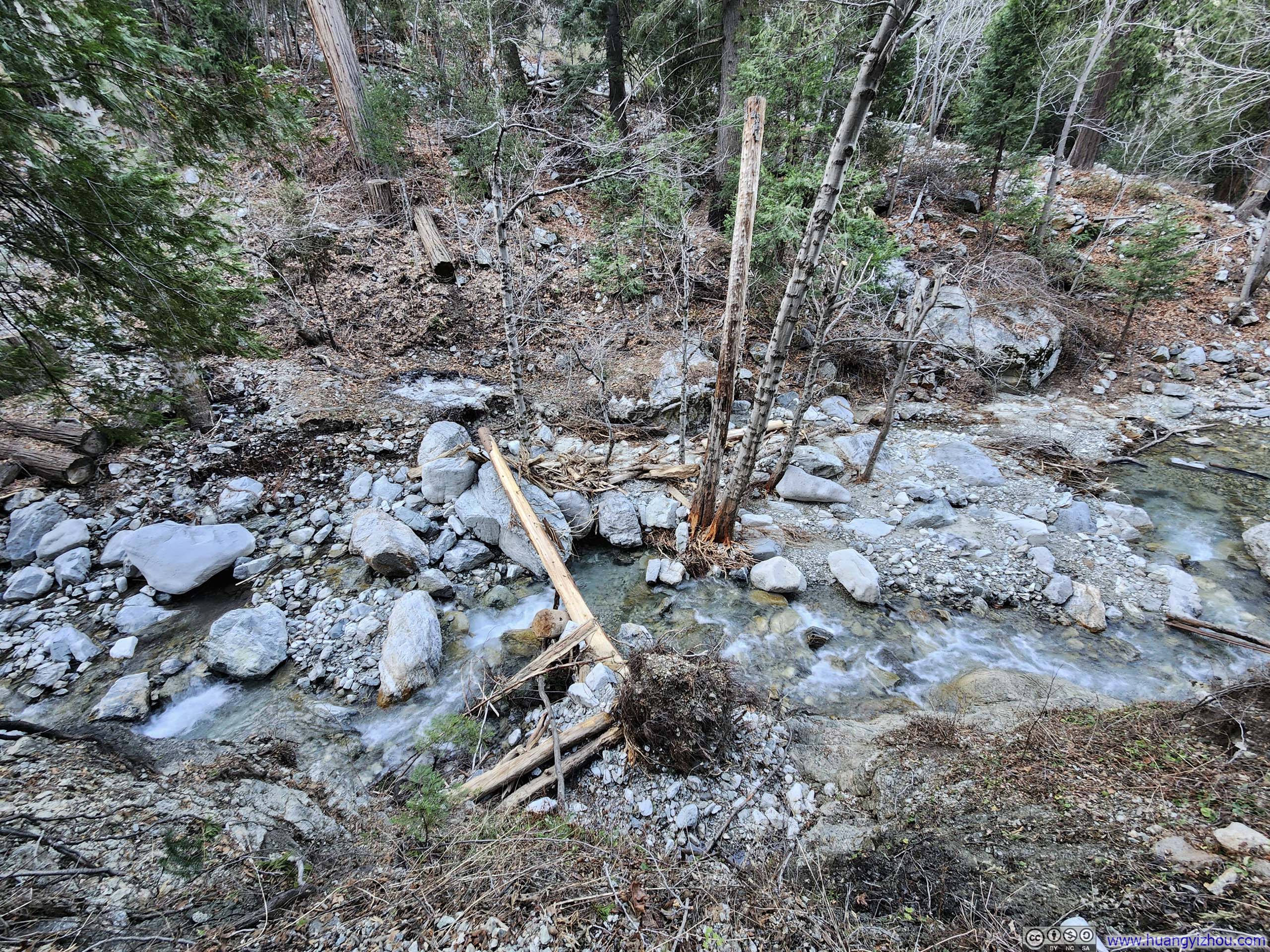
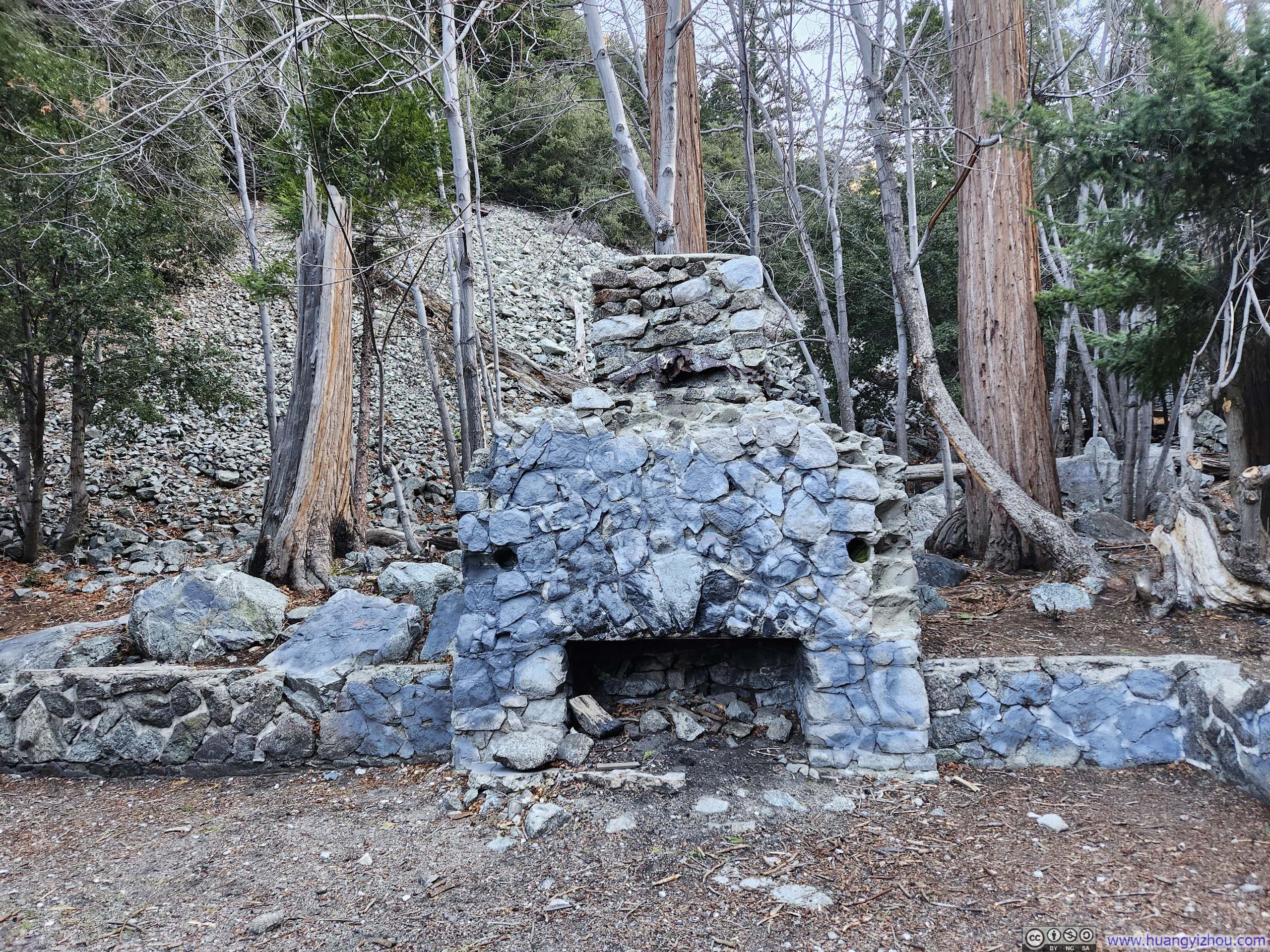
I started my hike at 9:08am. From the trailhead, the trail wound its way largely alongside Icehouse Creek toward Icehouse Saddle. Scattered along the route were a handful of cabins (or what remained of them). According to ChatGPT, these structures originally served the area’s commercial ice-harvesting operations, and later found new life as lodges and retreats for those seeking refuge from the summer heat.
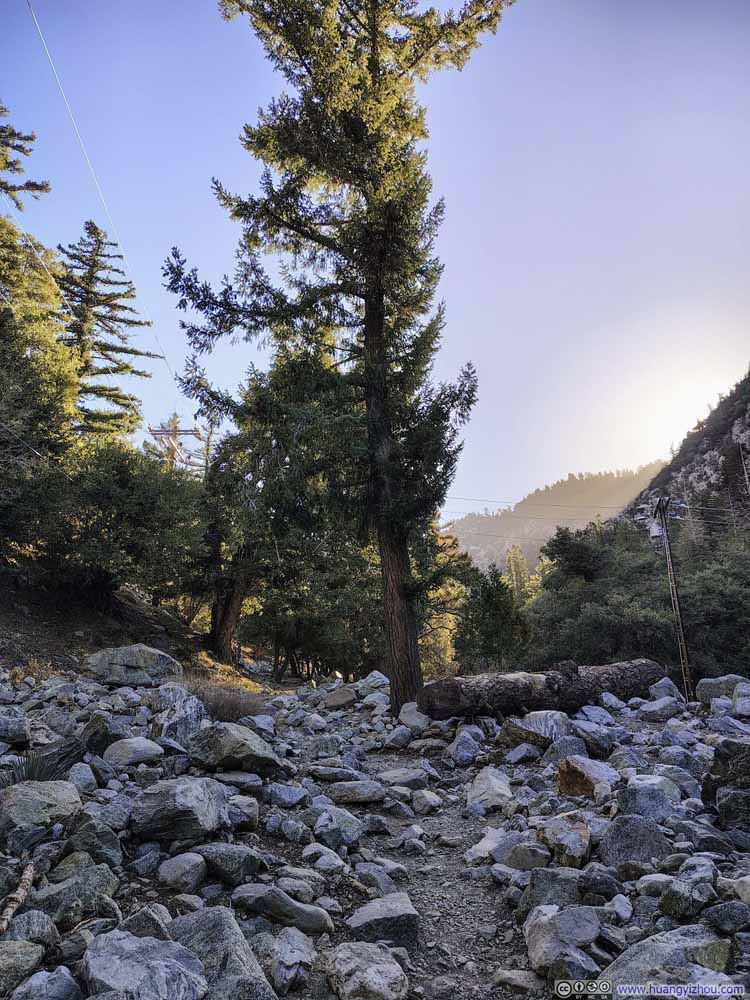 Trail
Trail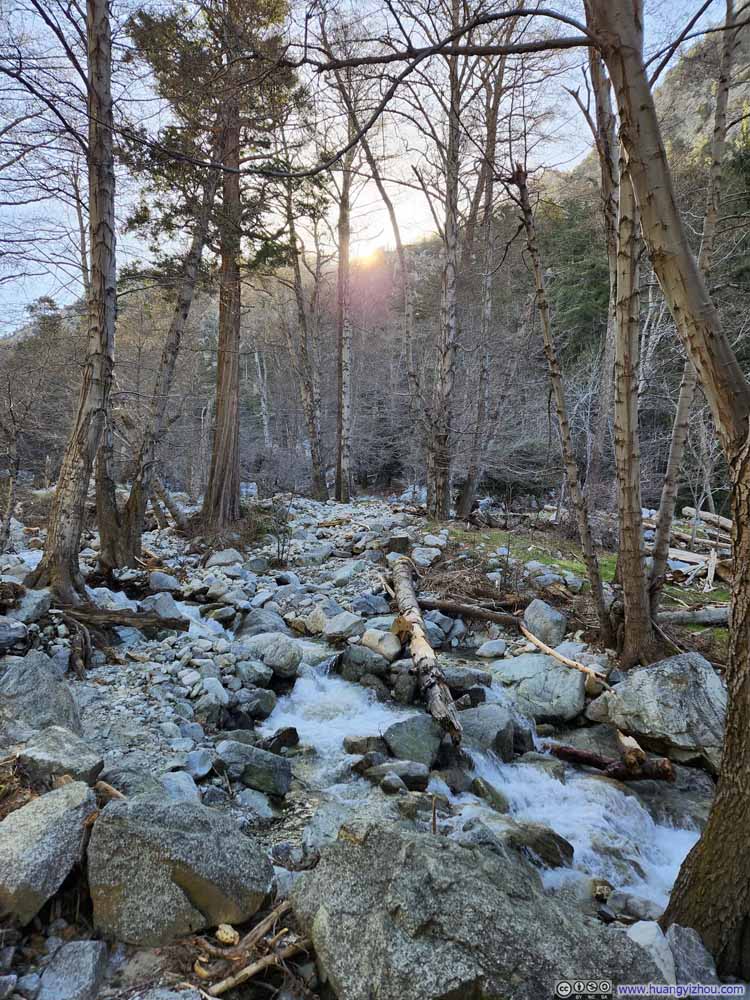 Icehouse Creek
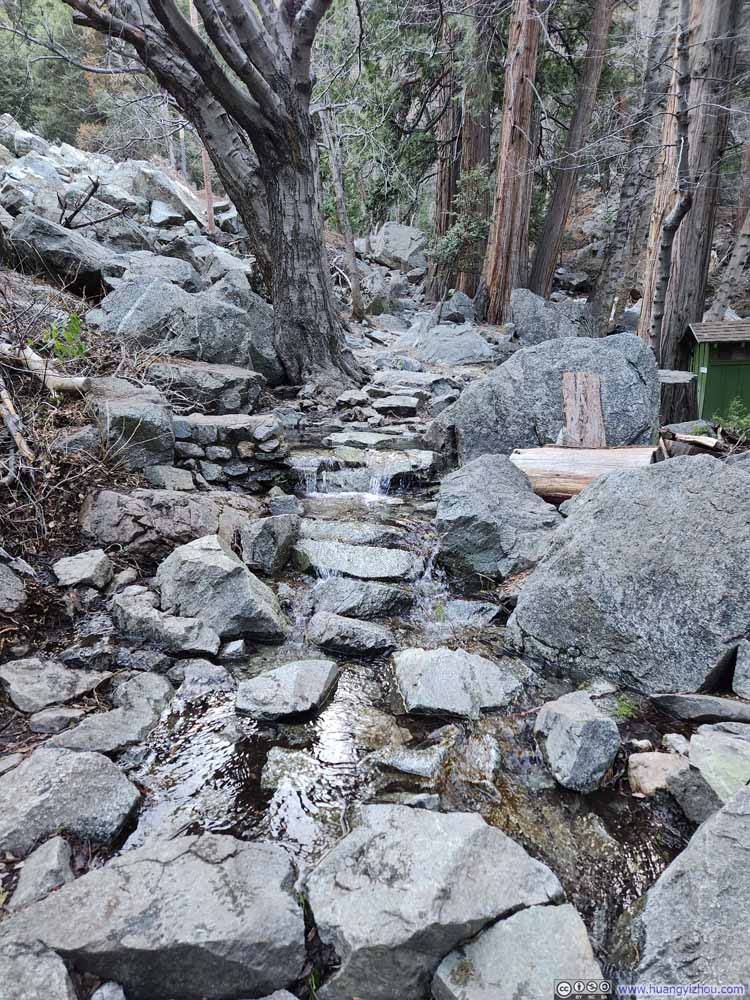 Waterflow along Trail
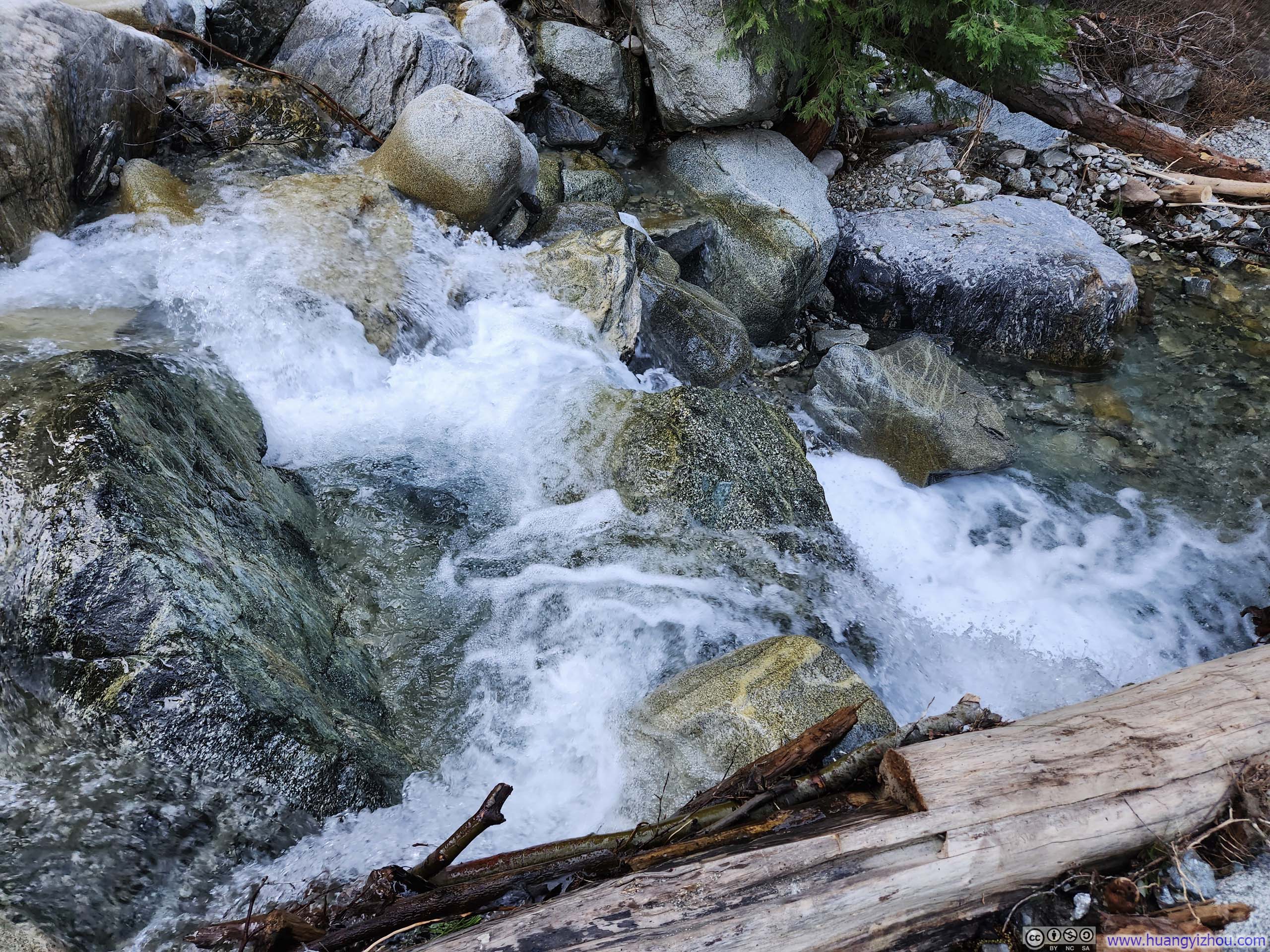
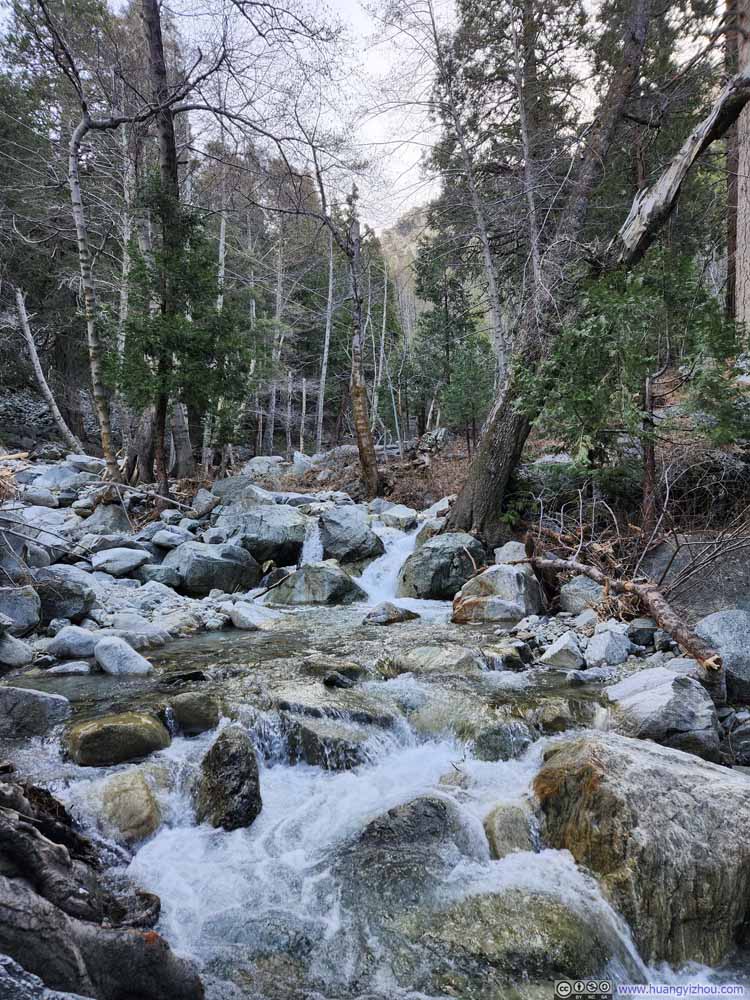 Cascades along Icehouse Creek
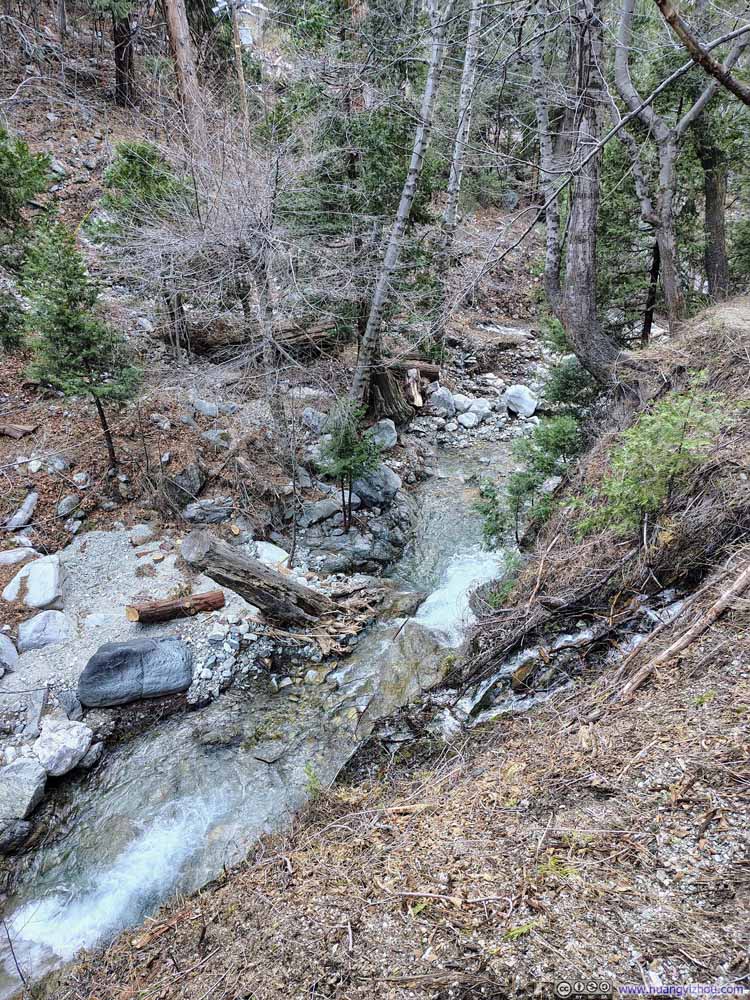 Icehouse Creek
 Icehouse Creek
Click here to display photos of the slideshow
Trail
Icehouse Creek
Waterflow along Trail
Cascades along Icehouse Creek
Icehouse Creek
Icehouse Creek
 Cascades along Icehouse Creek
 Icehouse Creek
 Cascades along Icehouse Creek
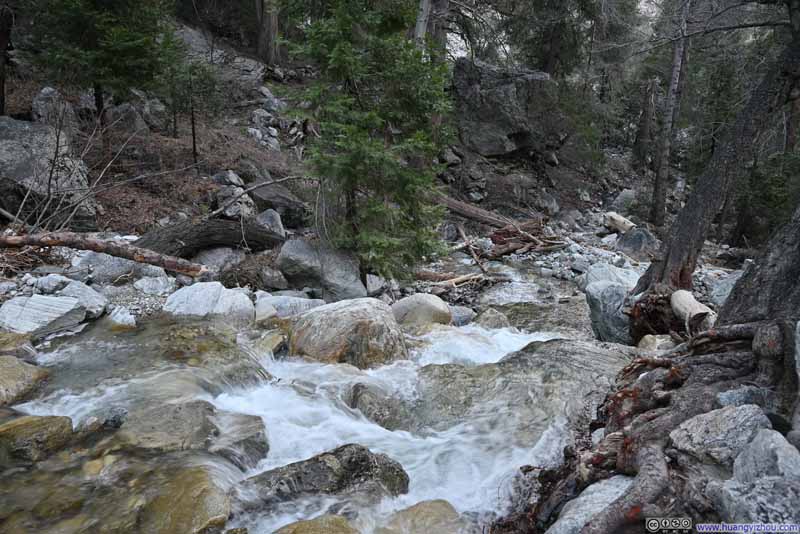 Cascades along Icehouse Creek
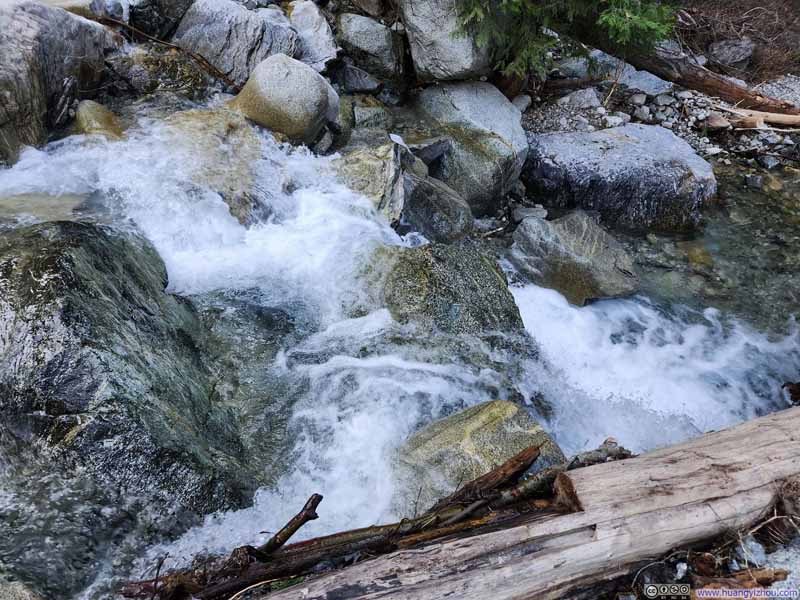 Cascades along Icehouse Creek
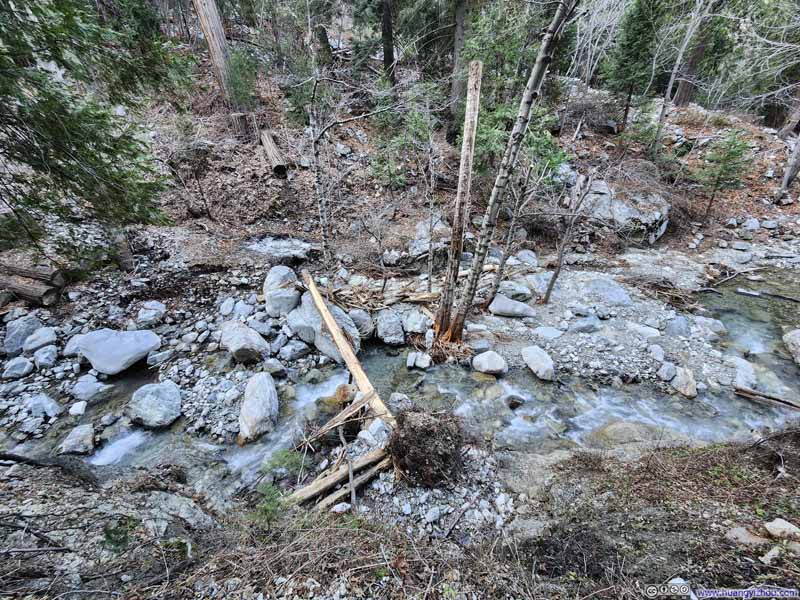 Icehouse Creek
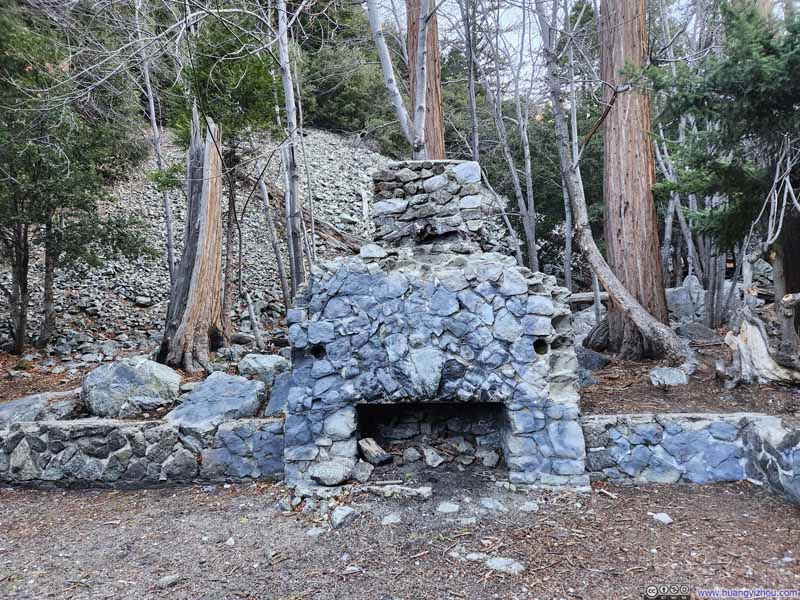 Remains of Mountain Cabins
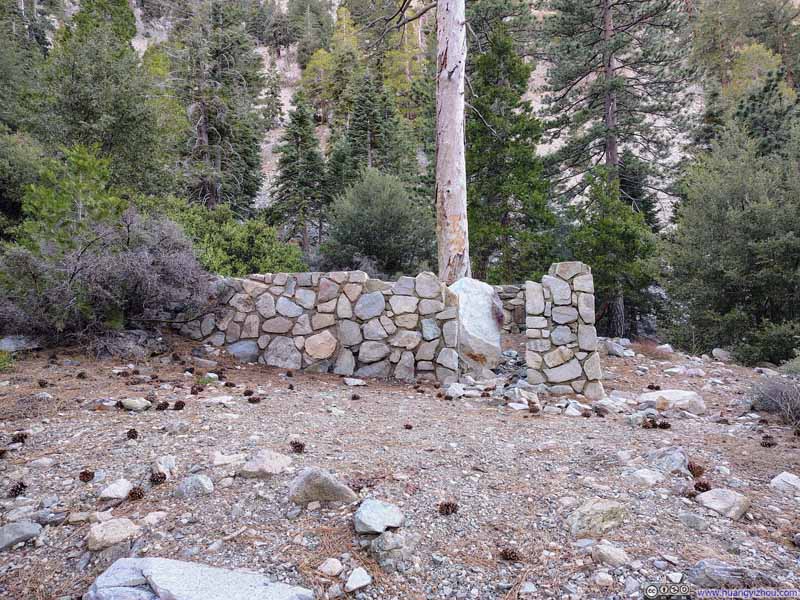 Remains of Mountain Cabins
Click here to display photos of the slideshow
Cascades along Icehouse Creek
Icehouse Creek
Cascades along Icehouse Creek
Cascades along Icehouse Creek
Cascades along Icehouse Creek
Icehouse Creek
Remains of Mountain Cabins
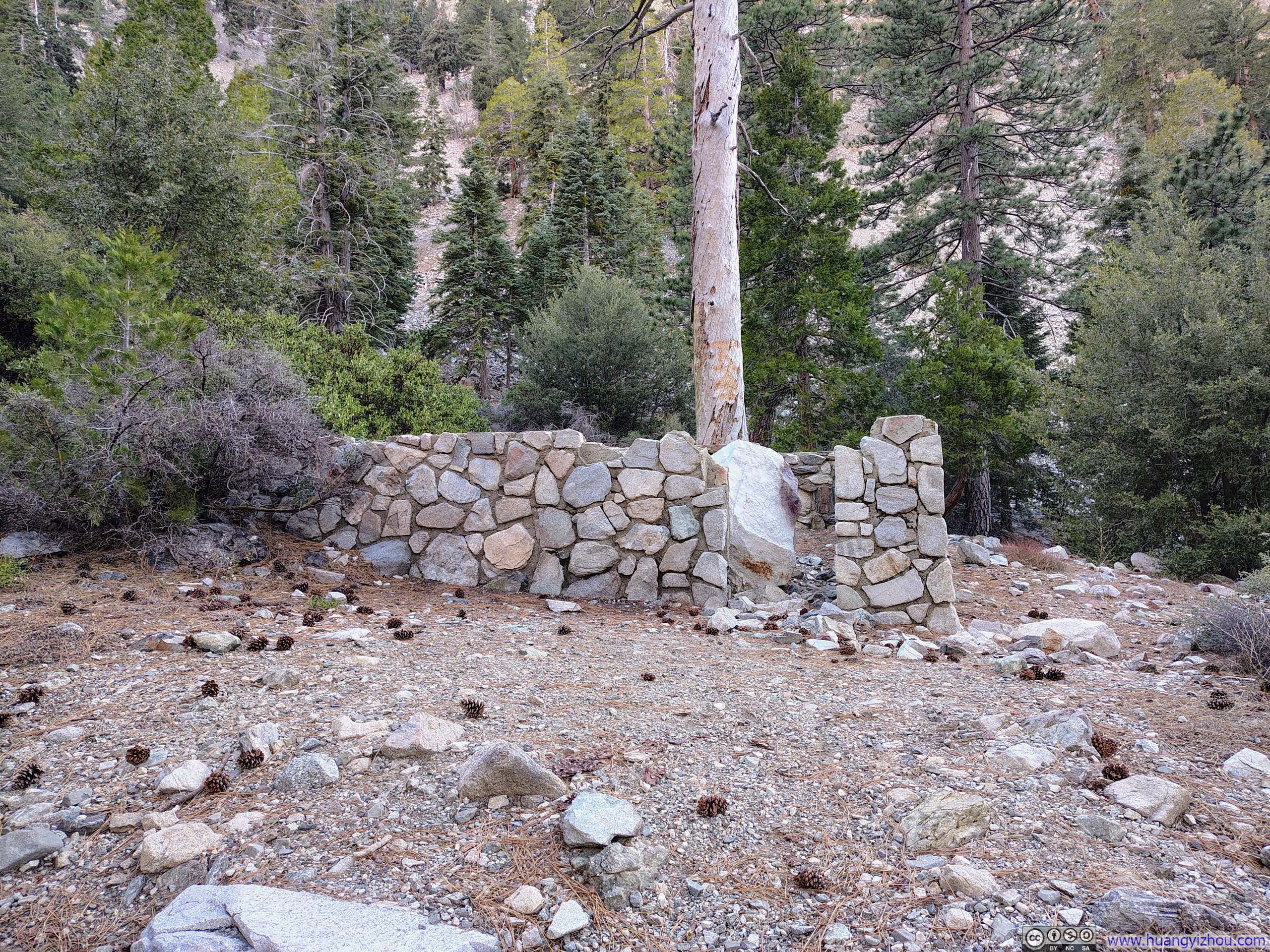
Remains of Mountain Cabins
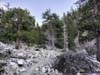
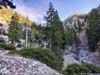
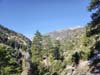
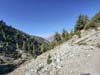
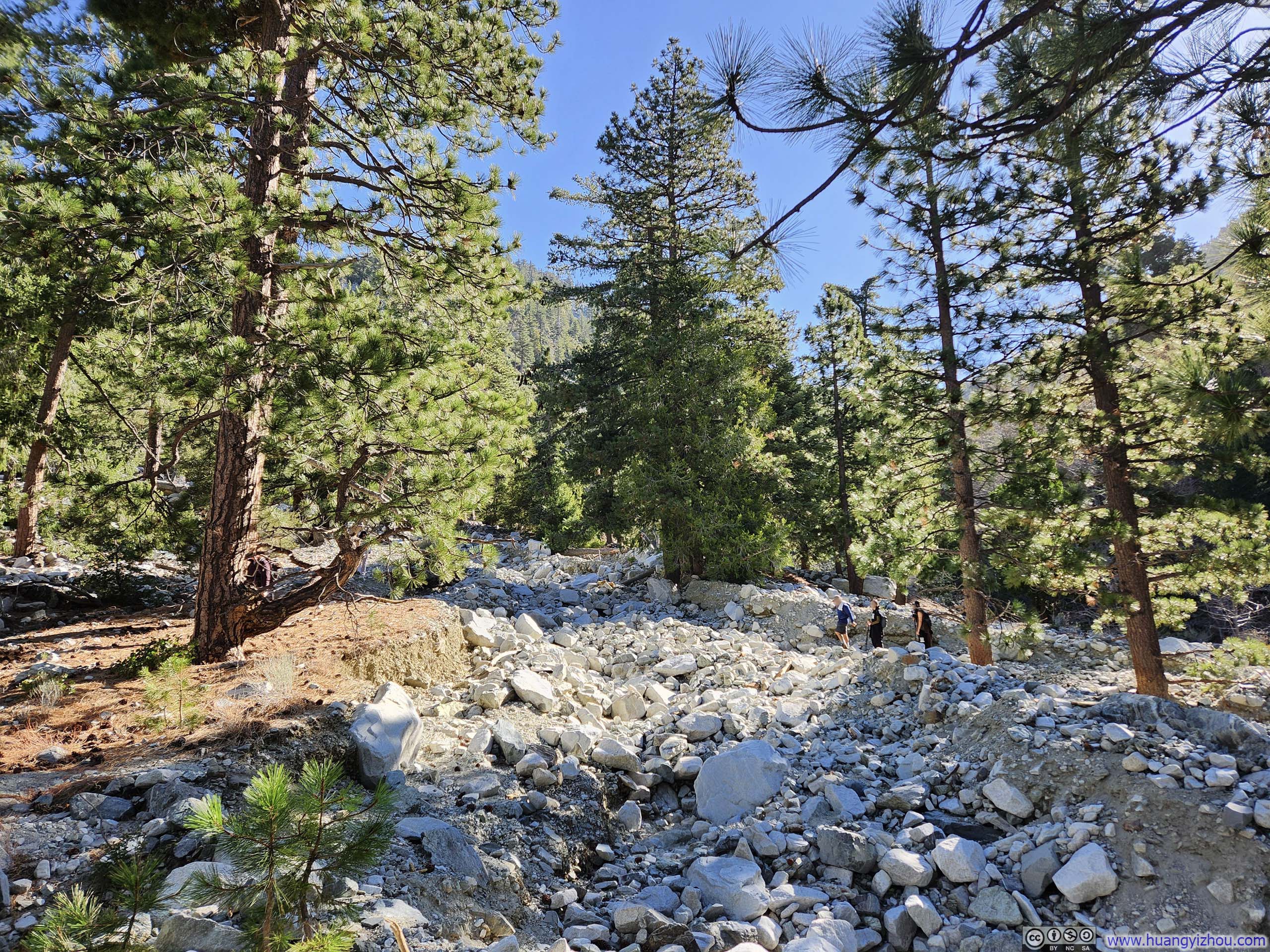
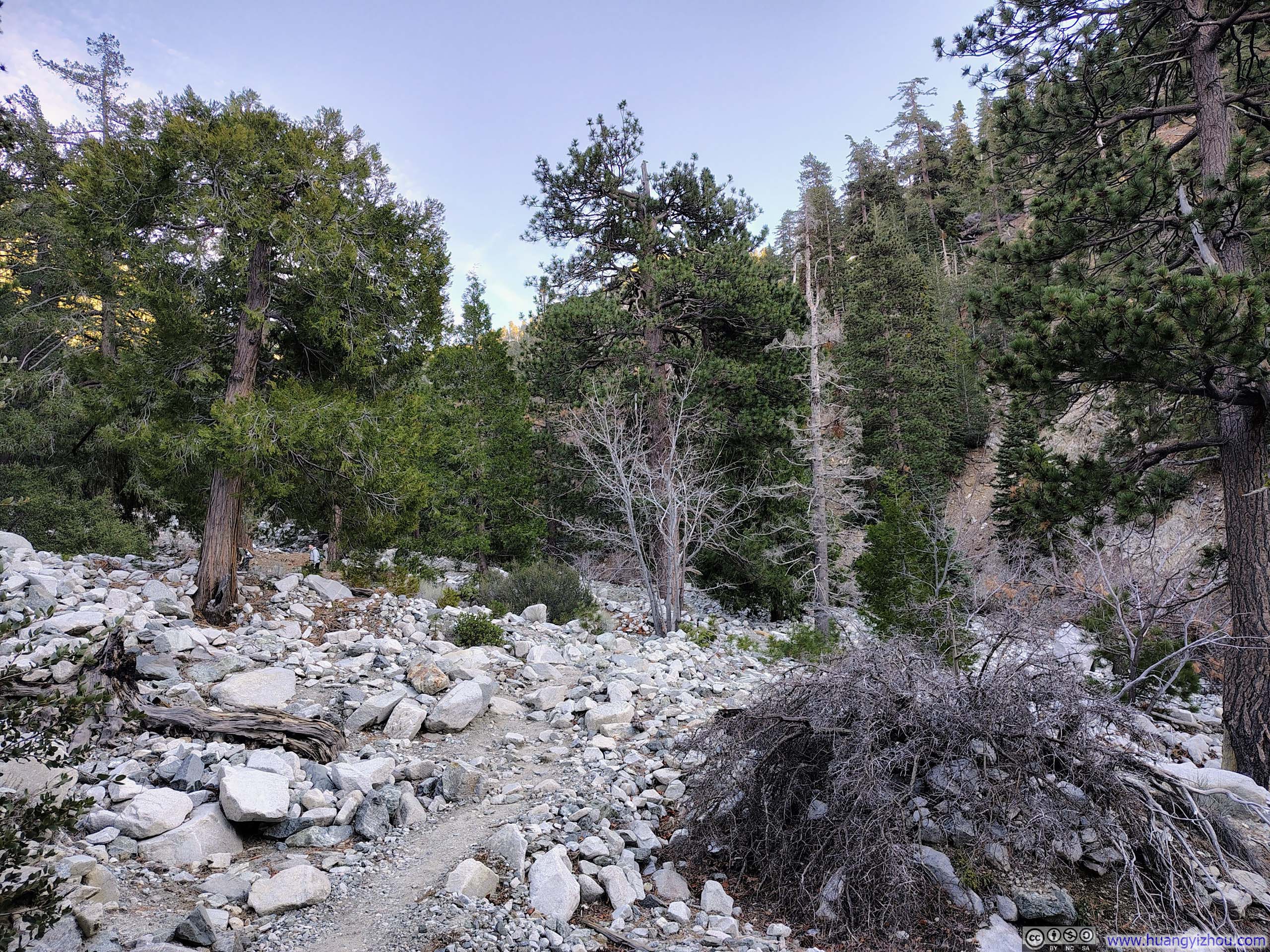
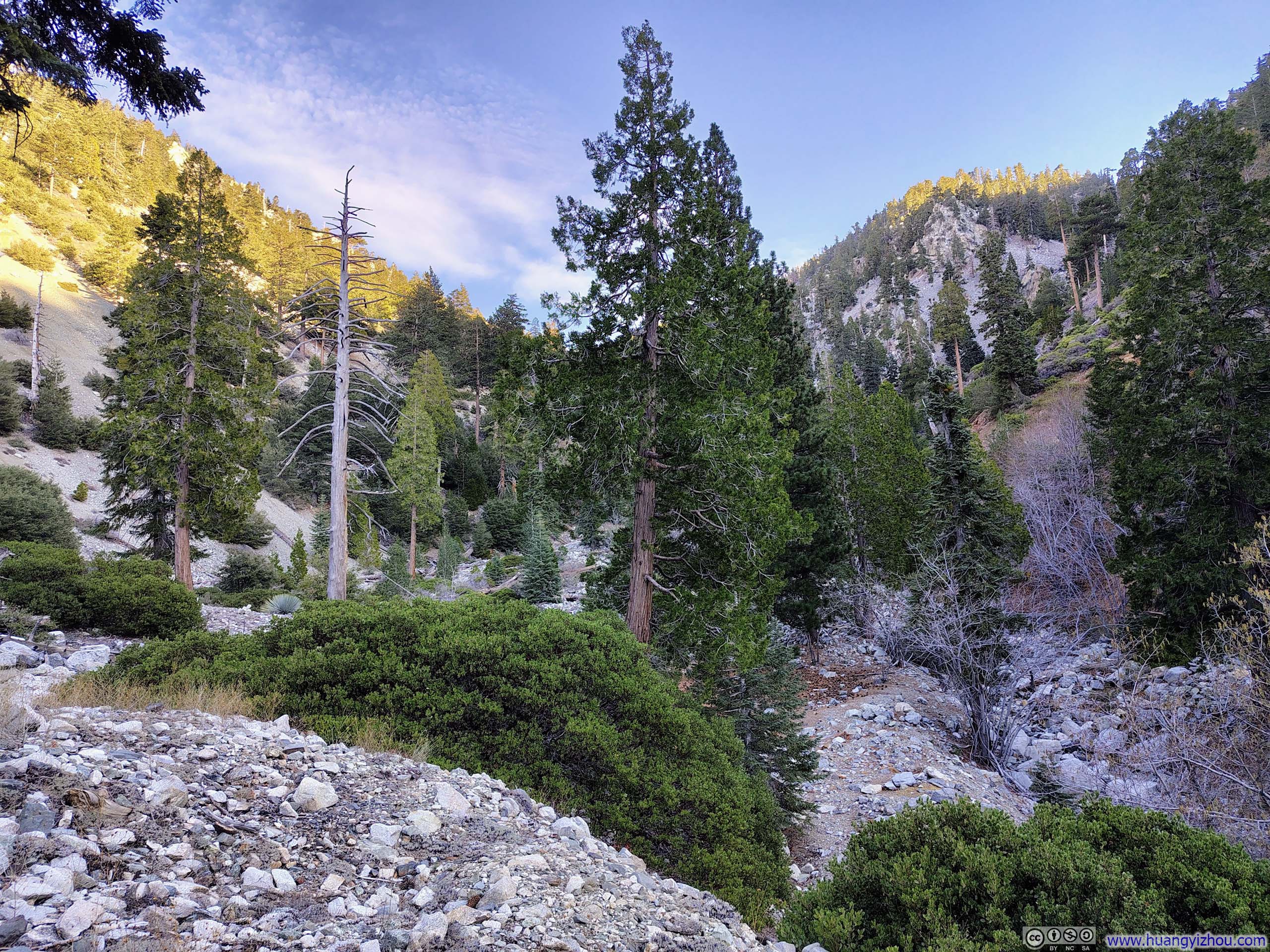
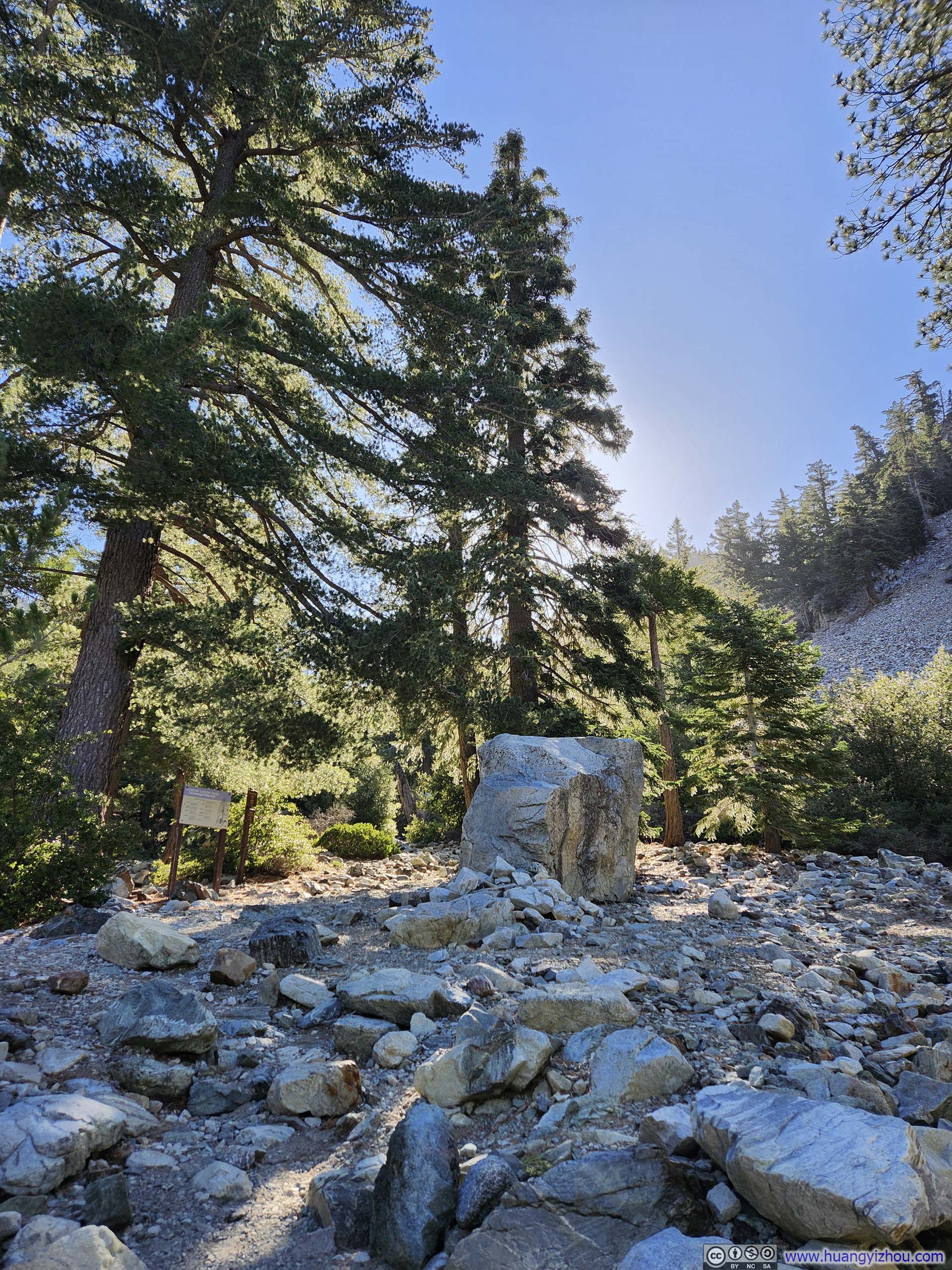
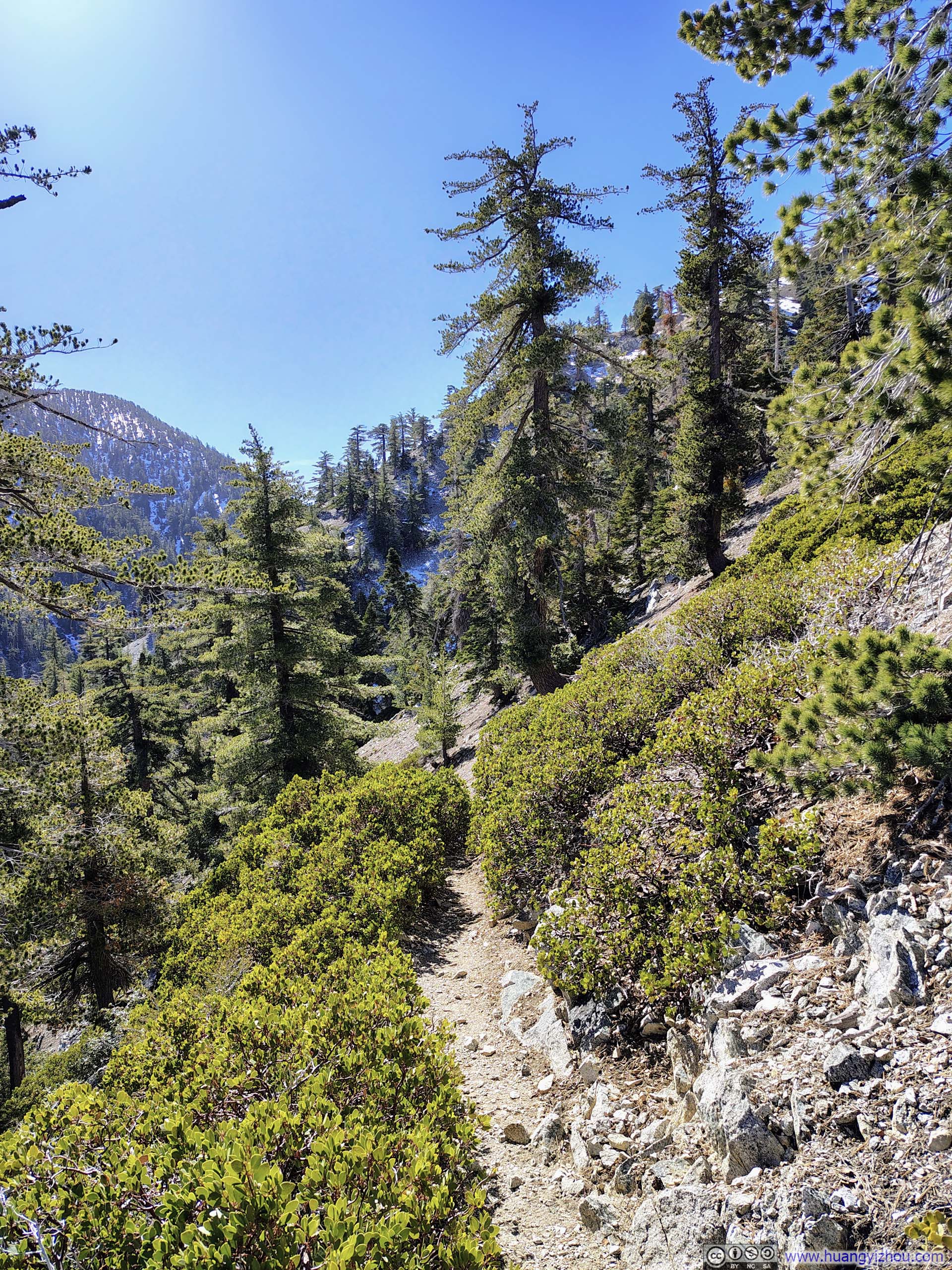
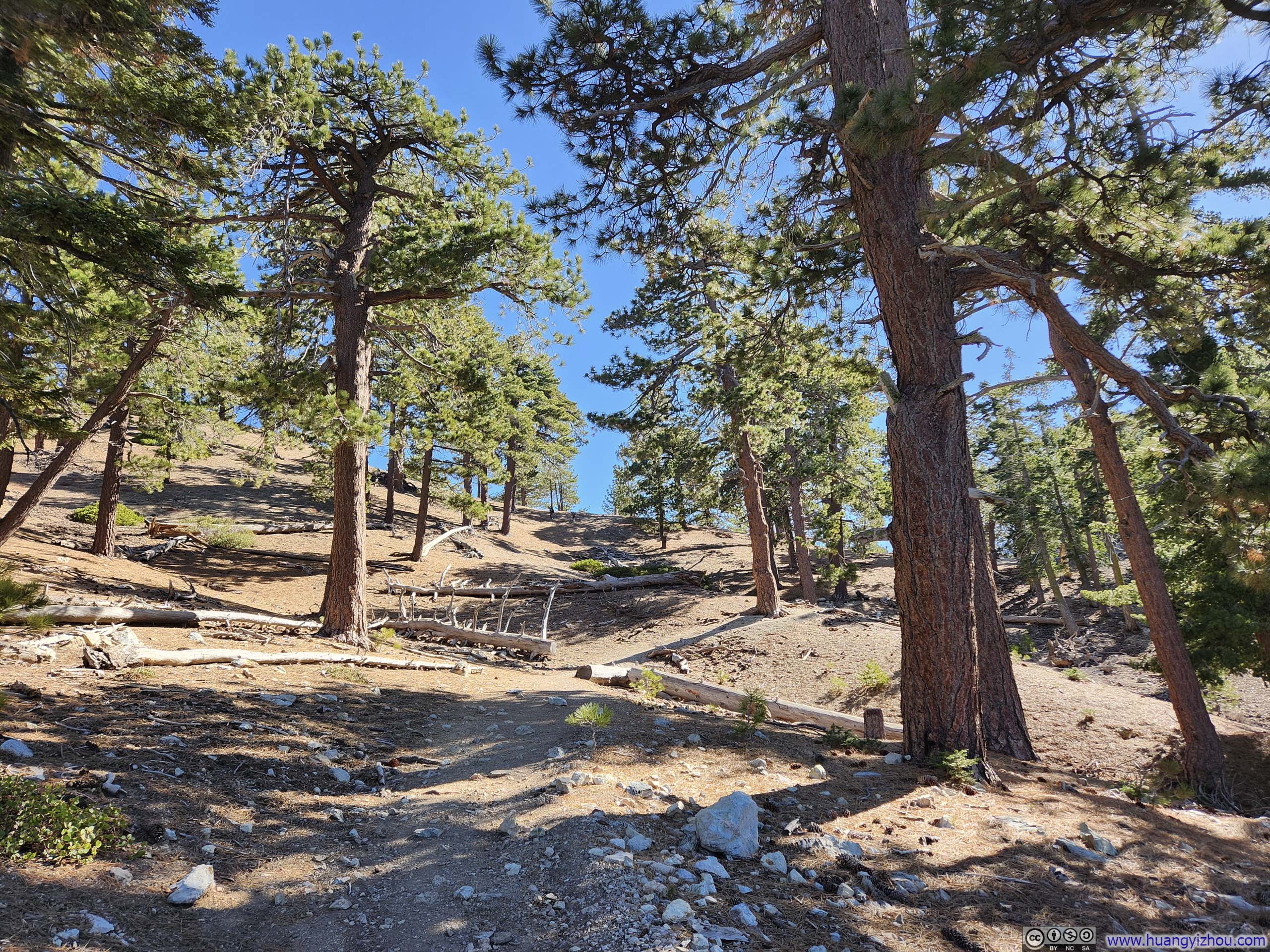
As for the trail itself, it began by hugging Icehouse Creek closely, accompanied by the soothing sound of running water. Further up, where the creek had largely retreated underground, the path crossed a vast field of rocks where the trail became difficult to discern — likely the aftermath of a recent storm. Fortunately, the general direction was easy enough to follow with offline maps, and before long I had rejoined the trail as it climbed steadily up the slopes of Icehouse Canyon.
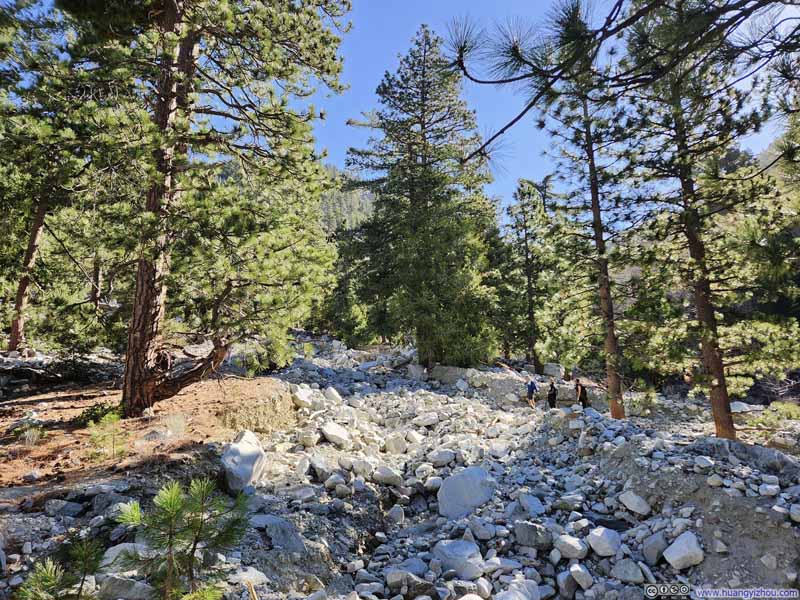 Field of Rocks along Icehouse Canyon
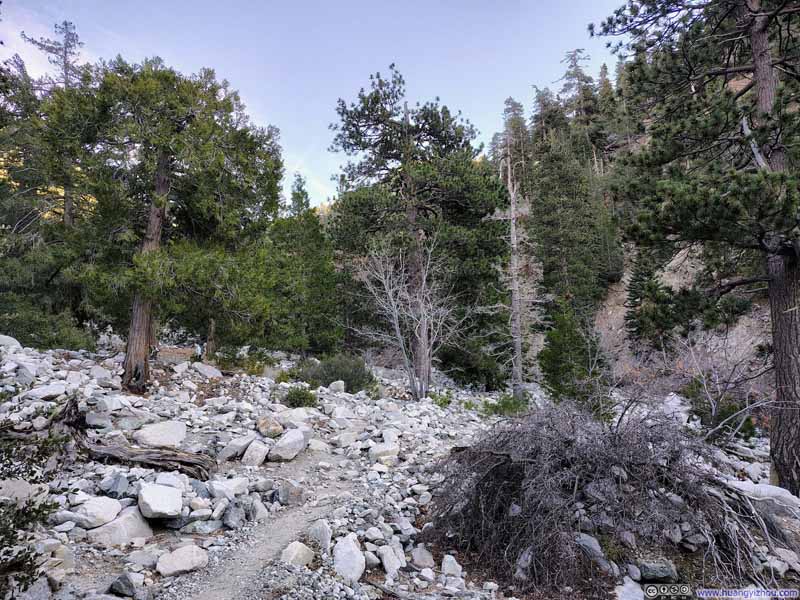 Trail
Trail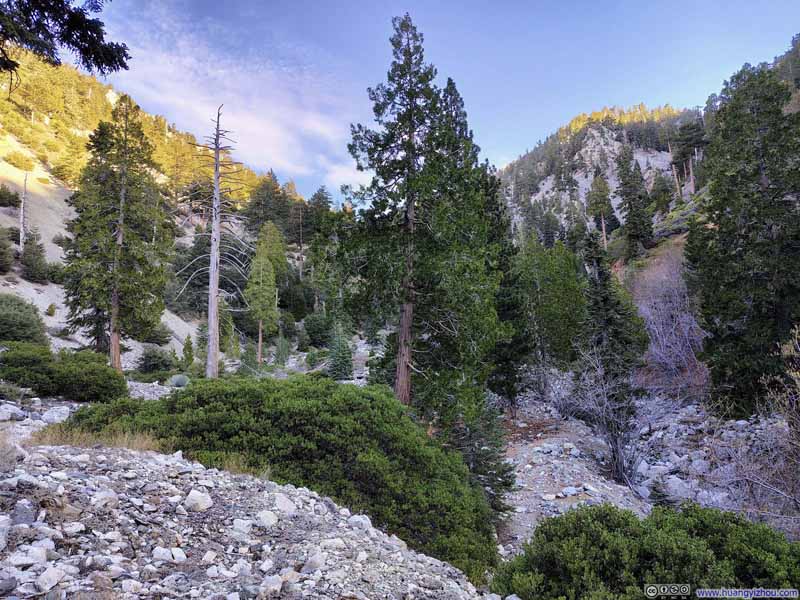 Trees in Icehouse Canyon
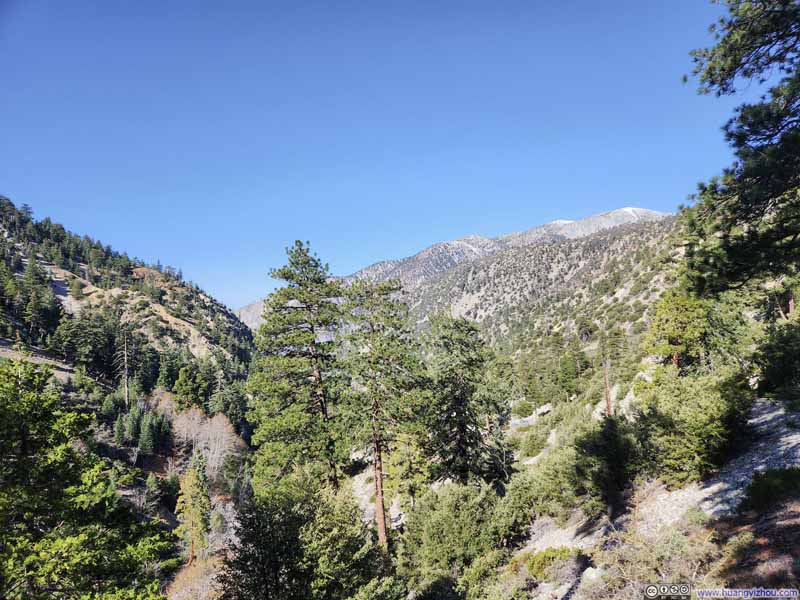 San Gabriel Mountains from Icehouse Canyon
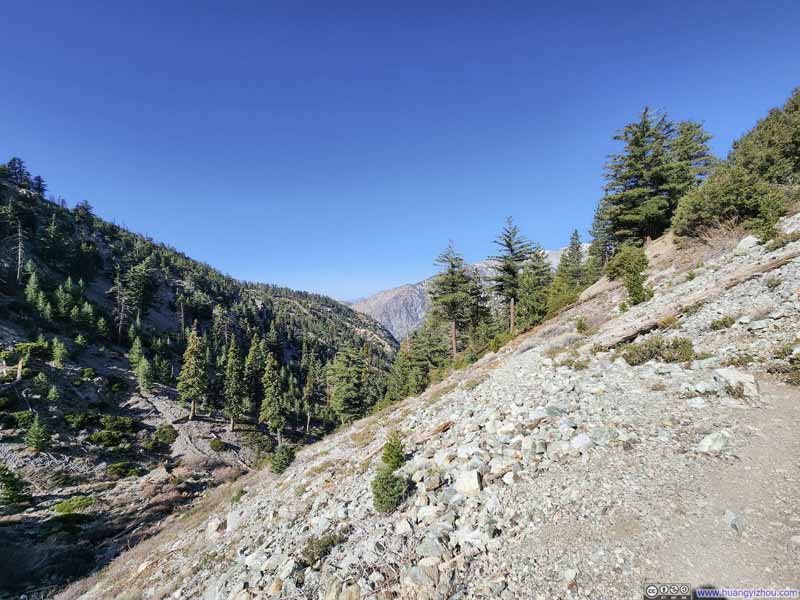 Trail above Icehouse Canyon
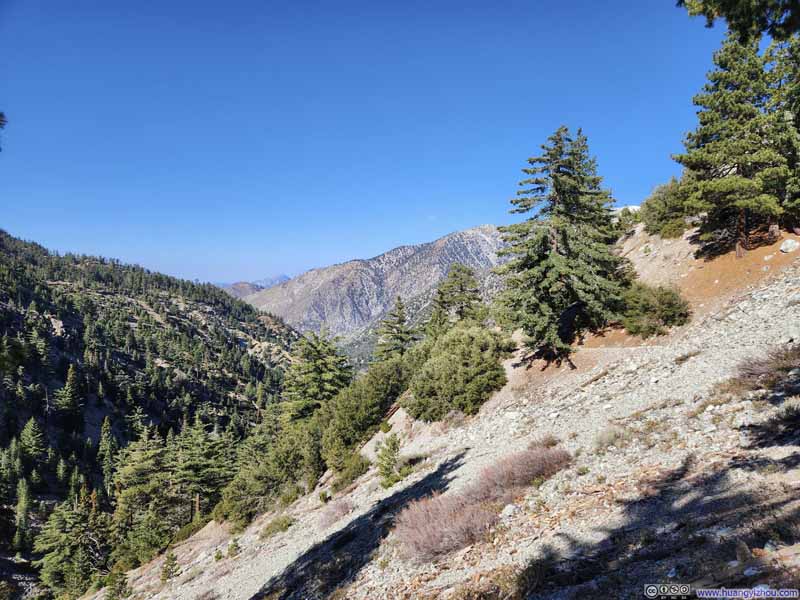 Trail above Icehouse Canyon
Click here to display photos of the slideshow
Field of Rocks along Icehouse Canyon
Trail
Trees in Icehouse Canyon
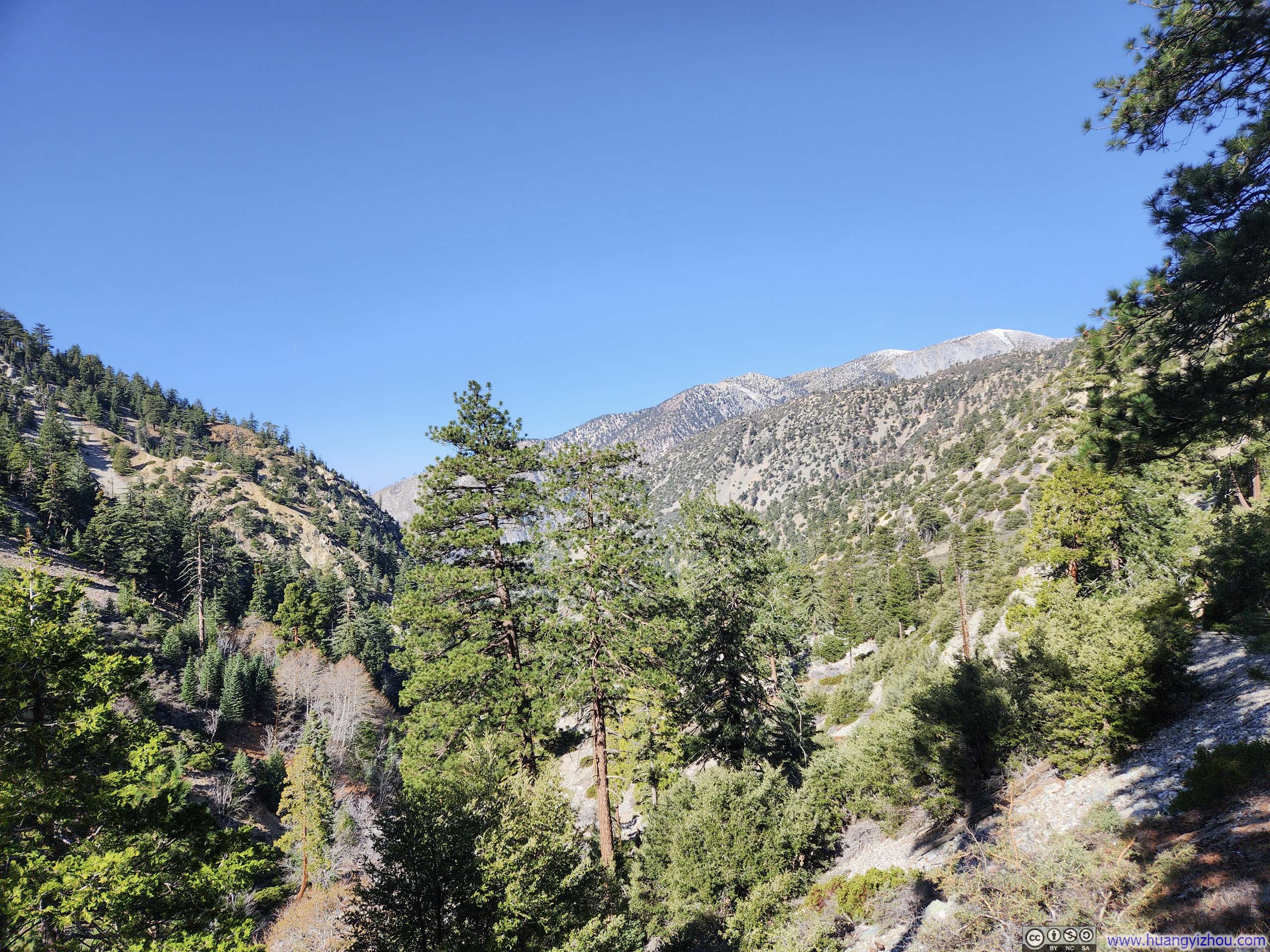
San Gabriel Mountains from Icehouse Canyon
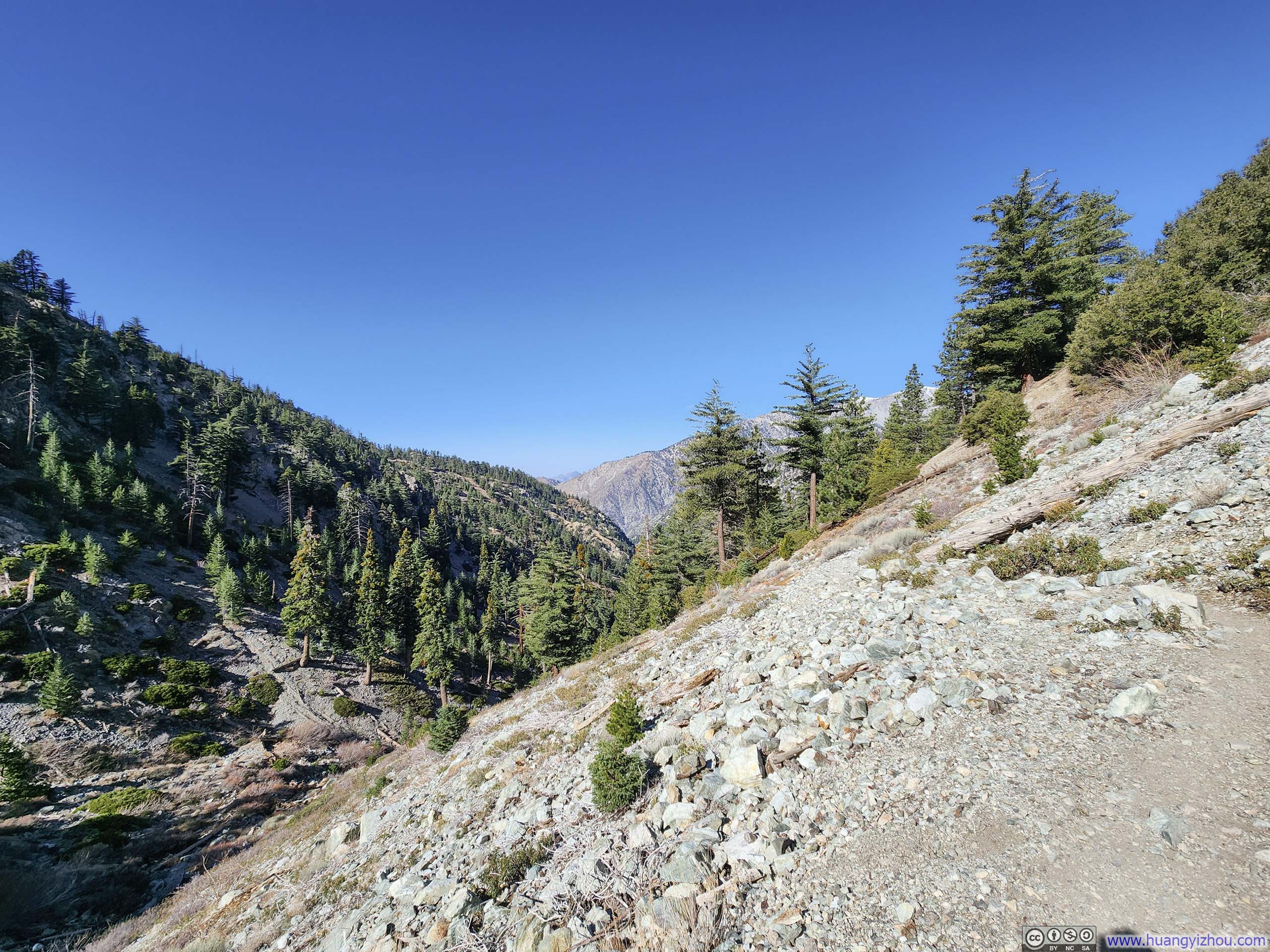
Trail above Icehouse Canyon
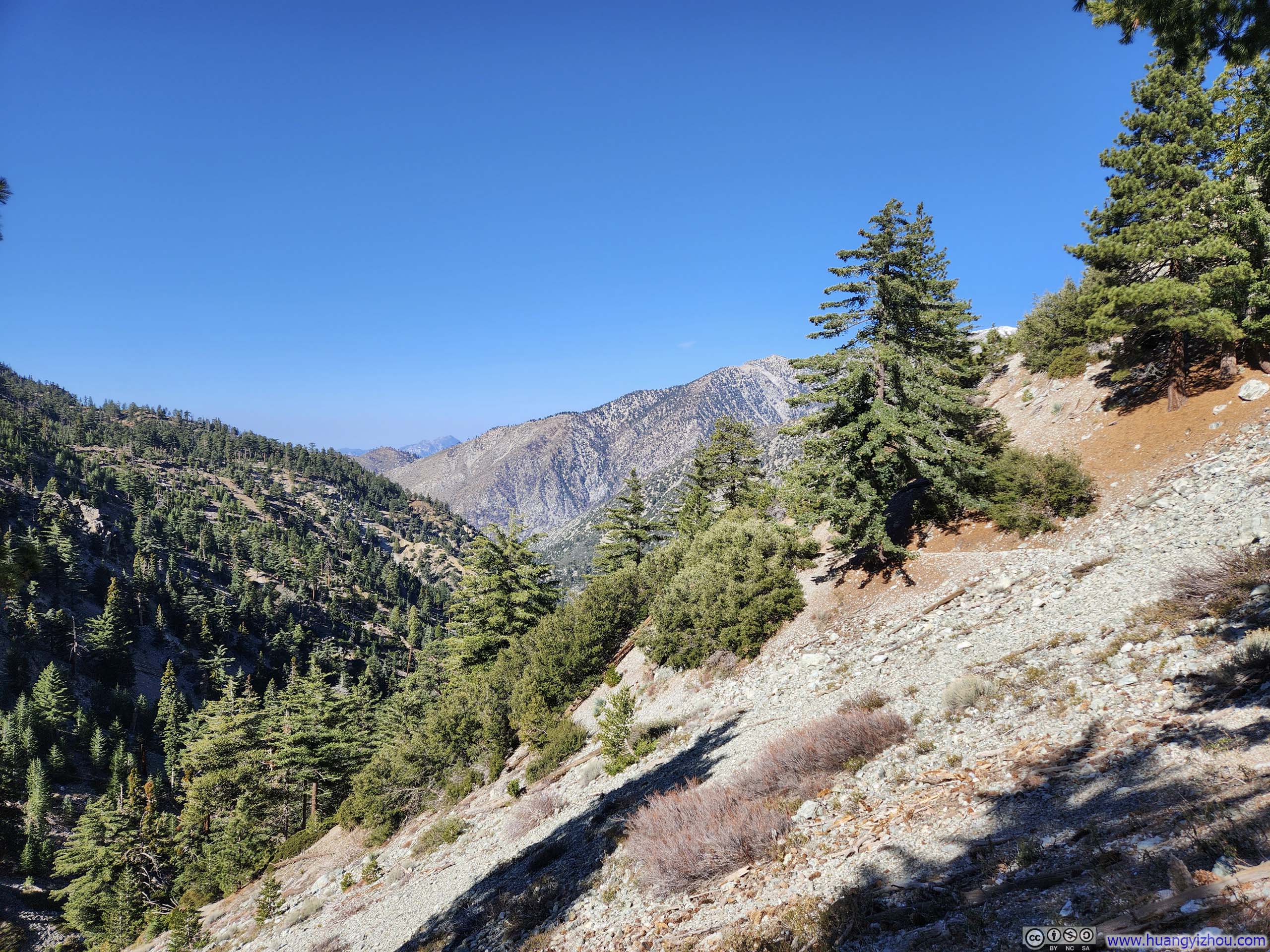
Trail above Icehouse Canyon
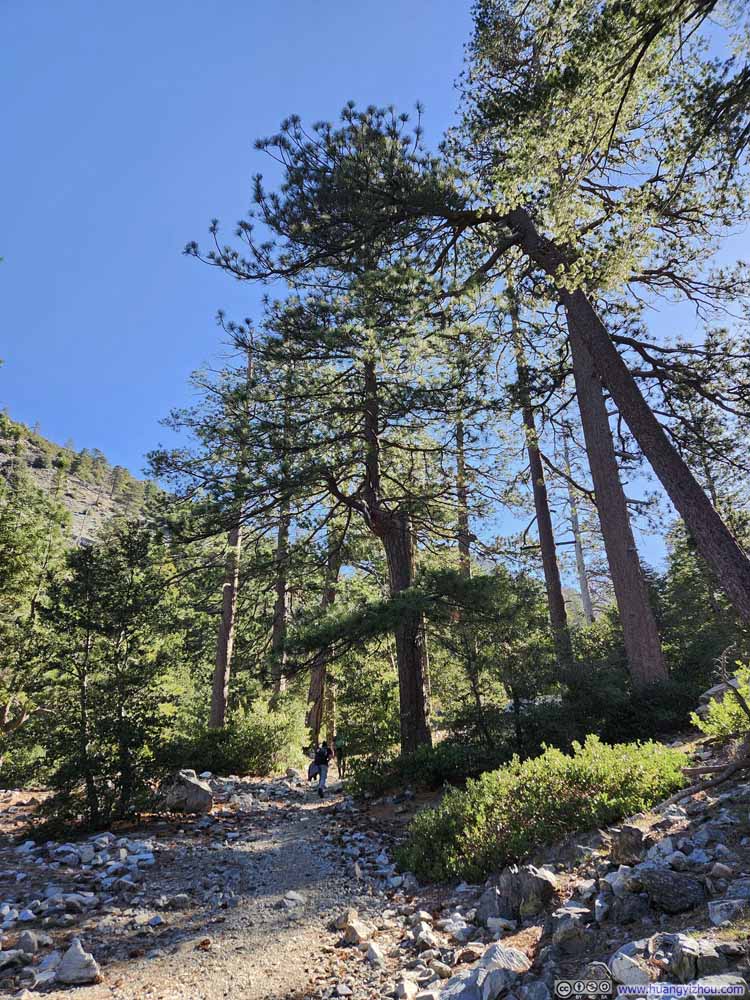 Trail
Trail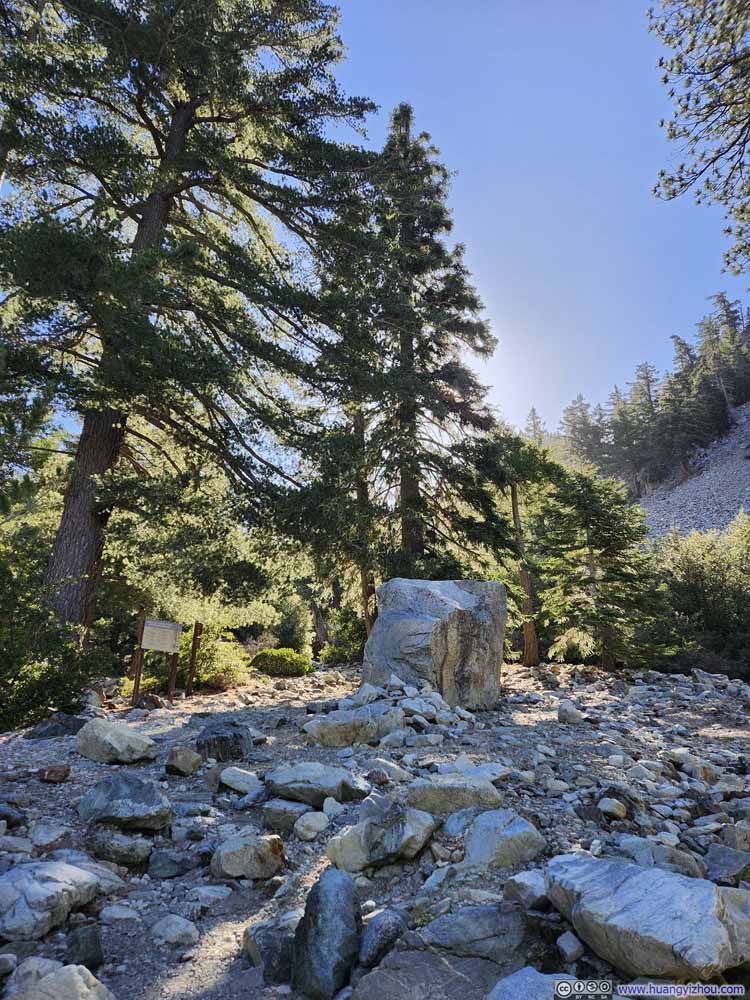 Trail
Trail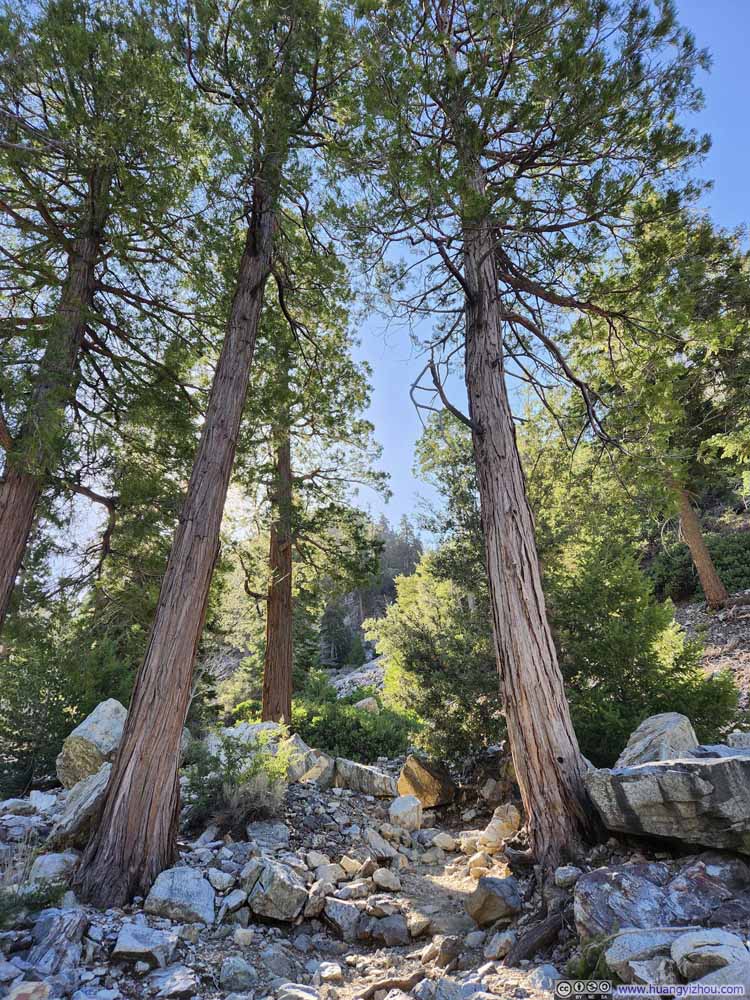 Trail
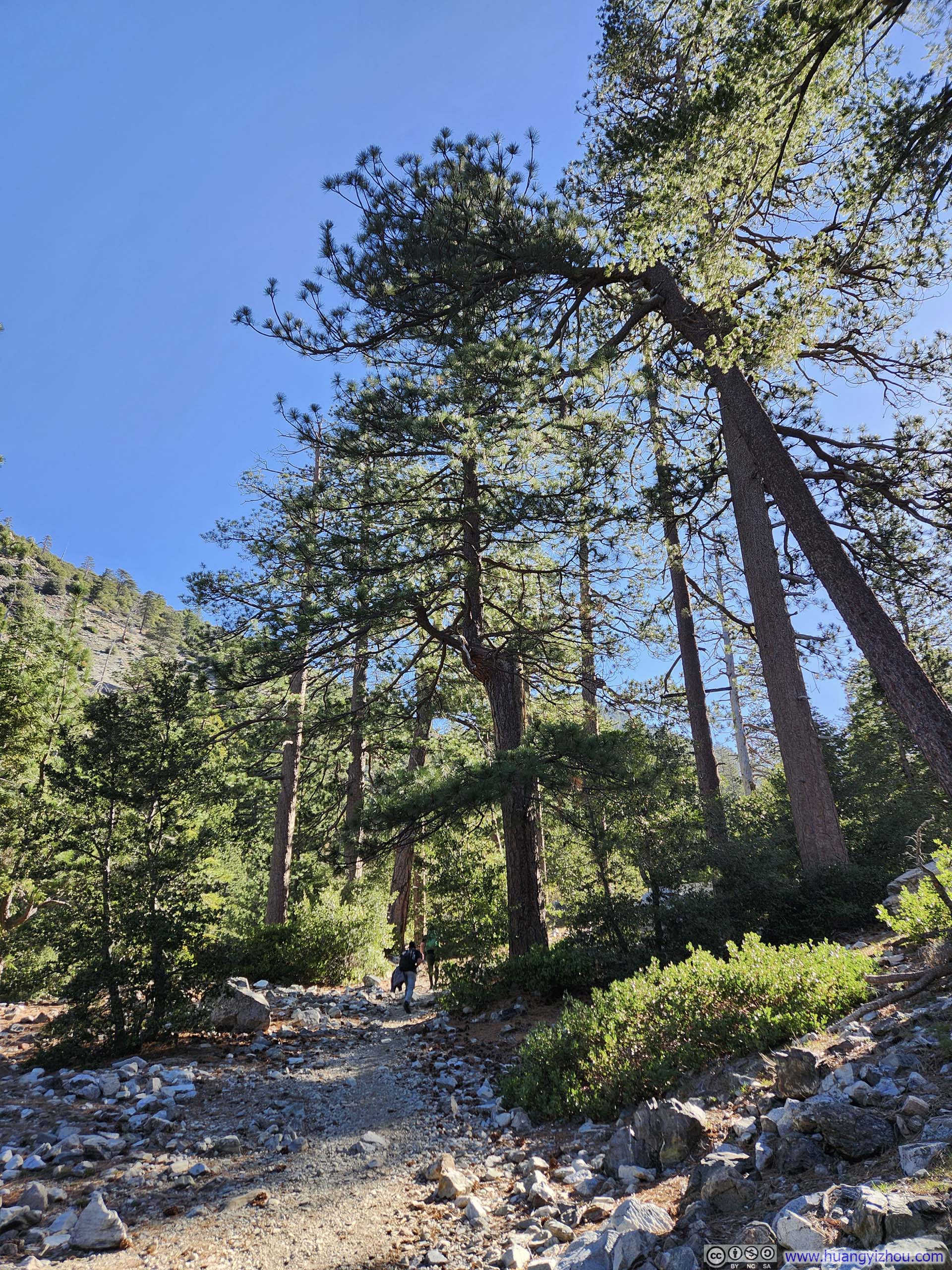
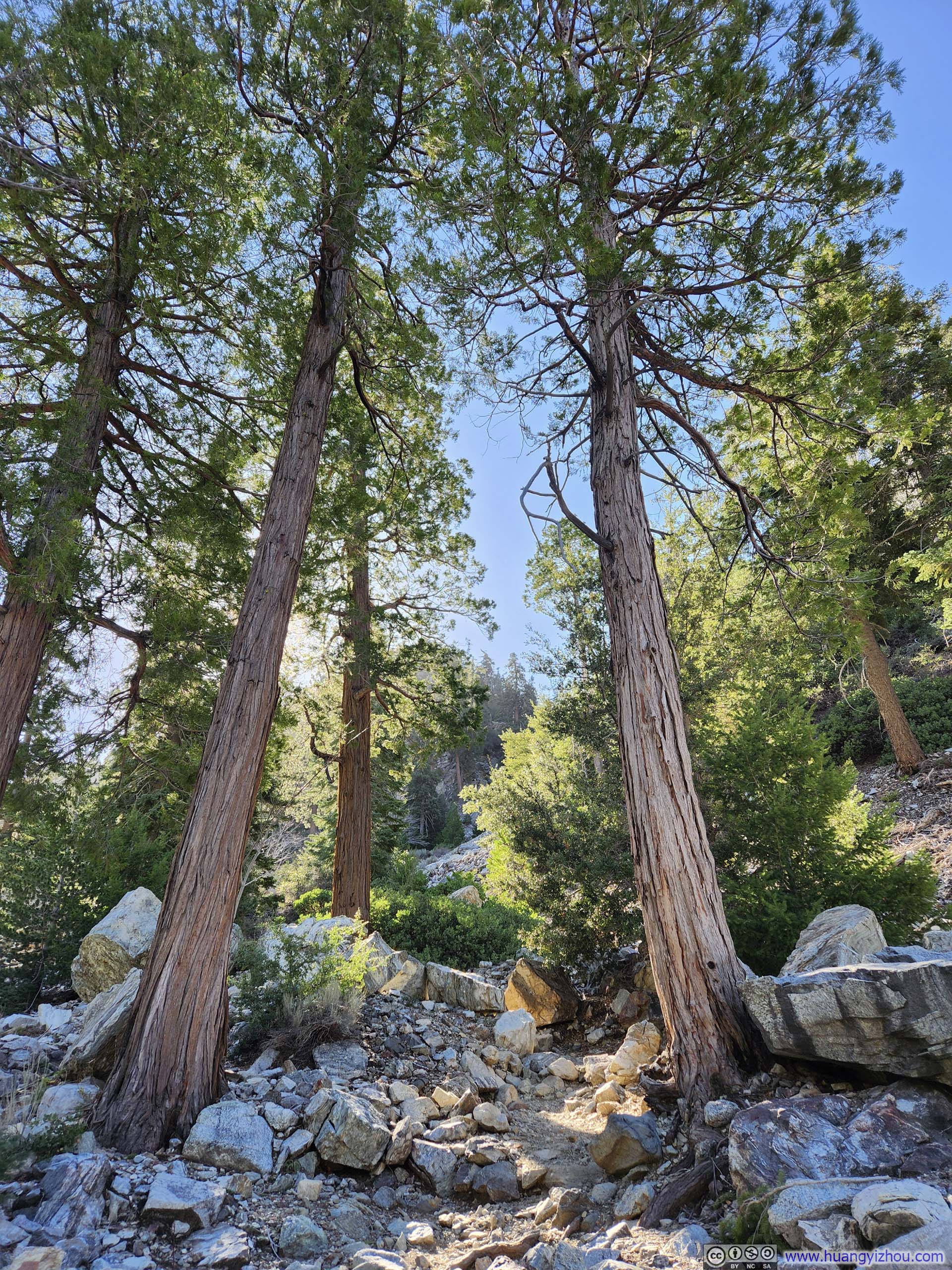
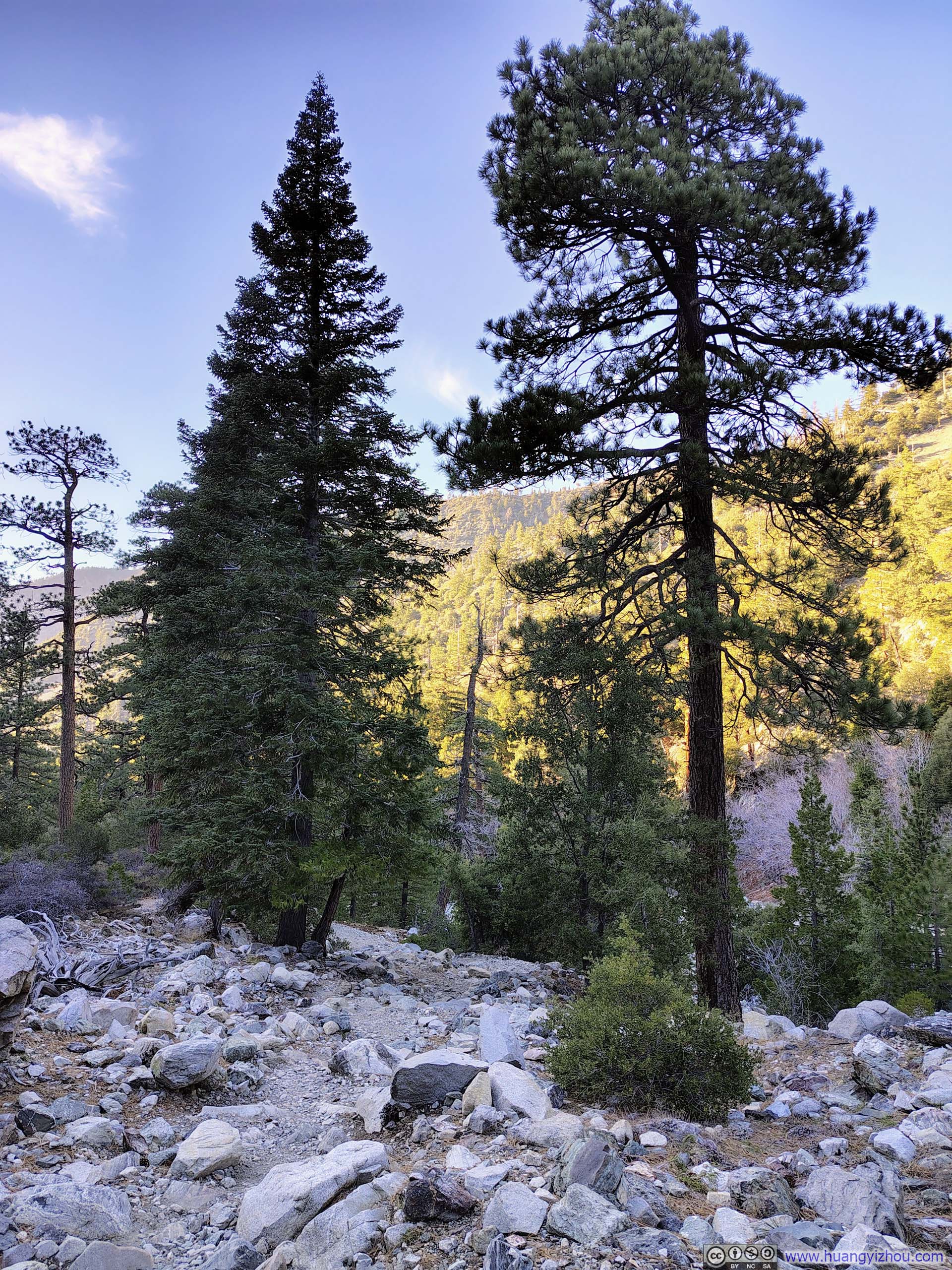
Trail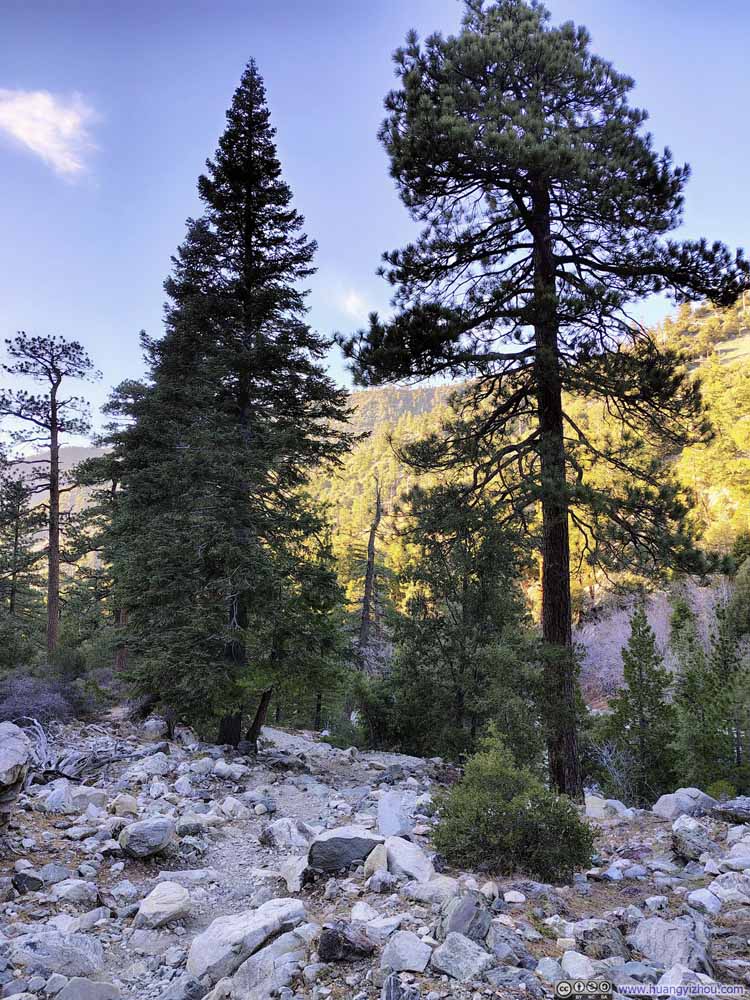 High Trees along TrailContrast between the density of leaves.
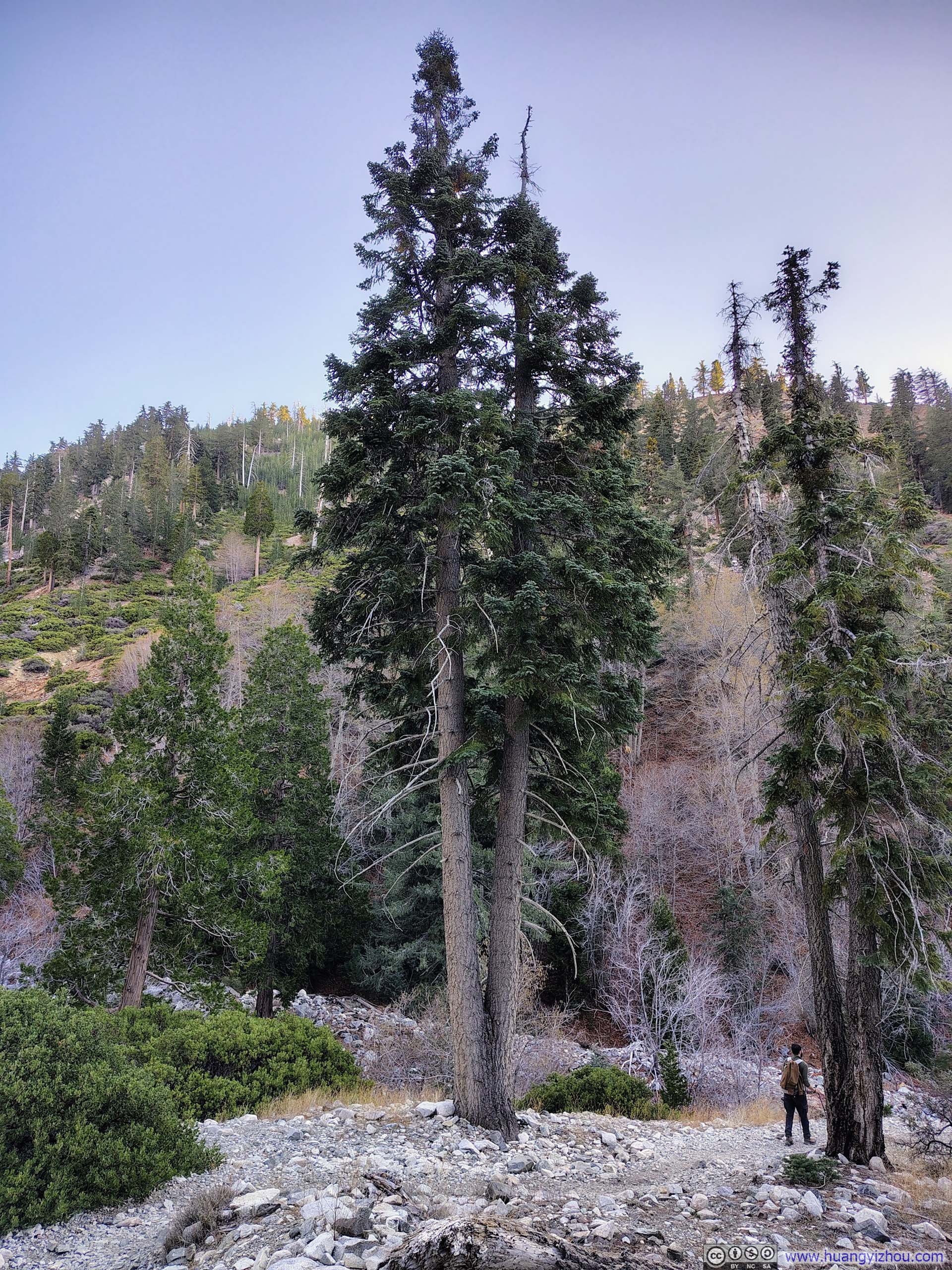
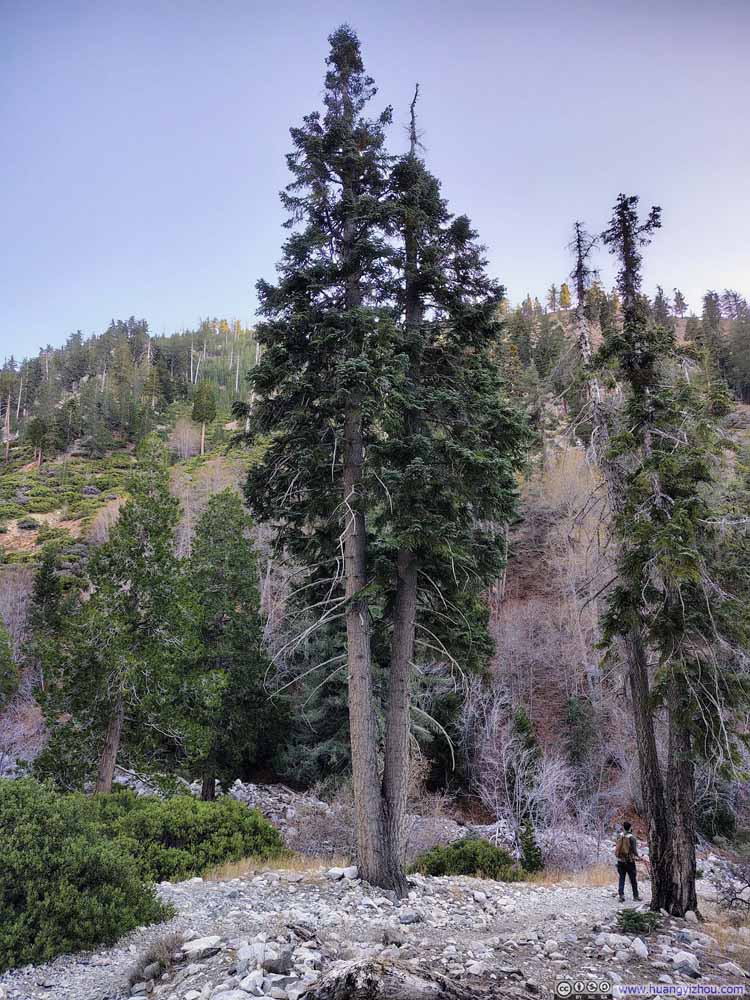 Binary Tree
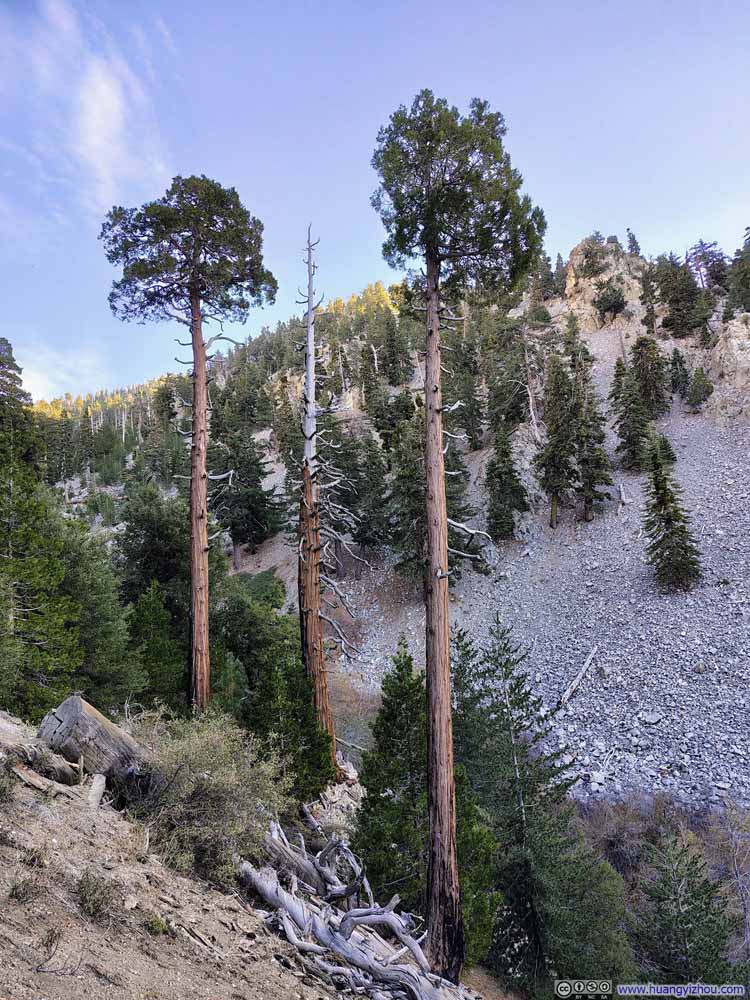 High TreesThis composition felt very ceremonial.
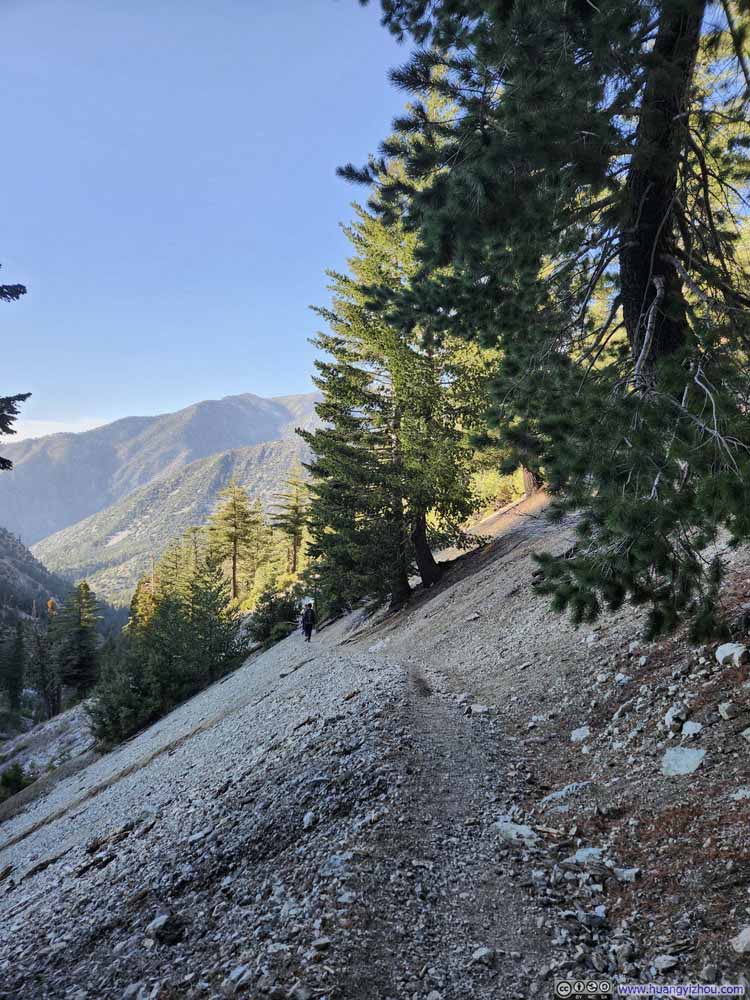 Trail
Trail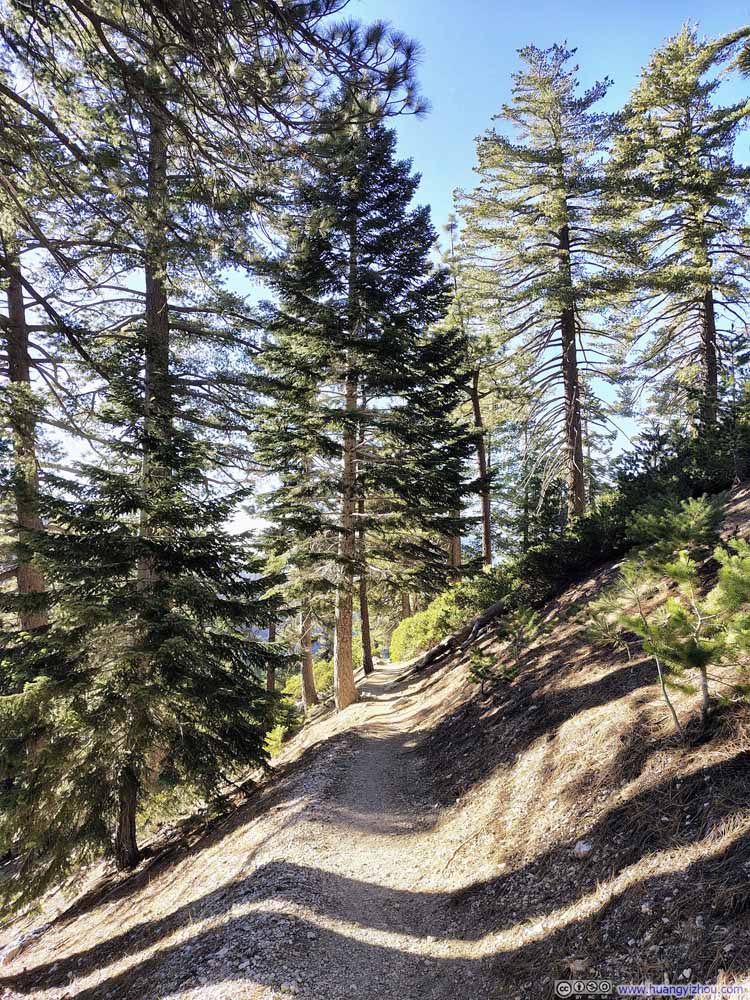 Trail
Trail
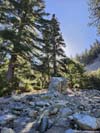
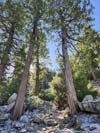
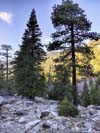
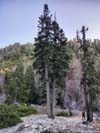
Click here to display photos of the slideshow
Trail
Trail
Trail
High Trees along TrailContrast between the density of leaves.
Binary Tree
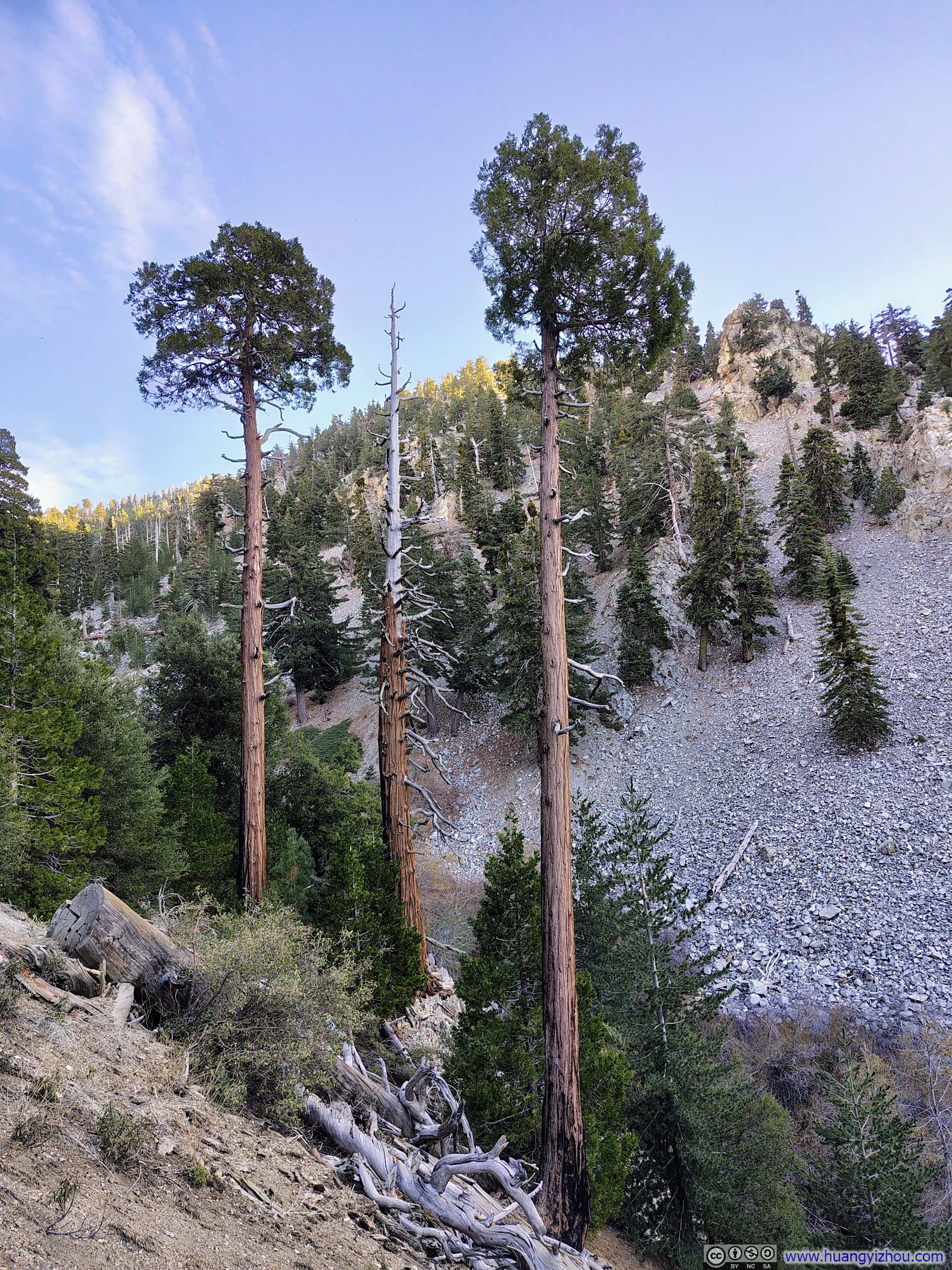
High TreesThis composition felt very ceremonial.
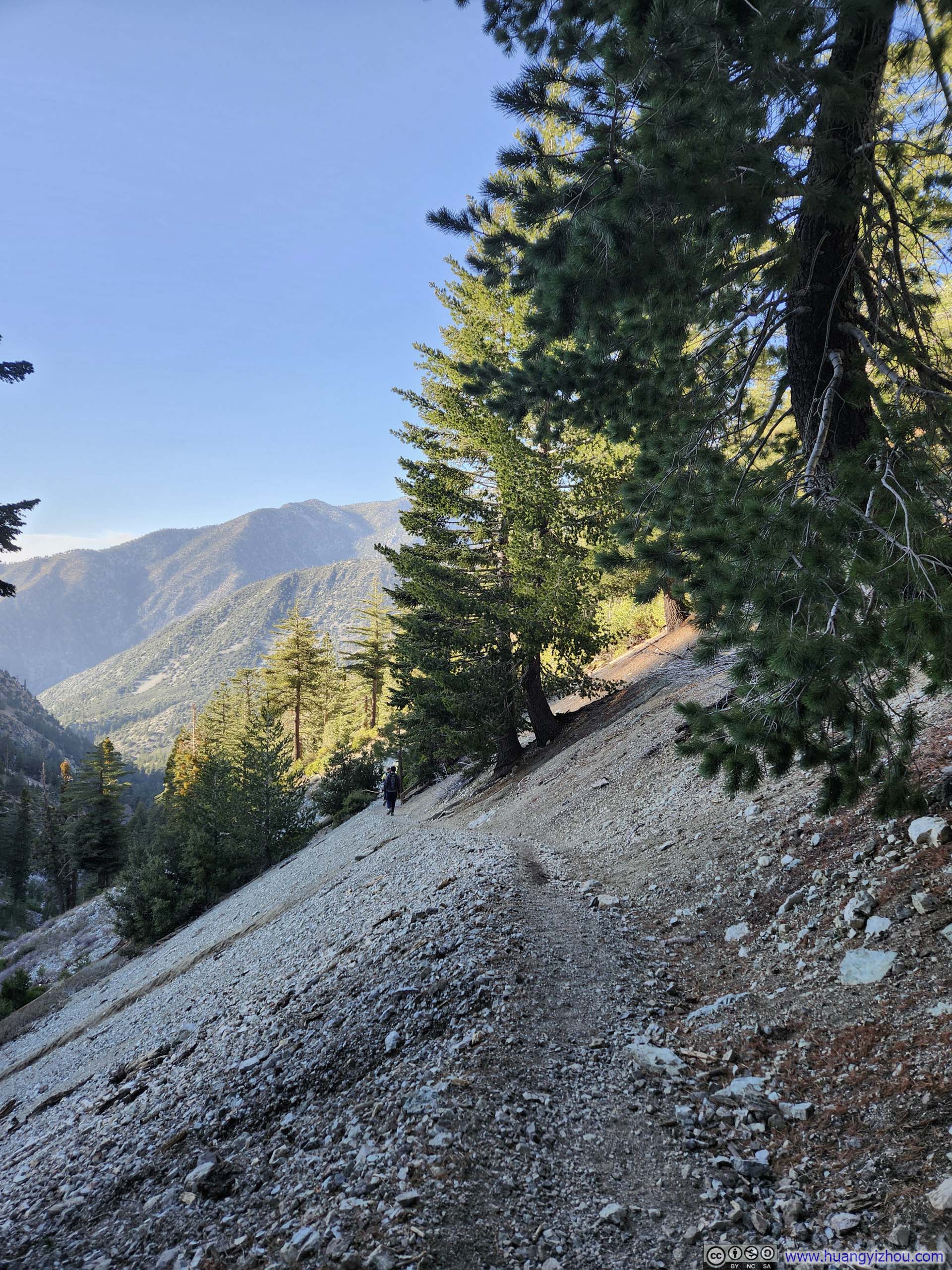
Trail
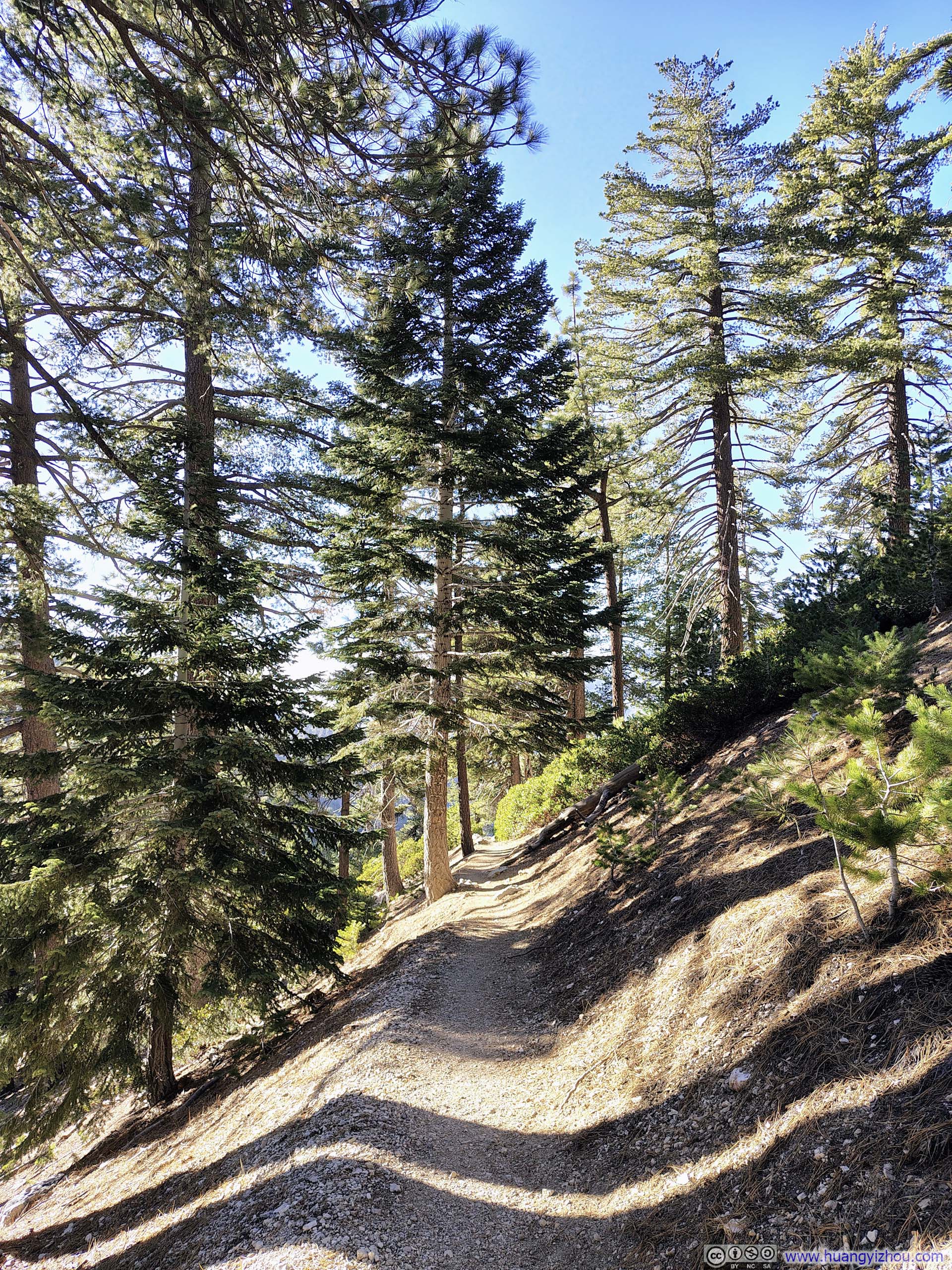
Trail
I reached Icehouse Saddle at 10:54am. This was the intersection of a few trails in the area, and a number of hikers had gathered there resting legs.
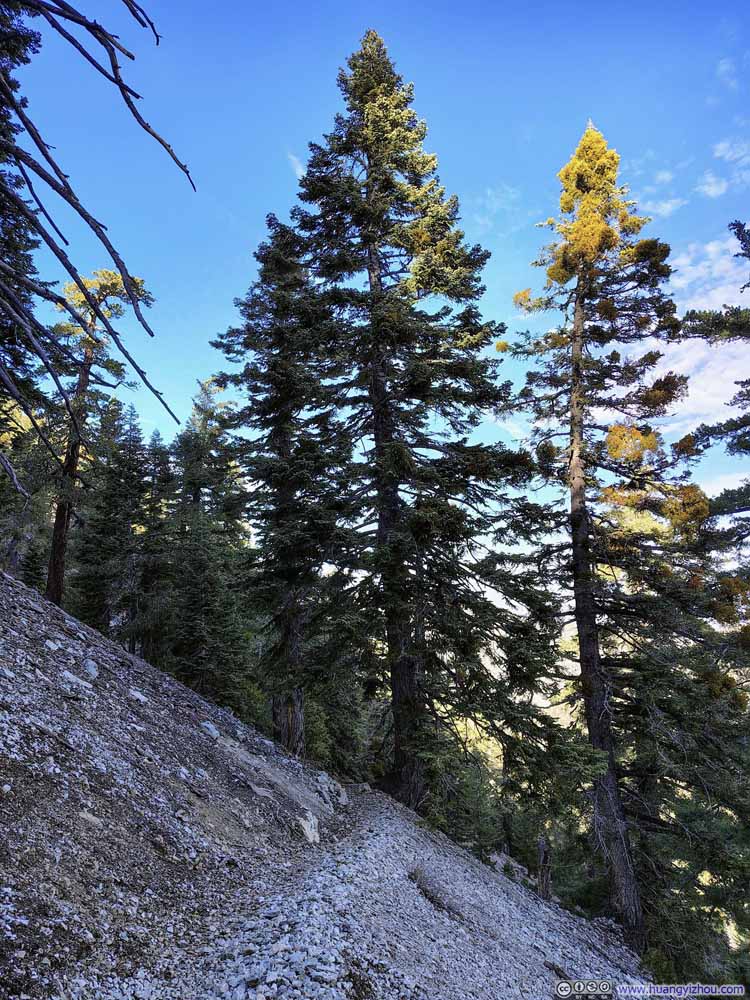
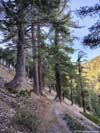
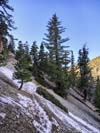
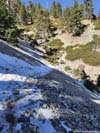
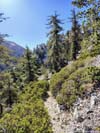
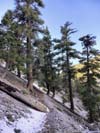
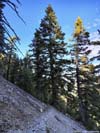
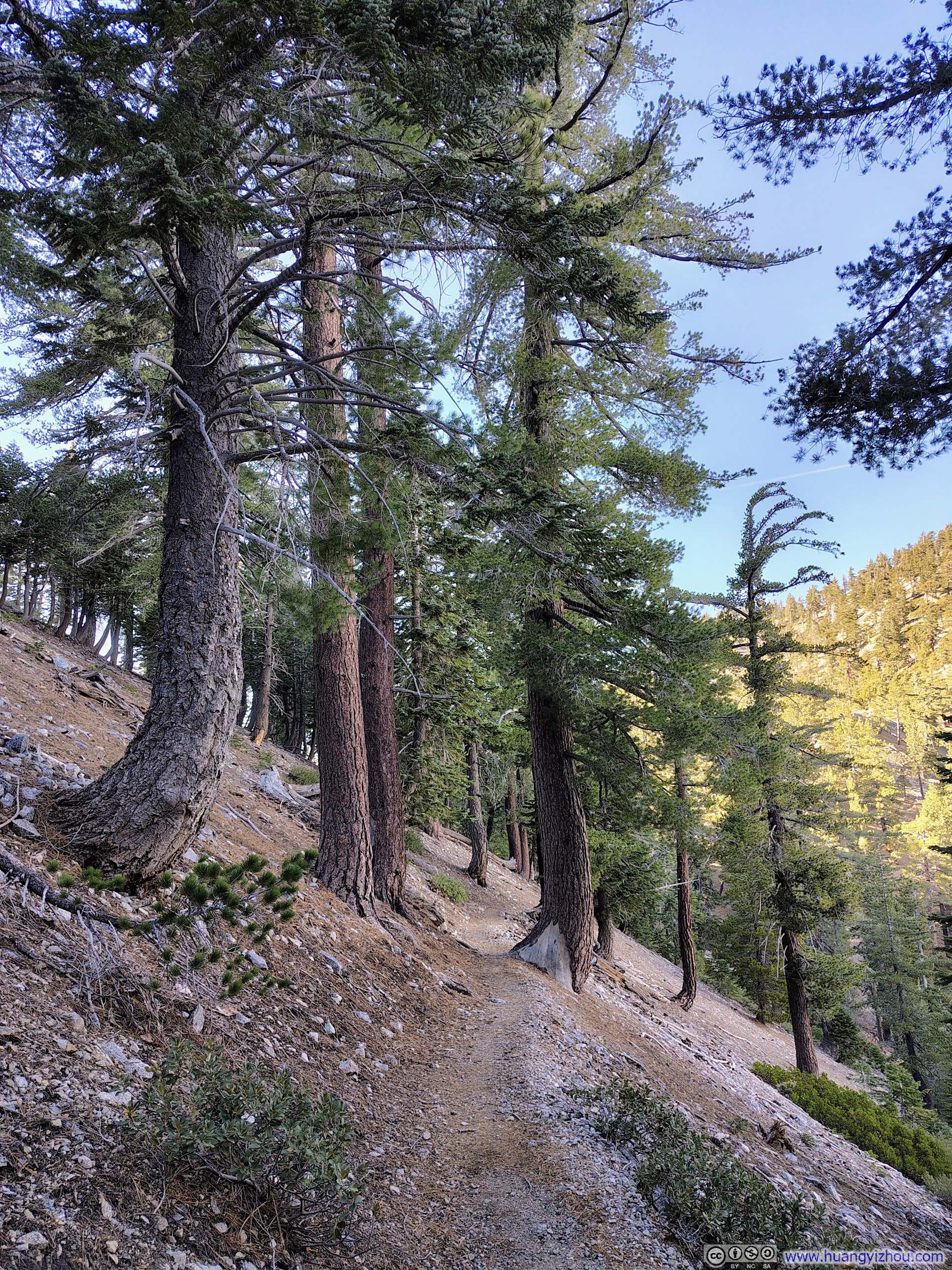
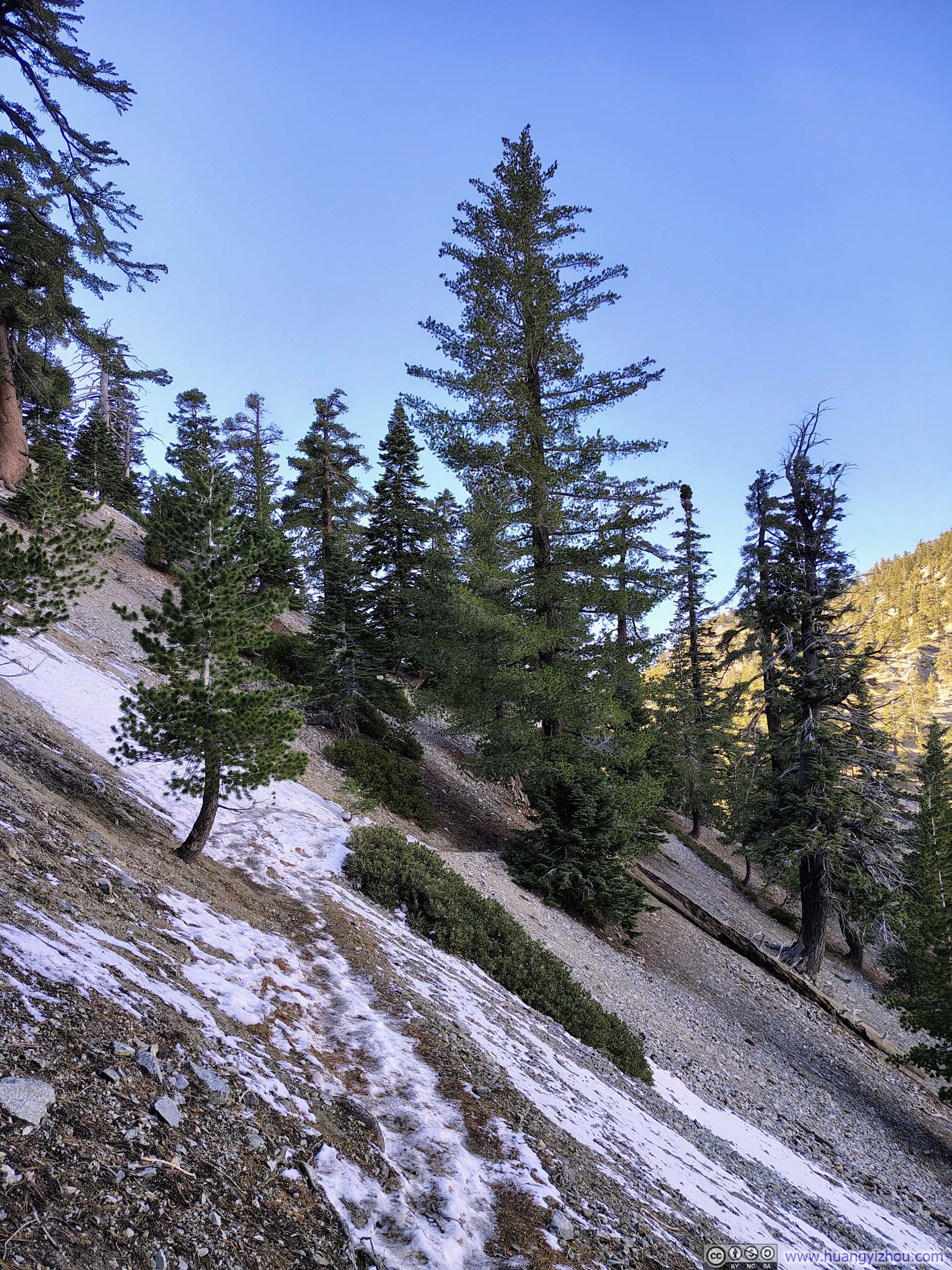
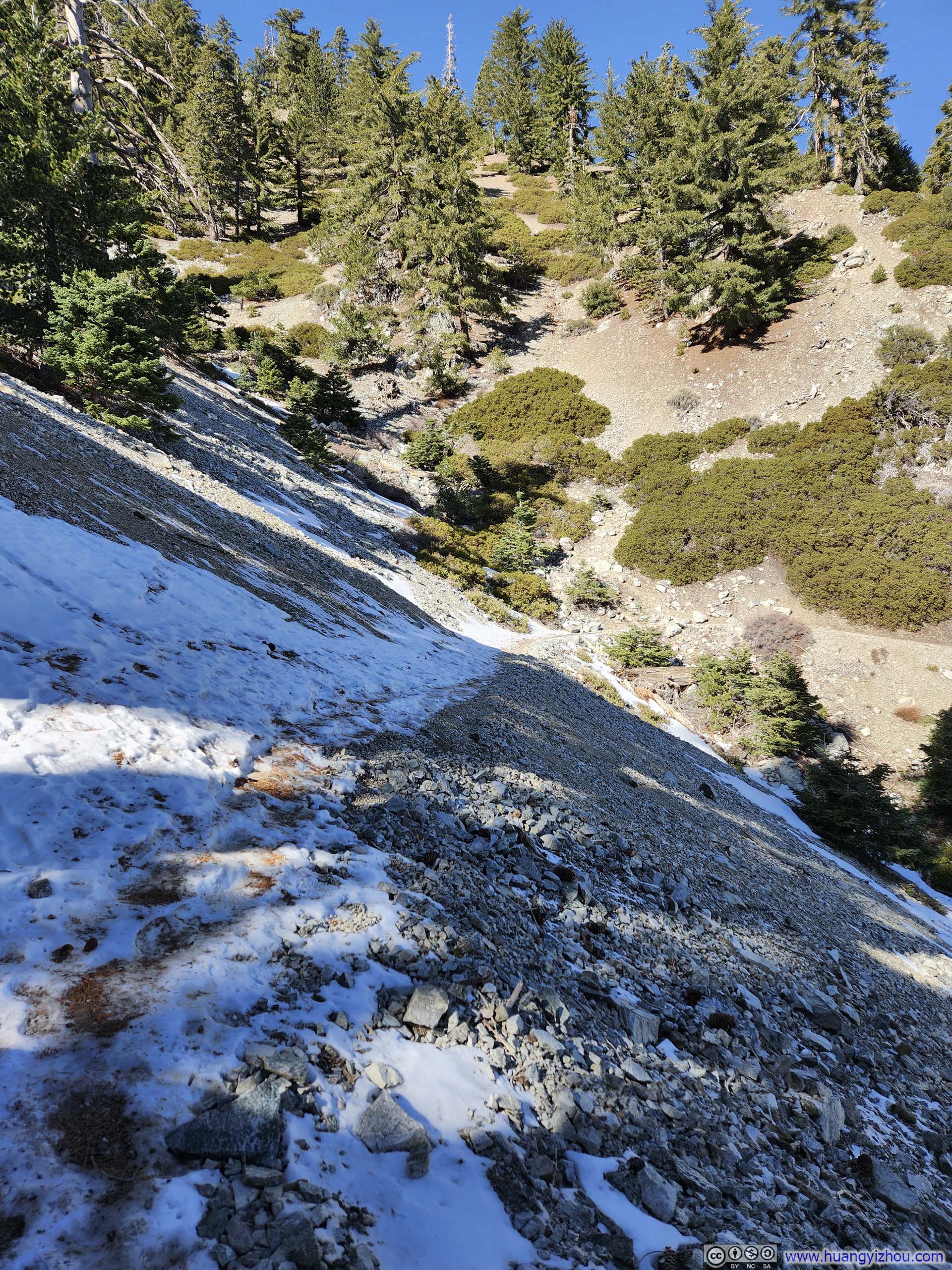
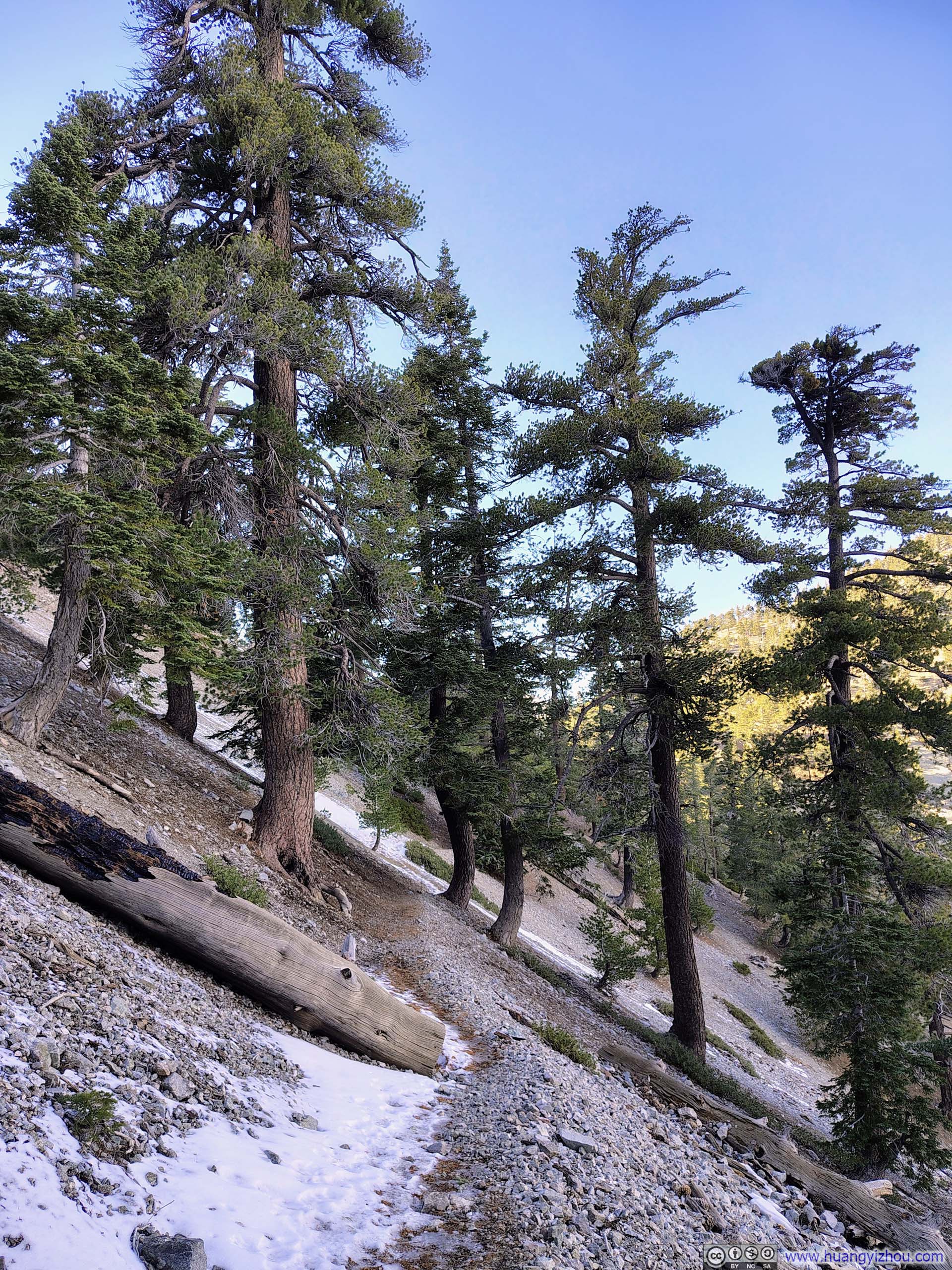
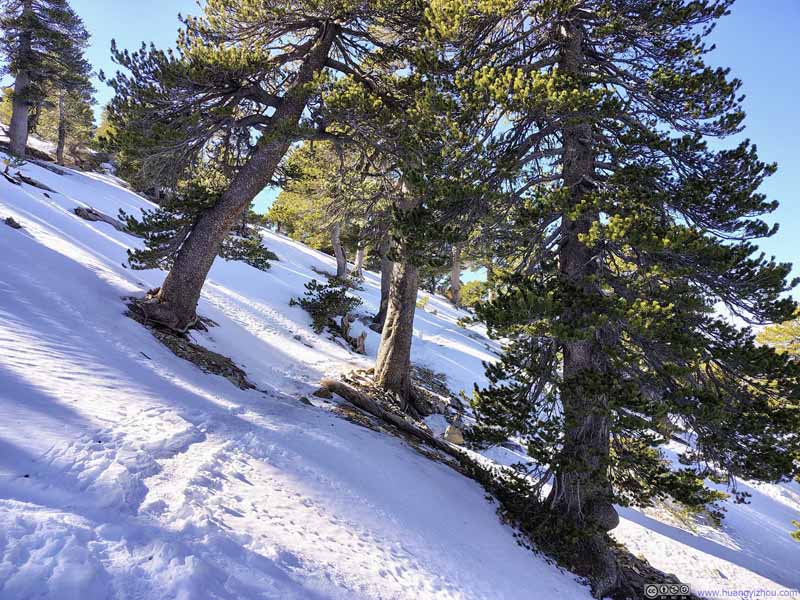
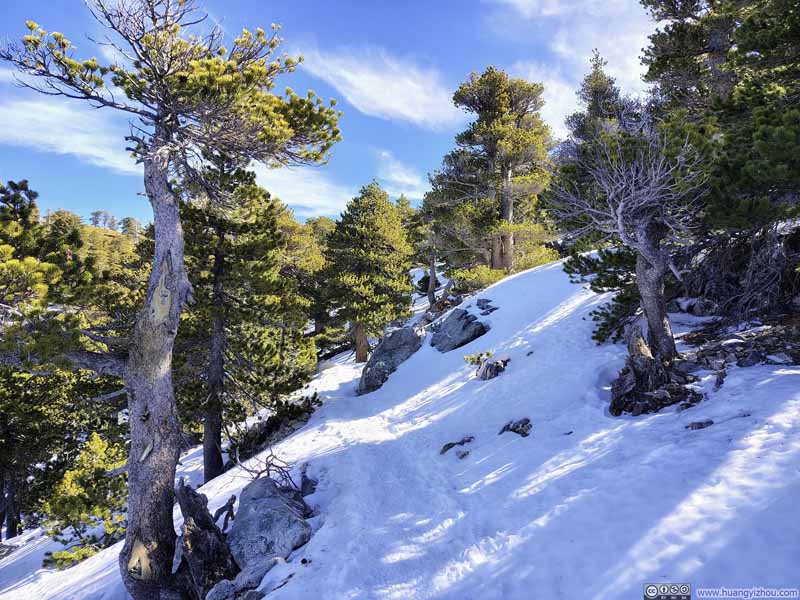
Continuing on, the next leg of the trail skirted the flanks of Bighorn Peak before reaching Cucamonga Saddle. I had read that snow cover was possible along the trail to Cucamonga Peak during the winter months. So far, the trail to Icehouse Saddle had been completely dry, but not long after setting off toward Cucamonga Saddle, patches of snow began to appear along the path (p2, 3, 5 below). Some of these patches were icy and offered little traction, but given how intermittent the snow cover was, I decided not to use microspikes.
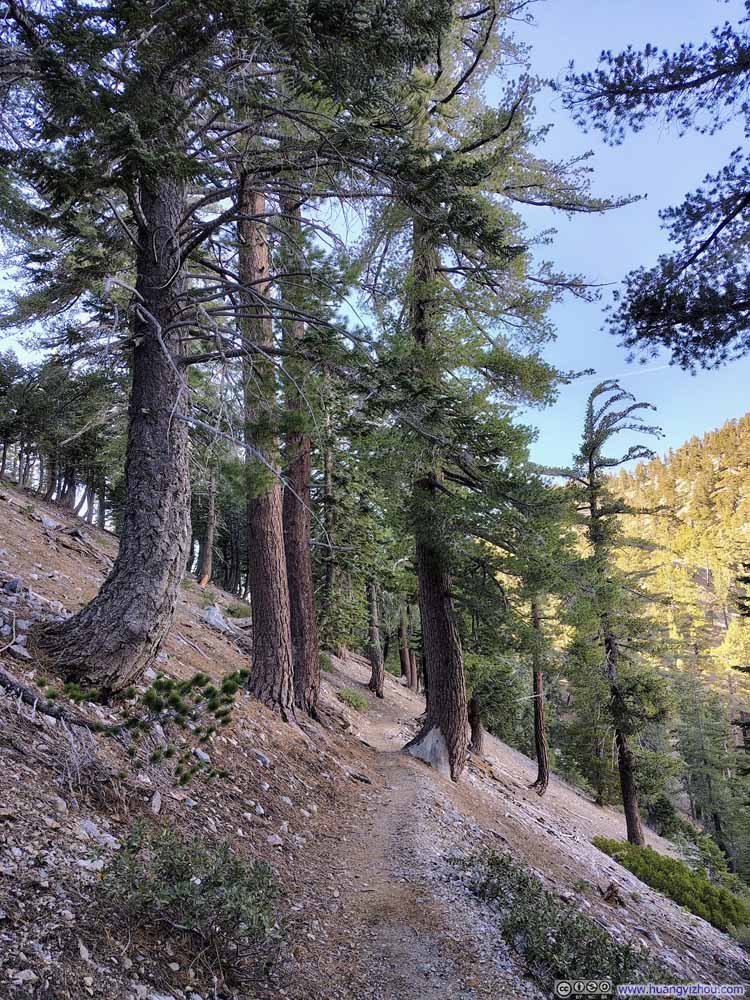 Trail
Trail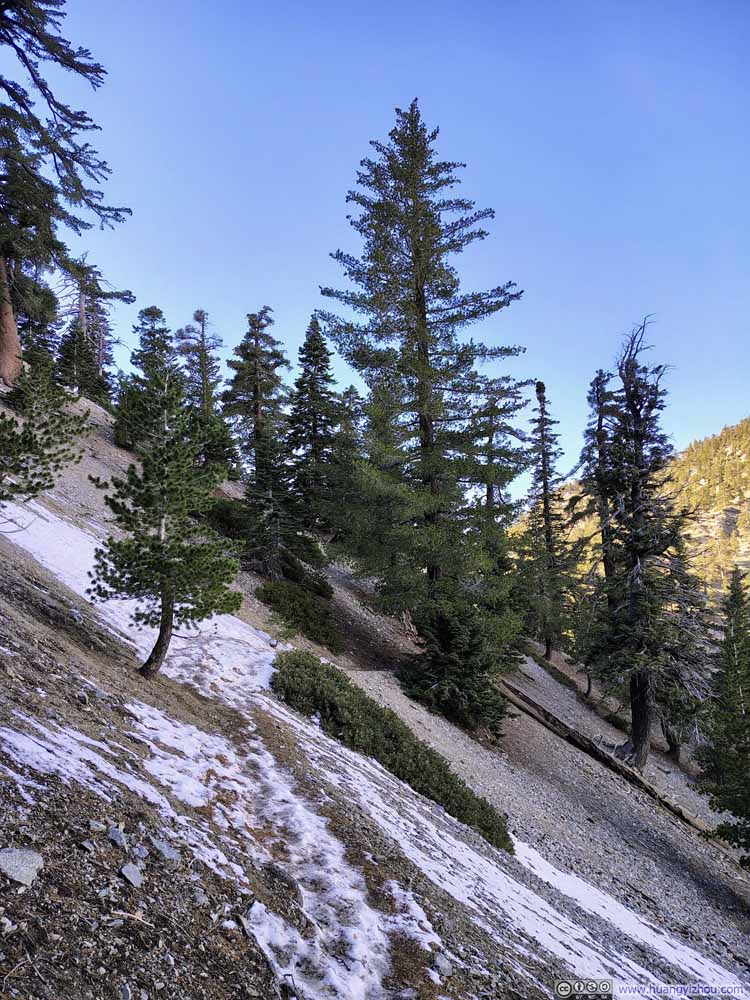 Snow along Trail
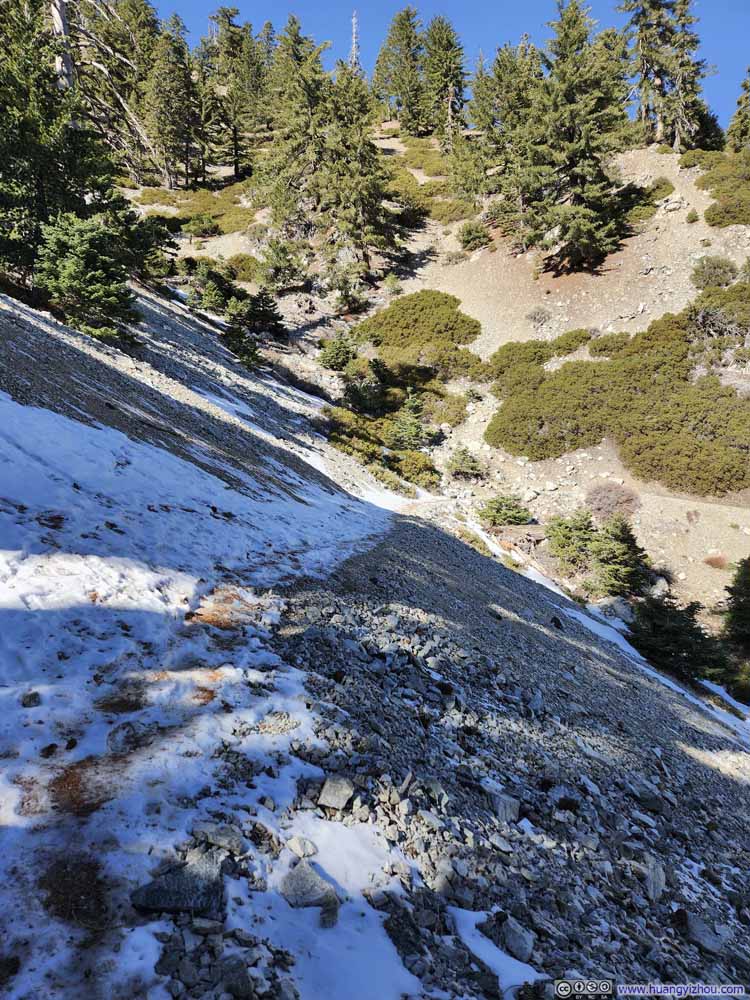 Snow along Trail
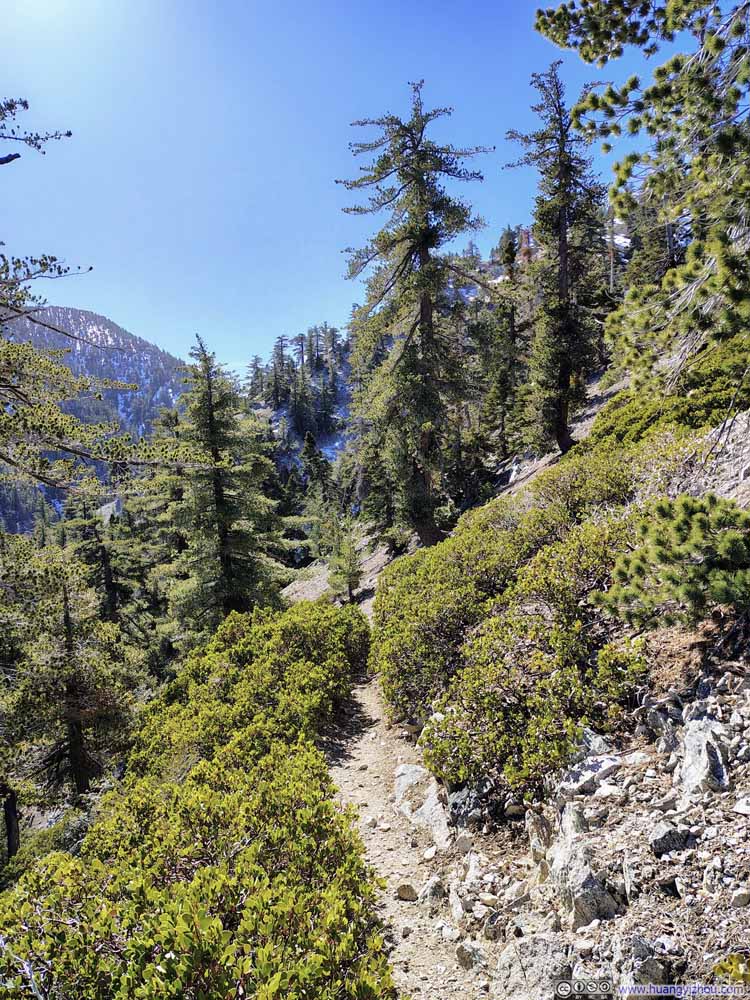 Trail
Trail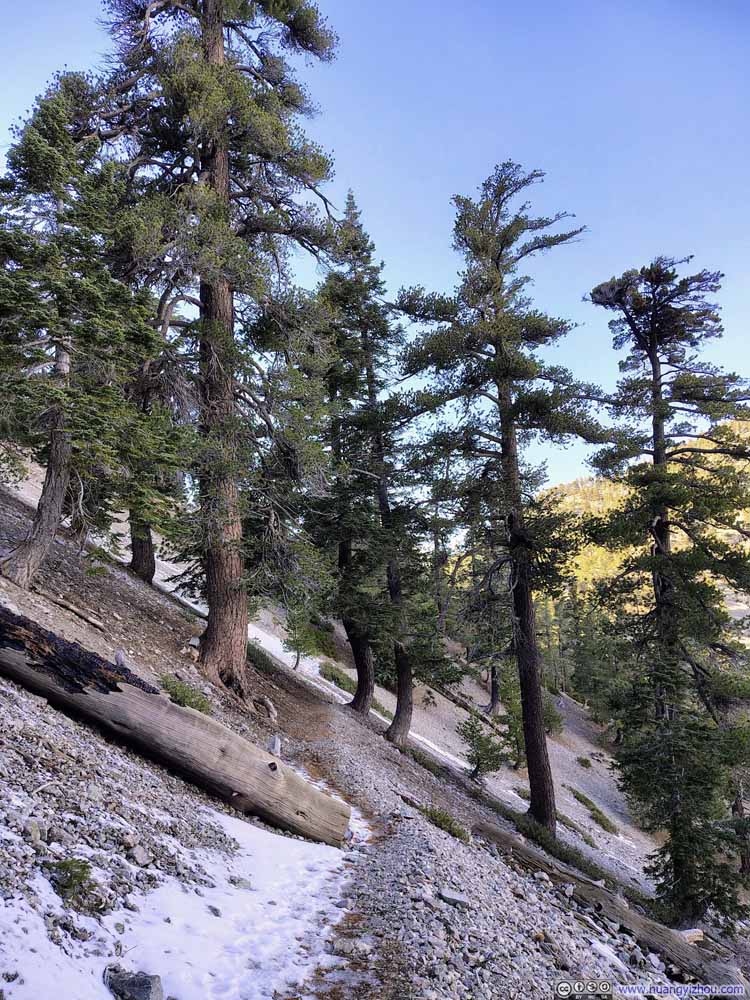 Snow along Trail
 Trail
Trail
Click here to display photos of the slideshow
Trail
Snow along Trail
Snow along Trail
Trail
Snow along Trail
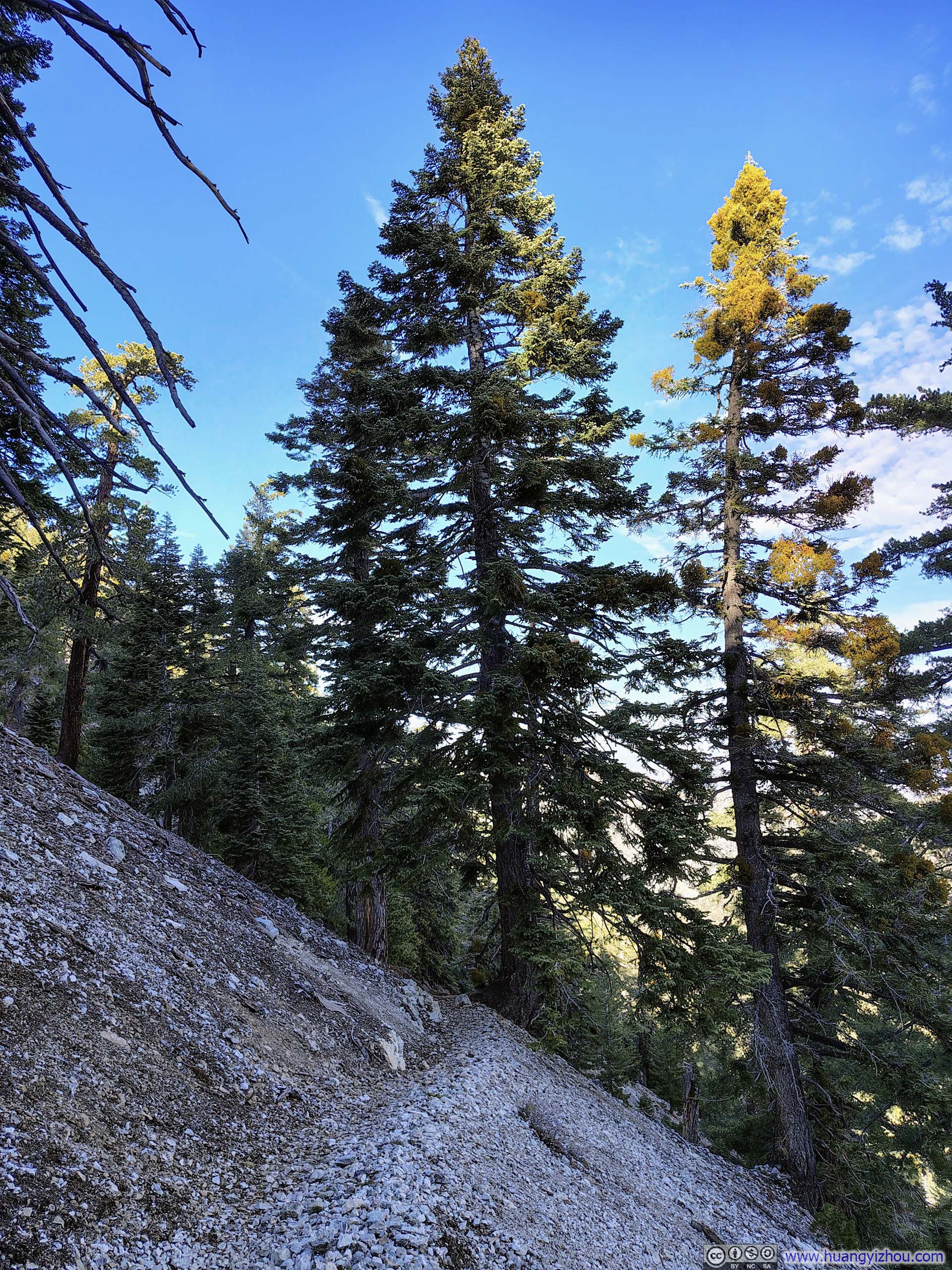
Trail
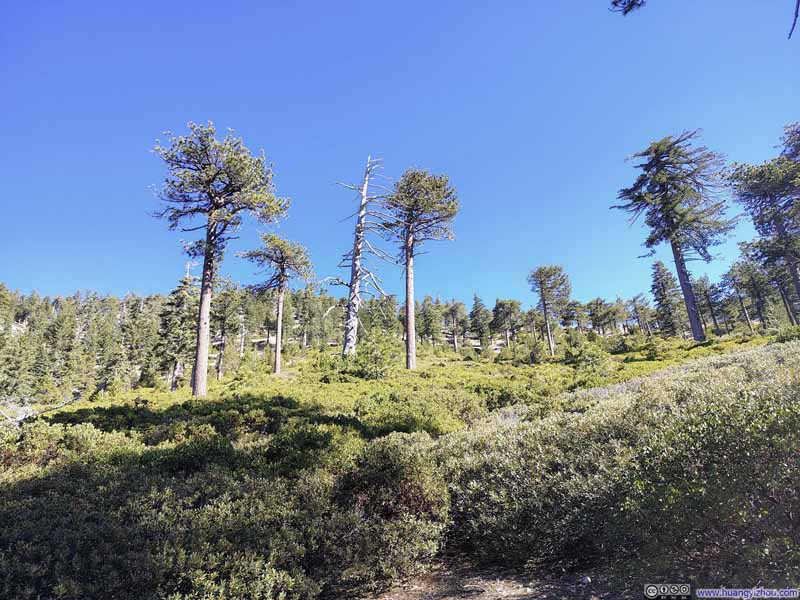 Trees along Trail
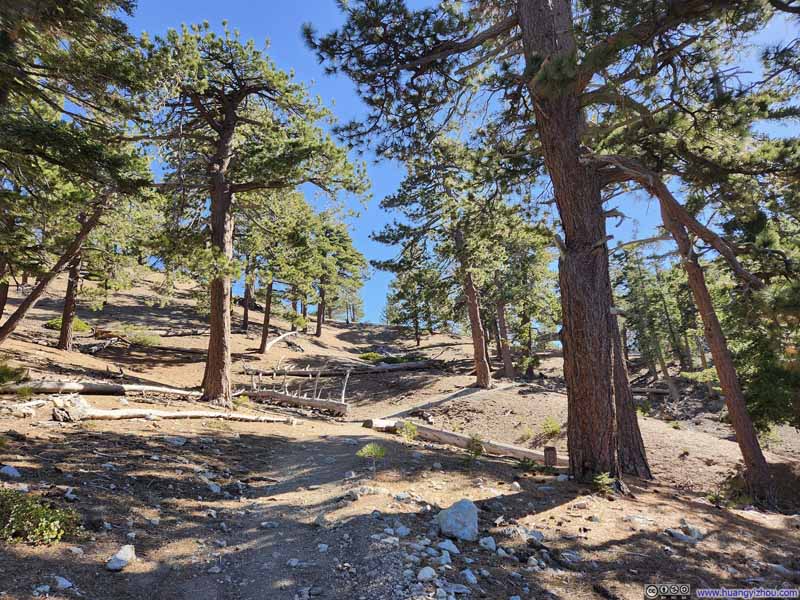 Trail
Trail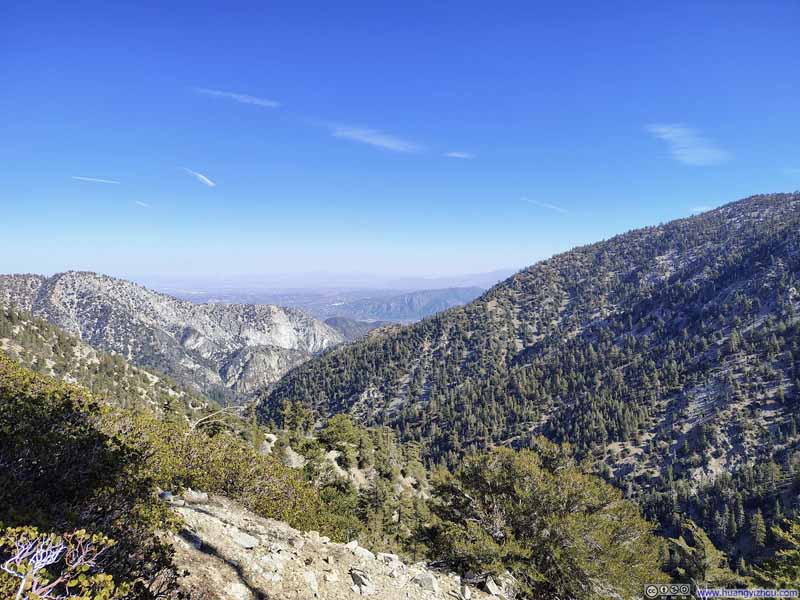 Mountains towards Cajon Pass
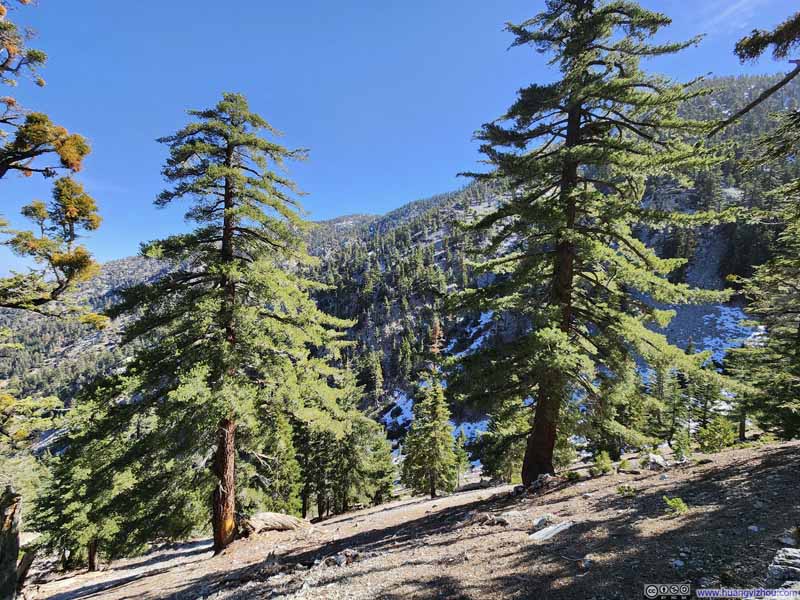 Trees along Trail
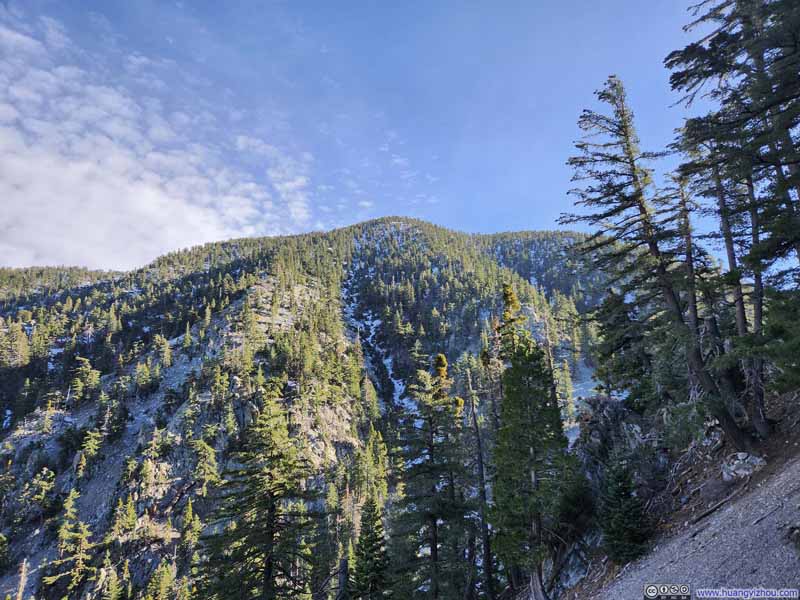 Cucamonga Peak from Trail
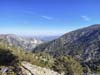
Click here to display photos of the slideshow
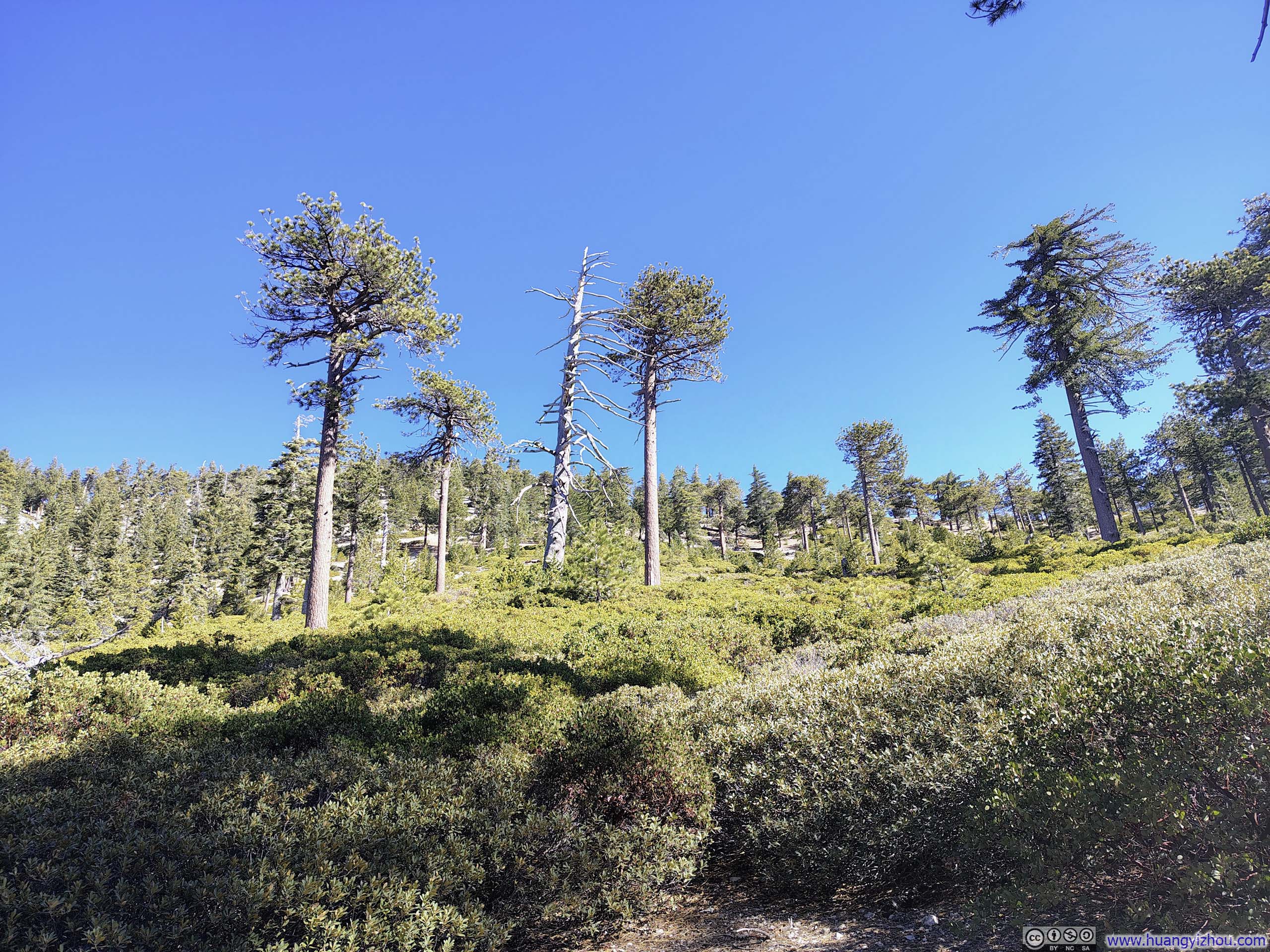
Trees along Trail
Trail
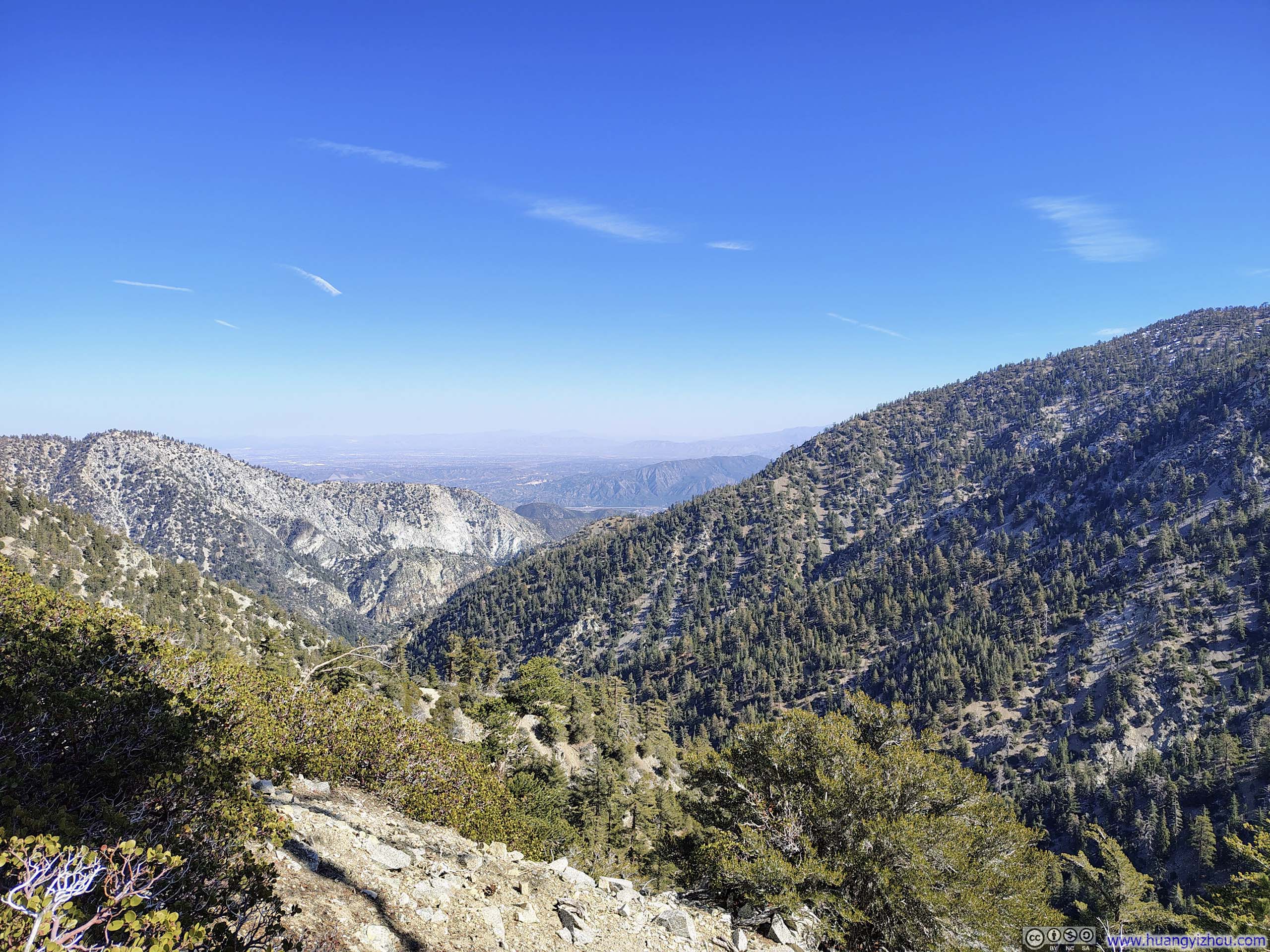
Mountains towards Cajon Pass
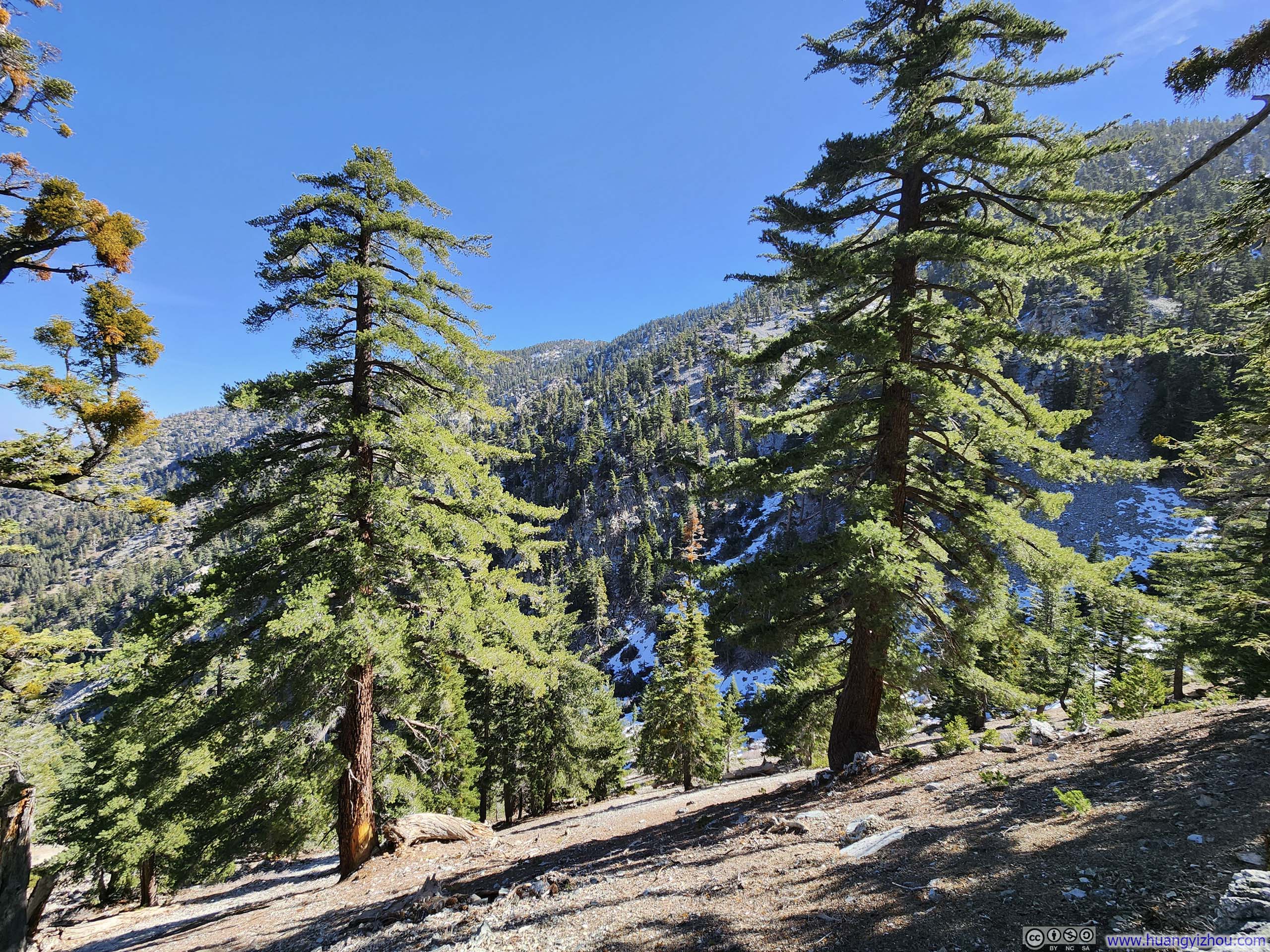
Trees along Trail
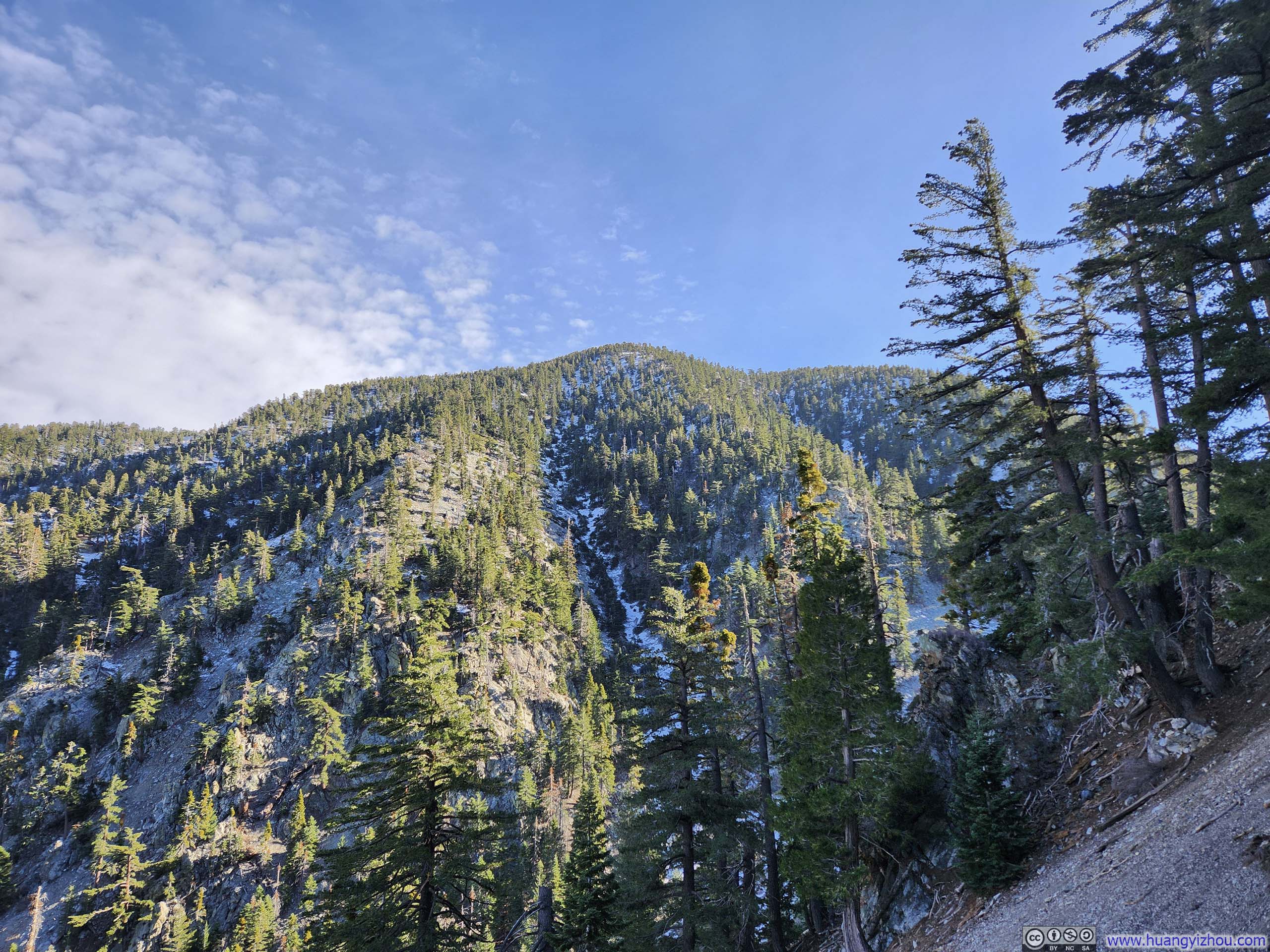
Cucamonga Peak from Trail
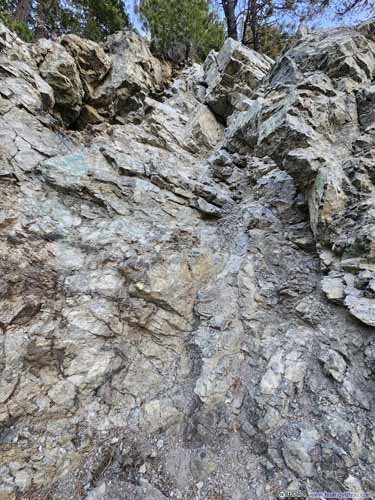
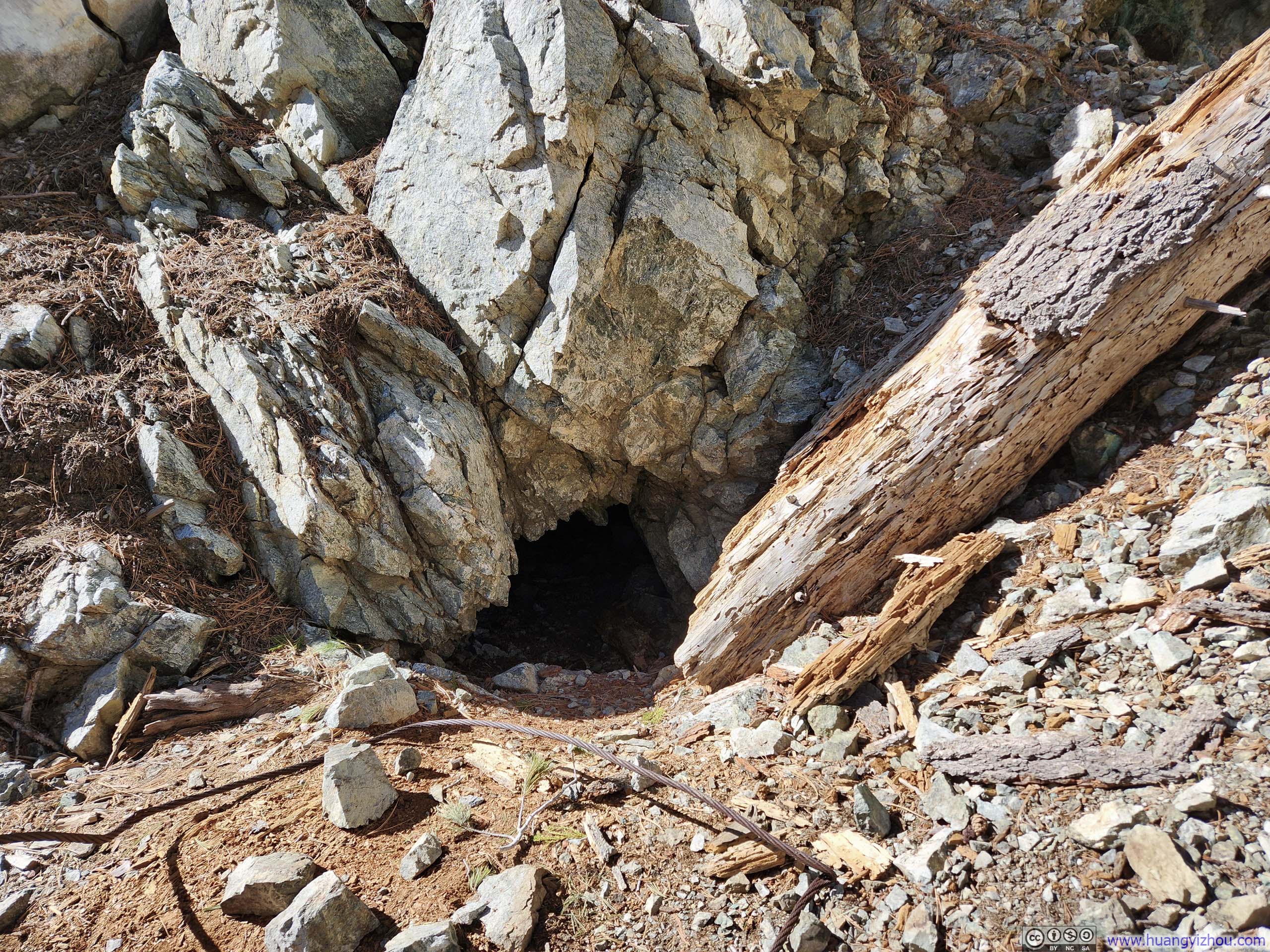
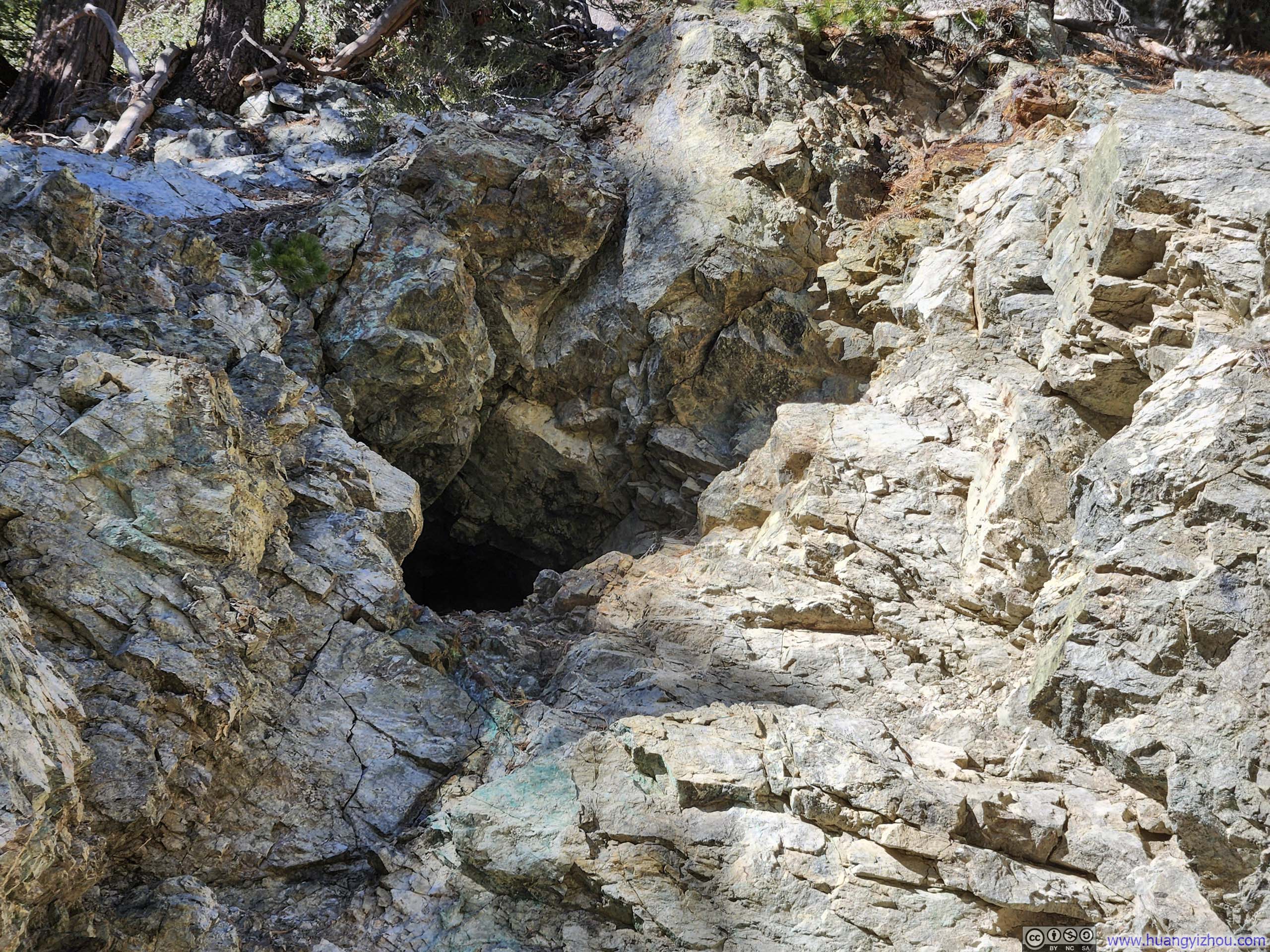
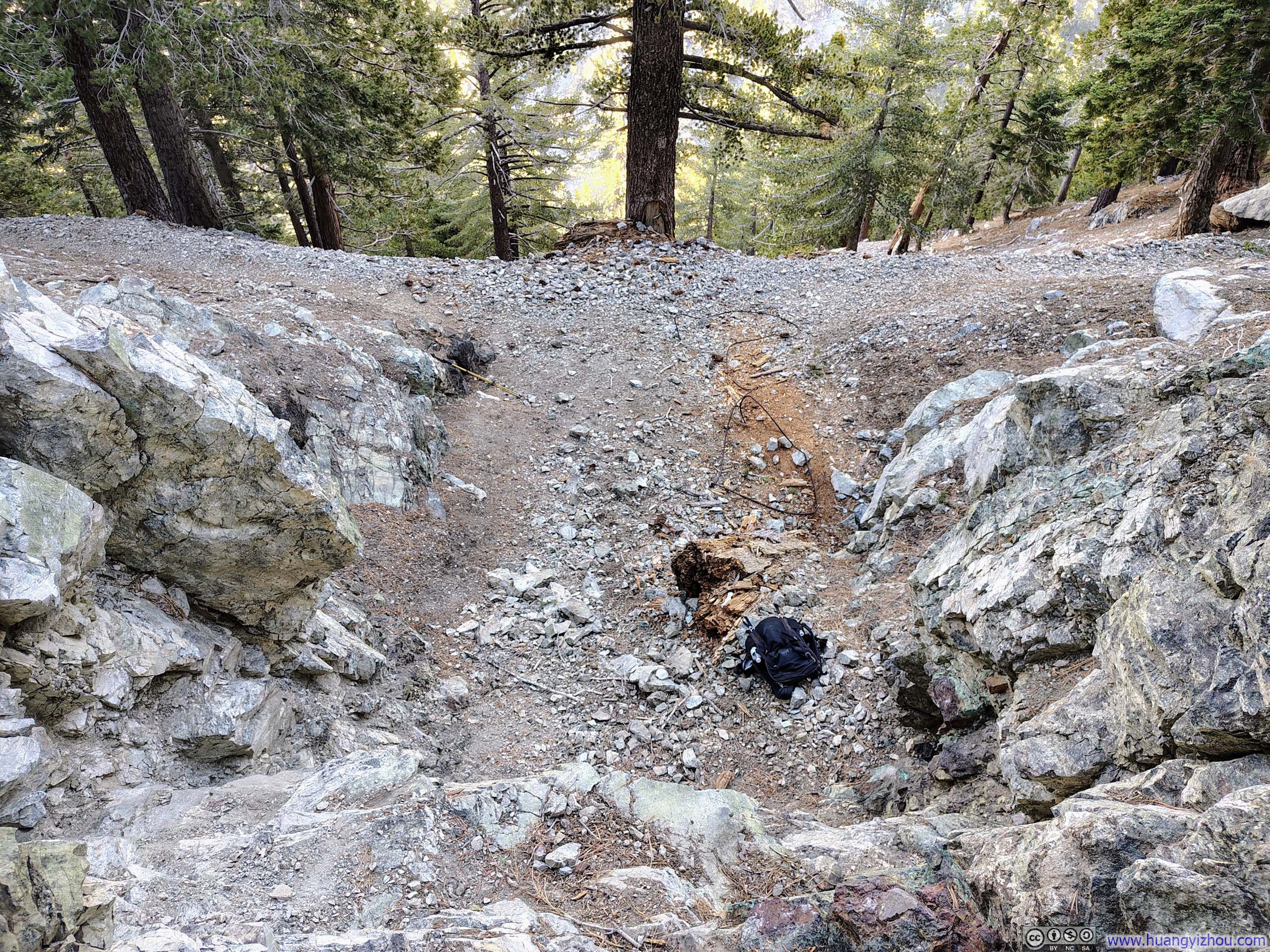
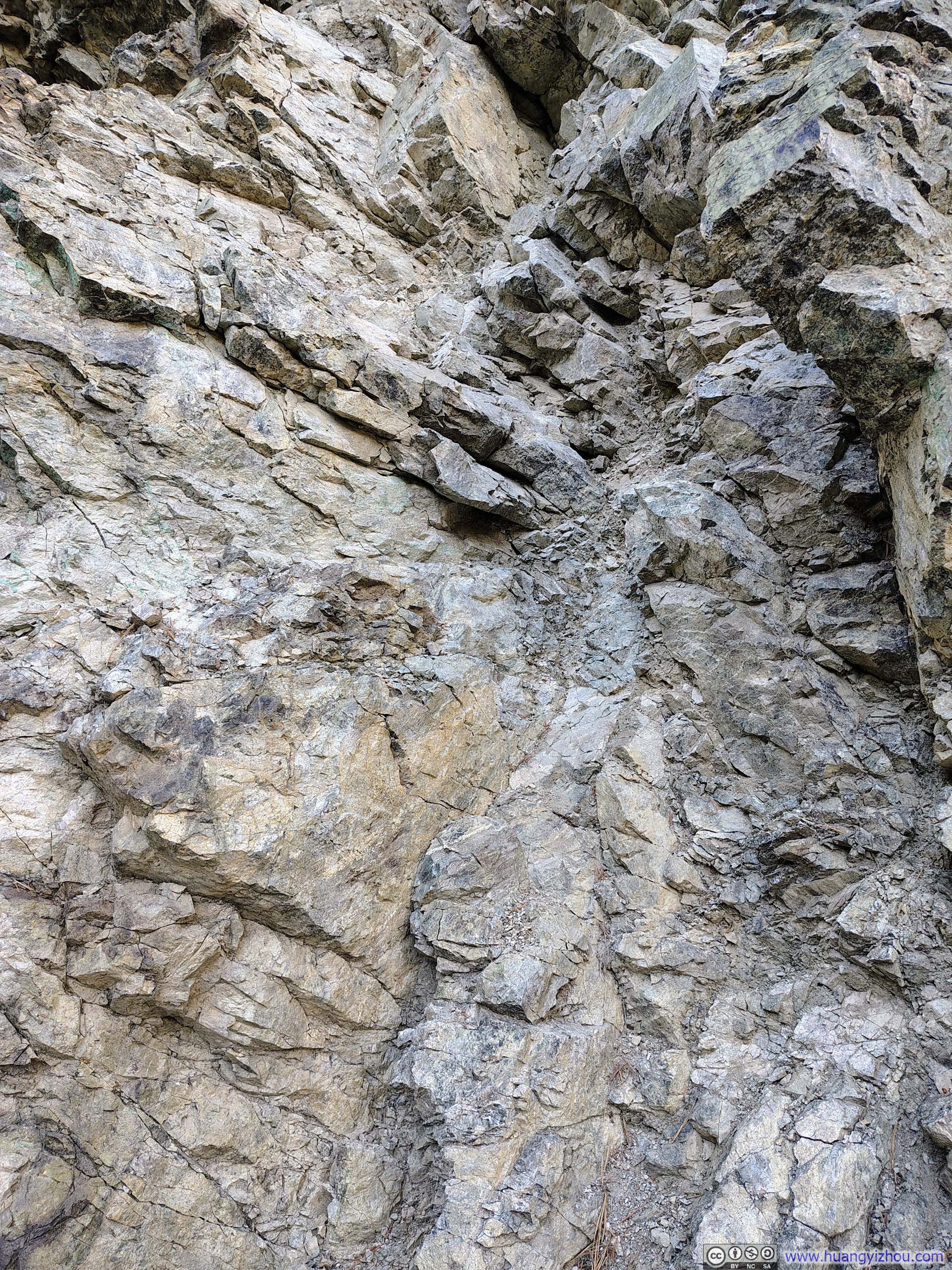
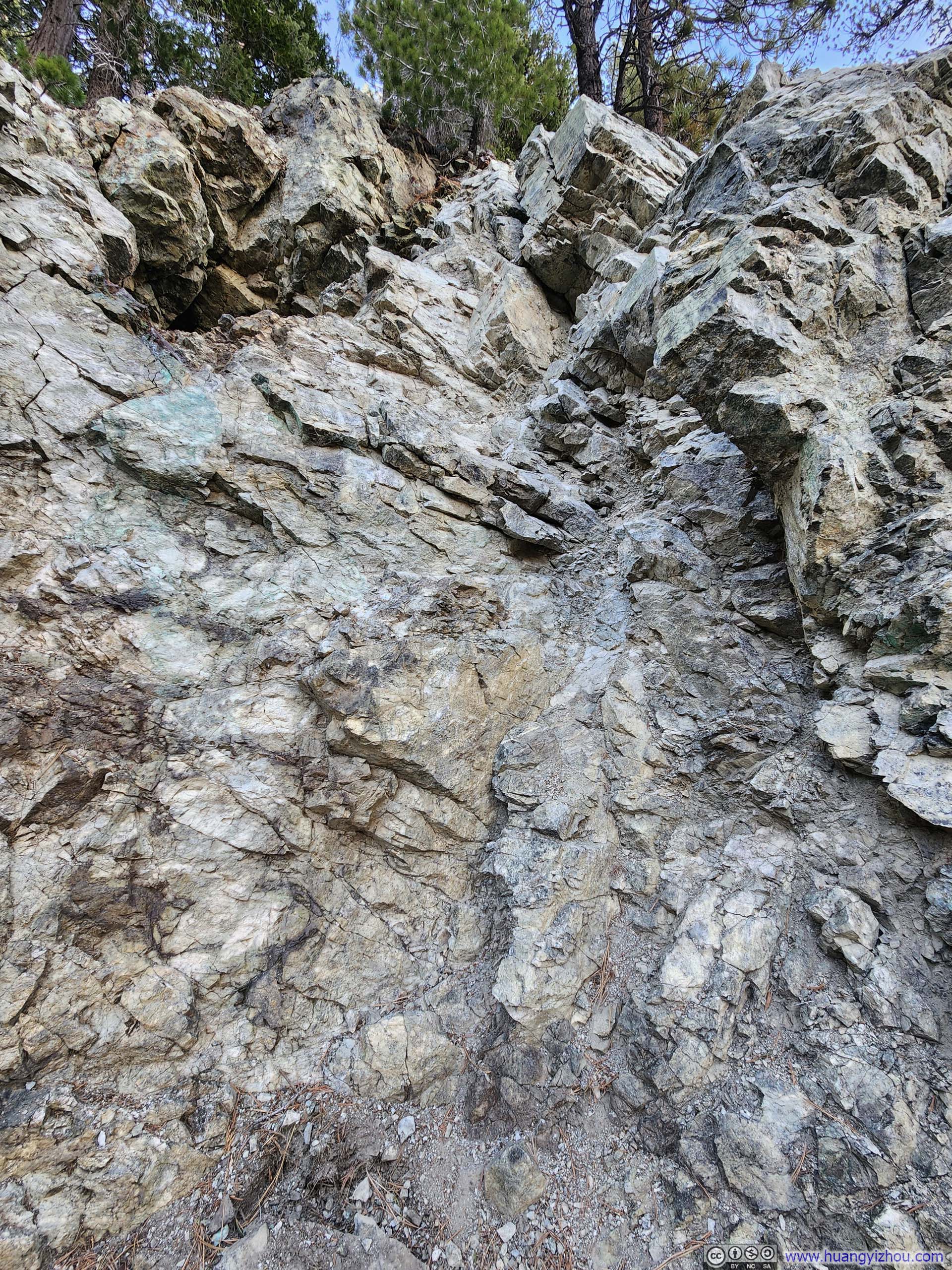
Along the way, I found two small caves right beside the trail. The first one was ground level (p1 below), its entrance no more than a narrow opening; the second one perched higher up (p2 below), demanding a bit of scrambling to reach (p4 below). On my way back I decided to scale the rock face and investigate the upper cave, which turned out to be pretty disappointing: What had appeared to be a proper cave when viewed from below turned out to be little more than a shallow recess in the rock.
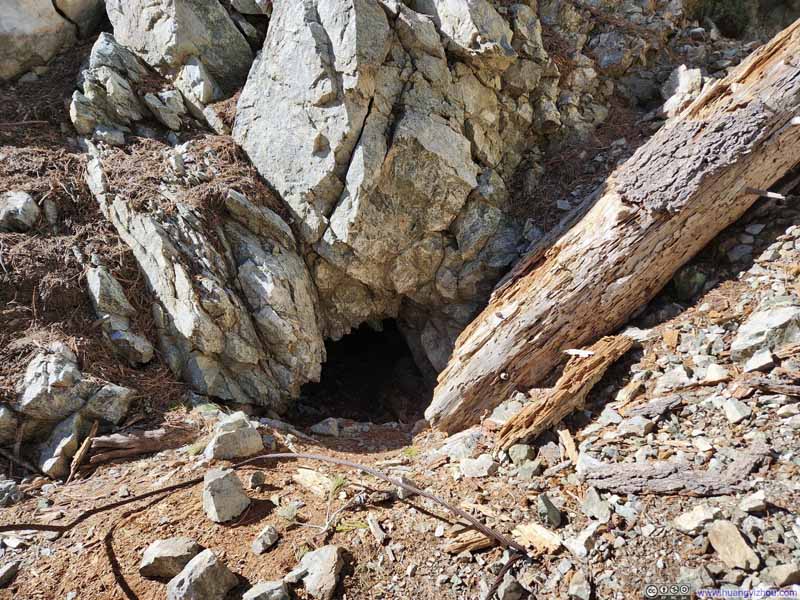 Small Cave
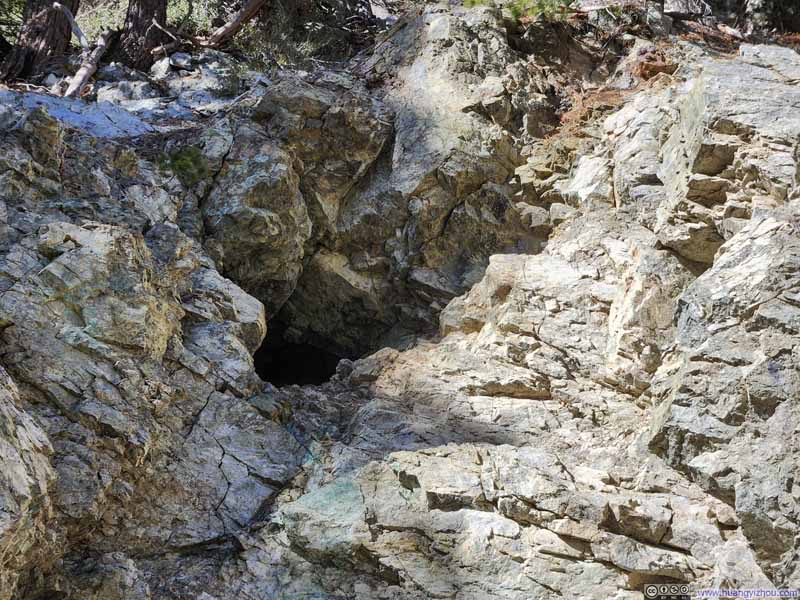 Small Cave above Cliff
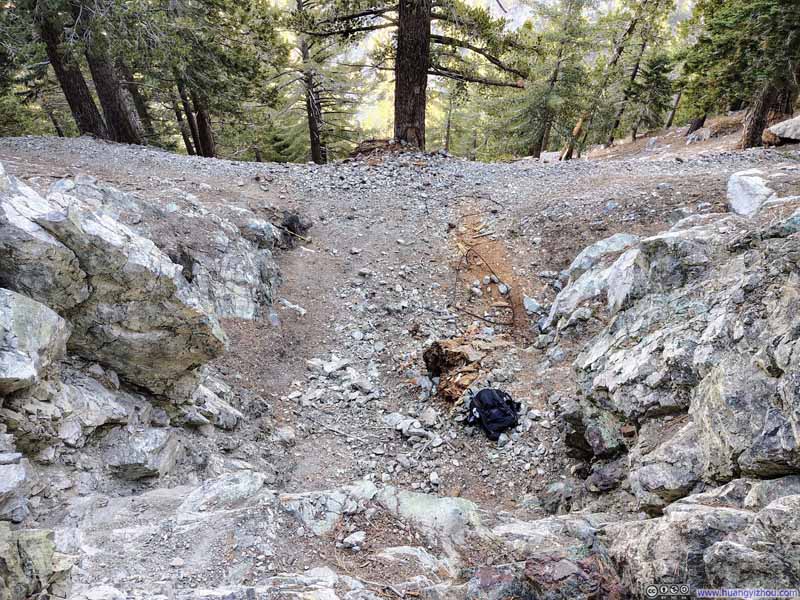 Looking Down from Small Cave on Cliff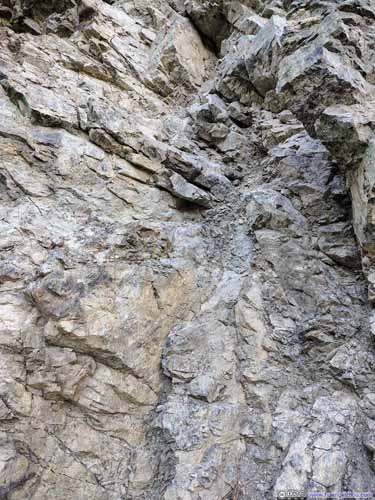
 Scrambling Path
Click here to display photos of the slideshow
Small Cave
Small Cave above Cliff
Looking Down from Small Cave on Cliff
 Scrambling Path
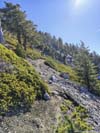
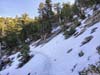
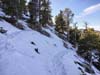
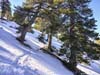
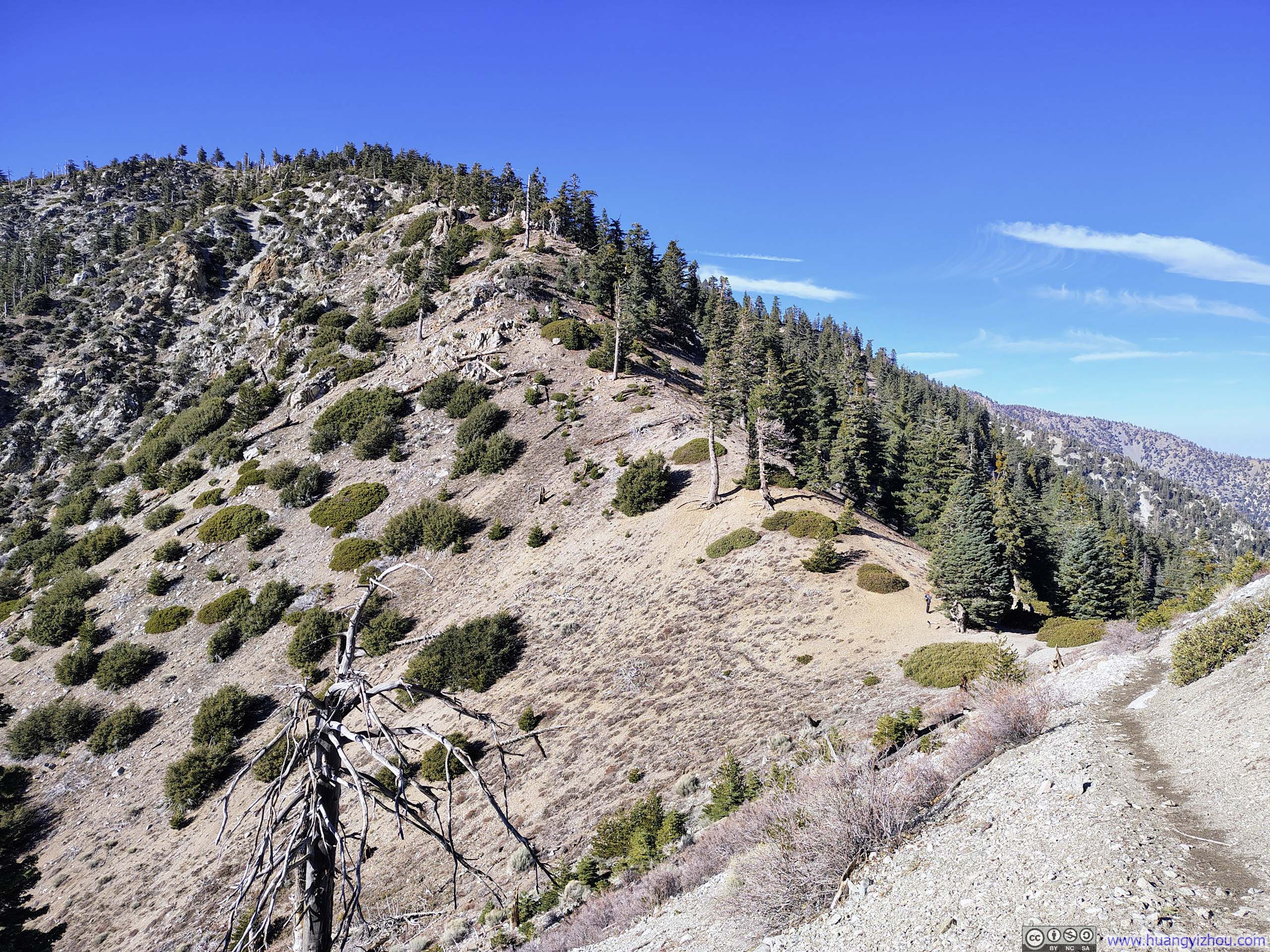
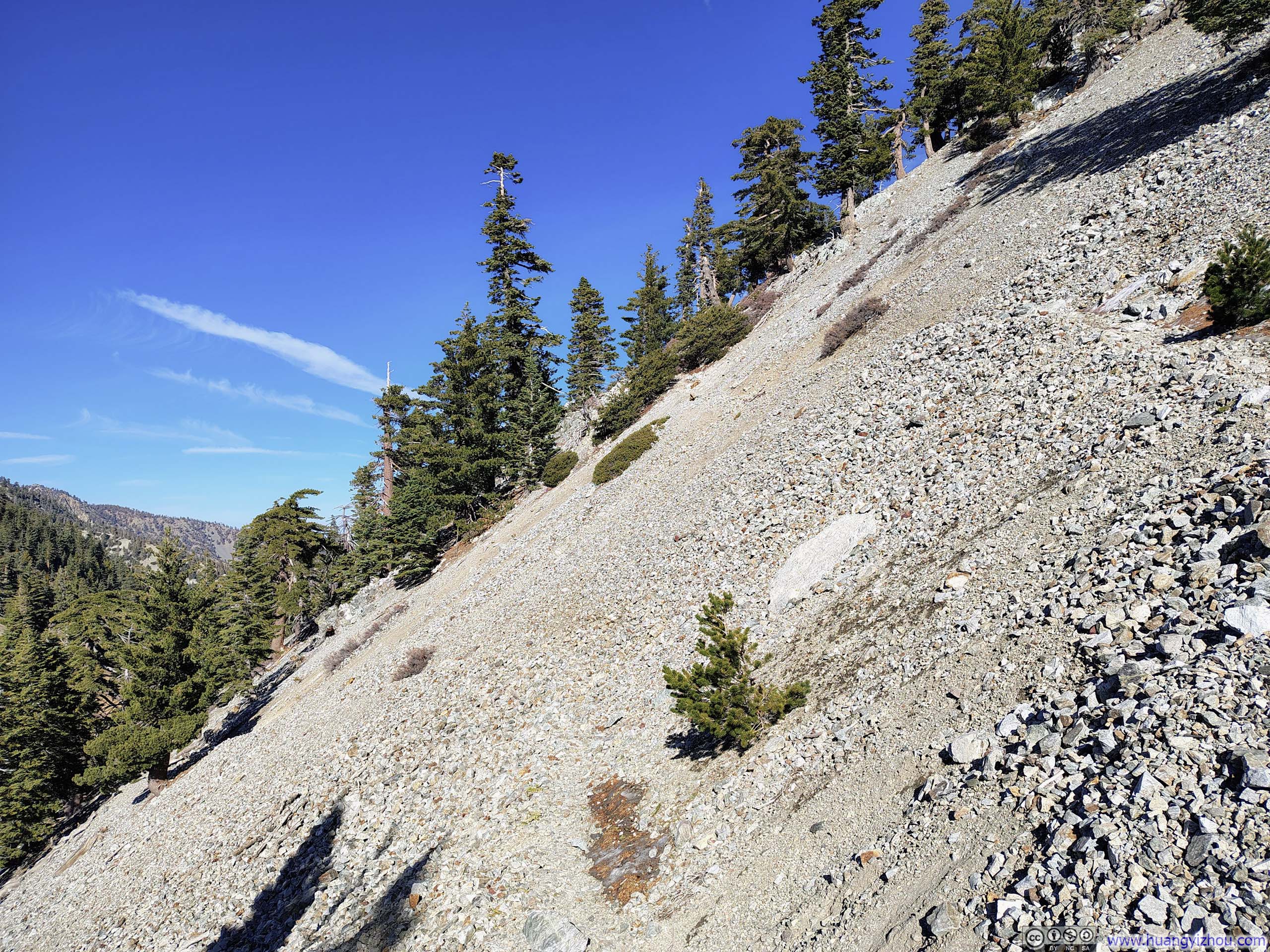
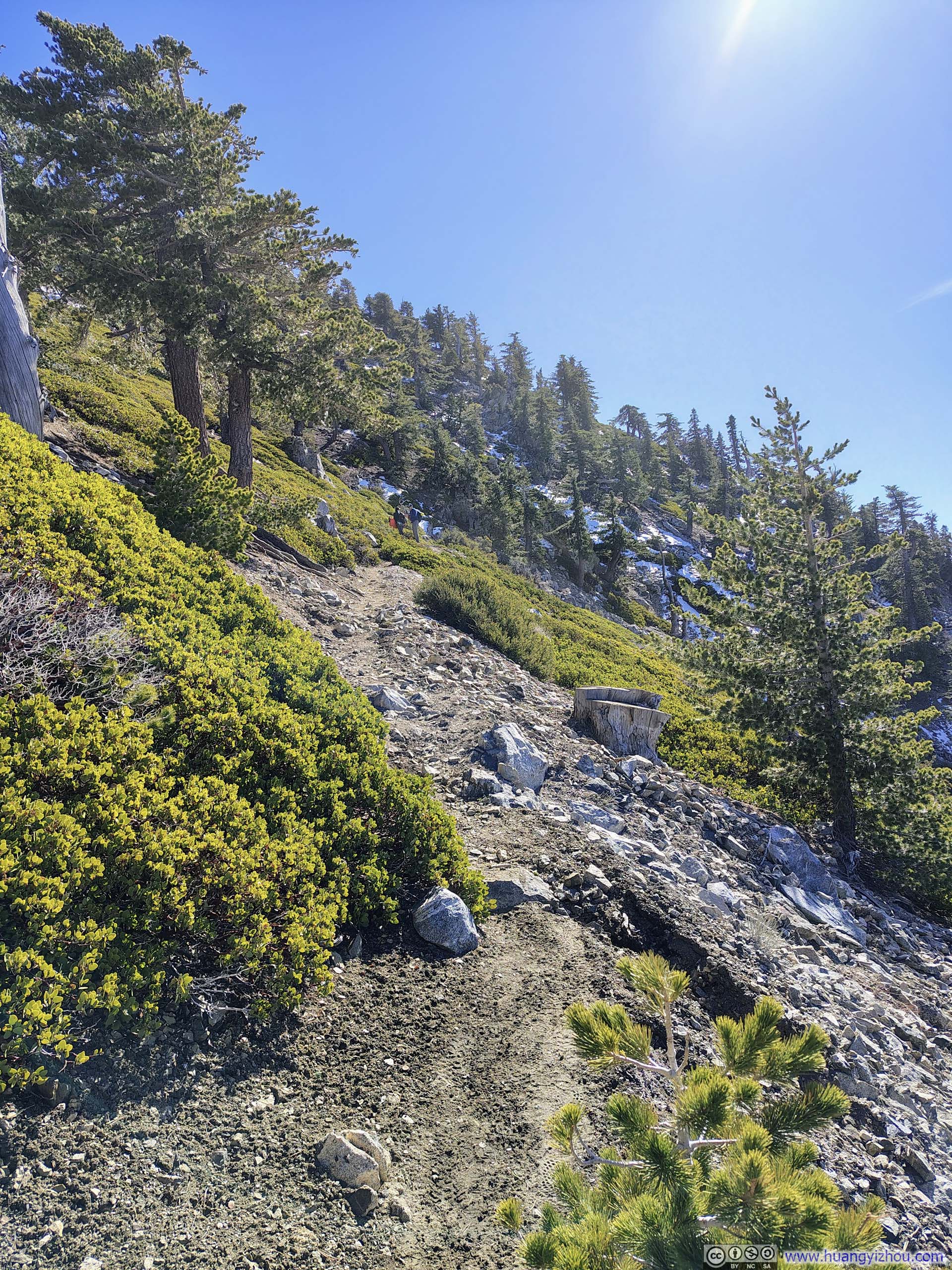
Leaving Cucamonga Saddle, the final stretch to Cucamonga Peak wound through a series of switchbacks, with snow cover gradually thickening along the way until the upper portions of the trail lay completely buried in white. As much as traction was concerned along the trail, it maintained a very gentle gradient throughout, so it was the camber that demanded caution for most of the time on snowy surfaces. Predictably, there was one middling section where snow came and went in patches, an inconsistency I found particularly disagreeable to navigate. (Overall, the snow provided much better traction than my hike of Mt Wrightson in Arizona two months ago.)
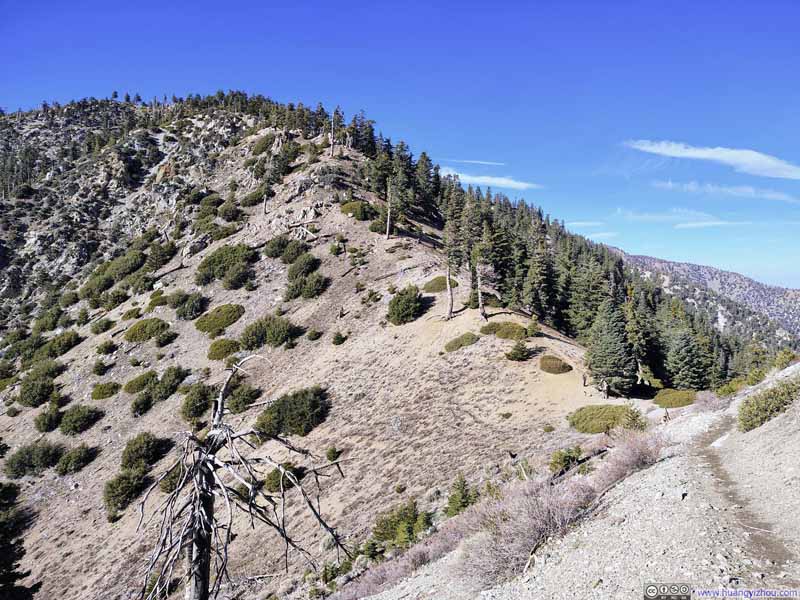 Ridge to Bighorn Peak
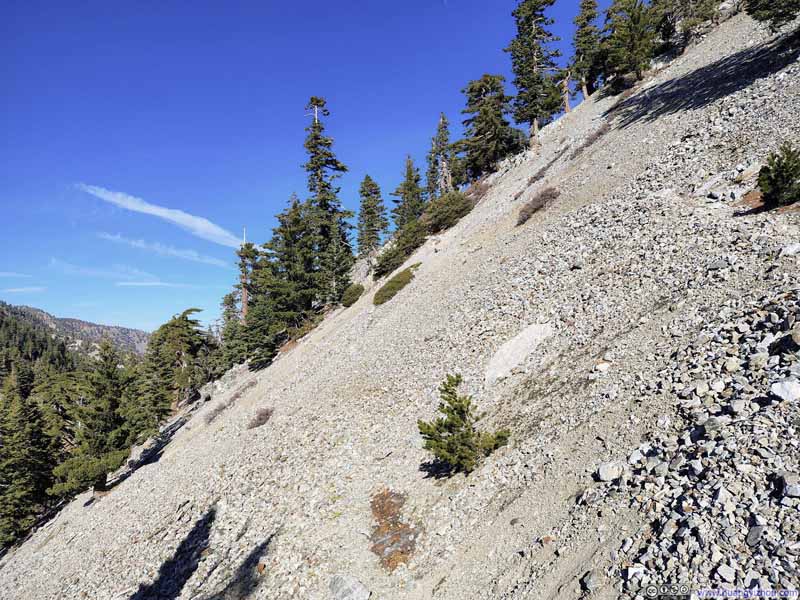 Trail along Rocky Slope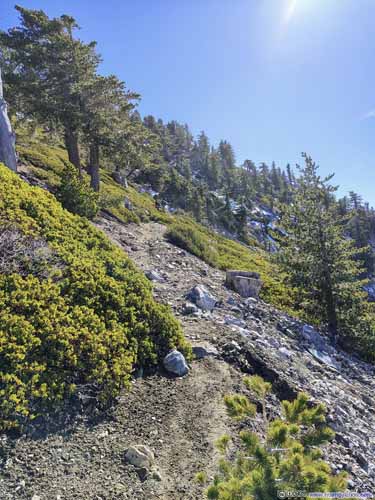
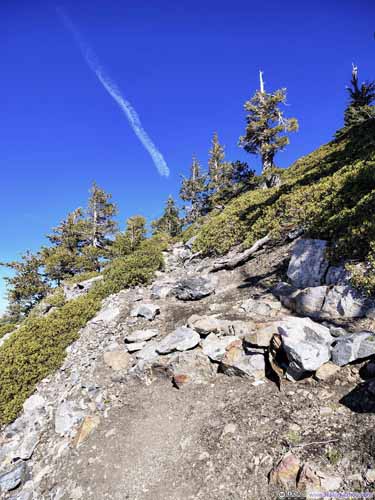 Trail
Trail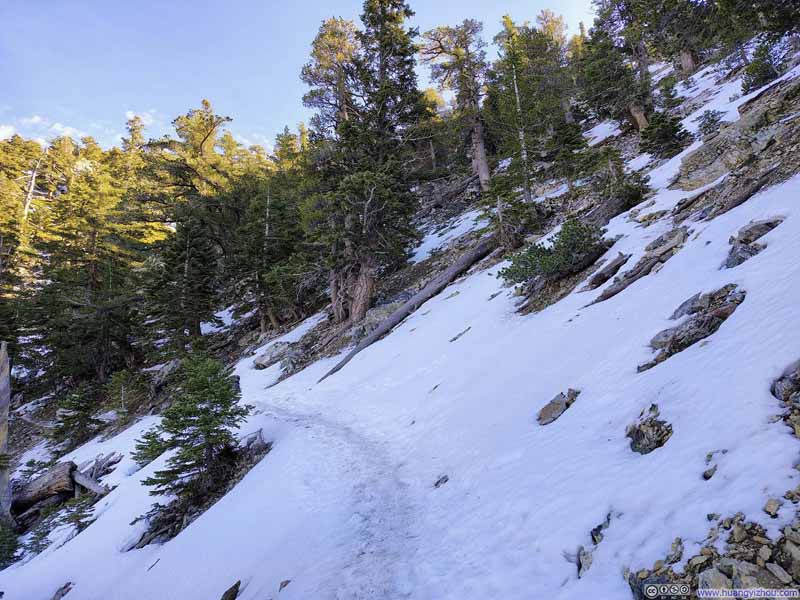 Snow along Trail
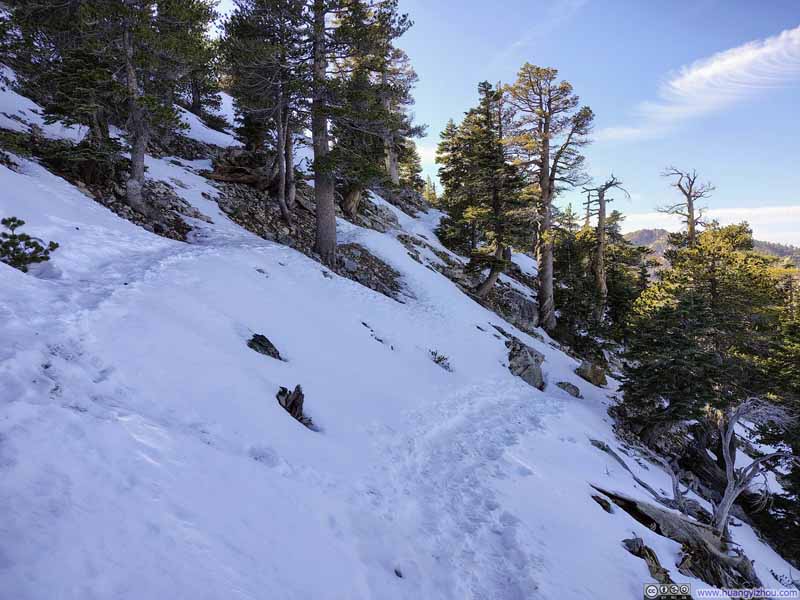 Snow along Trail
 Snow along Trail
 Snow along Trail
Click here to display photos of the slideshow
Ridge to Bighorn Peak
Trail along Rocky Slope
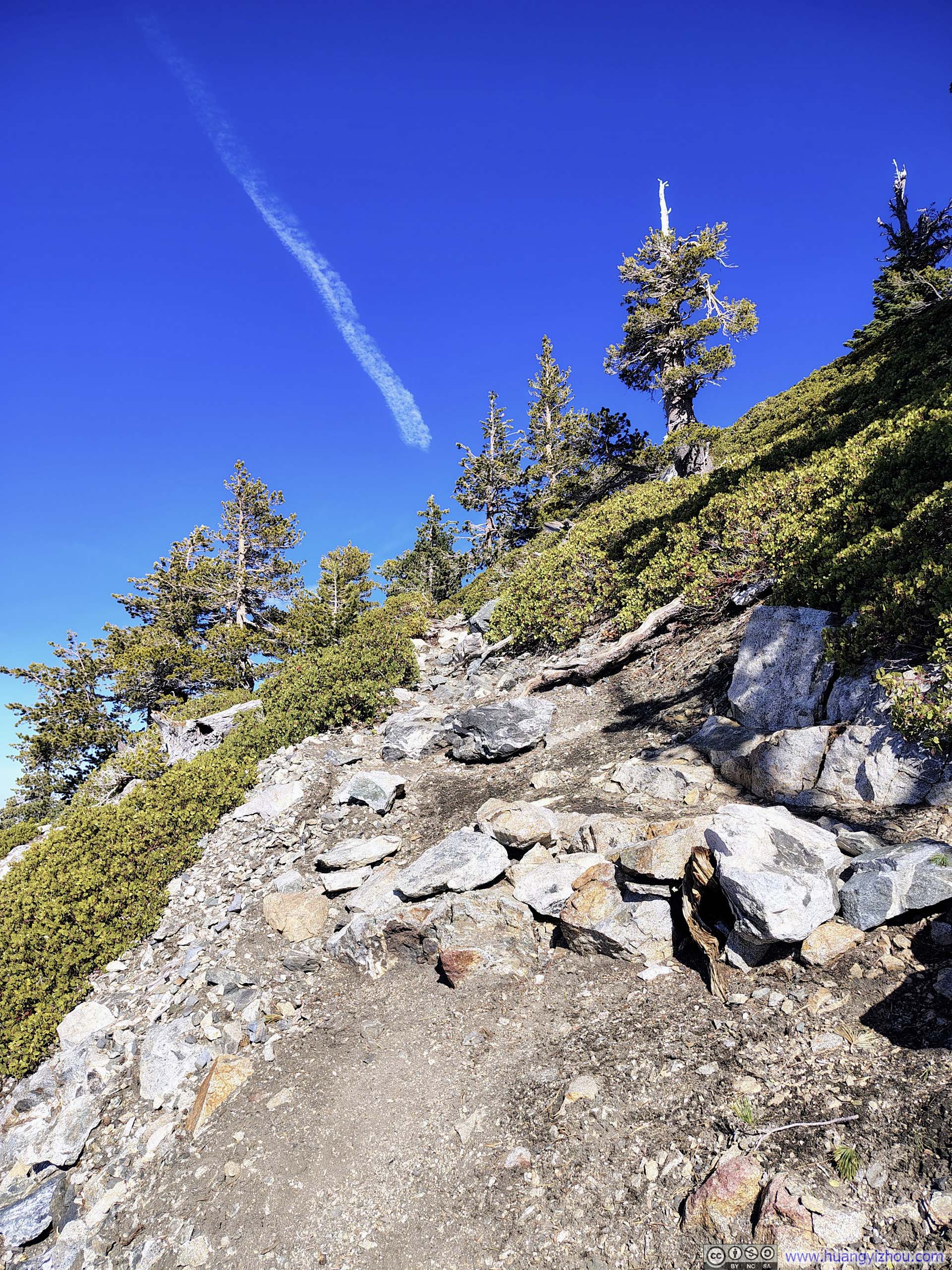 Trail
Trail
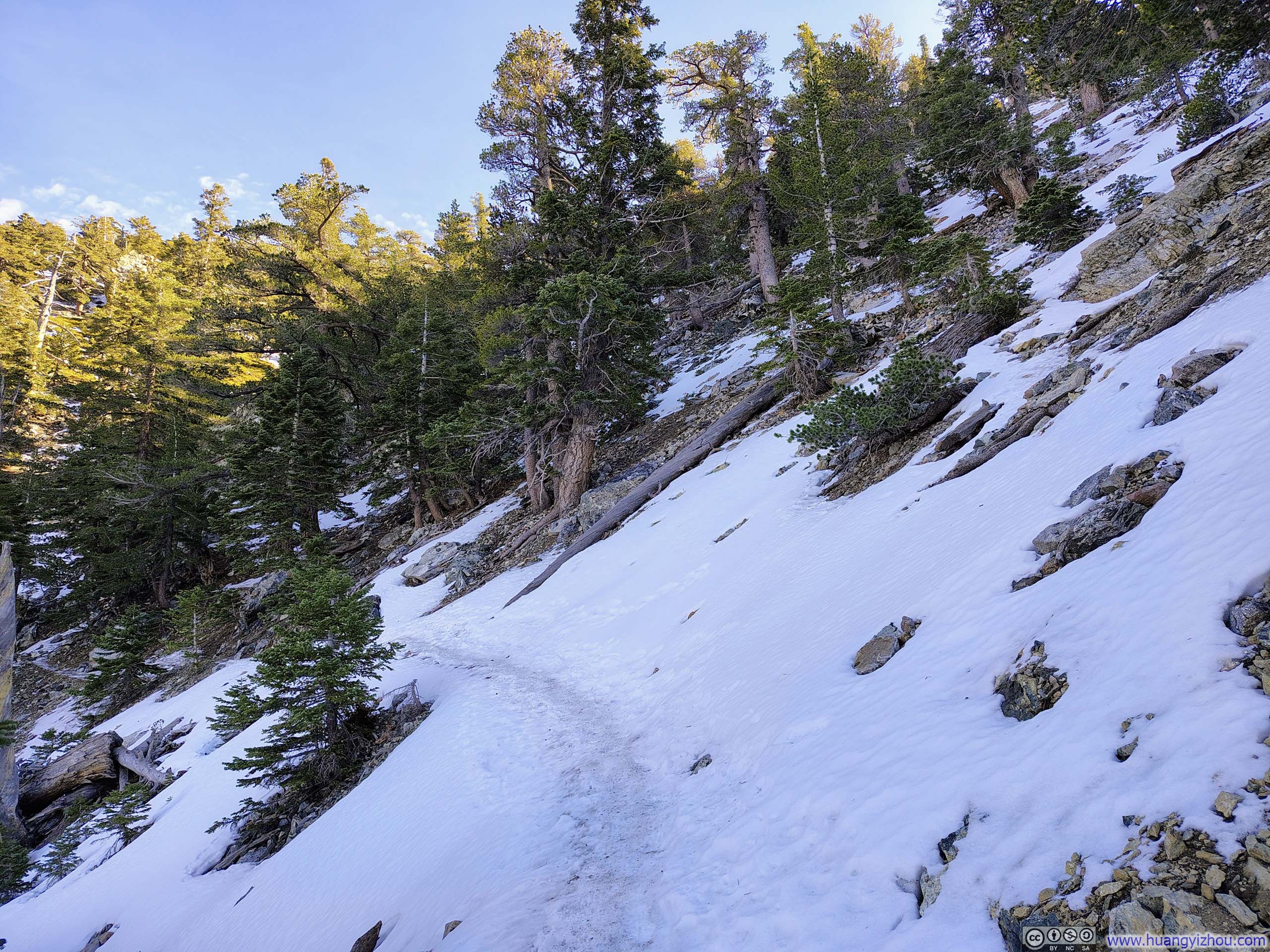
Snow along Trail
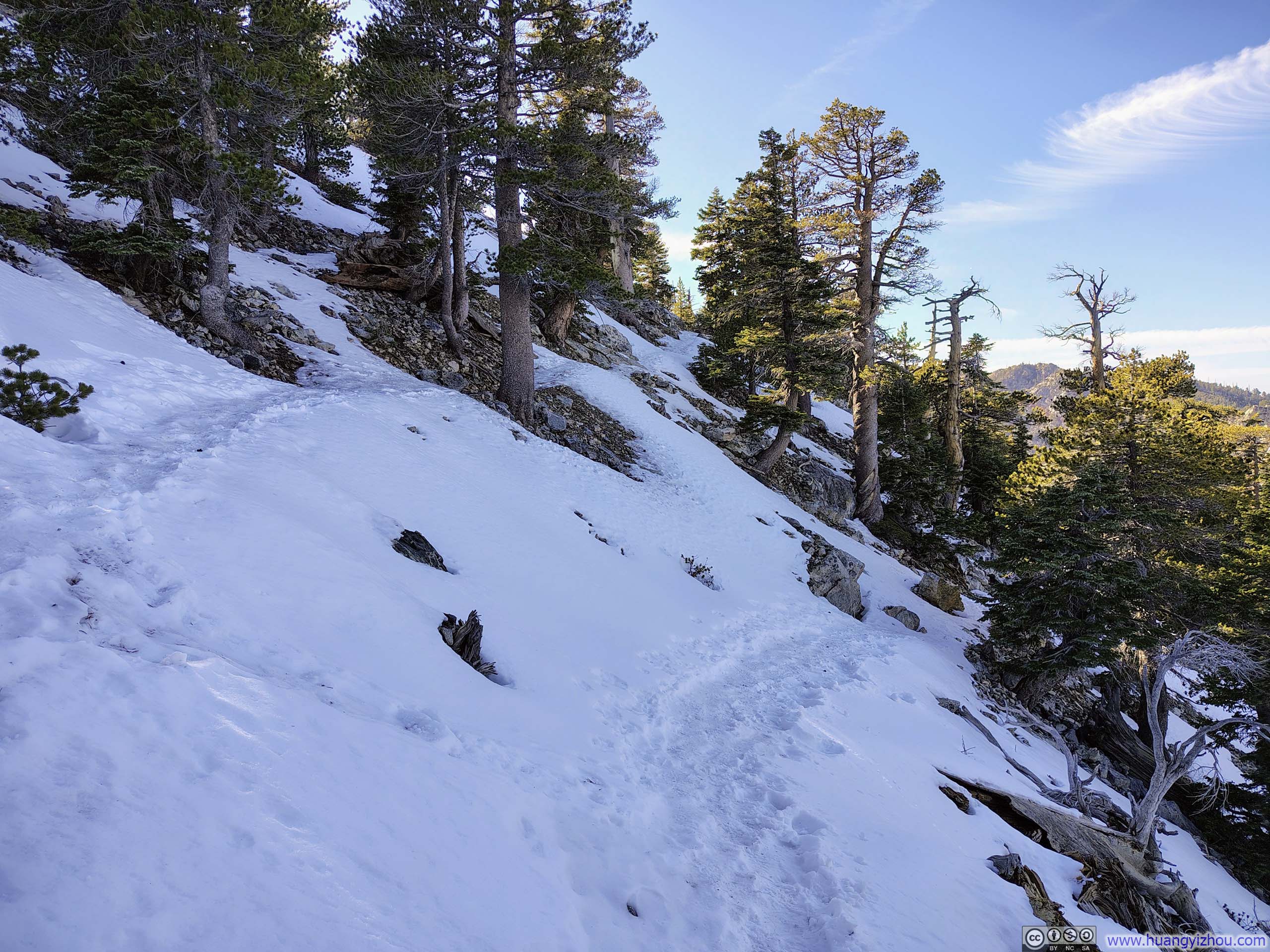
Snow along Trail
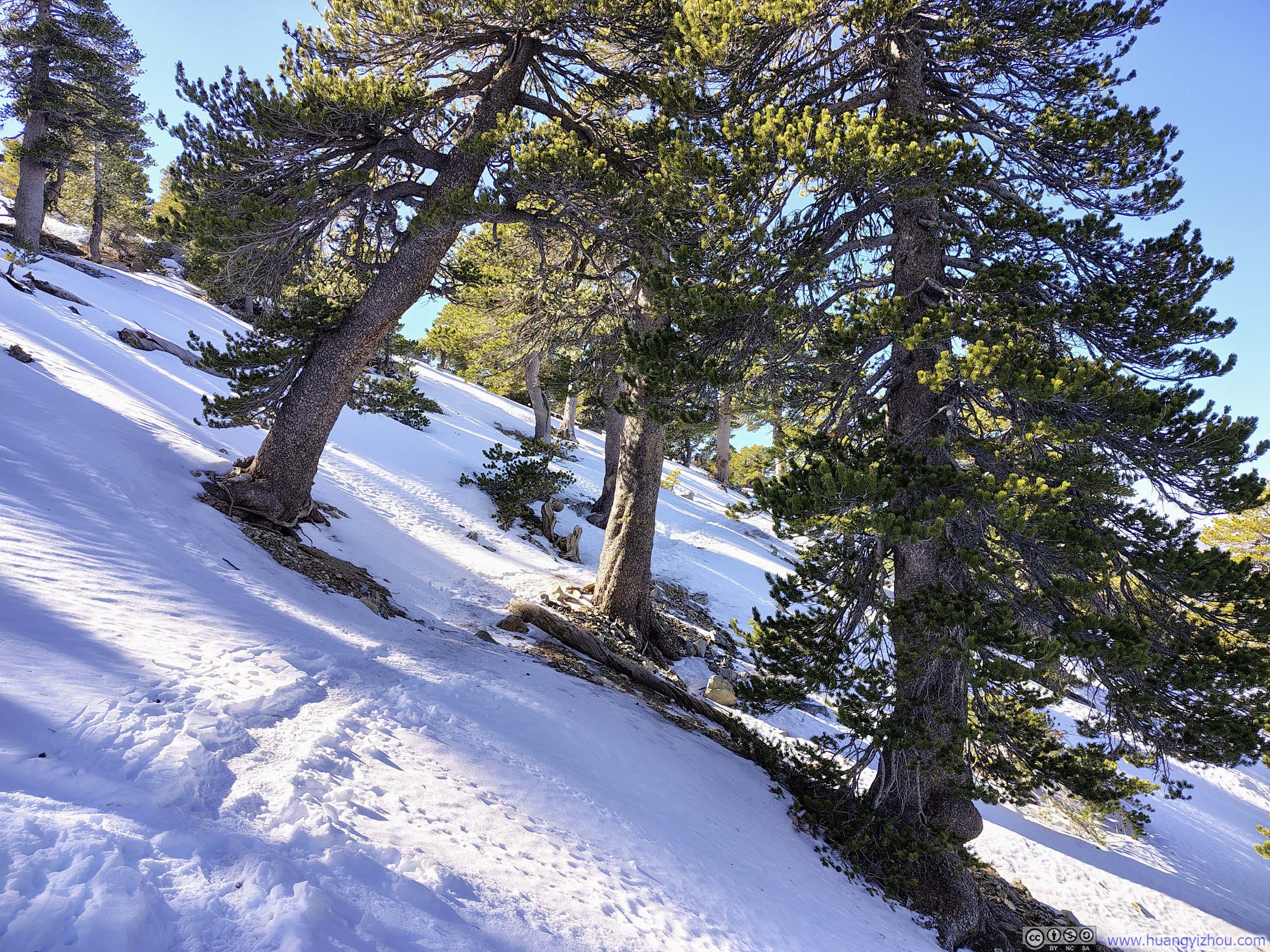
Snow along Trail
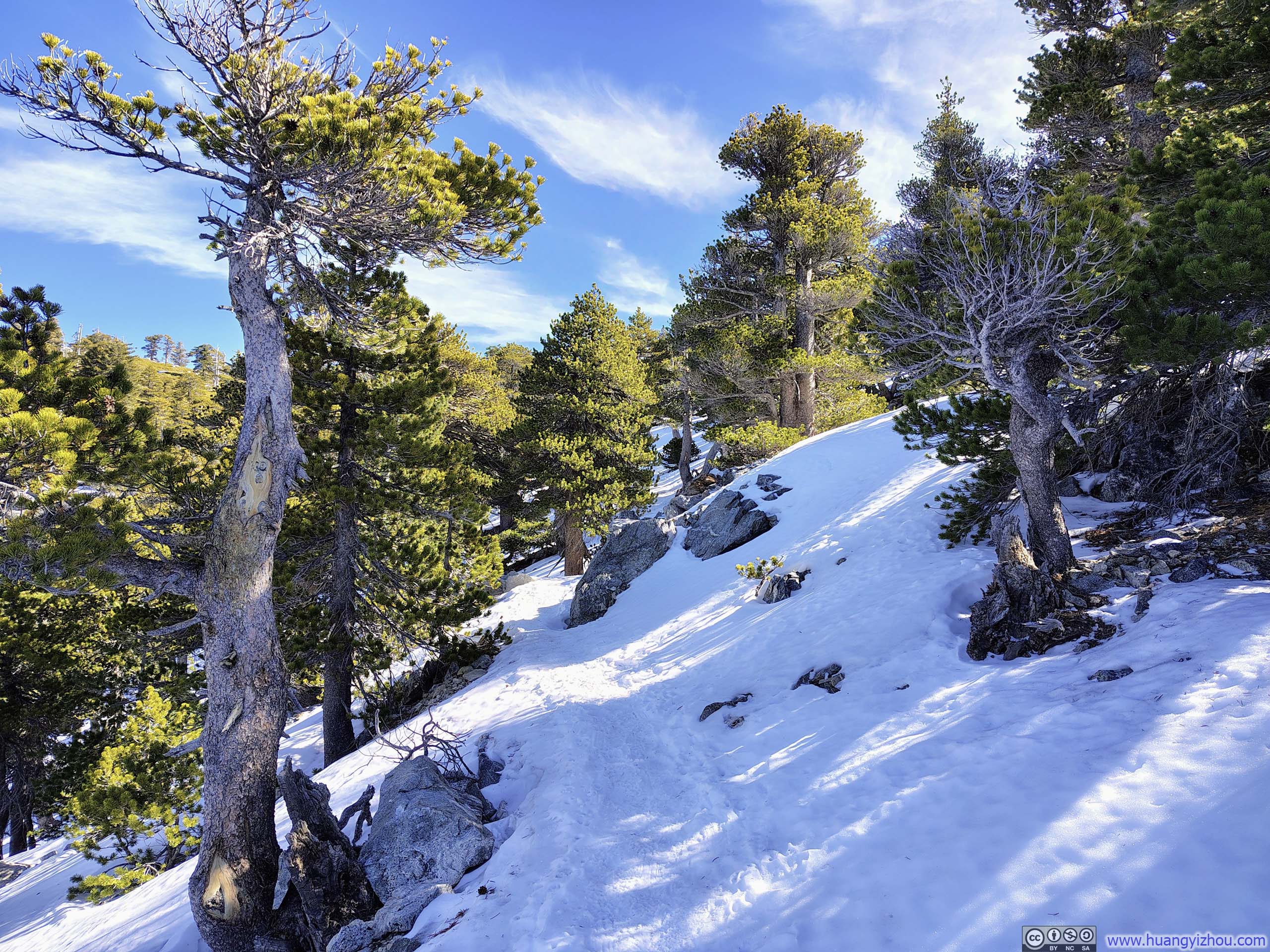
Snow along Trail
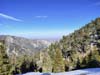
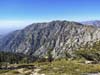
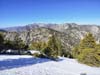
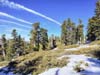
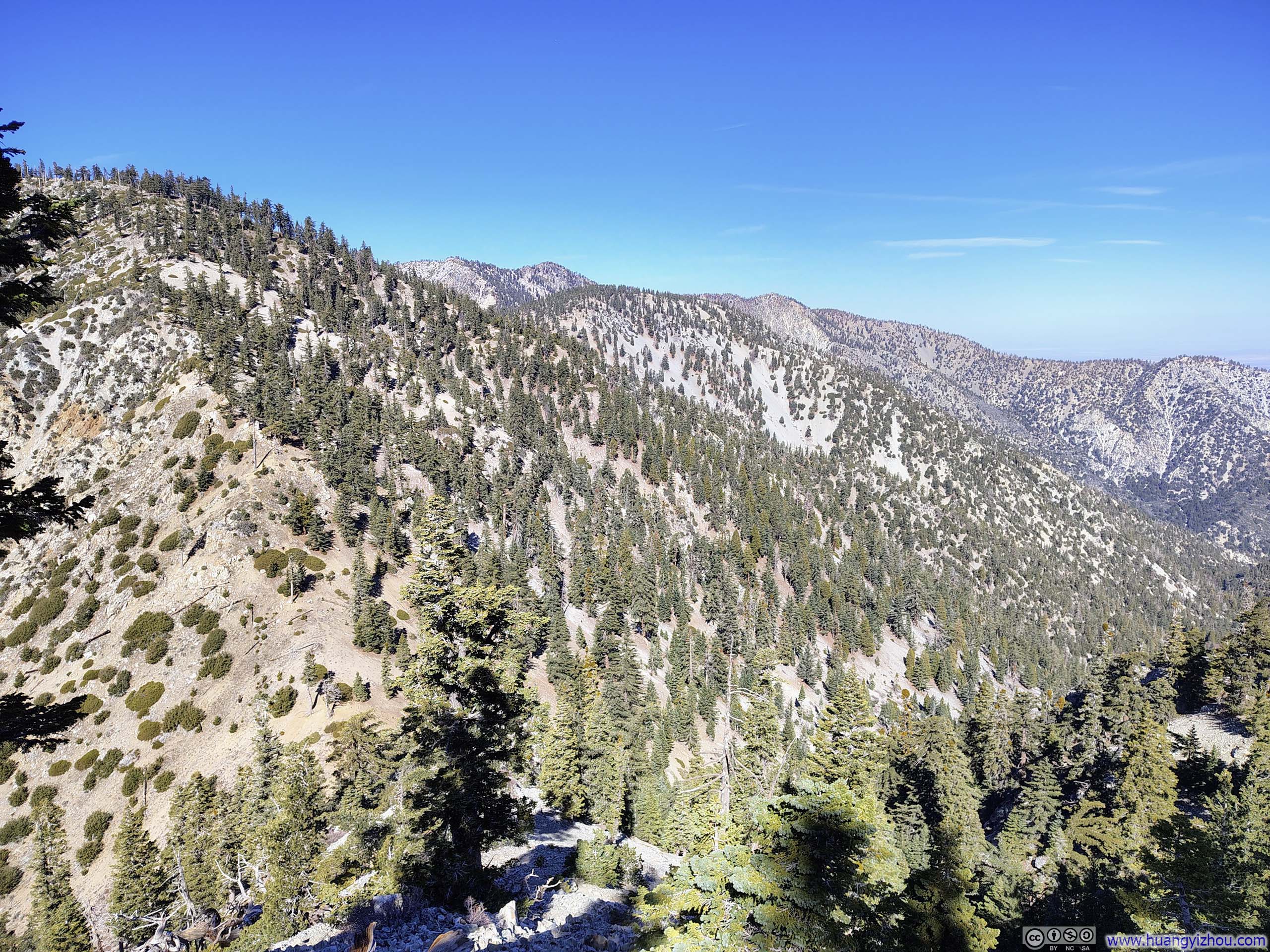
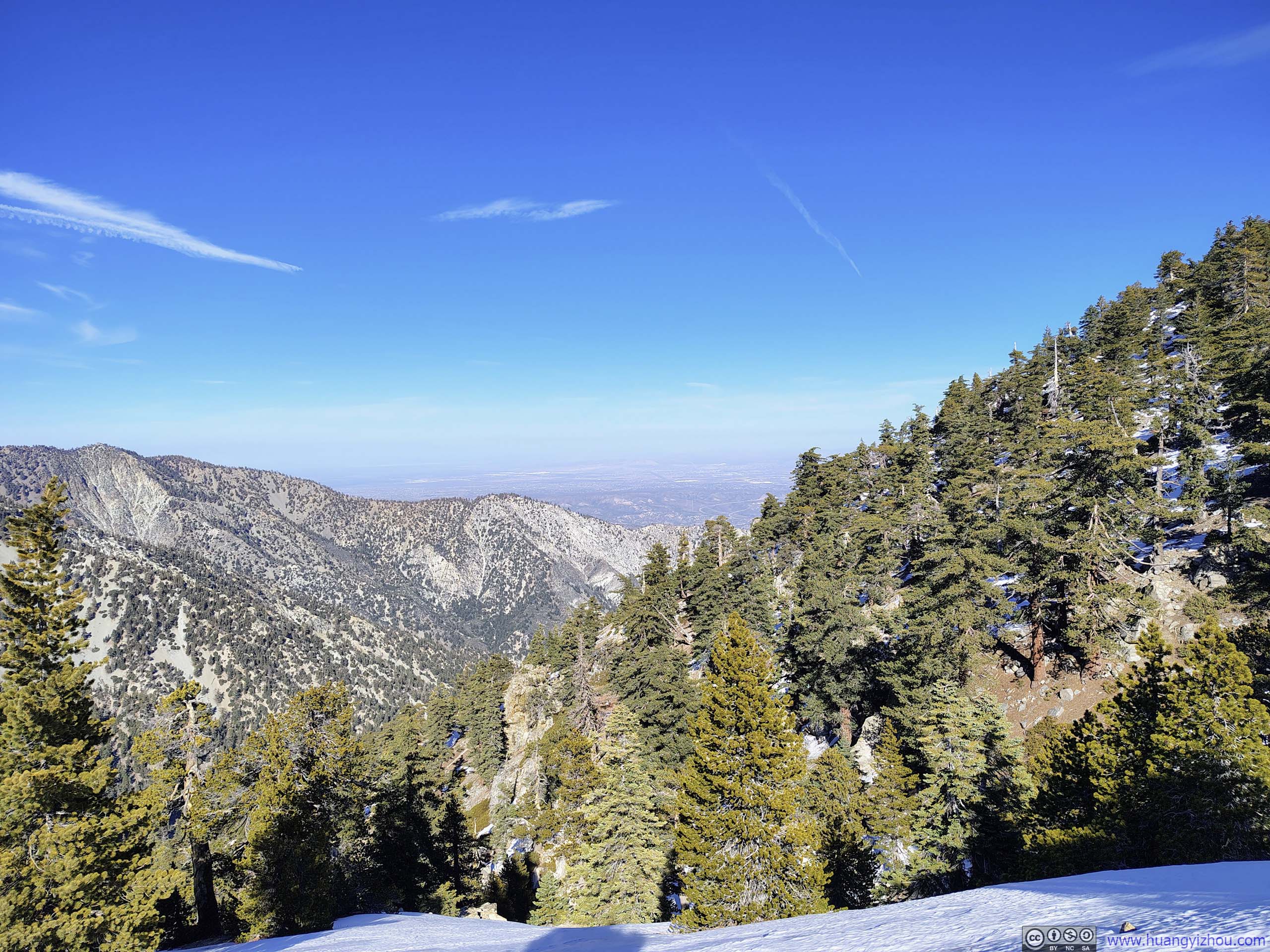
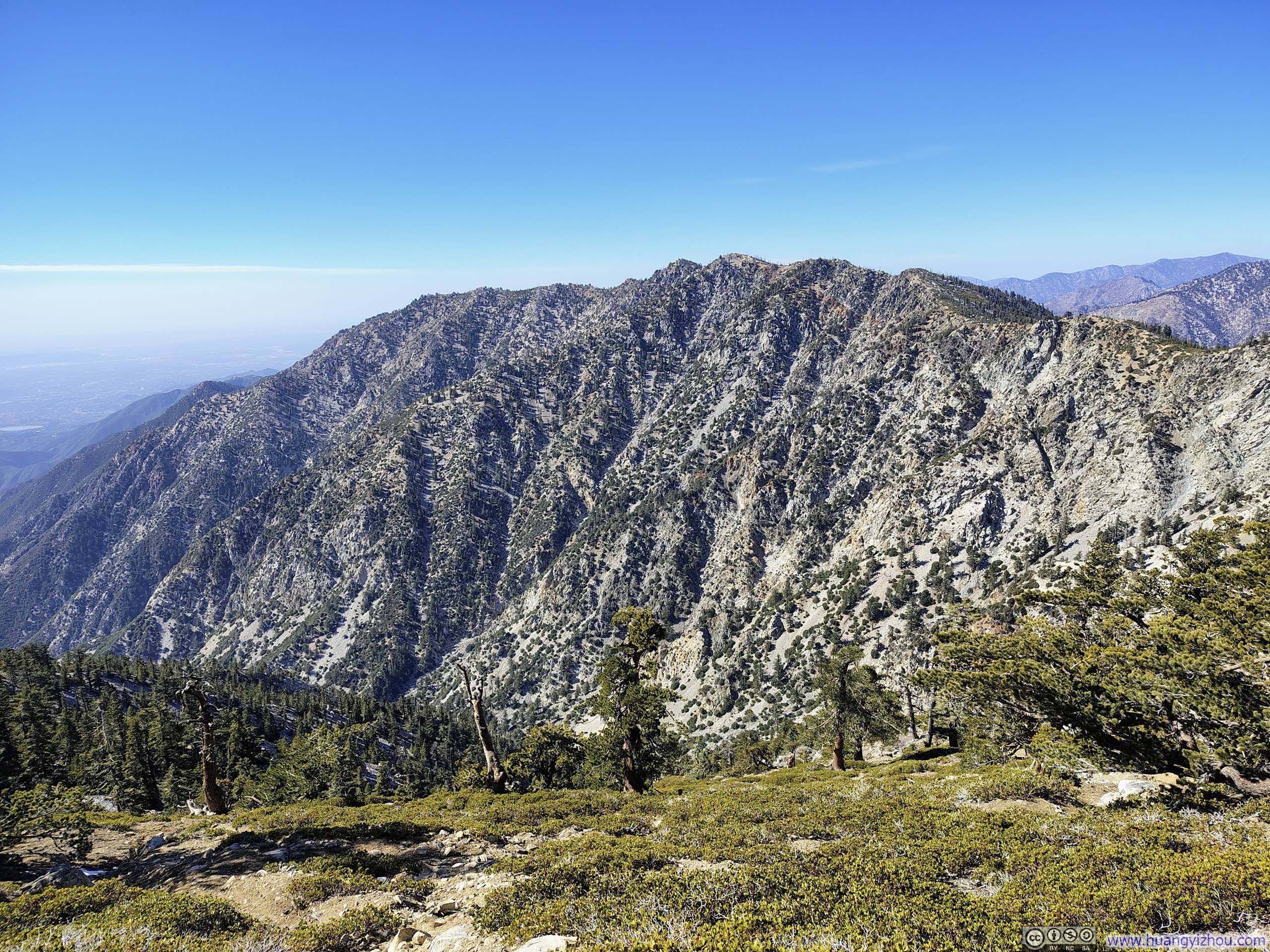
And vegetation was mostly shallow along this homestretch, opening up the landscape to sweeping views of the surrounding mountains.
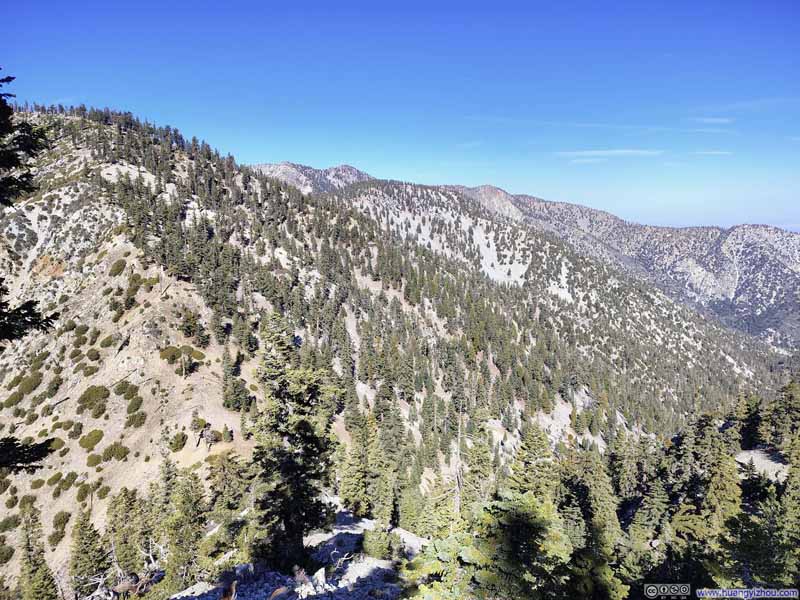 Overlooking Cucamonga Saddle
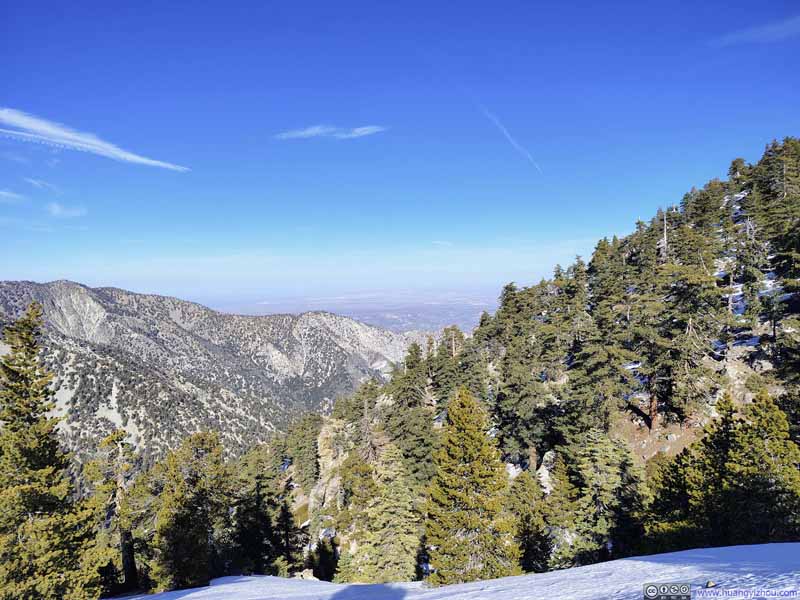 Mountains towards Cajon Pass
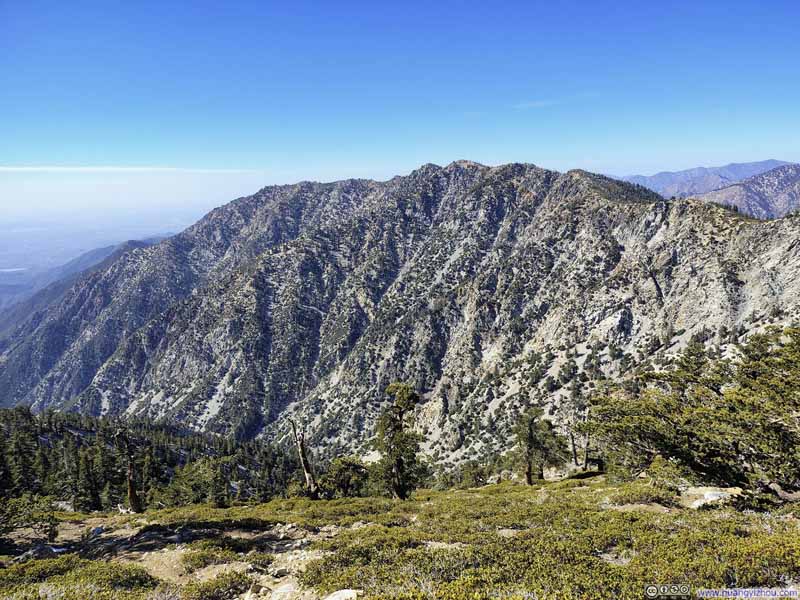 Ontario Peak
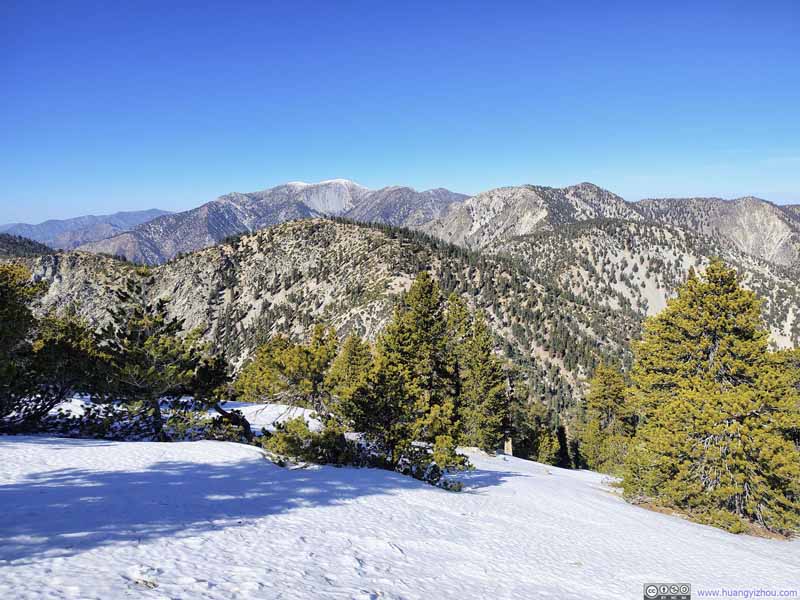 San Gabriel Mountains to the North
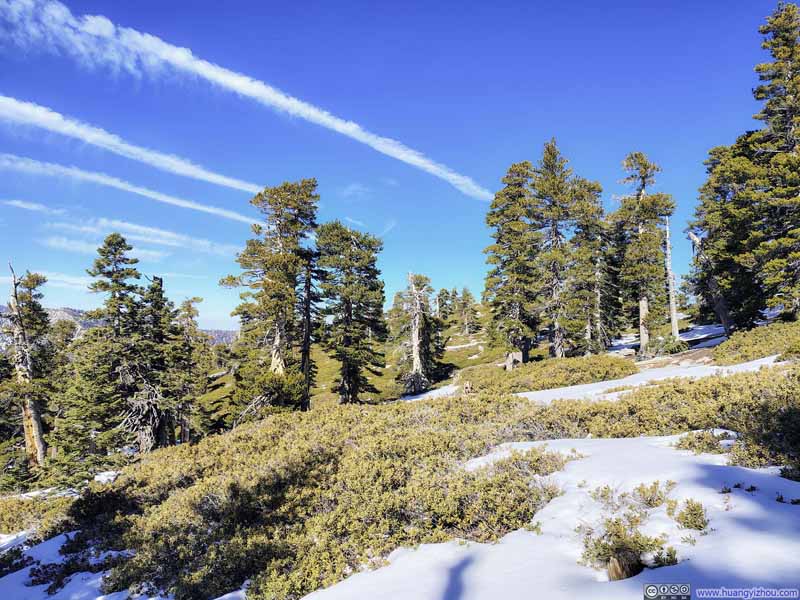 Trees Scattered among Field of Snow
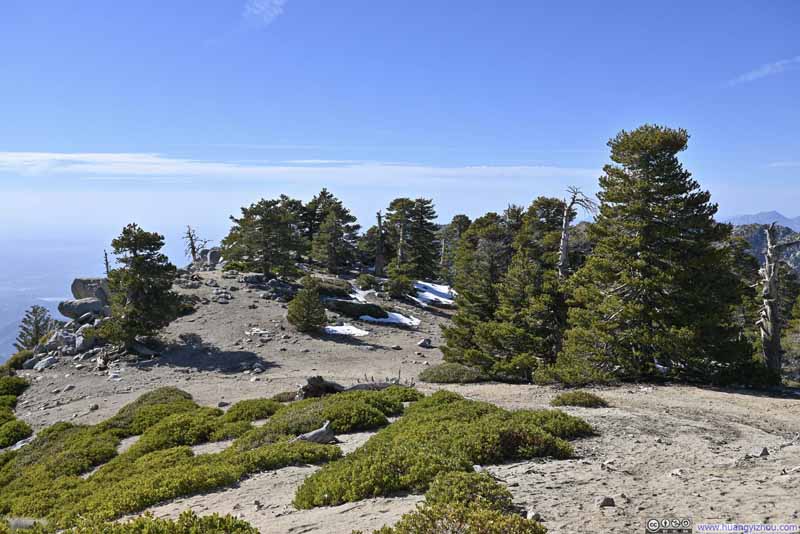 Summit Area of Cucamonga Peak
Click here to display photos of the slideshow
Overlooking Cucamonga Saddle
Mountains towards Cajon Pass
Ontario Peak
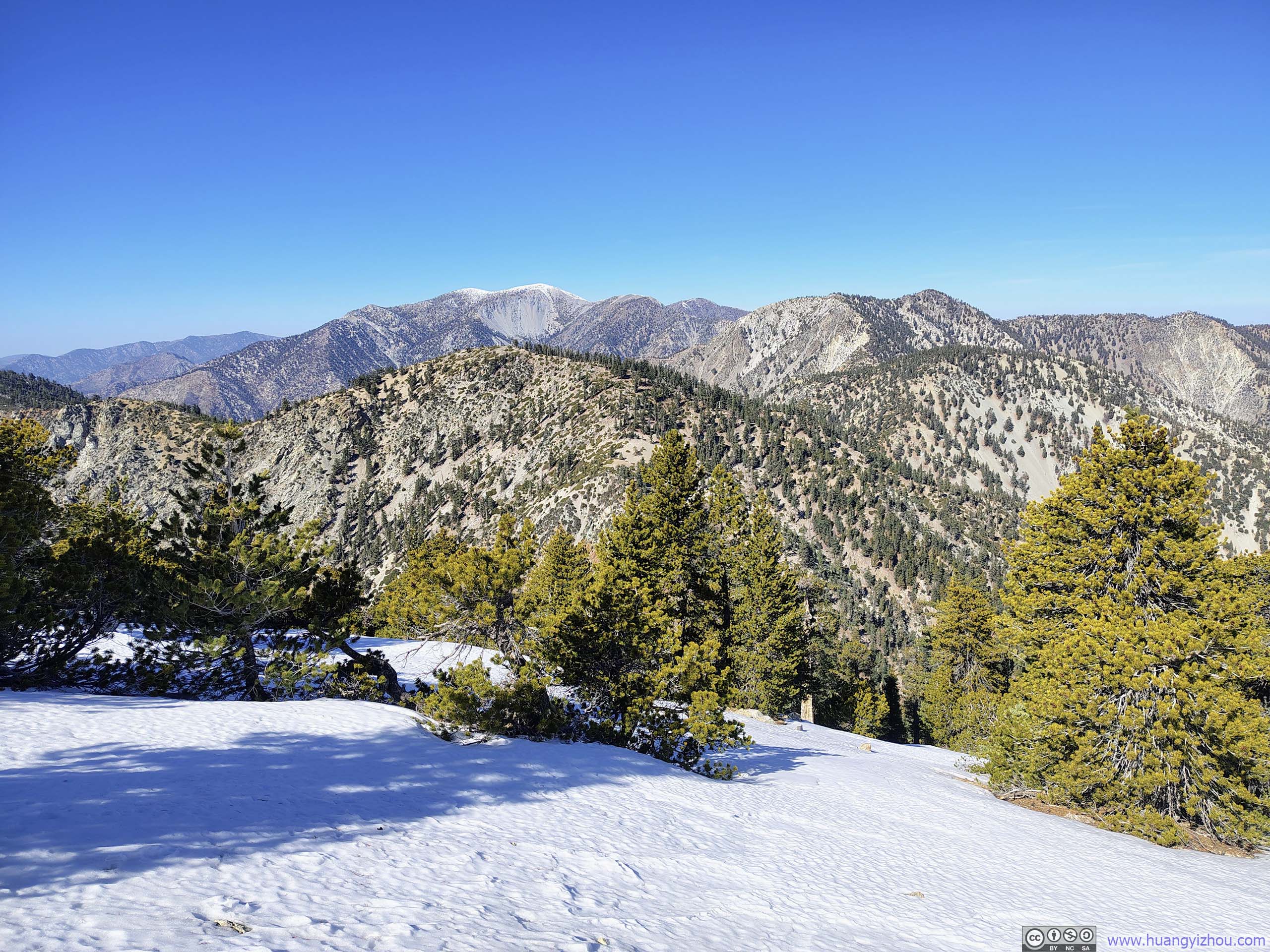
San Gabriel Mountains to the North
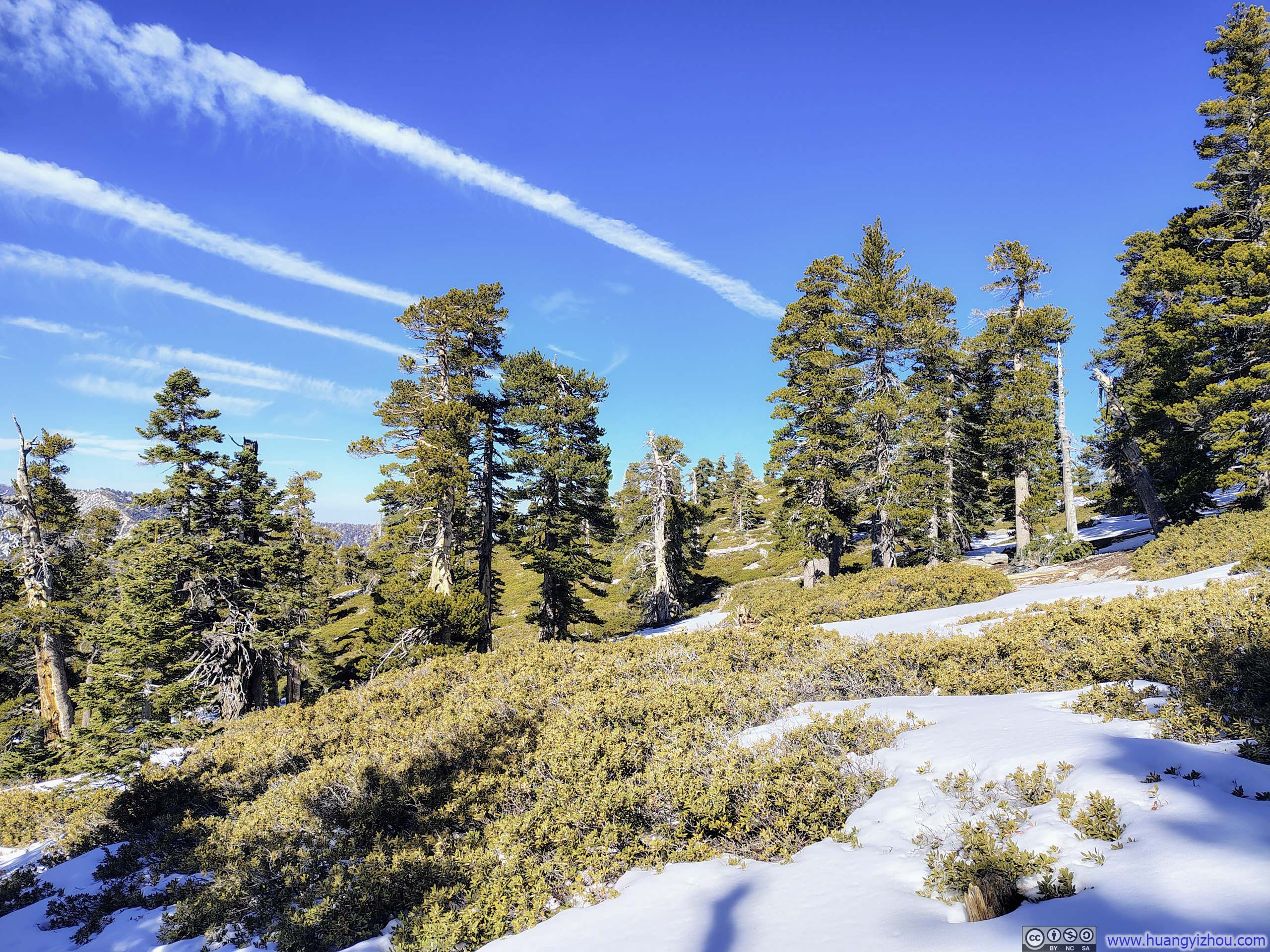
Trees Scattered among Field of Snow
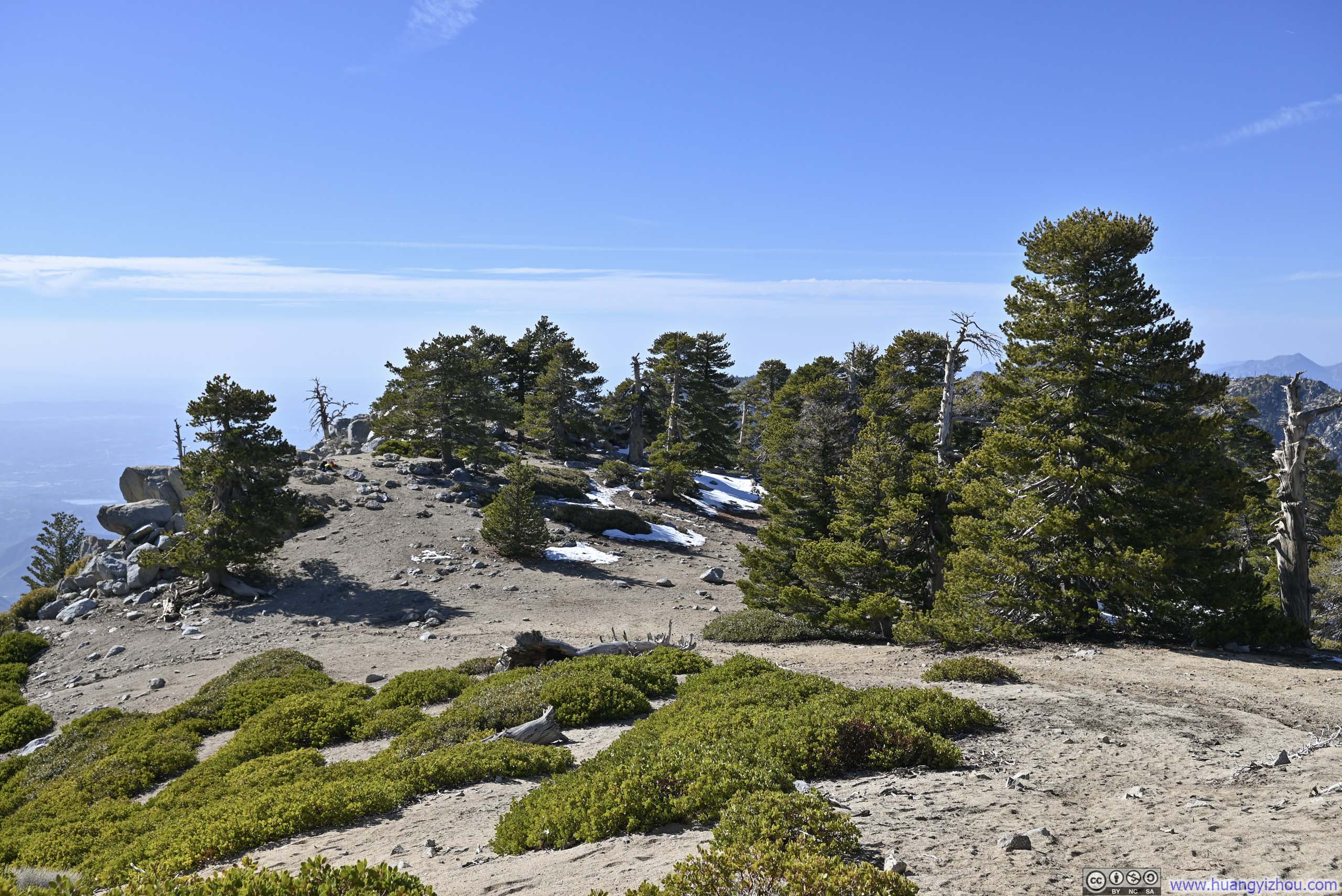
Summit Area of Cucamonga Peak
Finally, I reached the summit of Cucamonga Peak at 12:42 pm.
Unlike the trail leading up to it, the summit area was completely dry. It was a relatively spacious area, allowing people to spread out comfortably — I watched a group of women from a local club posing for various photos as I took in the surroundings.
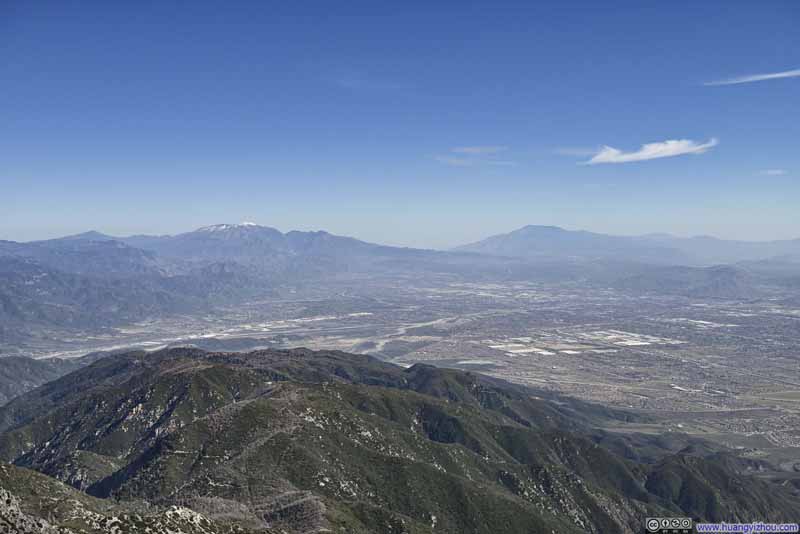
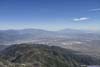
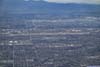
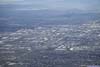
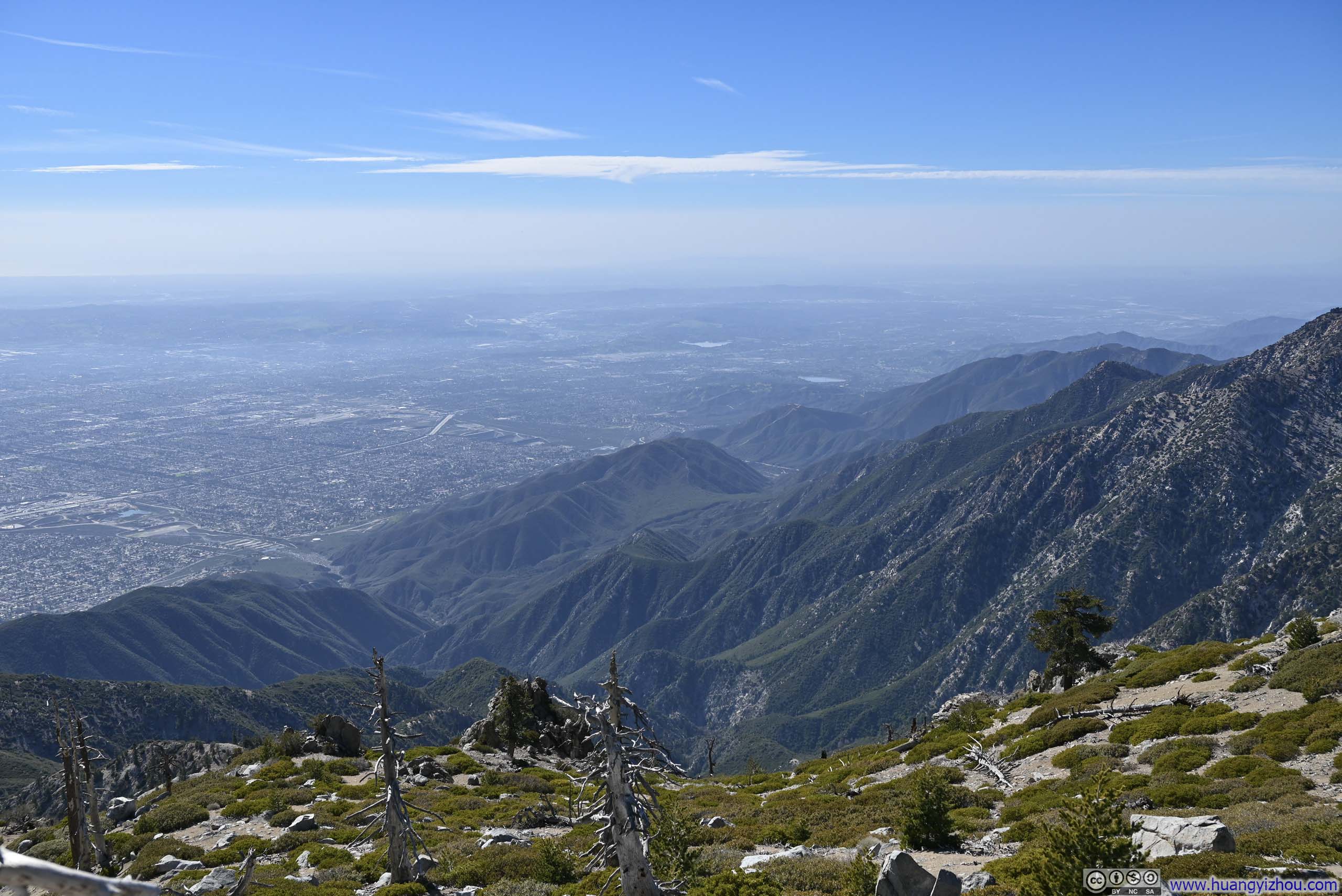
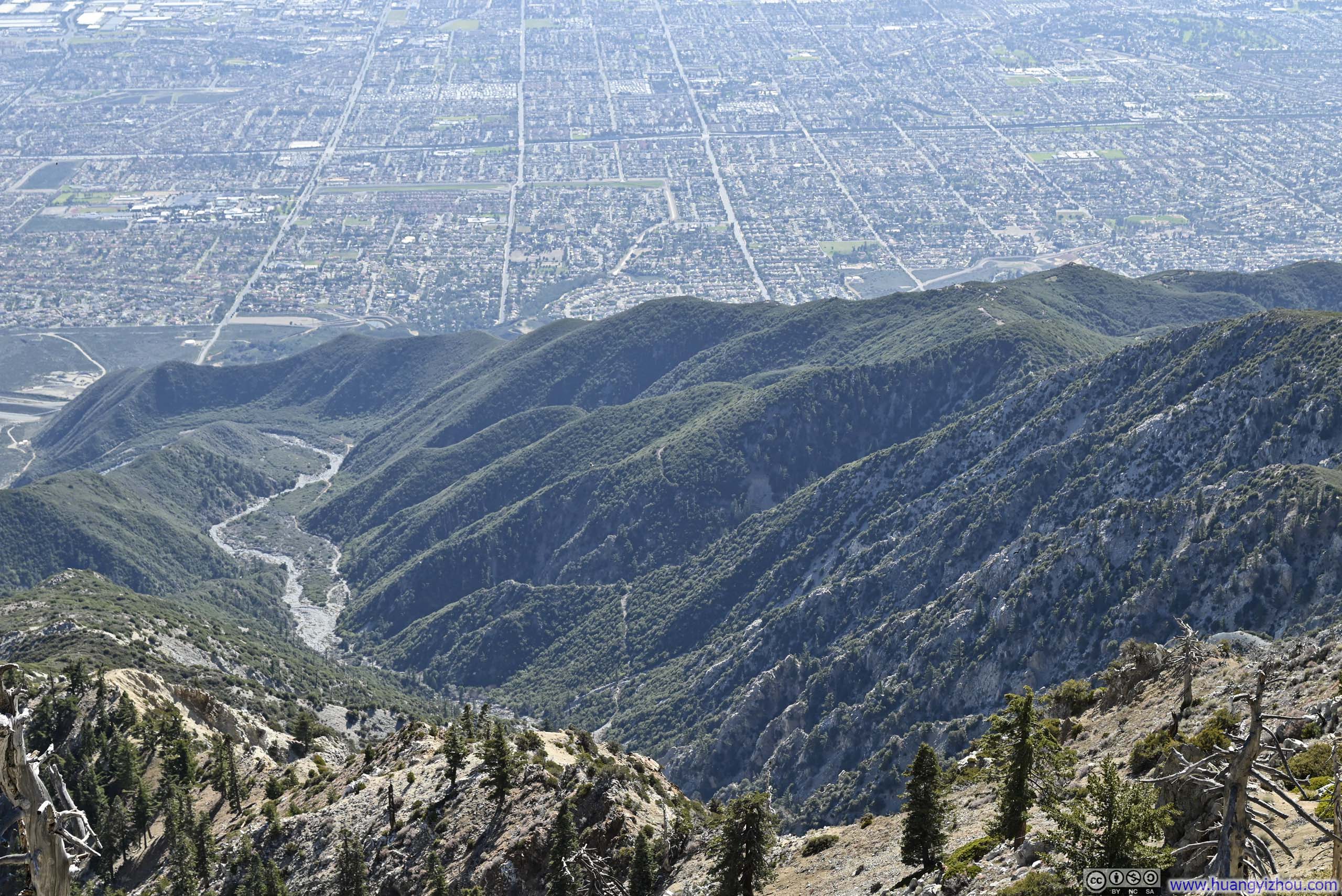
As for the views, the most prominent was undoubtedly Cucamonga Valley to the south, as the peak directly overlooked this sprawling suburb of Los Angeles, with the valley’s vast grid of streets painting a striking portrait of Southern California’s relentless urban sprawl. If the Los Angeles metropolitan area were a kingdom, Cucamonga Peak would arguably offer one of the finest vantage points a king could ask for — an unobstructed throne from which to survey his realm. (Though on the flip side, the view was against sunlight hence not very clear.)
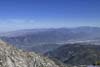
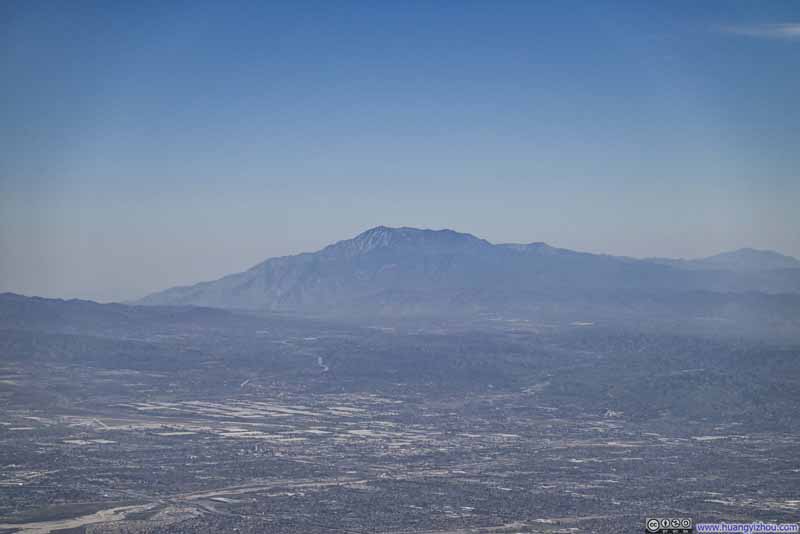
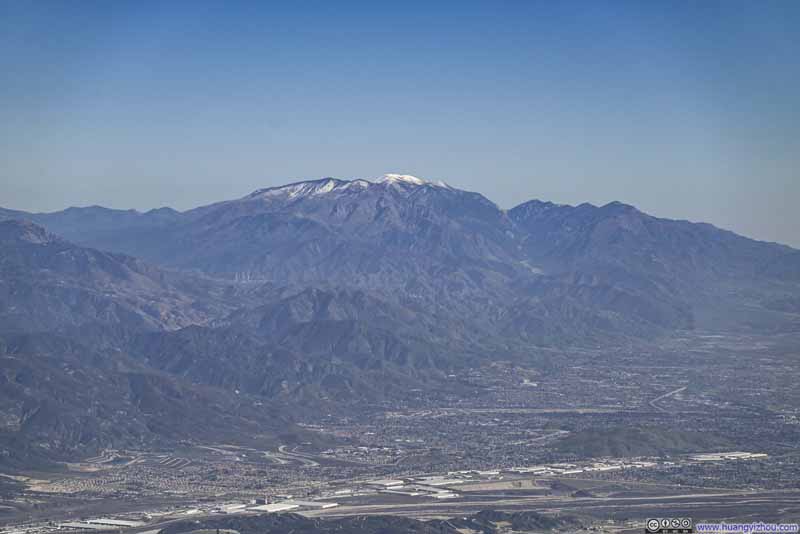
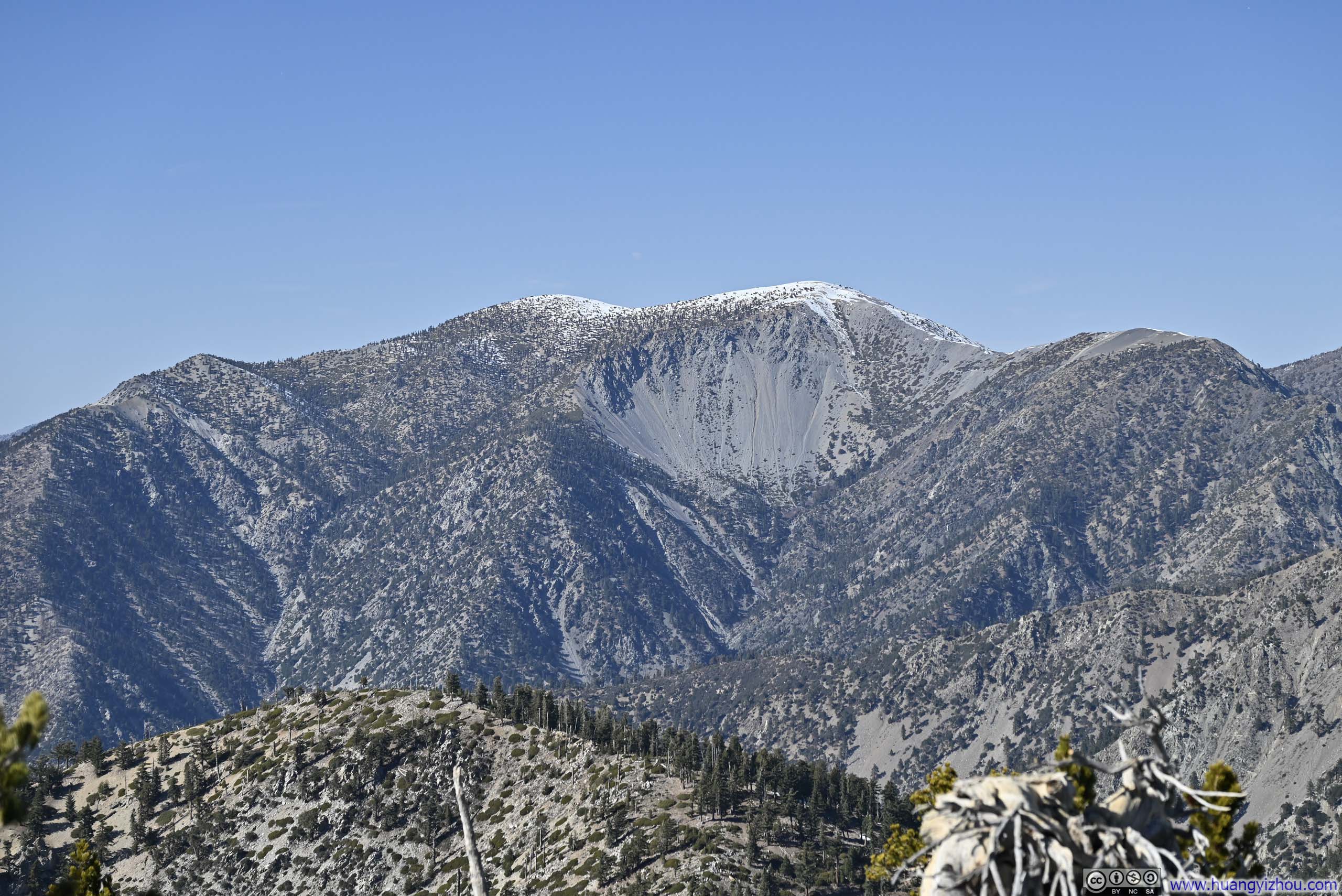
While the area’s characteristically hazy air largely obscured any views toward downtown Los Angeles, the views to the east more than compensated. There, the urban landscape met a natural boundary, of the commanding duo of San Gorgonio Mountain and San Jacinto Peak guarding San Gorgonio Pass. Further north, the Mojave Desert unfurled in endless expanse beyond Cajon Pass, where signs of civilization quickly dissolved into rolling hills and haze.
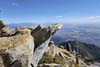
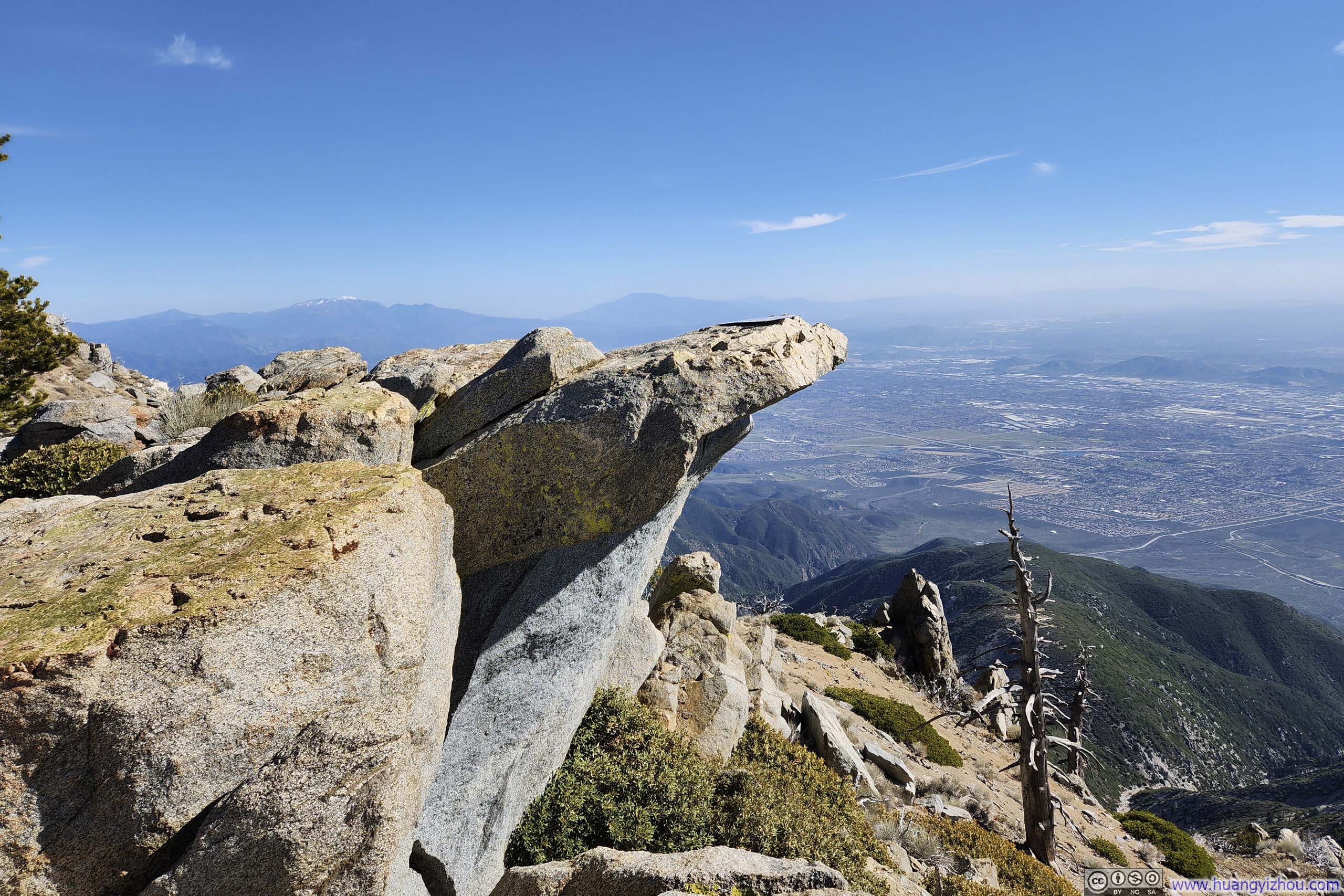
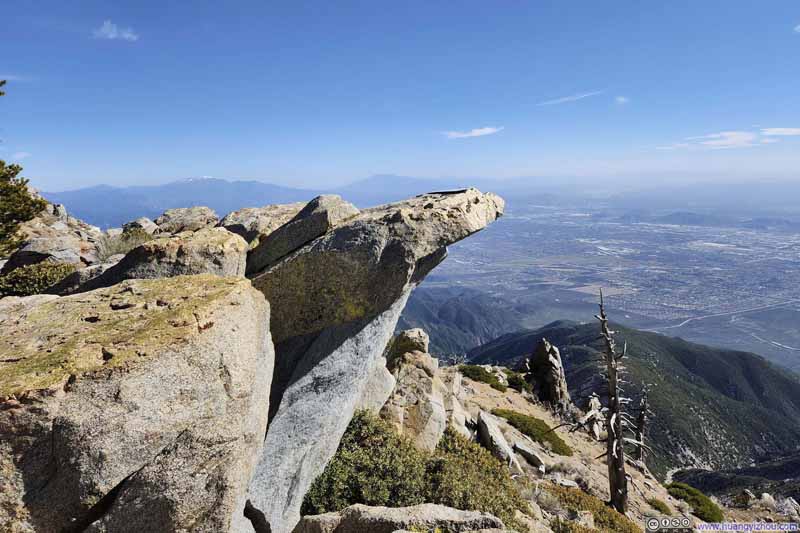 Rocky Outcrop on Cucamonga PeakThe typical photo spot. I didn’t find it as exciting as the photos online, so I skipped it.
 San Gorgonio Mountain and San Jacinto Peak
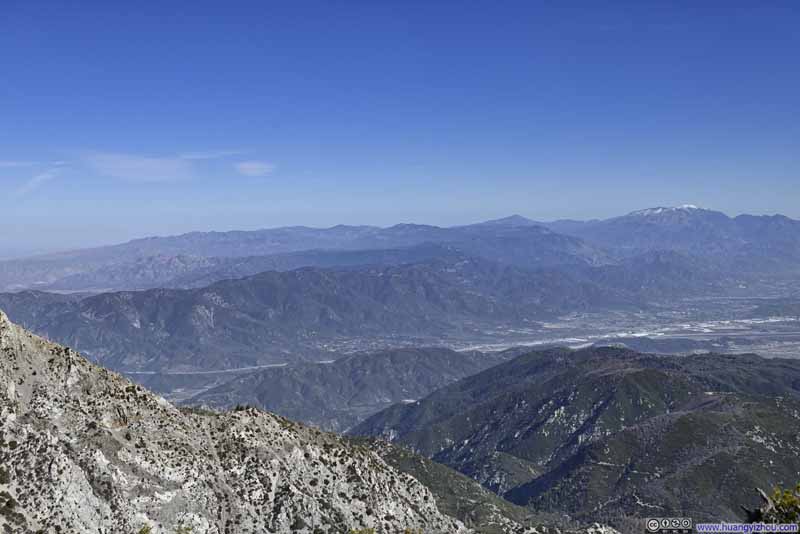 San Bernardino Mountains
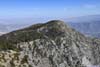
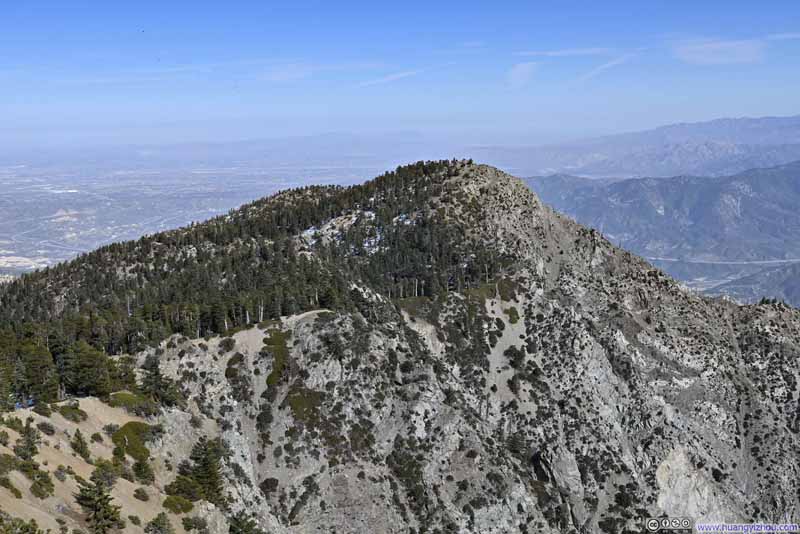 Etiwanda Peak
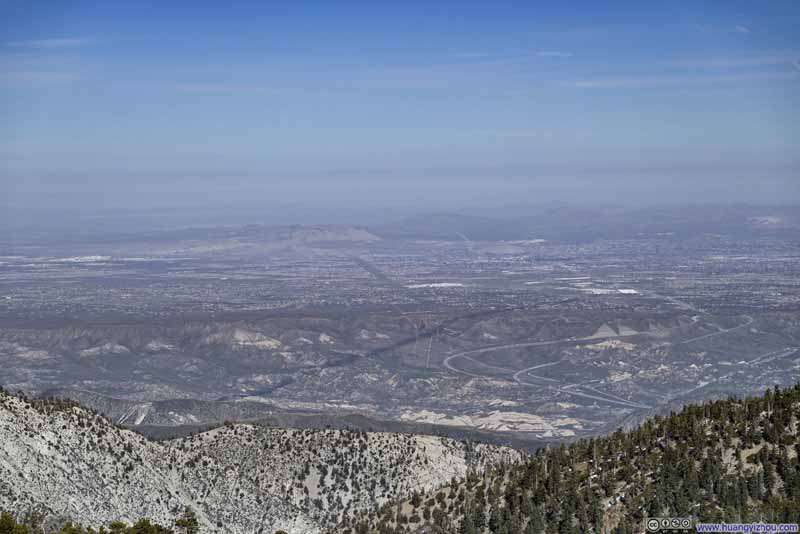 Mojave Desert beyond Cajon Pass
Click here to display photos from the summit of Cucamonga Peak.
Rocky Outcrop on Cucamonga PeakThe typical photo spot. I didn’t find it as exciting as the photos online, so I skipped it.
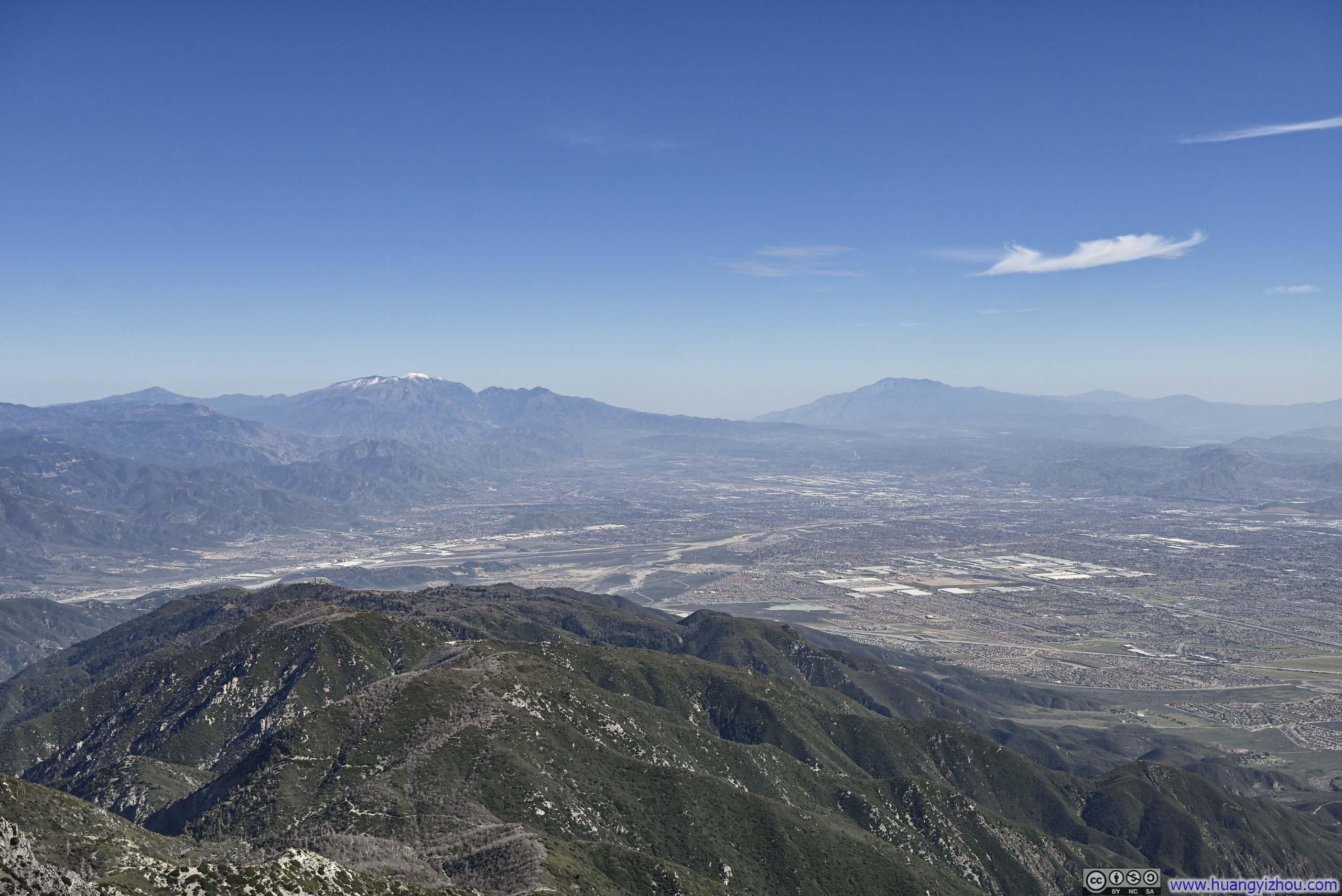
San Gorgonio Mountain and San Jacinto Peak
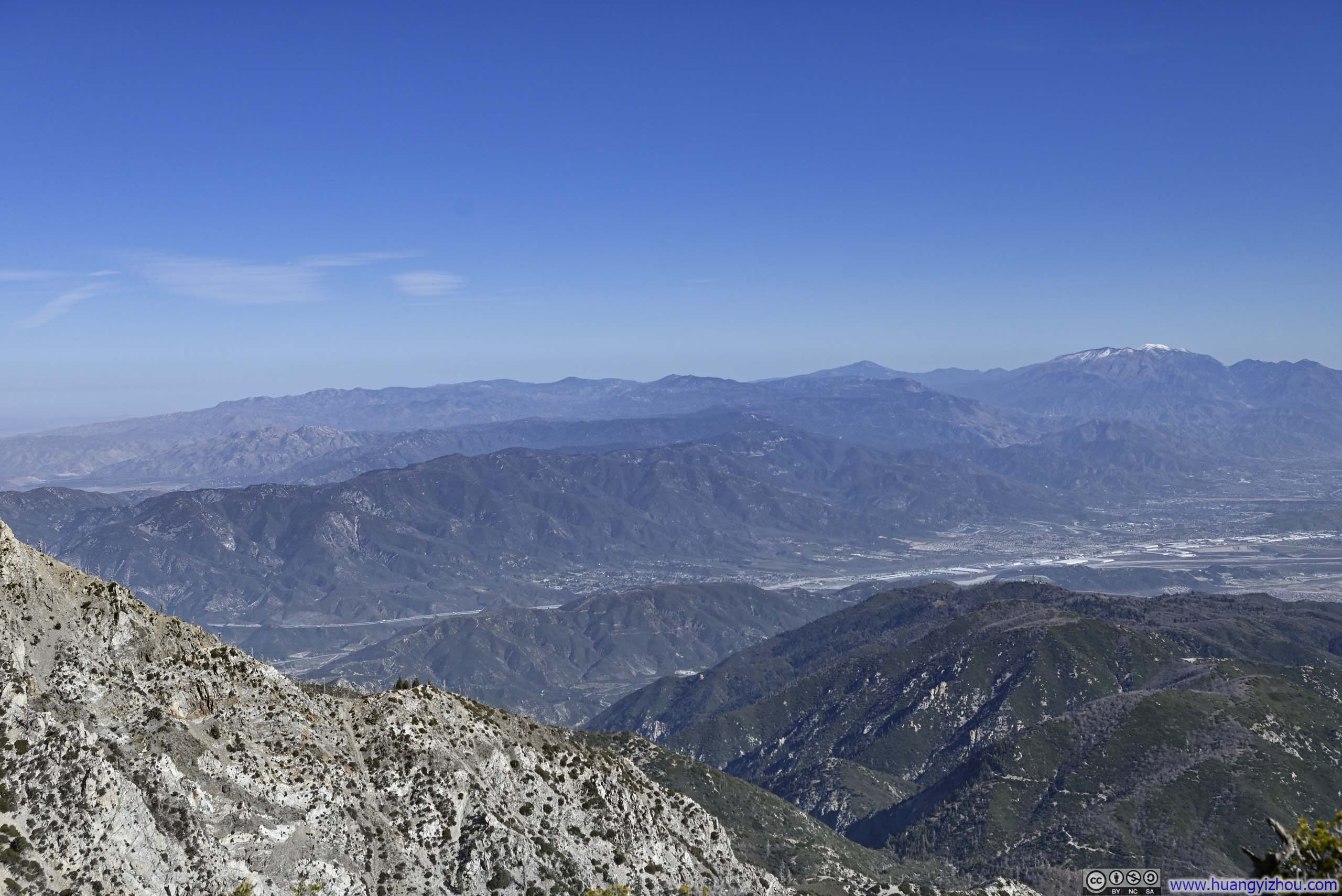
San Bernardino Mountains
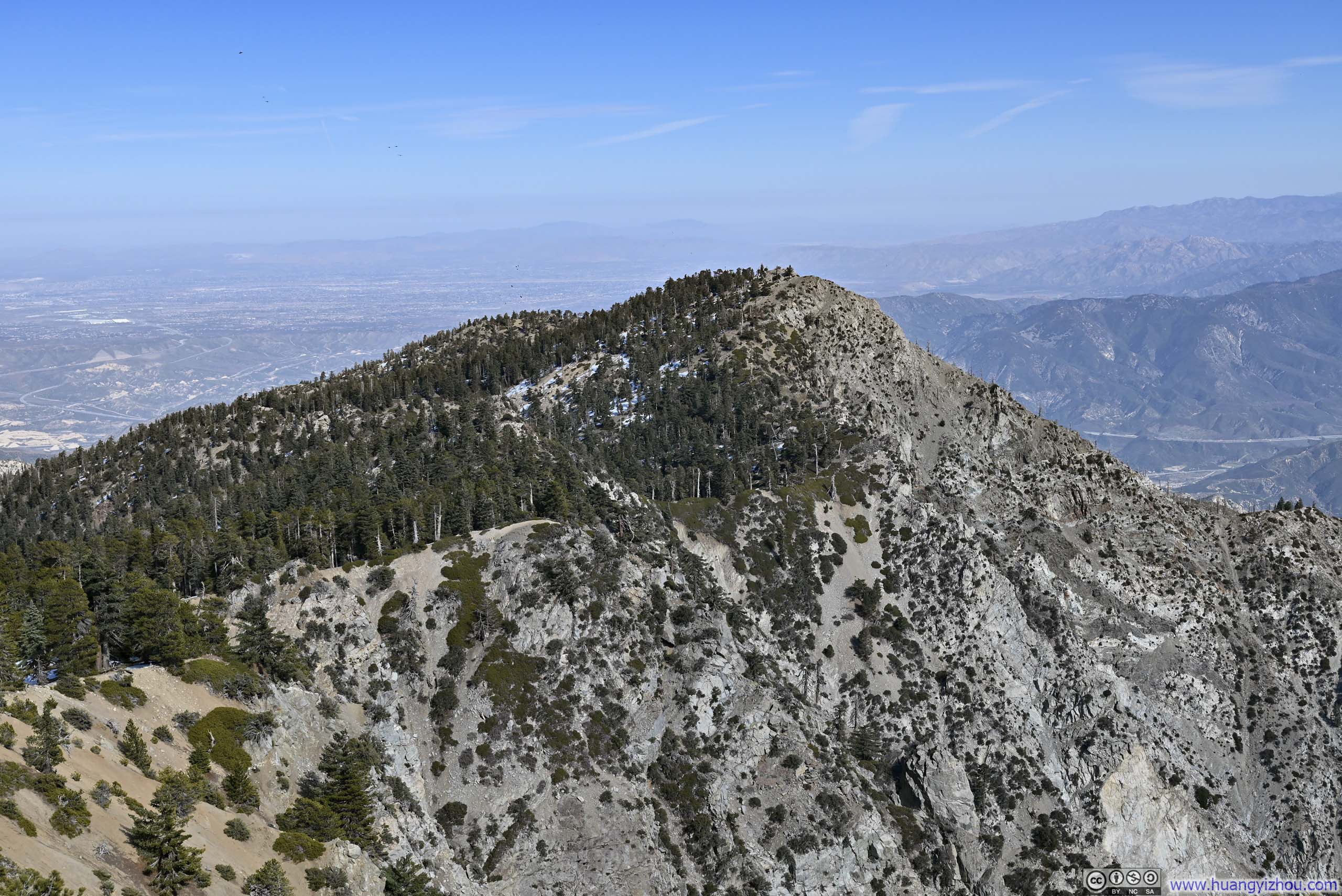
Etiwanda Peak
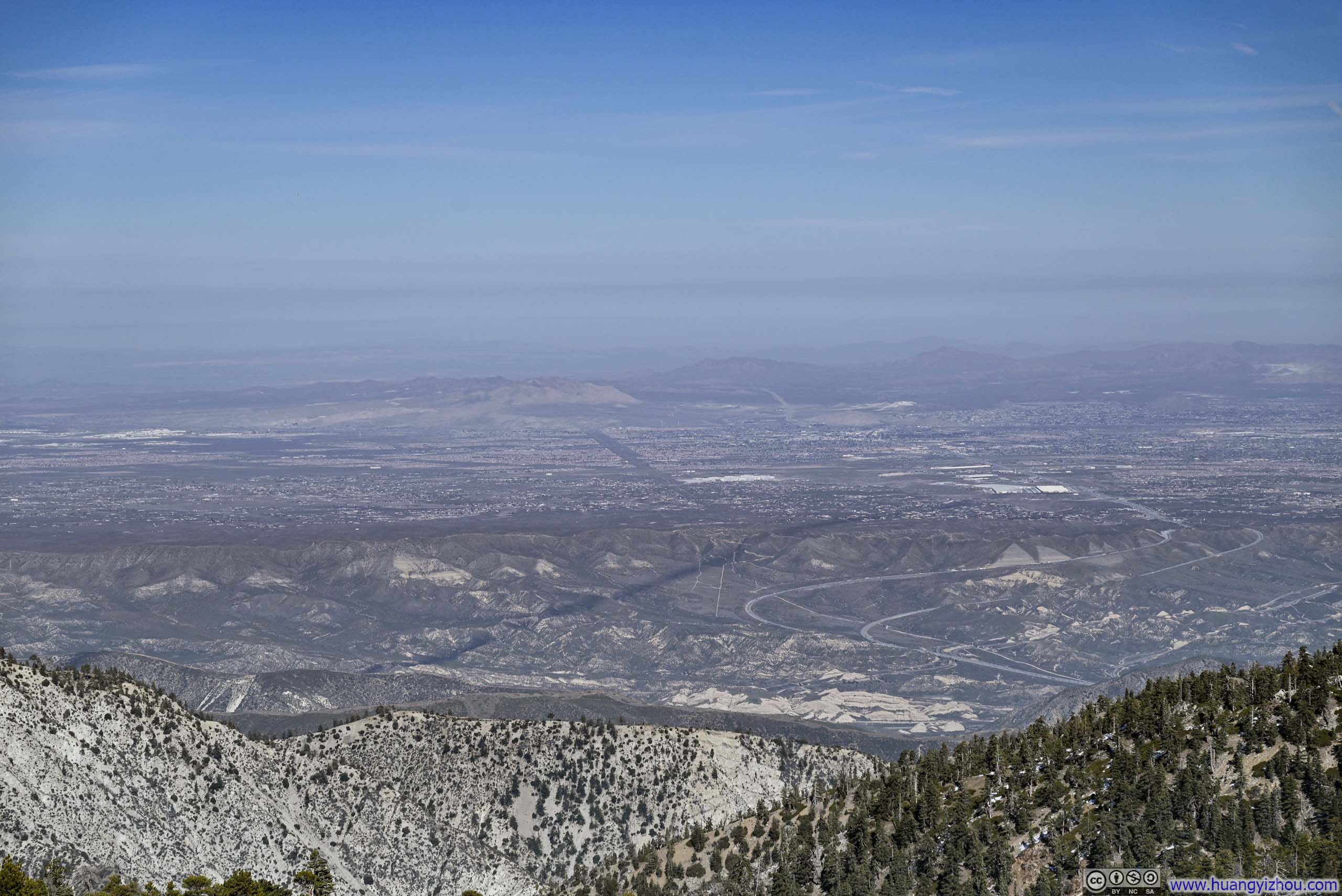
Mojave Desert beyond Cajon Pass
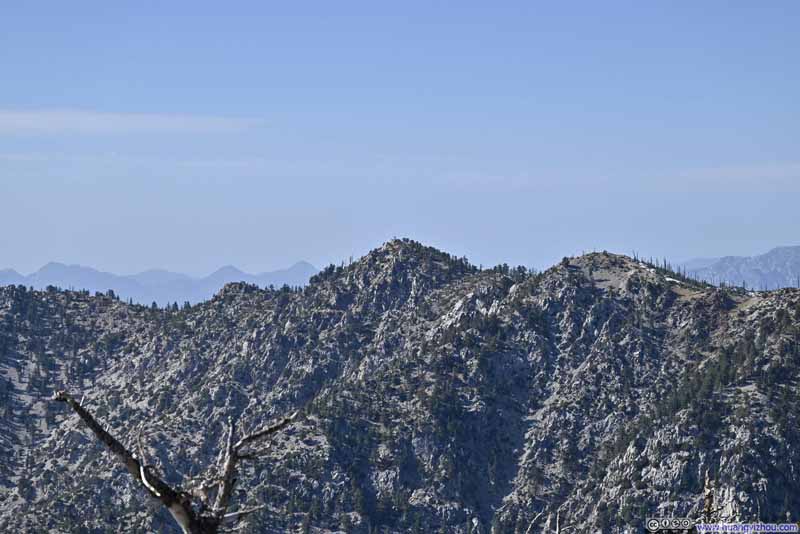
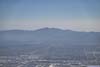
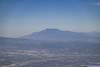
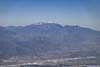
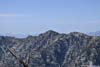
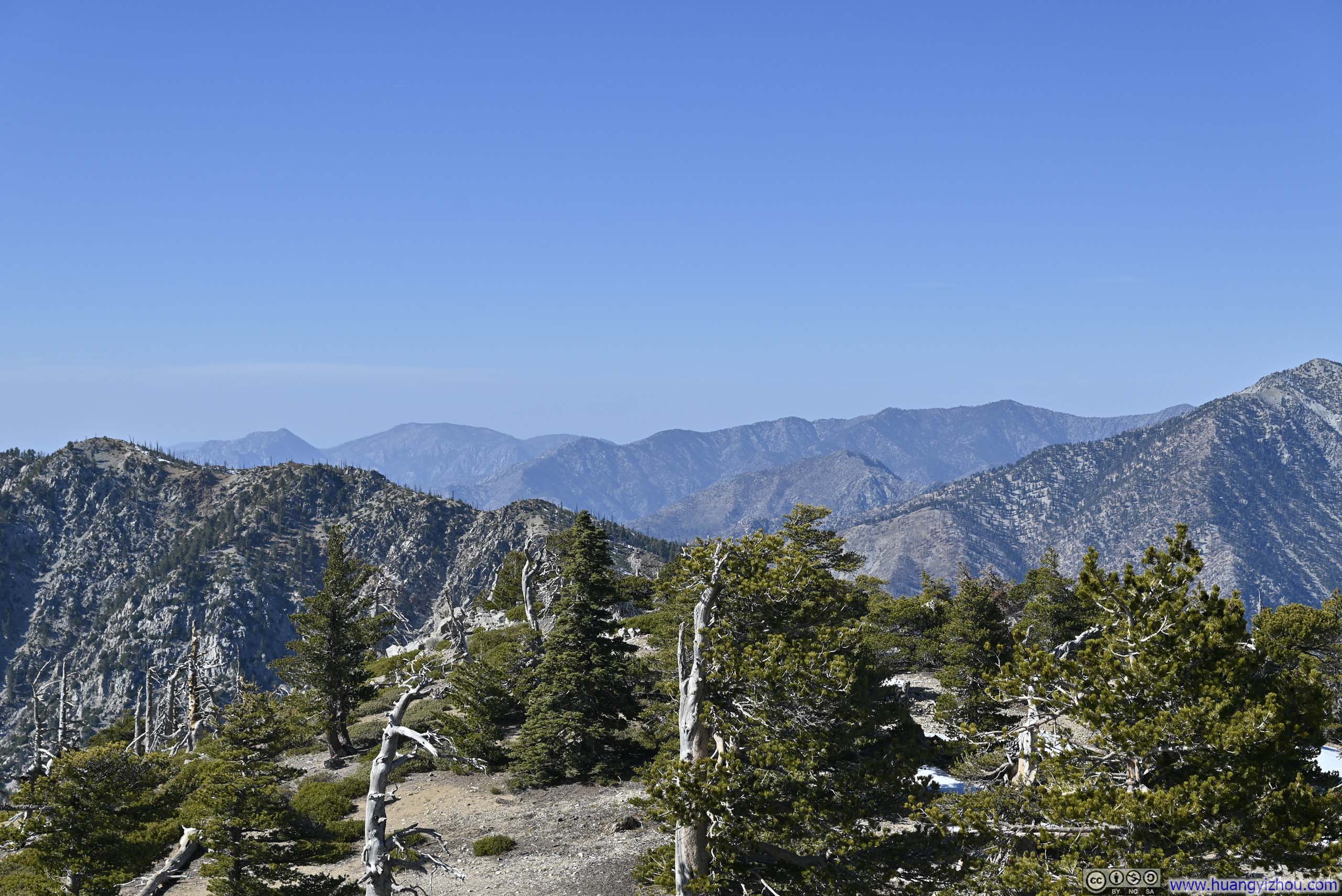
In addition to the rocky outcrop at the end of the trail, Cucamonga Peak also had another vista about 70m (230ft) to the east, which was a lot less crowded during my visit.
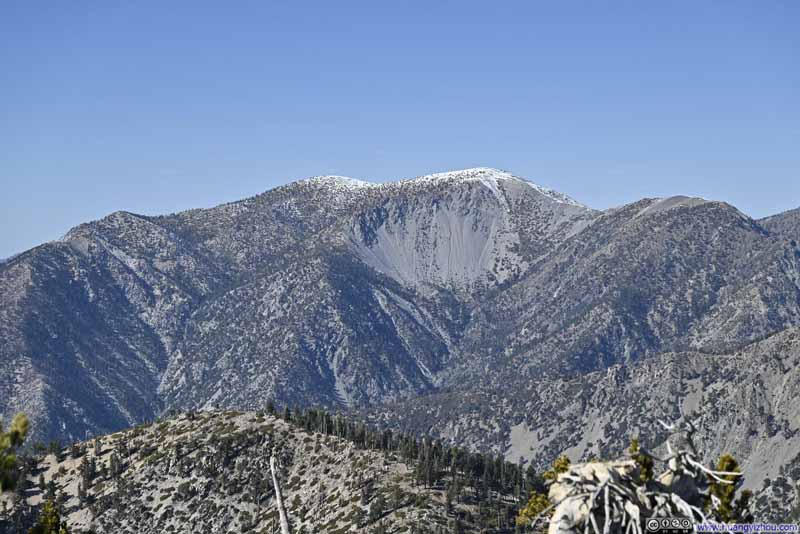 Mt San Antonio
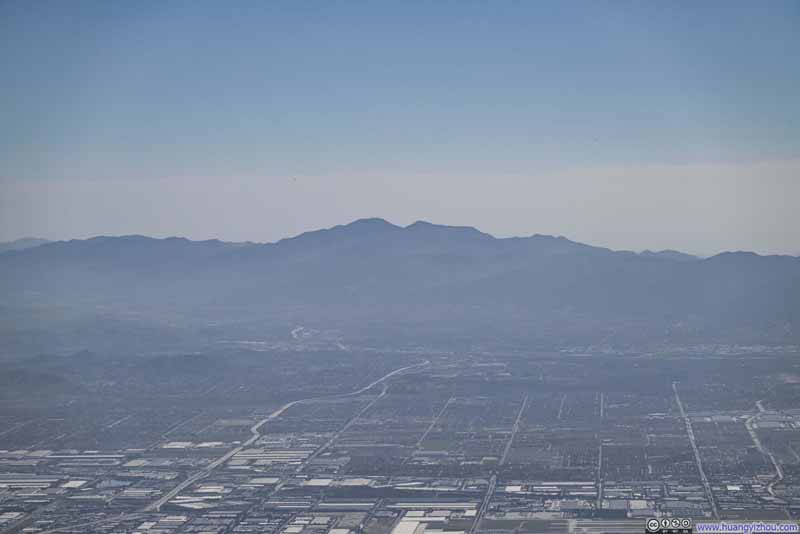 Santiago Peak
 San Jacinto Peak
 San Gorgonio Mountain
 Ontario Peak
Click here to display photos from the summit of Cucamonga Peak.
Mt San Antonio
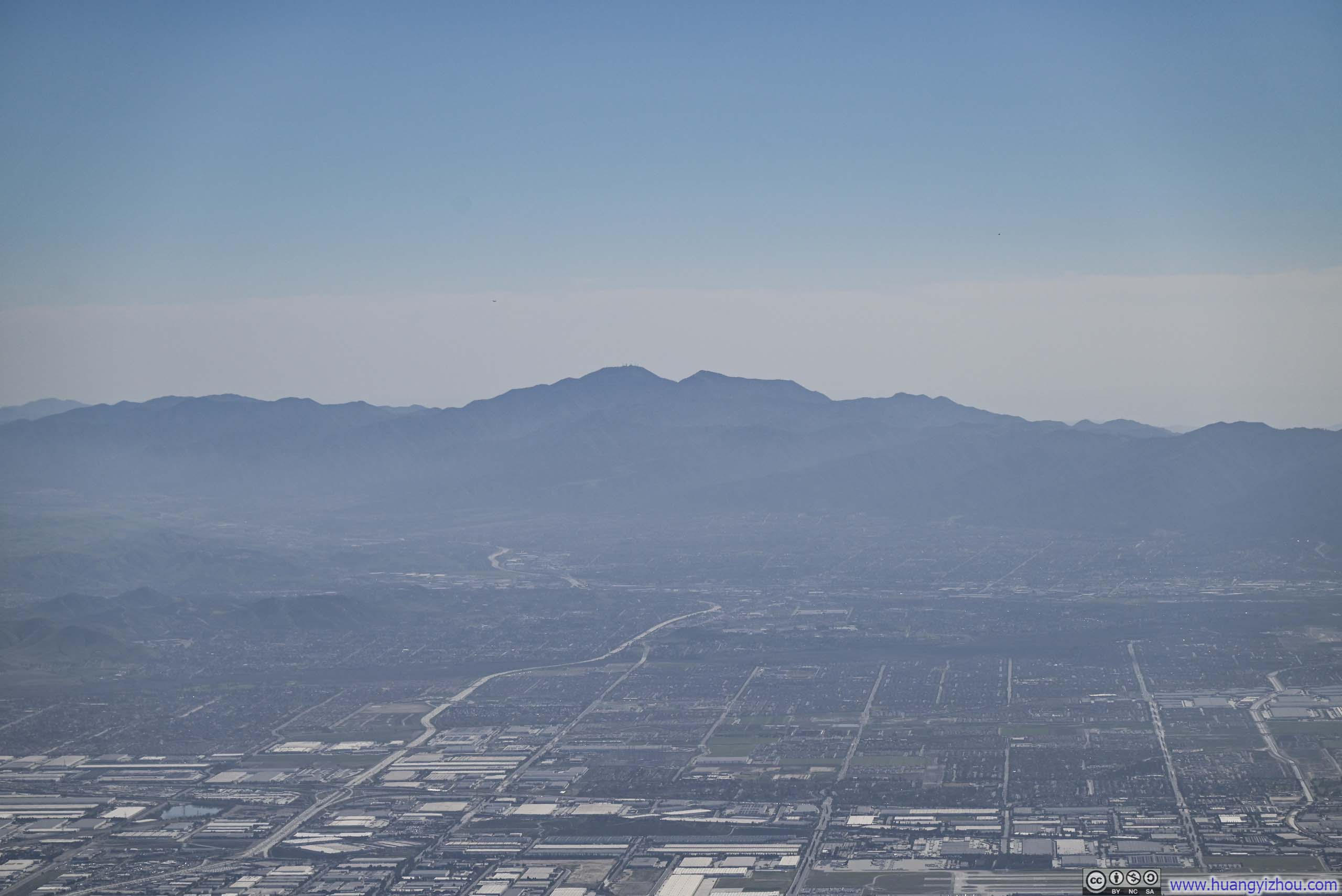
Santiago Peak
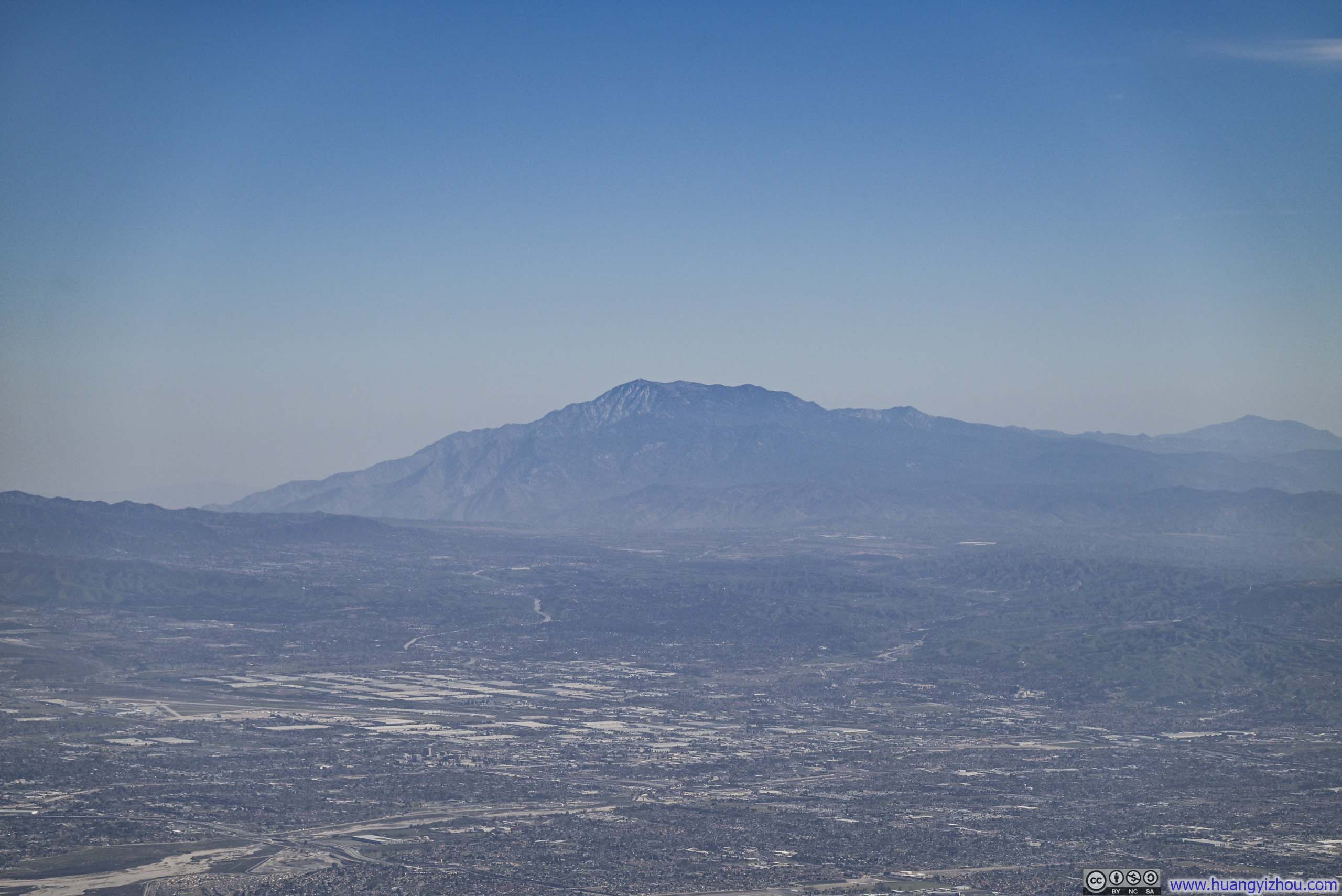
San Jacinto Peak
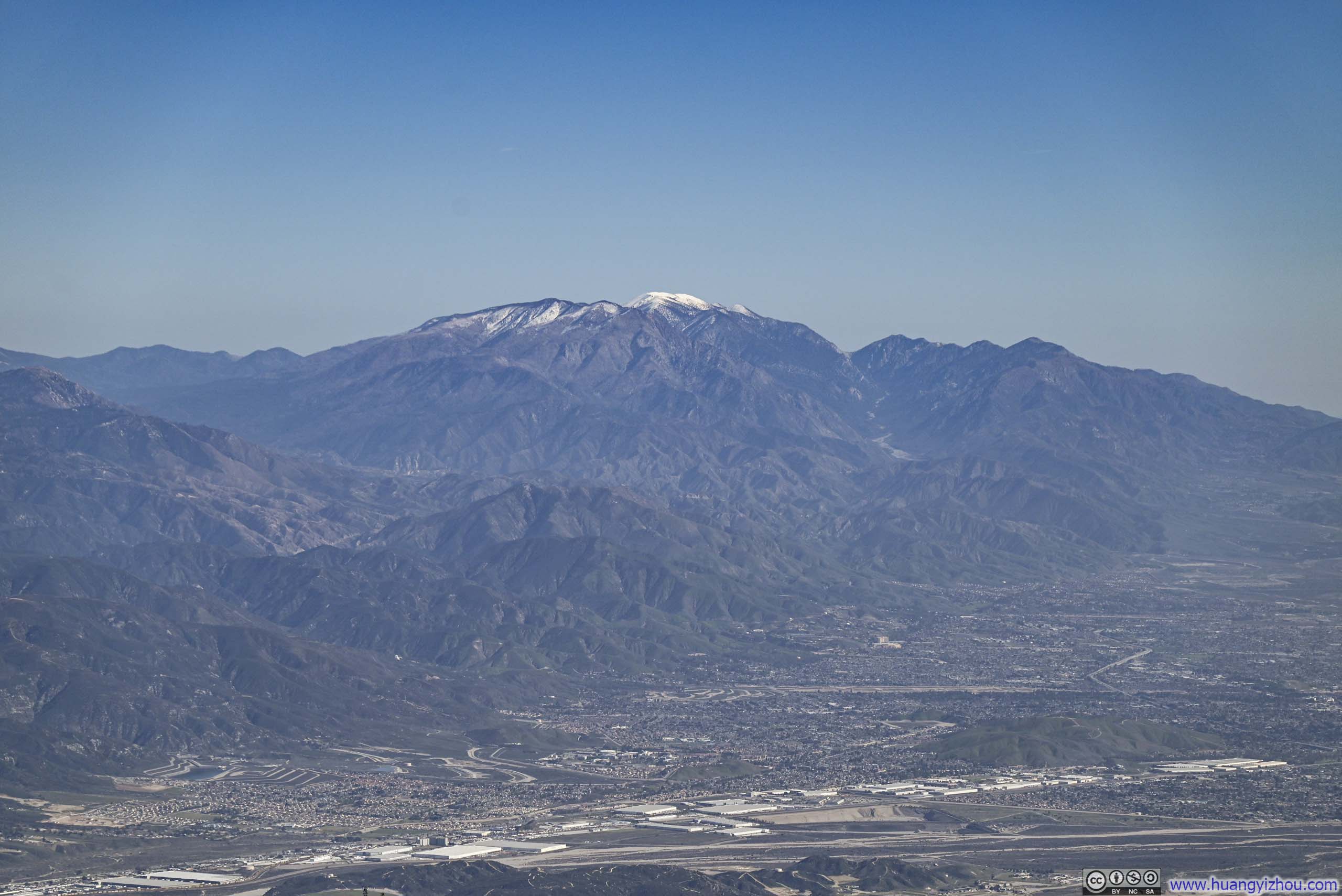
San Gorgonio Mountain
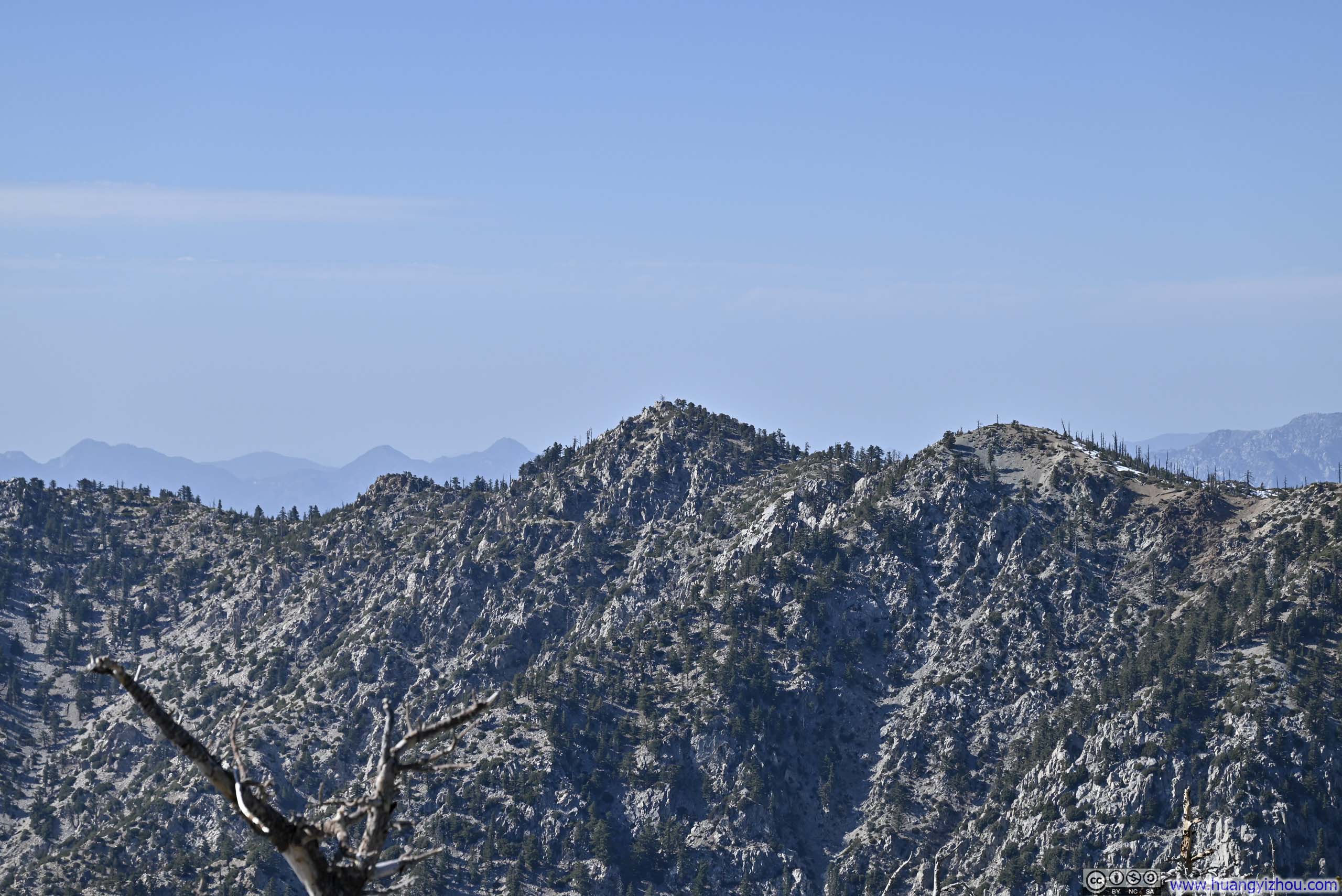
Ontario Peak
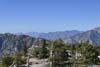
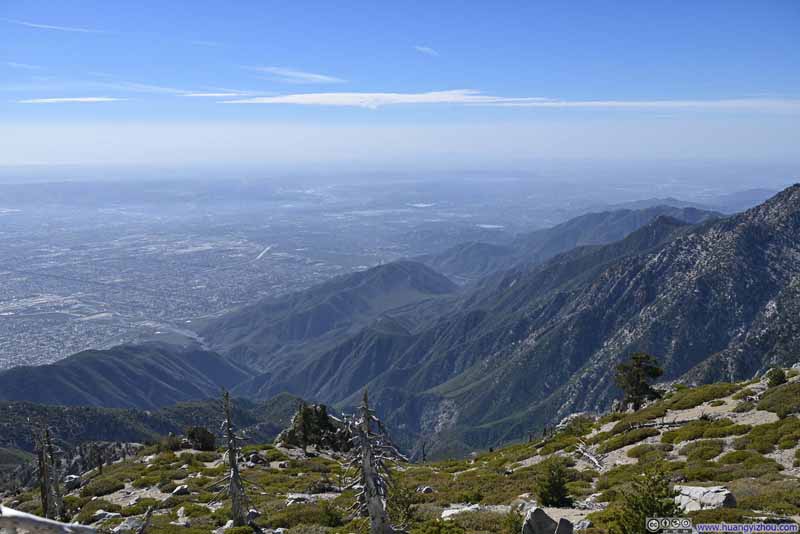 Distant Los Angeles Metropolis
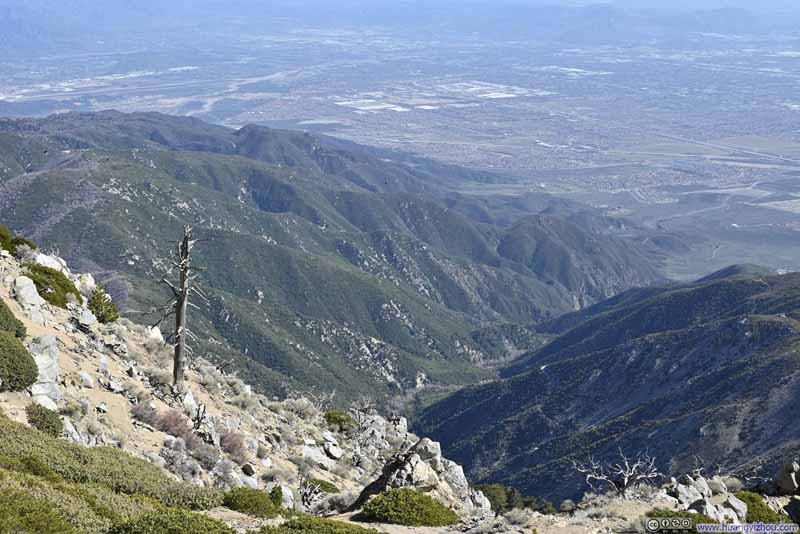
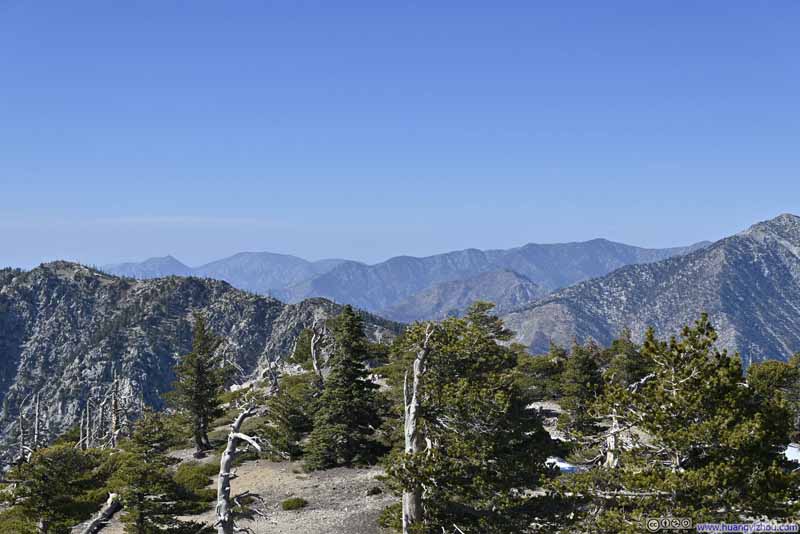 San Gabriel Mountains to the Northwest
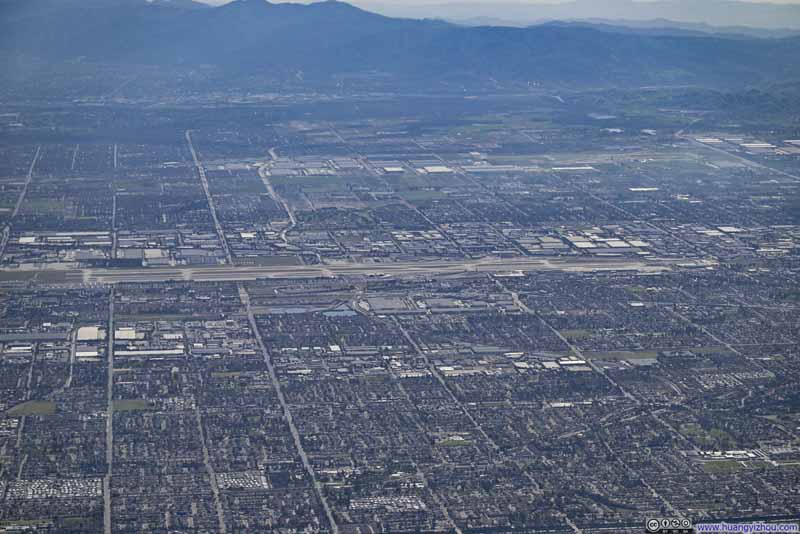 Ontario Airport
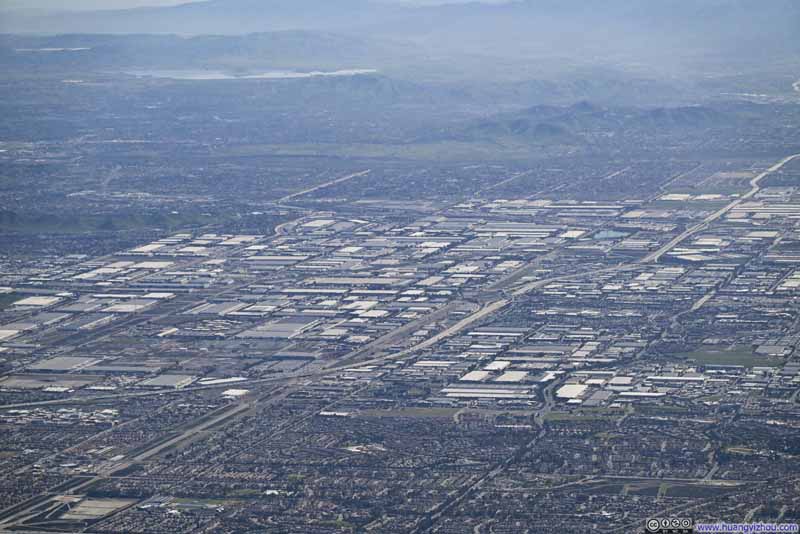 Warehouses
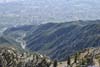
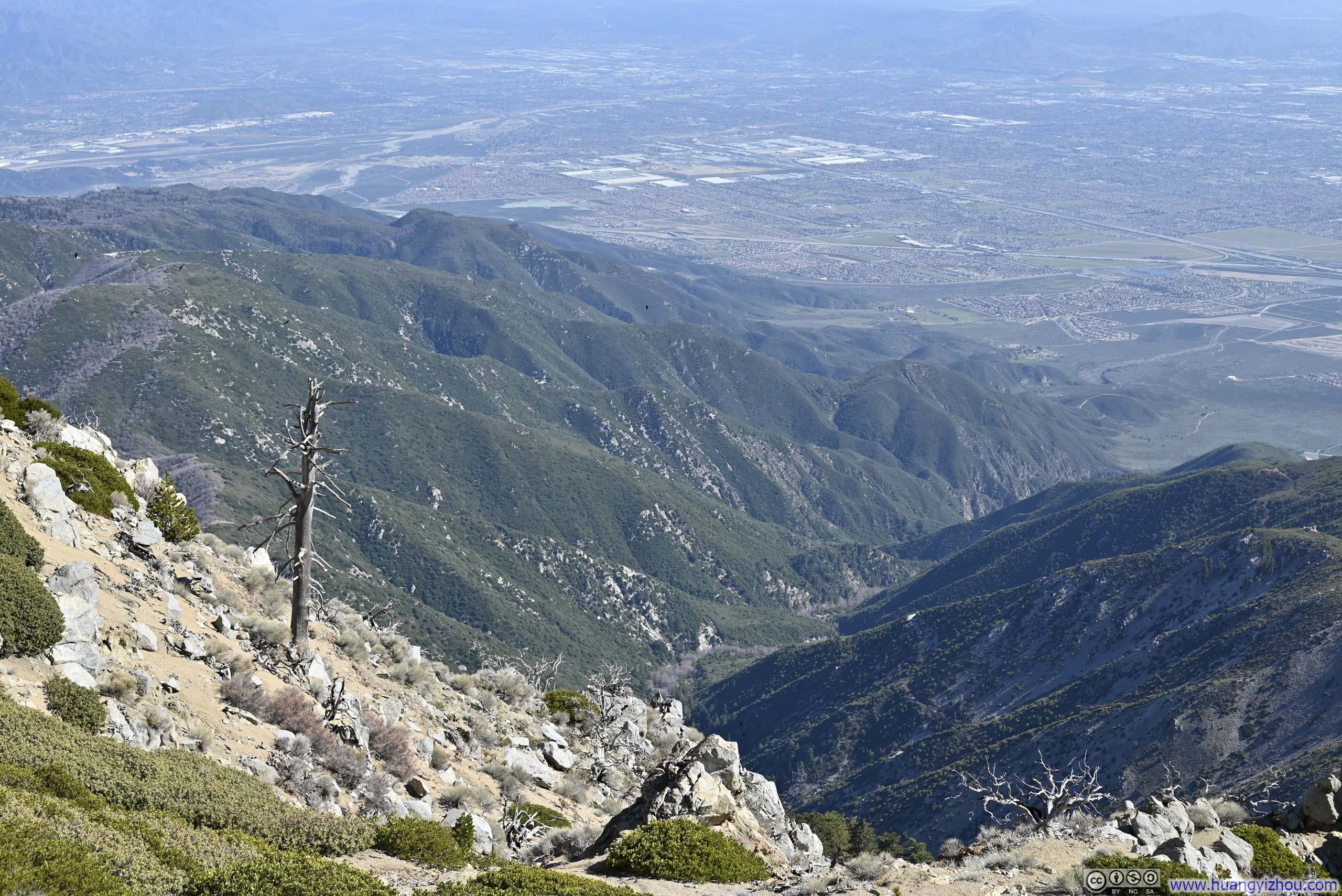
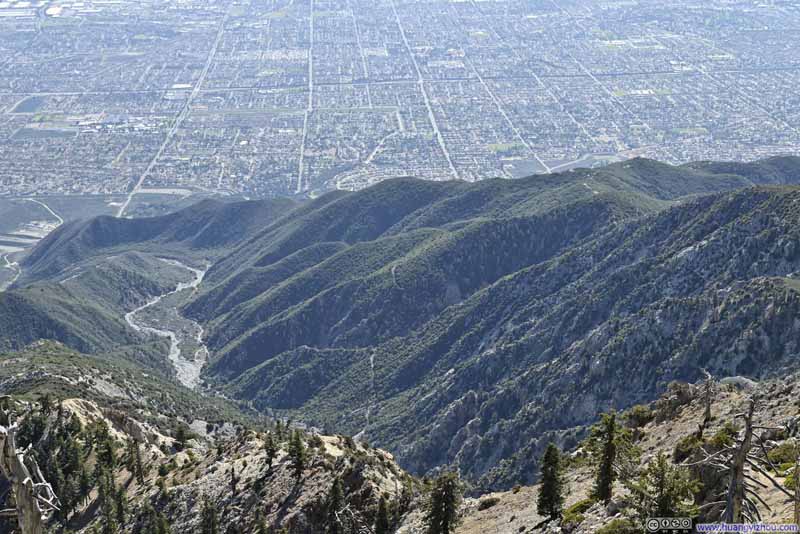 Calamity Canyon
 Day Canyon
Click here to display photos from the summit of Cucamonga Peak.
Distant Los Angeles Metropolis
San Gabriel Mountains to the Northwest
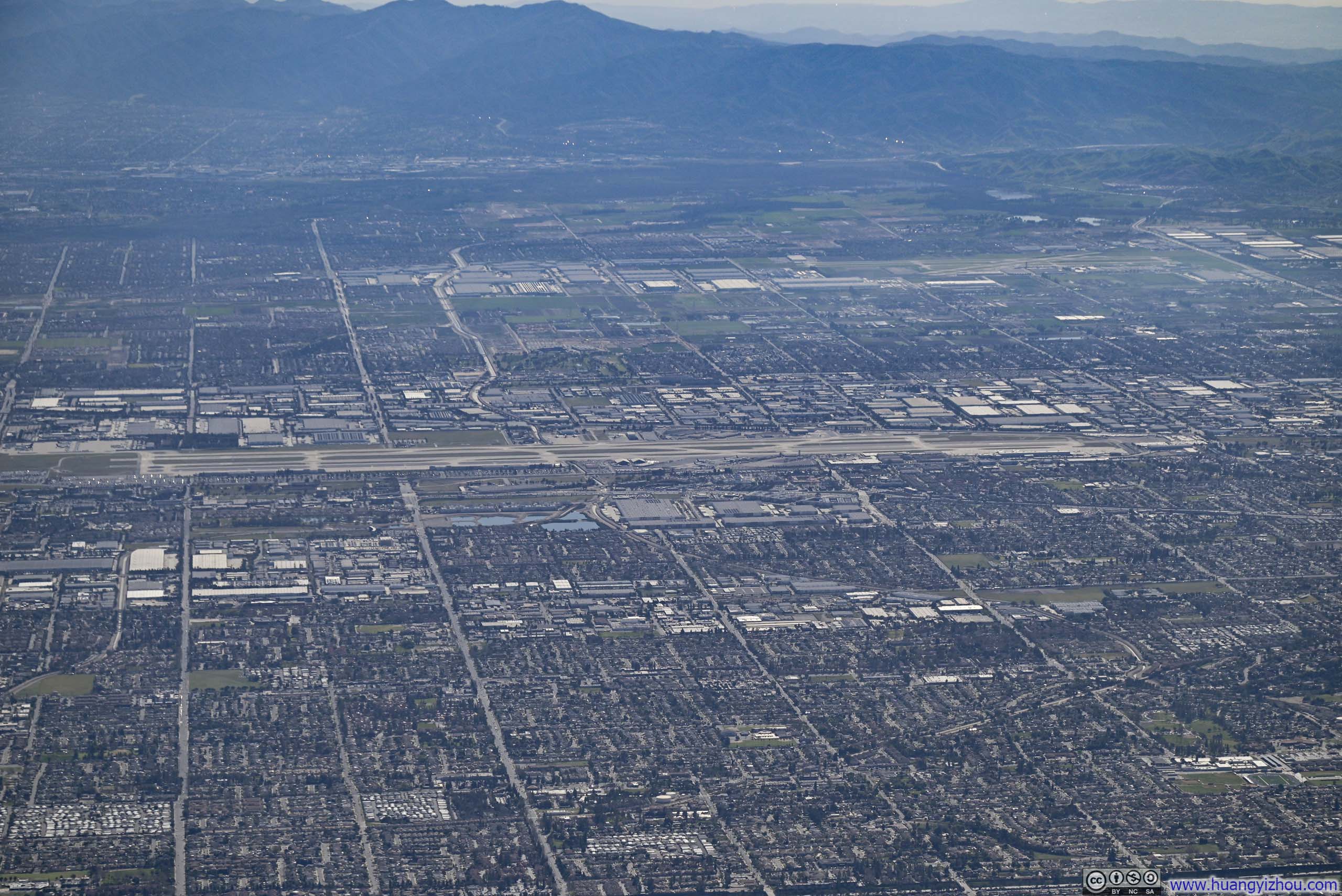
Ontario Airport
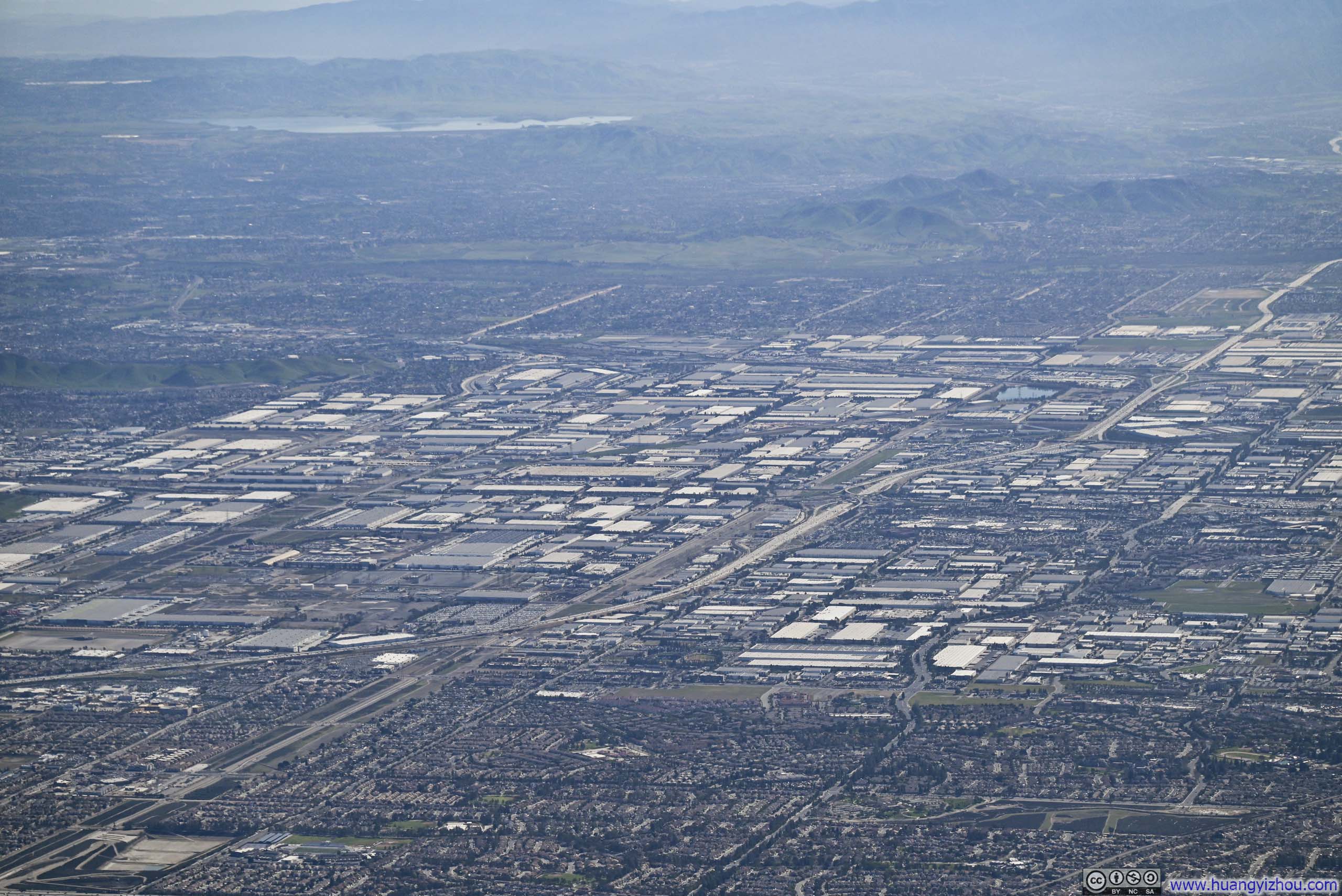
Warehouses
Calamity Canyon
Day Canyon
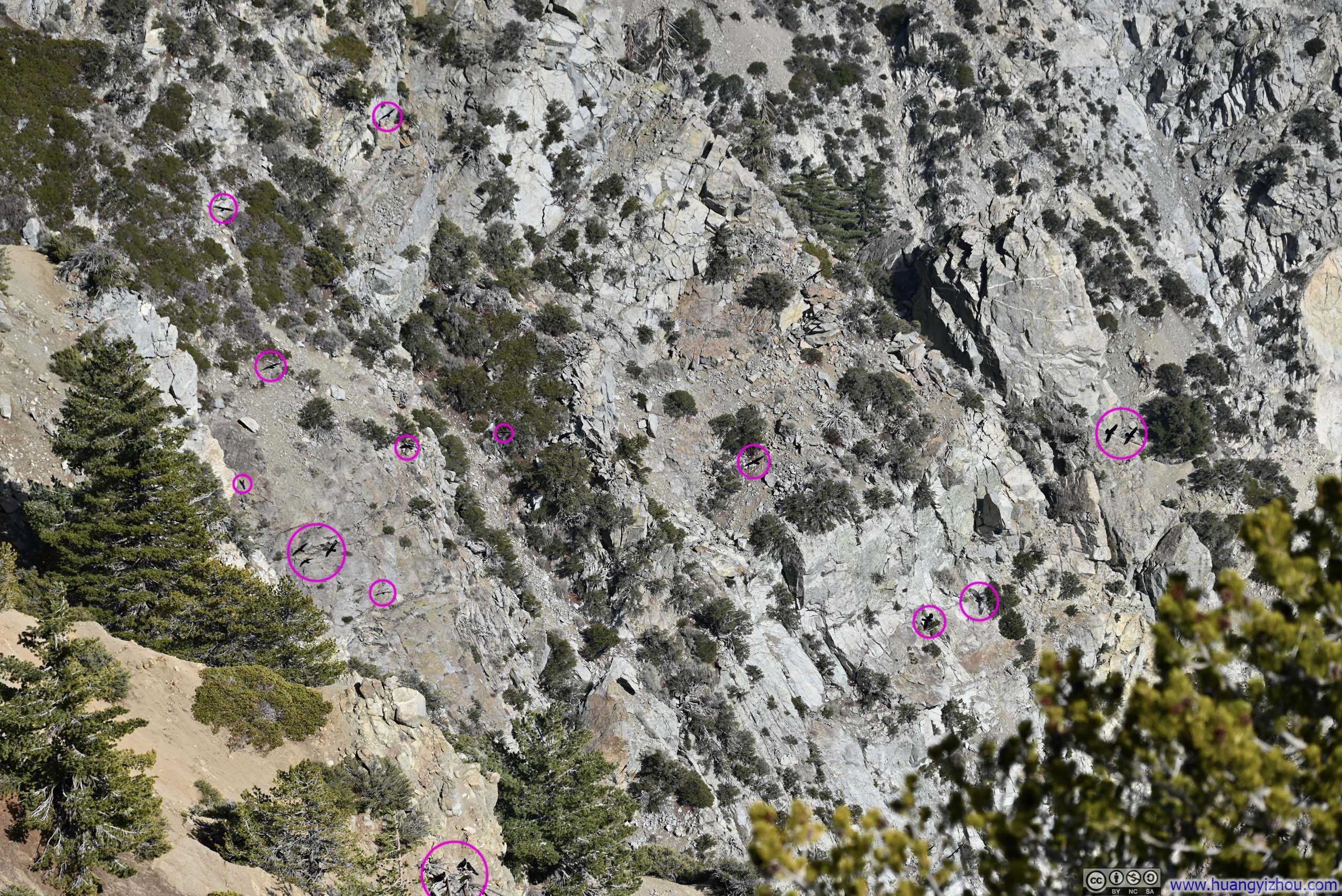
Birds Flying

View from Cucamonga Peak
I spent about an hour at the summit of Cucamonga Peak before starting my descent at 1:34pm.
The day did come with one minor mishap on the water front: an entire full bottle had been sitting undetected at the bottom of my backpack all along. As a result I ran low on water and had to replenish from Icehouse Creek. Despite that, I went a bit faster on my way down and reached the trailhead just past 5pm, concluding the hike in just under 8 hours.
My flight back to Boston wasn’t until 10pm, which afforded me roughly 5 hours to make my way to Los Angeles Airport — enough time to grab dinner and run a few errands along the way. Even with the predictable chaos of LAX evening traffic, I made it to the terminal by 8:30pm. And that’s when my nightmare began.
American Airlines Flight 2453 from Los Angeles to Boston
My plan upon arriving at the airport was straightforward: find a single-stall bathroom, give myself a proper wipe-down after a day’s worth of hiking sweat, change into fresh clothes, and board the flight back to Boston in dignity, exactly what I had done last July before flying home from Anchorage. This time, however, no such sanctuary was to be found. Terminal 4 spanned three levels, and I rode the escalators up and down multiple times, only to find that the sole single-stall bathroom appeared to be locked.
Given Terminal 5 was closed for renovation, my next best hope was TBIT. However, TBIT was bustling that evening, with queues seemingly spilling out of every restroom. Reluctantly, I retreated to Terminal 4 and made do with a standard bathroom — managing a change of clothes, but forgoing the wipe-down entirely. (In hindsight, I suspected I worked up more of a sweat scrambling around the airport than I had on the hike itself.)
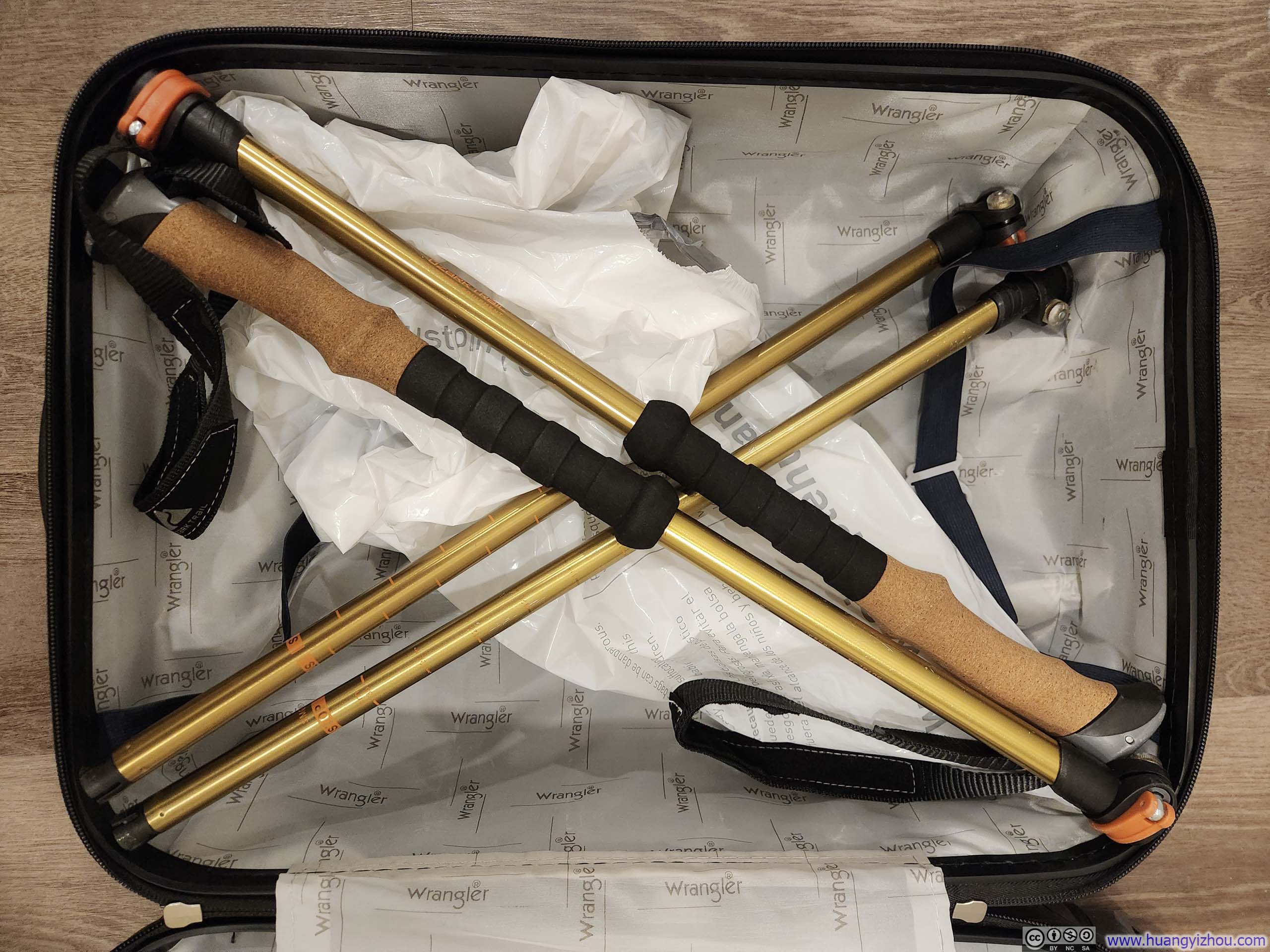
Packing Hiking Poles into Suitcase
Then there’s the suitcase situation. Had I brought a full-sized checked bag, I could have packed an extra pair of shoes better suited to the LA weather — the ones I wore had been chosen for potentially icy conditions on Cucamonga Peak, and were to some degree uncomfortably warm by the time I was back in the city. A larger suitcase would also have meant my hiking poles could remain assembled, freeing up space to stow my camera and laptop inside the bag, hence I could keep my change of clothes in the backpack, which I could have carried through security and used airside, bathroom or lounge.
Throughout most of the day, I had been at No. 2 on the upgrade list for this flight, with one business class seat still open. As boarding began, it appeared that the No.1 no-showed, and the upgrade came through. (Given the state I was in, I genuinely felt bad about my neighbors.)
American Airlines 2453
Los Angeles, CA (LAX) – Boston, MA (BOS)
Airbus A321 (N105NN)
Seat 10F
Scheduled Departure – 10:00pm
Actual Departure – 10:14pm
Scheduled Arrival – 6:25am + 1
Actual Arrival – 6:16am + 1
5 hours and 2 minutes
Here’s GPS tracking:
As for the flight itself, there is little worth recounting as I spent most of it trying to sleep, intent on heading straight to the office the following morning. It was only upon landing, at the Admirals Club in Boston, that I finally managed a proper shower, bringing this whirlwind weekend to a close.
END
 Weekend Trip to Los Angeles by Huang's Site is licensed under a Creative Commons Attribution-NonCommercial-ShareAlike 4.0 International License.