Updated on January 18, 2026
Day 5 of 2025 Labor Day Trip to California, Matterhorn Peak of Sierra Nevada
The fifth day of my 2025 Labor Day trip to California. After getting some rest the previous day, today I took on Matterhorn Peak that lay on the boundary of Yosemite National Park and Toiyabe National Forest.
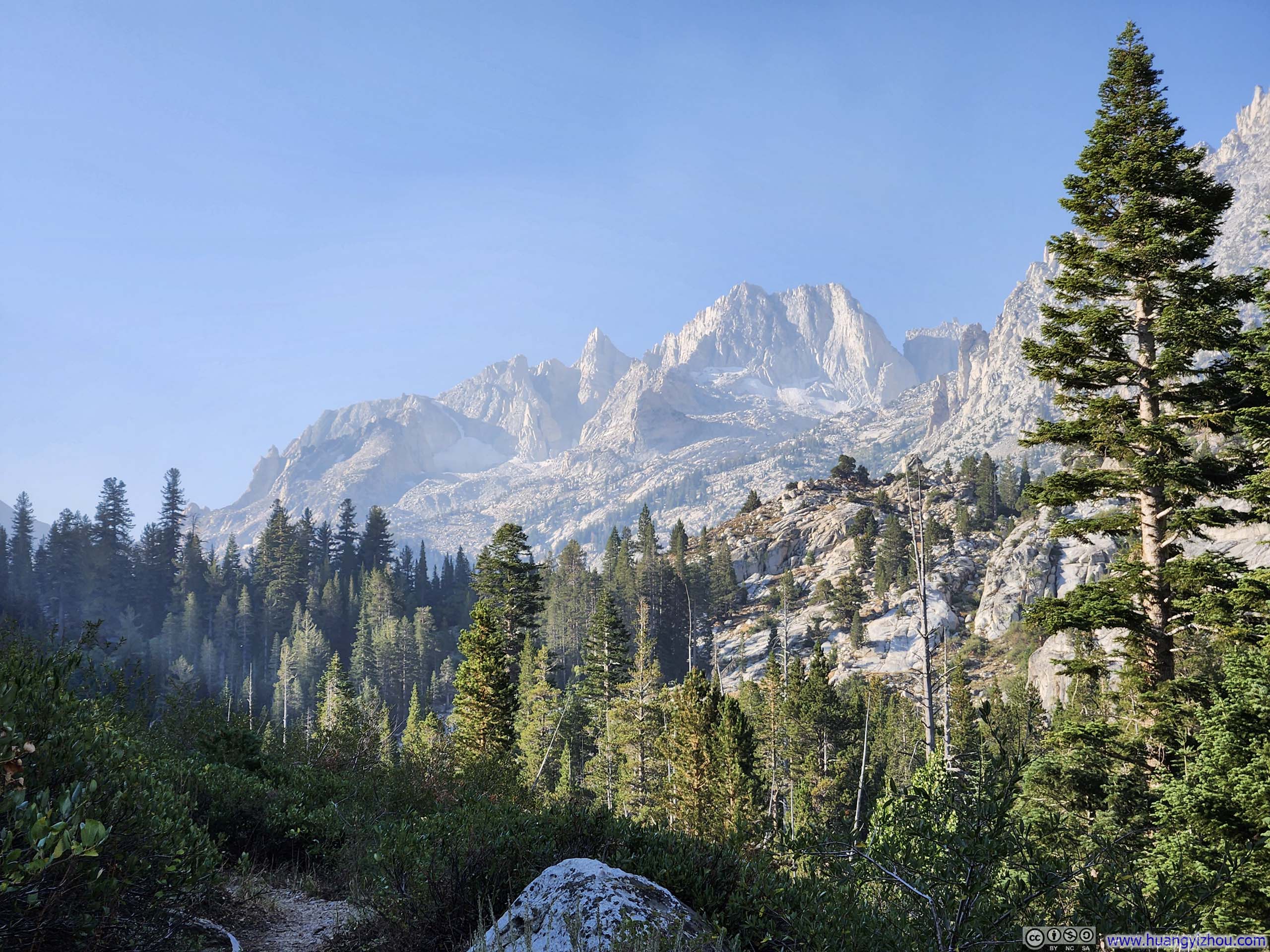
Sawtooth Ridge from TrailMatterhorn Peak was the tower in the center.
As mentioned in my previous post, the Garnet Fire altered my plans, redirecting me from Kings Canyon to Bridgeport for the day. I found myself weighing three options: Mount Conness, Excelsior Mountain, or Matterhorn Peak. Of these, the trail to Matterhorn Peak was the most ambitious, 20 kilometers round-trip with 1570 meters of elevation gain (12.5 miles, 5,150 feet), about 50% more than the other two candidates. Yet I felt adequately rested from the previous day, and the peak’s storied name, borrowed from that imposing peak straddling the Italian-Swiss border, proved irresistible. I decided to attempt it.
September 5: Hike to Matterhorn Peak
The journey to Matterhorn Peak encompassed varied terrains: a leisurely stroll through forest shade, some bushwhacking through dense undergrowth, some rock-hopping across a talus field, occasionally getting lost where errant boulders interrupted tranquil meadows, more rock-hopping, fighting altitude thickness through a scree field, and finally, a few scrambling moves near the summit.
Matterhorn Peak was the tallest and southernmost peak of the craggy and serrated “Sawtooth Ridge”, which, delightfully, was visible from the access road. The trailhead for this hike was located at Annett Mono Village, a modest resort and campground. Parking was free and no registration was needed for day hikes.
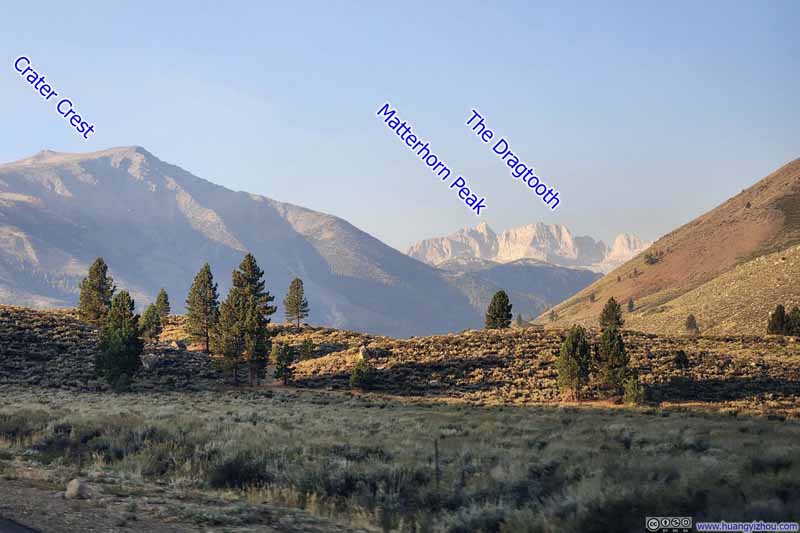 Sawtooth Ridge from Road
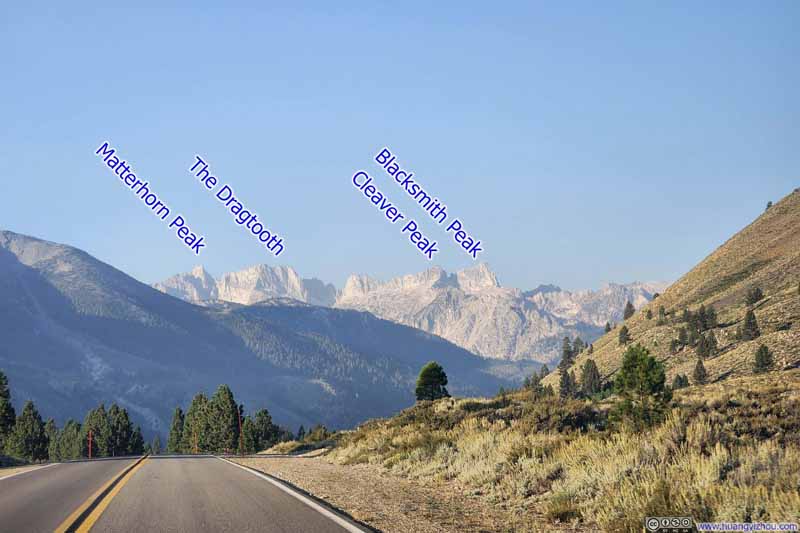 Sawtooth Ridge from Road
Click here to display photos of the Sawtooth Ridge from road.
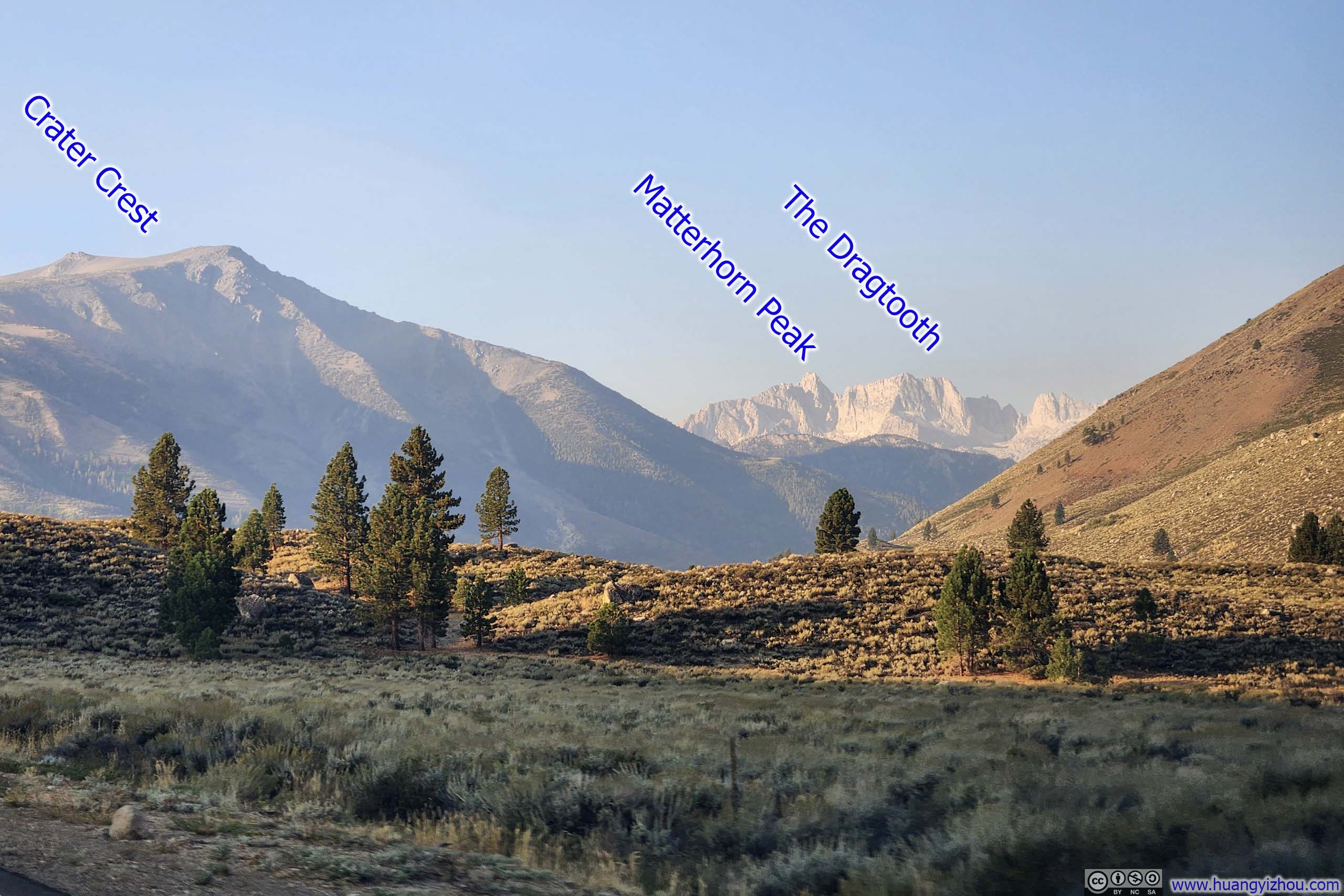
Sawtooth Ridge from Road
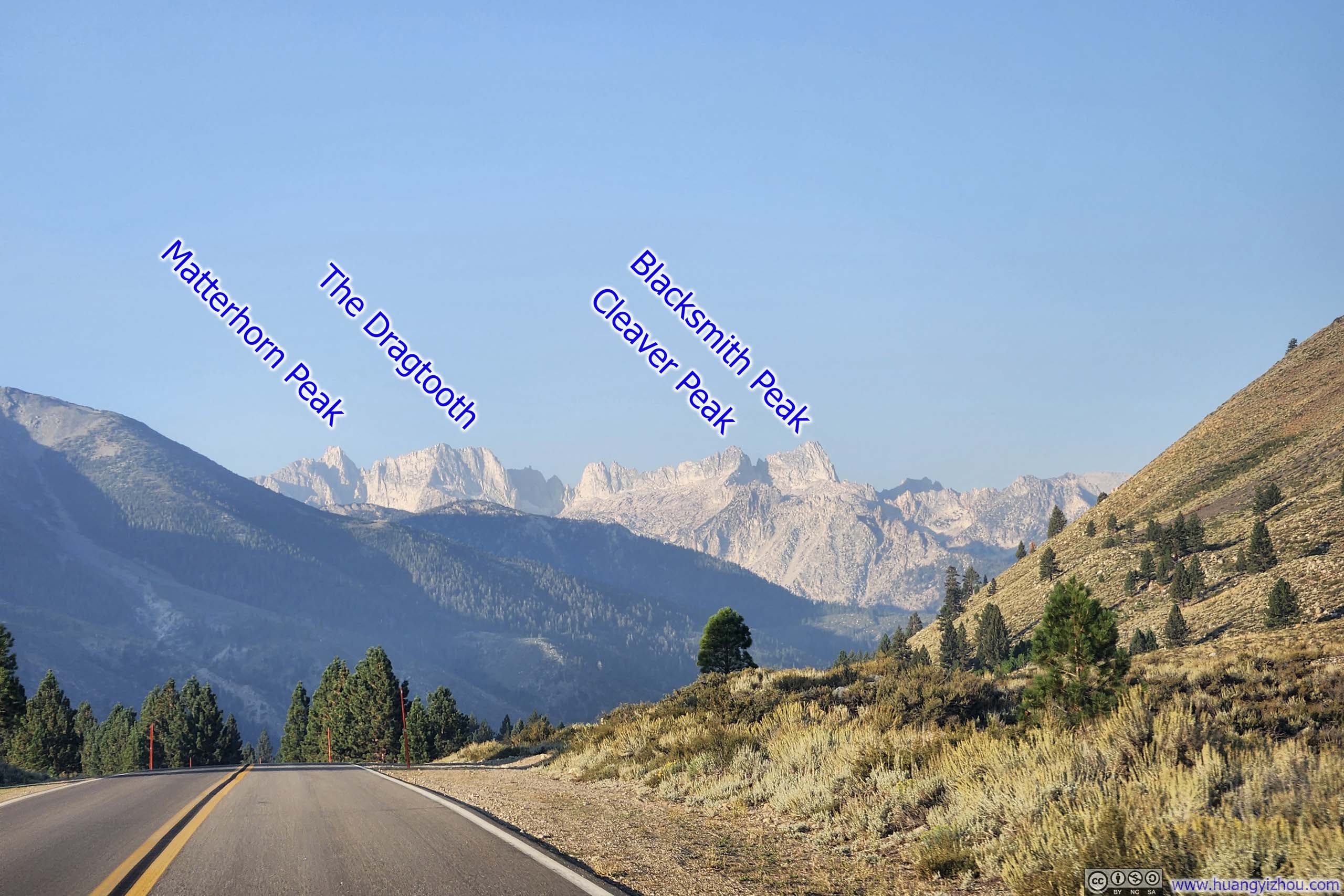
Sawtooth Ridge from Road
After some warmup, I started the hike at 7:50am. Here’s GPS tracking:
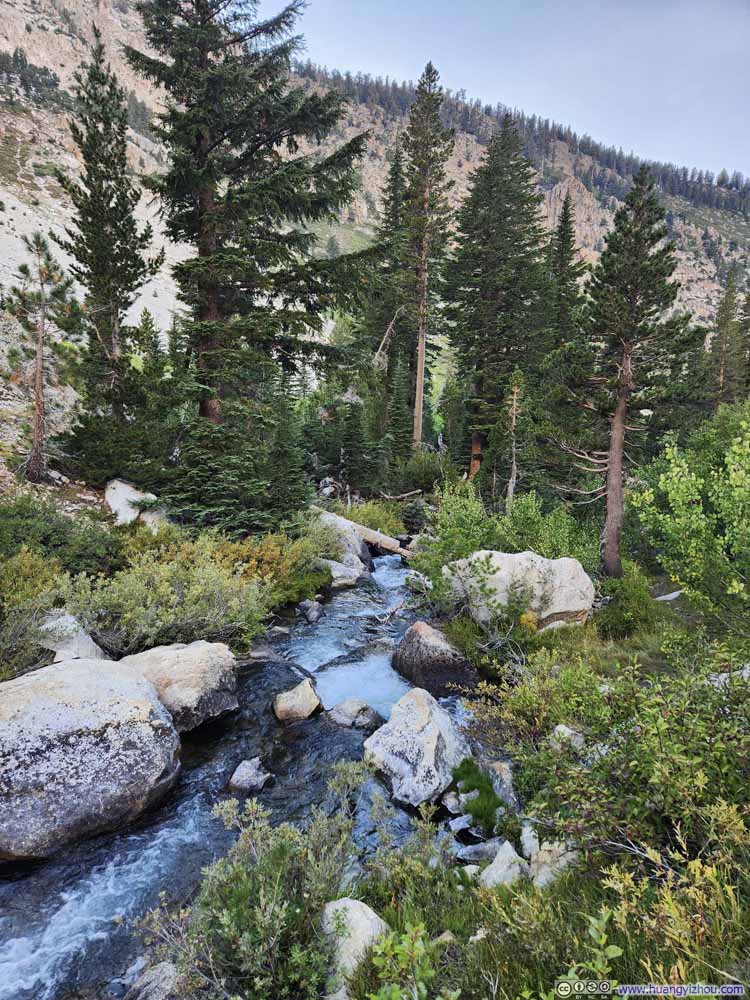
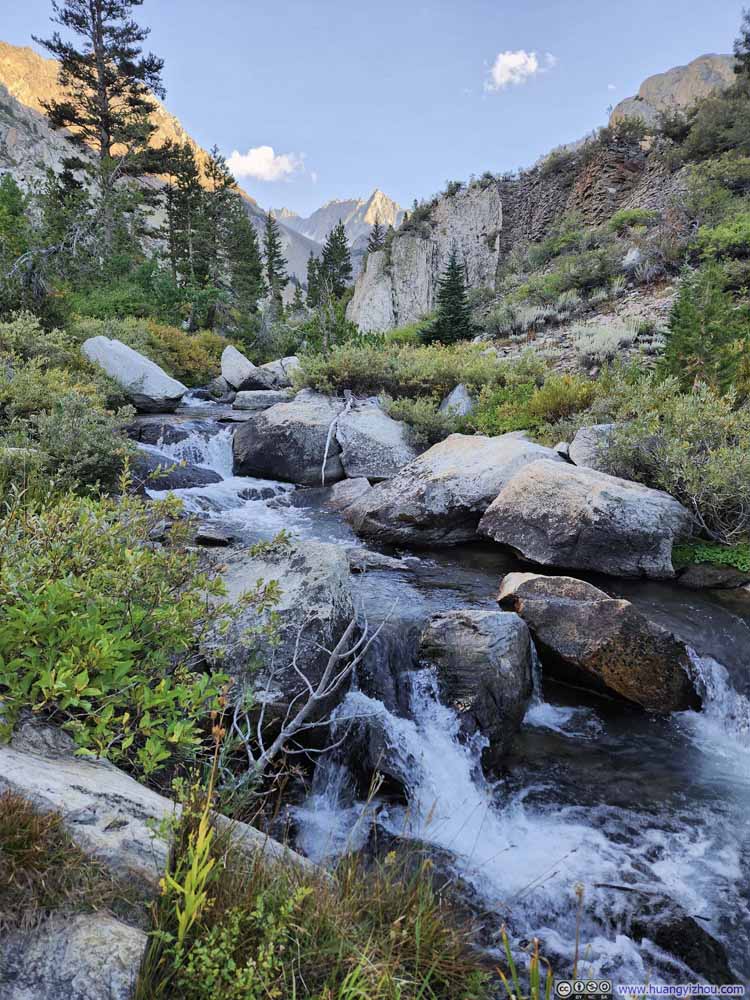
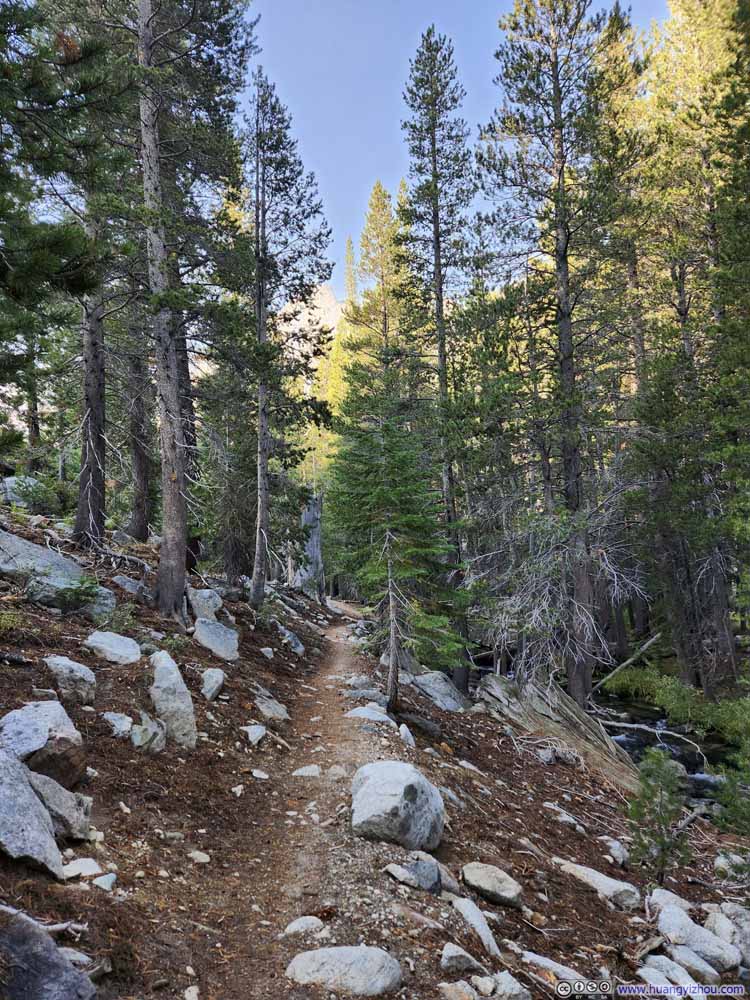
The trail to Matterhorn Peak traced Horse Creek upstream to its headwaters near Horse Creek Pass, then veered westward for the final ascent to the summit. Near the trailhead, where the creek tumbled through a succession of steep cascades, the path wound upward in switchbacks to ease the climb. Here, the journey began as little more than a leisurely stroll through the forest.
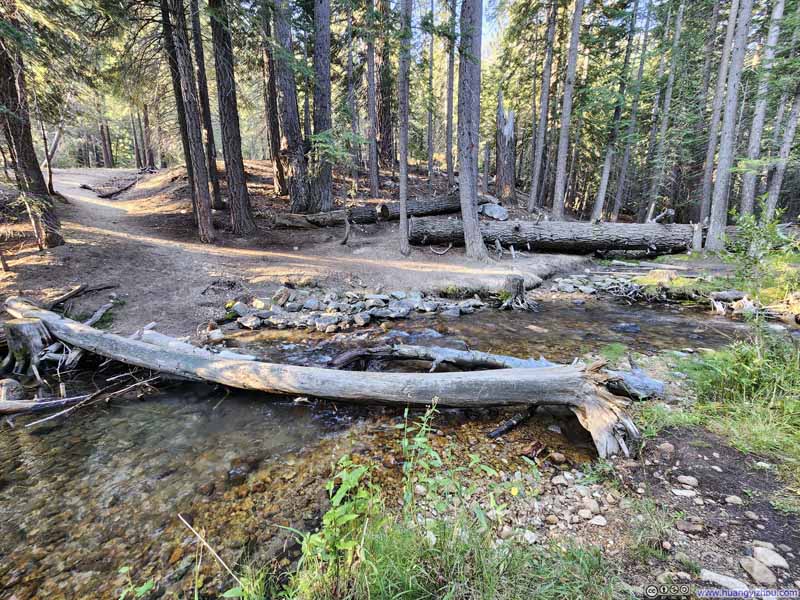 Crossing Robinson Creek
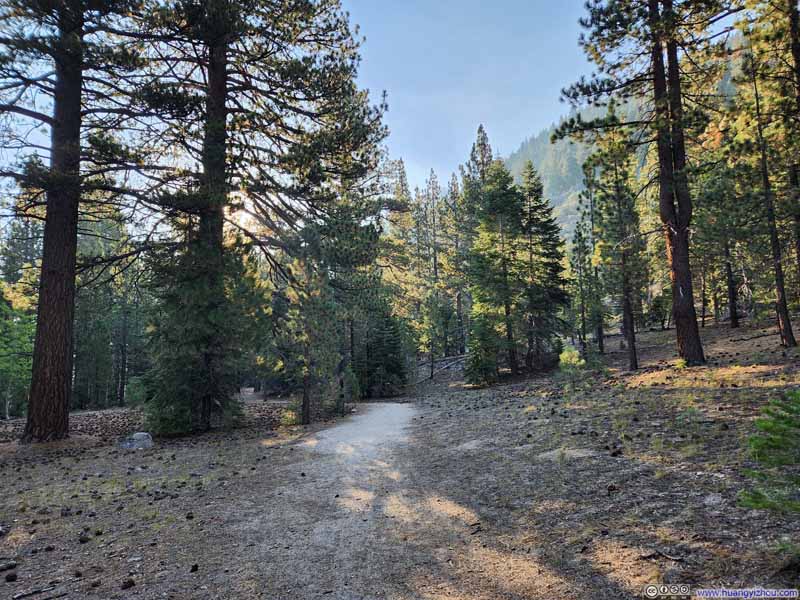 Trail in Woods
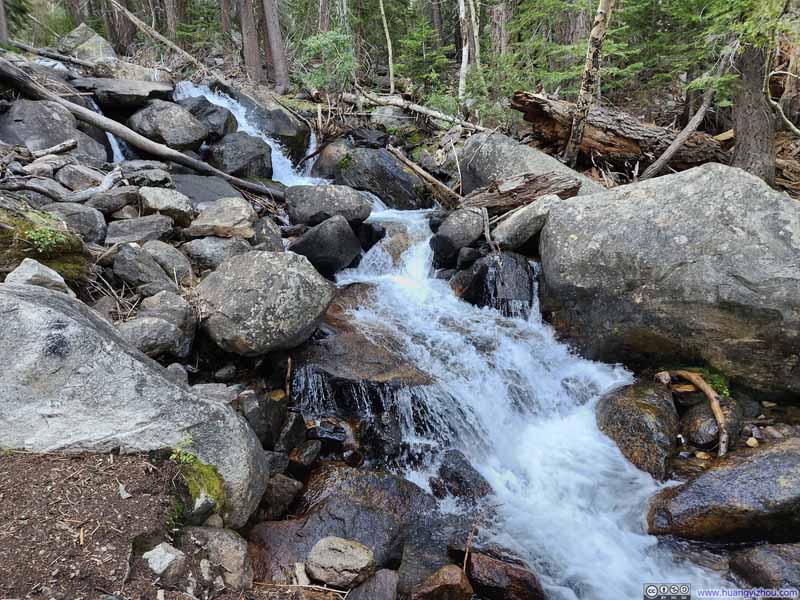 Horsetail Falls
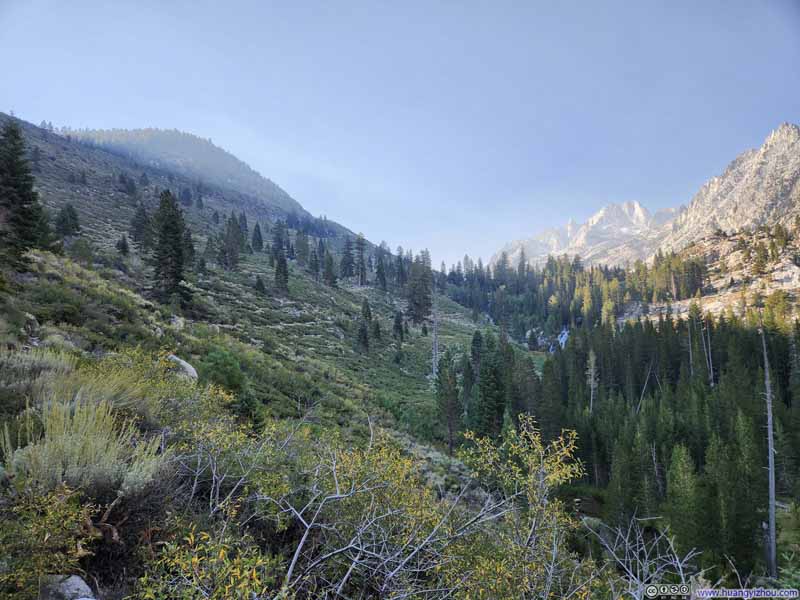 Trail in Valley
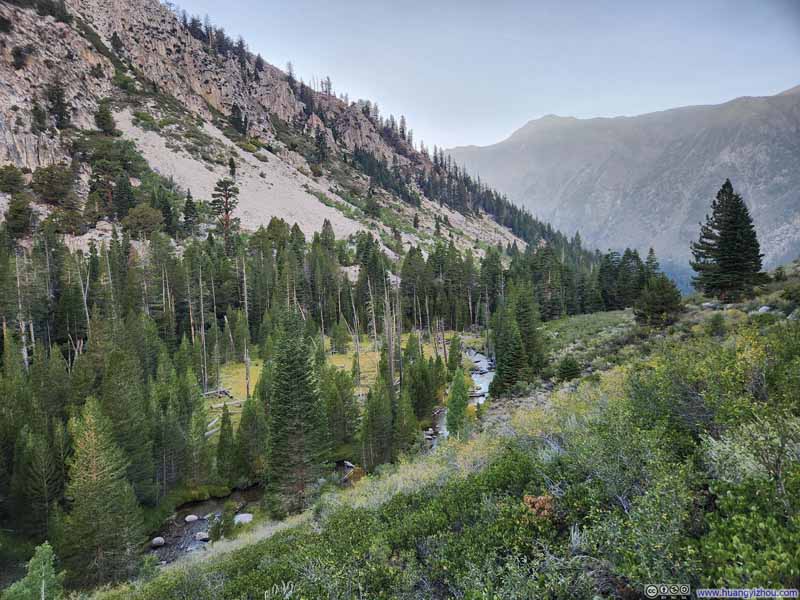 Overlooking Horse Creek
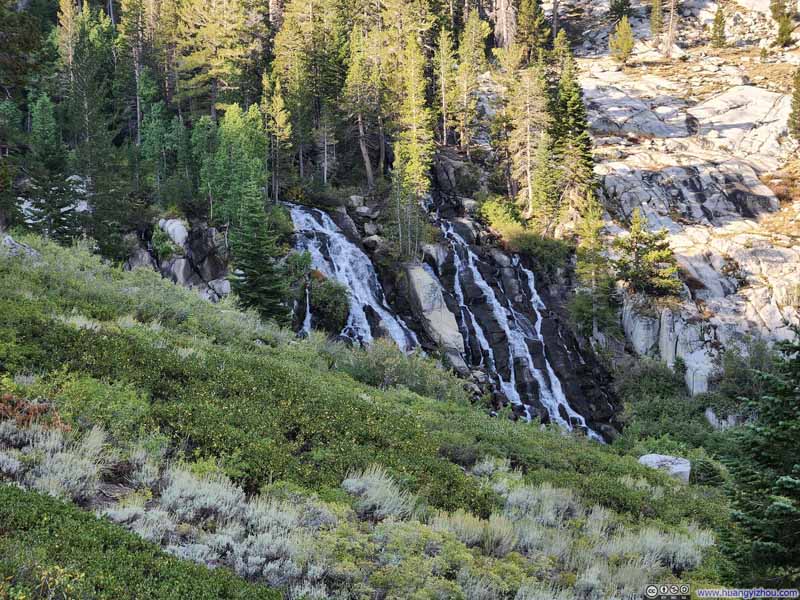 Waterfalls along Horse Creek
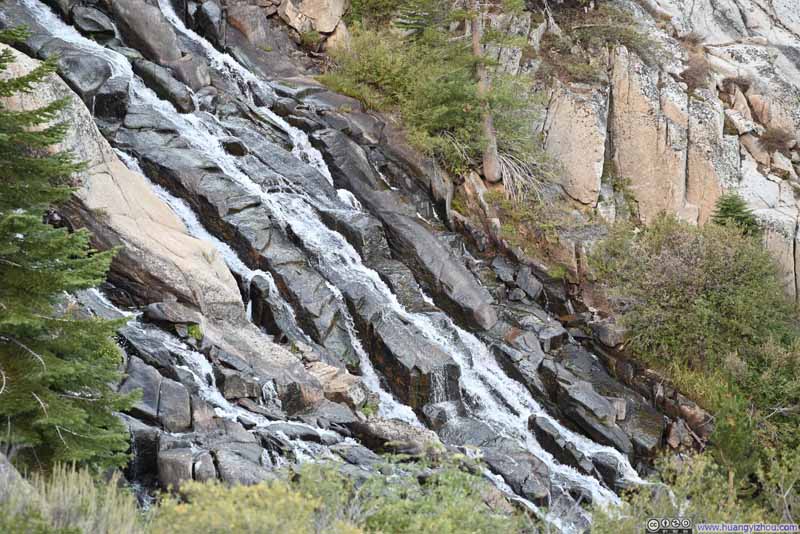 Waterfalls along Horse Creek
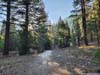
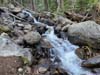
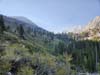
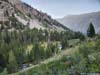
Click here to display photos of the slideshow
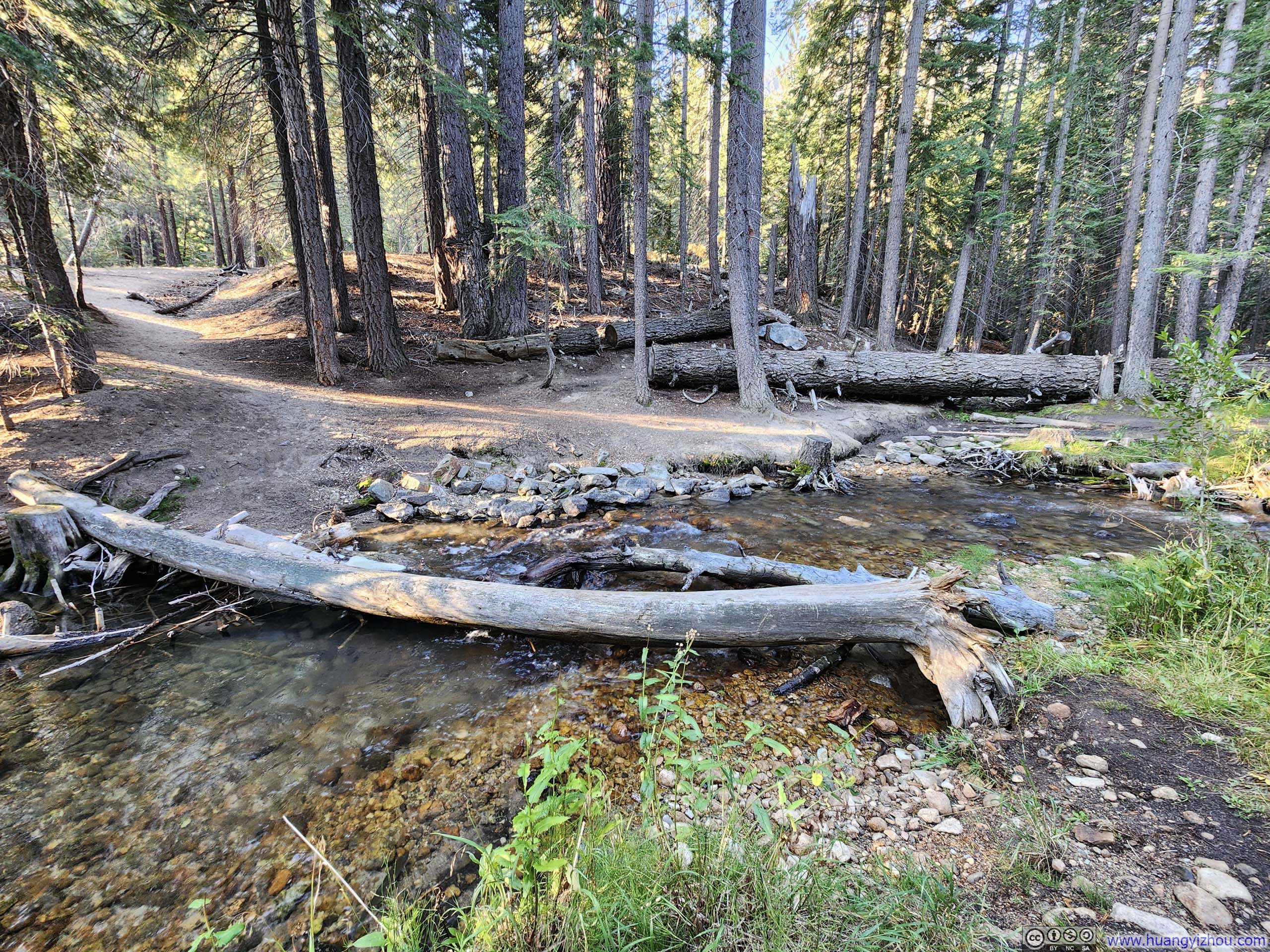
Crossing Robinson Creek
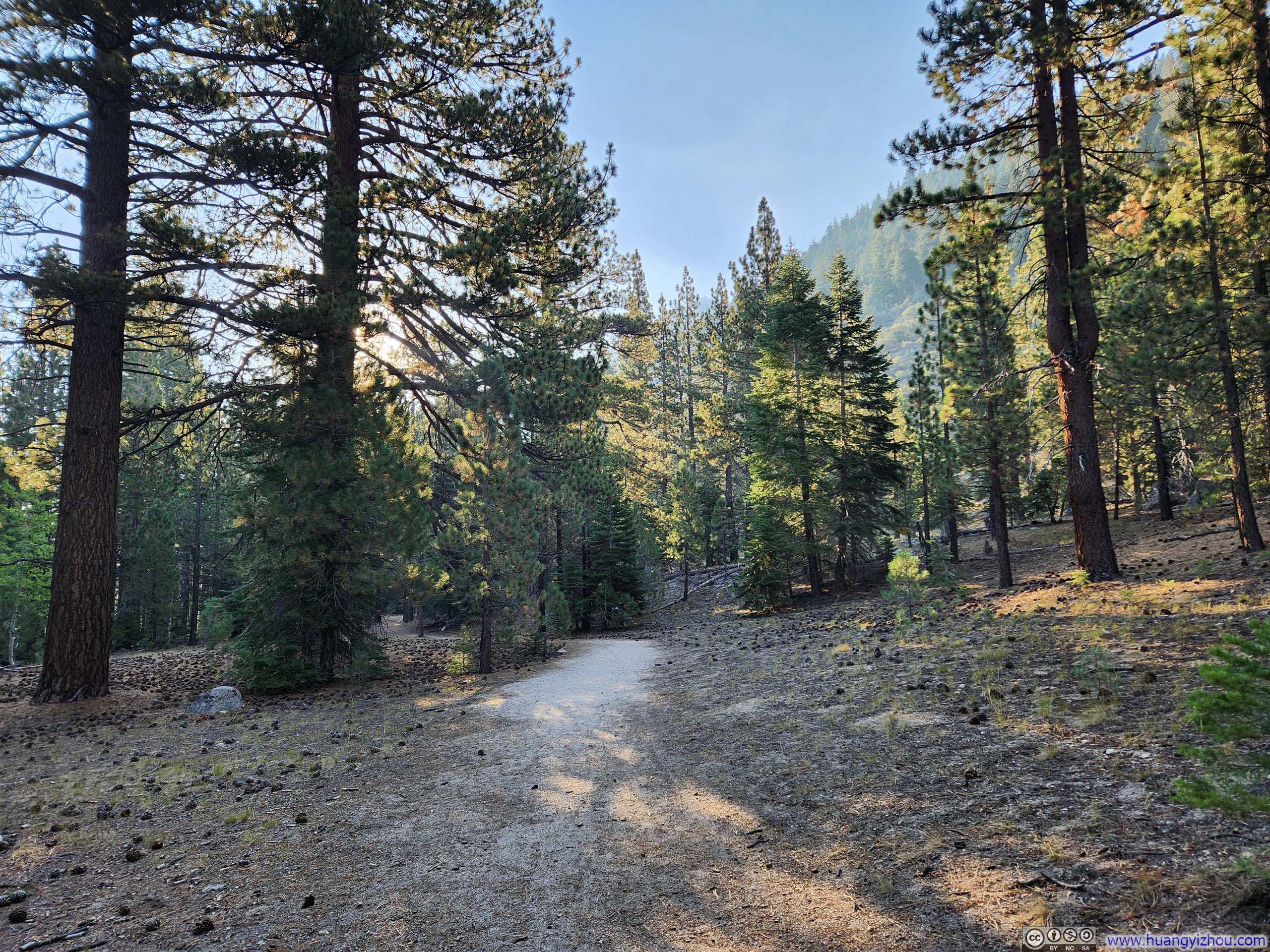
Trail in Woods
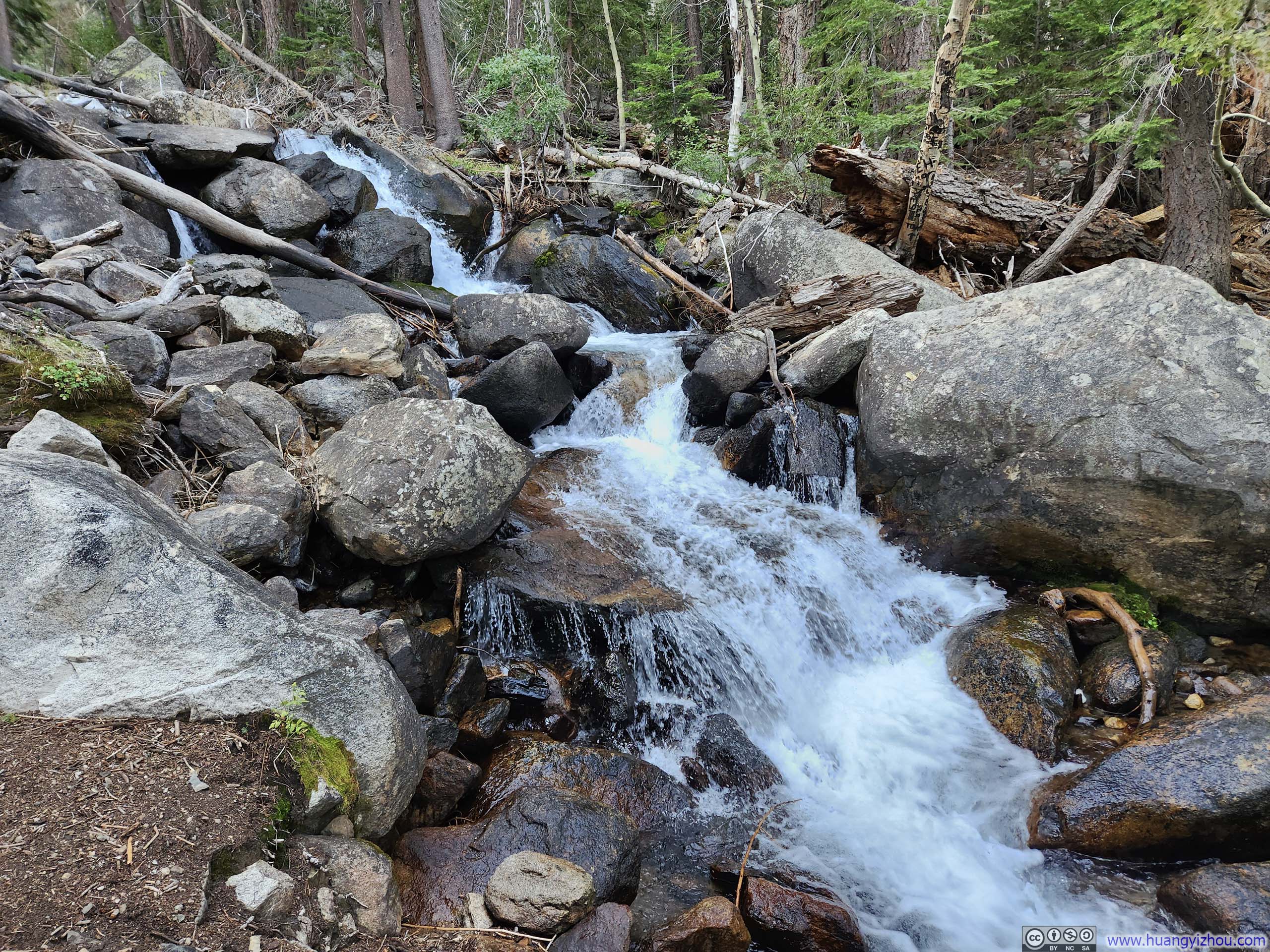
Horsetail Falls
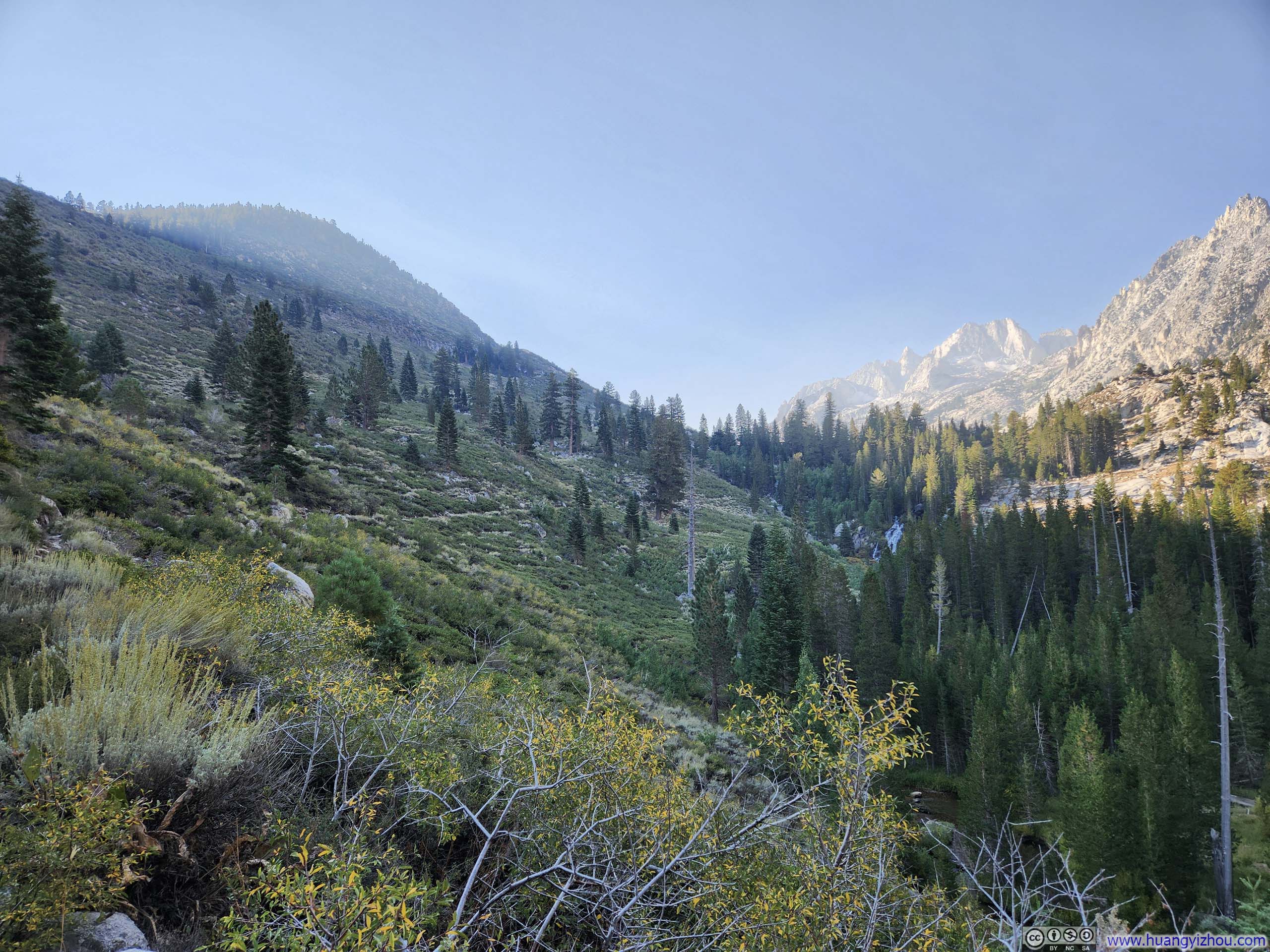
Trail in Valley
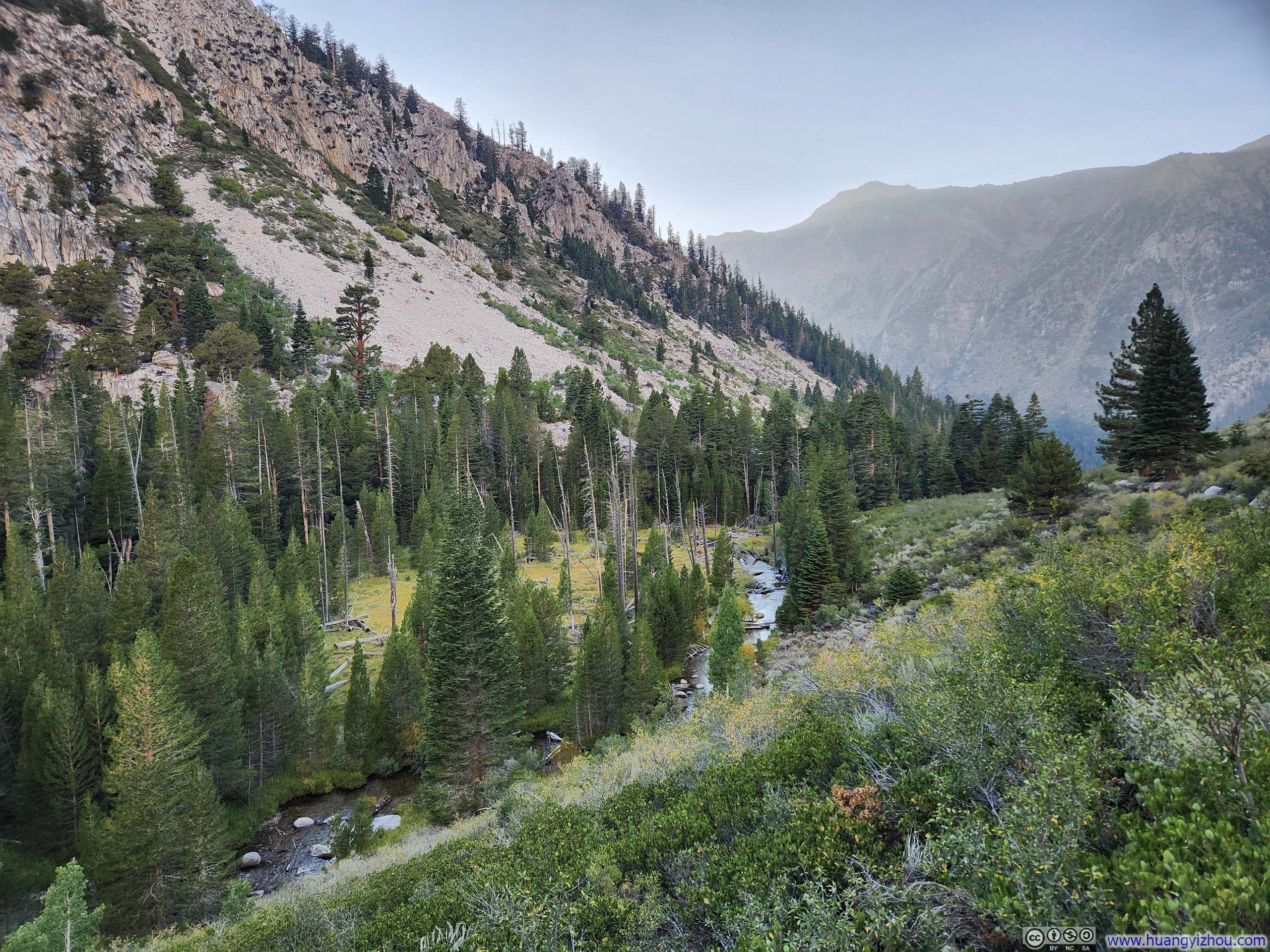
Overlooking Horse Creek
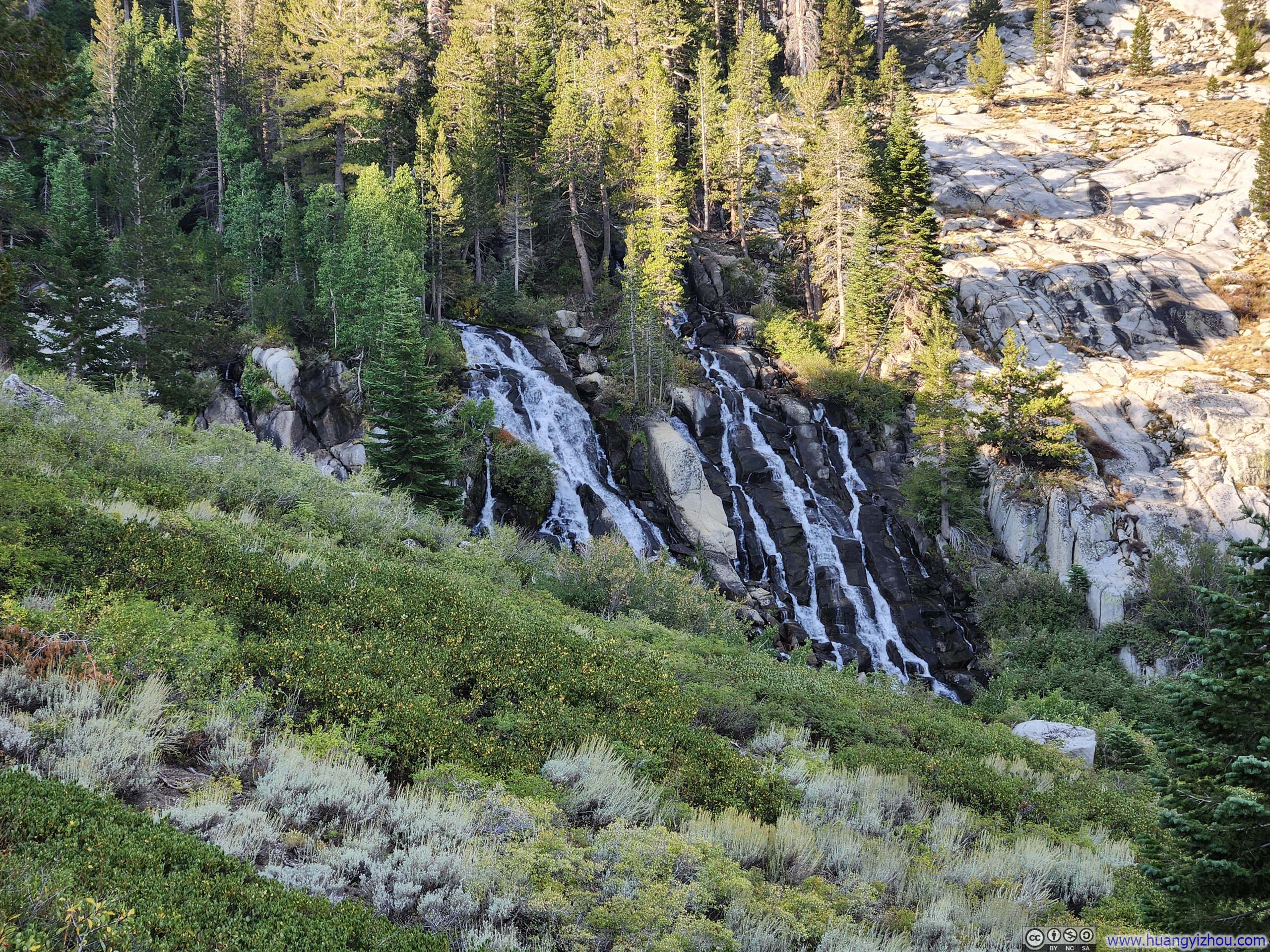
Waterfalls along Horse Creek
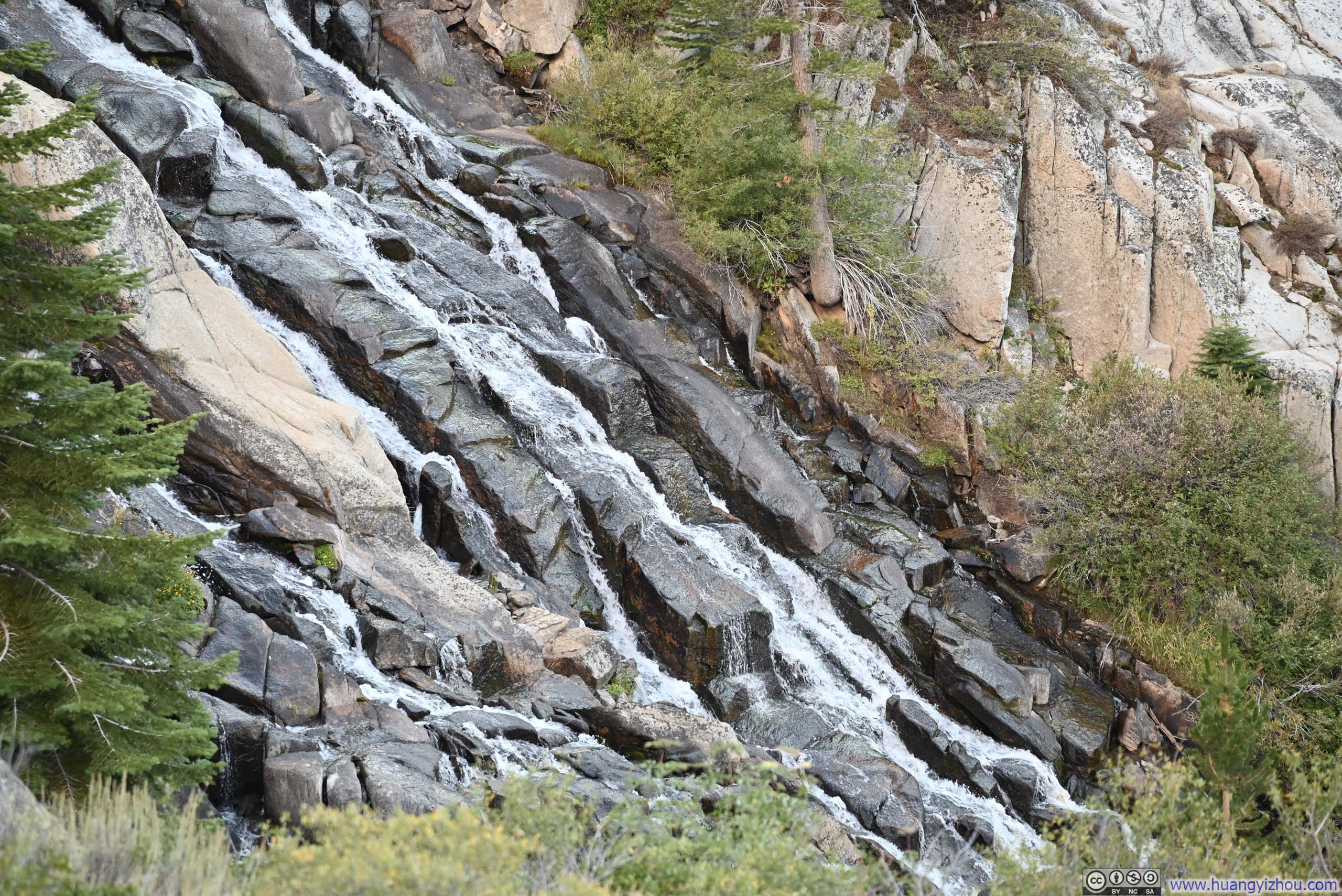
Waterfalls along Horse Creek
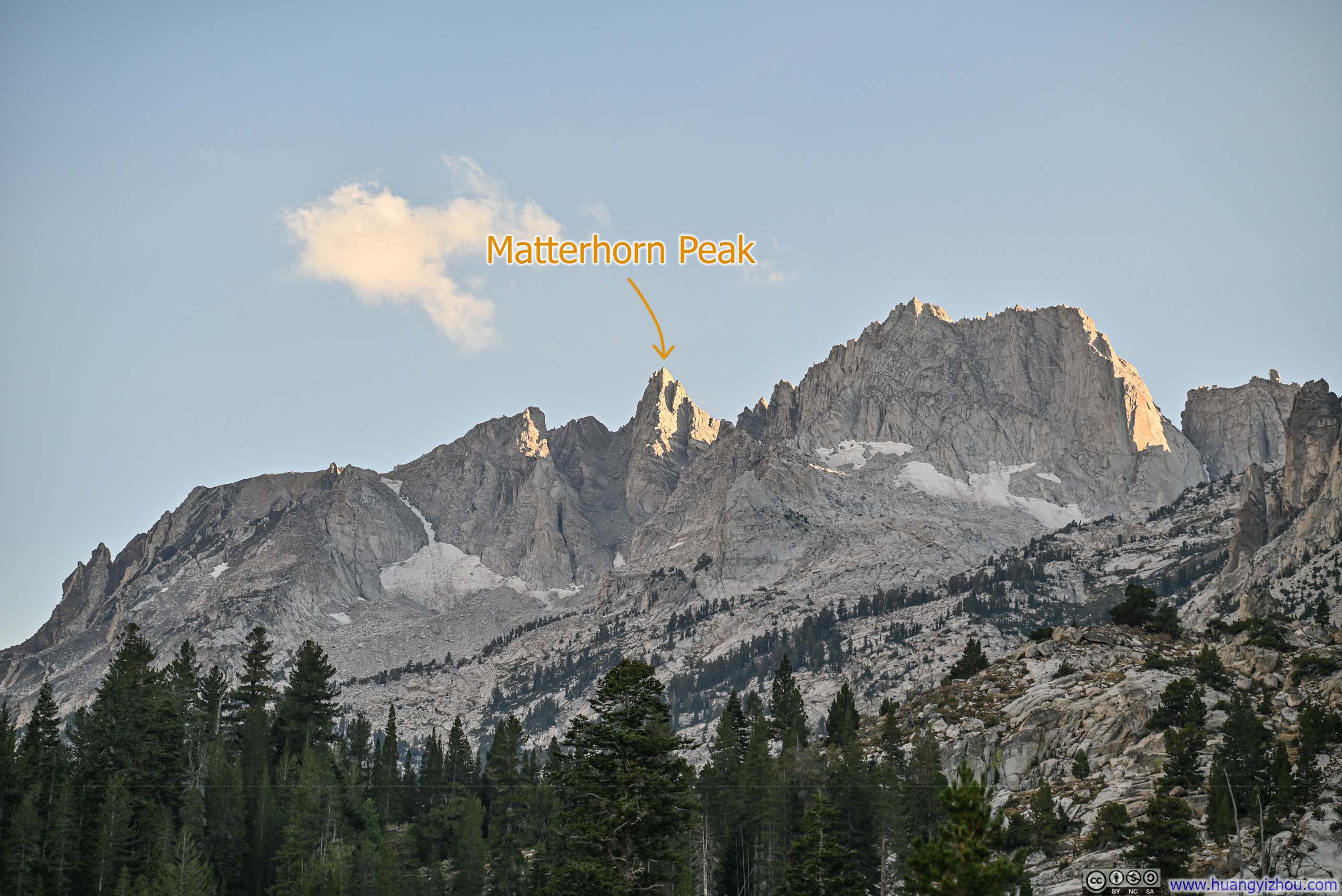
Sawtooth Ridge from Trail
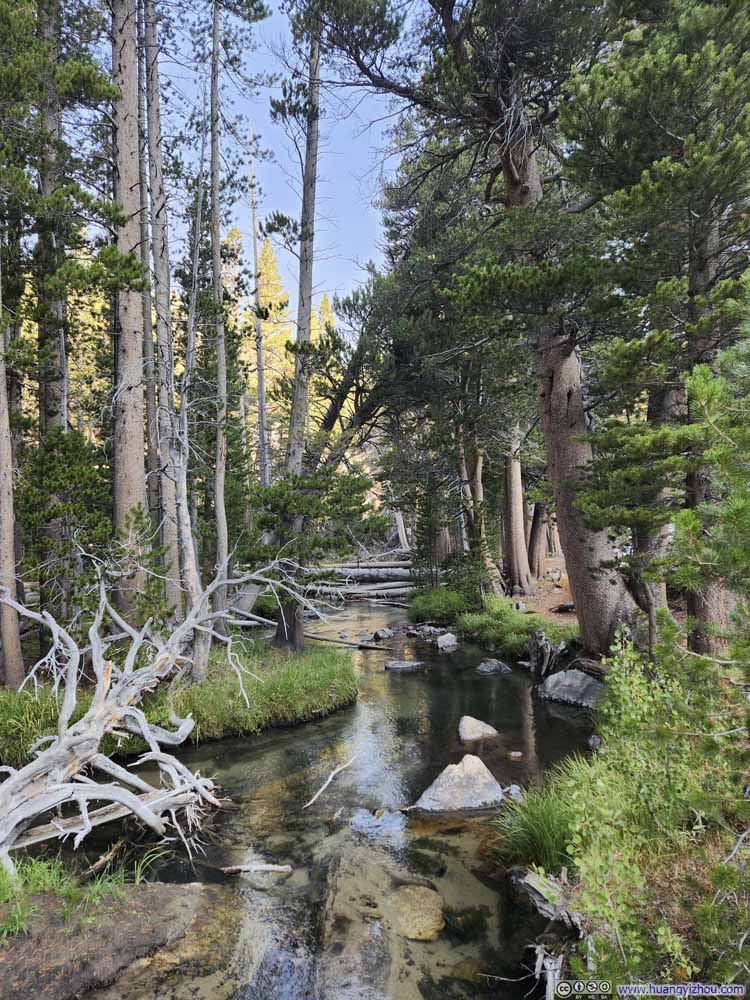
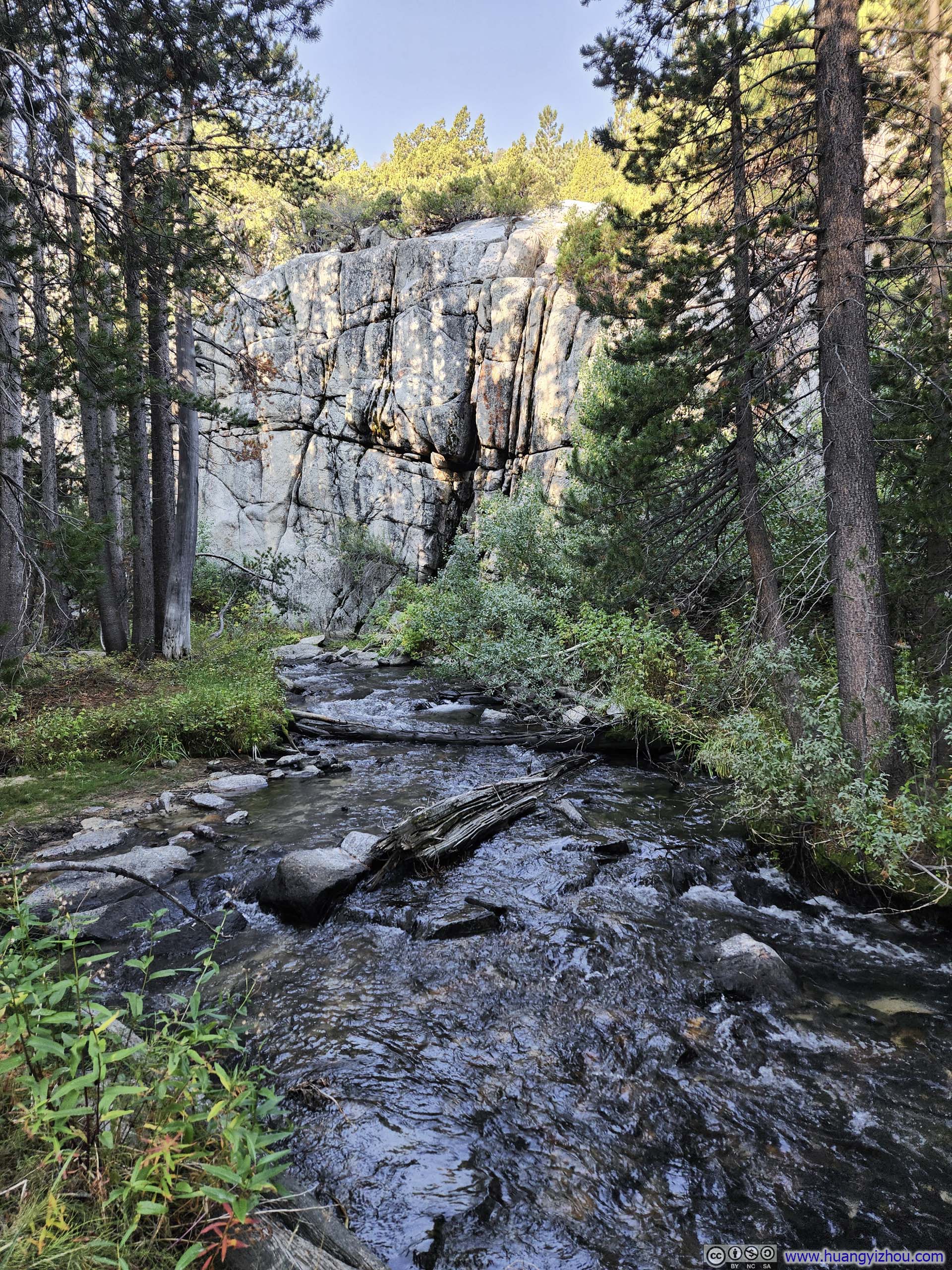
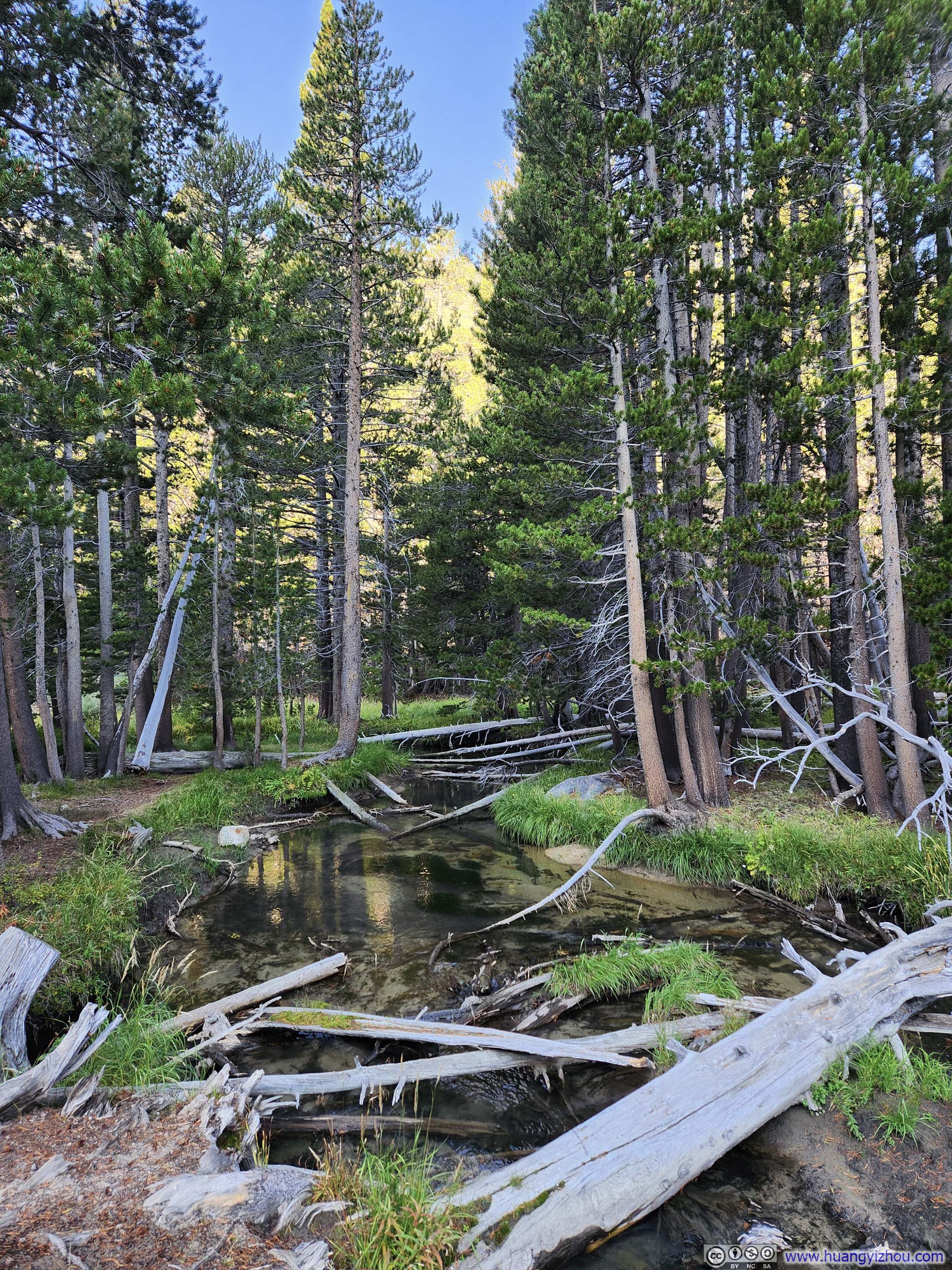
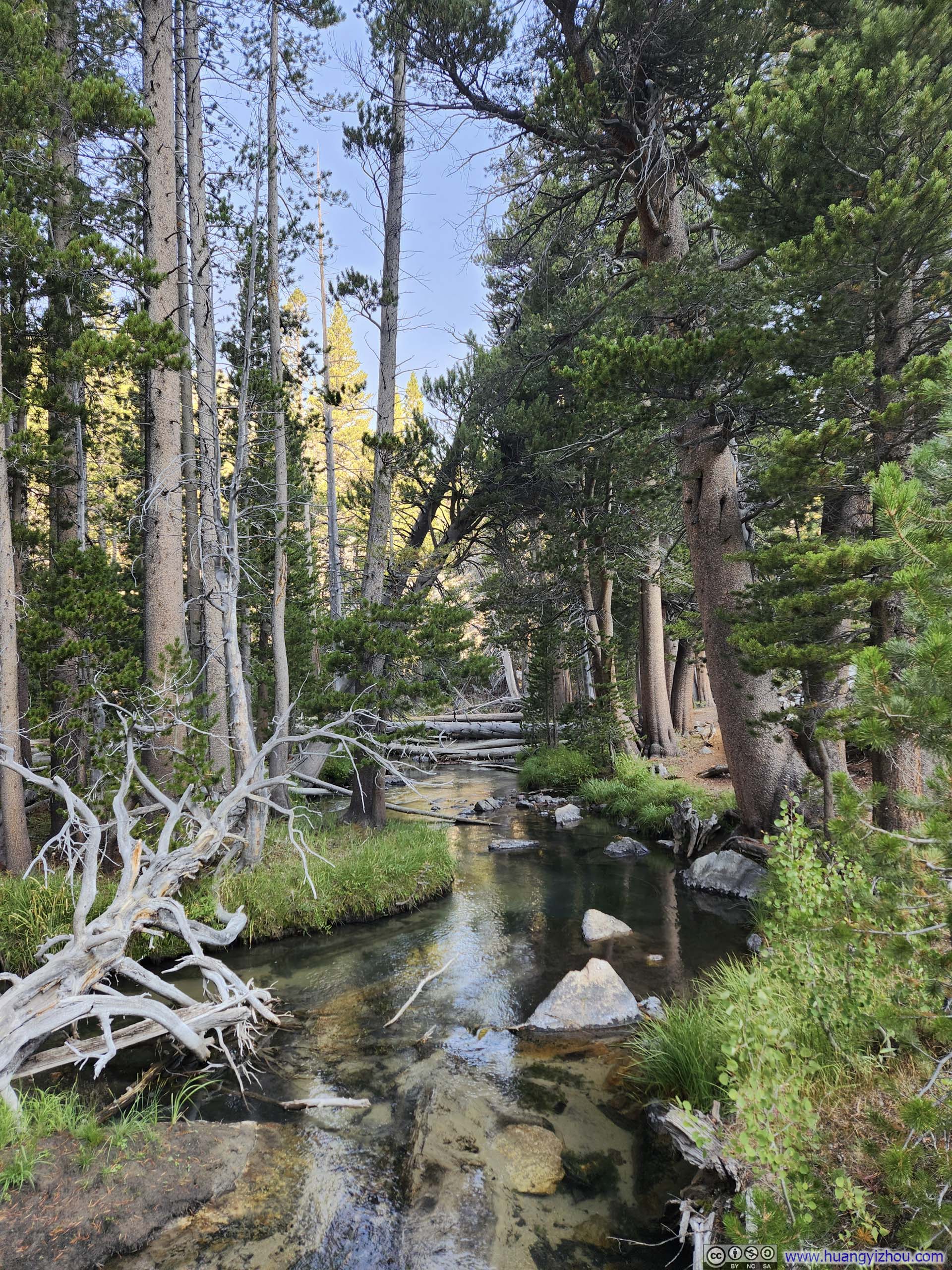
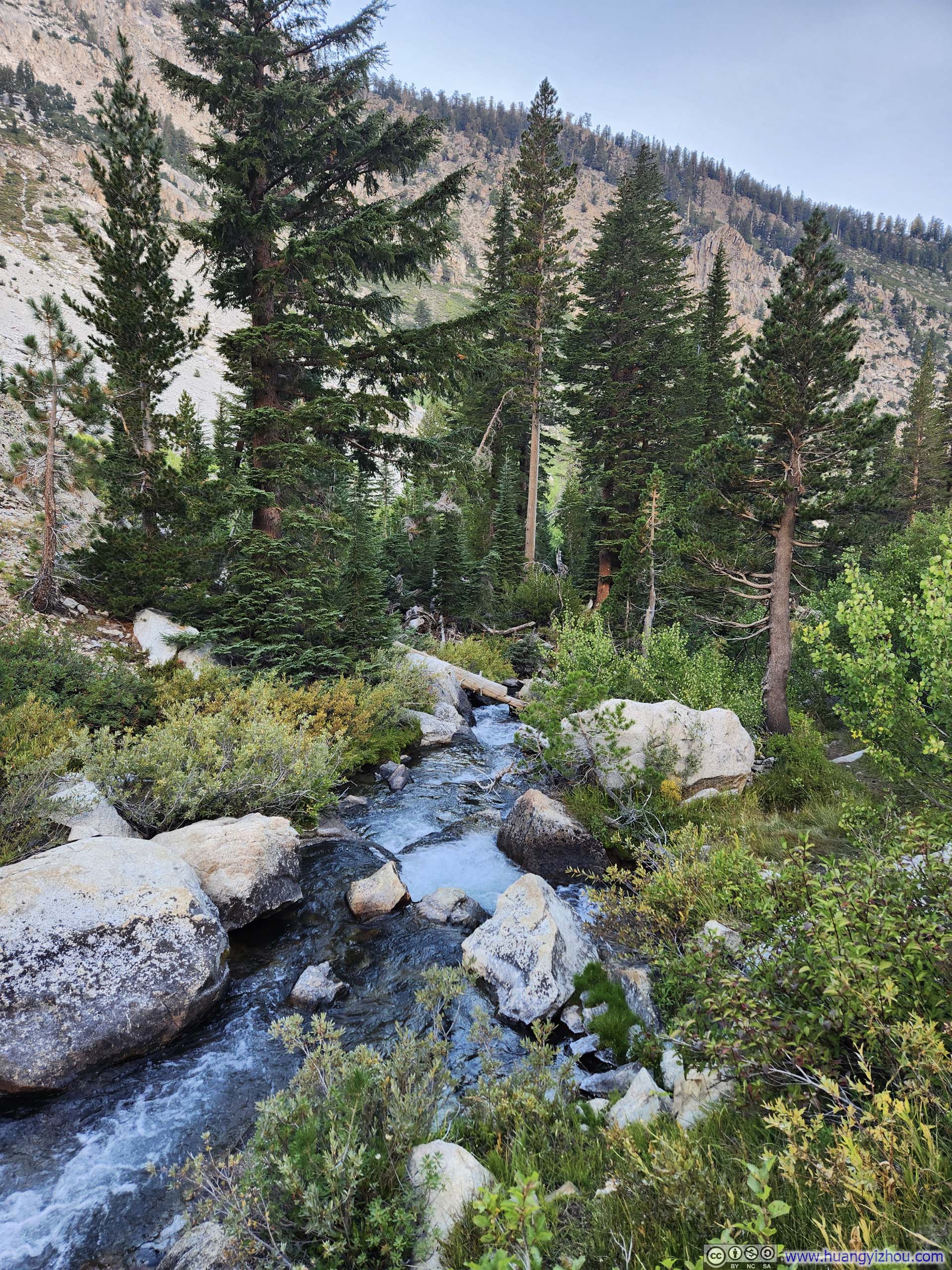
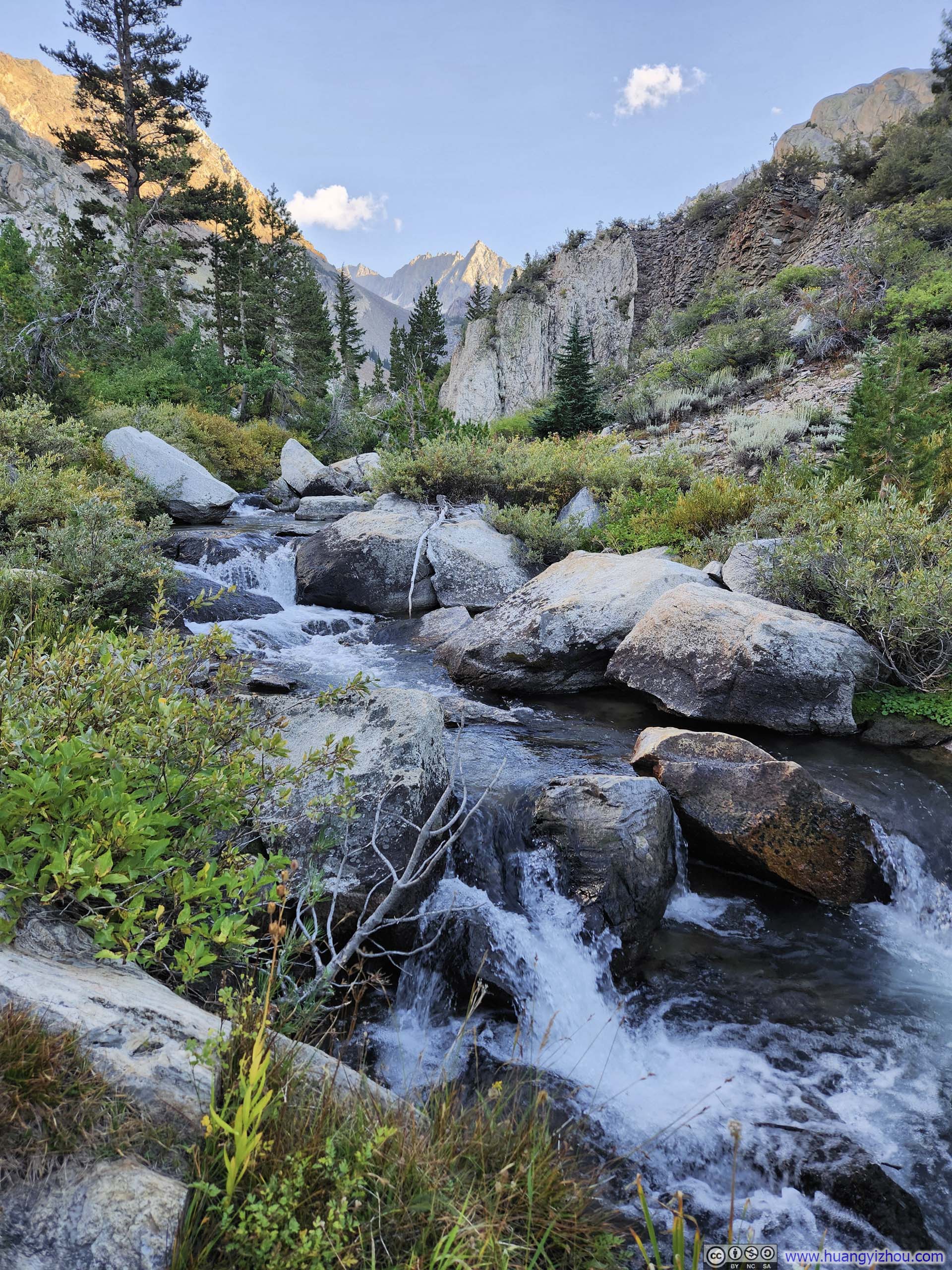
After climbing through the switchbacks, there was a section of mostly flat trail that followed the tranquil waters of Horse Creek closely.
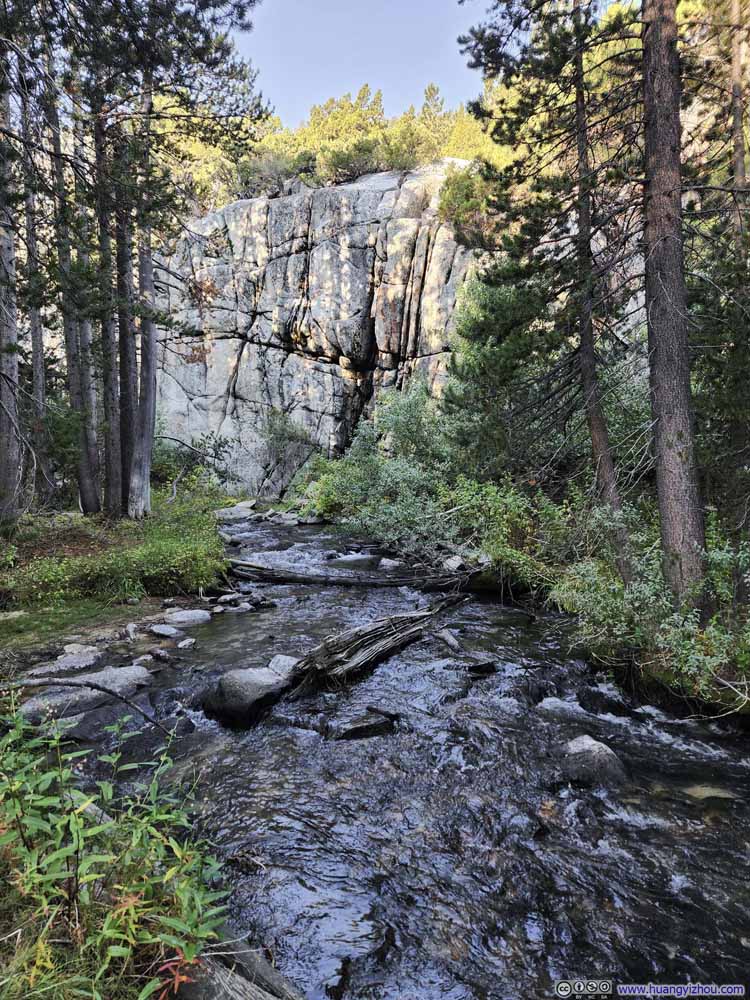 Horse Creek
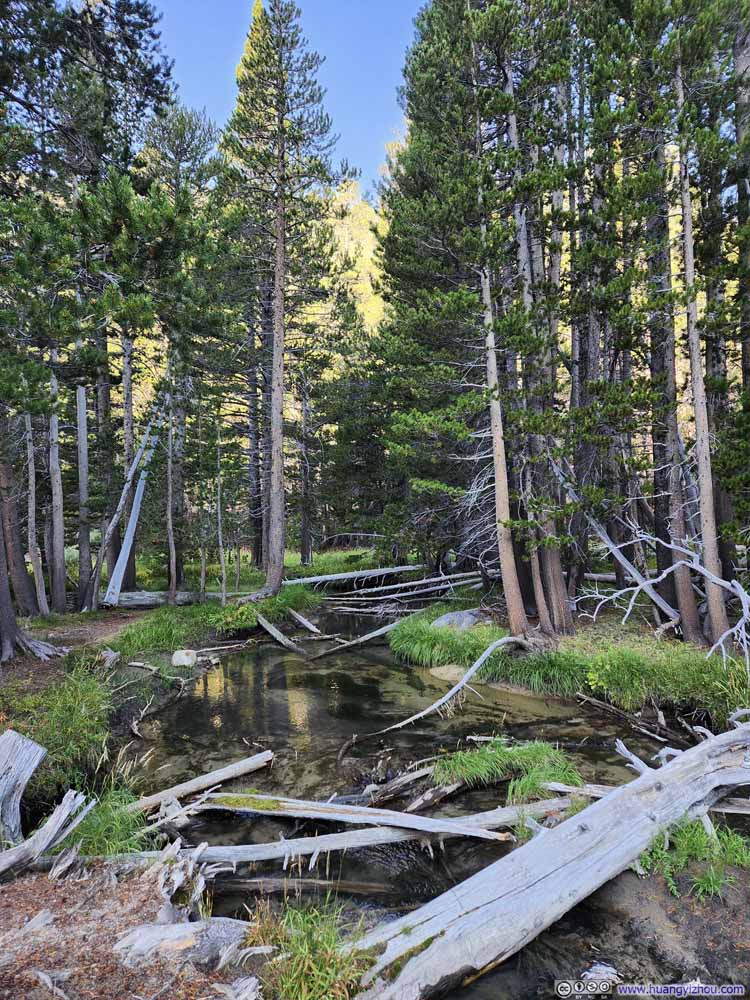 Horse Creek
 Horse Creek
 Horse Creek
 Horse Creek
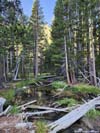
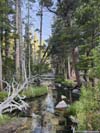
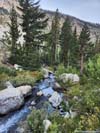
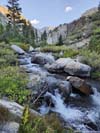
Click here to display photos of the slideshow
Horse Creek
Horse Creek
Horse Creek
Horse Creek
Horse Creek
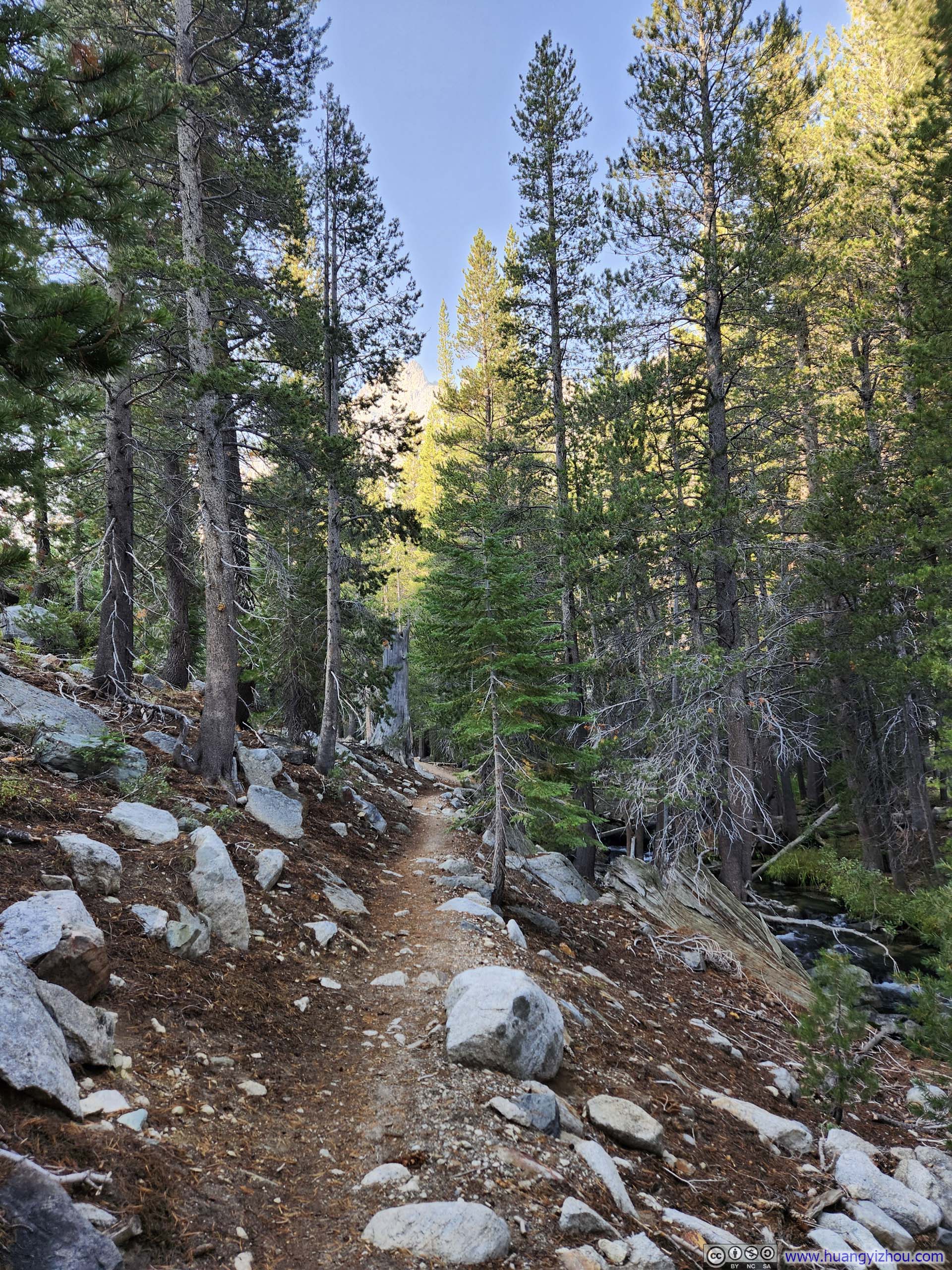
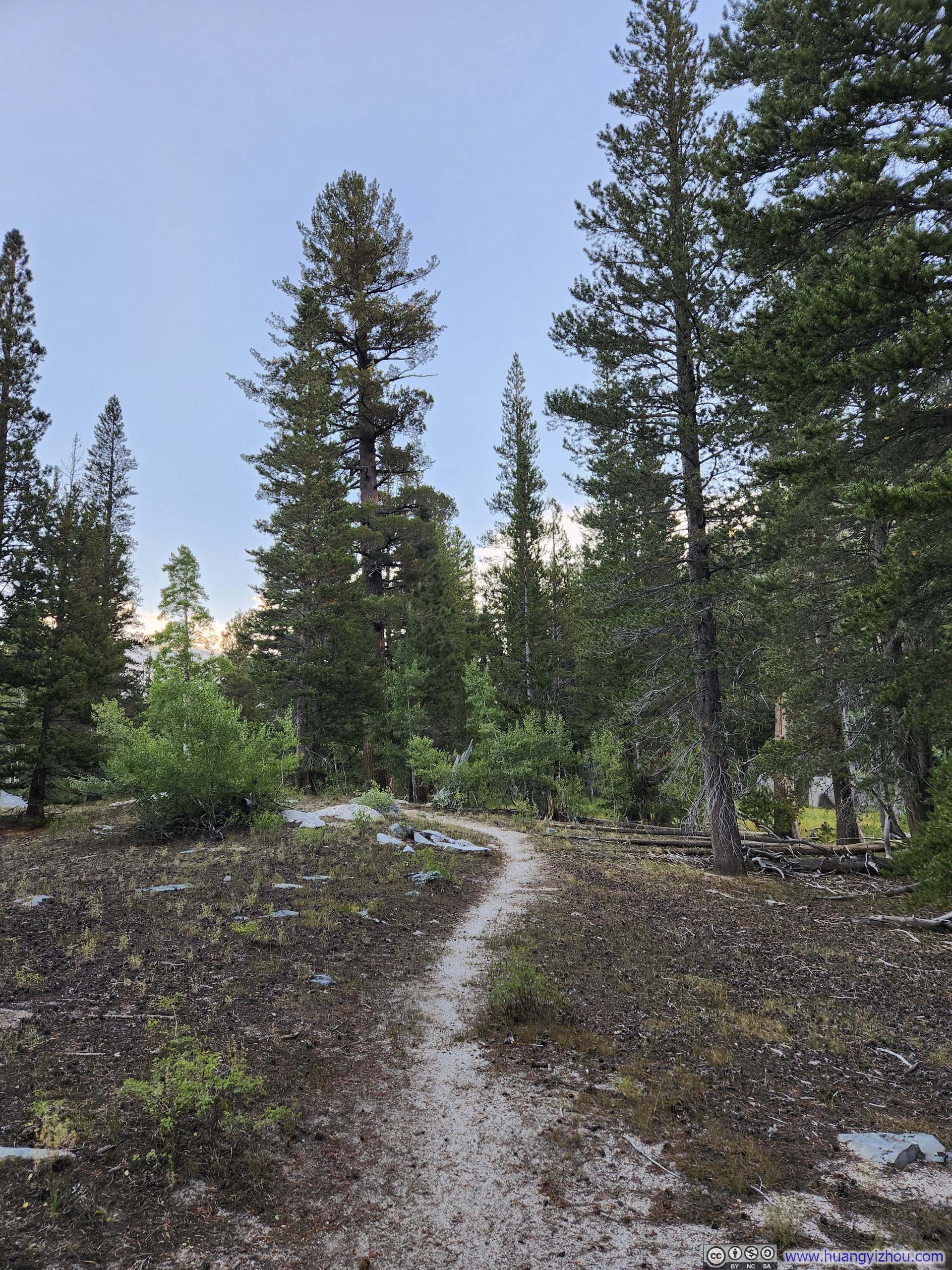
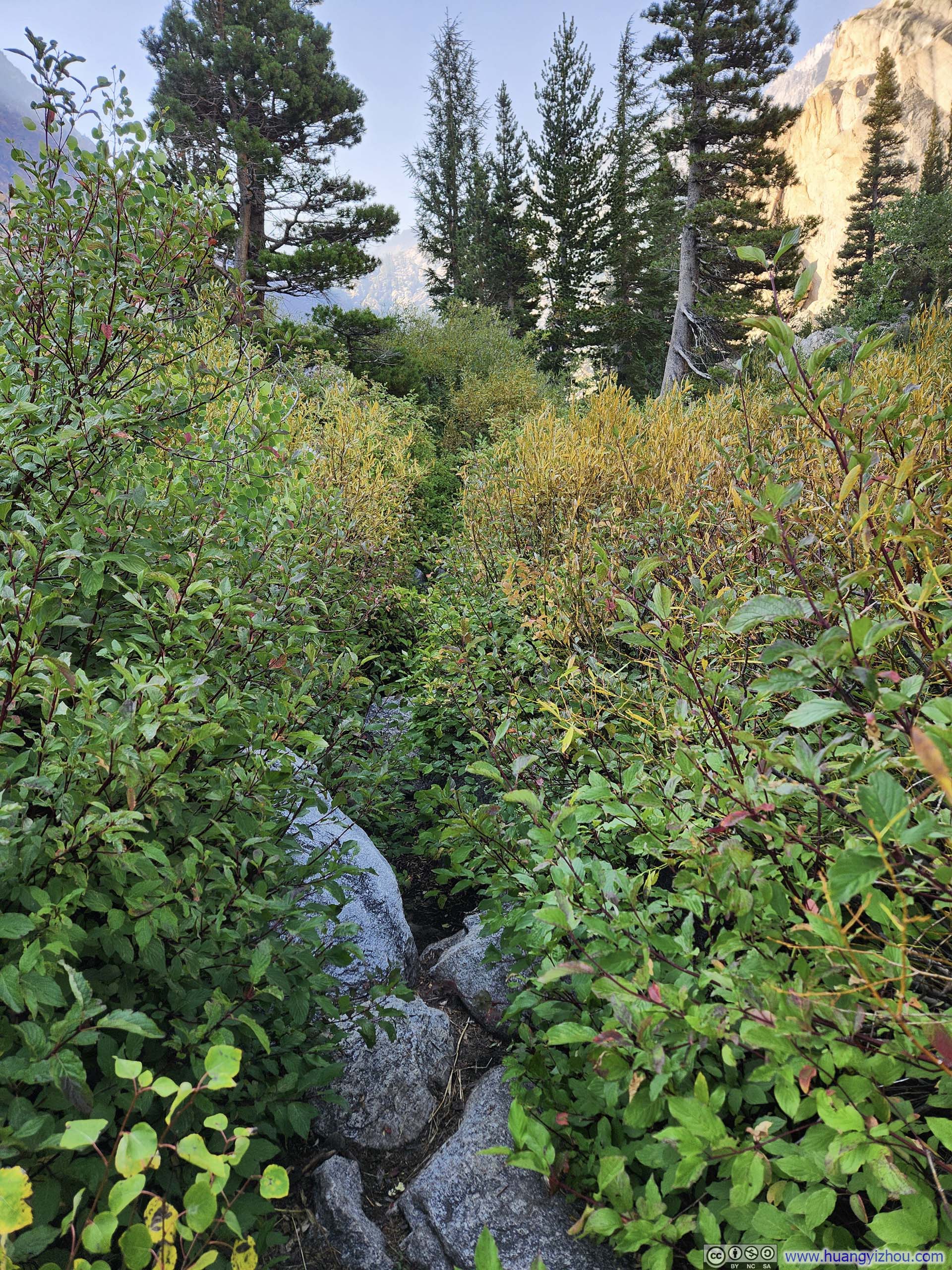
Continuing onward, the vegetation along the trail gradually transitioned from high trees to shallow scrub. Around 4.5km (2.8mi) from the trailhead, this shift created a particularly troublesome stretch where the bushes grew to roughly human height—an awkward dimension that left the path severely overgrown (p3-4 below). I had to force my way through the encroaching branches, which wasn’t pleasant. At times, the path itself became nearly indiscernible, as the vegetation formed a labyrinthine maze at every turn. On my way back, I attempted to circumvent this bushwhacking by detouring off-trail to walk along the rocks to the east, though this strategy met with only partial success, as certain sections of dense growth proved inescapable.
 Trail
Trail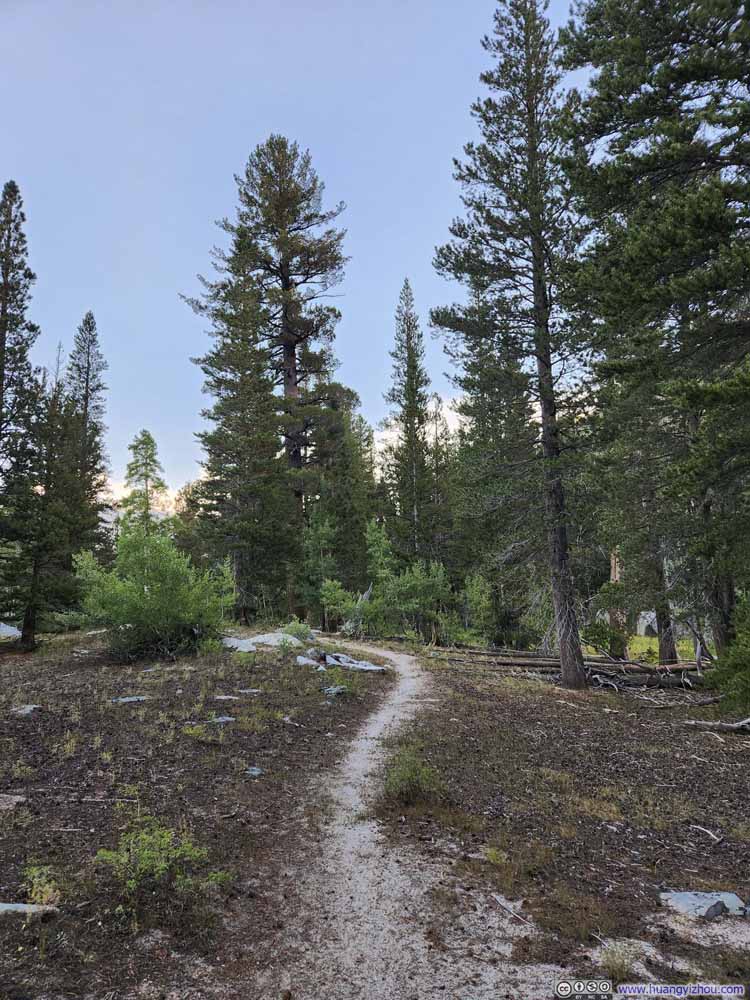 Trail
Trail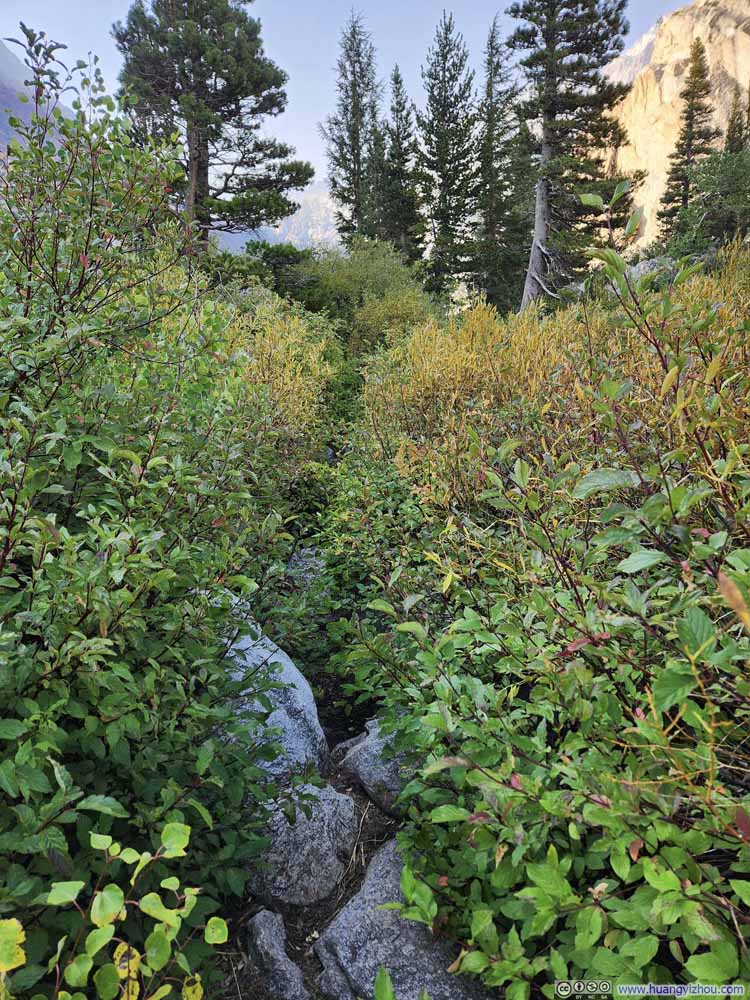 Overgrown Trail
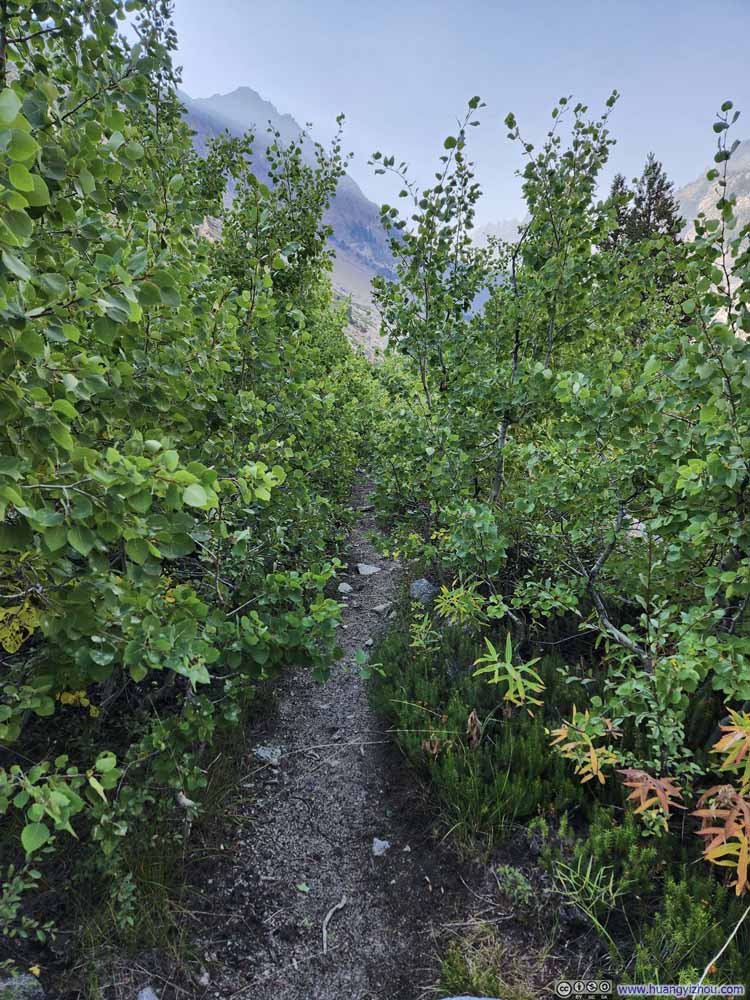 Overgrown Trail
Click here to display photos of the slideshow
Trail
Trail
Overgrown Trail
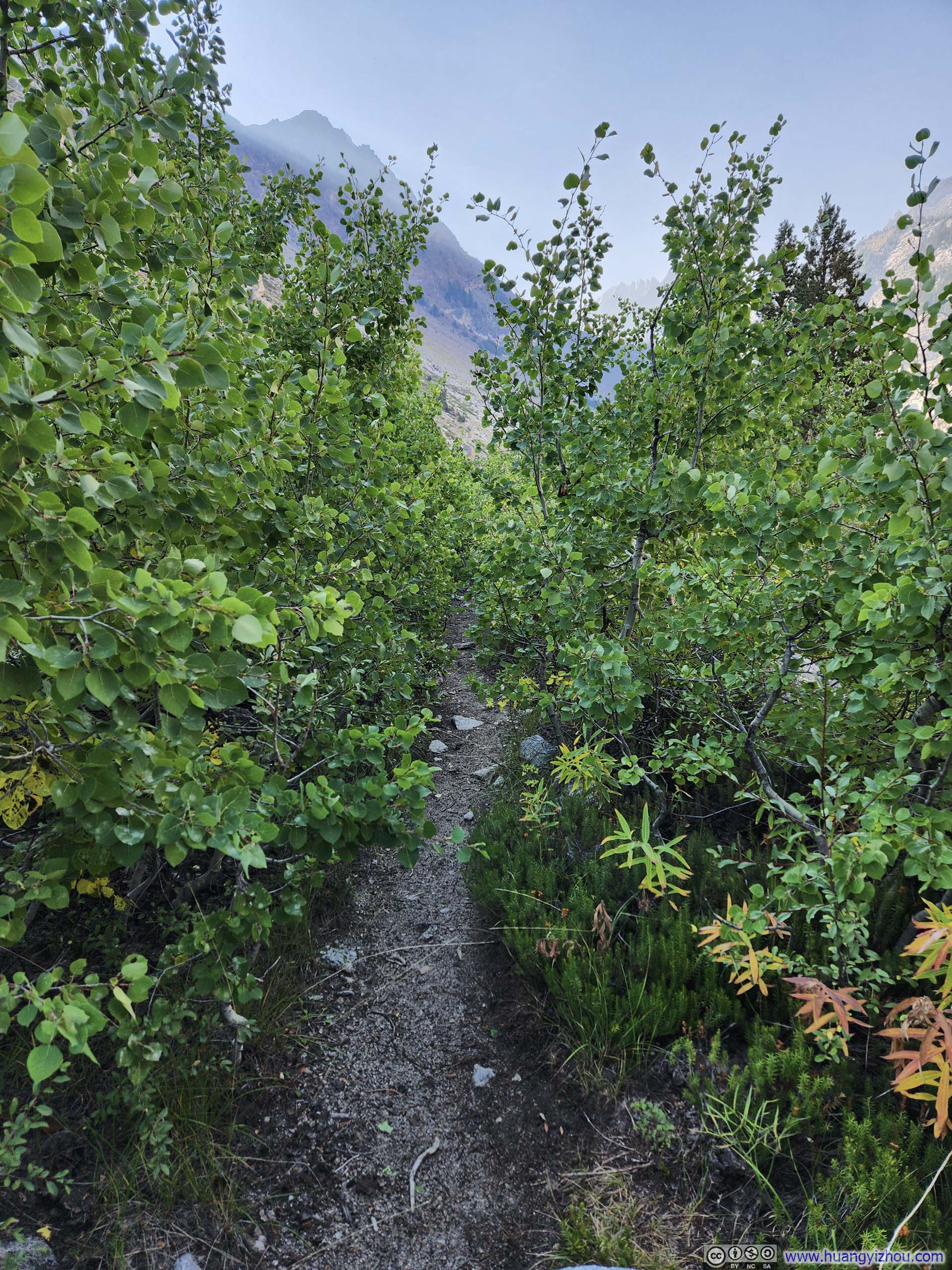
Overgrown Trail
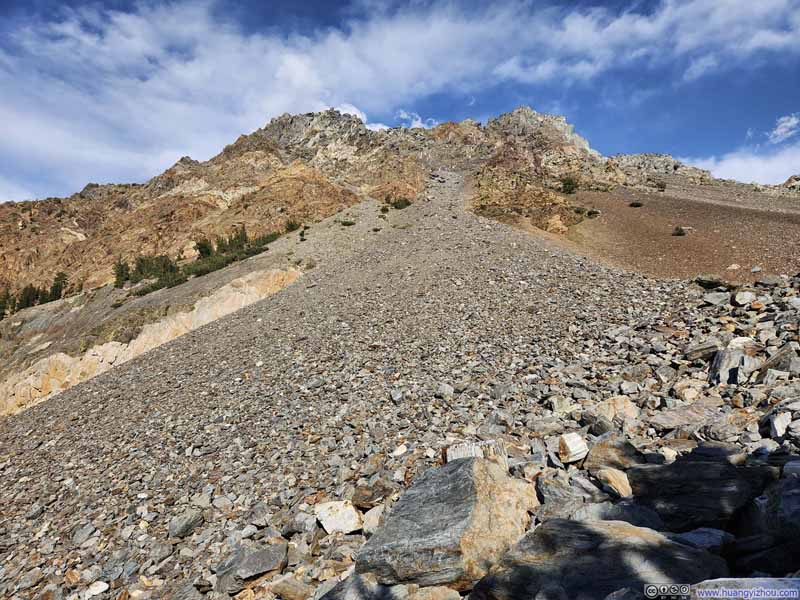
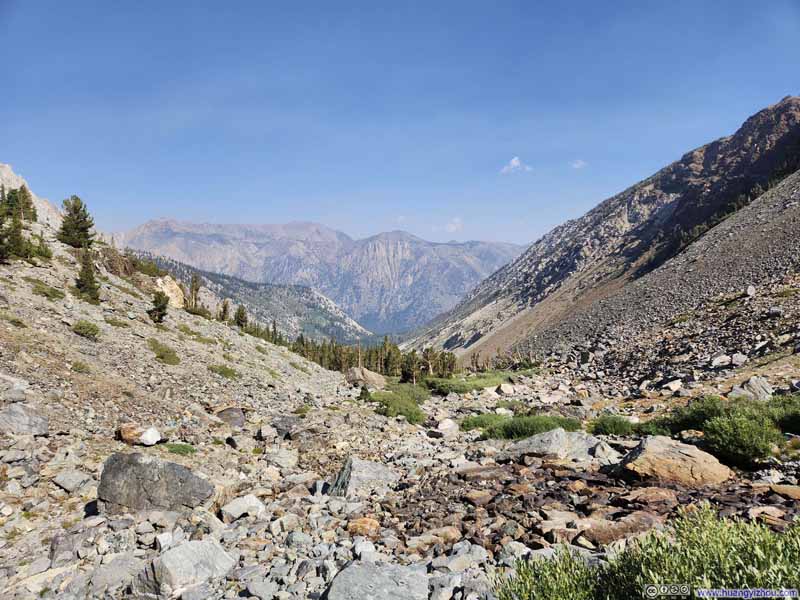
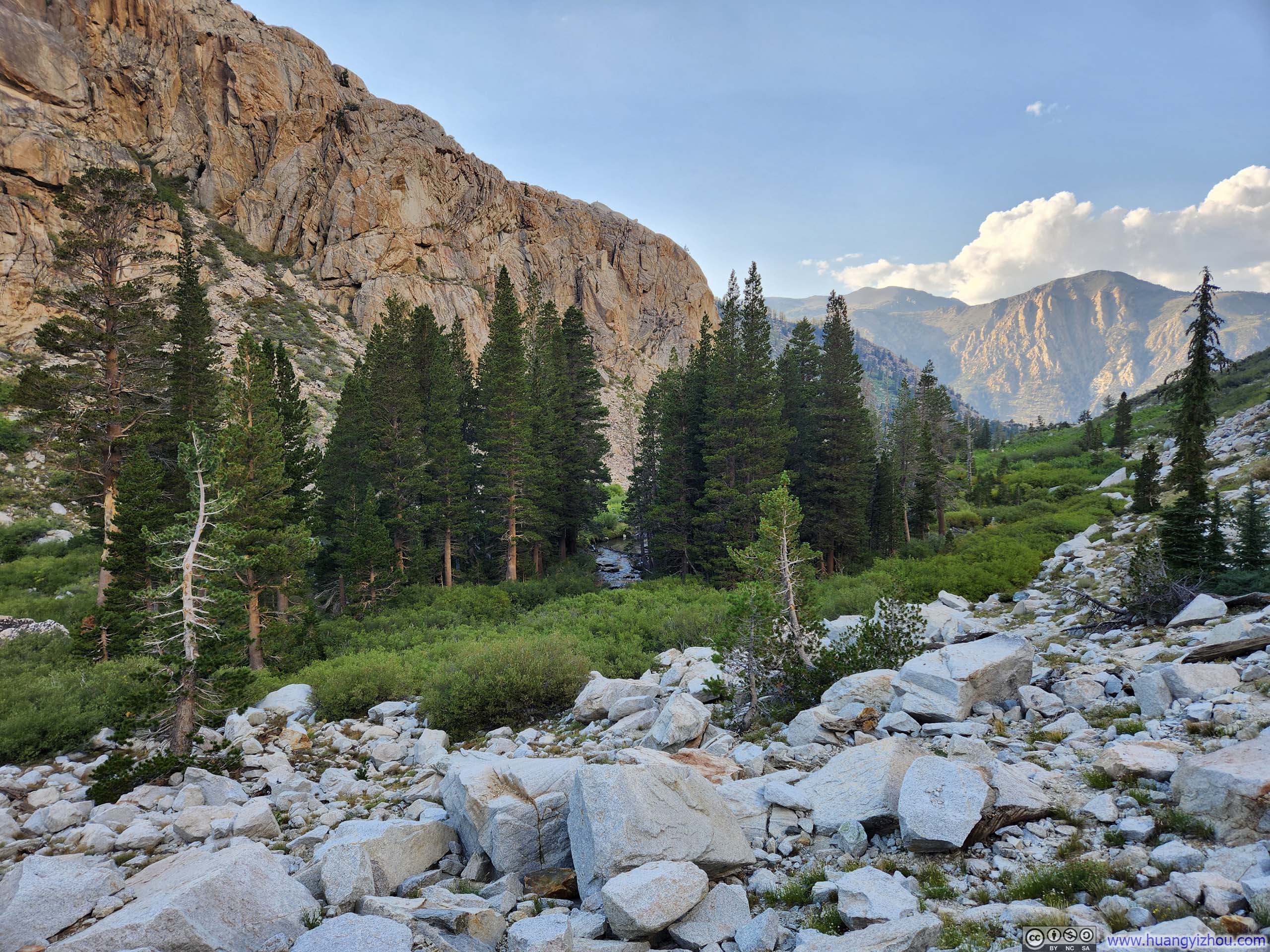
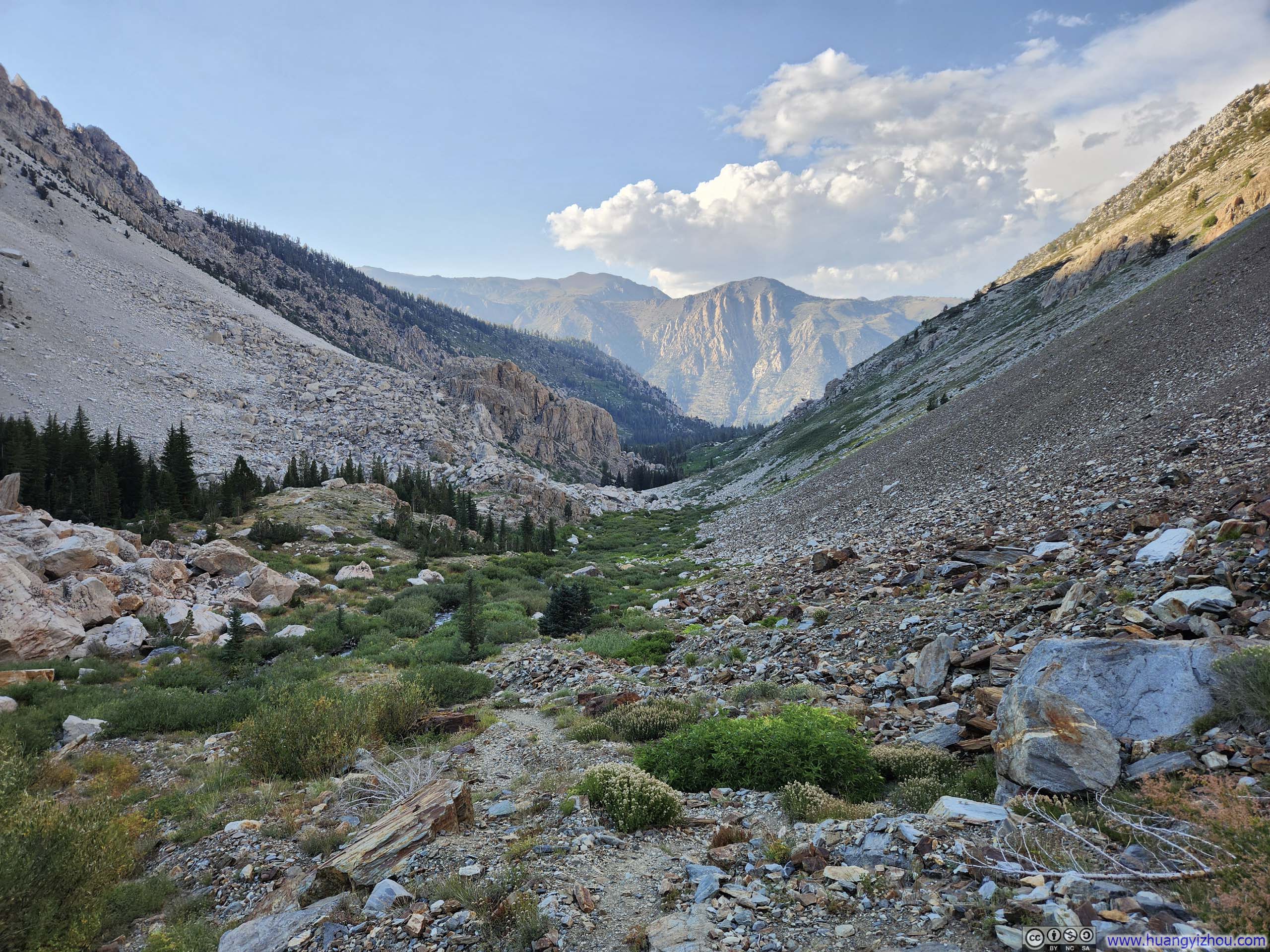
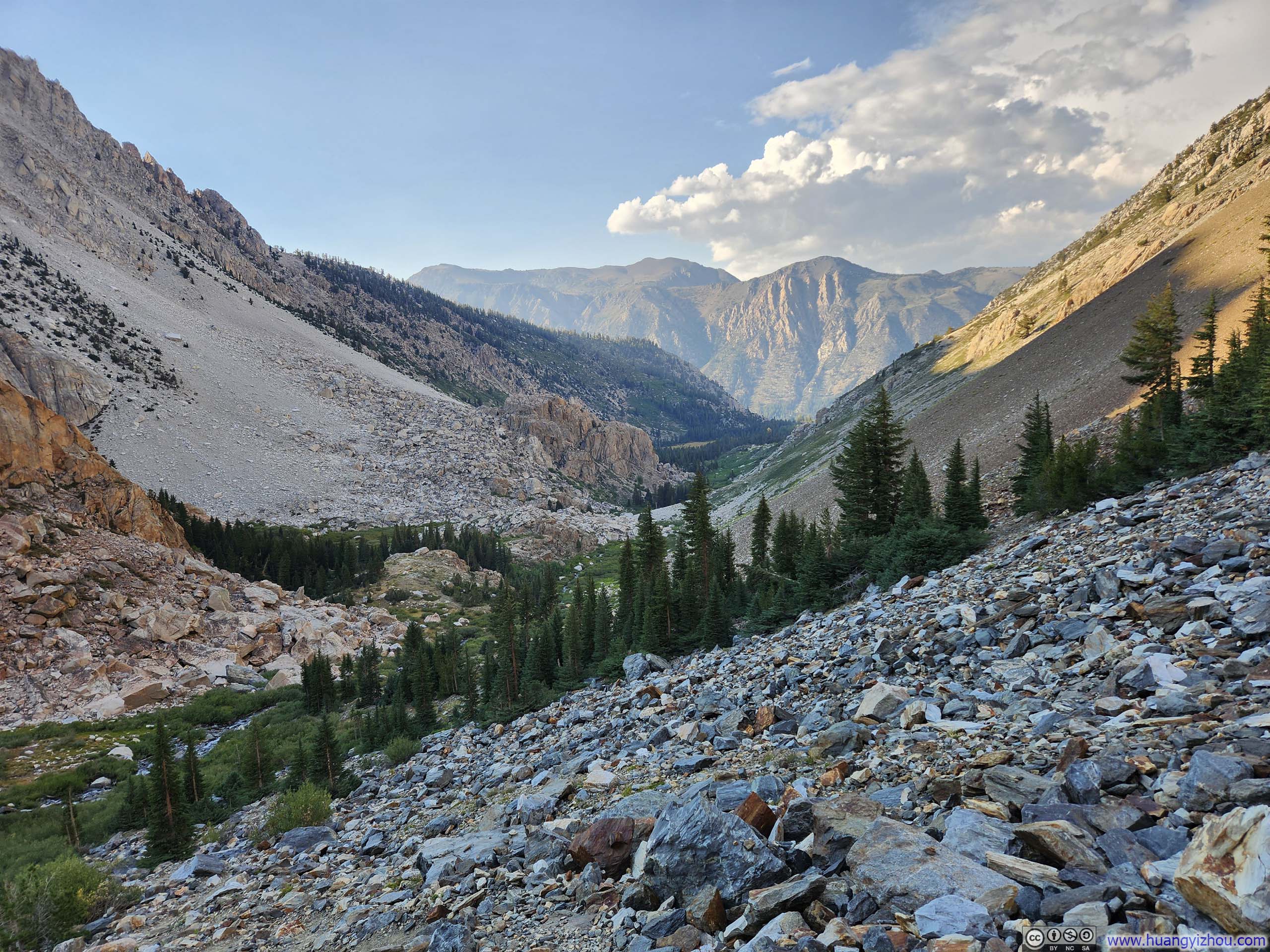
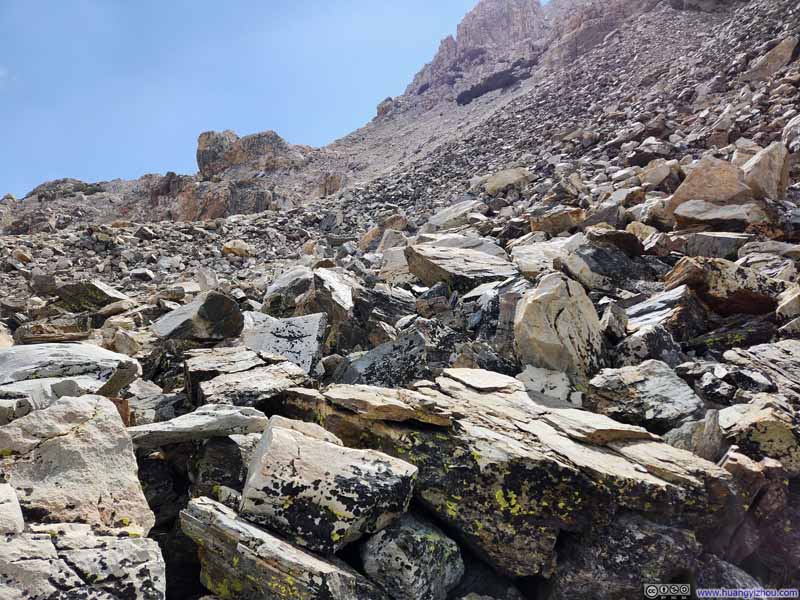
Fortunately, the bushwhacking section proved brief before the trail emerged onto the rocky terrain along Horse Creek. What lay ahead was a formidable slope—a vast expanse of steep rocky field rising at roughly a 40% gradient (p7 below, about 5.8km/3.6mi from trailhead). Horse Creek flew underneath those rocks, hidden from sight. The trail grew faint along the slope’s face, which I missed during my ascent. (It ended up being a similar rock hopping experience, whether one followed the official trail or not.)
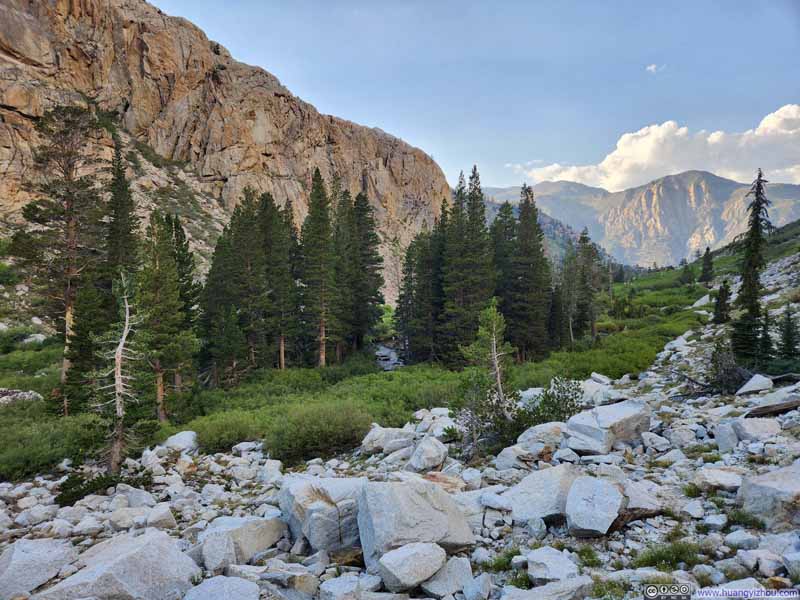 Trees along Horse Creek
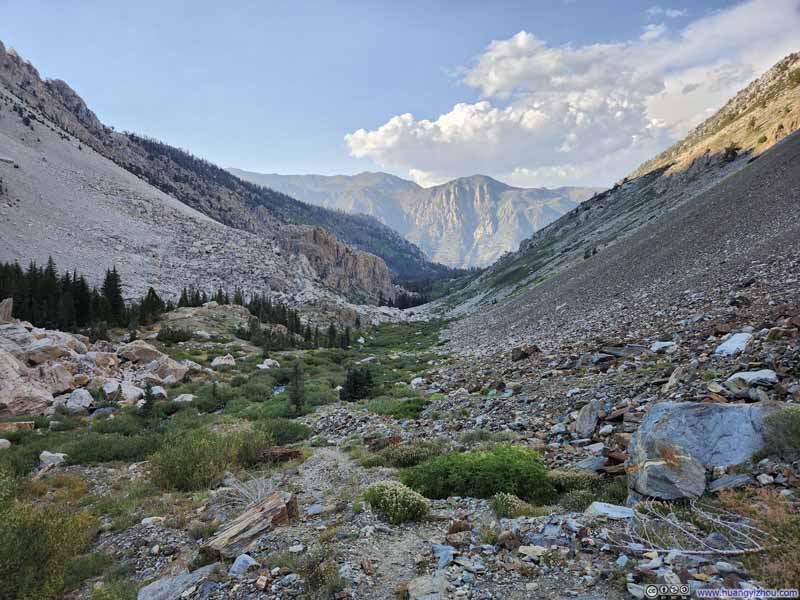 Overlooking Valley
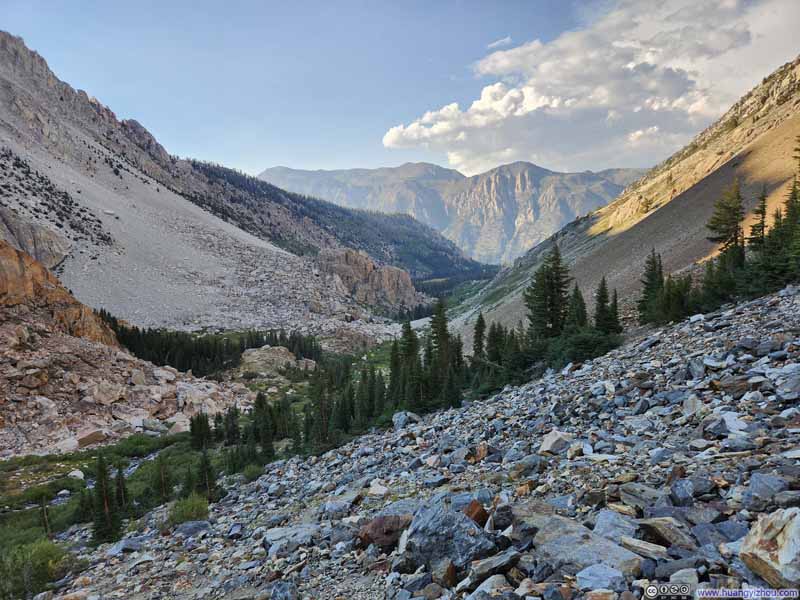 Trail on Rocky Slope
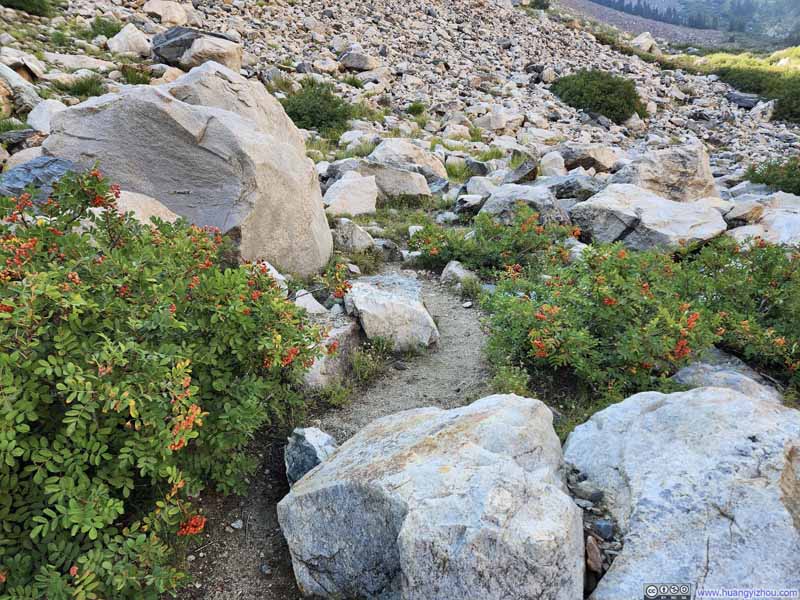 Trail
Trail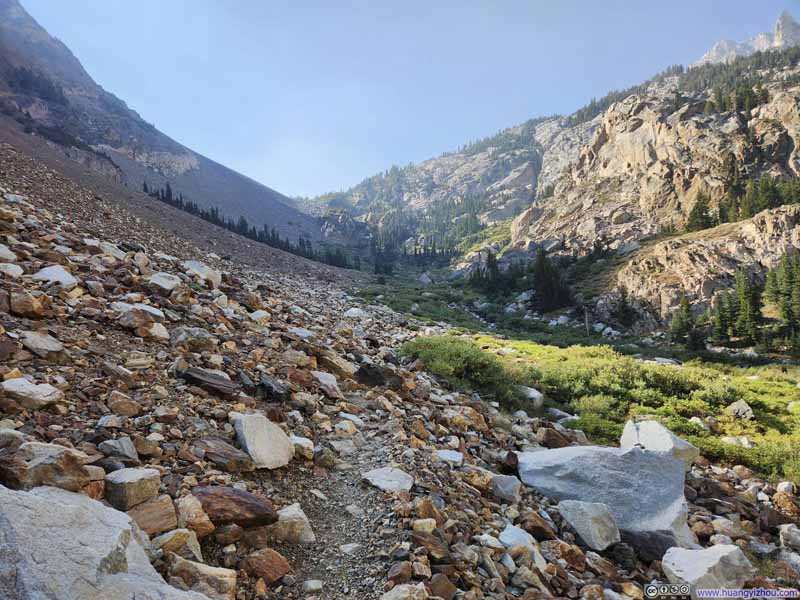 Trail
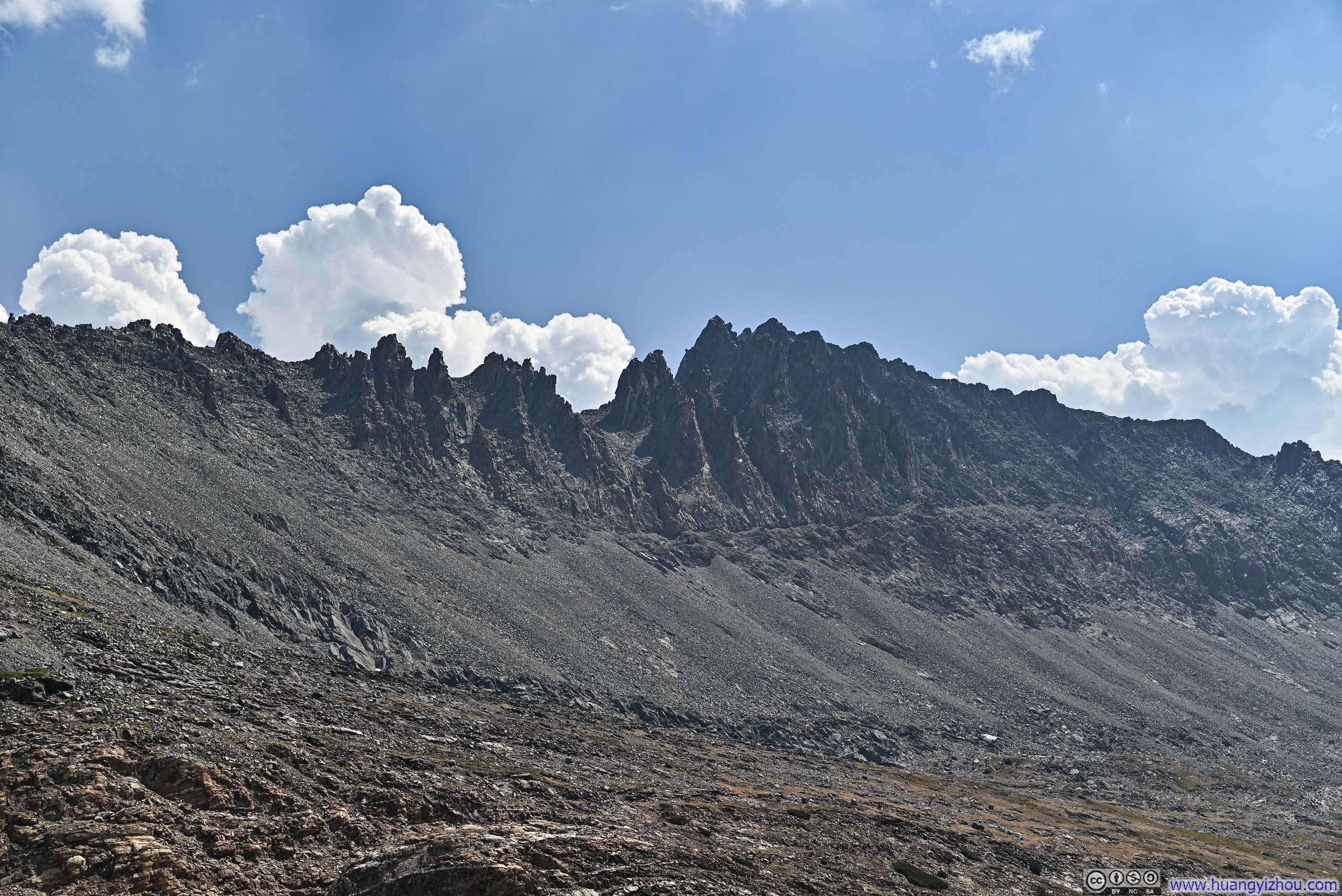
Trail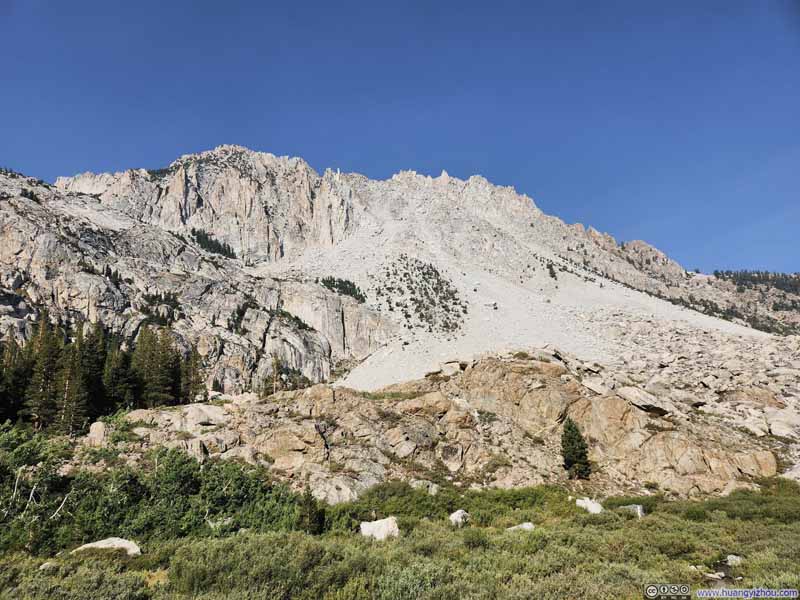 Serrated RidgelinePart of “The Cleaver” ridge.
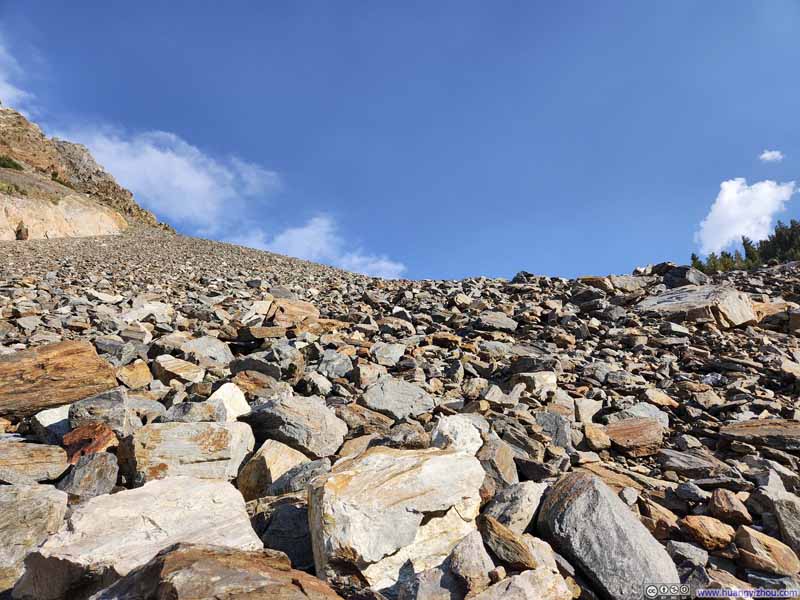 Trail onto Rocky Slope
 Hill
Hill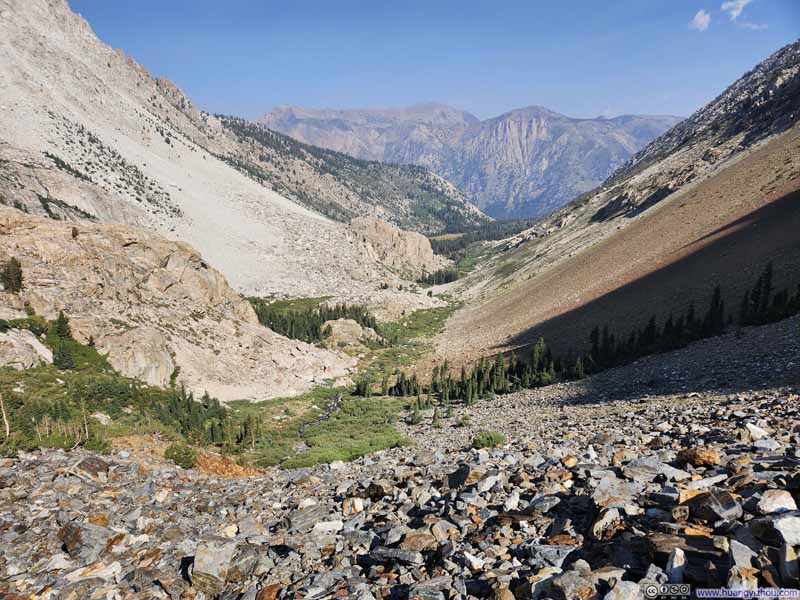 Overlooking Valley
 Valley
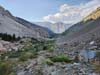
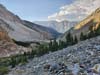
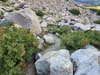
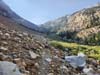
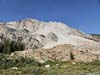
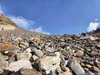
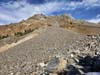
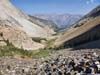
Click here to display photos of the slideshow
Trees along Horse Creek
Overlooking Valley
Trail on Rocky Slope
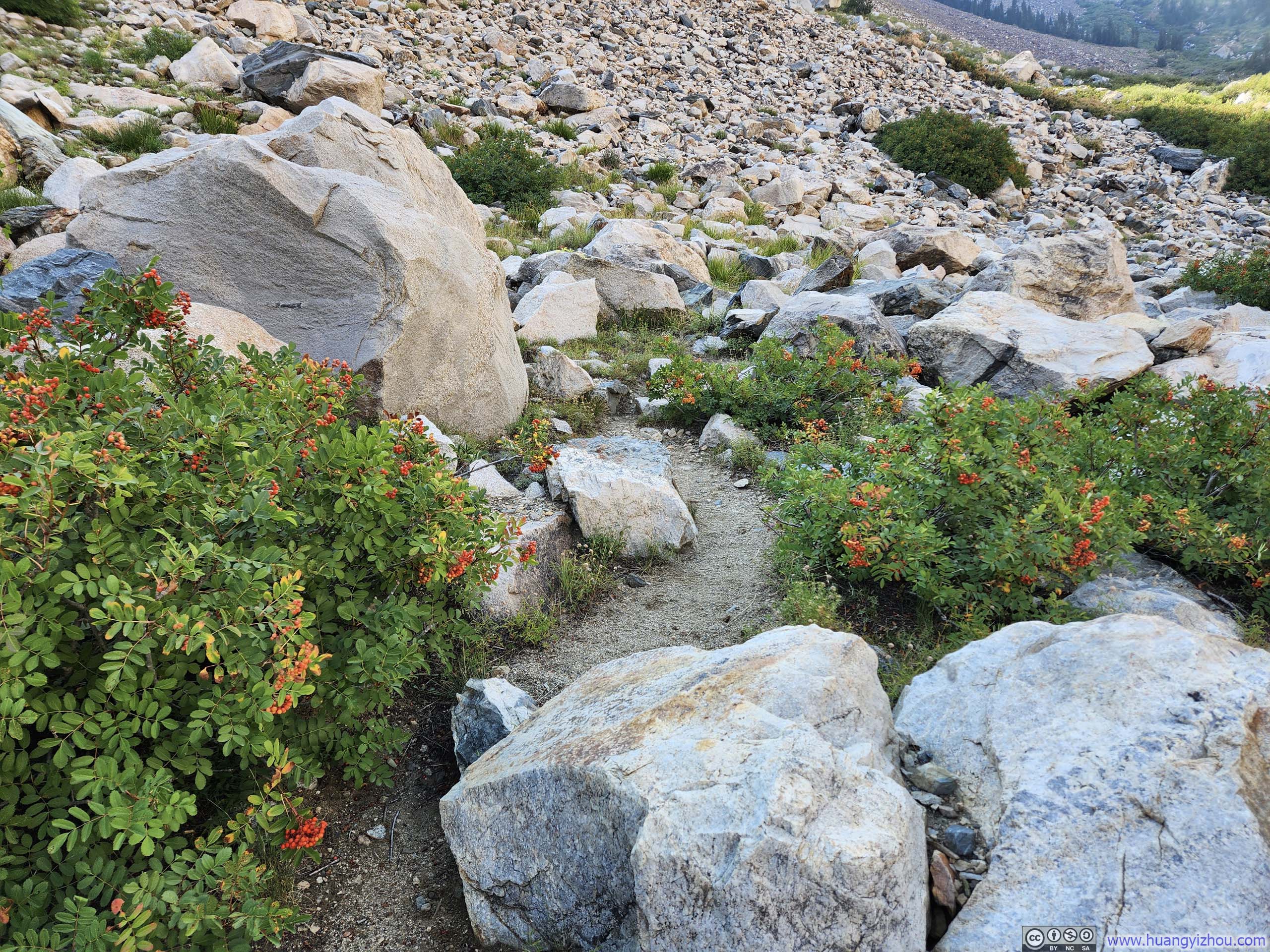
Trail
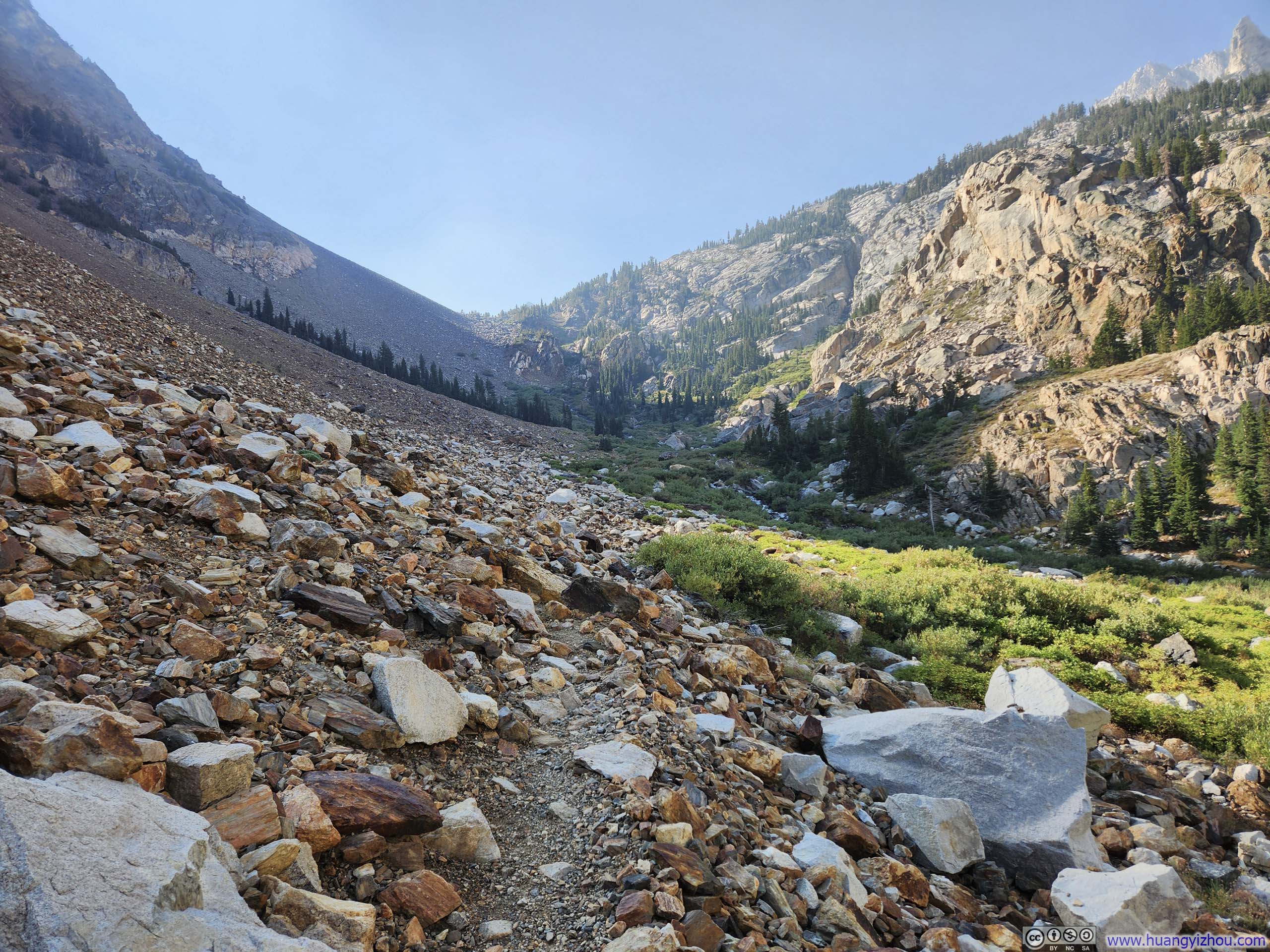
Trail
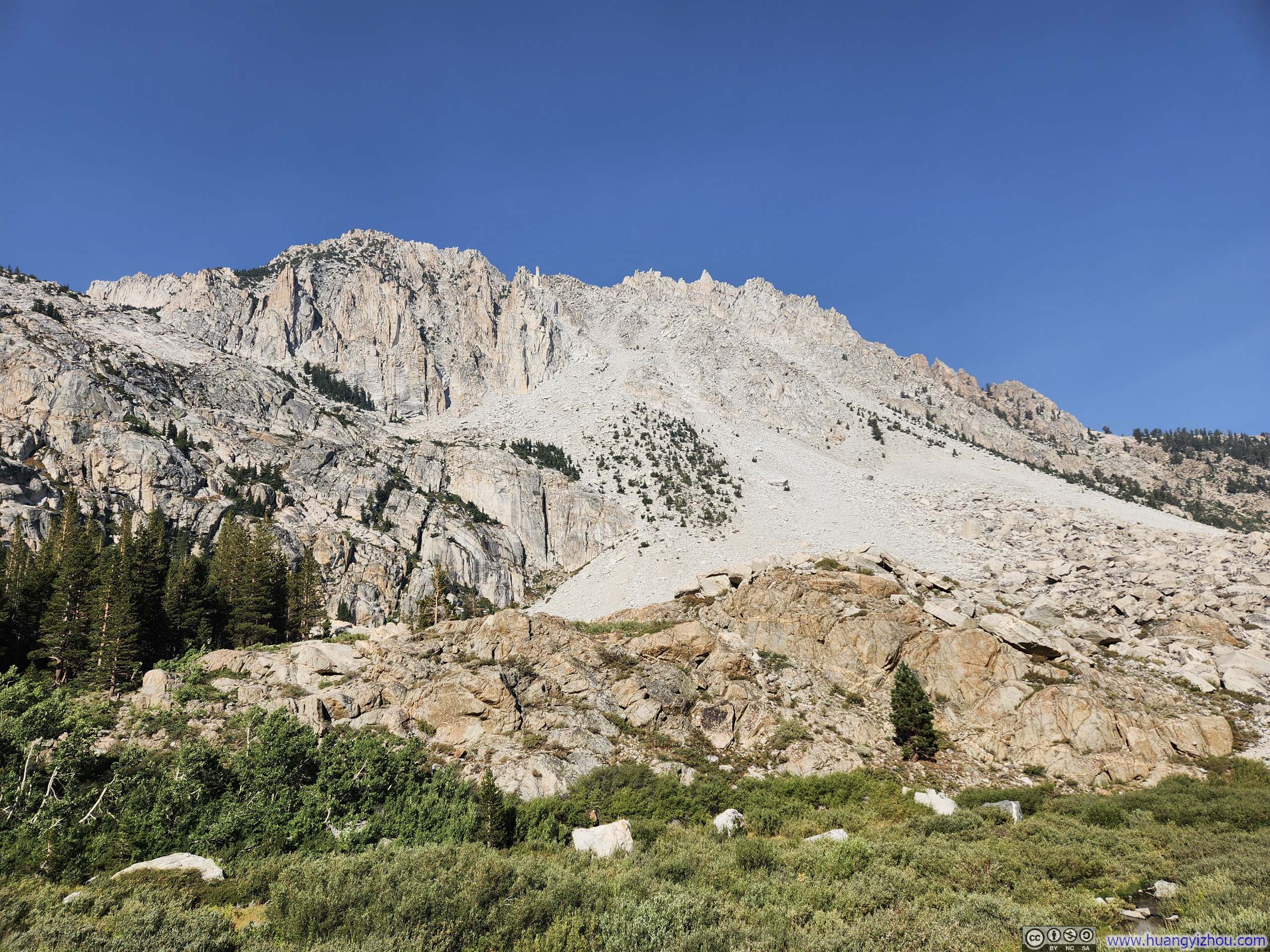
Serrated RidgelinePart of “The Cleaver” ridge.
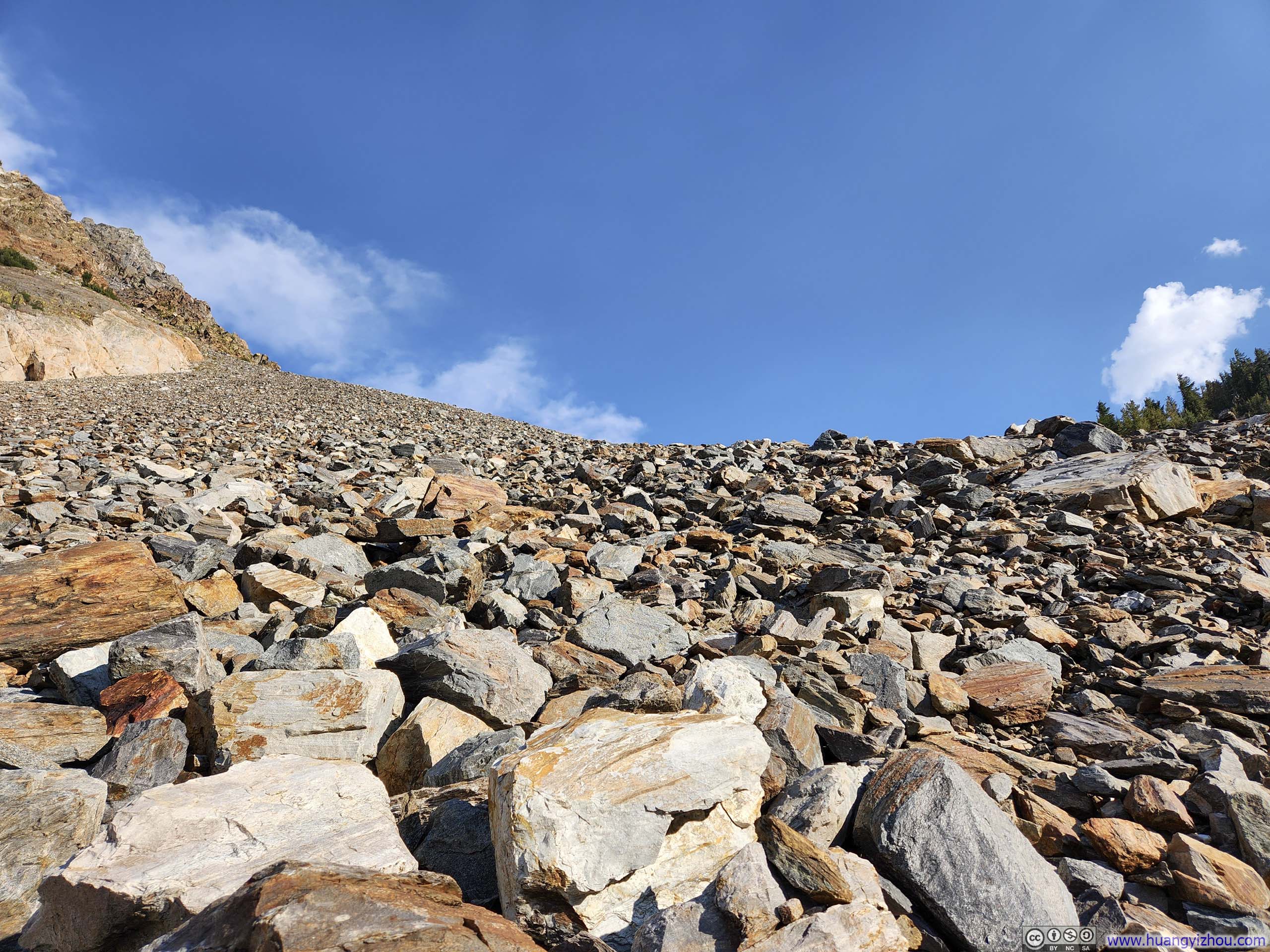
Trail onto Rocky Slope
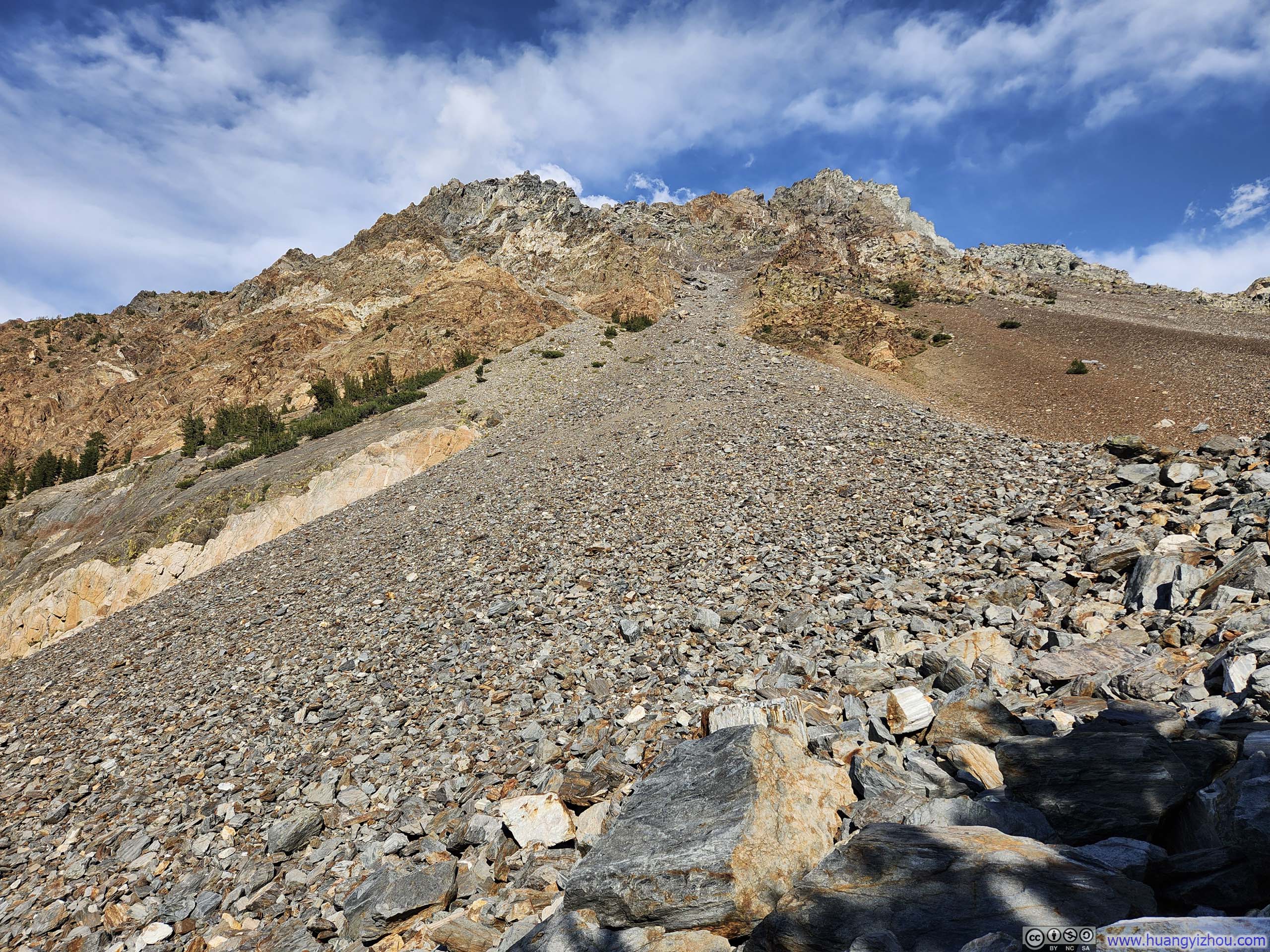
Hill
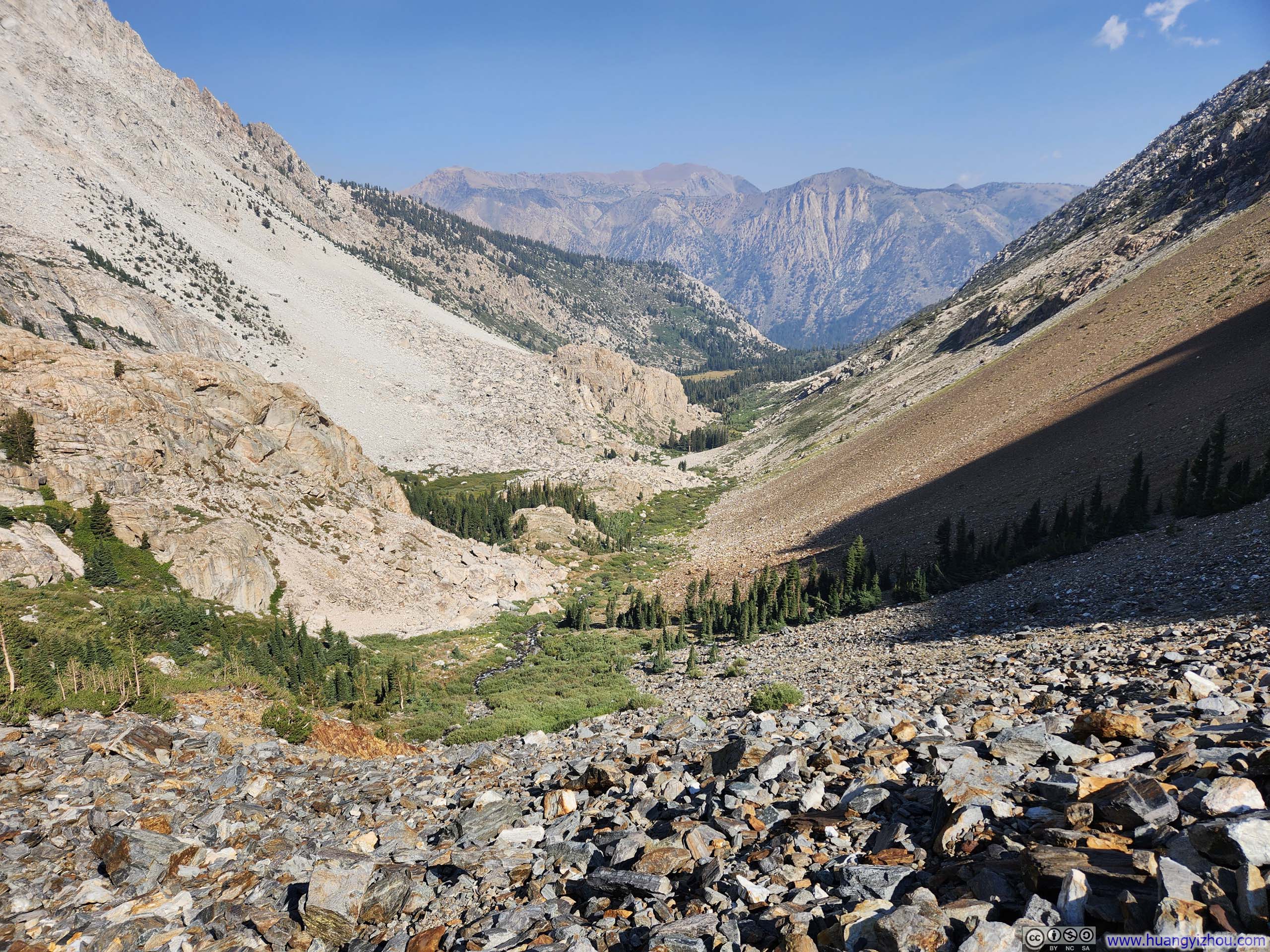
Overlooking Valley
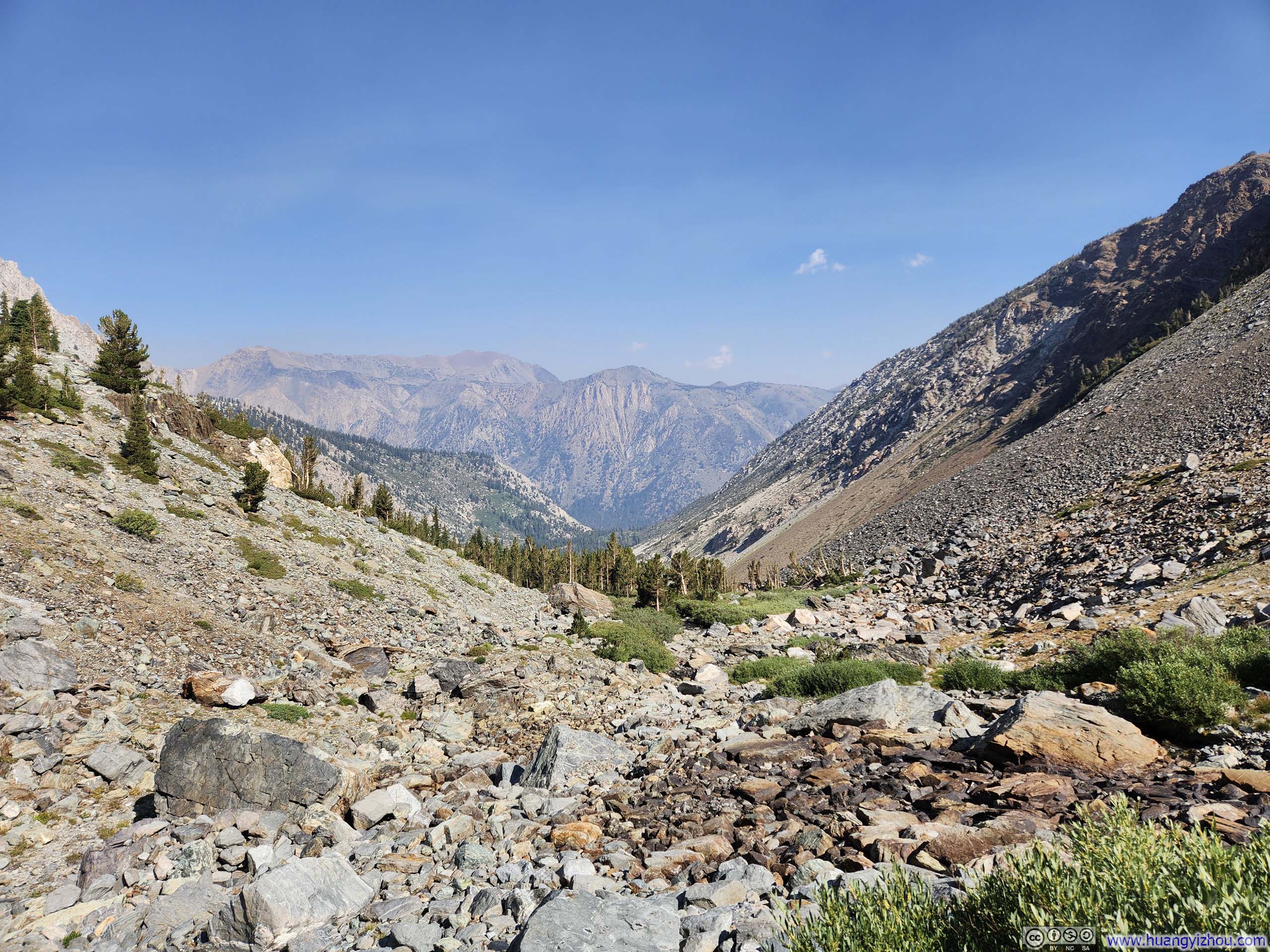
Valley
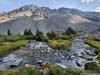
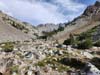
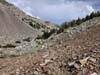
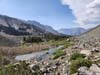
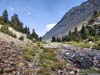
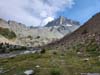
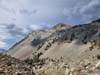
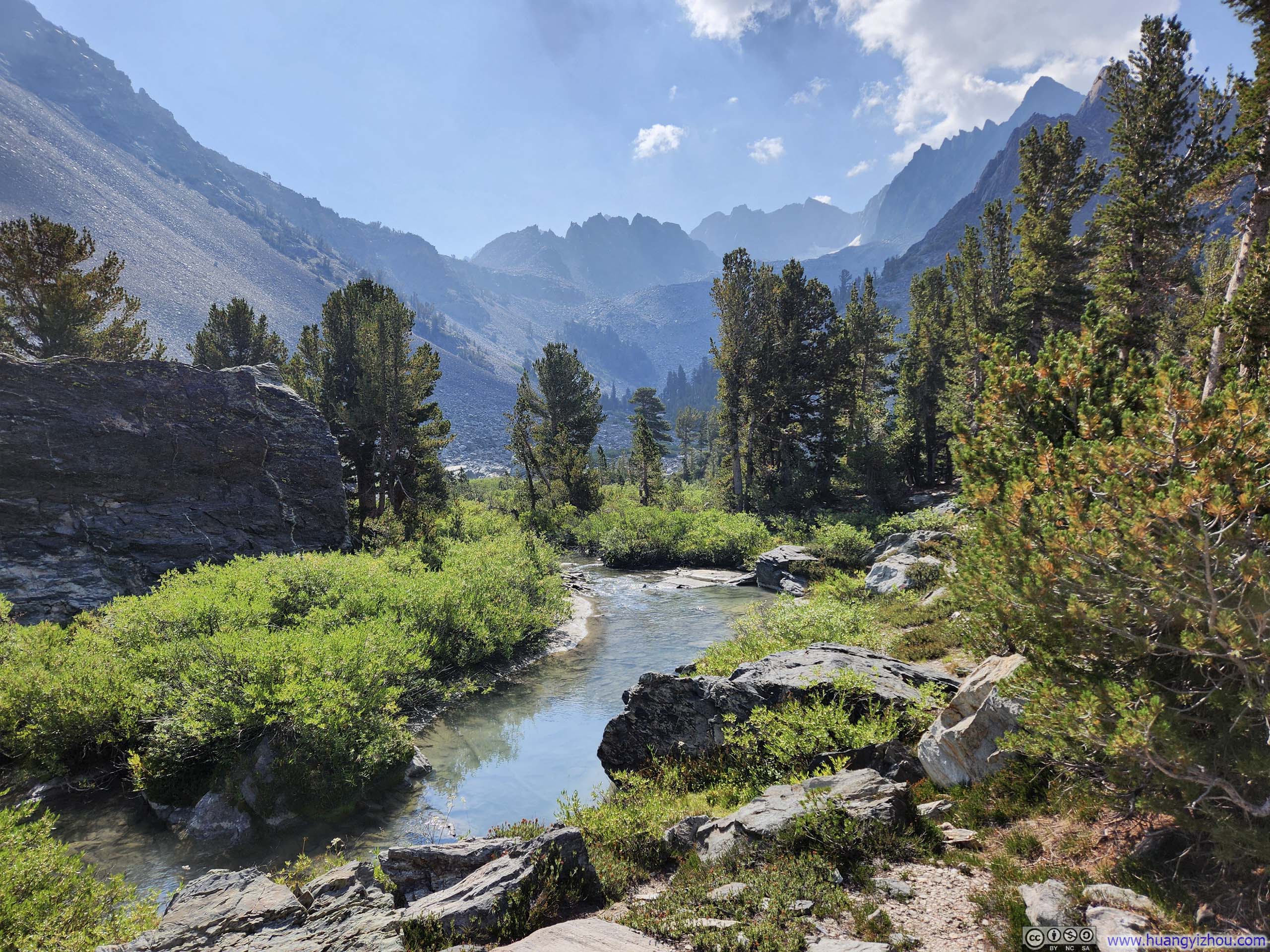
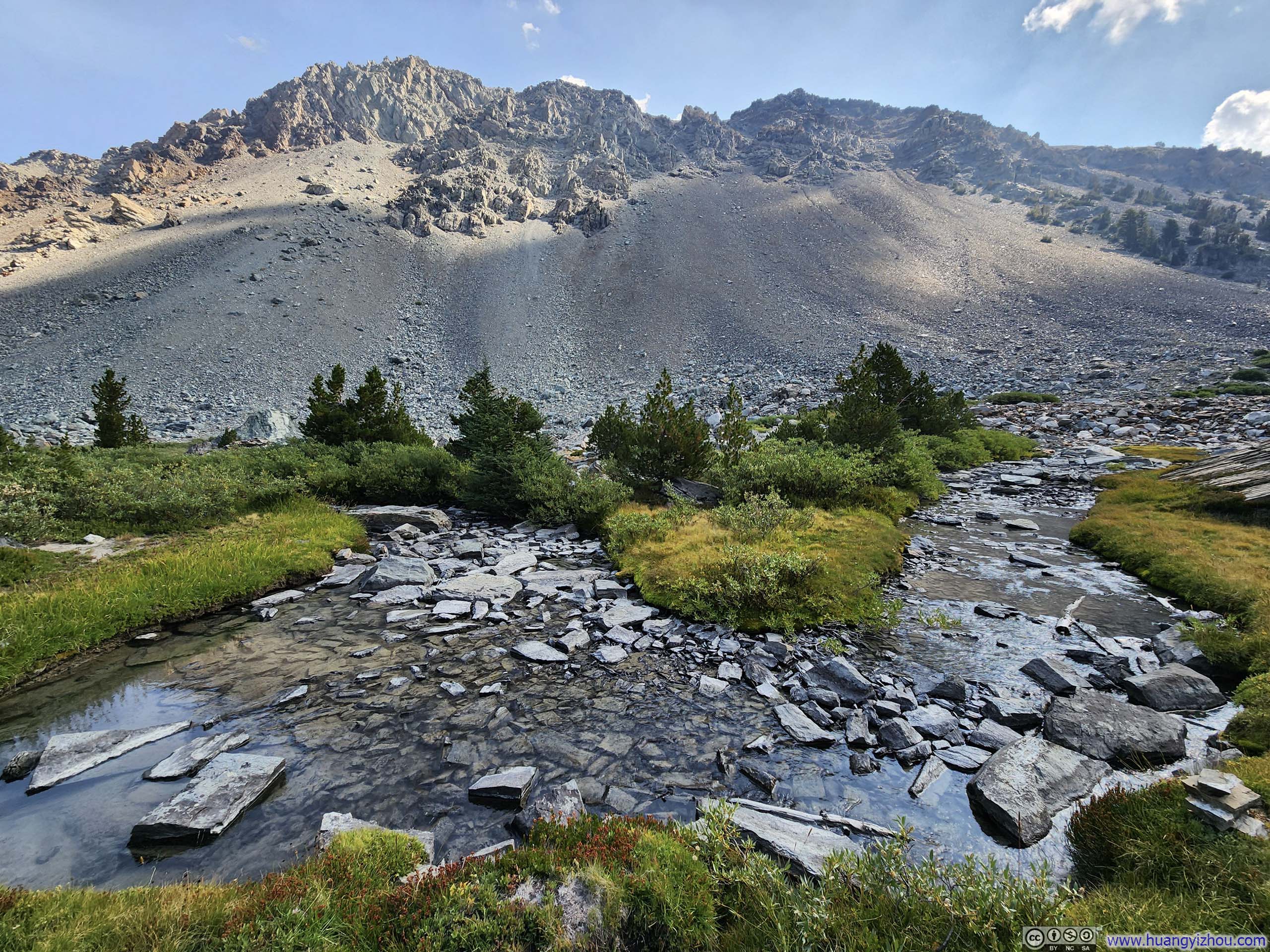
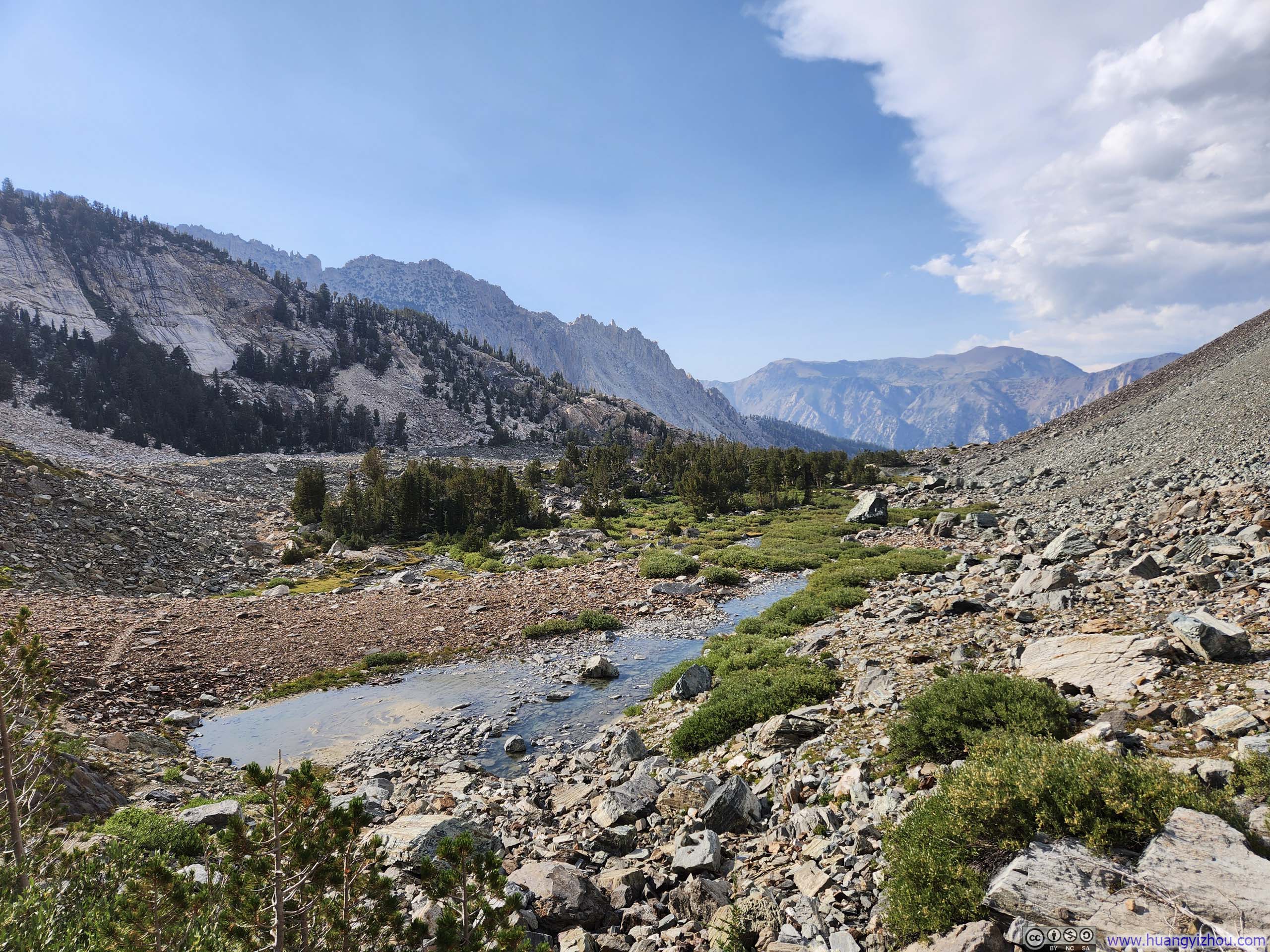
the trail briefly plunged into wooded terrain, where gravel had supplanted the dirt of the earlier switchbacks. Here, the path grew faint and elusive, its course obscured by the loose stone underfoot. Giant boulders encroached upon the trail in places, forcing me to pick my way over and around these ancient sentinels. Mercifully, these obstacles proved short-lived, and soon the trail reunited with Horse Creek—though the waterway had dwindled to little more than a scattering of shallow and seemingly disconnected puddles.
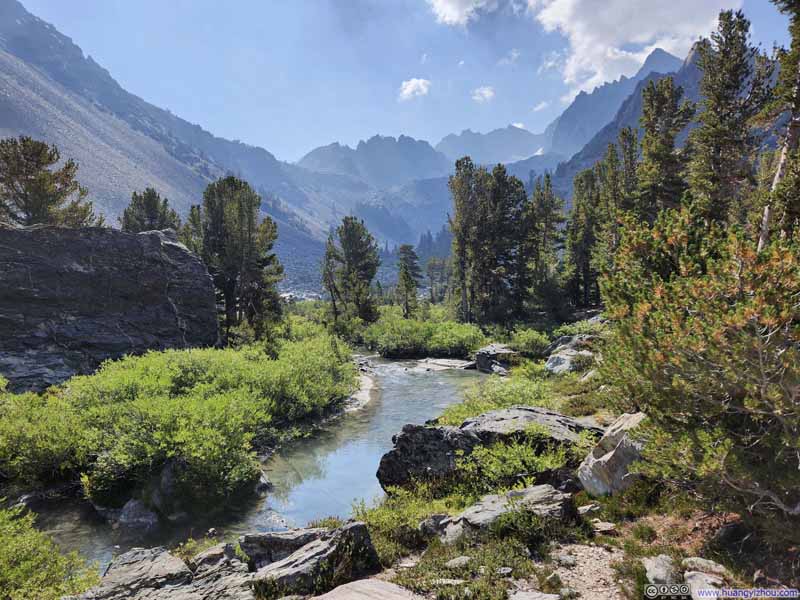 Horse Creek
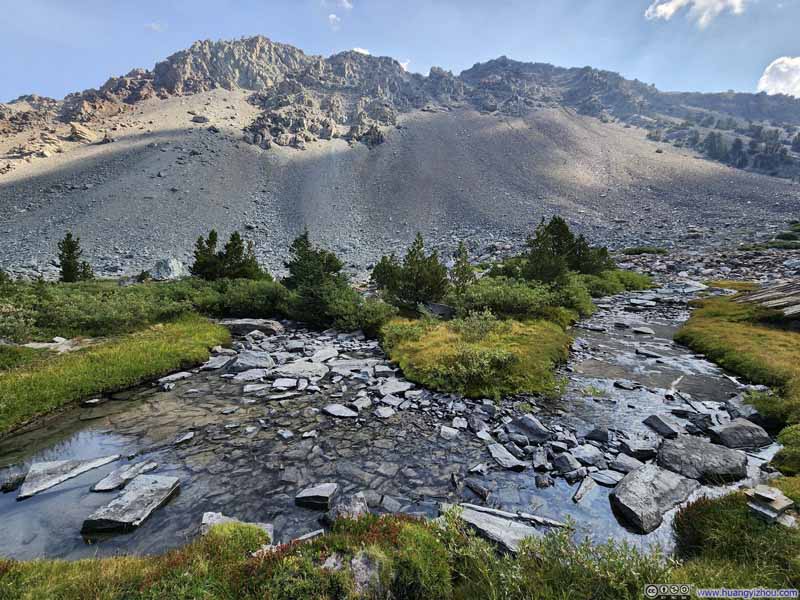 Horse Creek
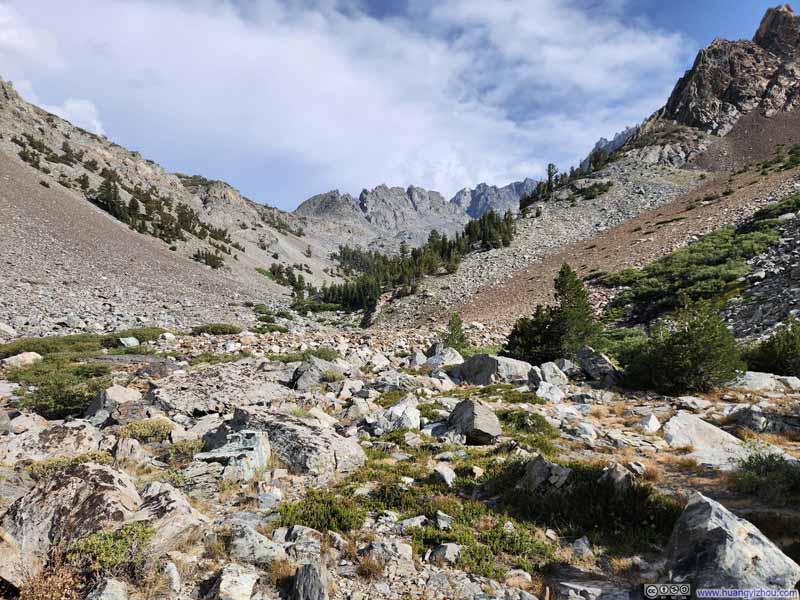 Faint Trail in Valley
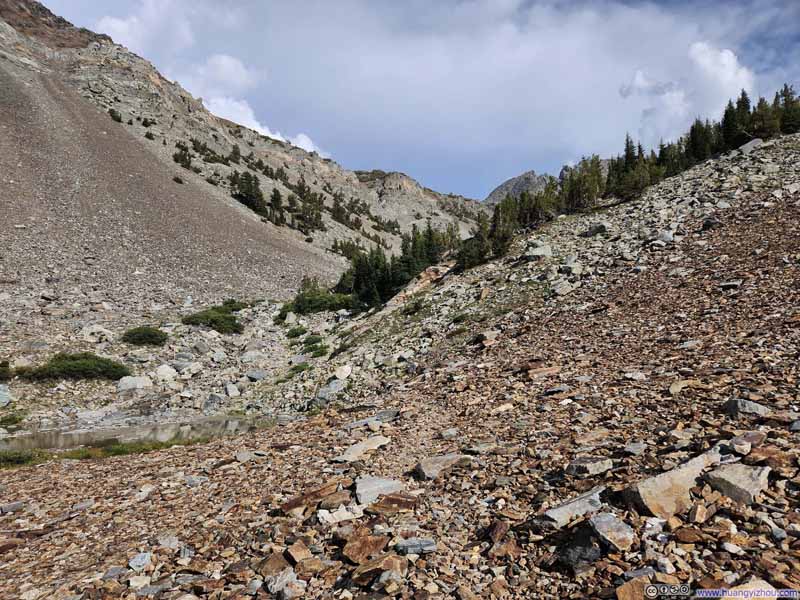 Faint Trail on Rocks
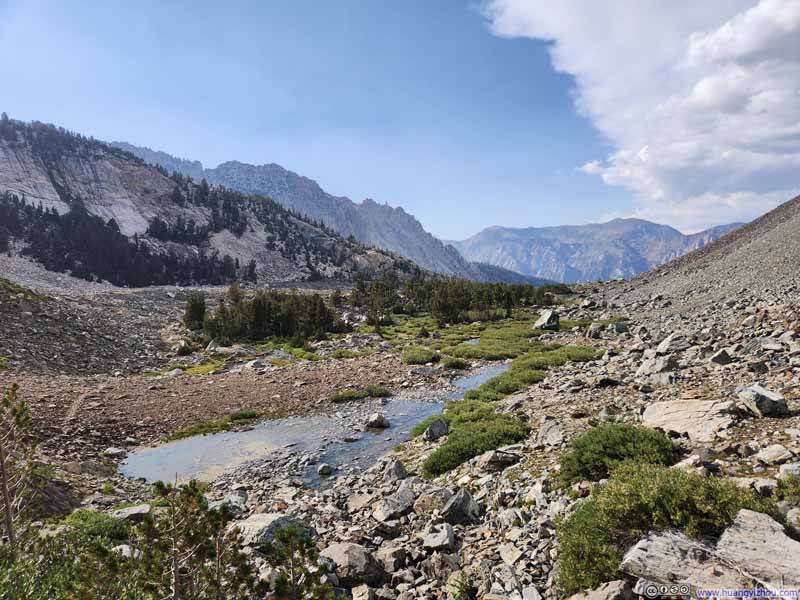 Ponds along Horse Creek
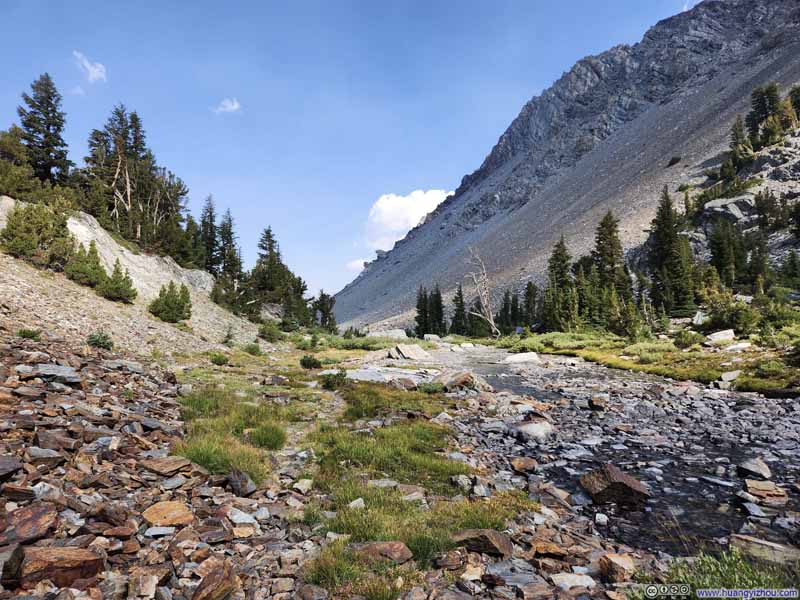 Trail along Horse Creek
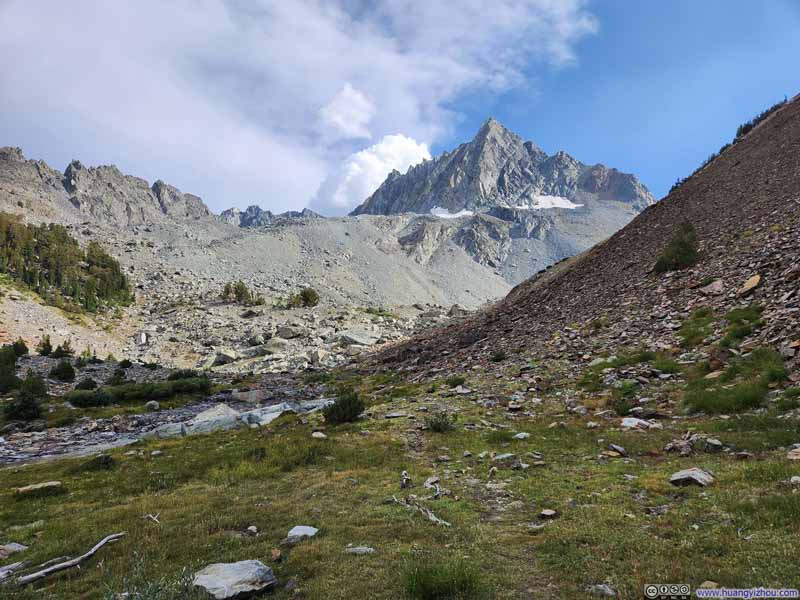 Trail along Horse Creek
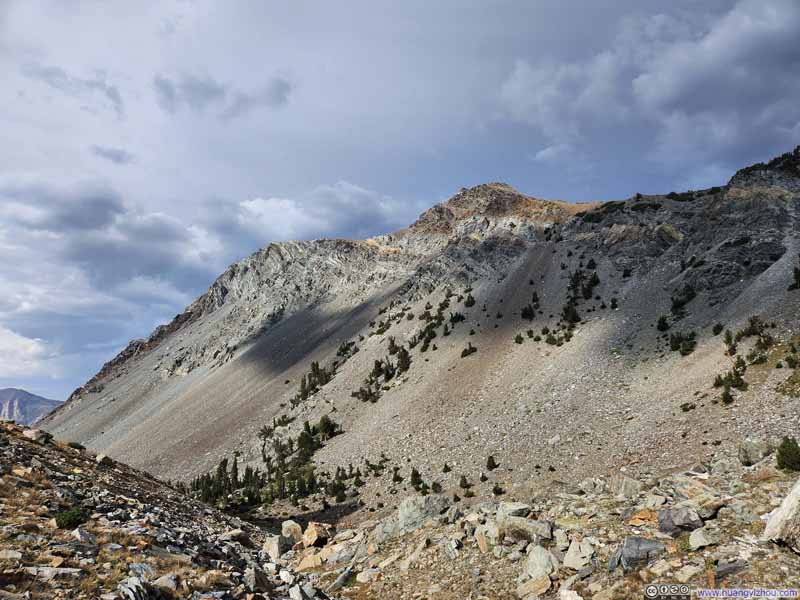 Rocky Hill
Click here to display photos of the slideshow
Horse Creek
Horse Creek
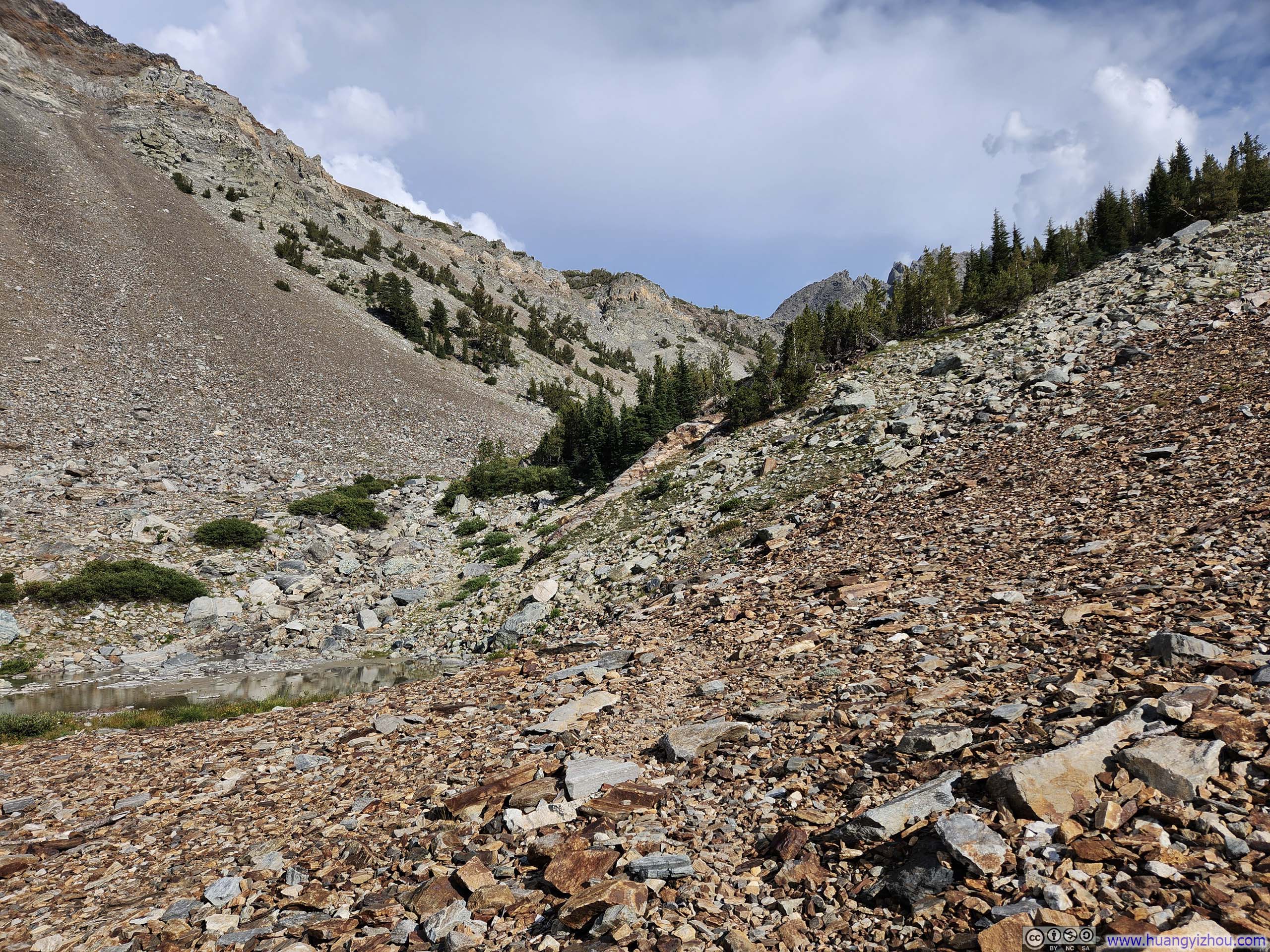
Faint Trail in Valley
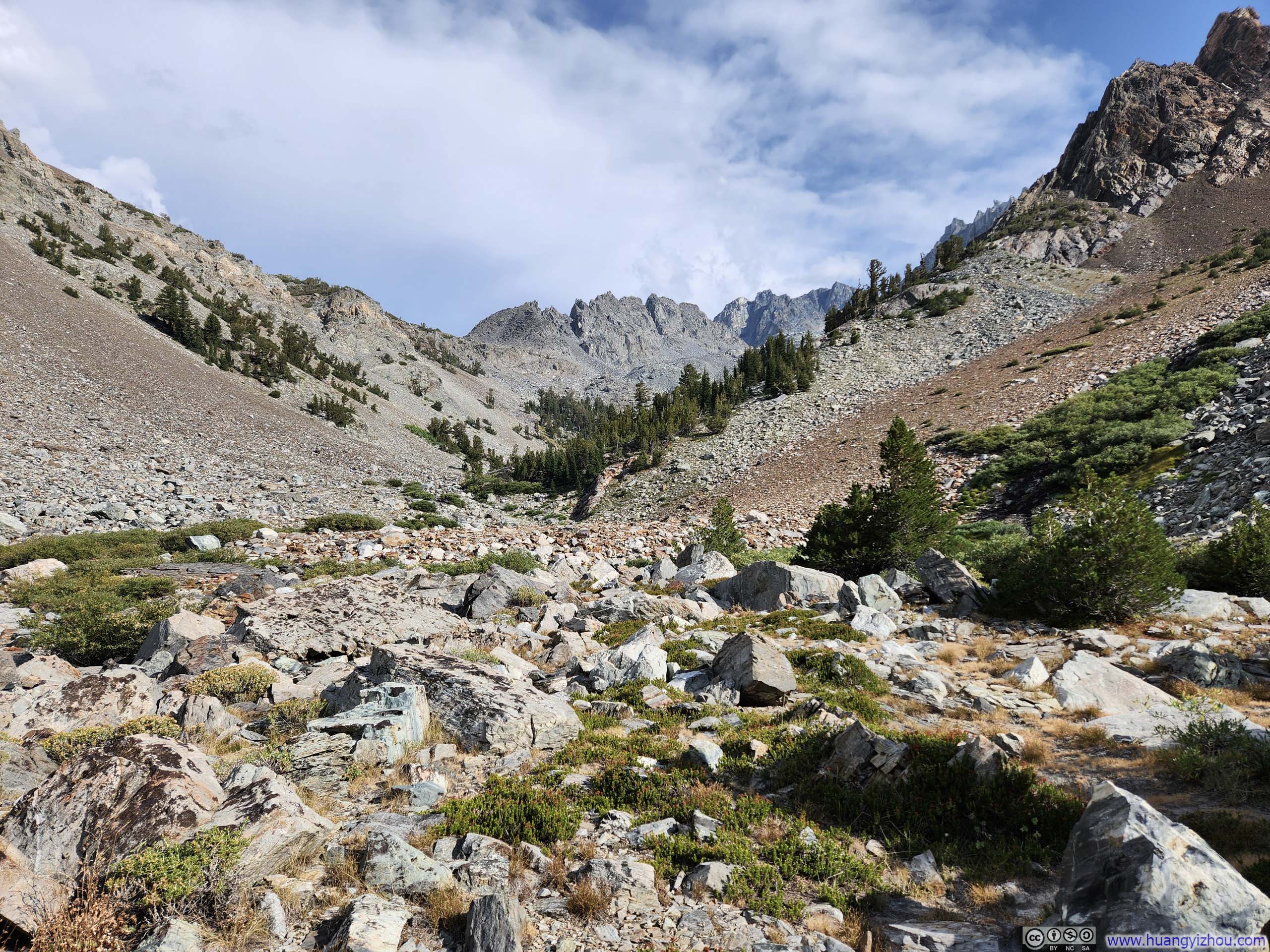
Faint Trail on Rocks
Ponds along Horse Creek
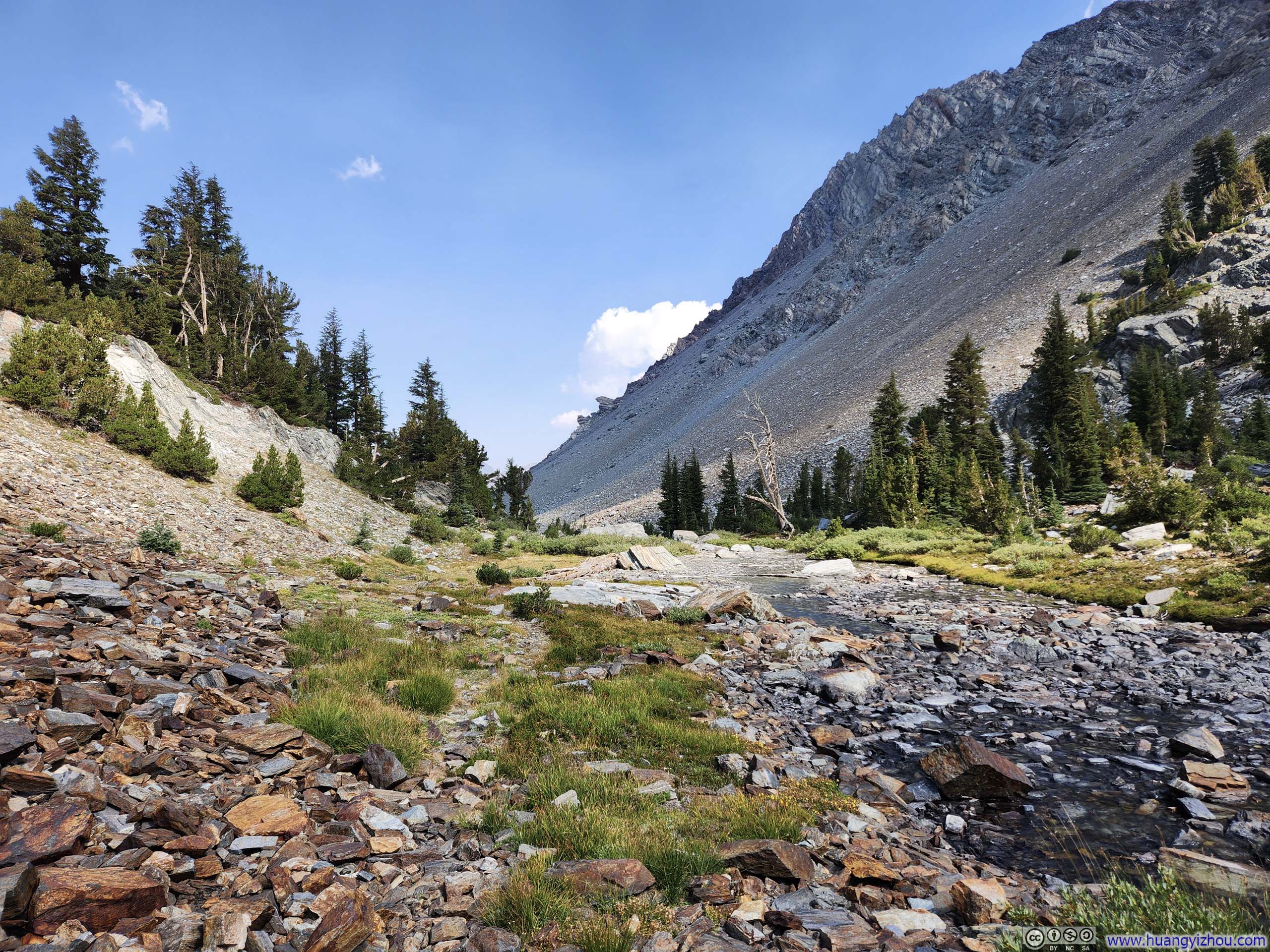
Trail along Horse Creek
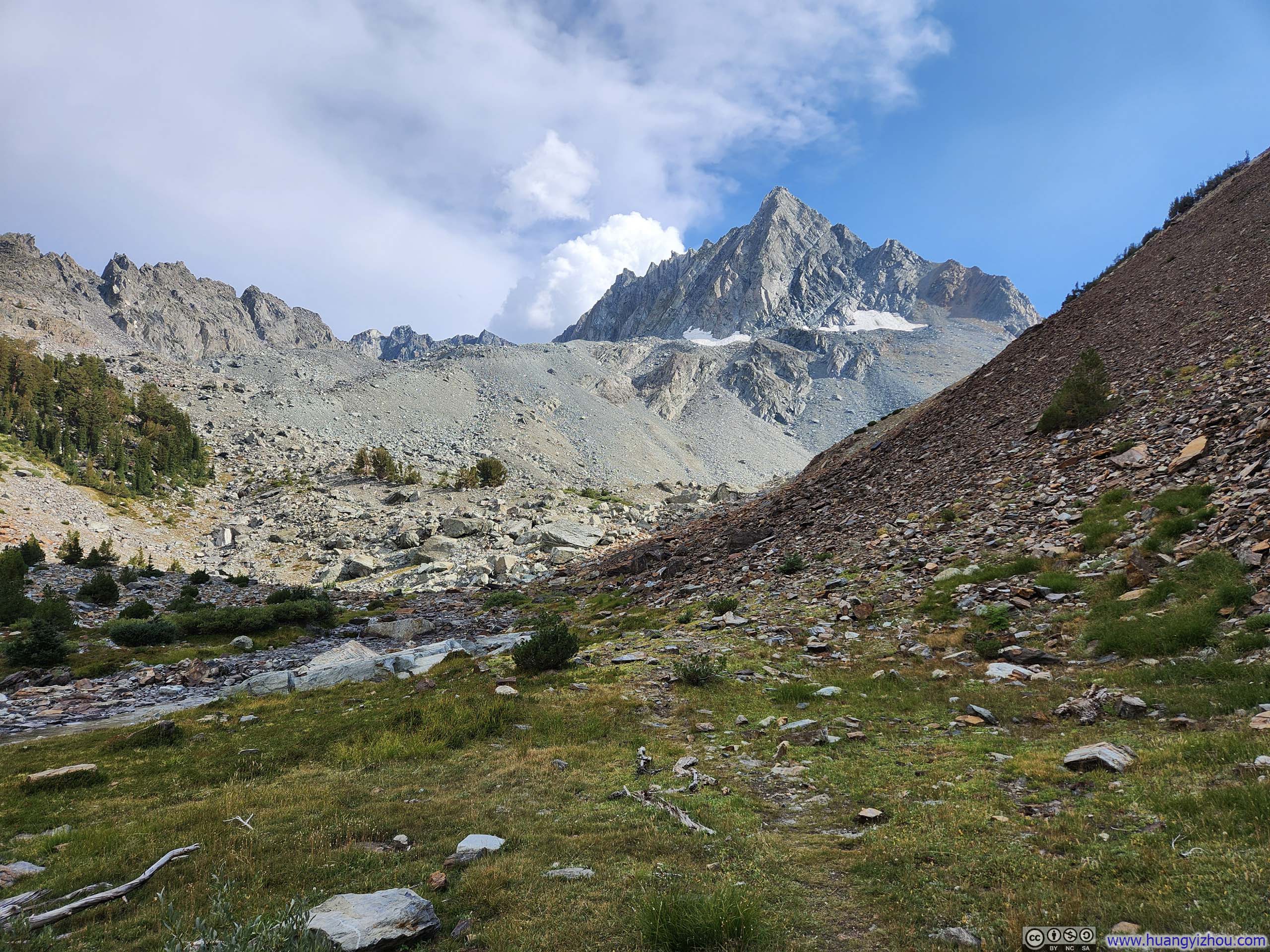
Trail along Horse Creek
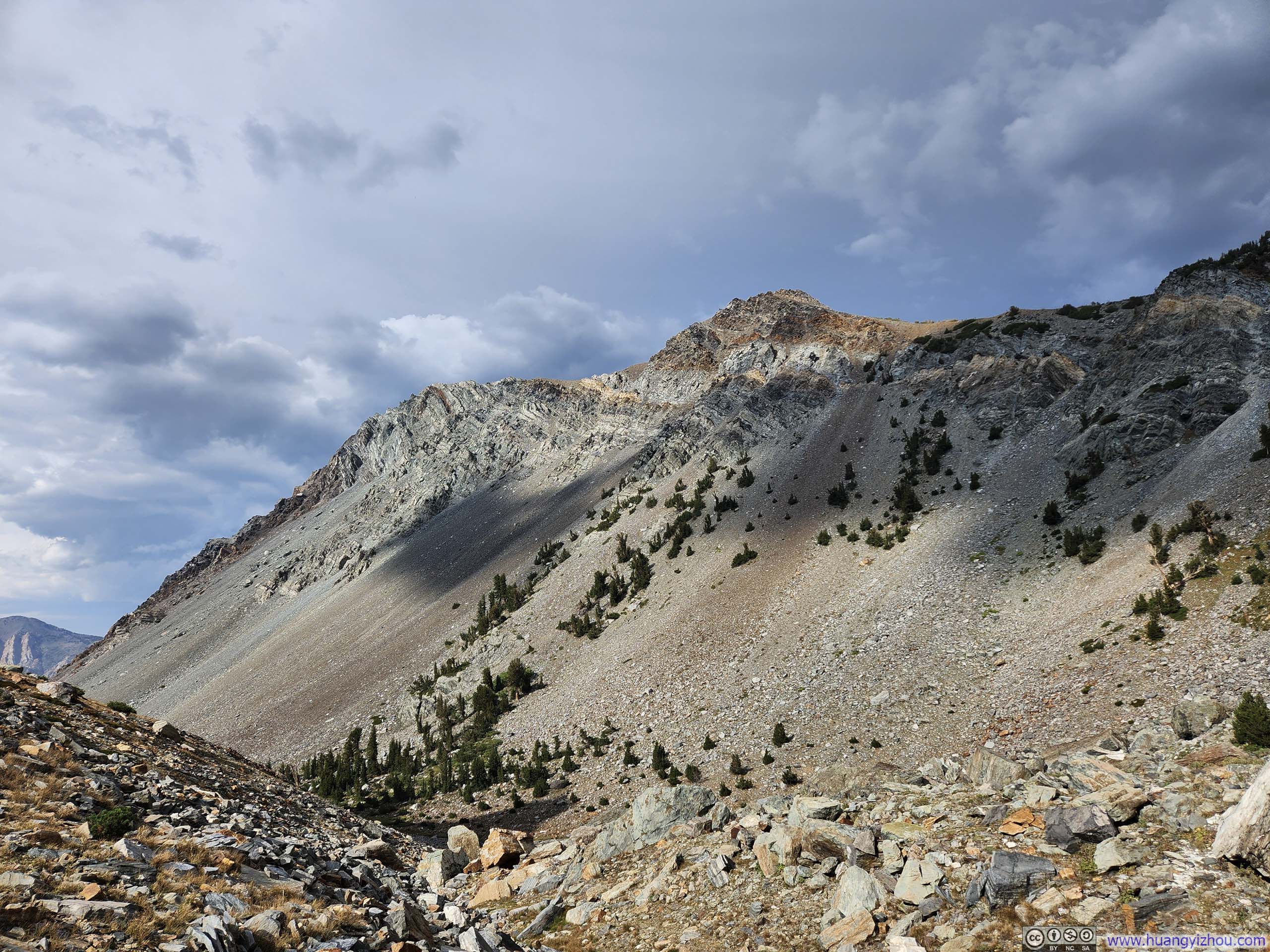
Rocky Hill
Eventually, Horse Creek vanished altogether as the trail ascended toward Horse Creek Pass, the saddle point of Horse Creek Peak to the east and Matterhorn Peak to the west, separating Toiyabe National Forest to the north and Yosemite National Park to the south. The path grew increasingly elusive and frequently dissolving into the rocky landscape. Whenever I lost sight of any discernible trail, I simply picked my way across the stones in the general direction, a strategy that proved largely sufficient.
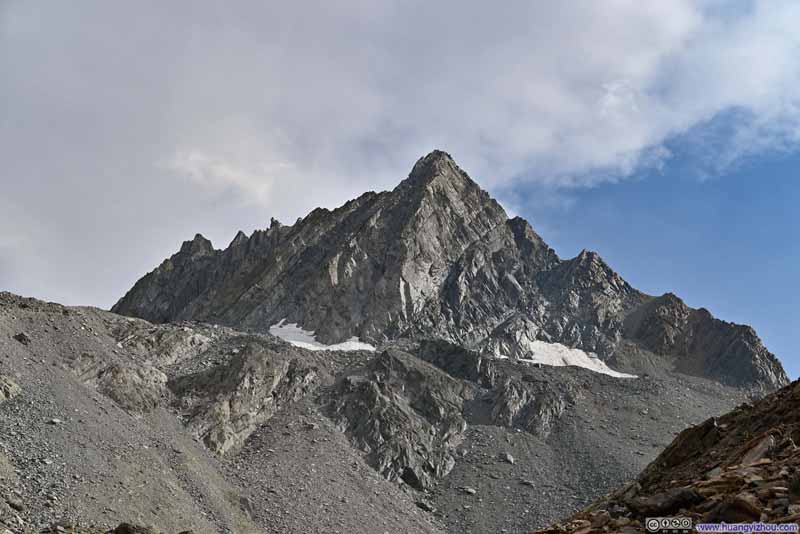 Horse Creek Peak
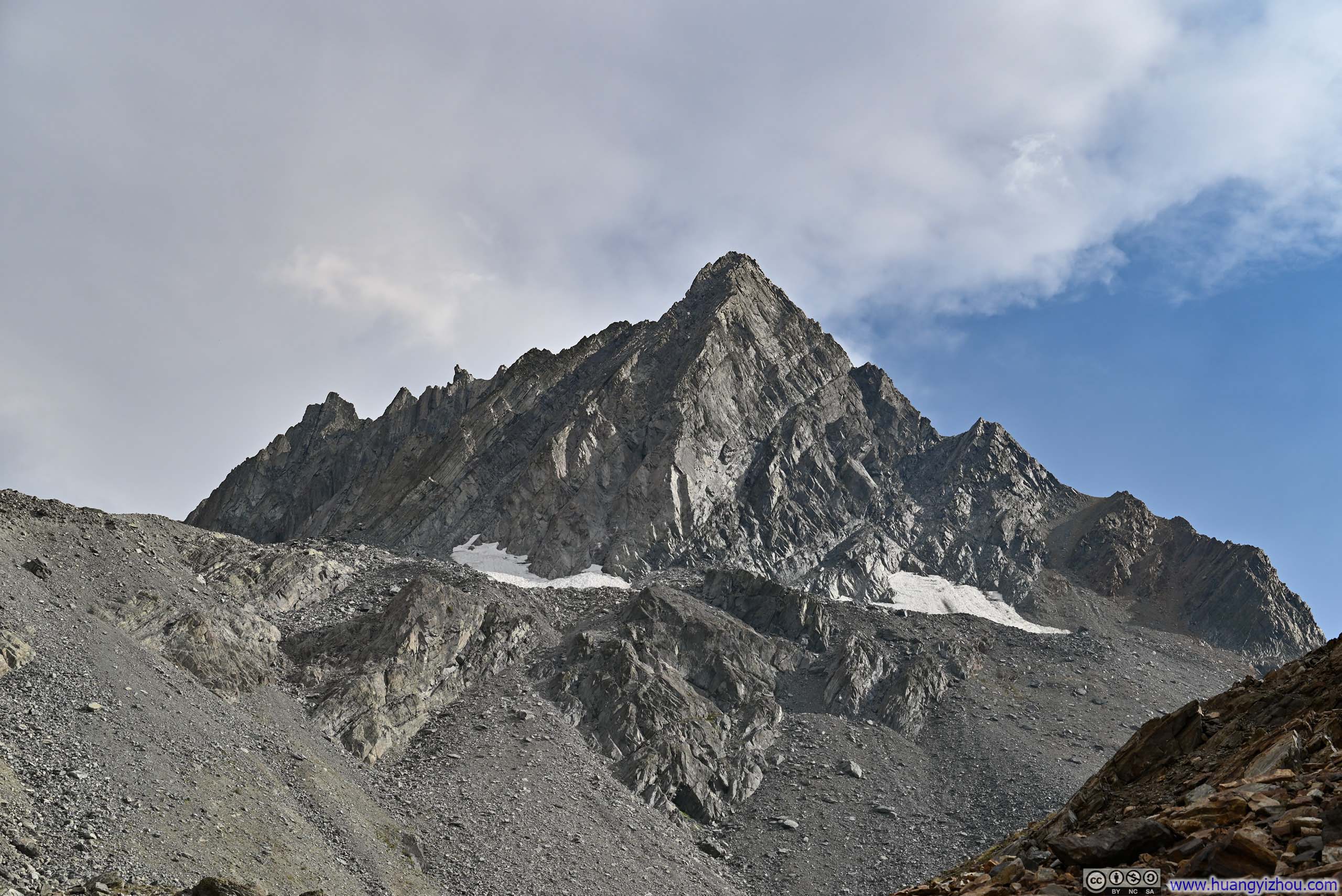
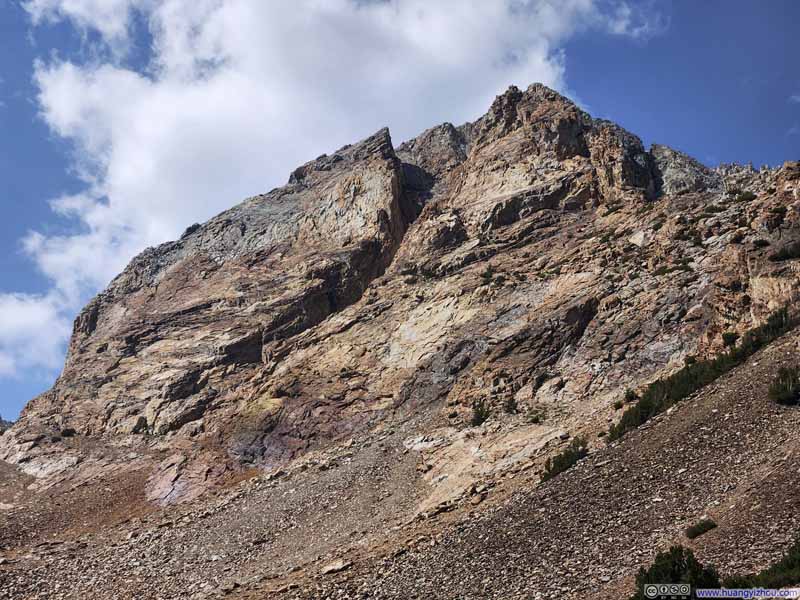 Matterhorn Peak from Trail
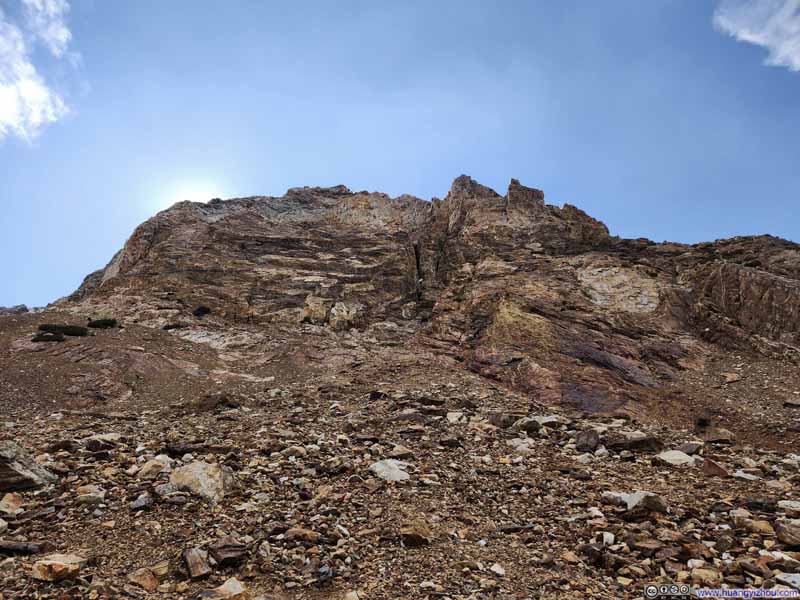 Matterhorn Peak from Trail
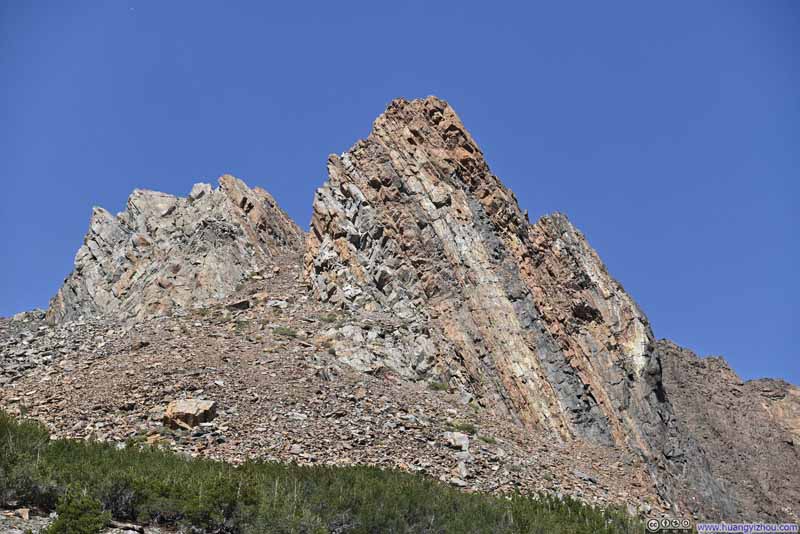 Layered Rocks
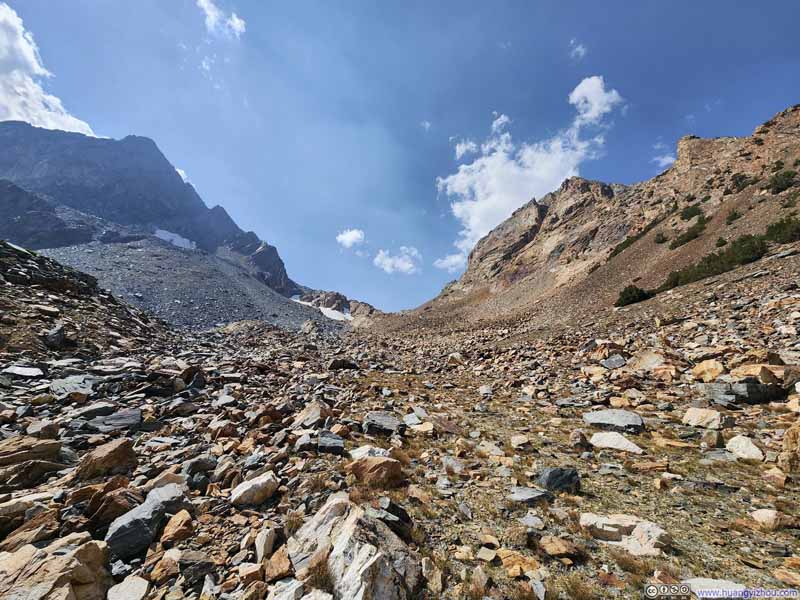 Trail on Rocks to Horse Creek Pass
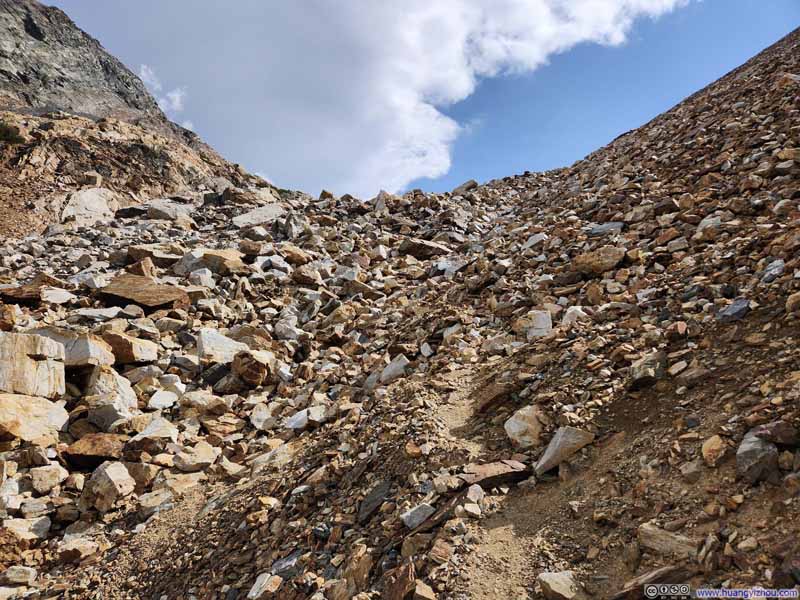 Trail on Rocks to Horse Creek Pass
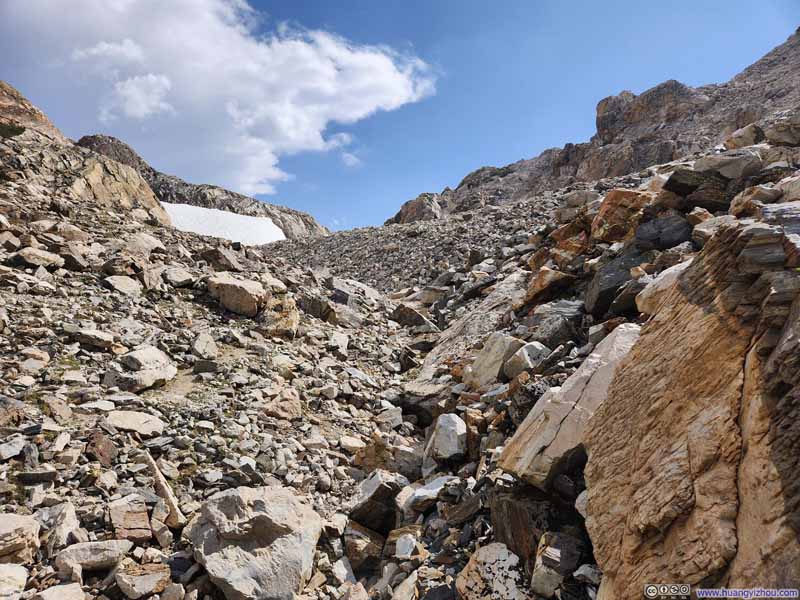 Trail on Rocks to Horse Creek Pass
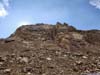
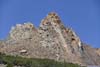
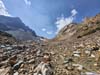
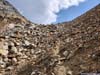
Click here to display photos of the slideshow
Horse Creek Peak
Matterhorn Peak from Trail
Matterhorn Peak from Trail
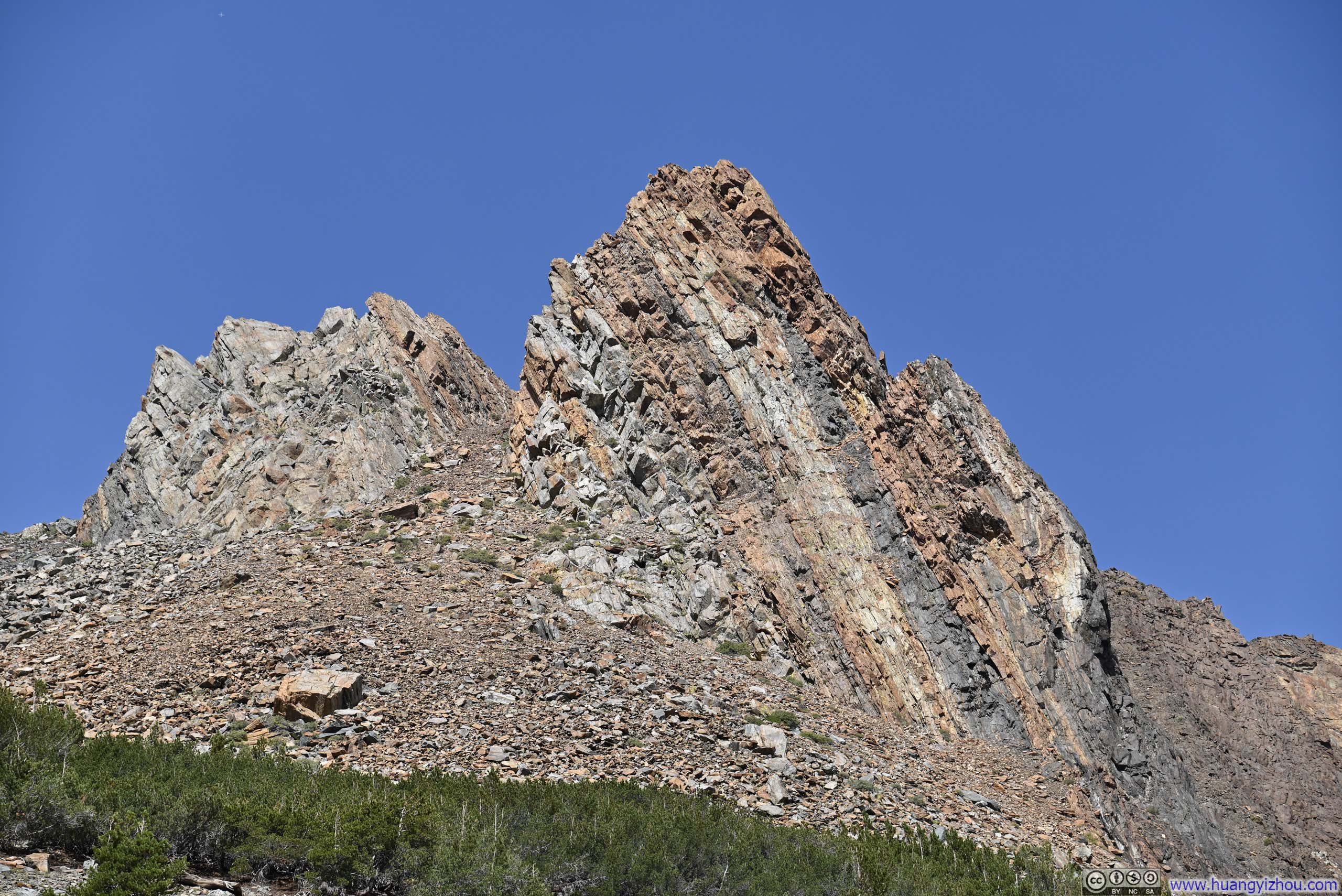
Layered Rocks
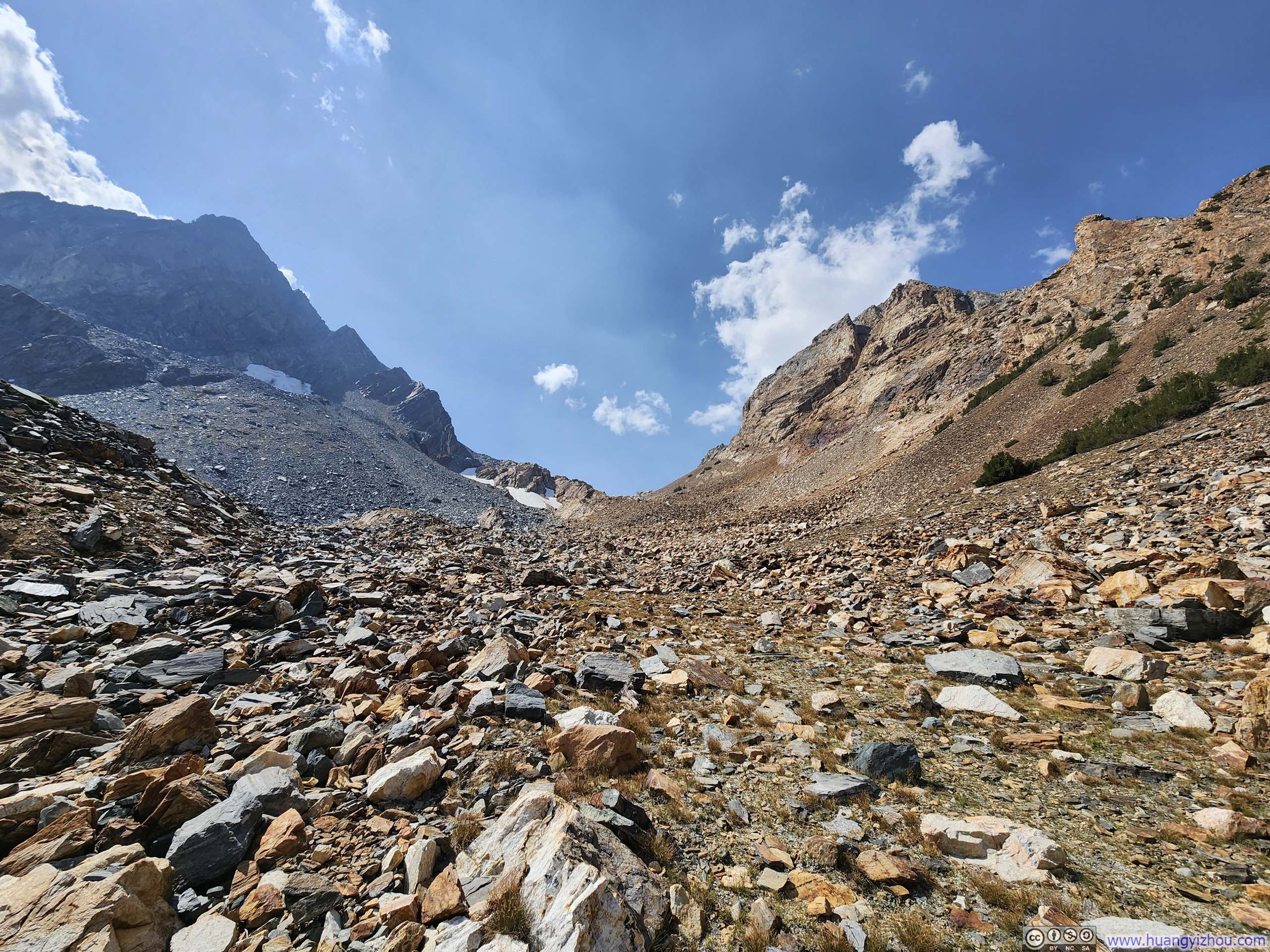
Trail on Rocks to Horse Creek Pass
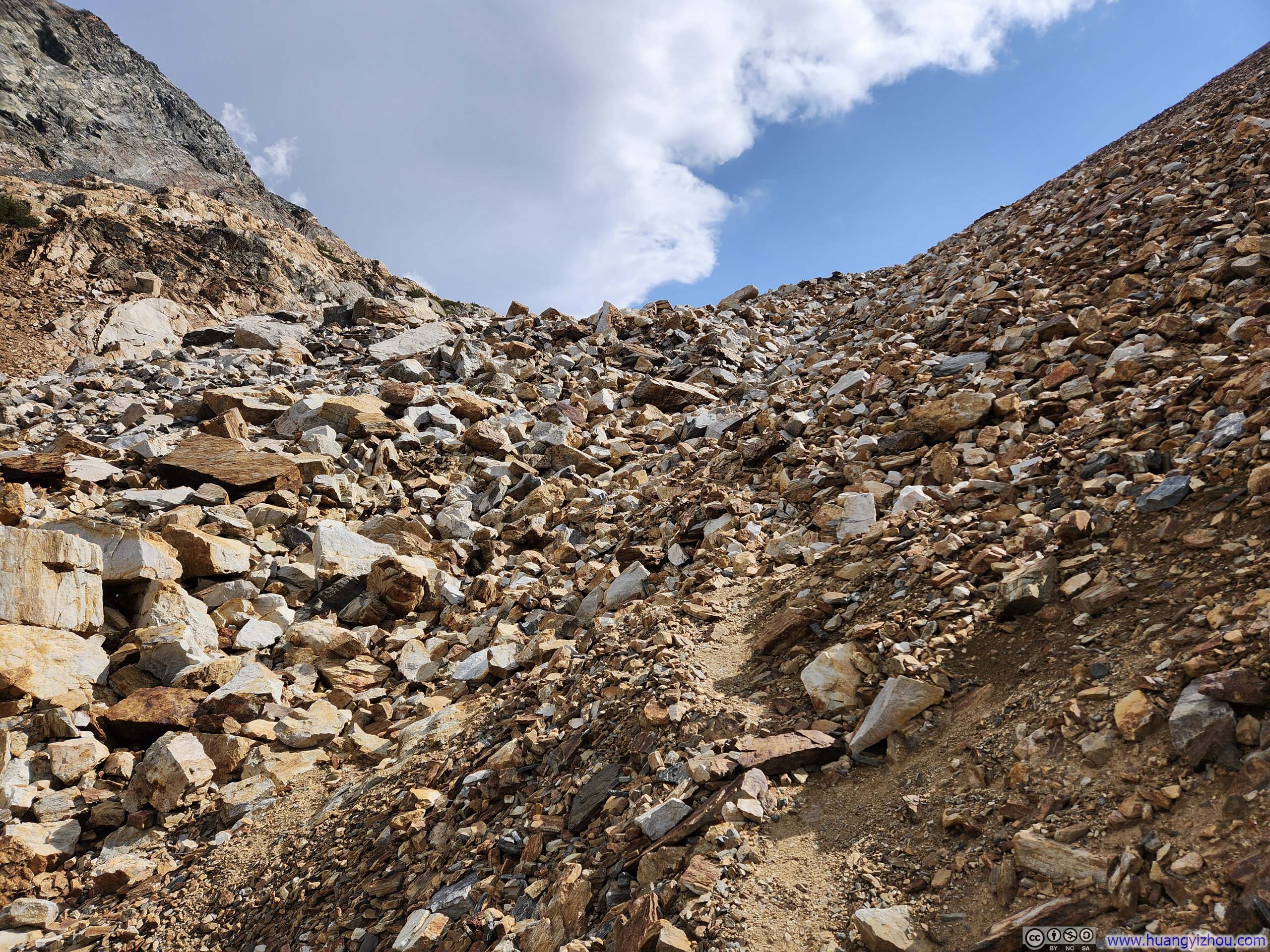
Trail on Rocks to Horse Creek Pass
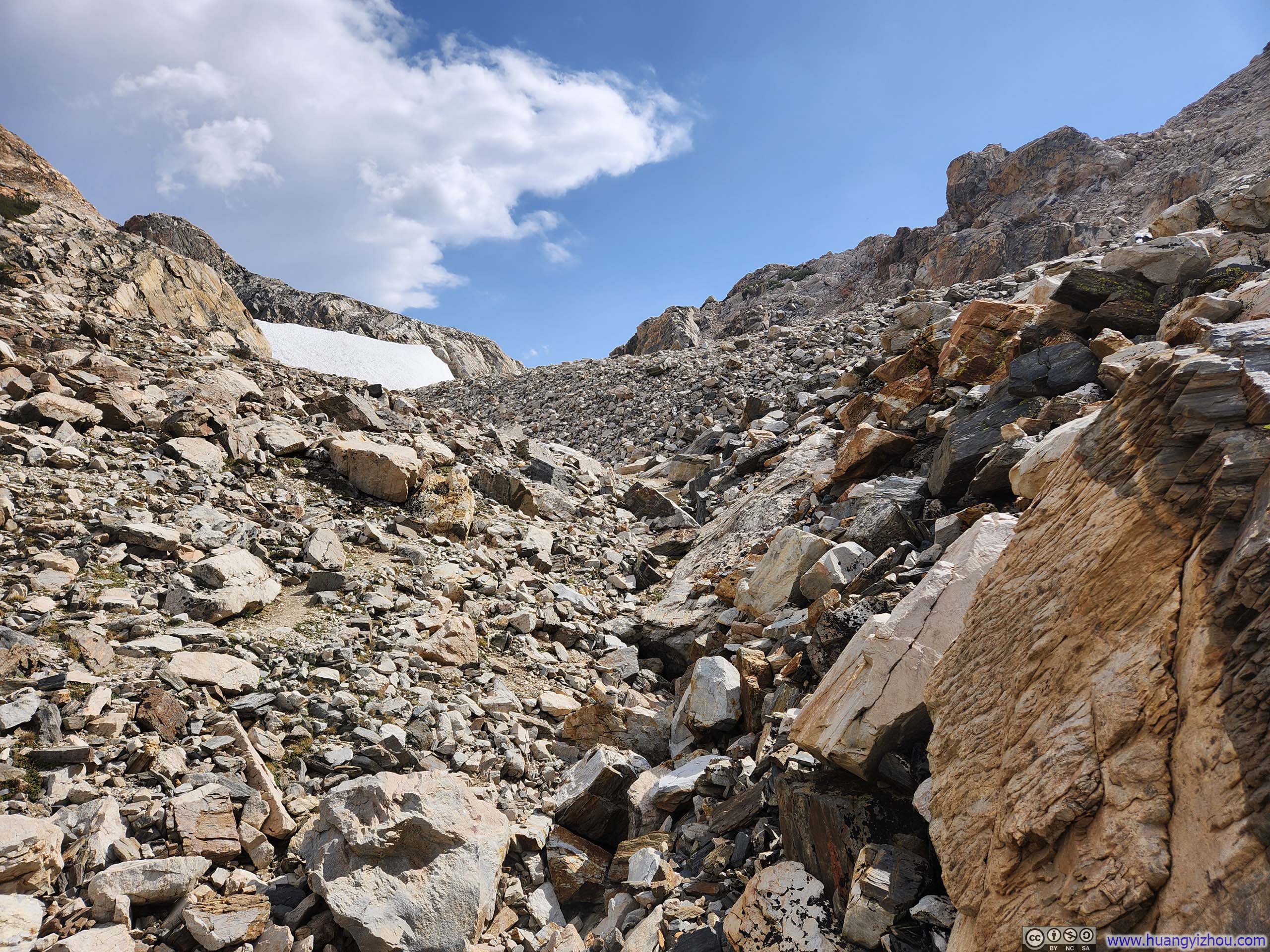
Trail on Rocks to Horse Creek Pass
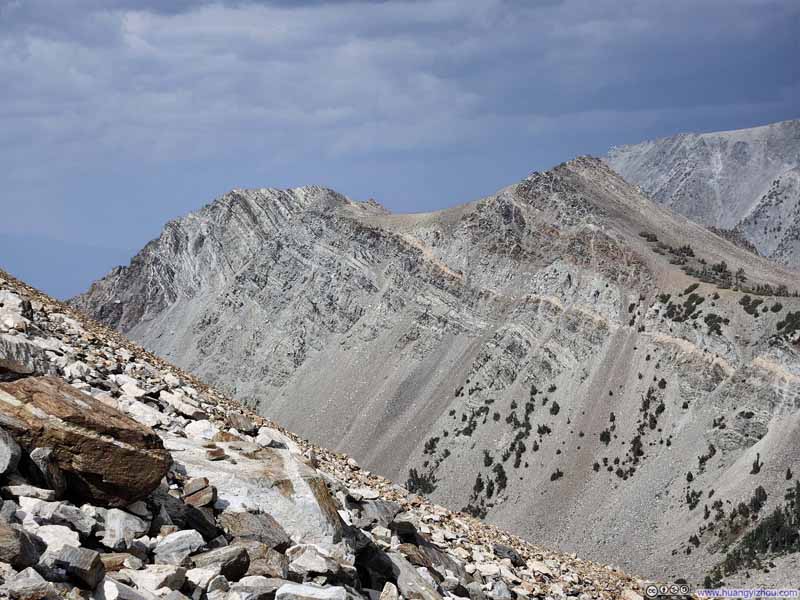
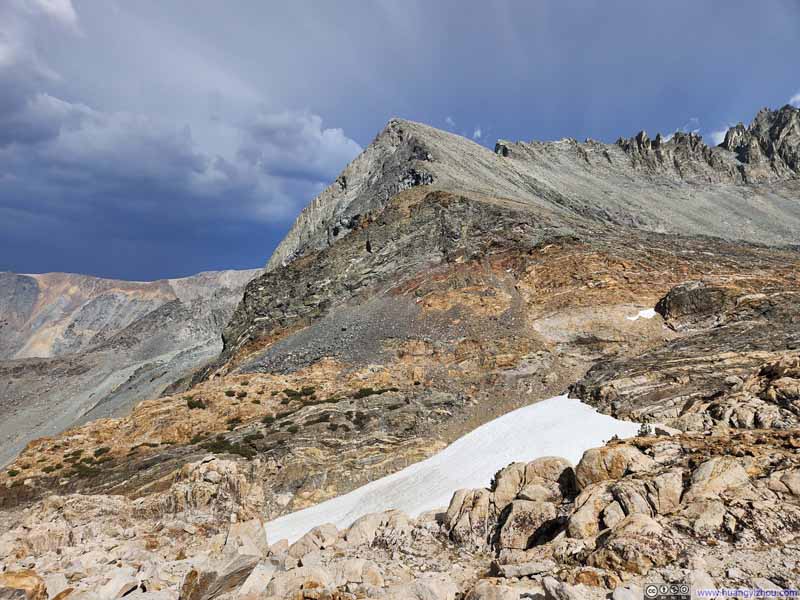
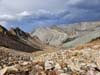
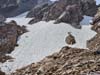
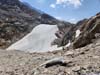
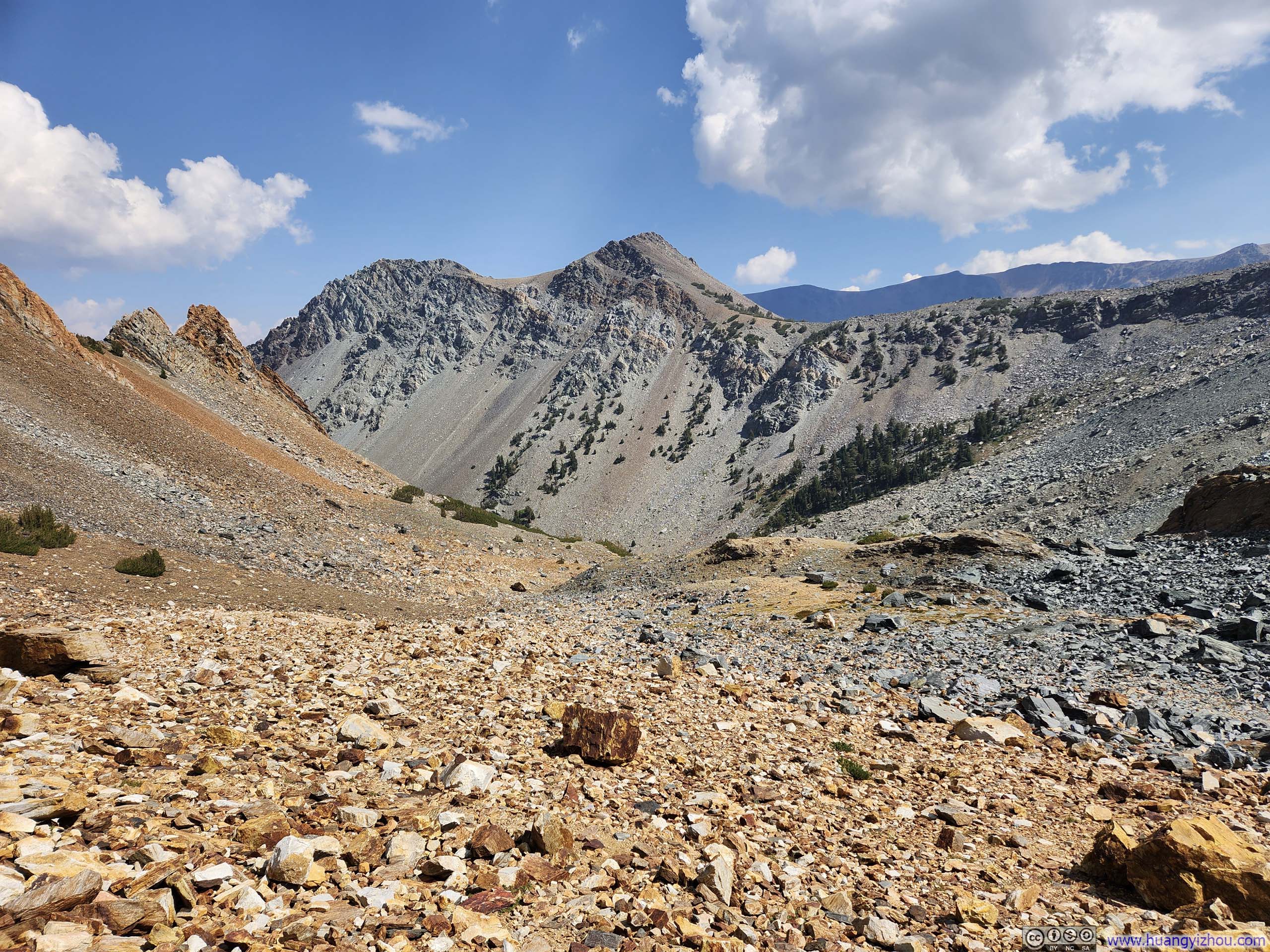
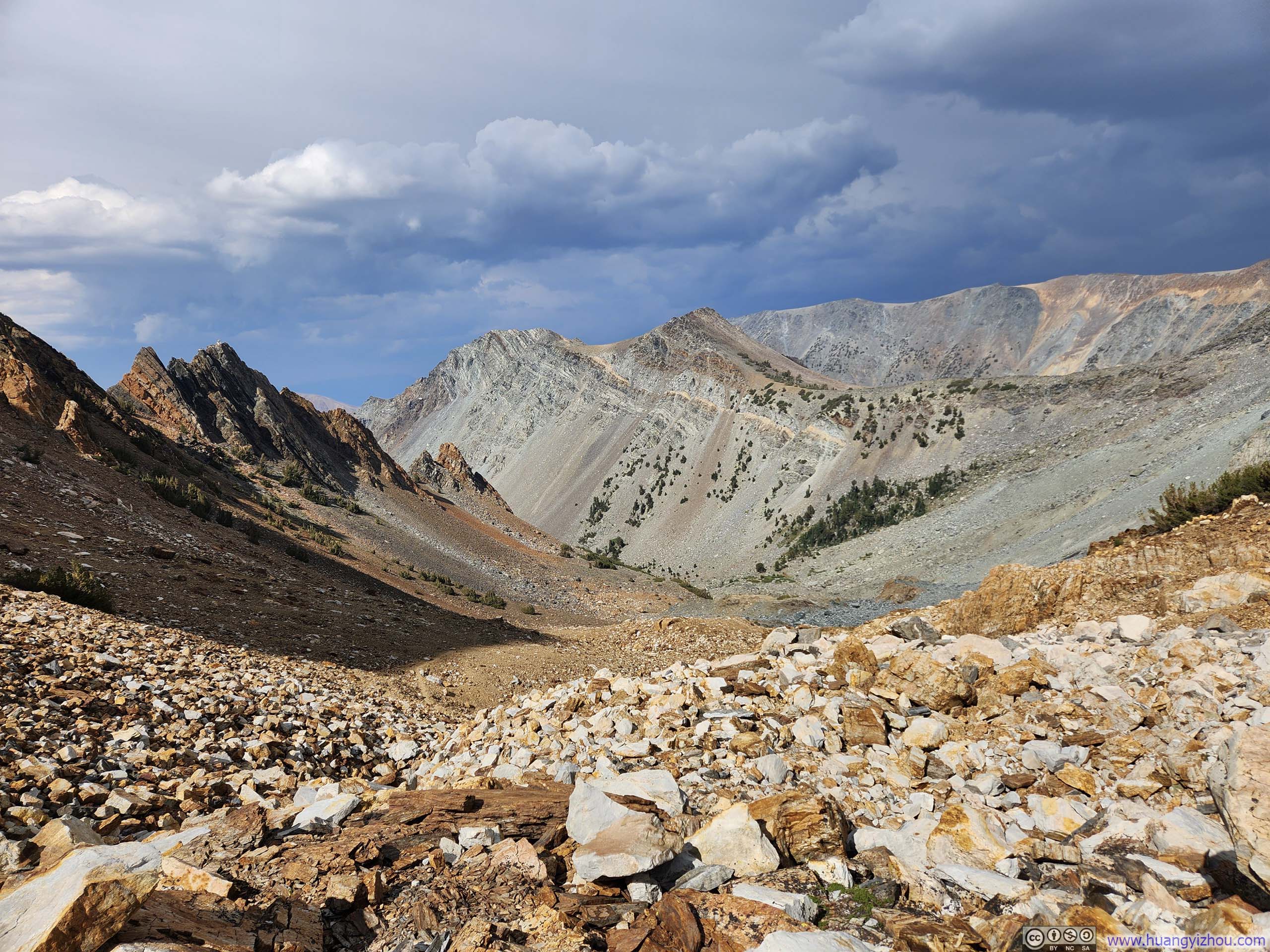
It’s worth noting that near Horse Creek Pass, two route variations existed. The first, documented on AllTrails, reached the actual saddle point at Horse Creek Pass before turning west toward Matterhorn Peak. The second variation, apparently more popular on summitpost.org and the one I followed, turned west earlier, bypassing Horse Creek Pass entirely. This alternative likely gained favor because it circumvented a snow patch (p3-4 below), making it both safer and more direct.
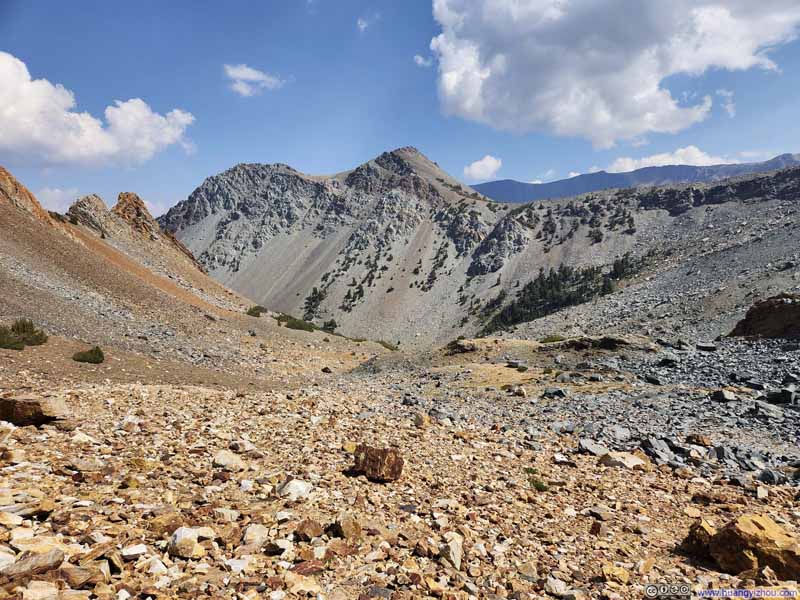 Trail against Mountainous Backdrop
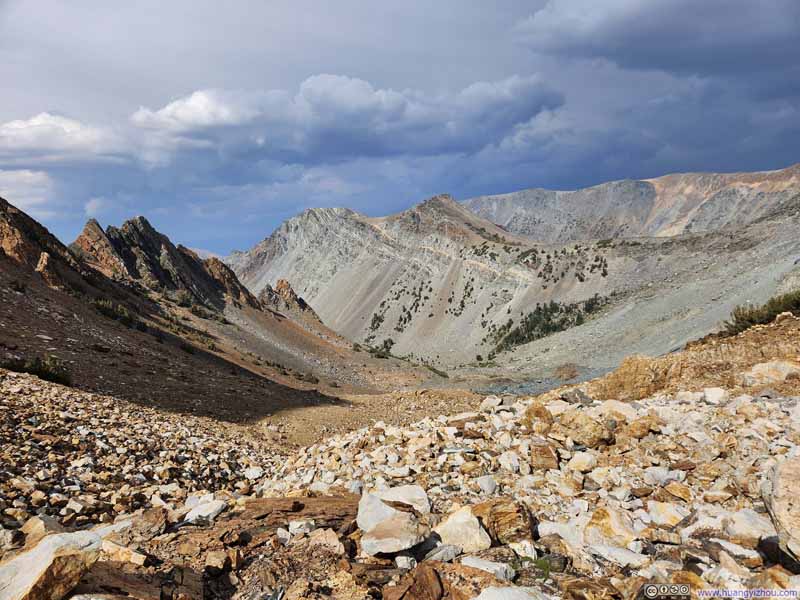 Trail against Mountainous Backdrop
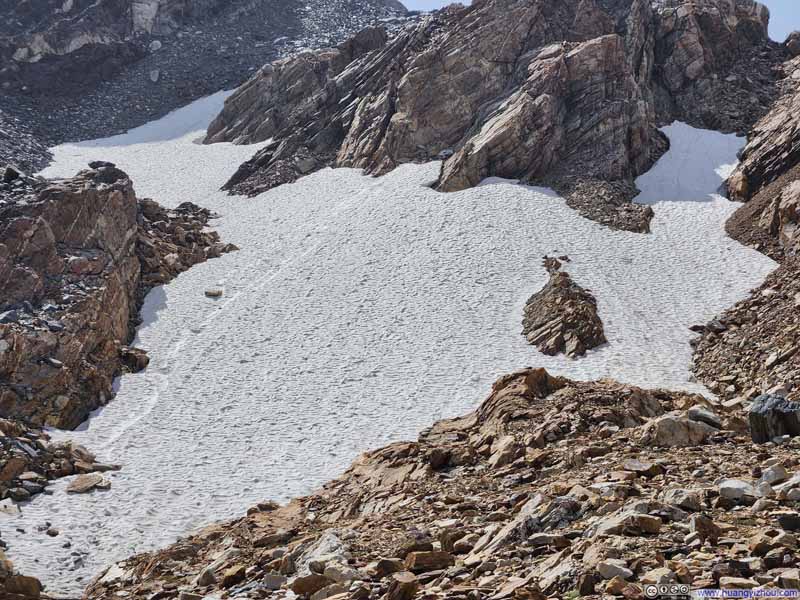 Snow Patch
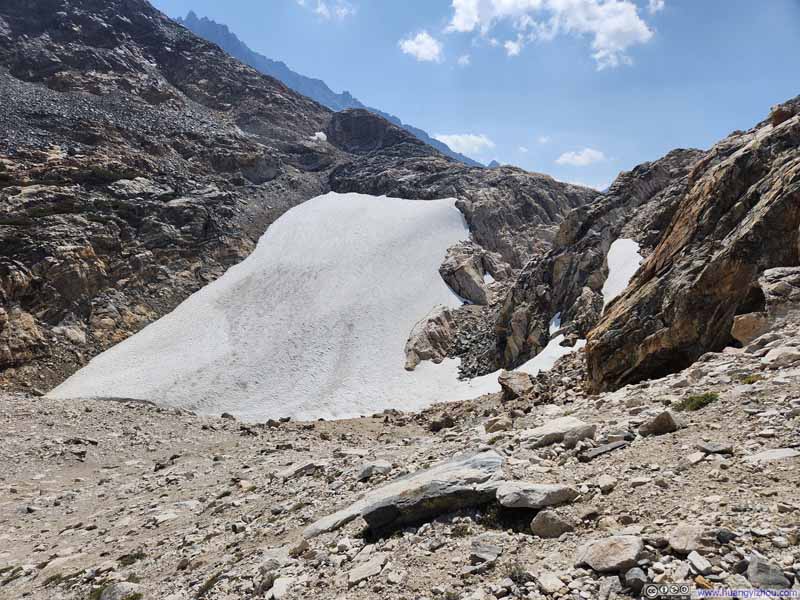 Snow Patch
 Talus Field
 HillsOn the eastern flank of Horse Creek Valley.
 Horse Creek Peak
Click here to display photos of the slideshow
Trail against Mountainous Backdrop
Trail against Mountainous Backdrop
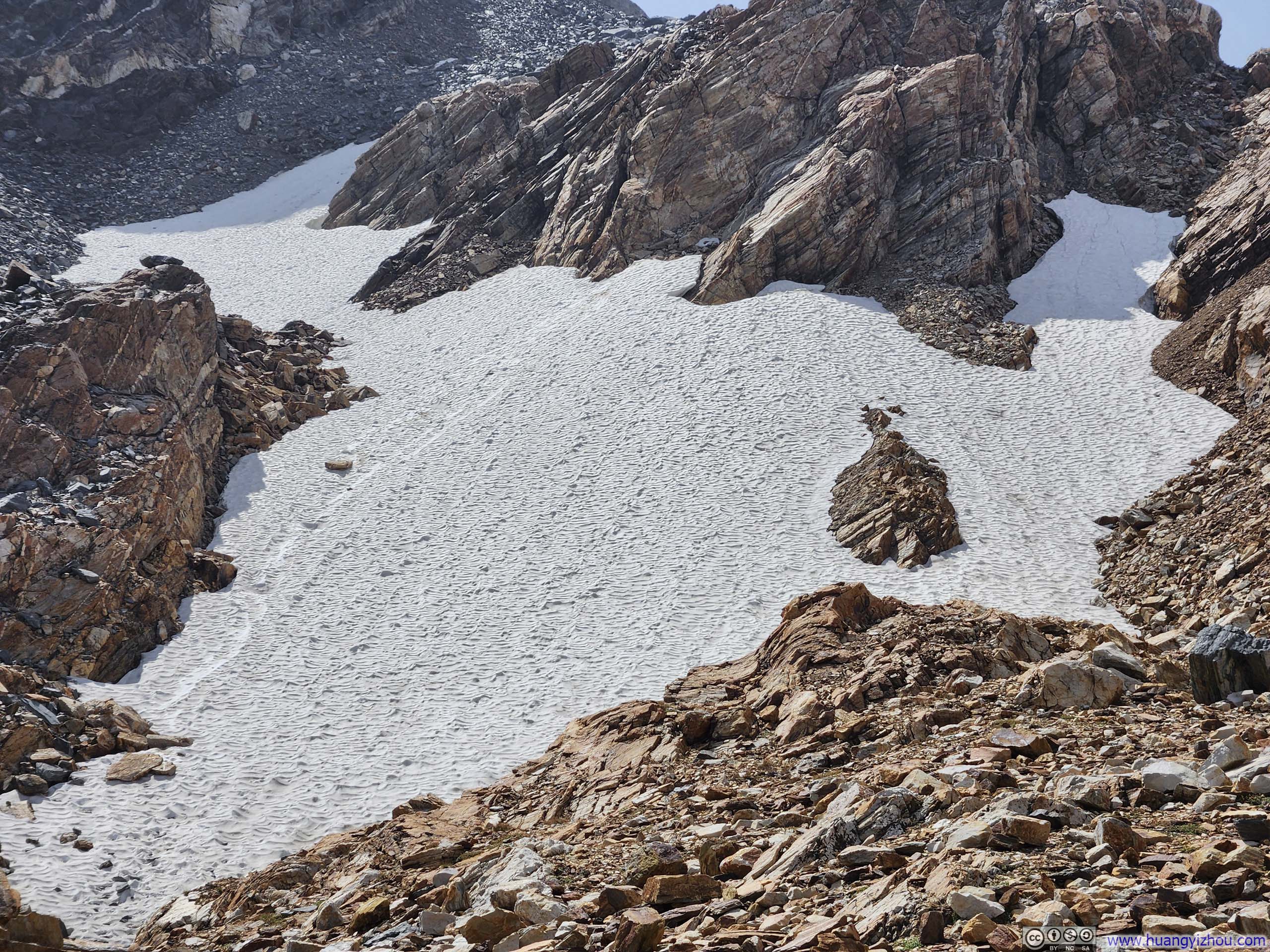
Snow Patch
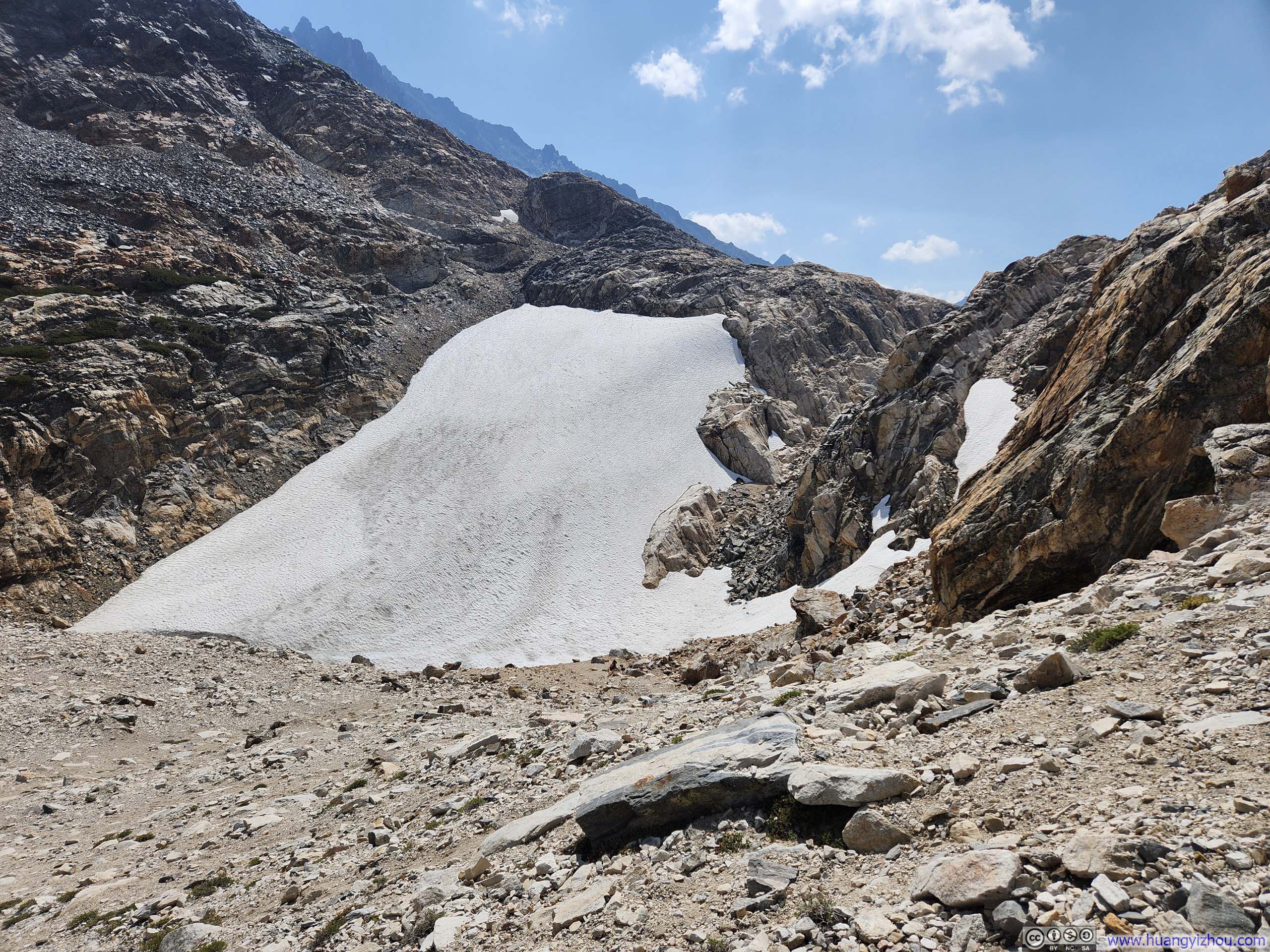
Snow Patch
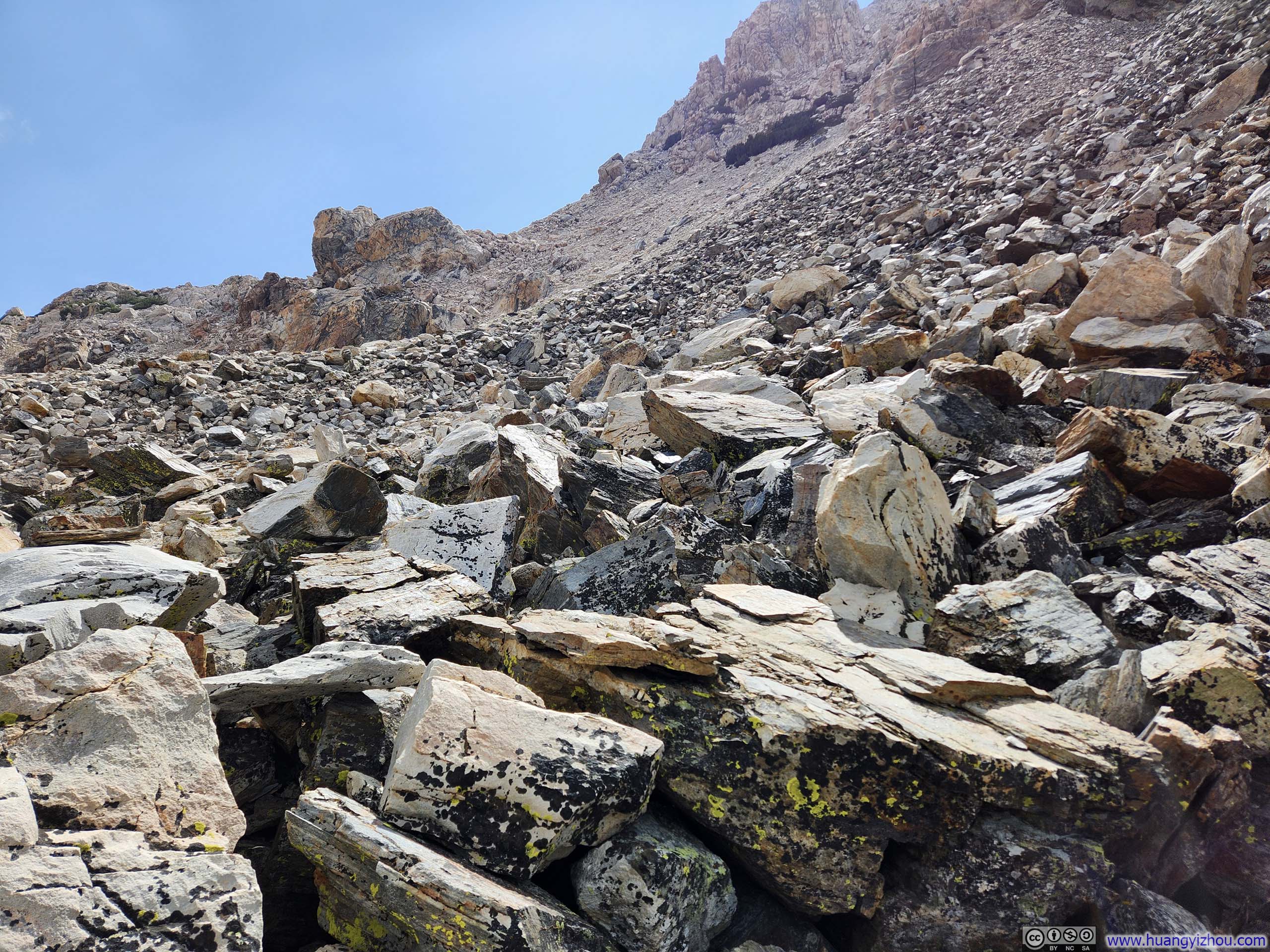
Talus Field
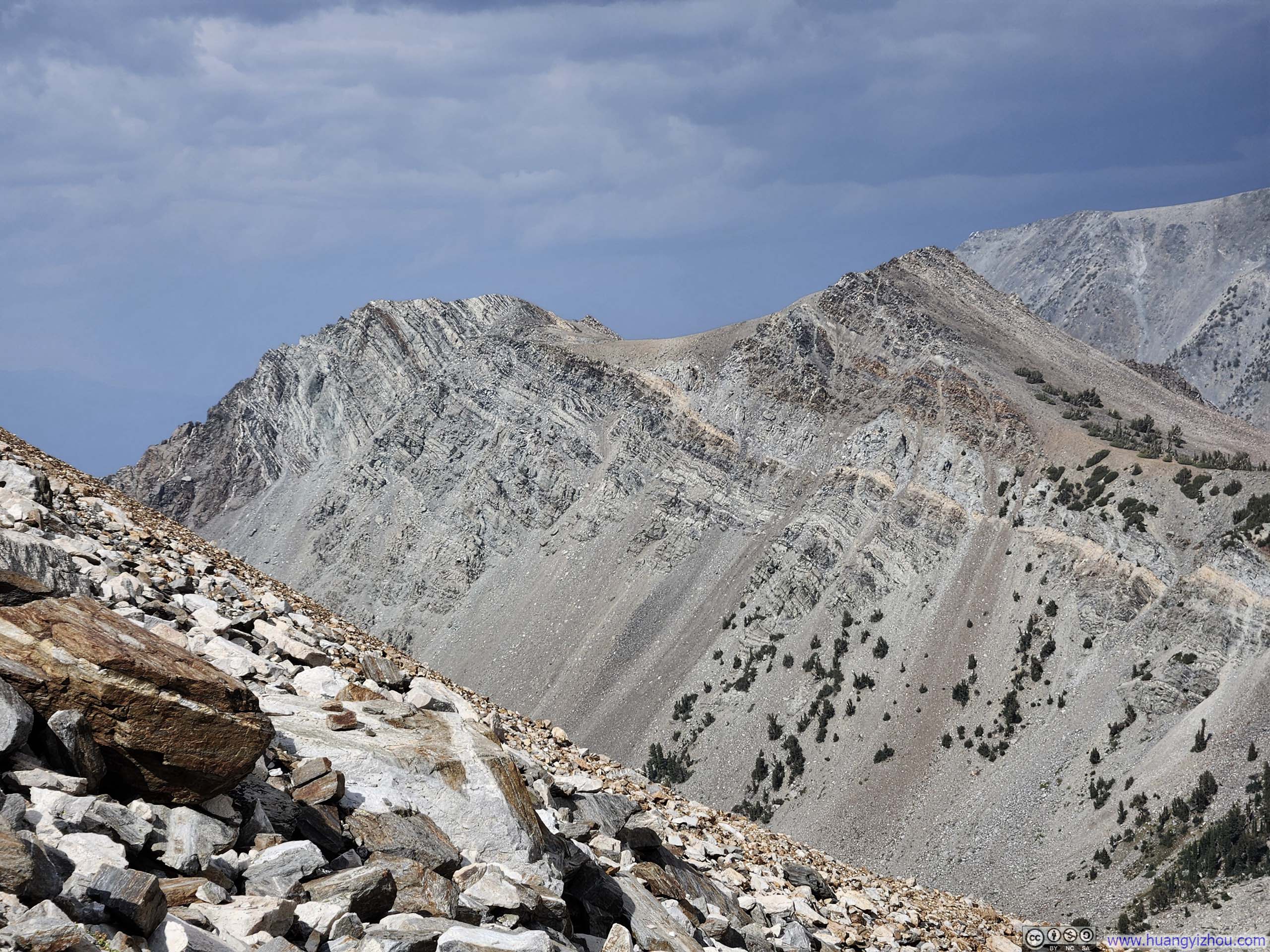
HillsOn the eastern flank of Horse Creek Valley.
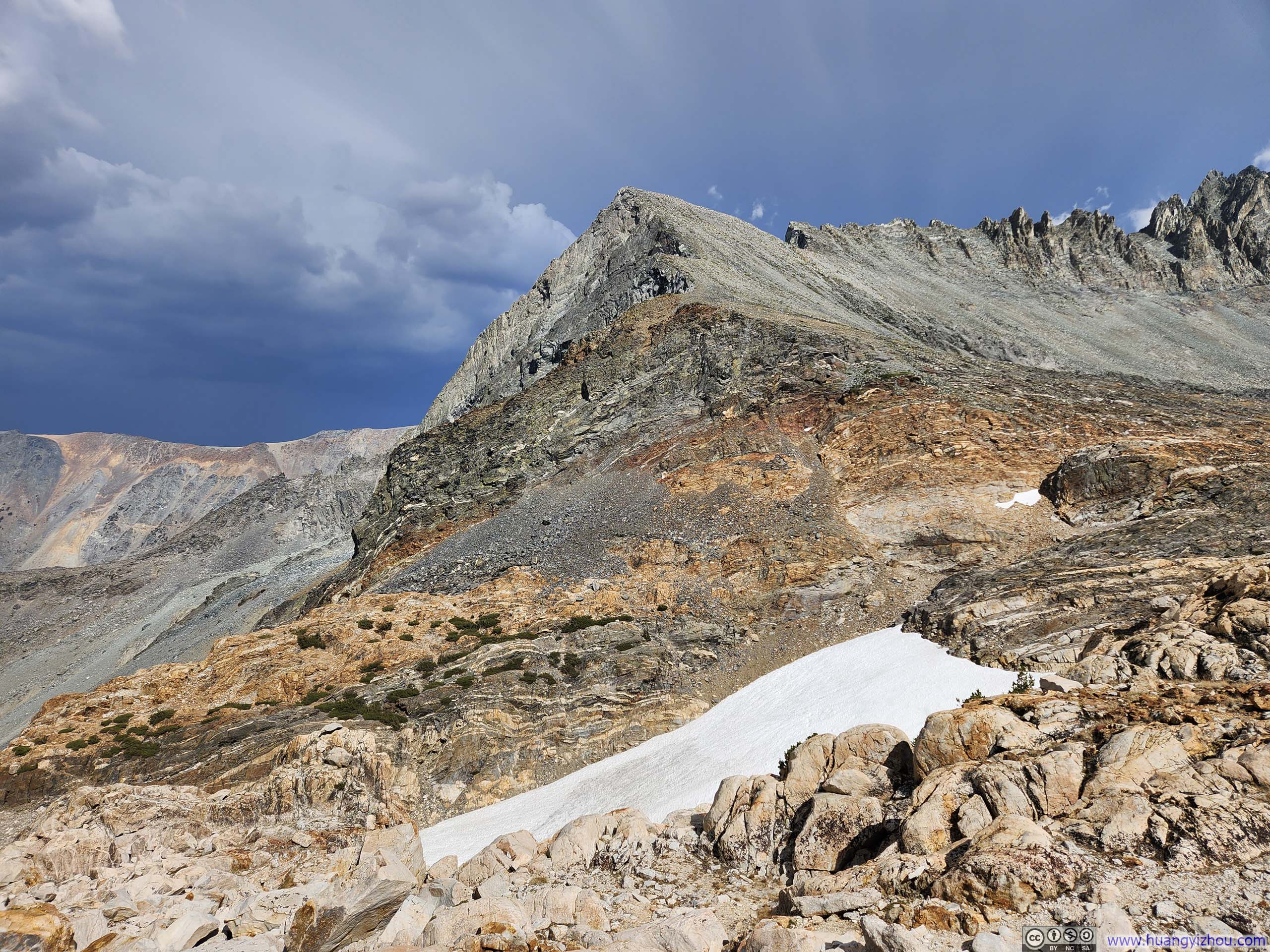
Horse Creek Peak
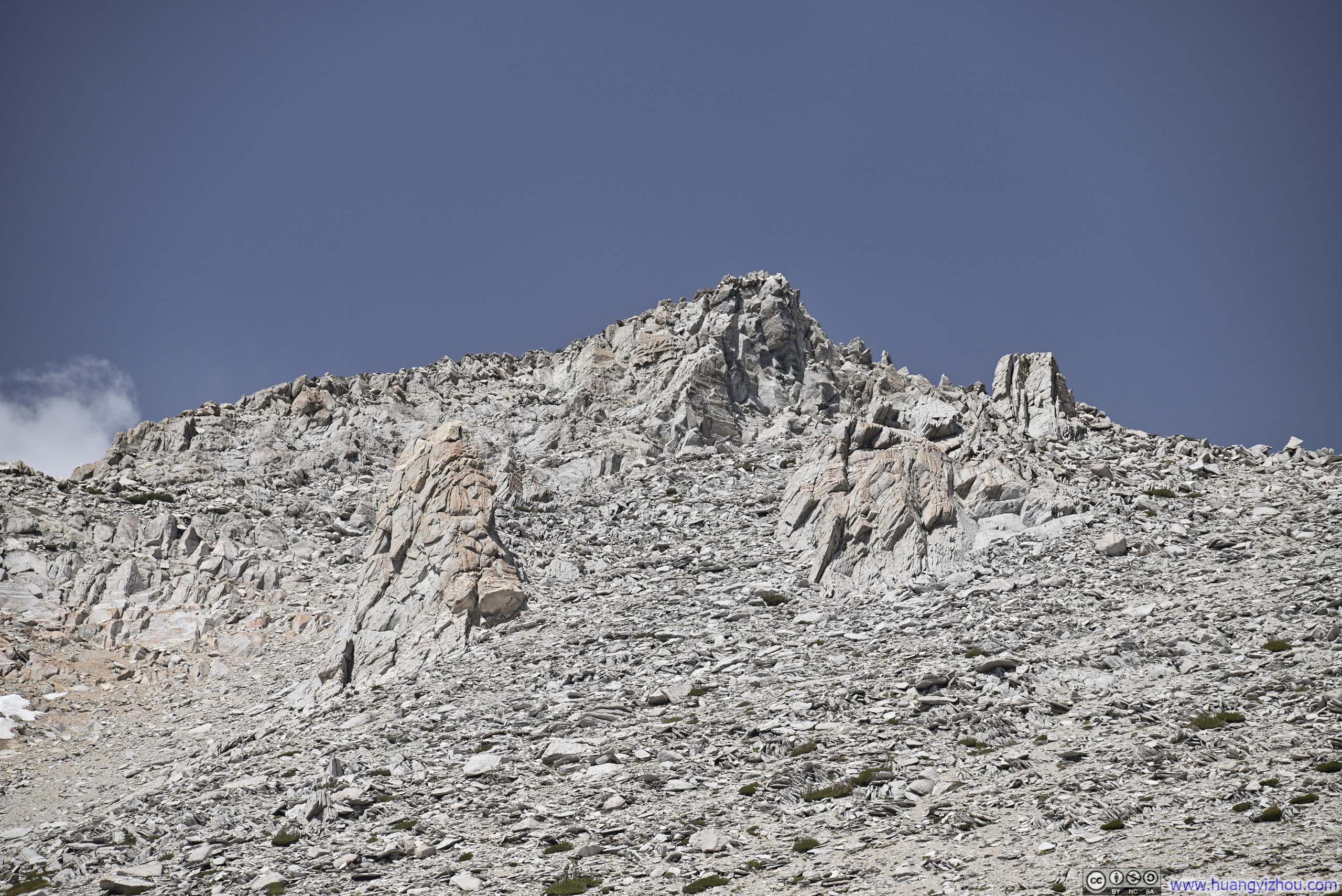
I reached my version of “Horse Creek Pass” (the boundary of Toiyabe National Forest and Yosemite National Park) just before noon. There, I paused to rest, drinking in the views of Spiller Creek Valley—its meadows a pleasing tapestry of verdant green and autumn brown, the pine trees scattered around, and the serrated granite peaks soaring above in silent majesty. And of course, my destination of Matterhorn Peak just behind them.
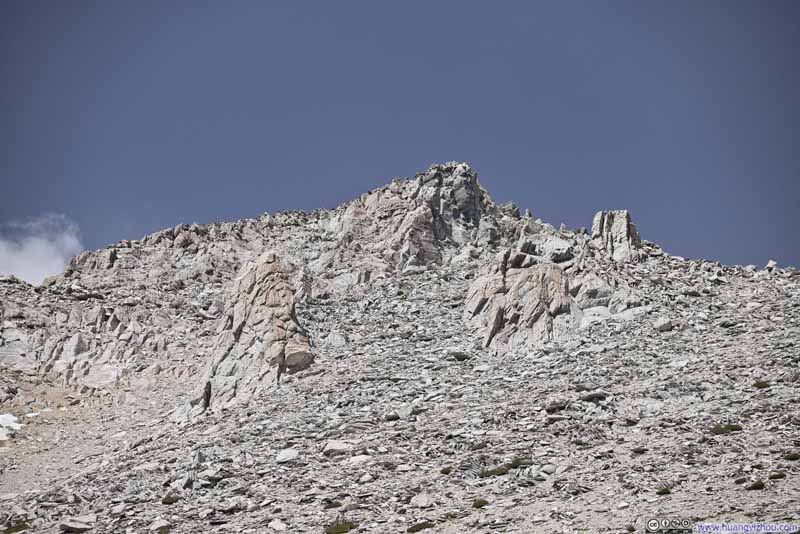 Matterhorn Peak from Horse Creek Pass
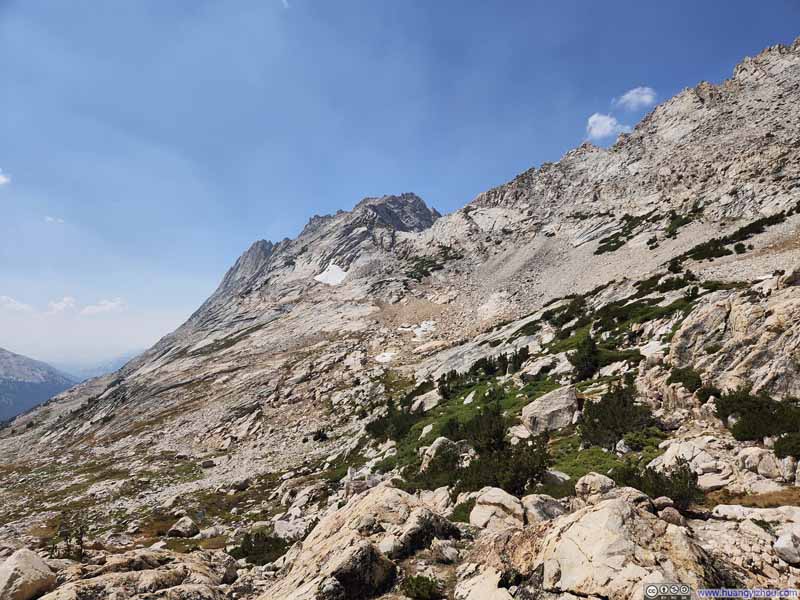
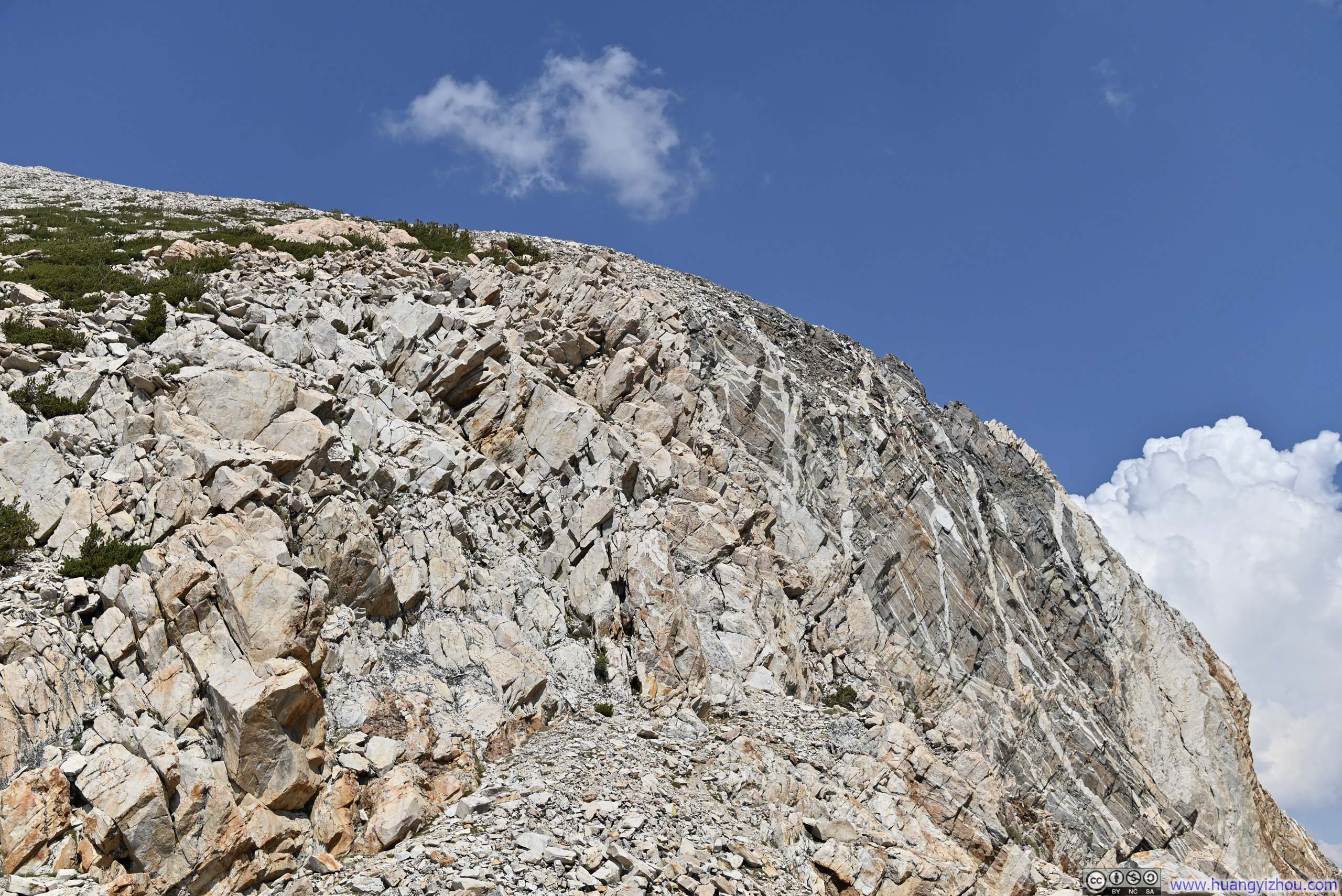
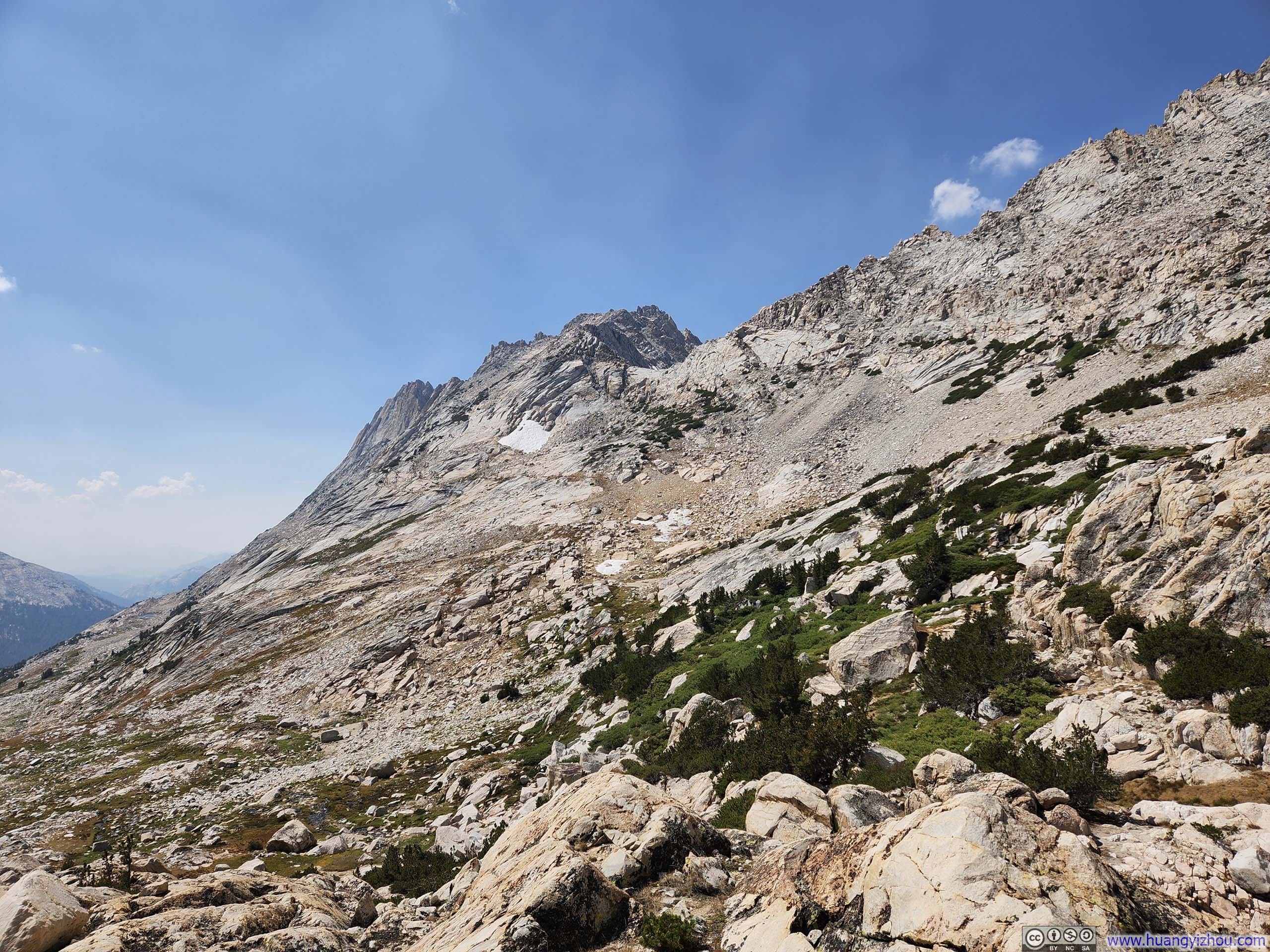
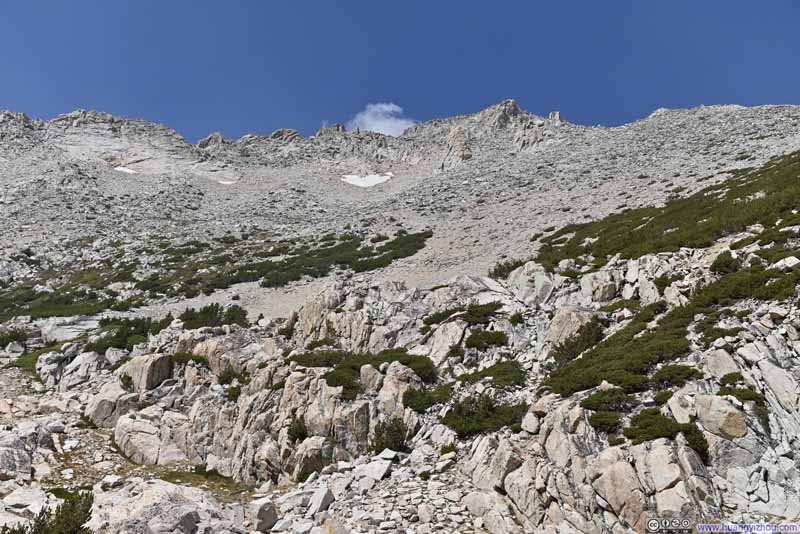 Steep Slope to Matterhorn Peak
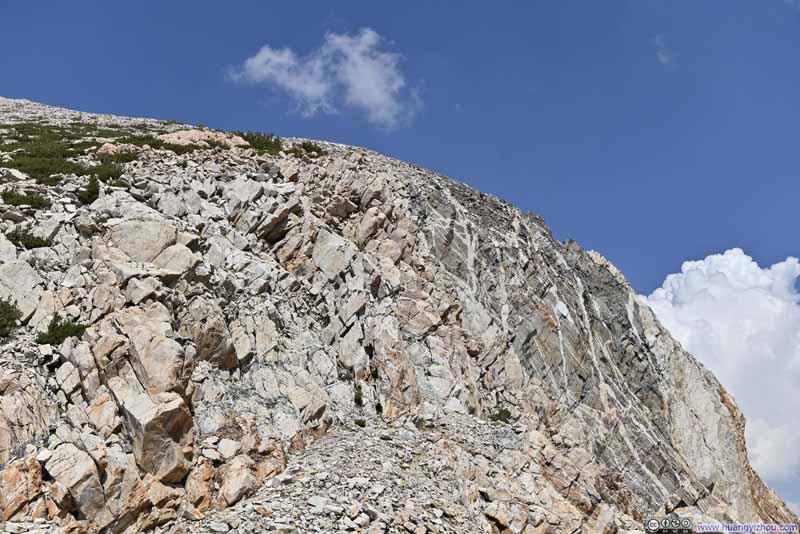 Cliff
Cliff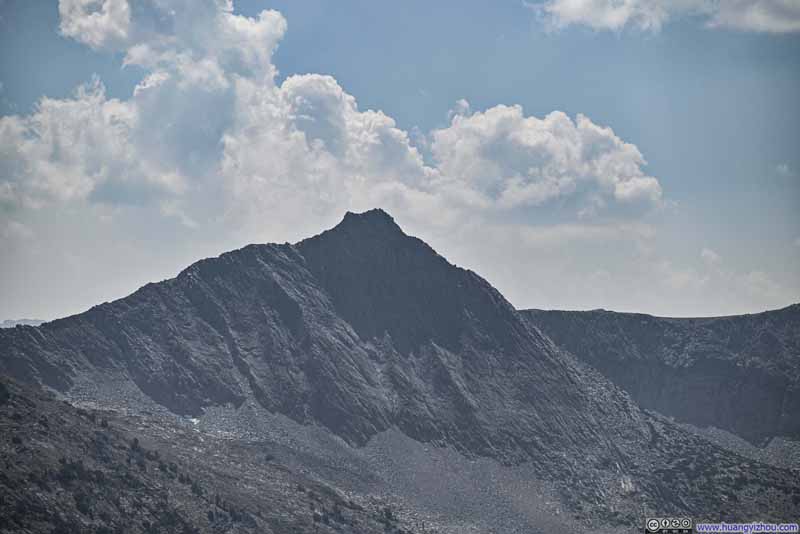 Stanton Peak
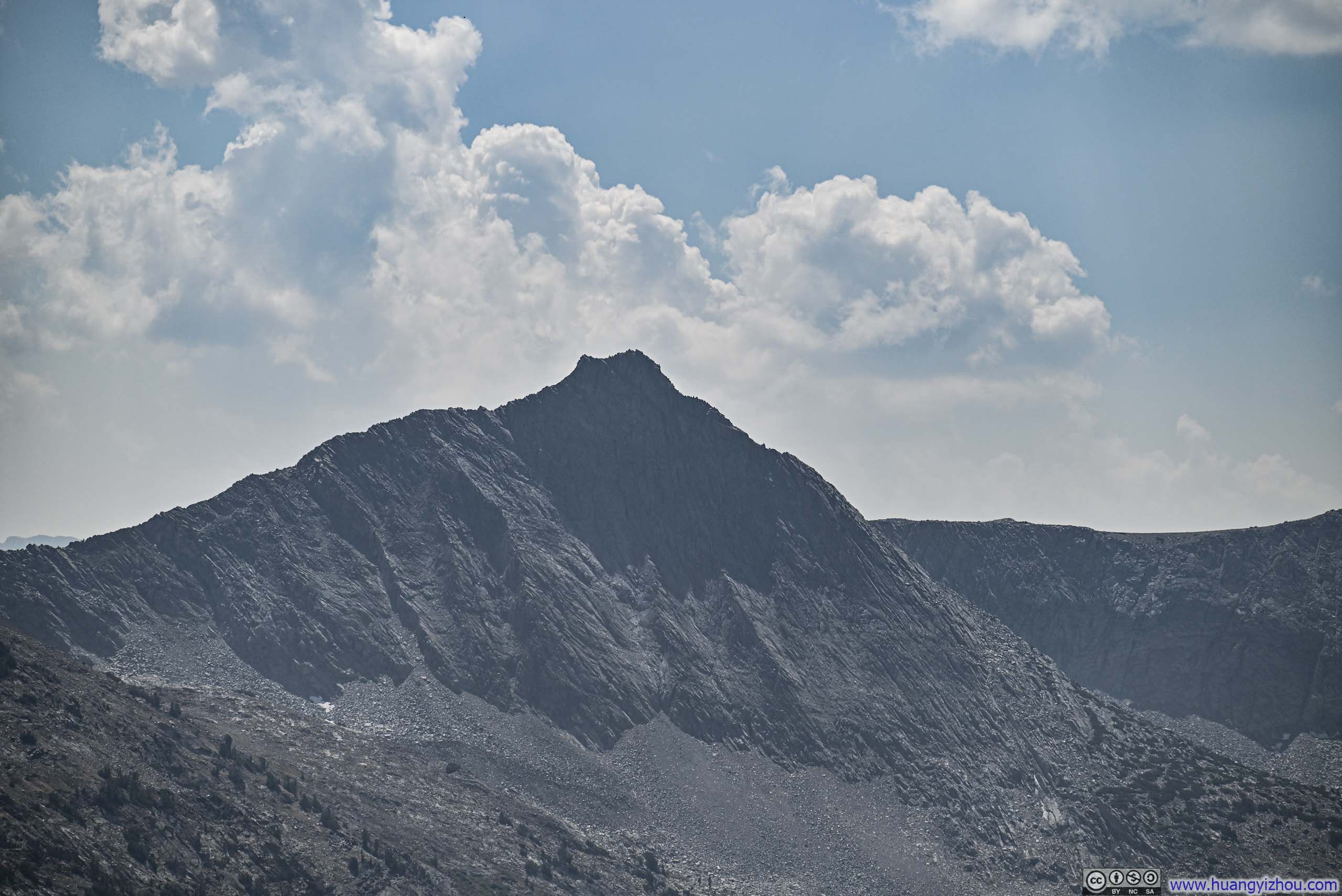
 Whorl Mountain
Click here to display photos of the slideshow
Matterhorn Peak from Horse Creek Pass
Steep Slope to Matterhorn Peak
Cliff
Stanton Peak
Whorl Mountain
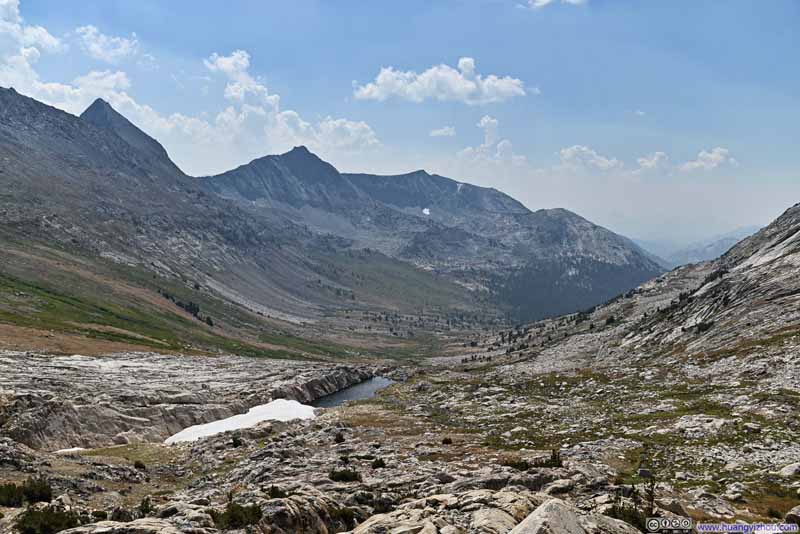 Spiller Creek Valley
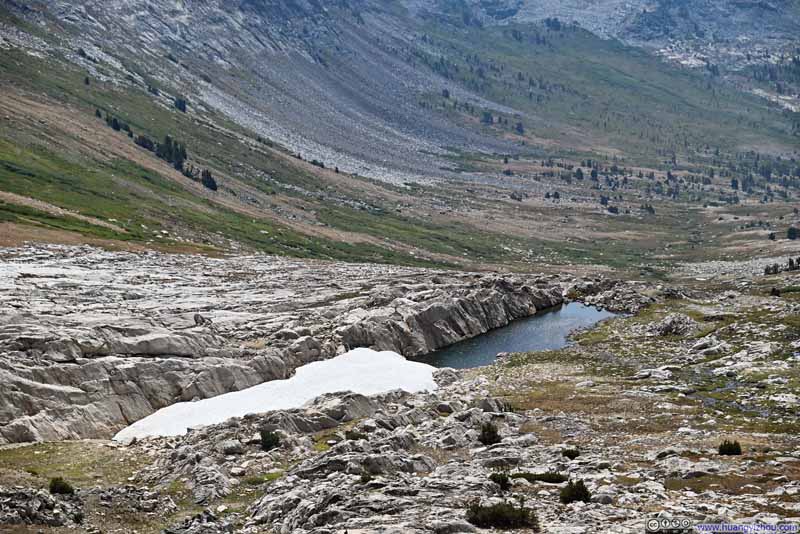 Snow Patches near Horse Creek Pass
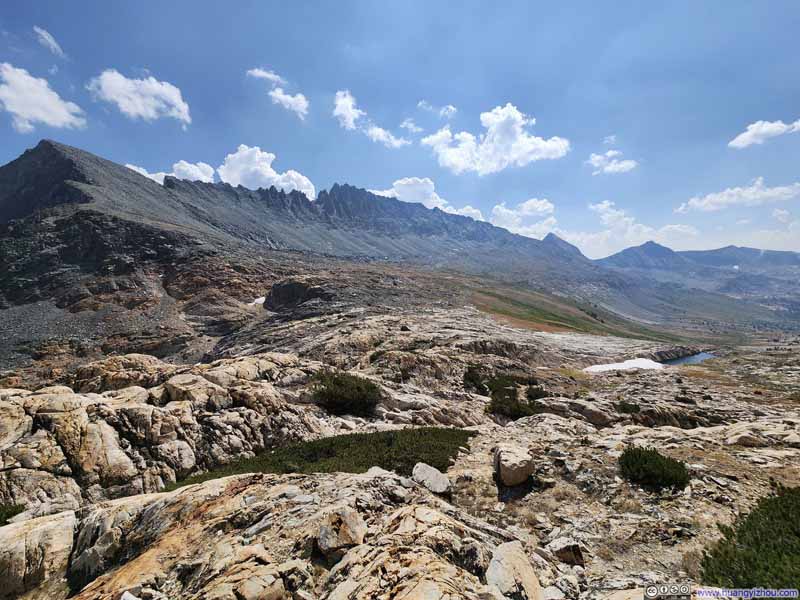 Serrated Ridgeline from Horse Creek Peak
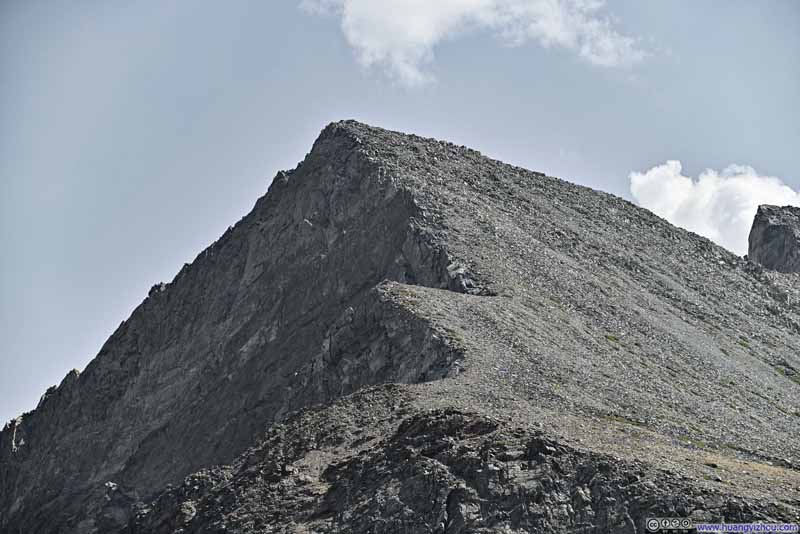 Horse Creek Peak
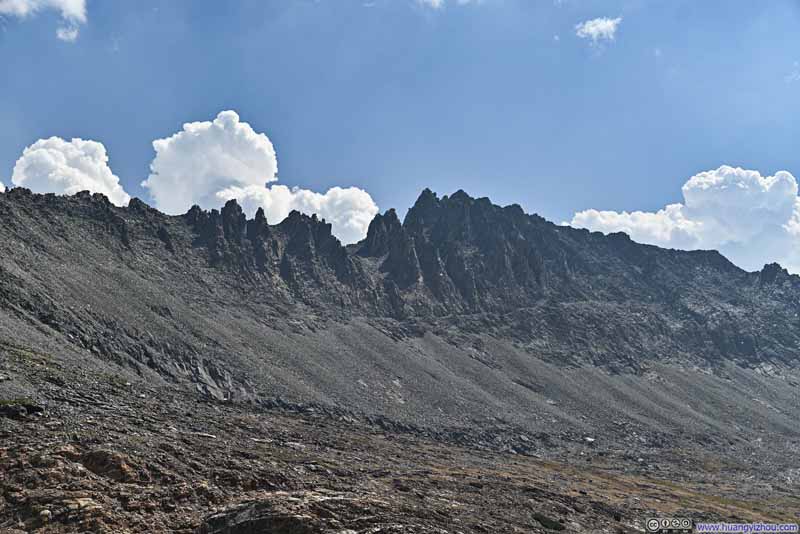 Serrated Ridgeline
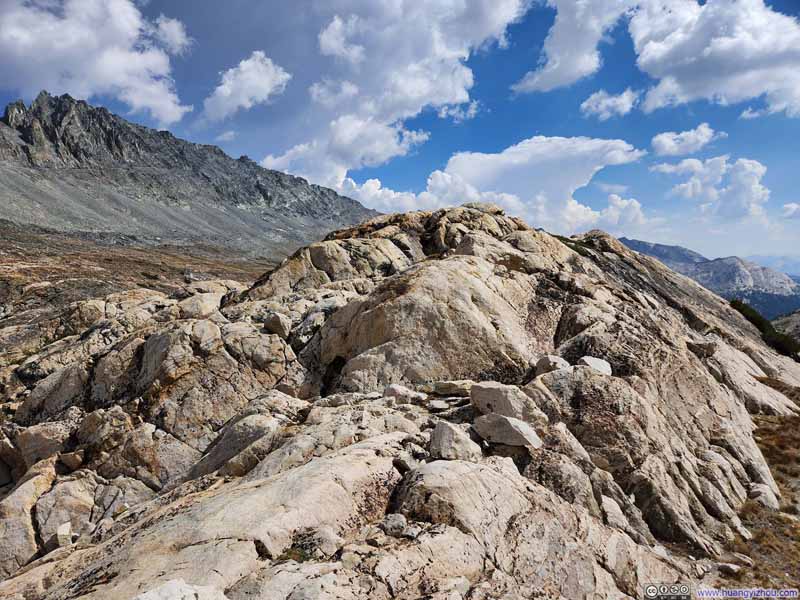 Small MoundOn top of which I took a short rest during my ascent.
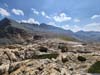
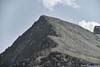
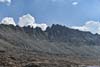
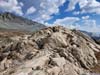
Click here to display photos of the slideshow
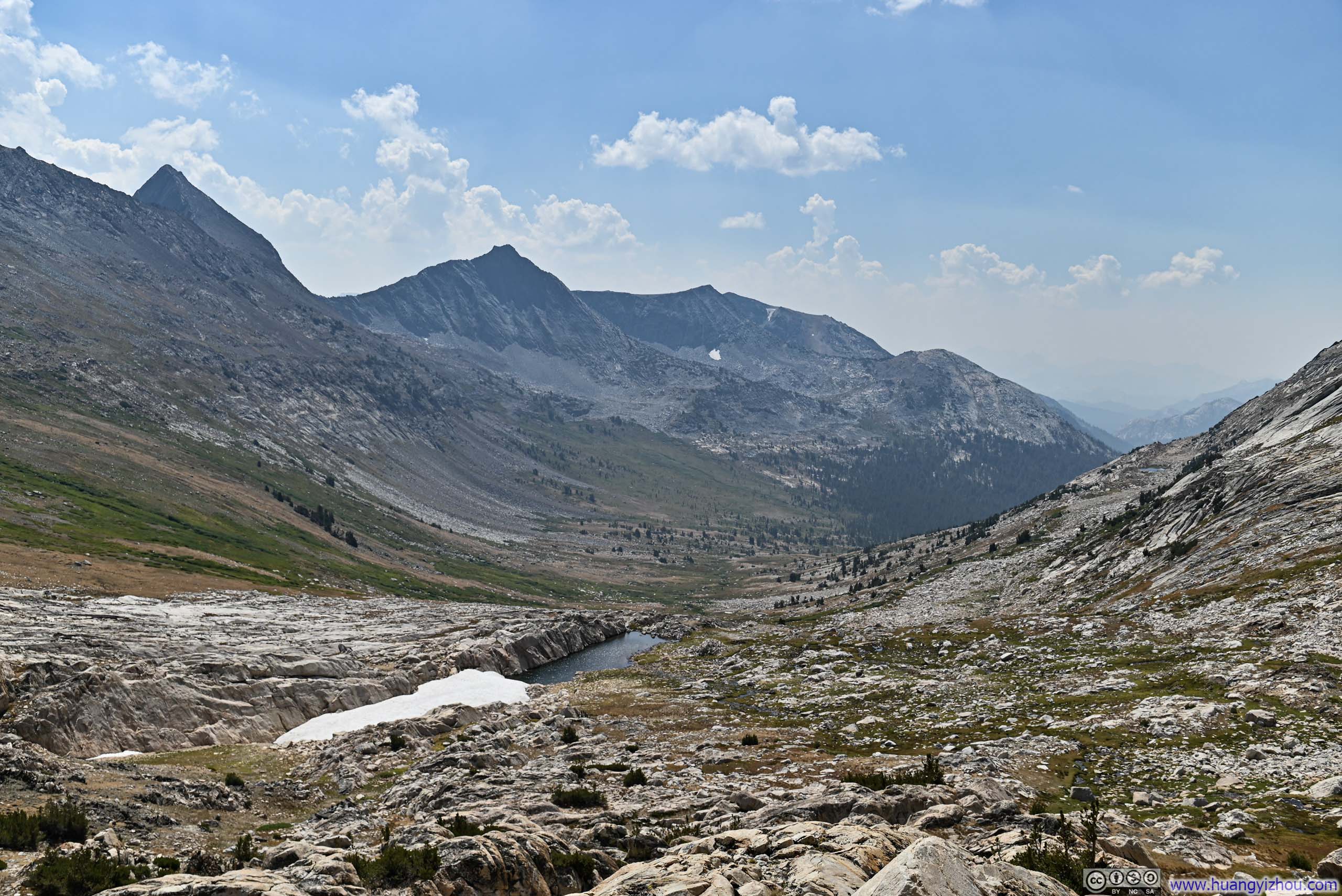
Spiller Creek Valley
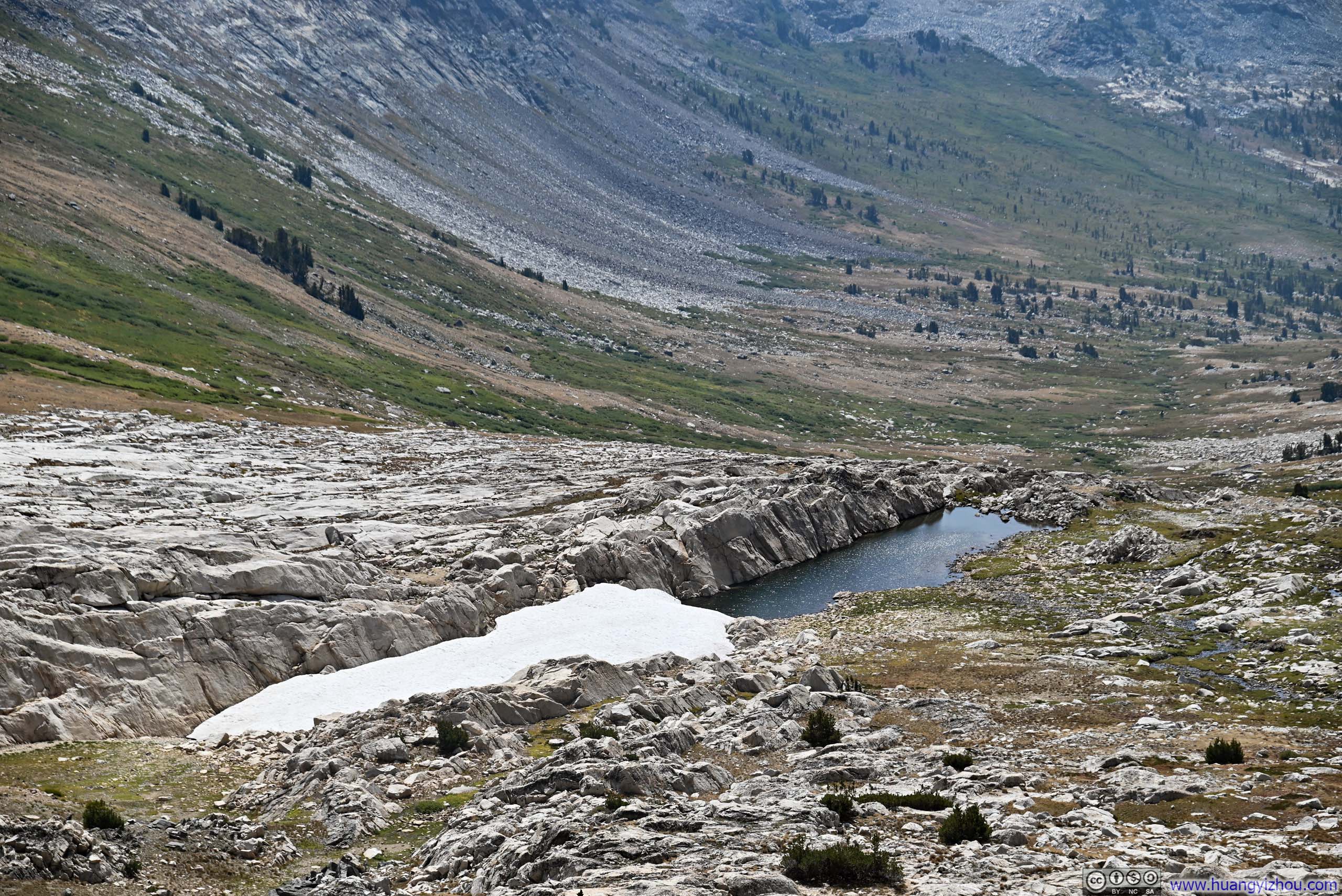
Snow Patches near Horse Creek Pass
Serrated Ridgeline from Horse Creek Peak
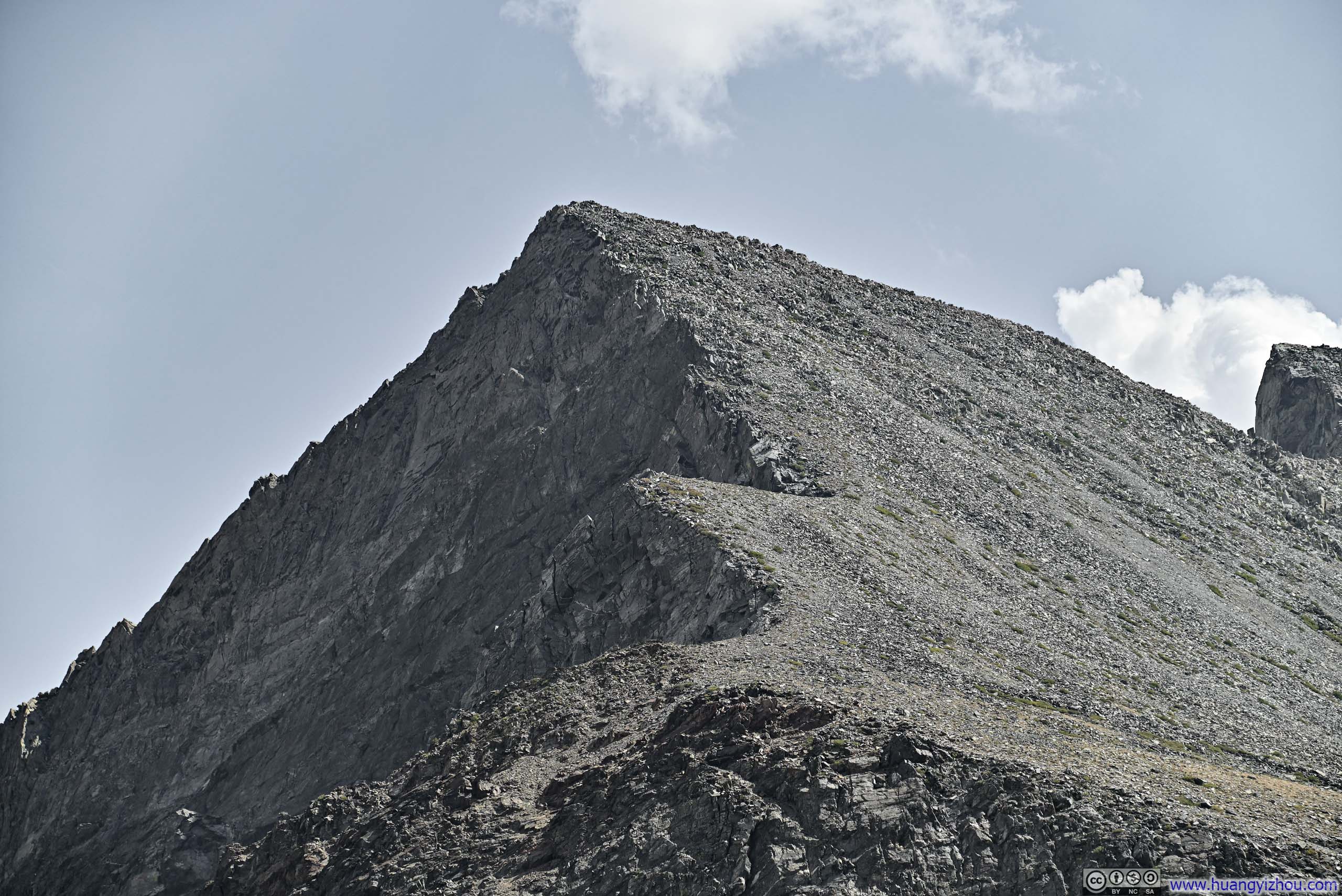
Horse Creek Peak
Serrated Ridgeline
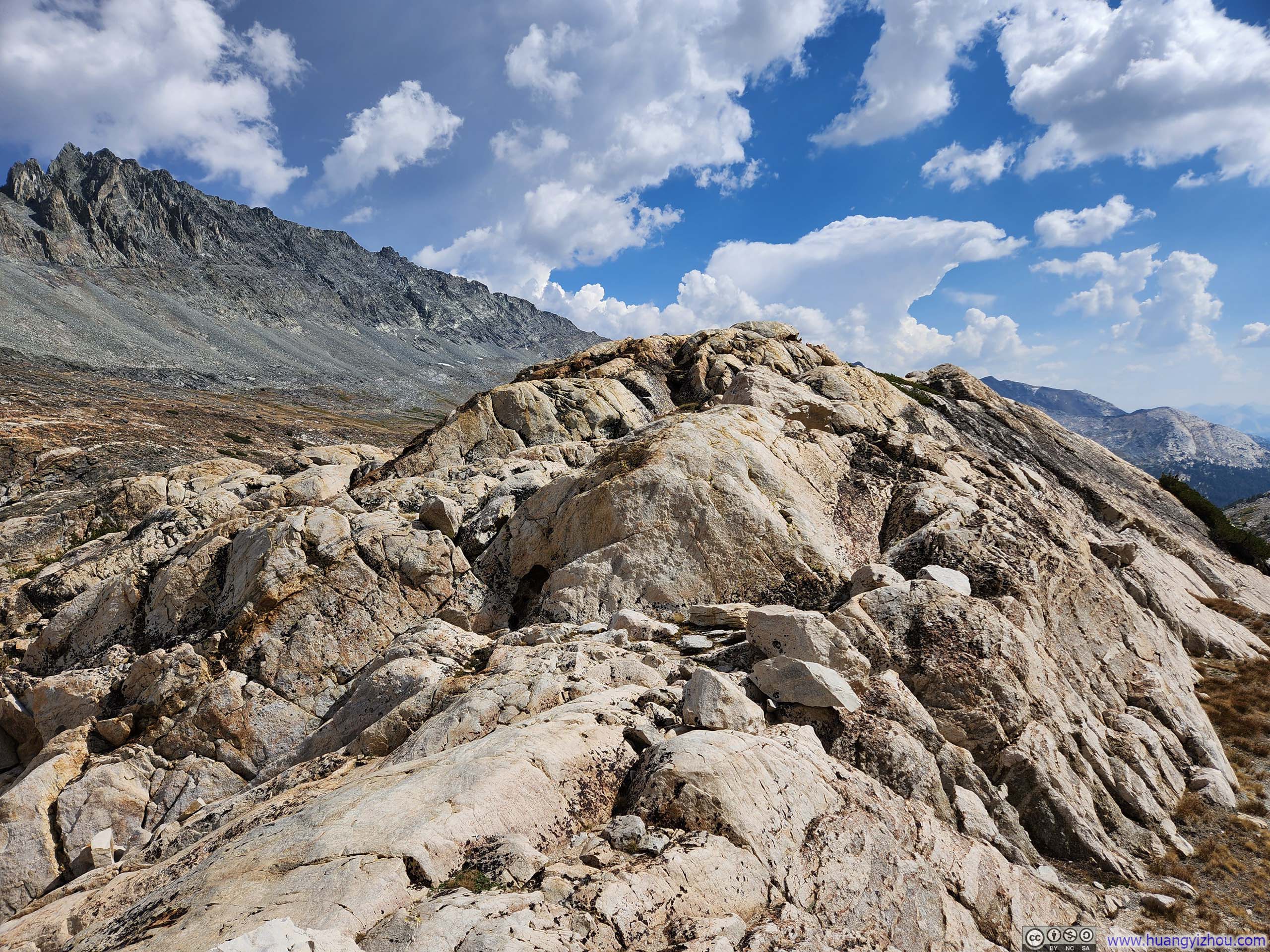
Small MoundOn top of which I took a short rest during my ascent.
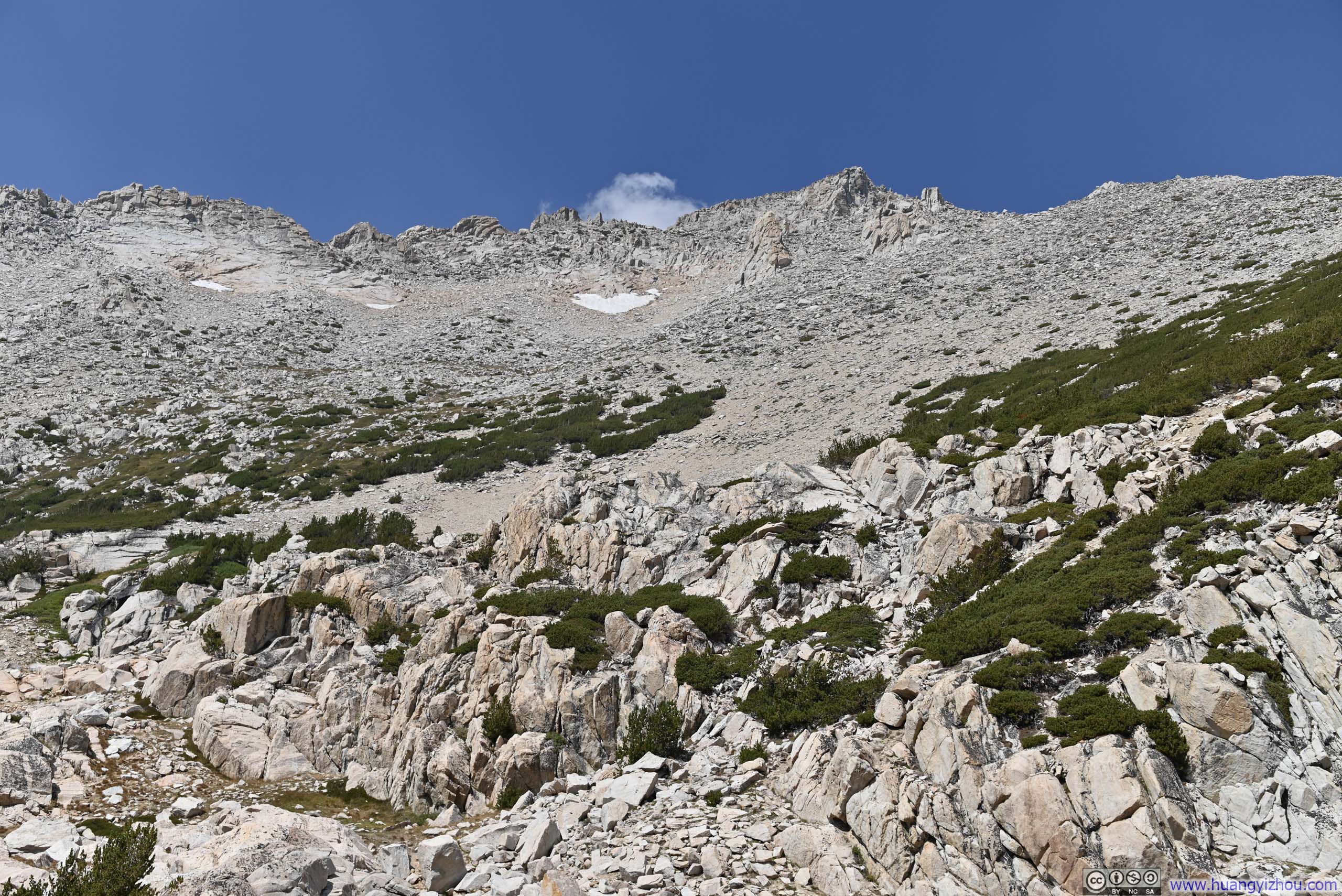
Finally, it’s the homestretch toward Matterhorn Peak. Expectedly, there was no obvious trail. I simply followed the general direction along the path of least resistance. The southeastern face of Matterhorn Peak presented a mixture of small scree and larger rocks, the scree posed somewhat of a traction issue, though nowhere as bad as the scree field before Sawtooth Pass 4 days prior. The final ascent averaged a 45% (tangent) gradient, making for quite a workout as I battled the thin air at altitude.
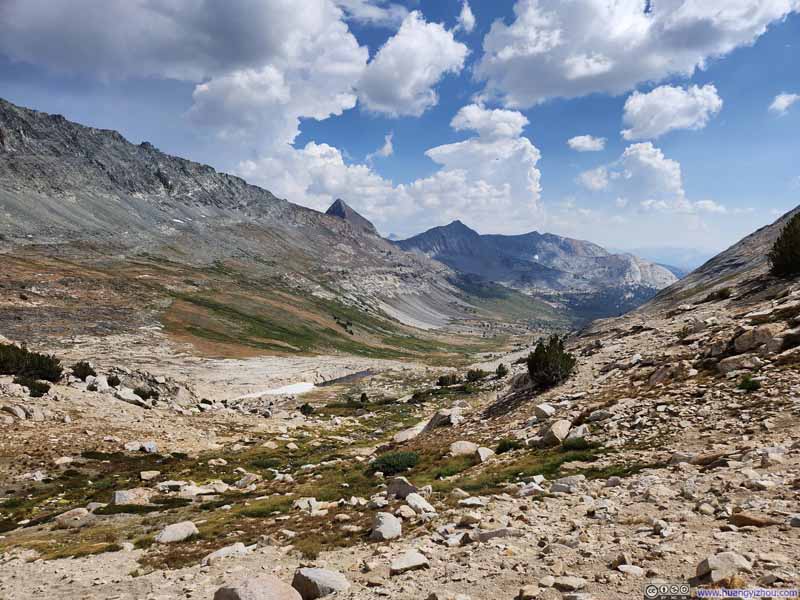 Spiller Creek Valley
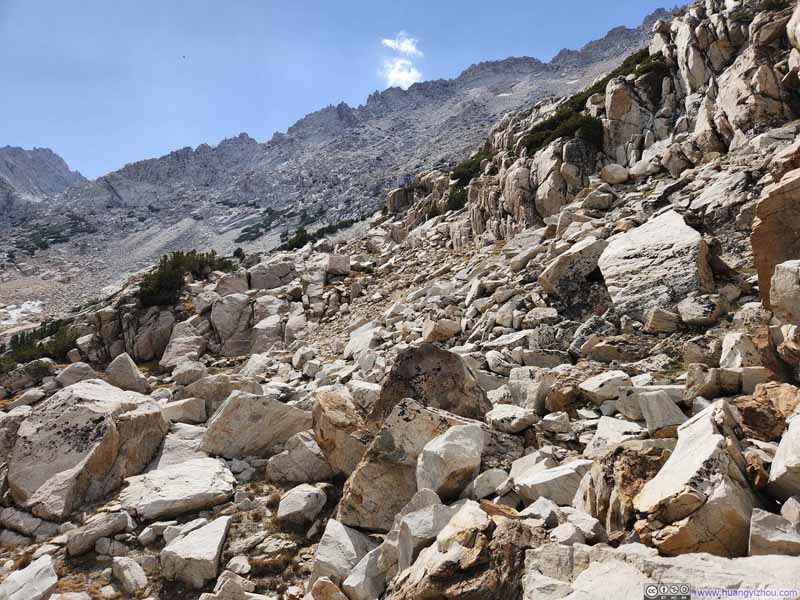 Talus Field
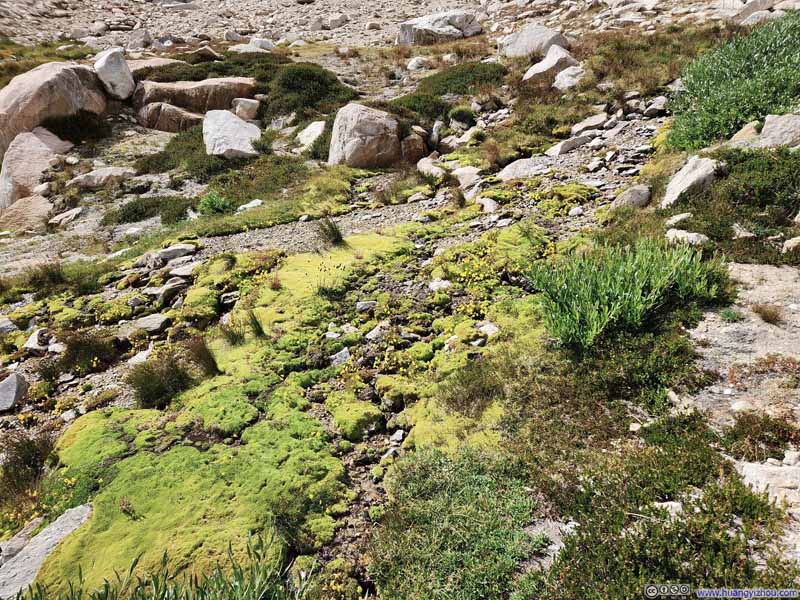 Creek with Mosses
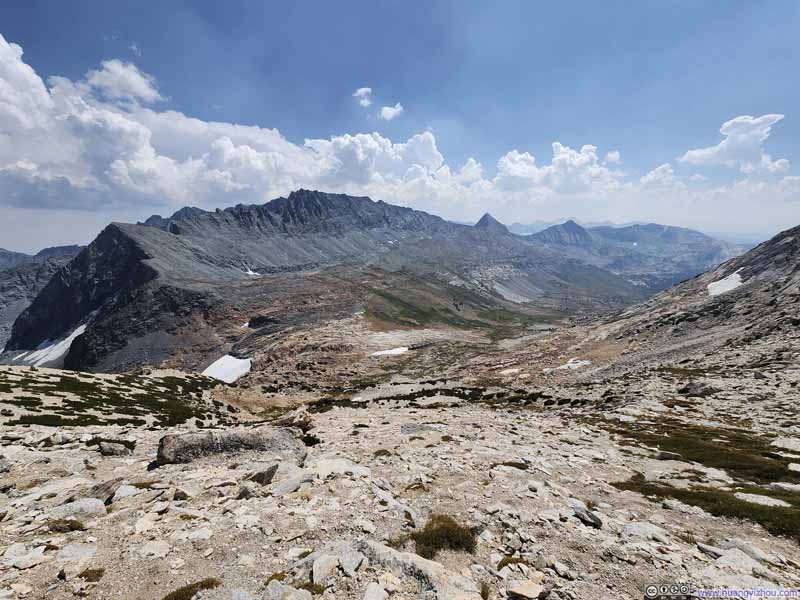 Overlooking Steep Path from Horse Creek Pass
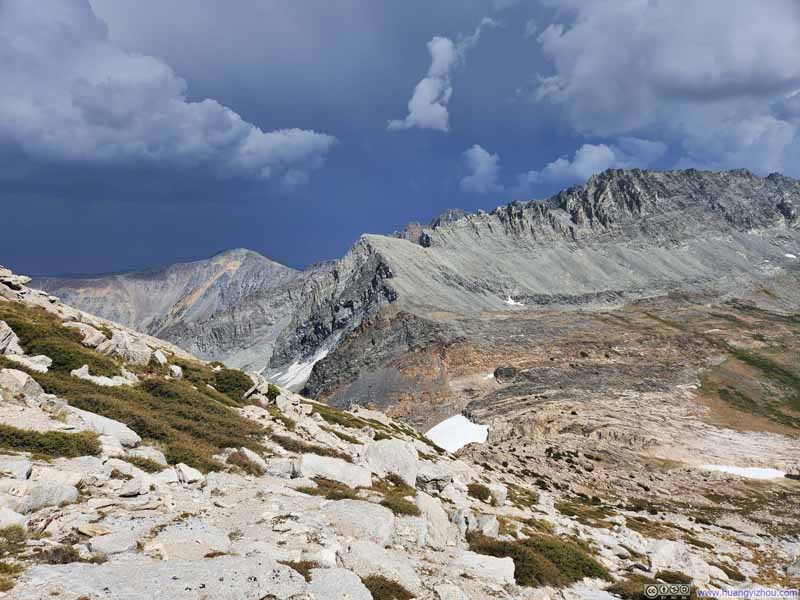 Dark Clouds beyond Horse Creek Peak
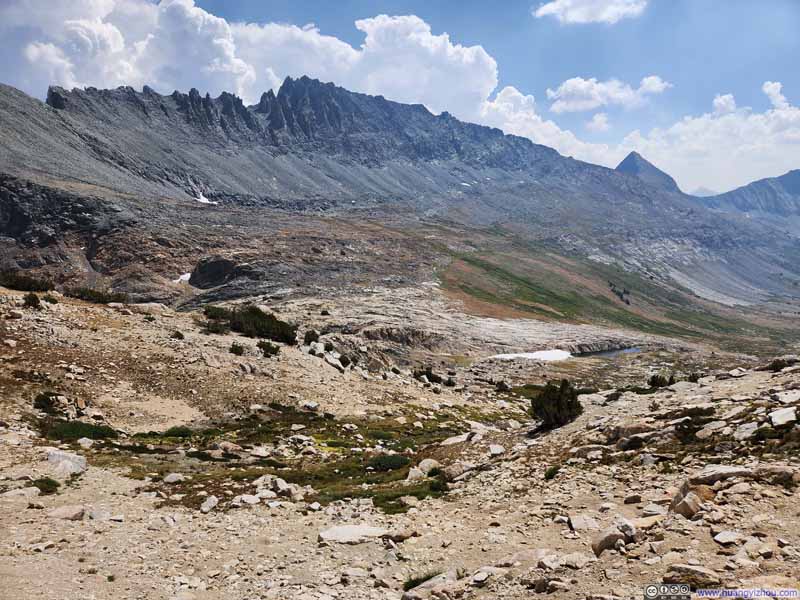 Overlooking Steep Path from Horse Creek Pass
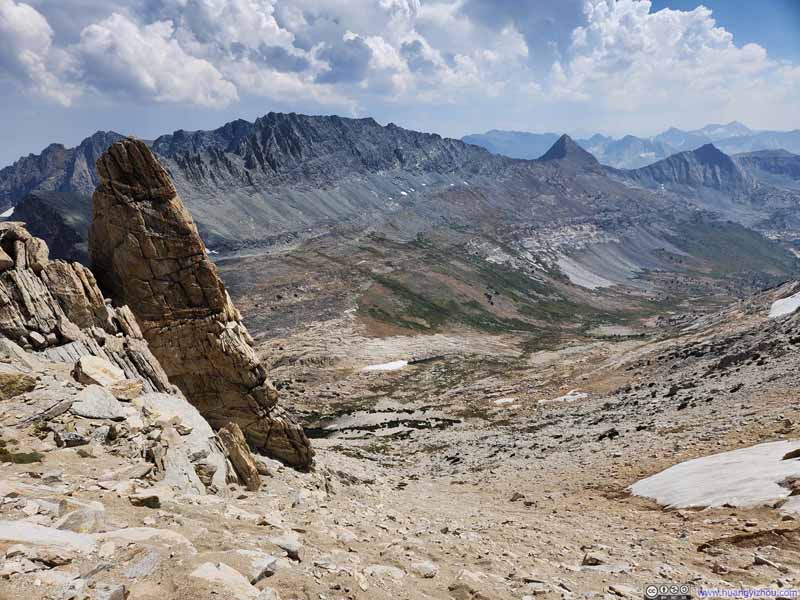 Overlooking Steep Path from Horse Creek Pass
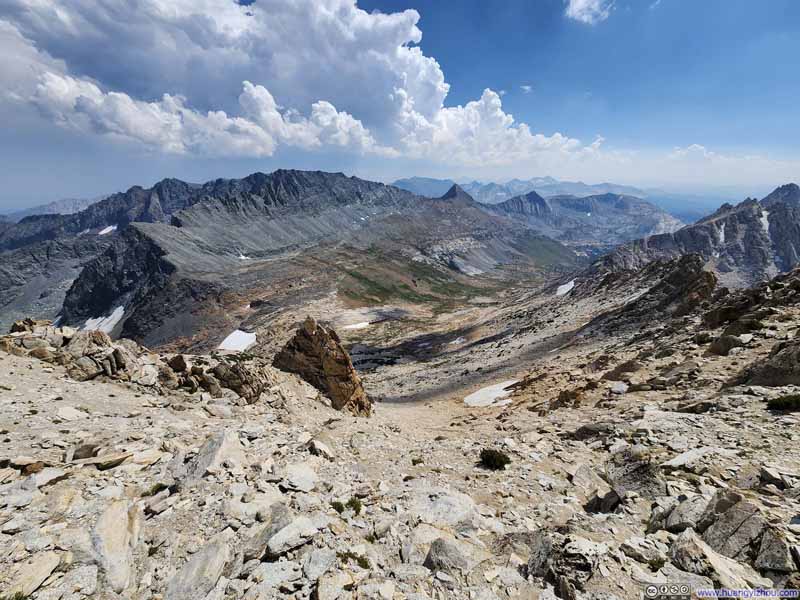 Overlooking Steep Path from Horse Creek Pass
Click here to display photos of the slideshow
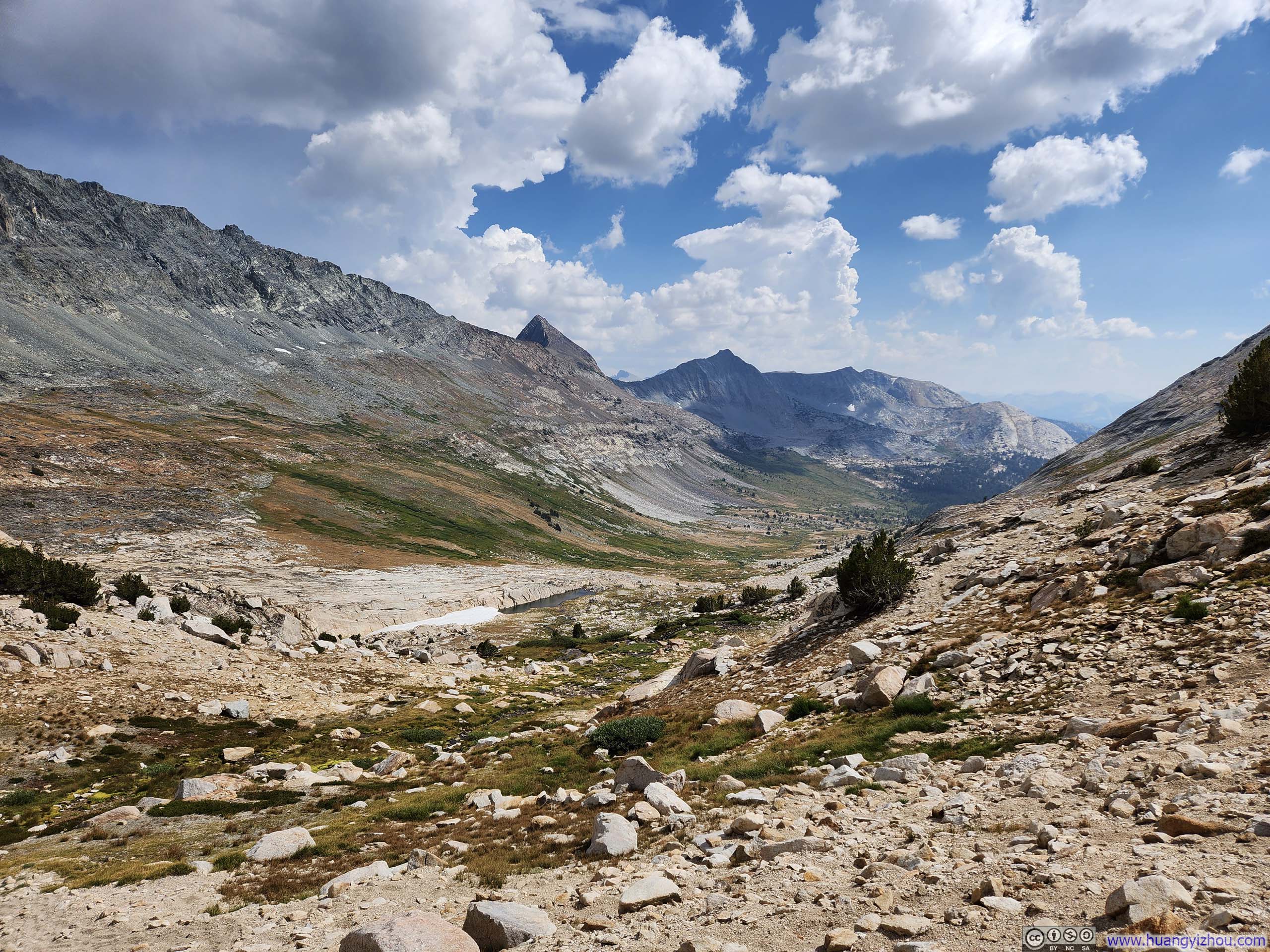
Spiller Creek Valley
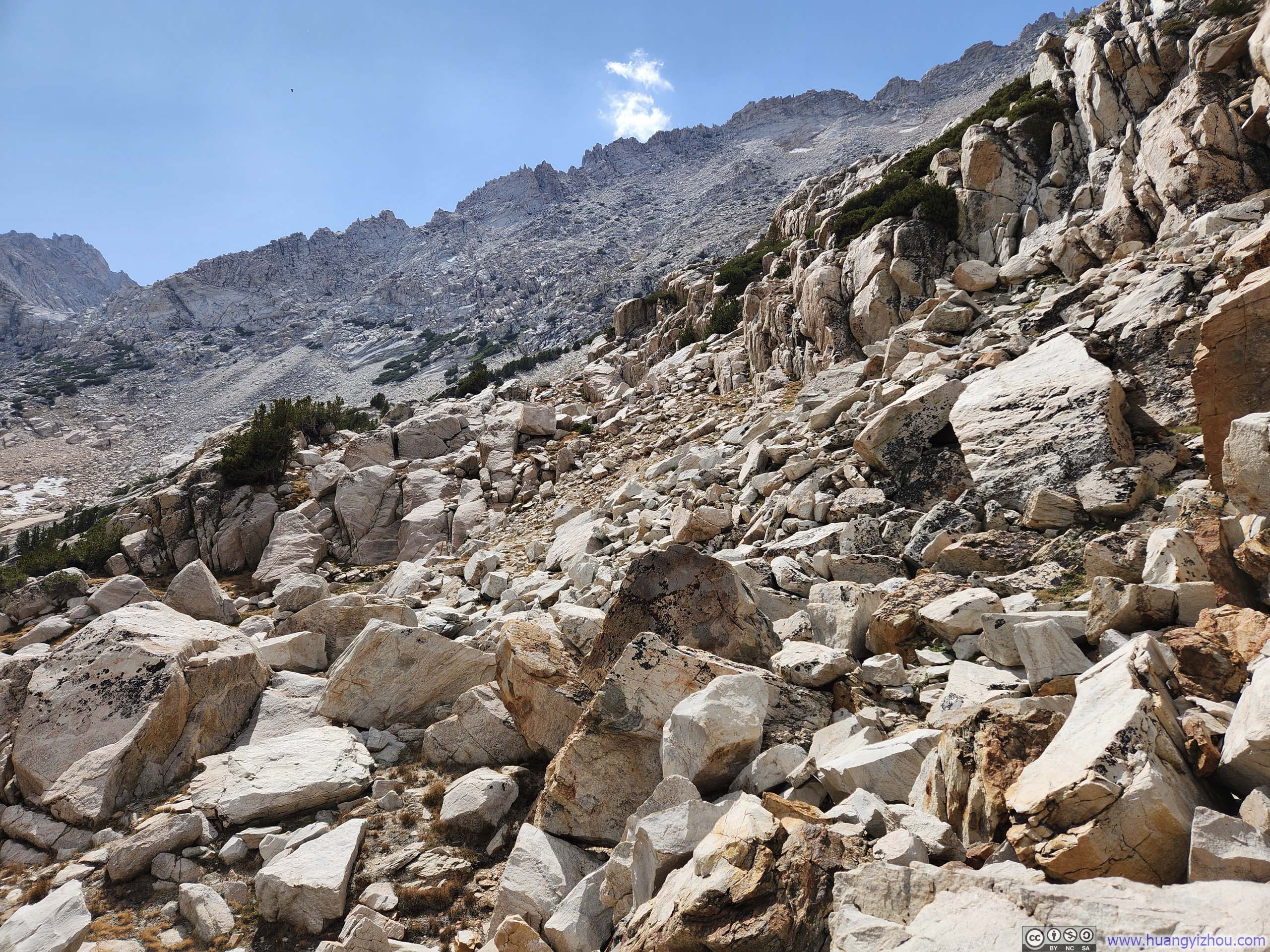
Talus Field
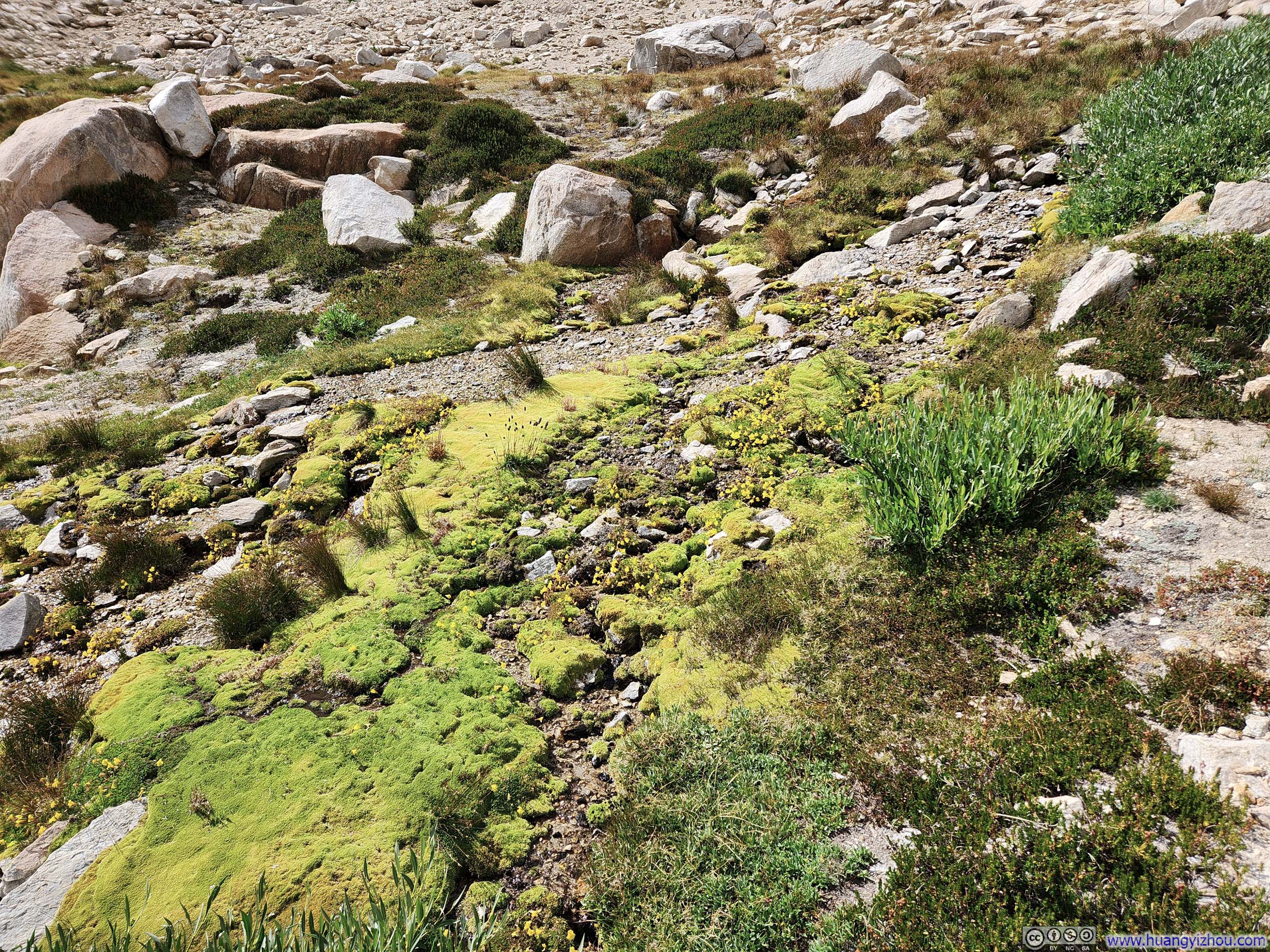
Creek with Mosses
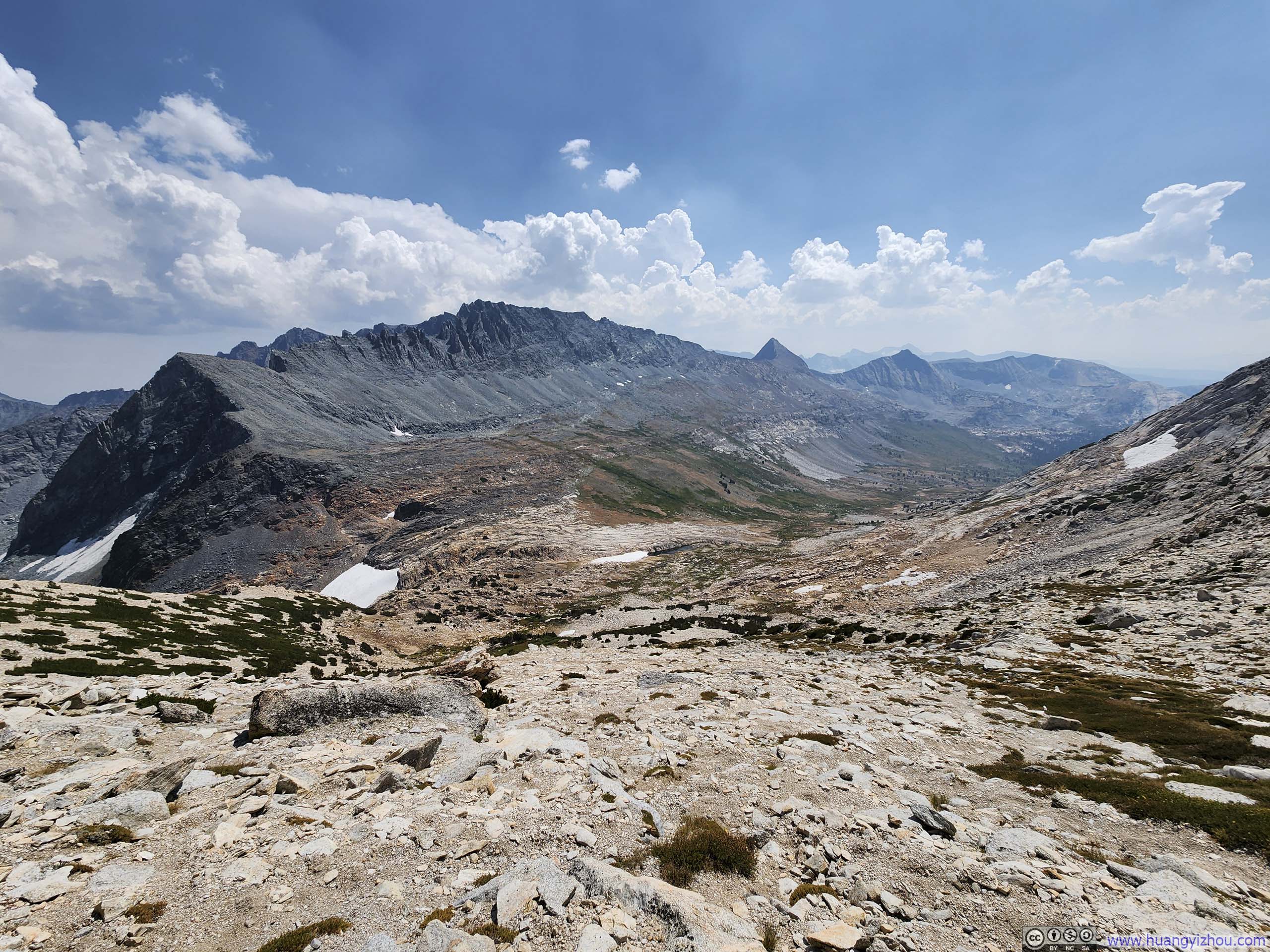
Overlooking Steep Path from Horse Creek Pass
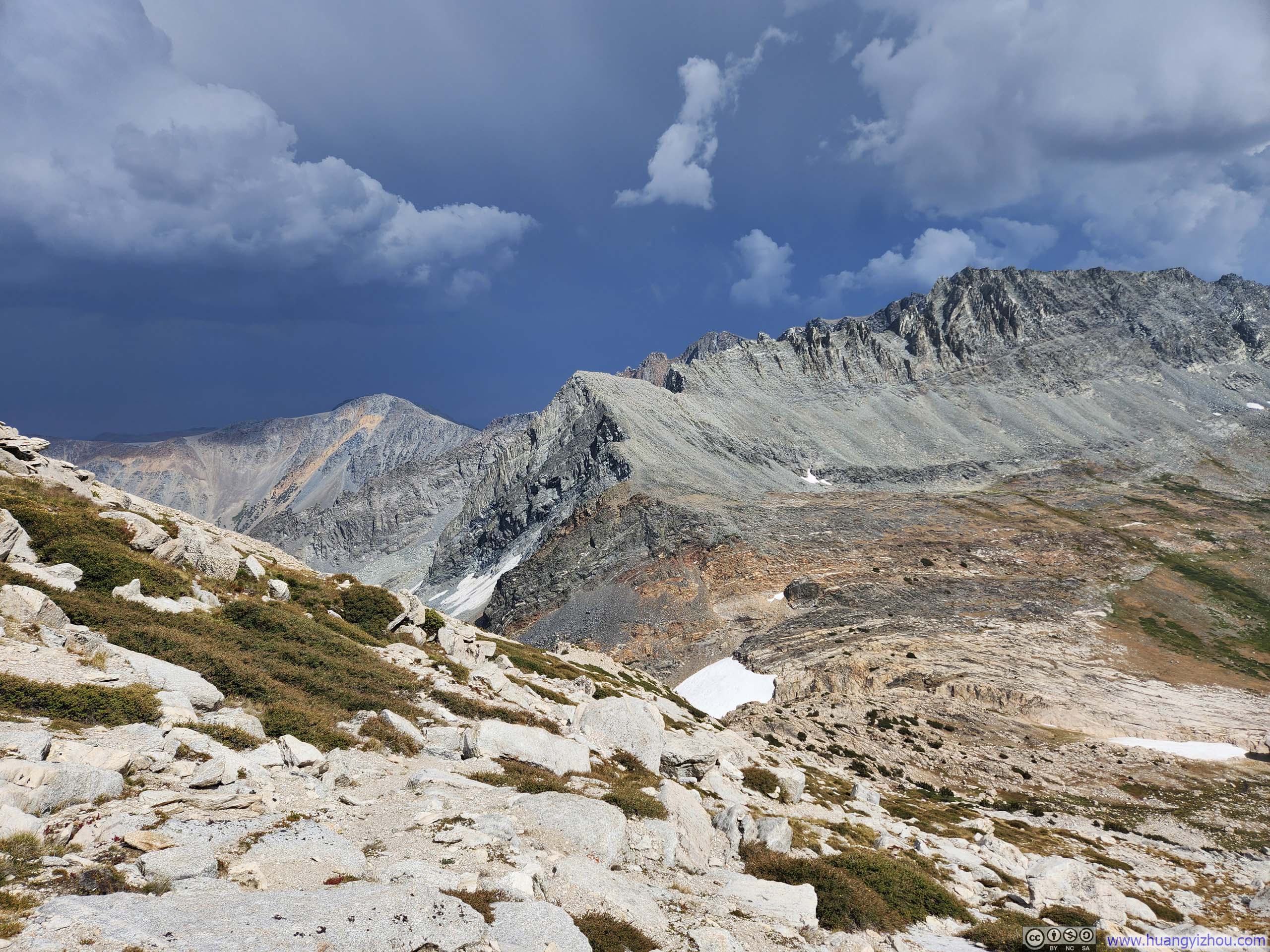
Dark Clouds beyond Horse Creek Peak
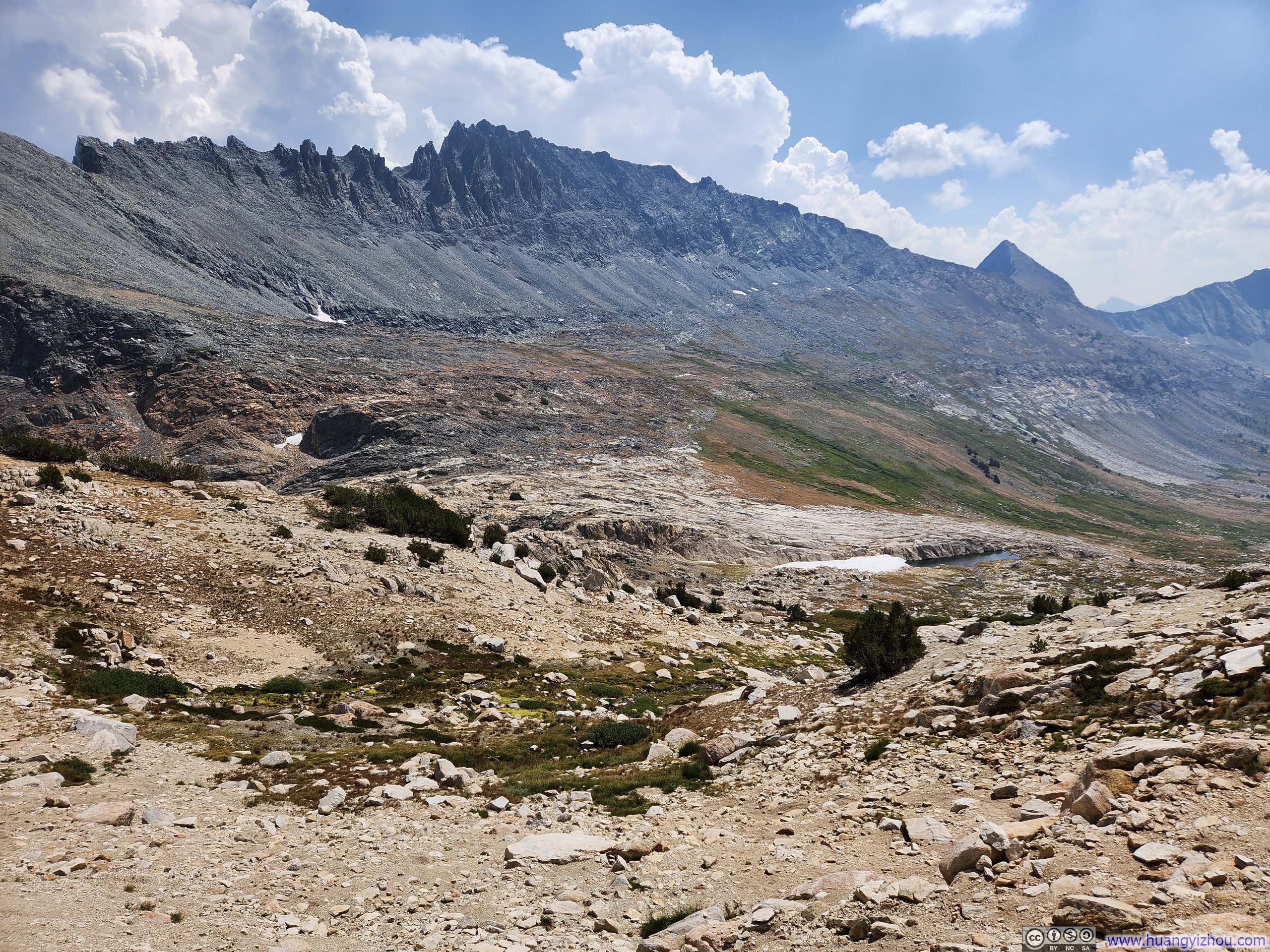
Overlooking Steep Path from Horse Creek Pass
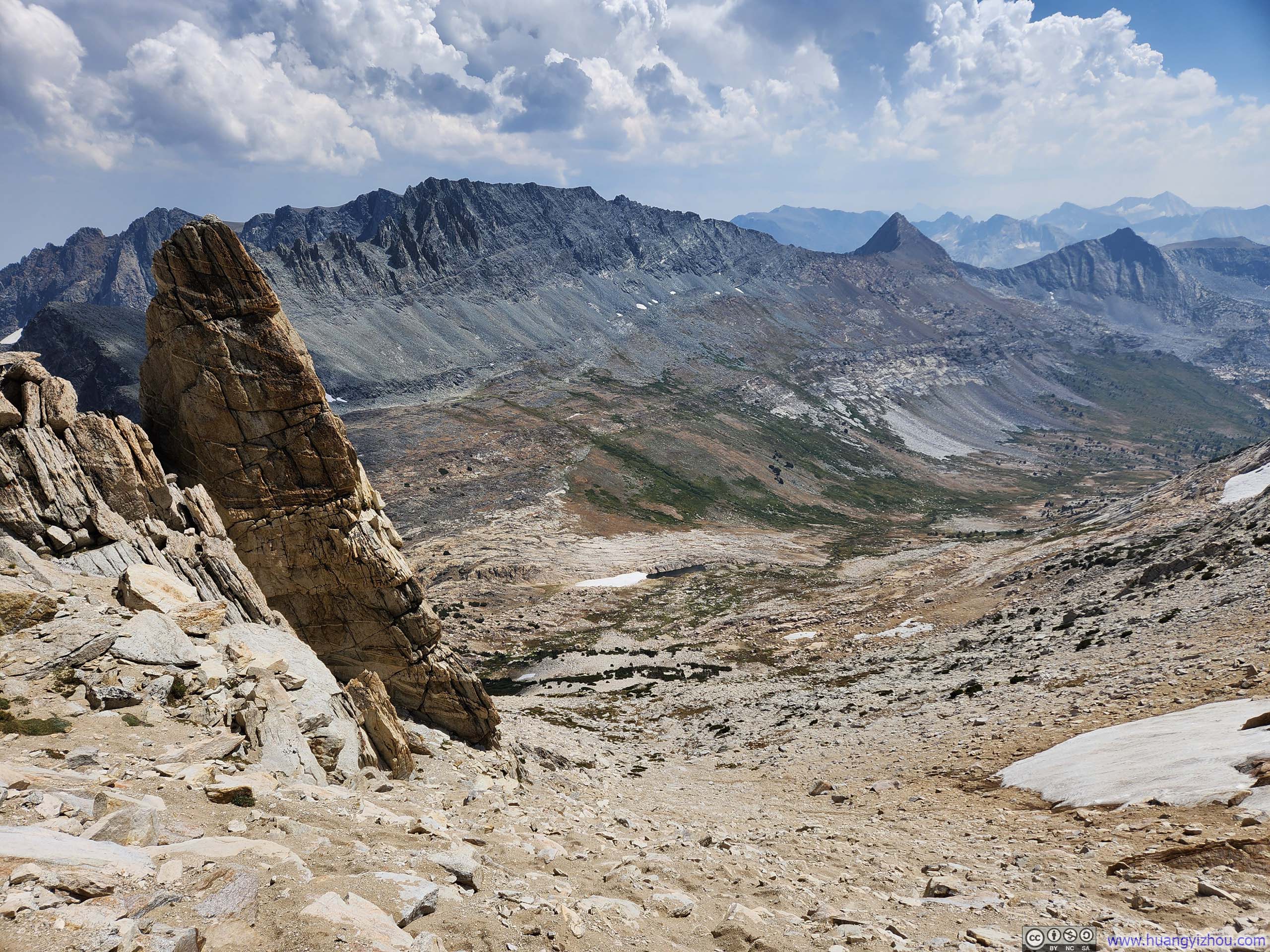
Overlooking Steep Path from Horse Creek Pass
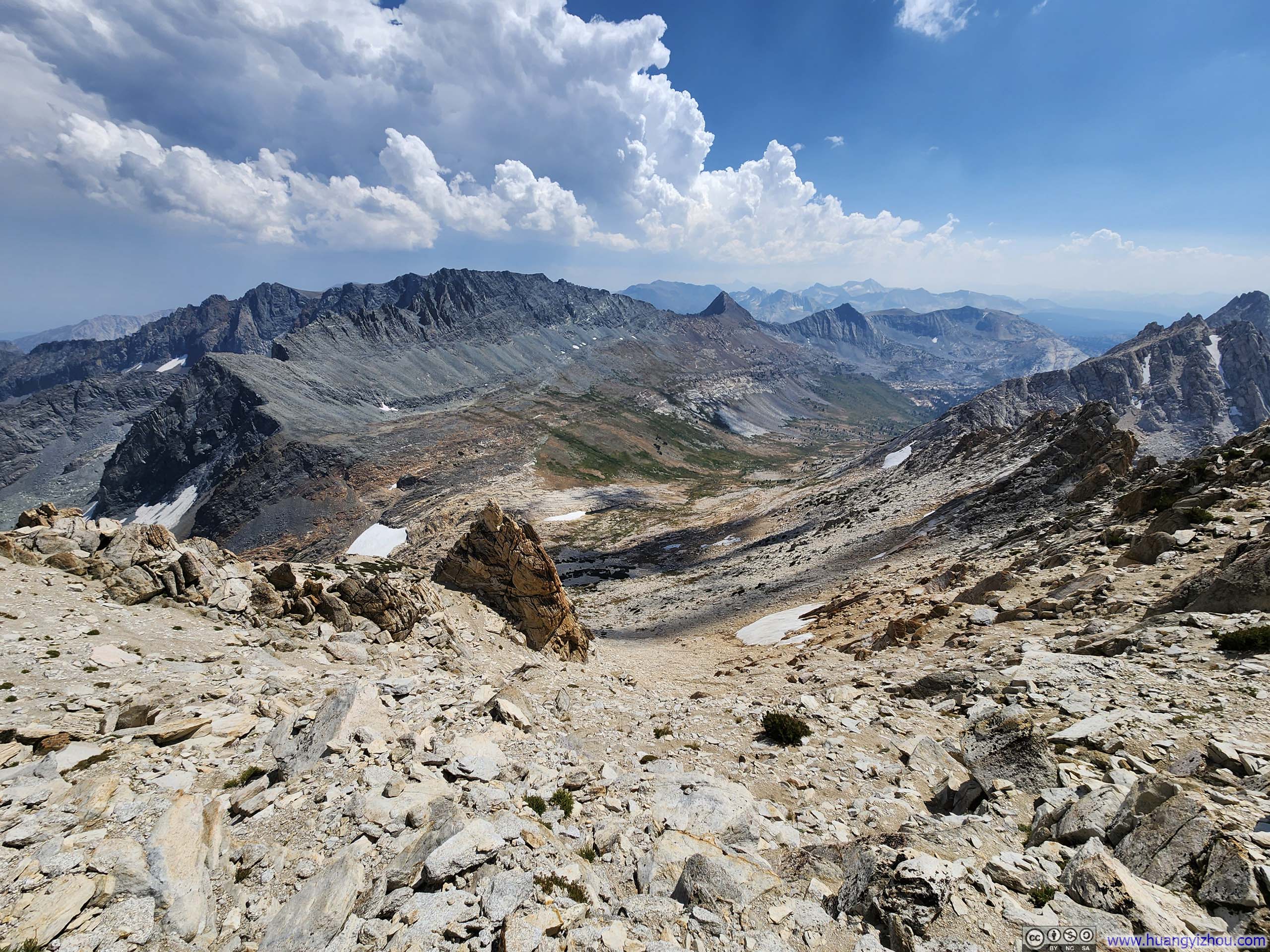
Overlooking Steep Path from Horse Creek Pass
I saw some online posts rating Matterhorn Peak as YDS Class 2. However, I recalled making a few moves near the top that were unmistakably Class 3. (Again, there was no trace of an established trail near the top.)
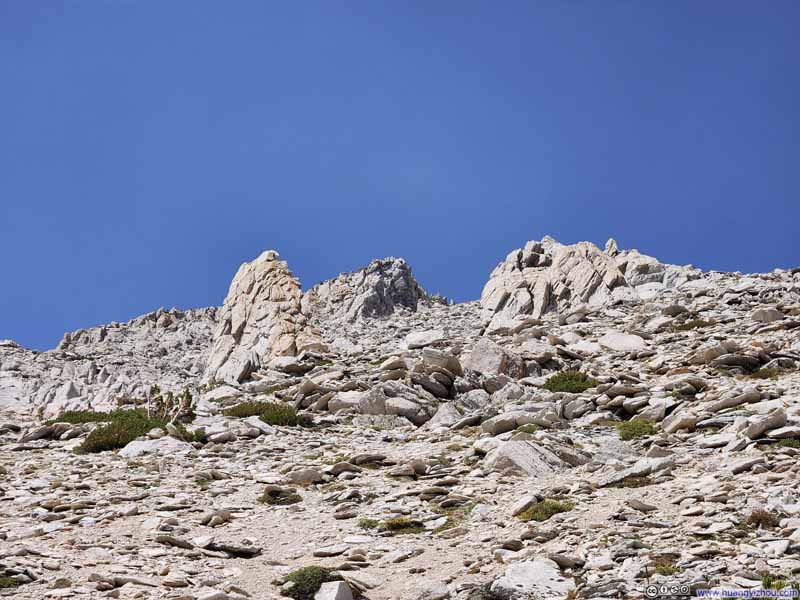 Steep Slope of Matterhorn Peak
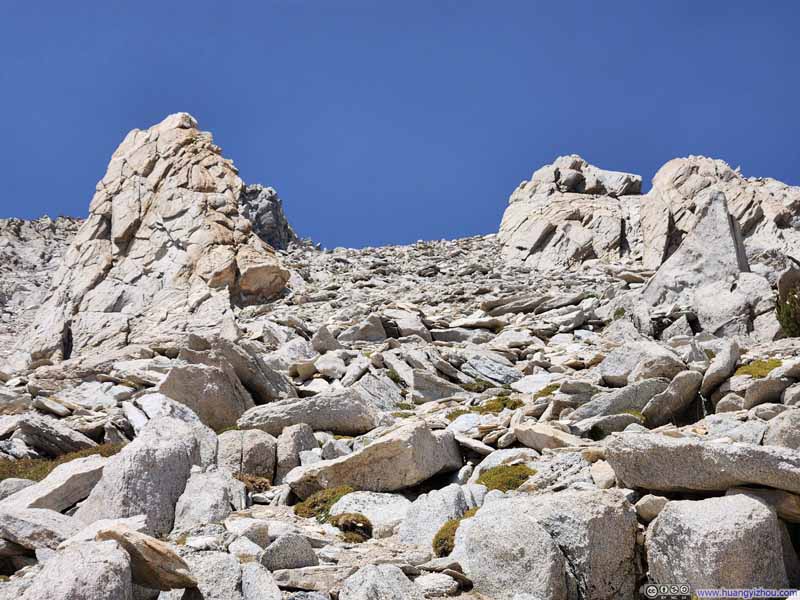 Steep Slope of Matterhorn Peak(To be clear, it’s towards the left of this photo, not towards the notch.)
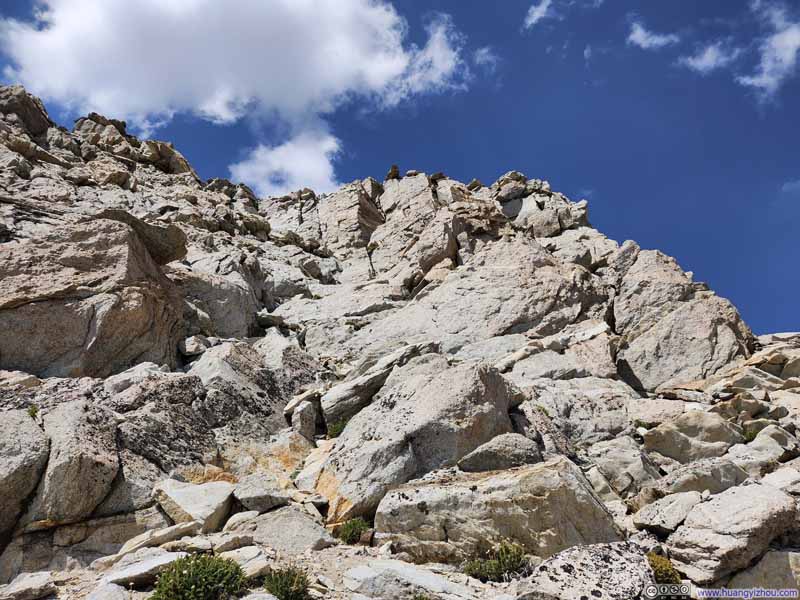 Steep Path to Matterhorn Peak
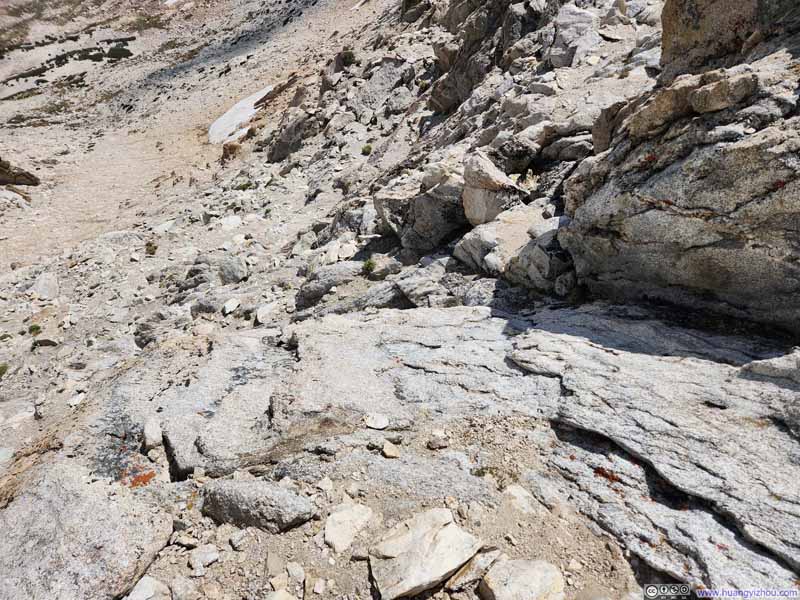 Steep Path to Matterhorn Peak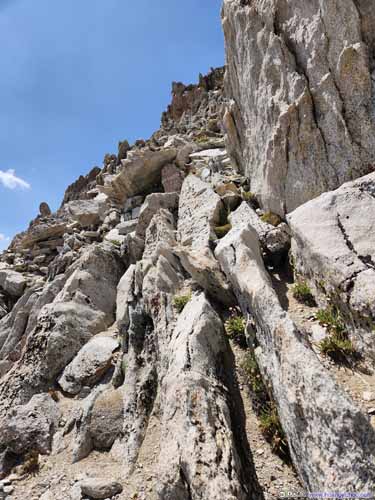
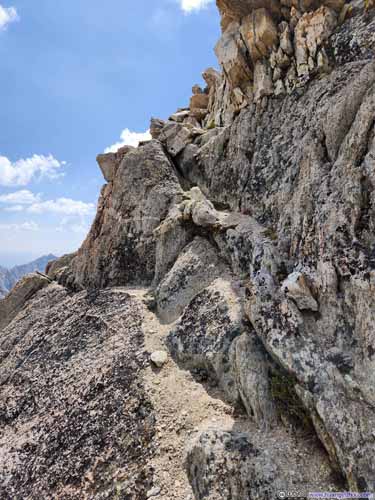 Narrow Path to Matterhorn Peak
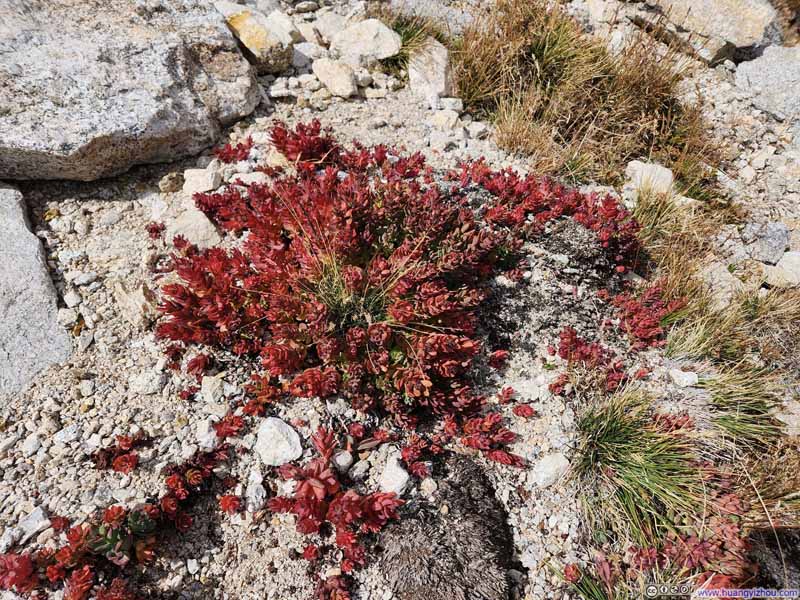 Flowers
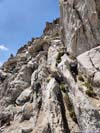
Click here to display photos of the slideshow
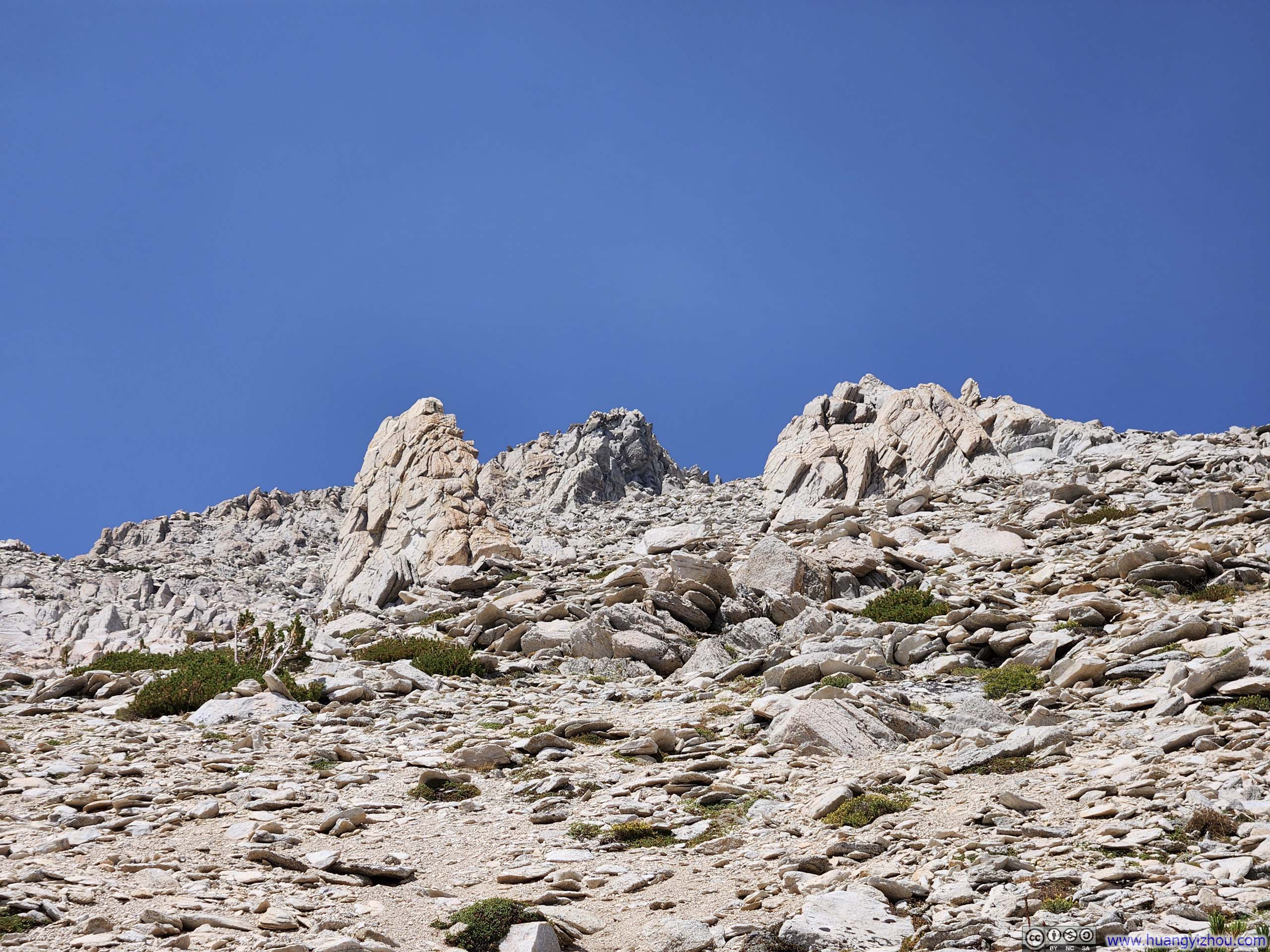
Steep Slope of Matterhorn Peak
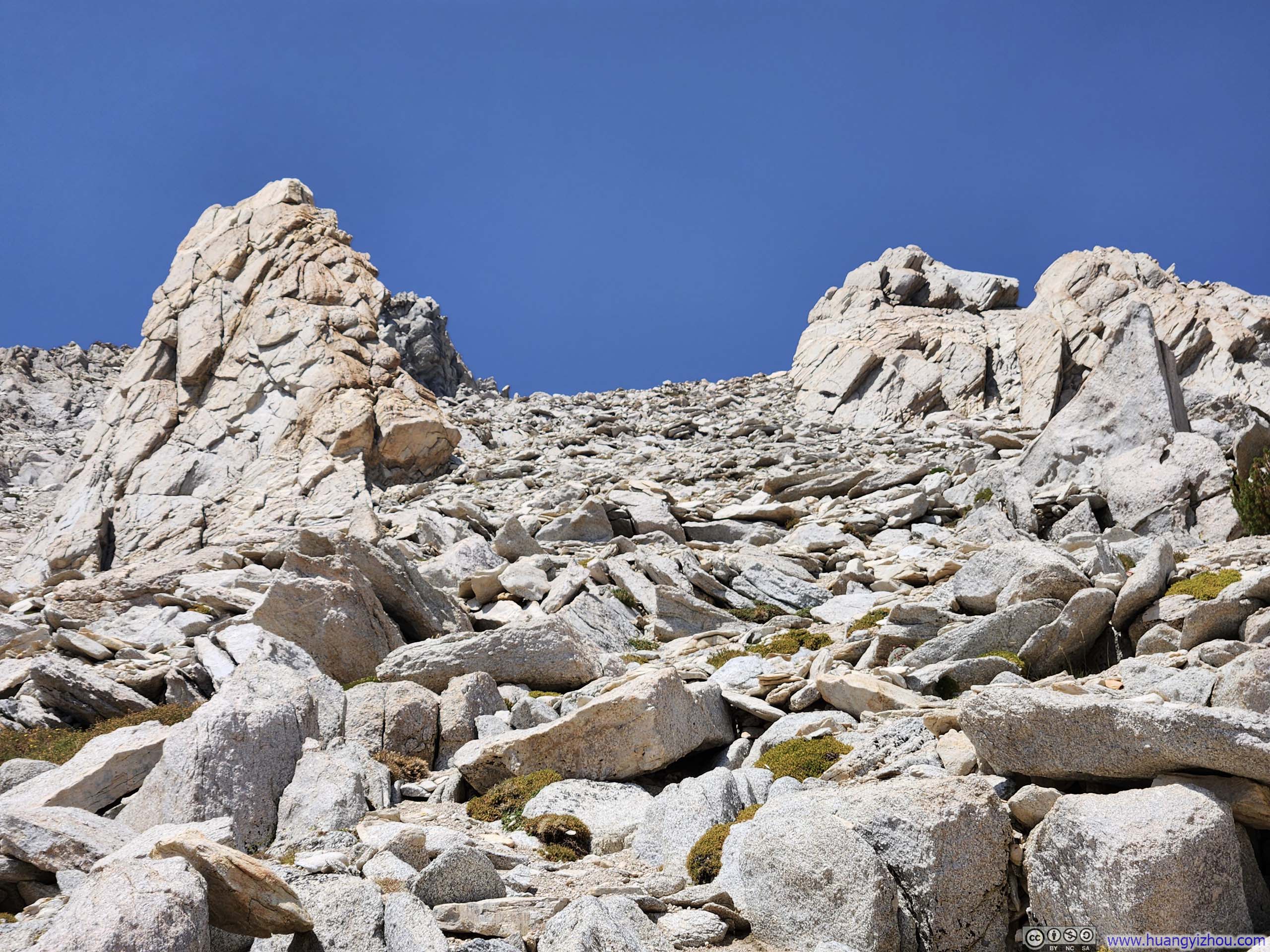
Steep Slope of Matterhorn Peak(To be clear, it’s towards the left of this photo, not towards the notch.)
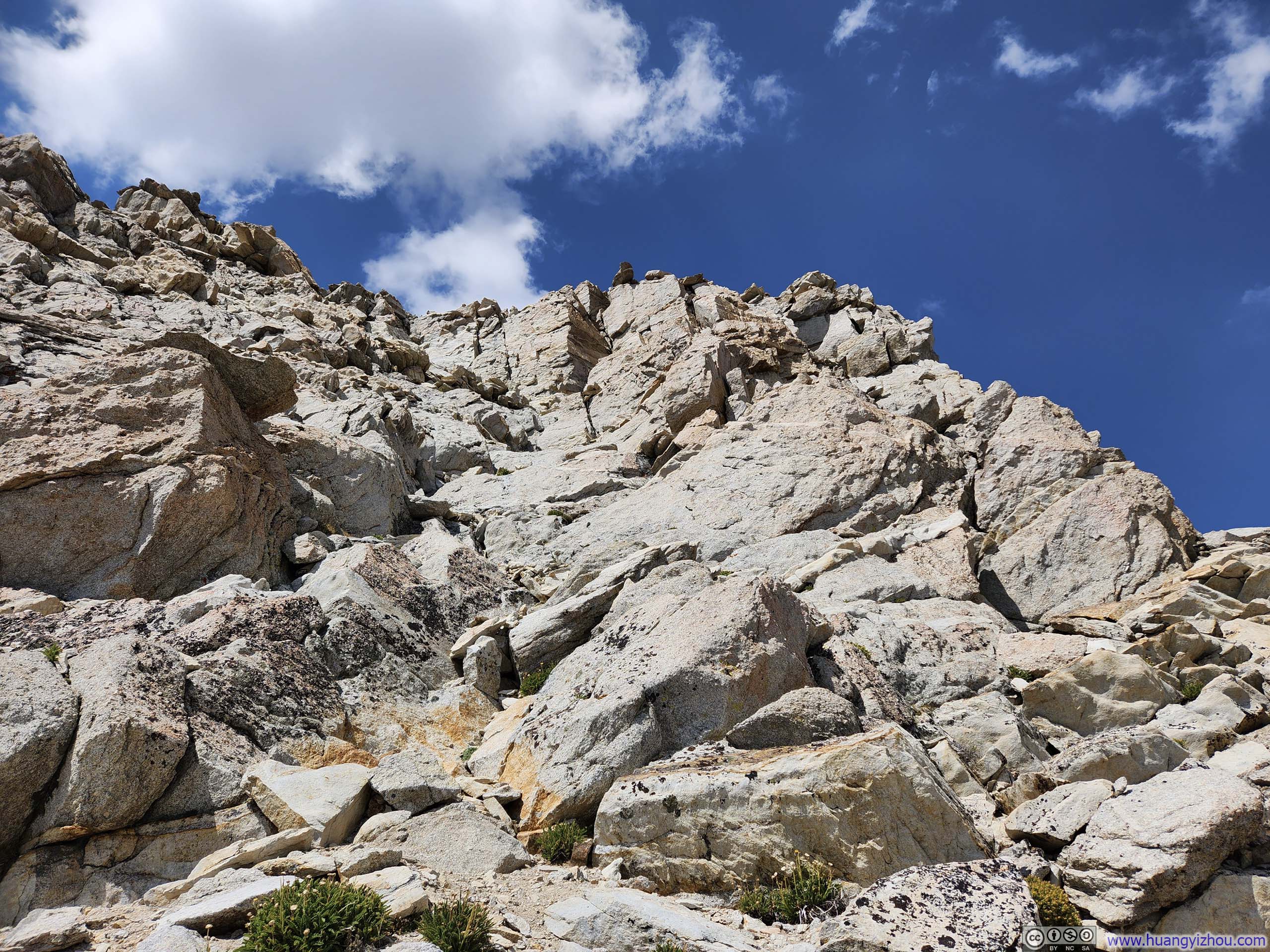
Steep Path to Matterhorn Peak
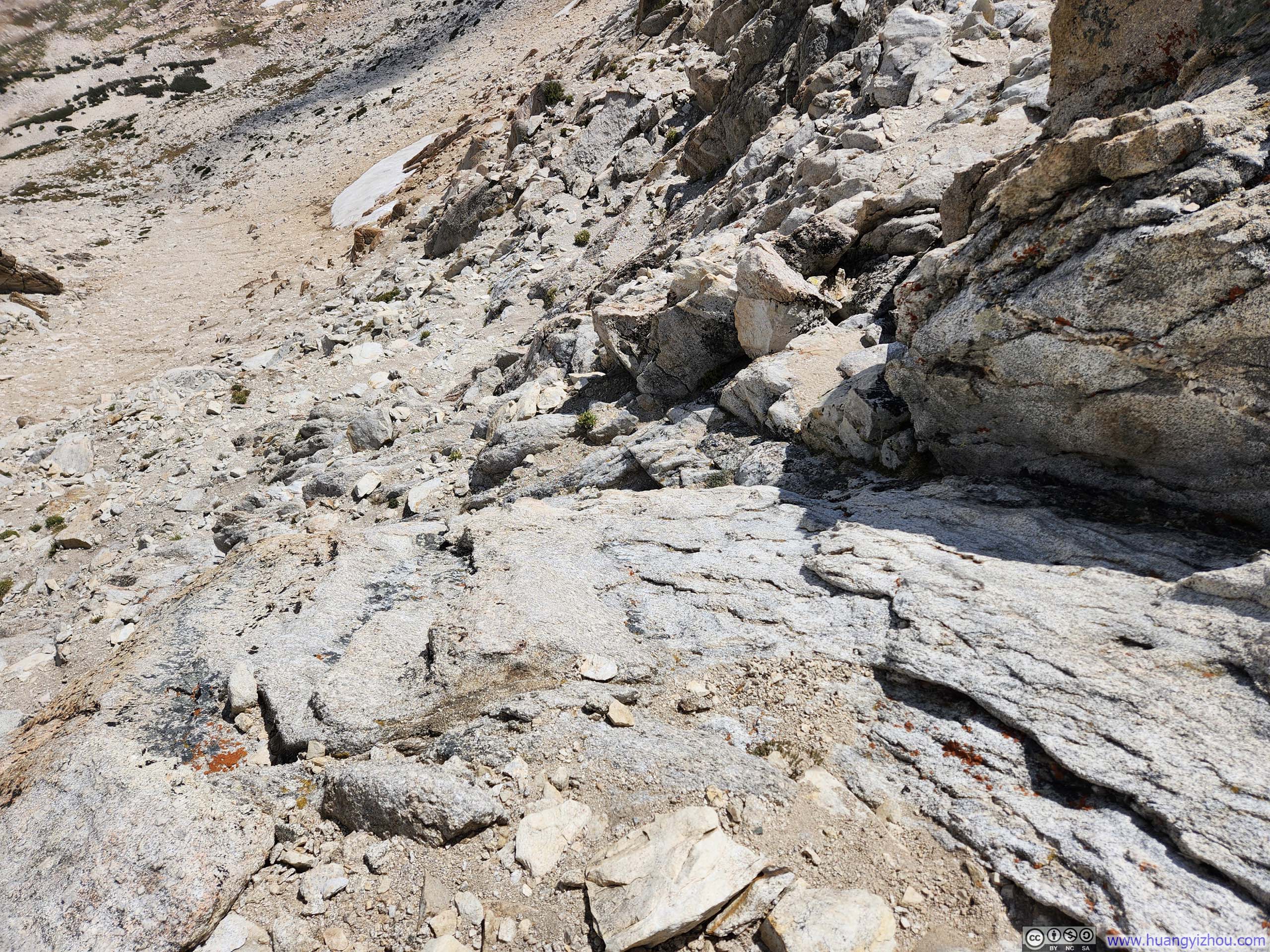
Steep Path to Matterhorn Peak
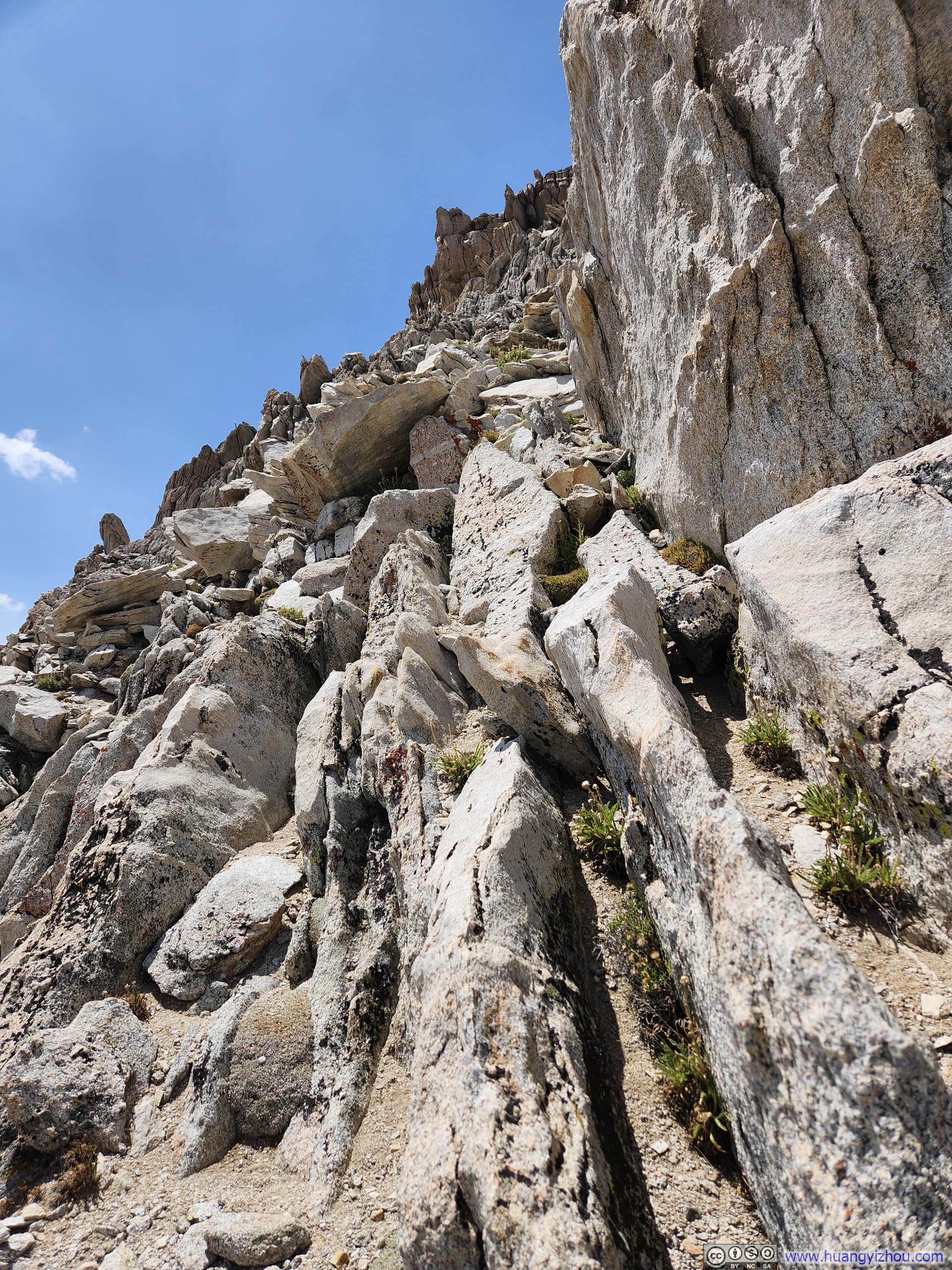
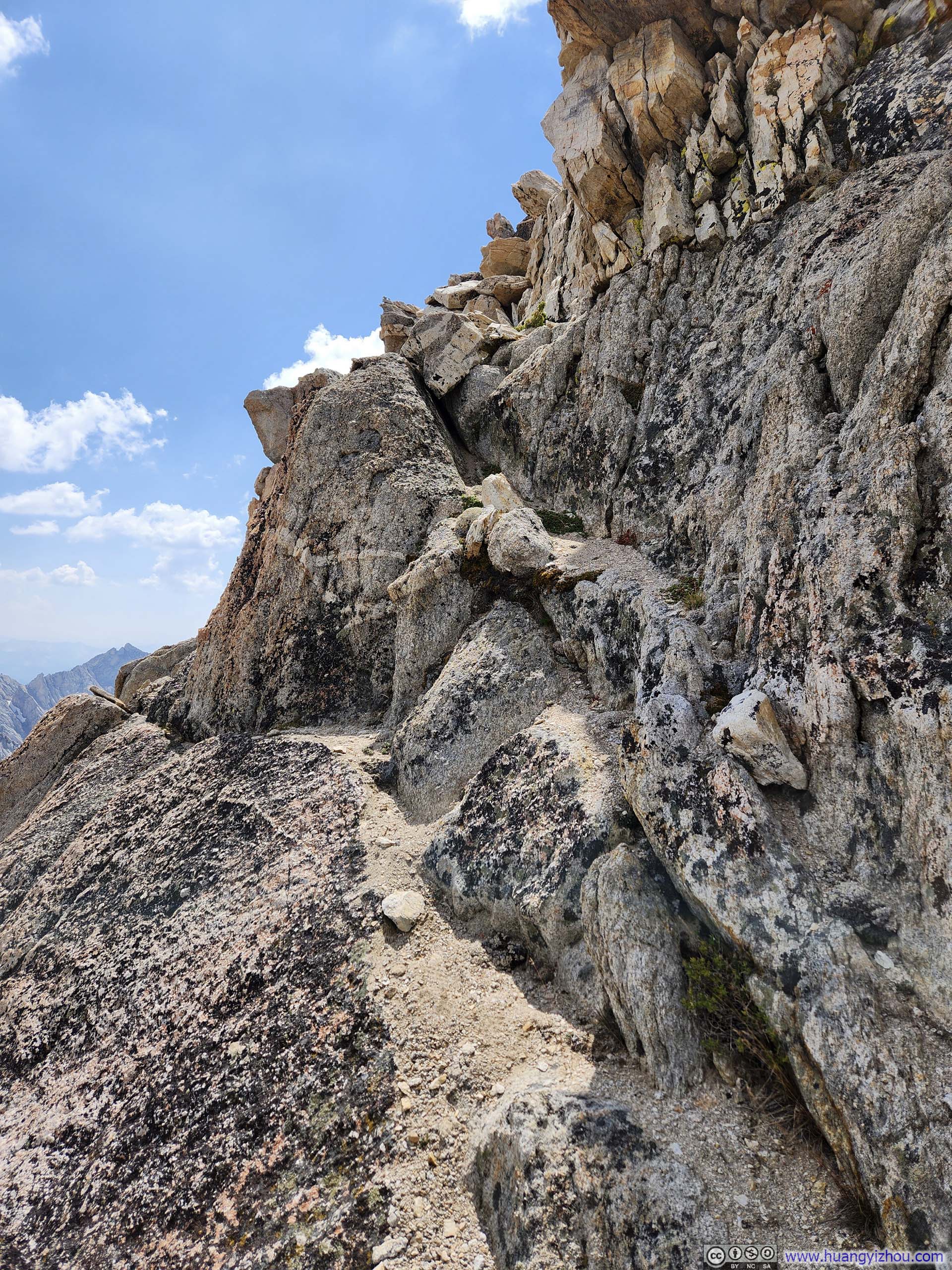 Narrow Path to Matterhorn Peak
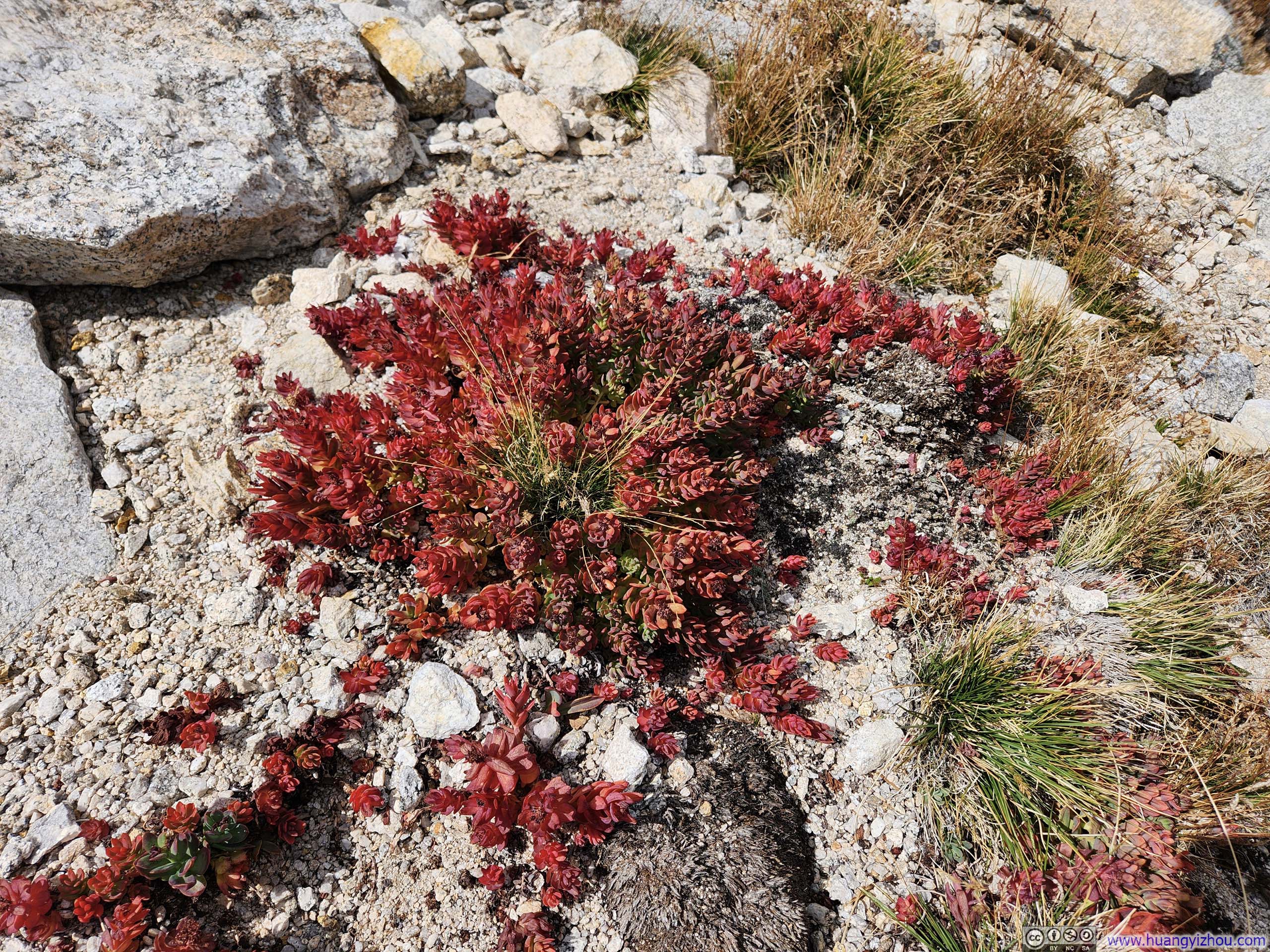
Flowers
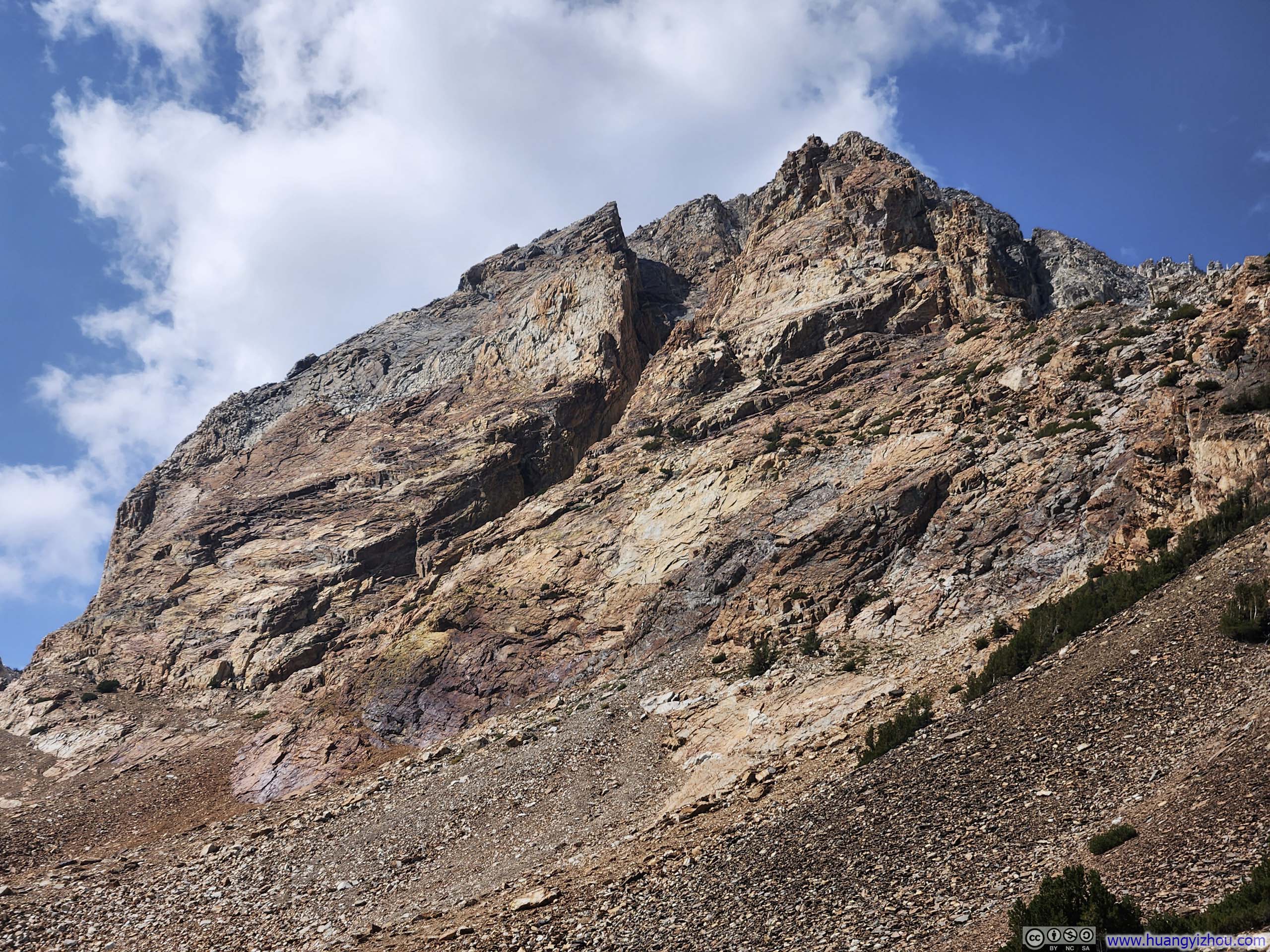
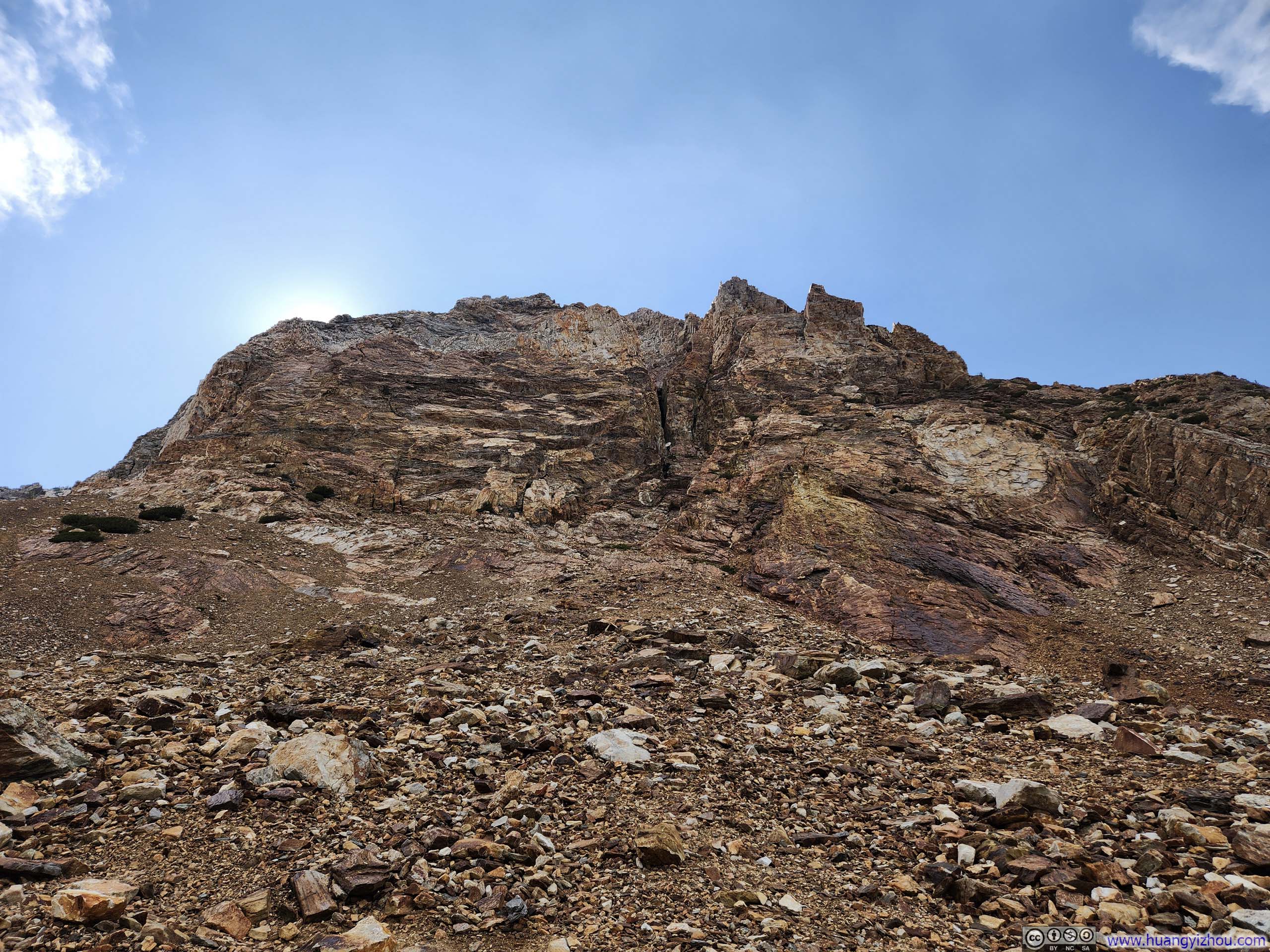
For the easiest approach, one should aim slightly to the south of Matterhorn Peak, then traverse the final 30m (100 ft) of ridge to reach the summit. The peak’s summit was directly above a couloir (which I detoured to visit during my descent, see p3-4 below), creating an exceptionally steep face. By veering southward, the exposure became far more manageable.
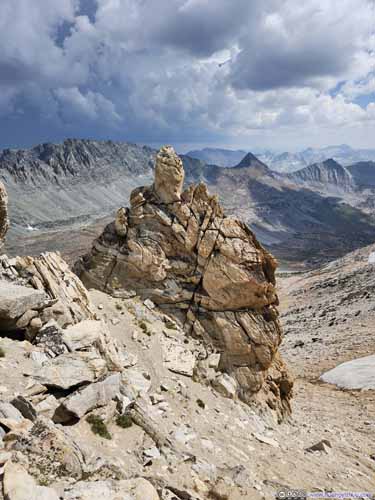
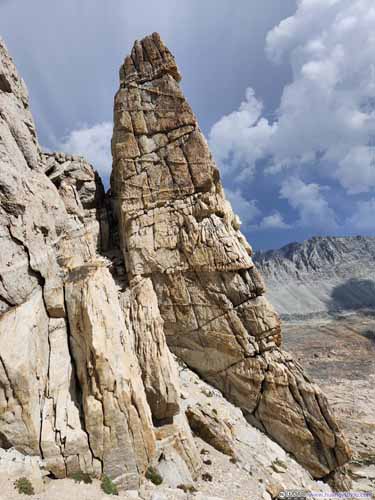 Rock Tower
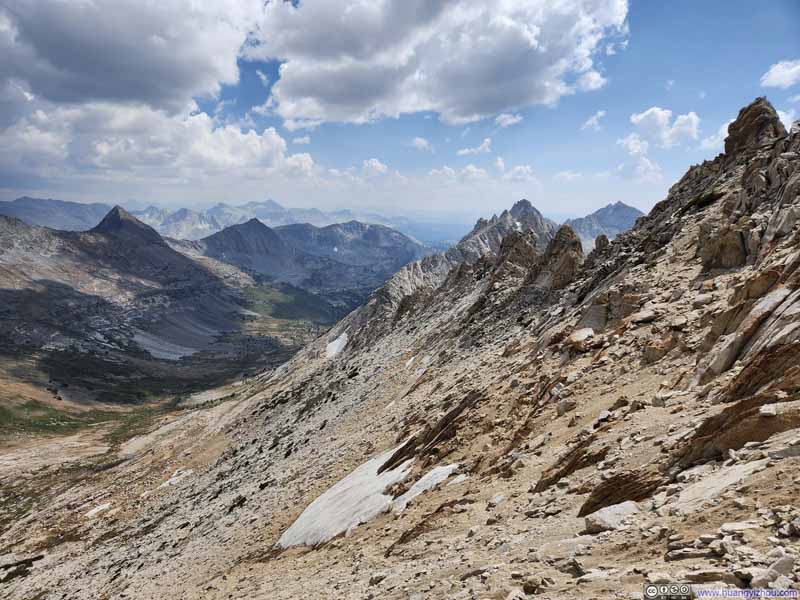 Ridgeline to Whorl Mountain
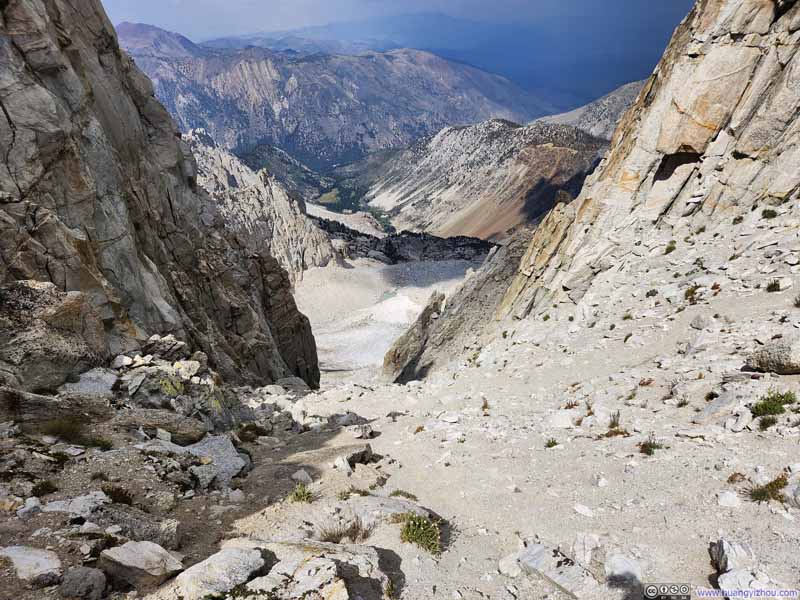 Couloir
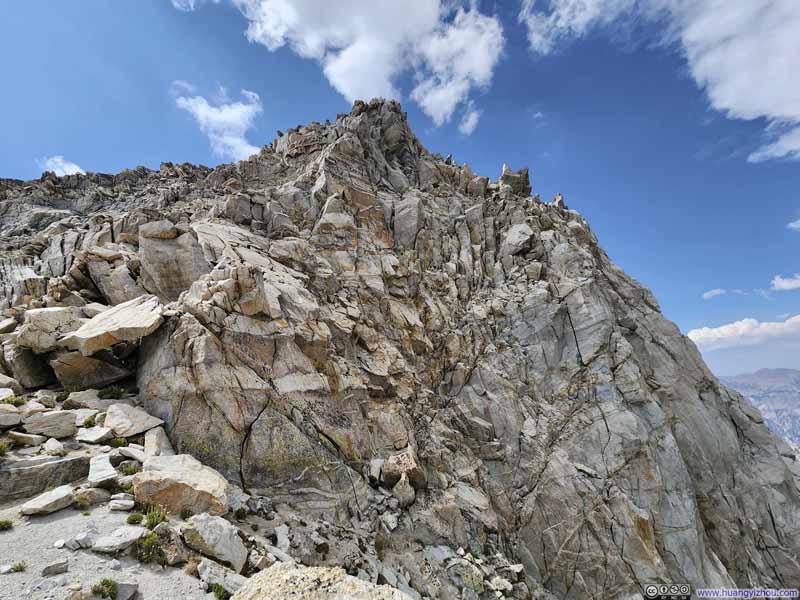 Rocky Cliff
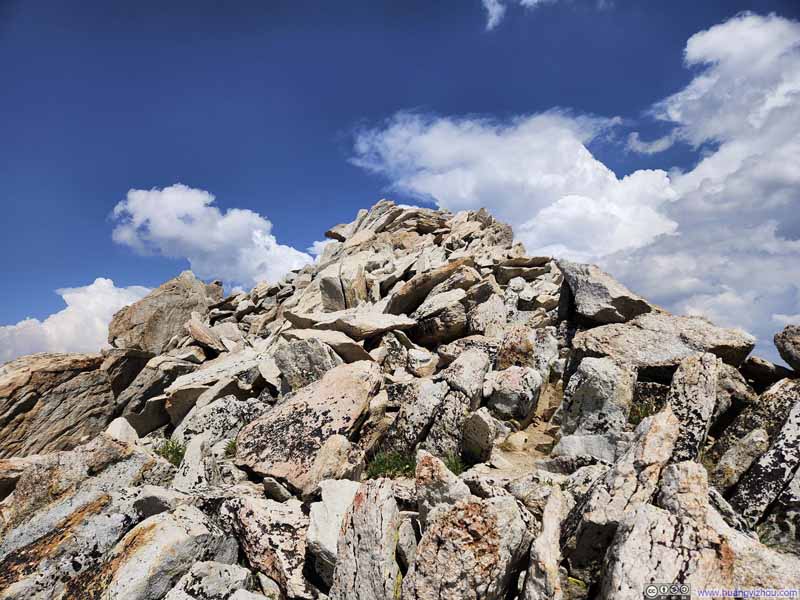 Homestretch before Matterhorn Peak Summit
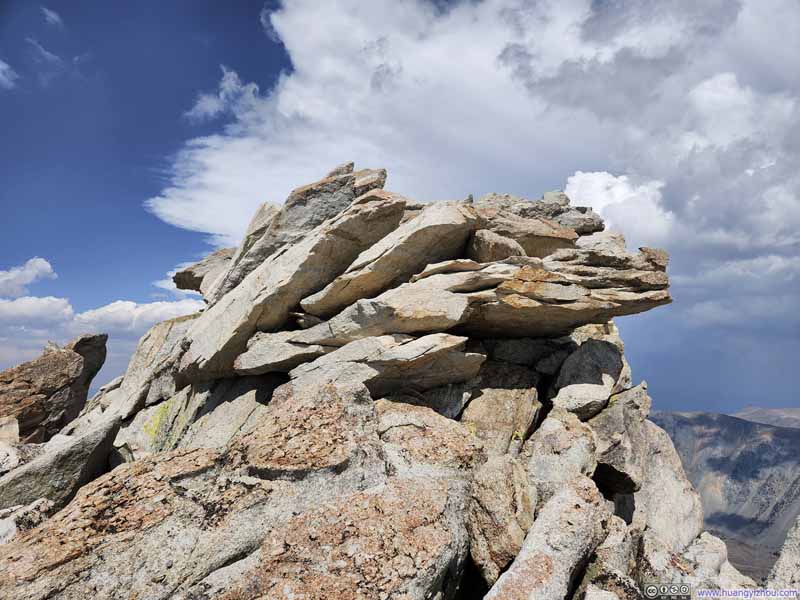 Summit Block of Matterhorn Peak
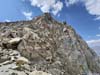
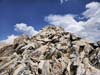
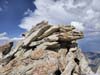
Click here to display photos of the slideshow
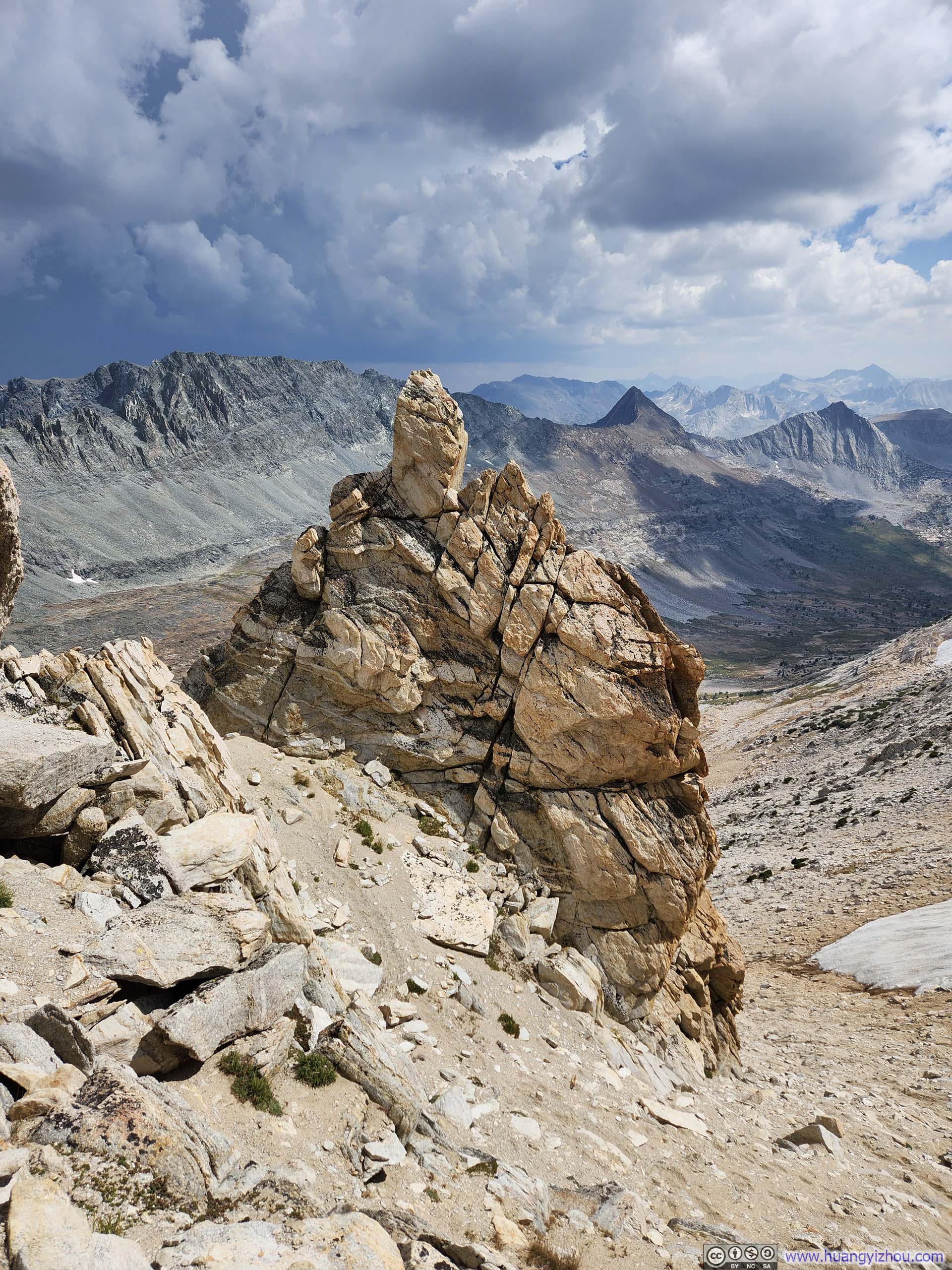
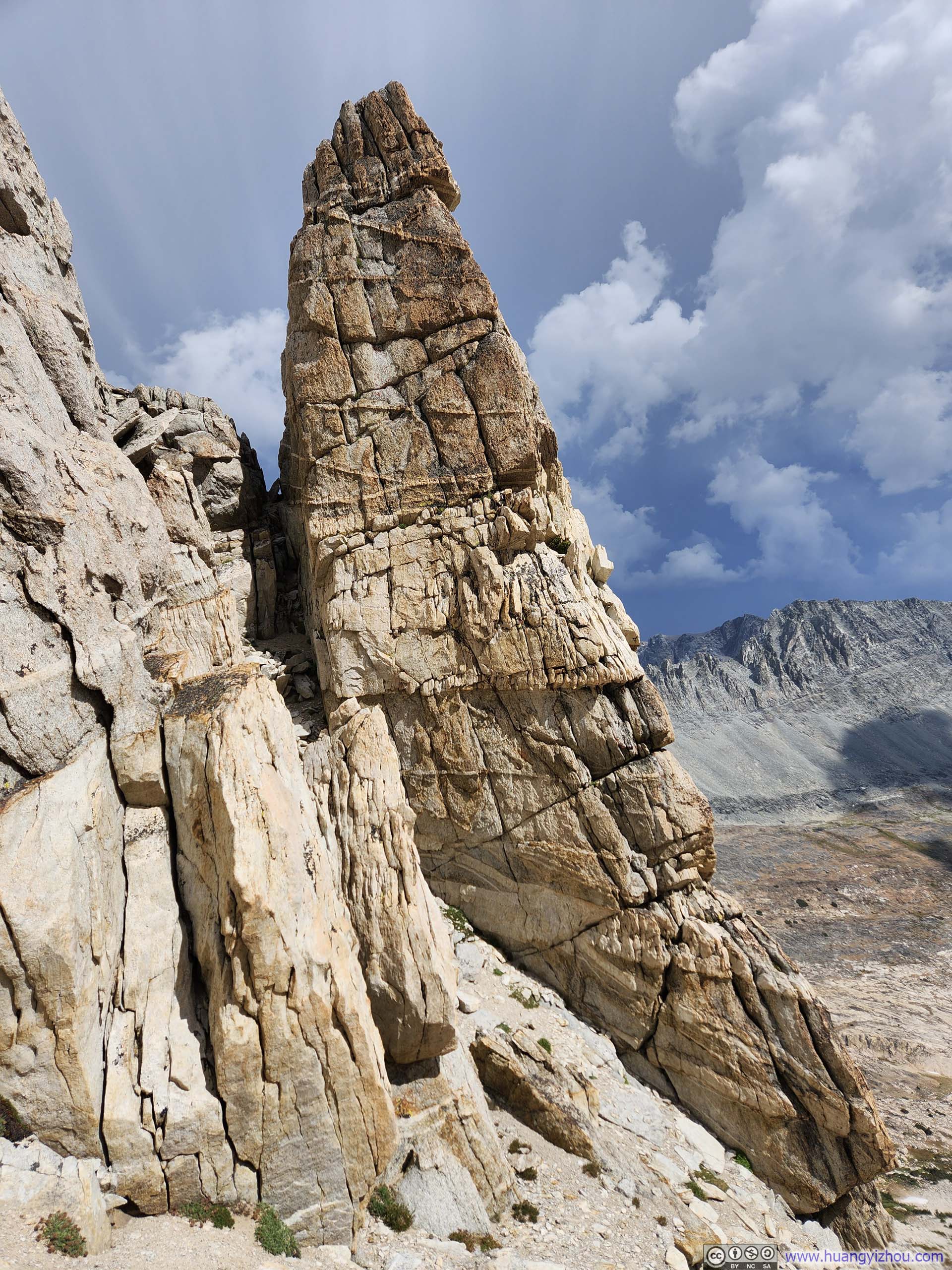 Rock Tower
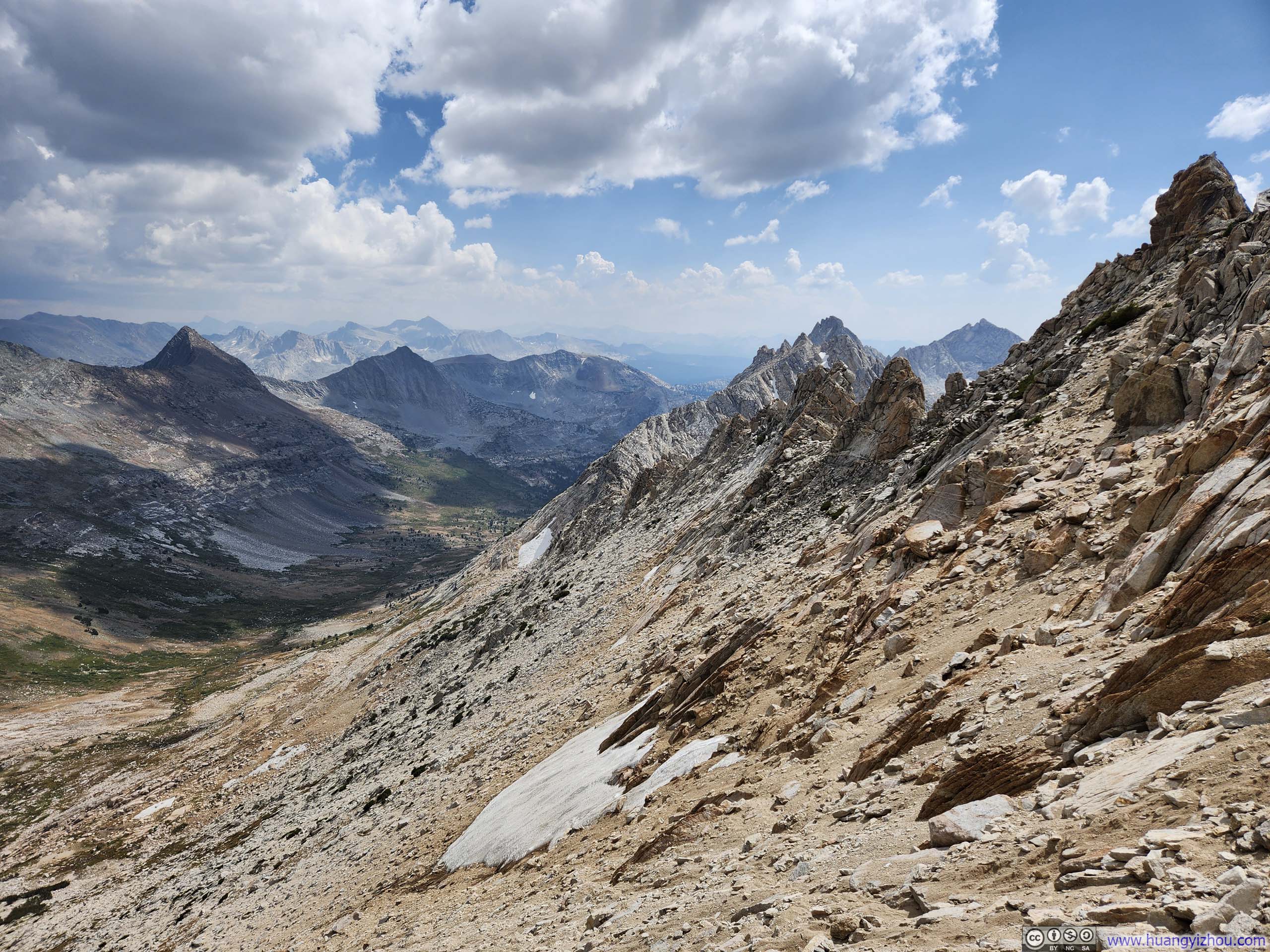
Ridgeline to Whorl Mountain
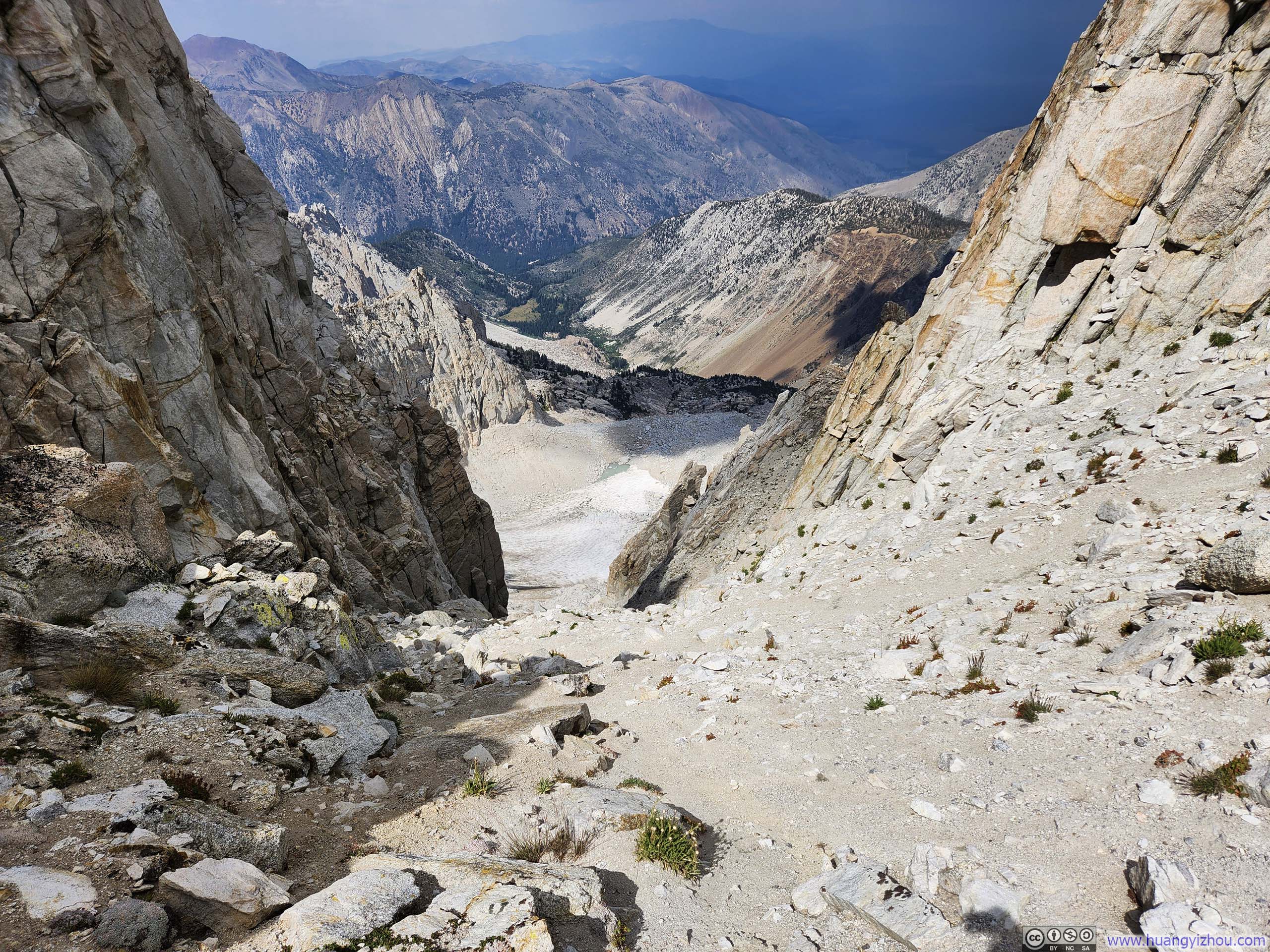
Couloir
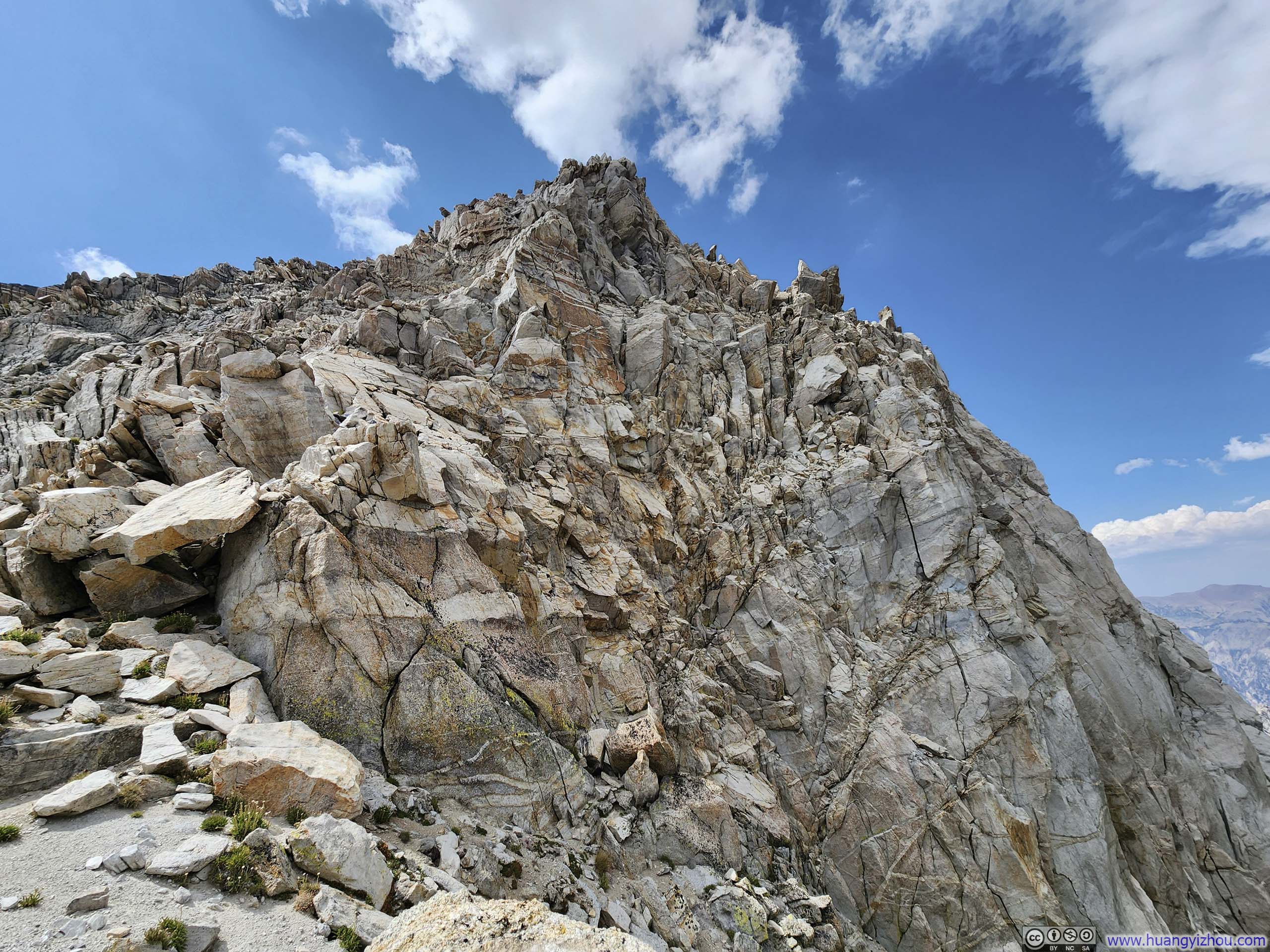
Rocky Cliff
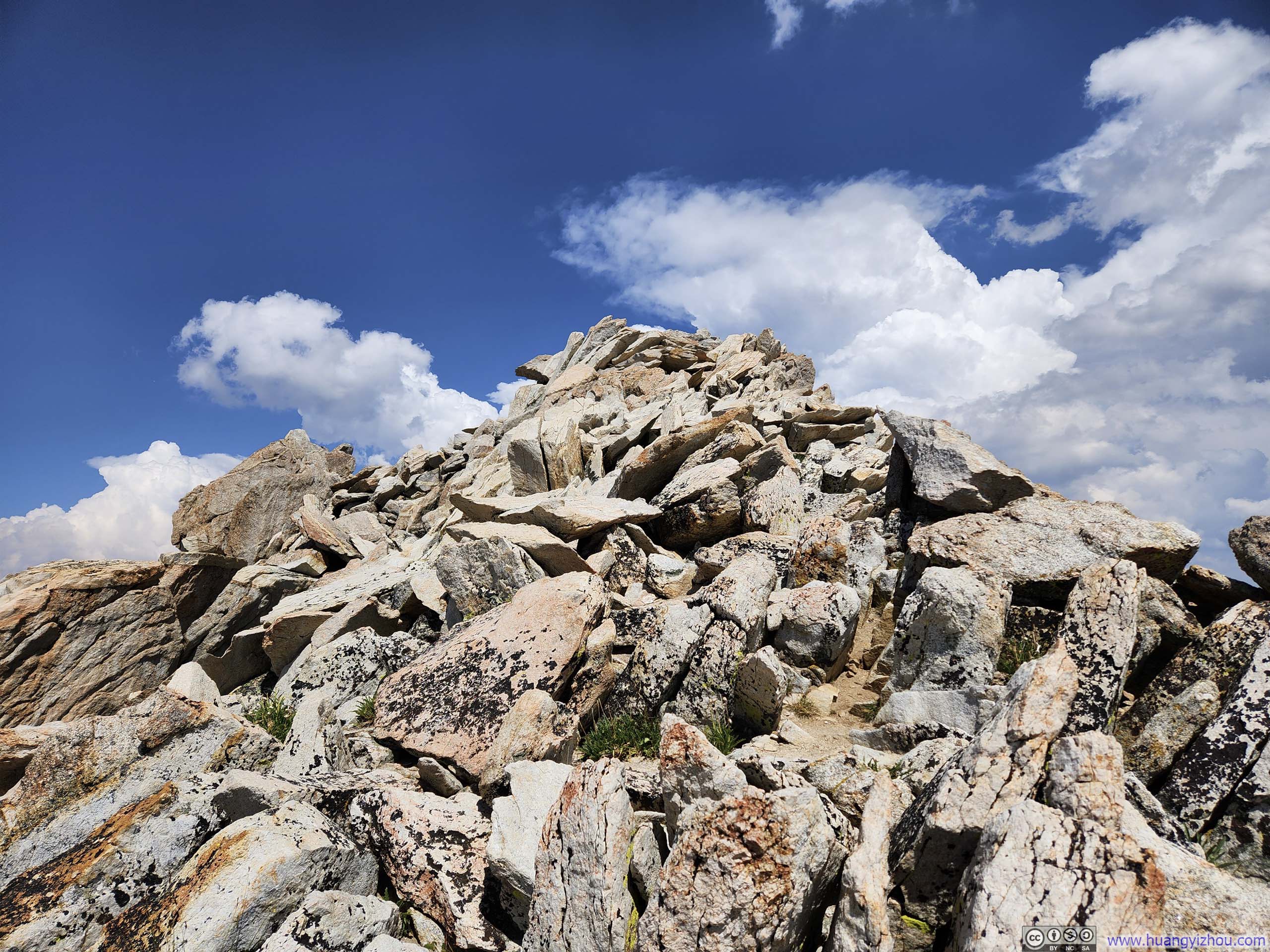
Homestretch before Matterhorn Peak Summit
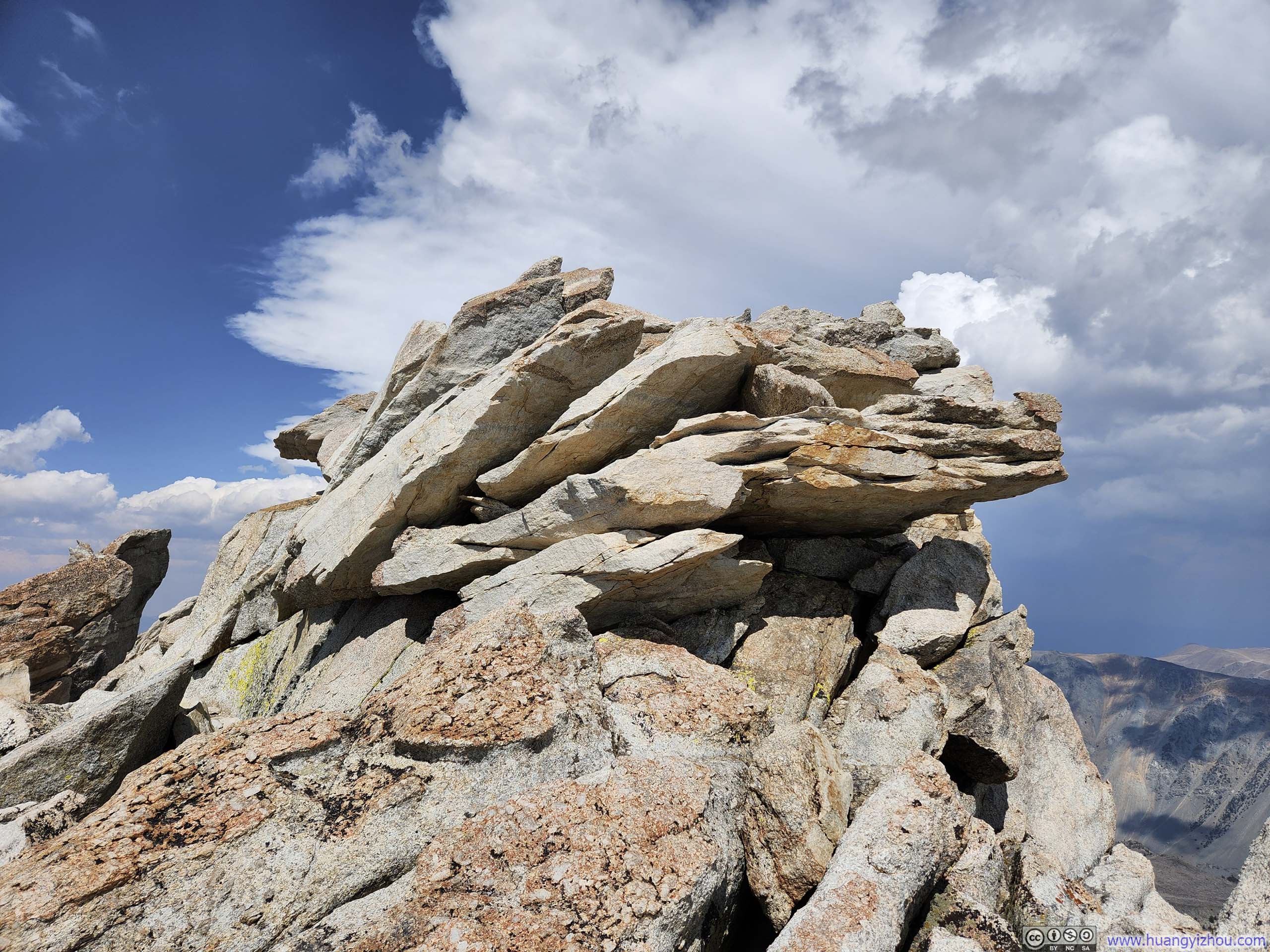
Summit Block of Matterhorn Peak
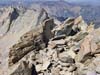
Finally, I reached the summit of Matterhorn Peak at 1:40pm. The true summit was a bit exposed, but there were safer areas just a few steps away.
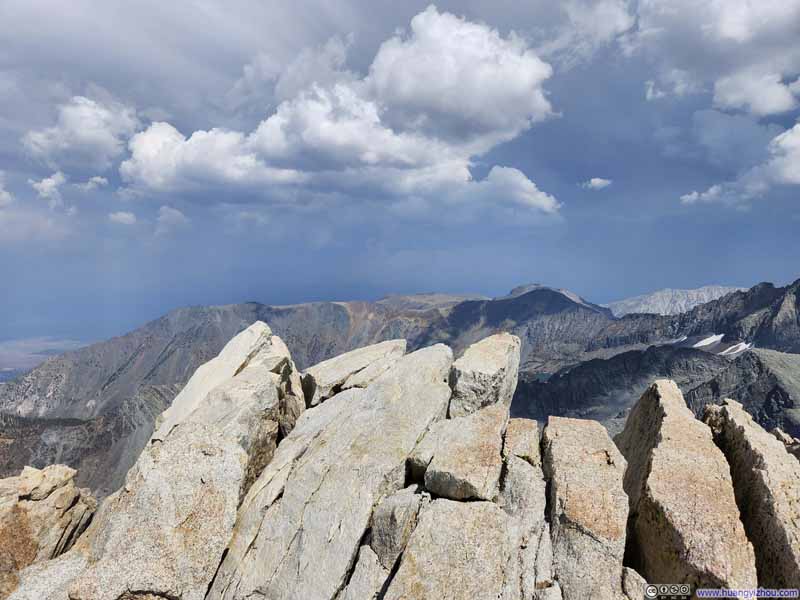 Summit of Matterhorn PeakSomewhat exposed on these rocks, but there were other safer areas around.
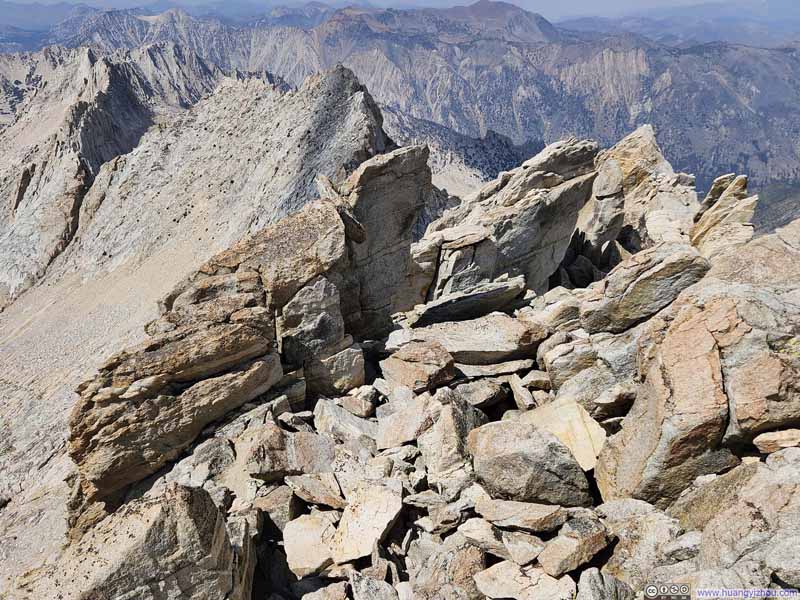 Rocks off Matterhorn Peak SummitOffering me some space to walk around.
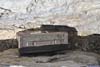
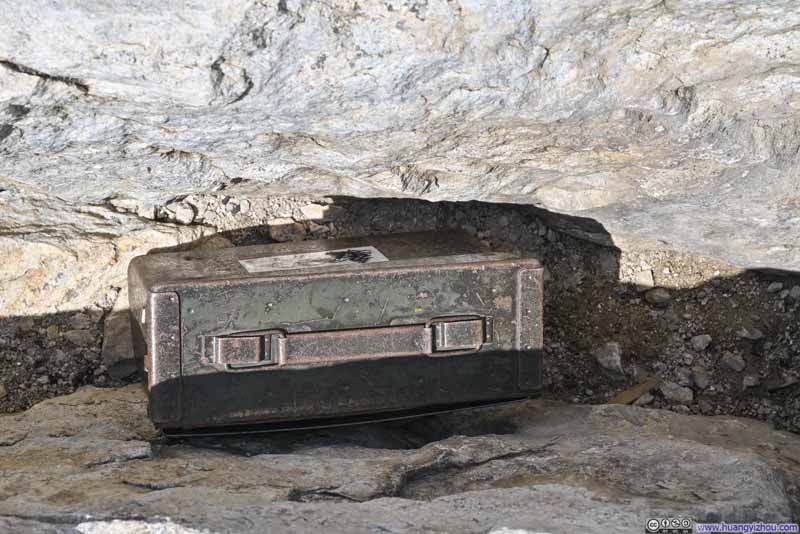 Register Box on Matterhorn PeakI didn’t poke into it.
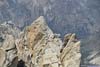
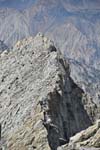
 Sawtooth Ridge off Matterhorn PeakA series of very exposed peaks.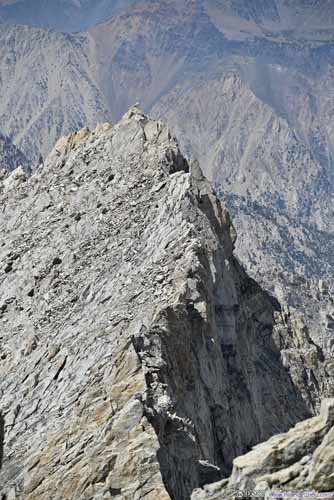
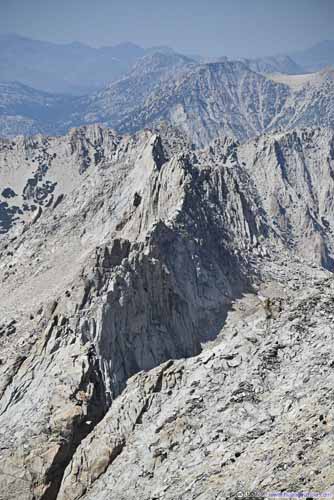 Sawtooth RidgeThe Dragtooth (left) / Blacksmith Peak (right)
Click here to display photos of the slideshow
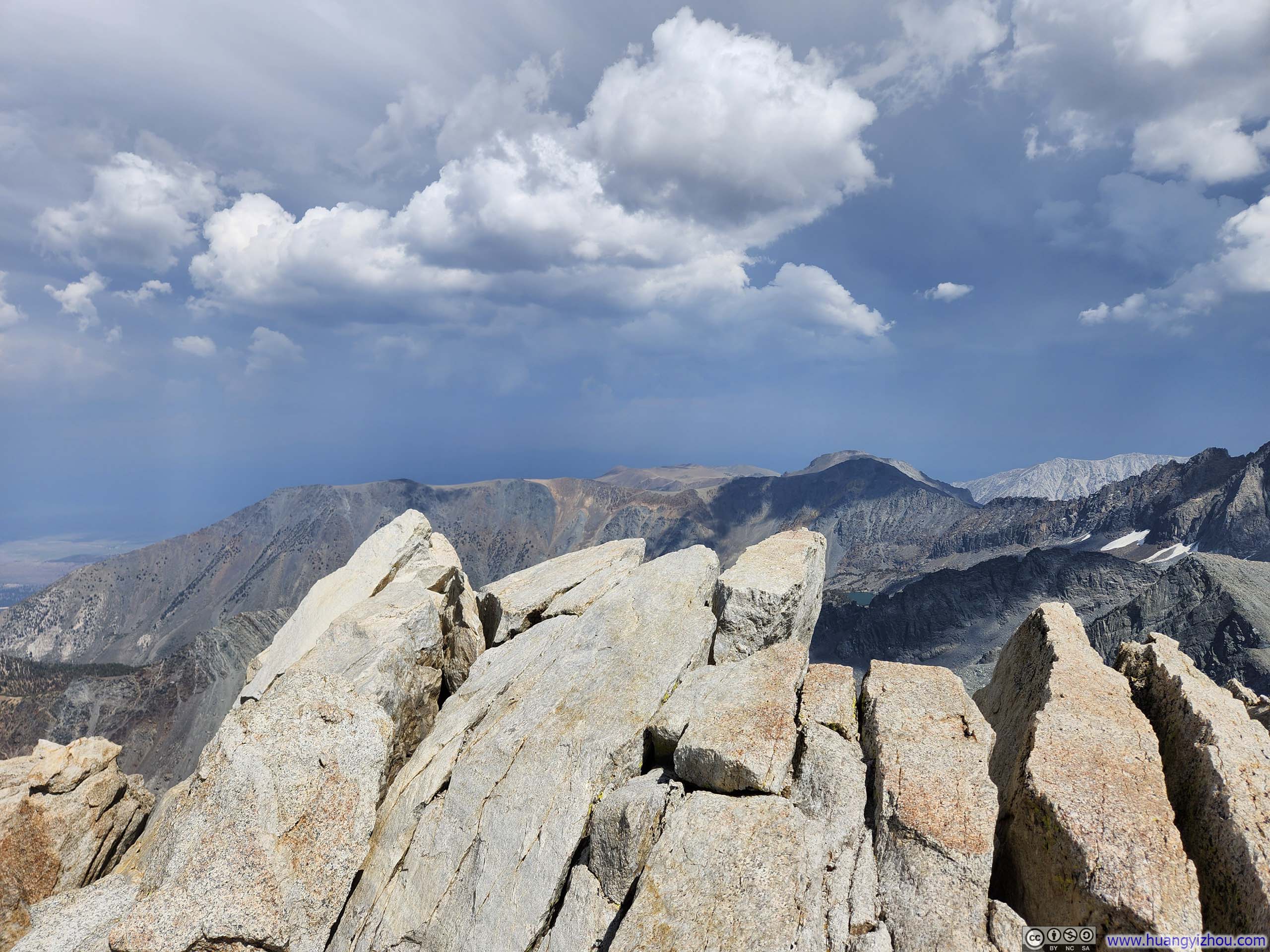
Summit of Matterhorn PeakSomewhat exposed on these rocks, but there were other safer areas around.
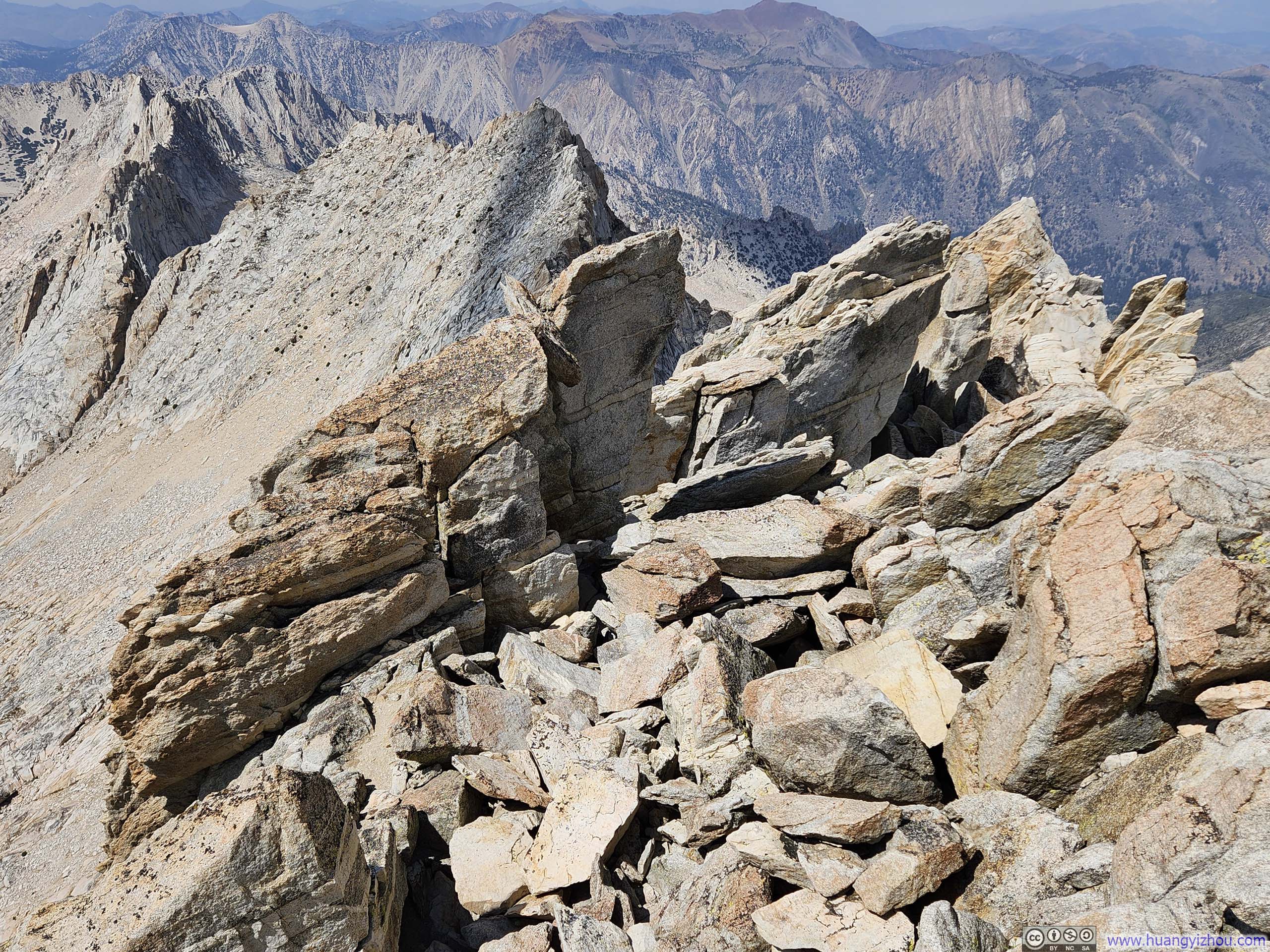
Rocks off Matterhorn Peak SummitOffering me some space to walk around.
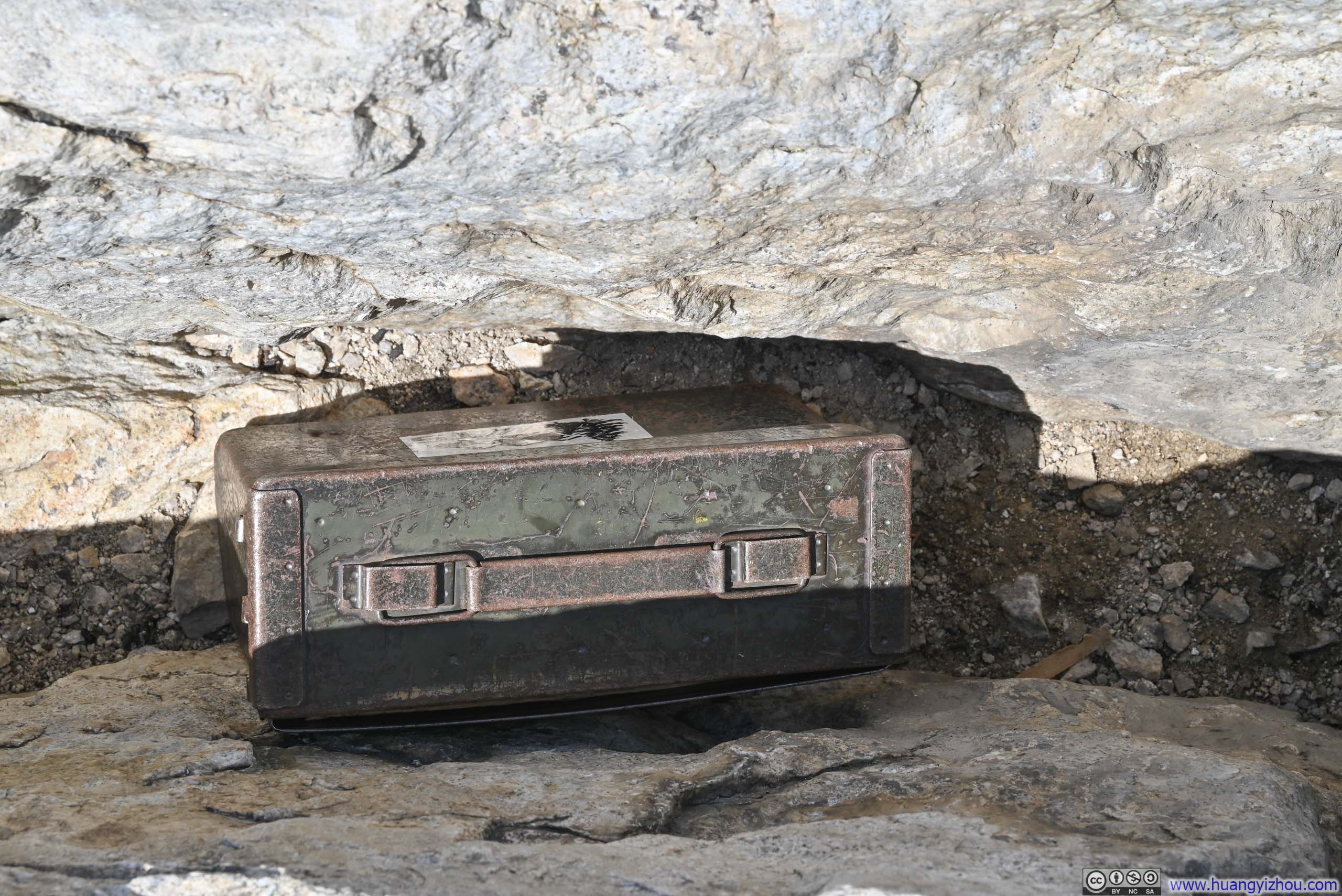
Register Box on Matterhorn PeakI didn’t poke into it.

Sawtooth Ridge off Matterhorn PeakA series of very exposed peaks.

Sawtooth RidgeThe Dragtooth
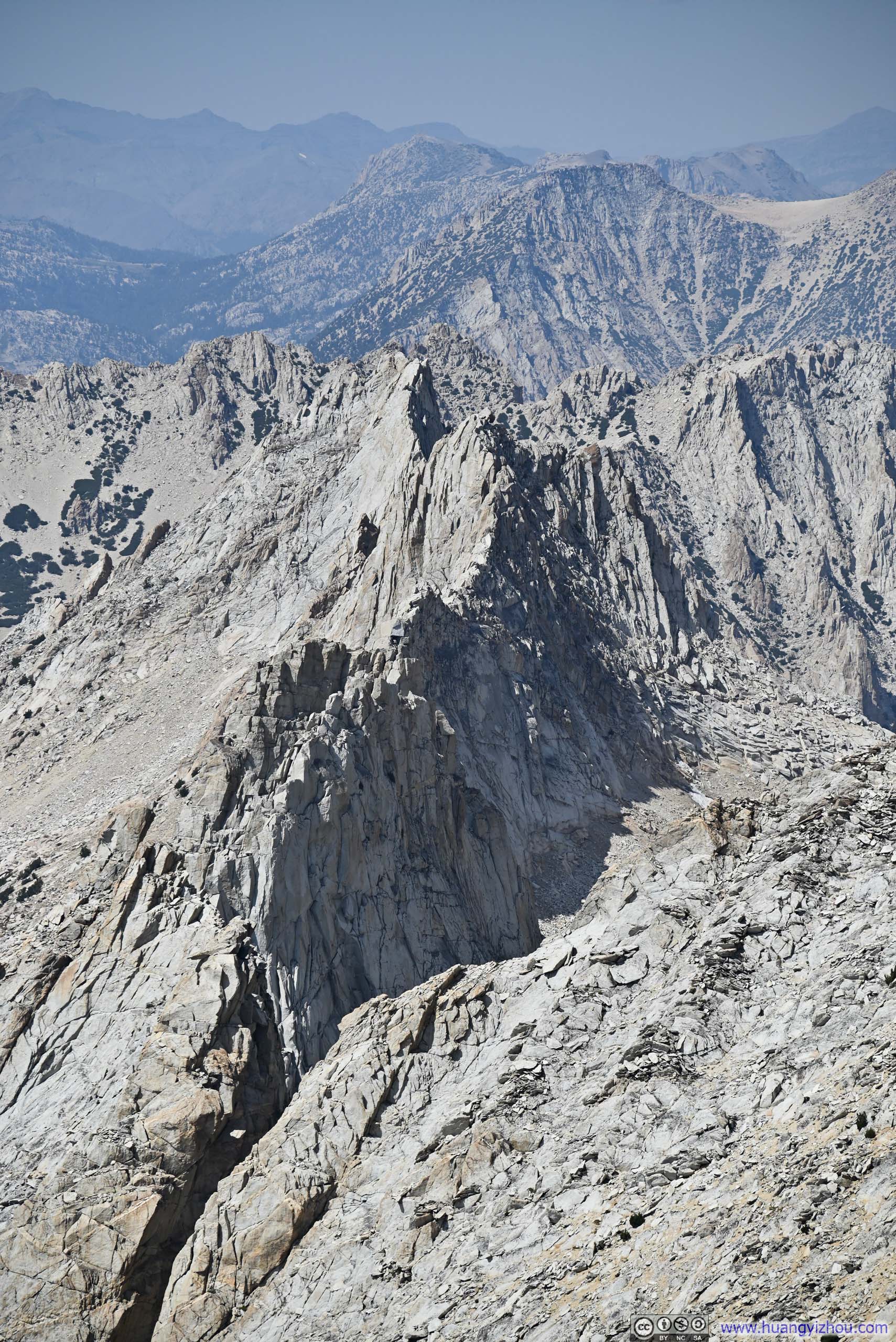 Sawtooth RidgeThe Dragtooth (left) / Blacksmith Peak (right)
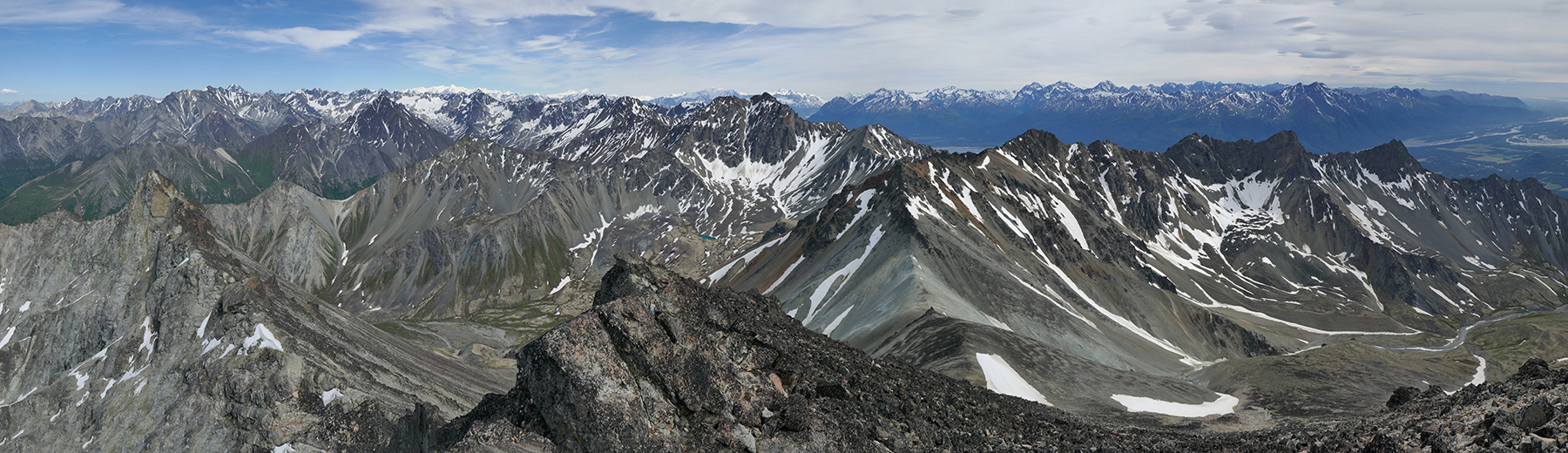
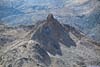
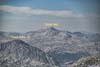
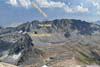
The summit of Matterhorn Peak offered panoramic views of endless peaks and valleys lining the horizon, giving me the sense of standing at the center of a universe called “Sierra Nevada.” This feeling of centrality was enhanced by Matterhorn Peak’s prominence (it was the northernmost 12,000-foot peak in the Sierra Nevada), and by the various ridgelines extending from it to divide watersheds—as if a king were apportioning territories among his vassals.
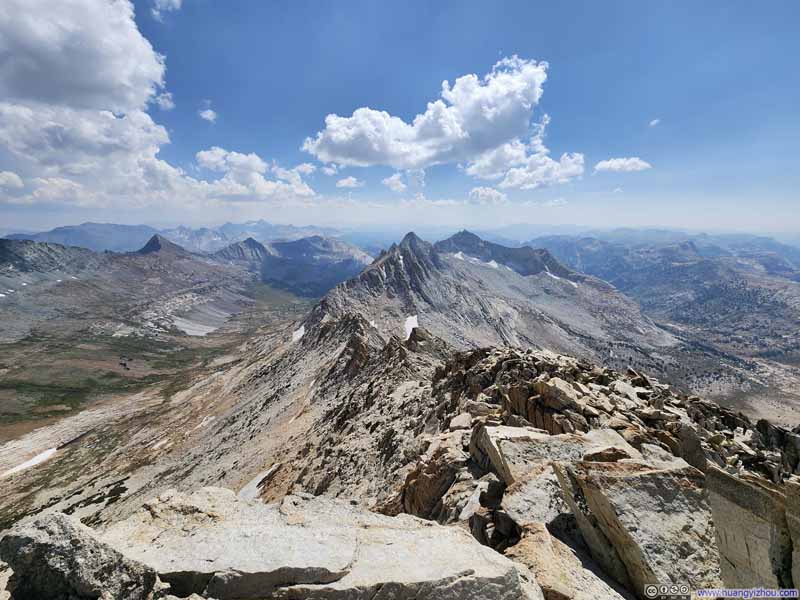 Mountains to the South
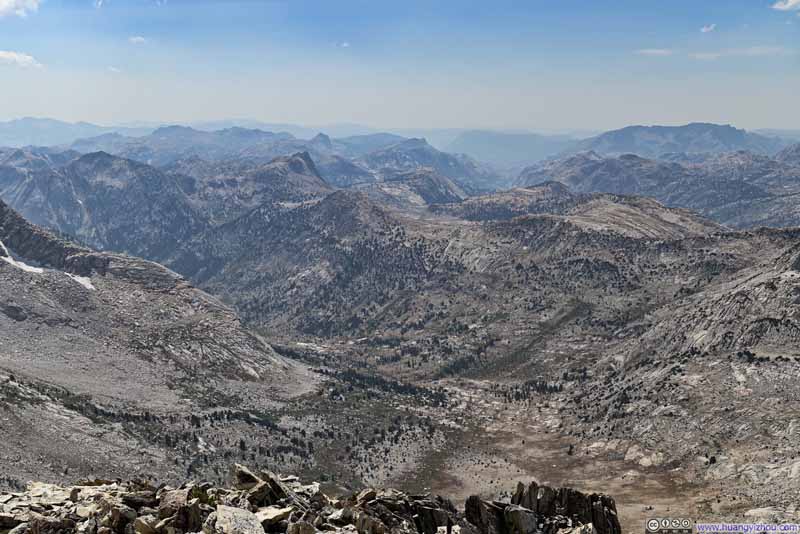 Mountains and Valleys
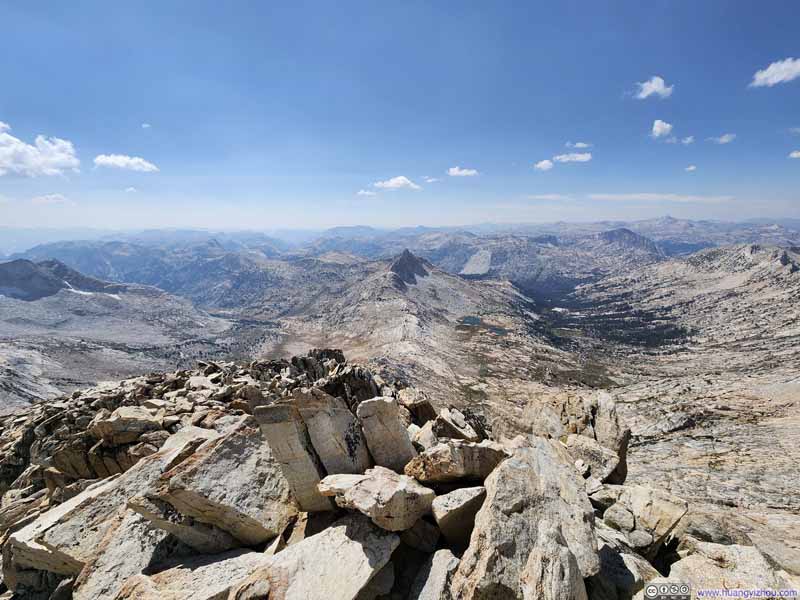 Mountains to the West
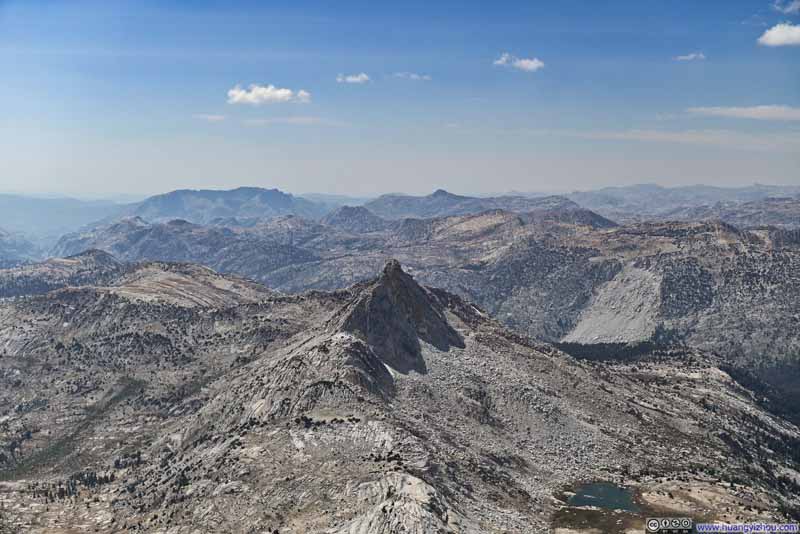 Mountains to the West
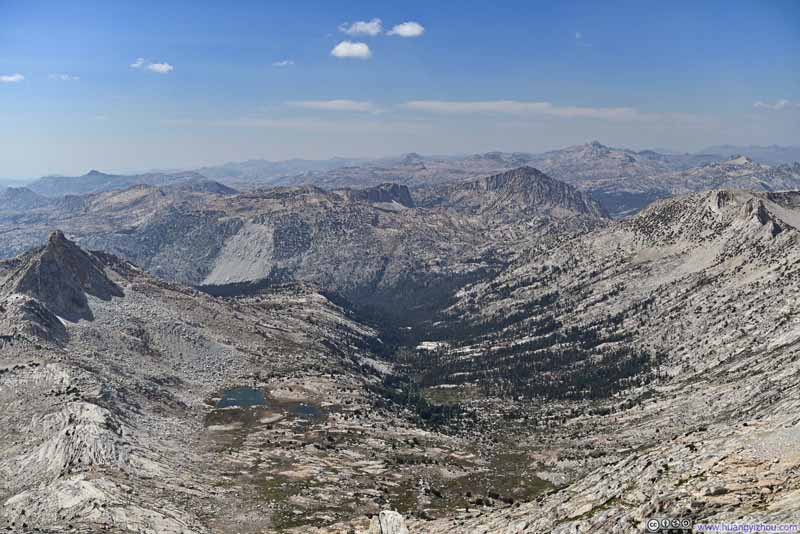 Valley
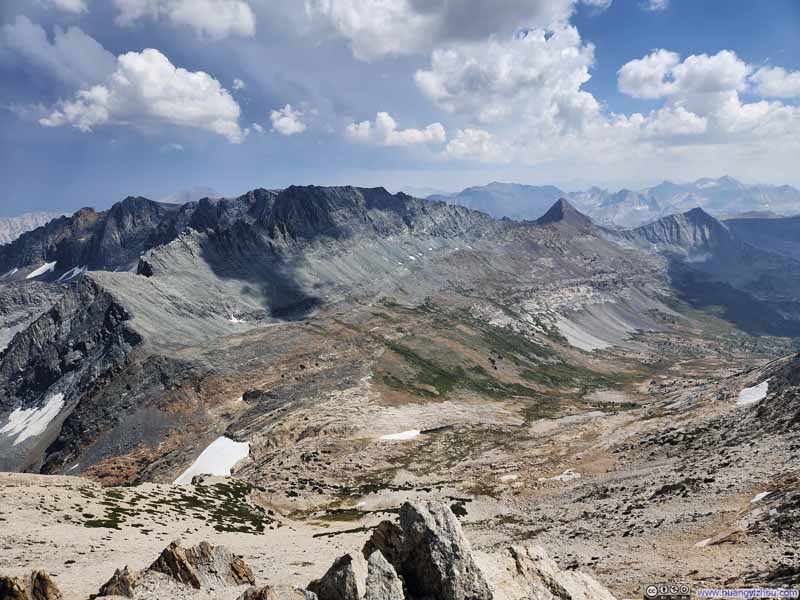 Mountain to the EastA ridgeline connecting Horse Creek Peak, Twin Peaks, Virginia Peak and Stanton Peak.
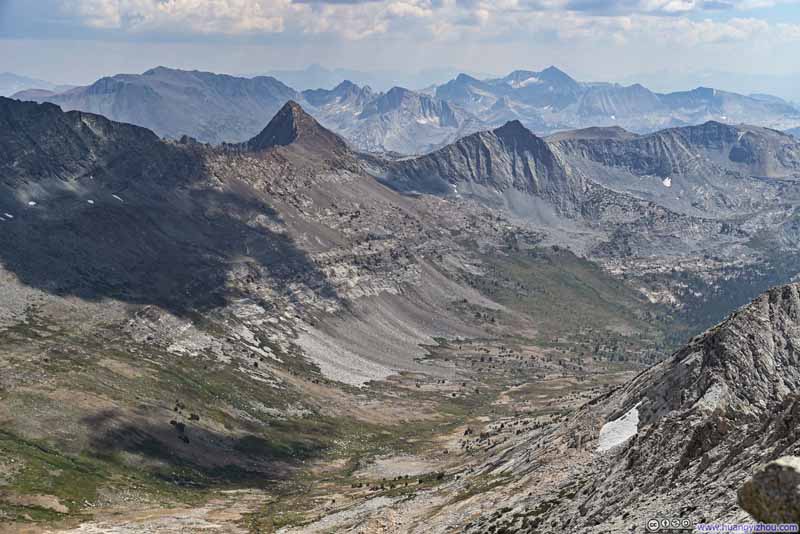 Spiller Creek Valley
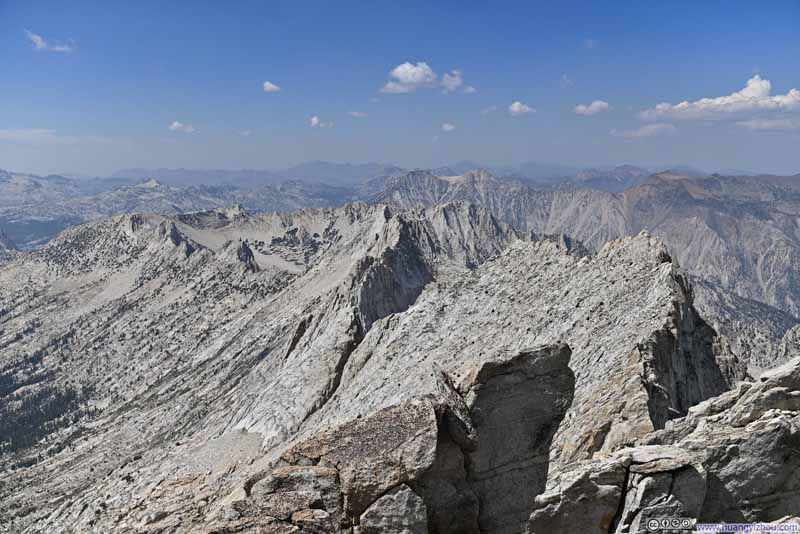 Mountains beyond Sawtooth Ridge
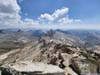
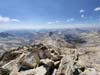
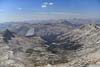
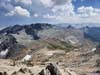
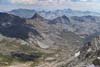
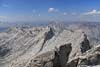
Click here to display photos from the summit of Matterhorn Peak.
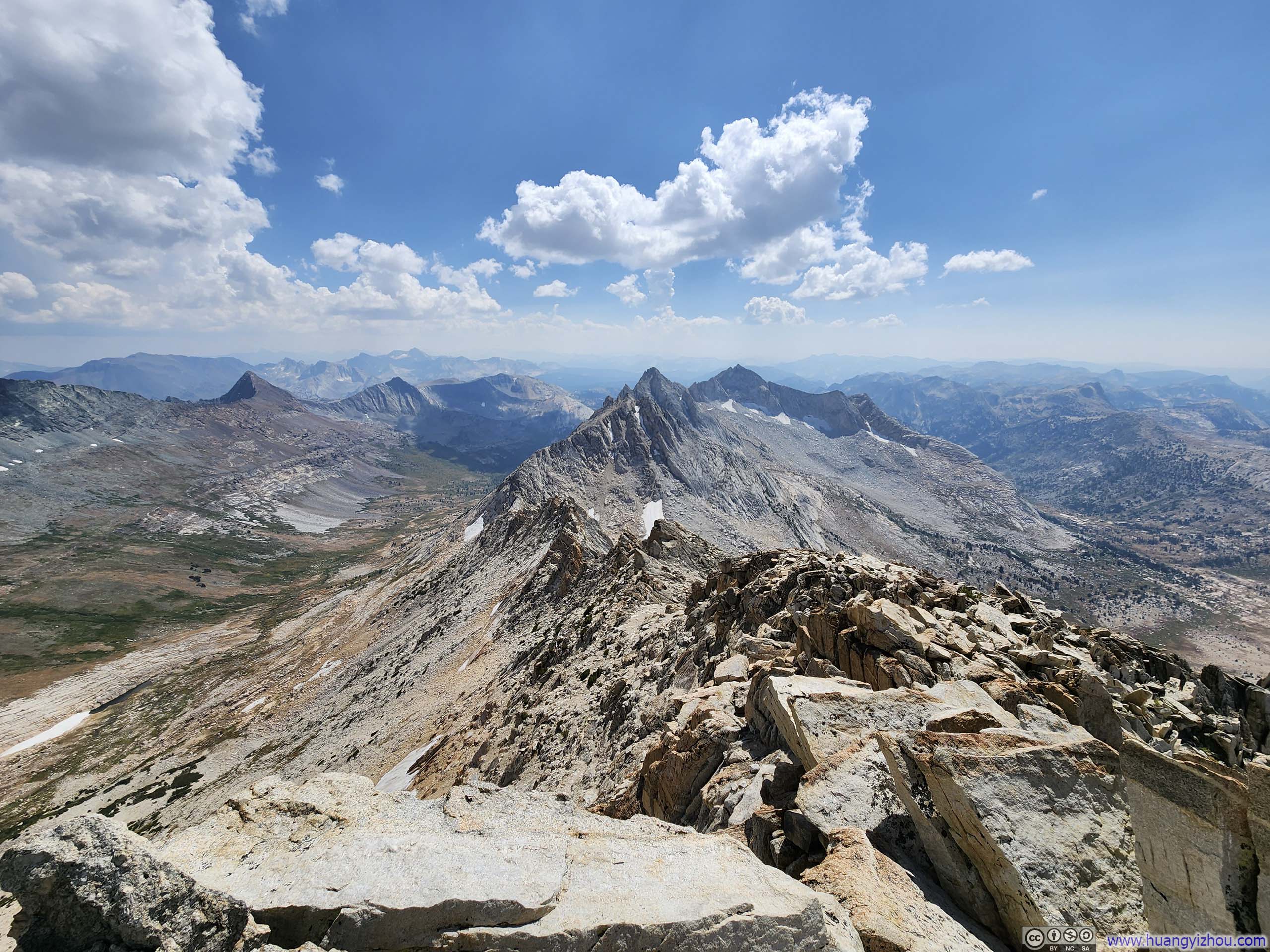
Mountains to the South
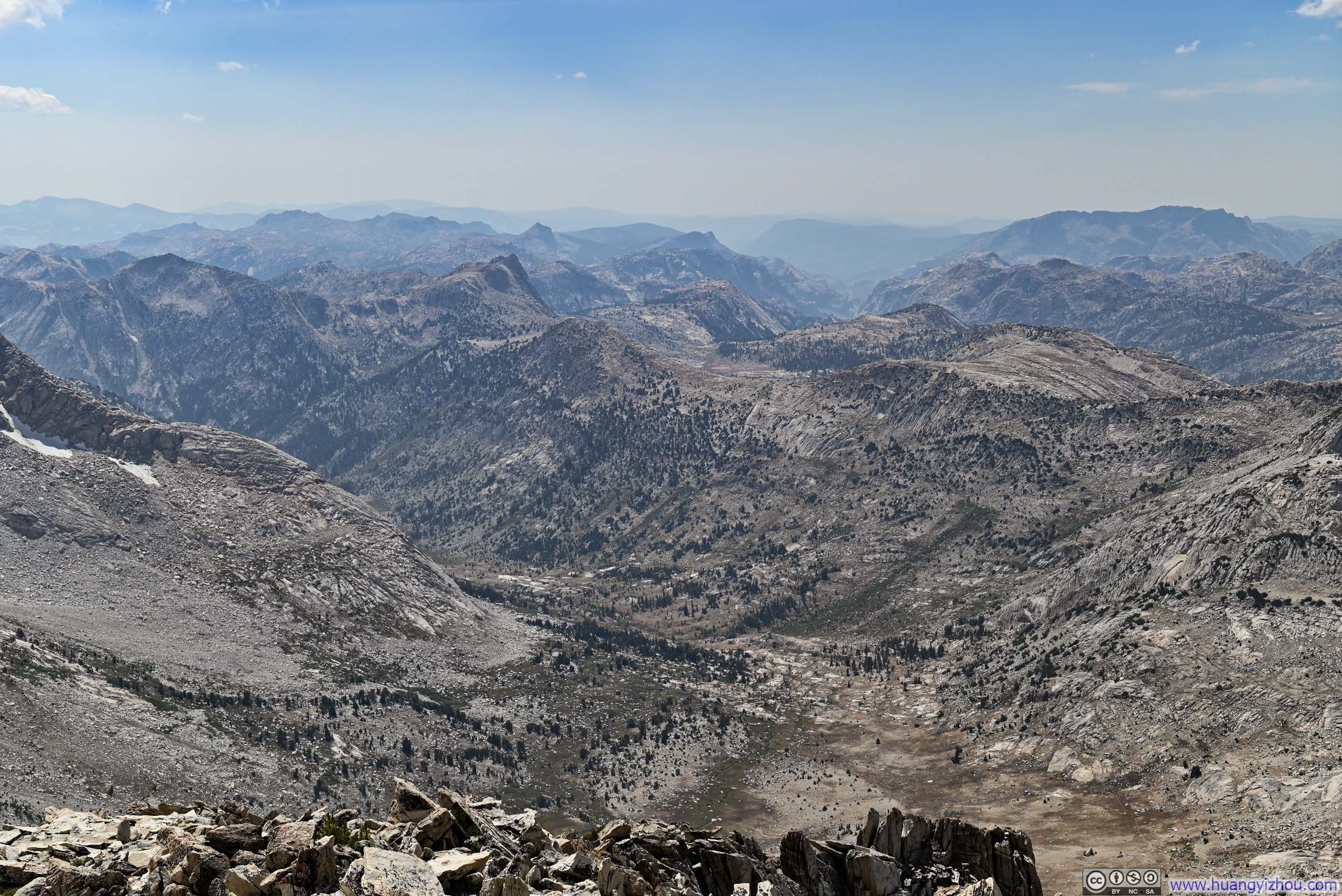
Mountains and Valleys
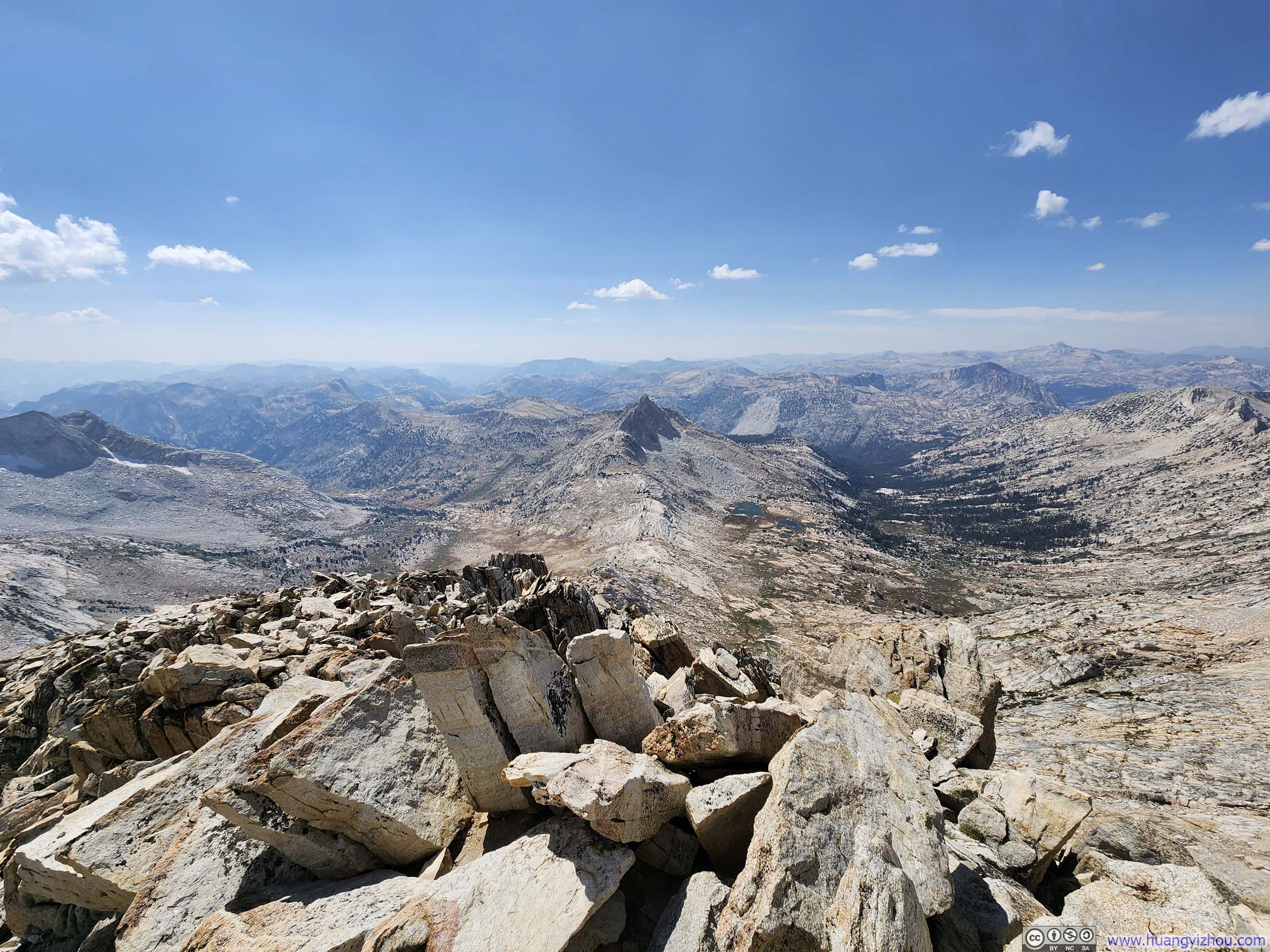
Mountains to the West
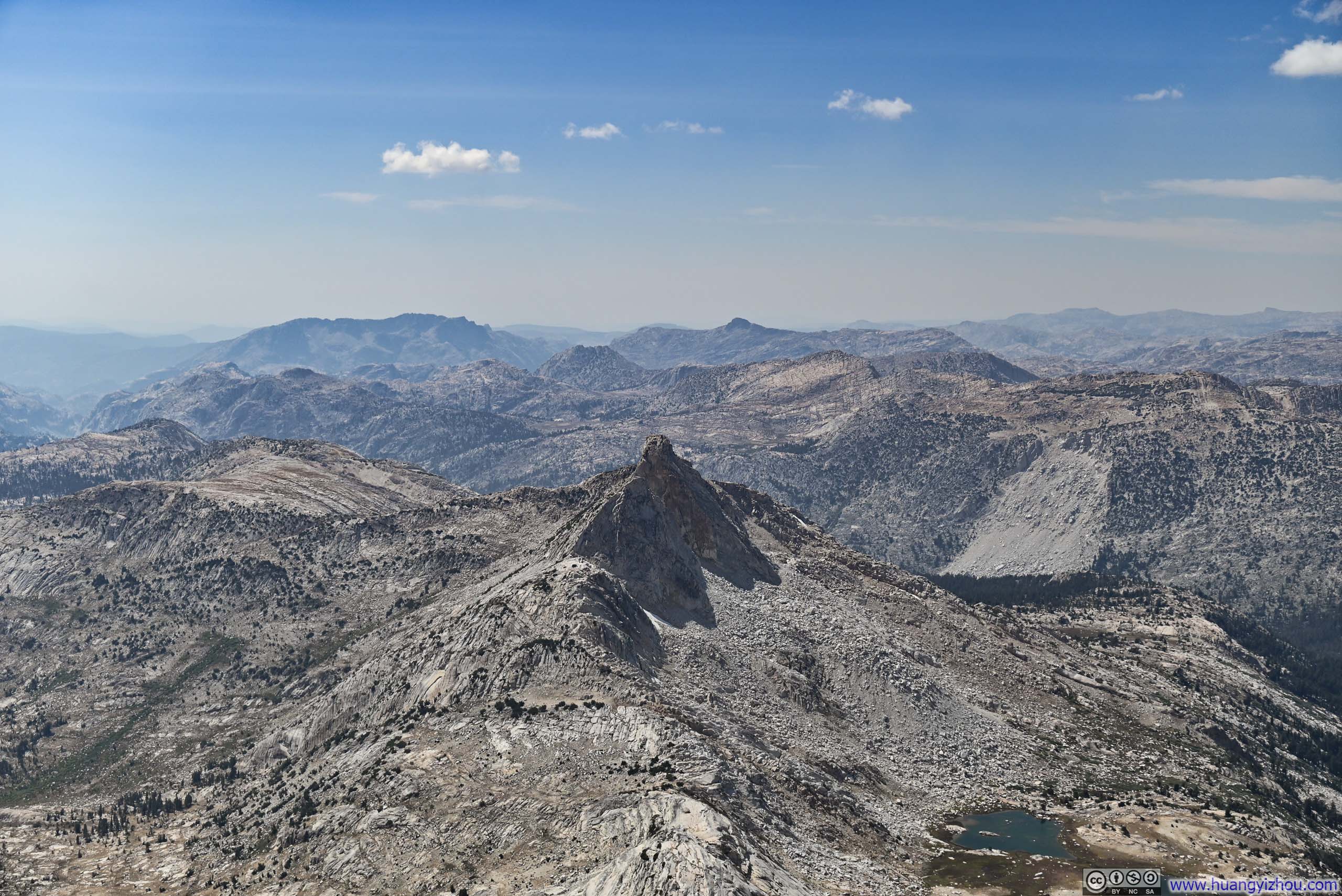
Mountains to the West

Valley
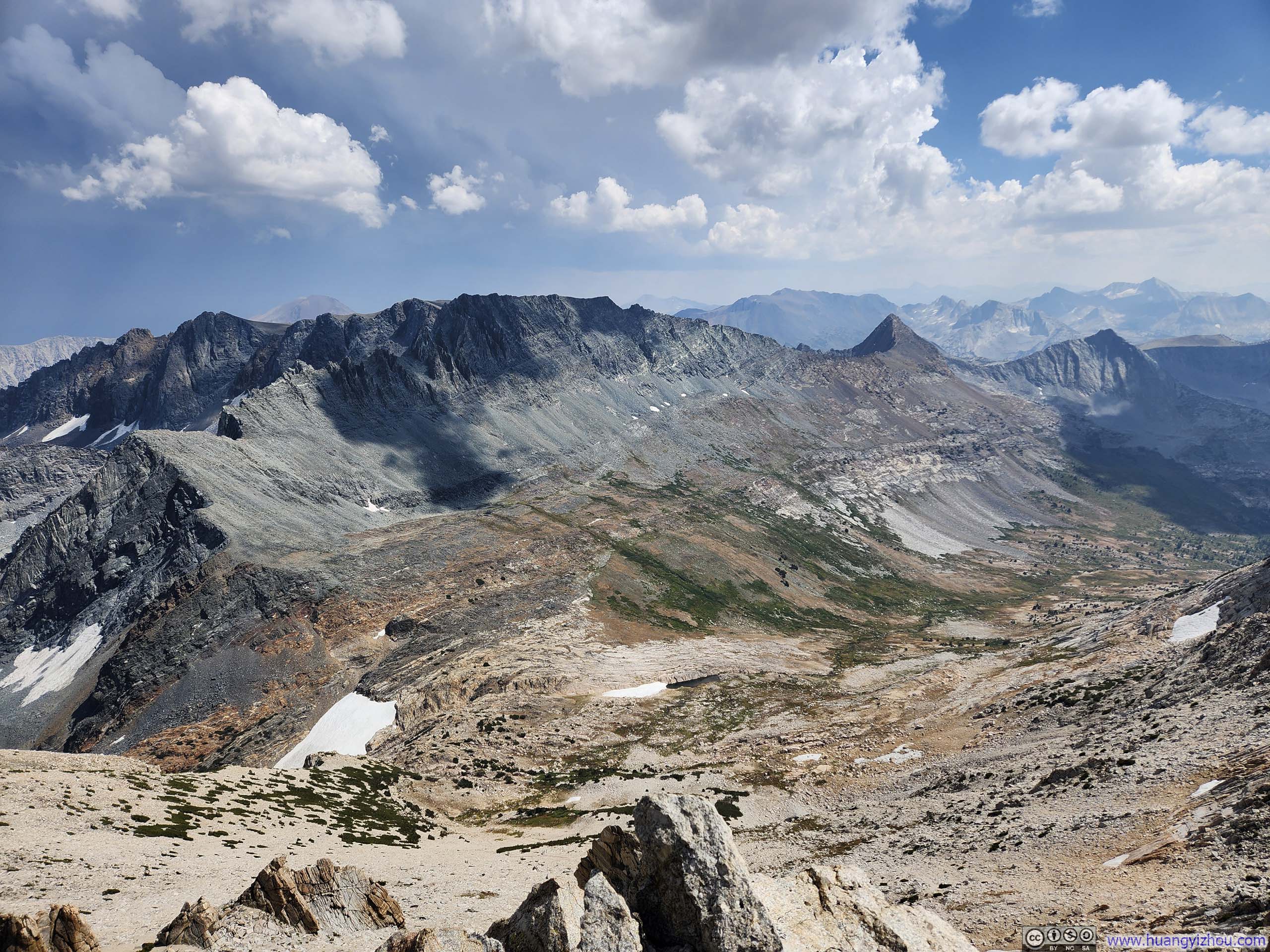
Mountain to the EastA ridgeline connecting Horse Creek Peak, Twin Peaks, Virginia Peak and Stanton Peak.
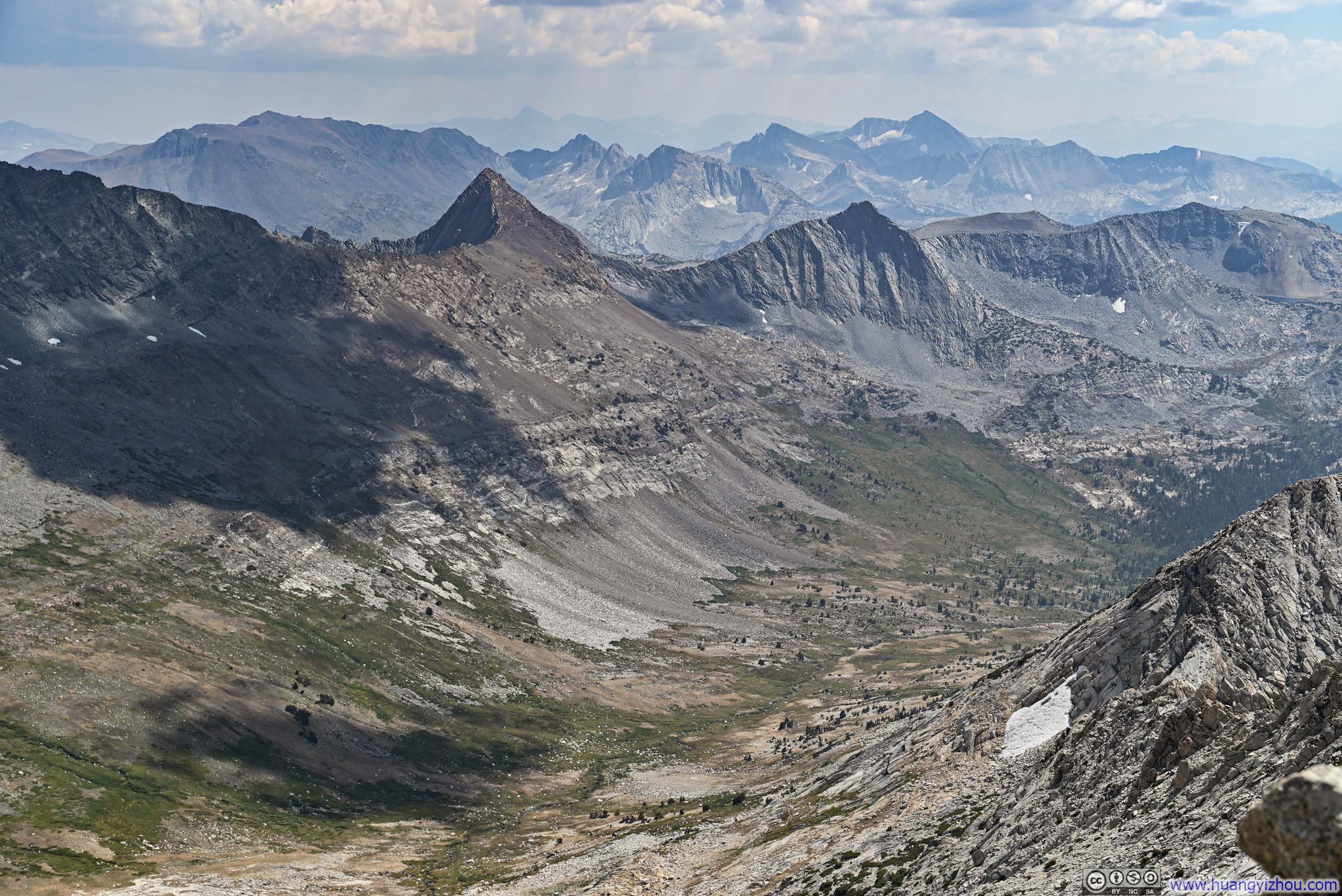
Spiller Creek Valley

Mountains beyond Sawtooth Ridge
Unfortunately, while visibility remained generally good that afternoon, distant southern views were still hazy, likely remnants from the Garnet Fire. Nevertheless, I could still discern the contours of several peaks, including the other two candidates for my hike this day: Mt Conness and Excelsior Mountain.
 Whorl Mountain
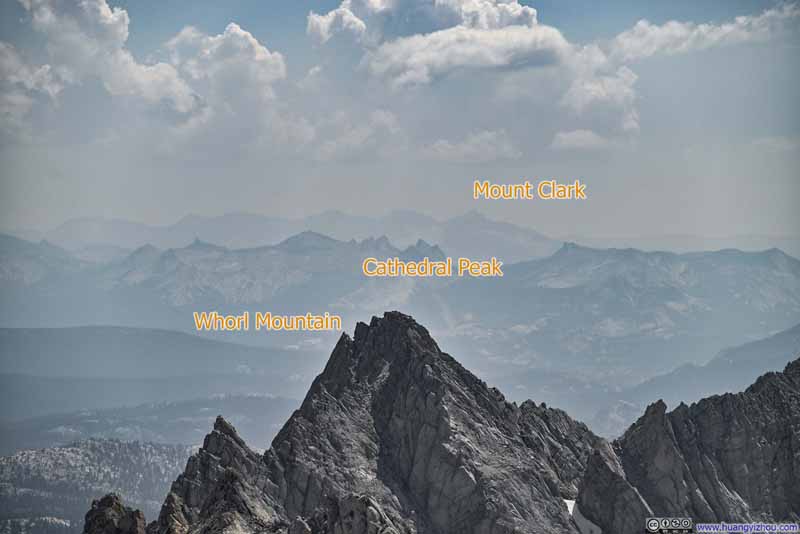 Mountains to the South
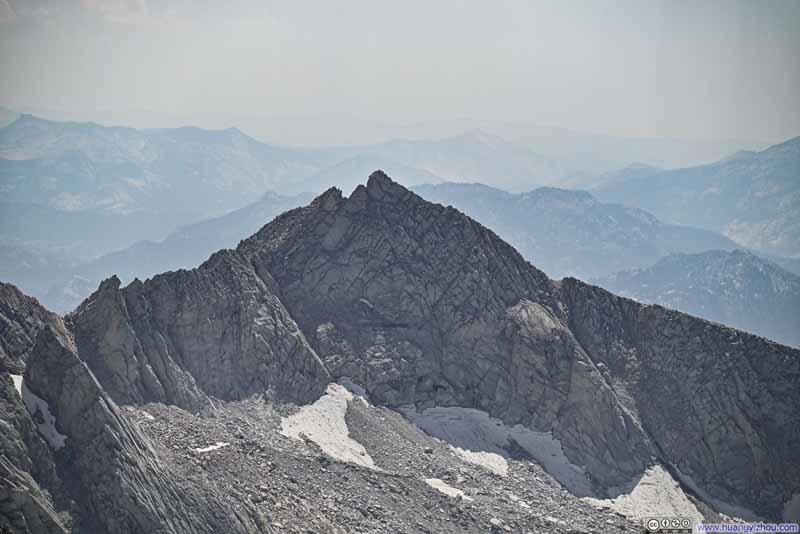 Peak 12000
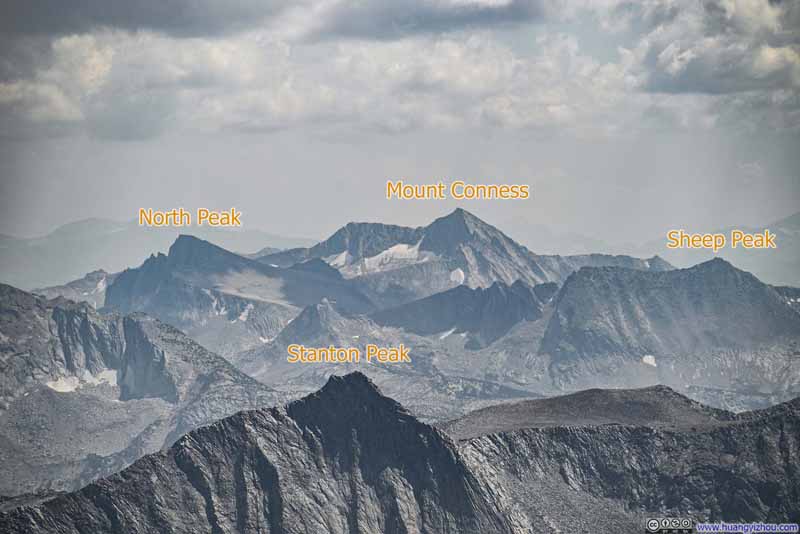 Mountains to the South
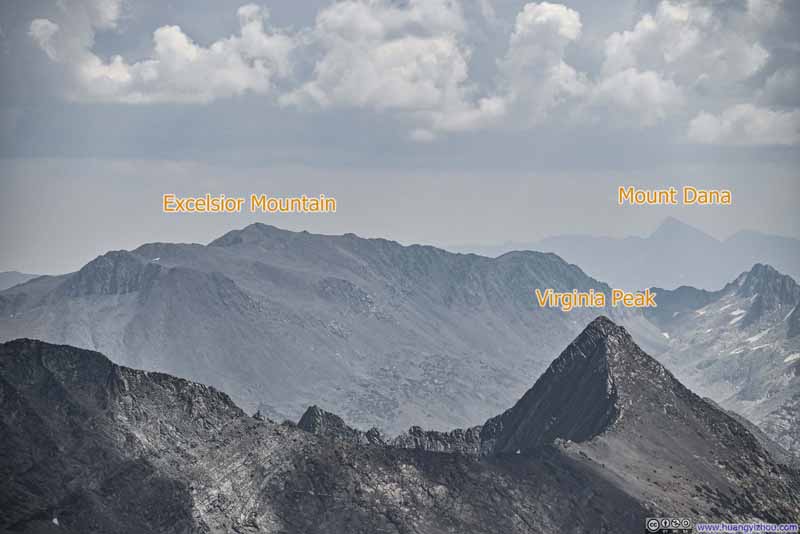 Mountains to the Southeast
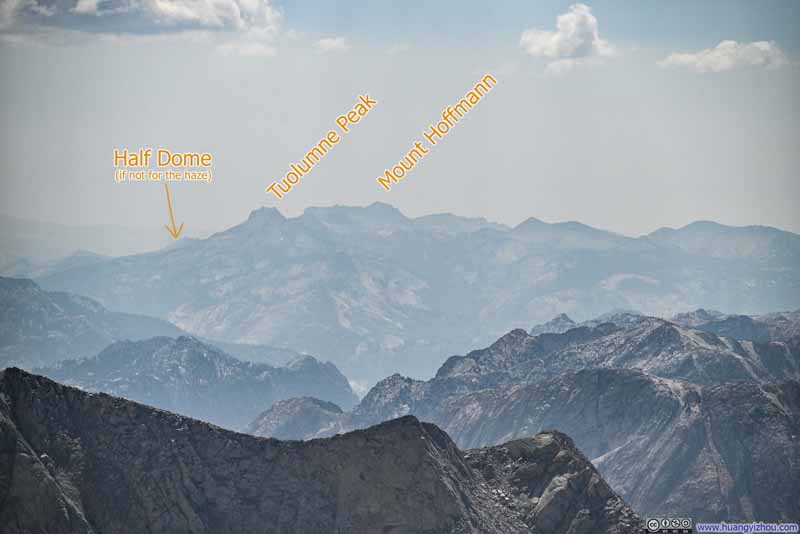 Mountains to the South
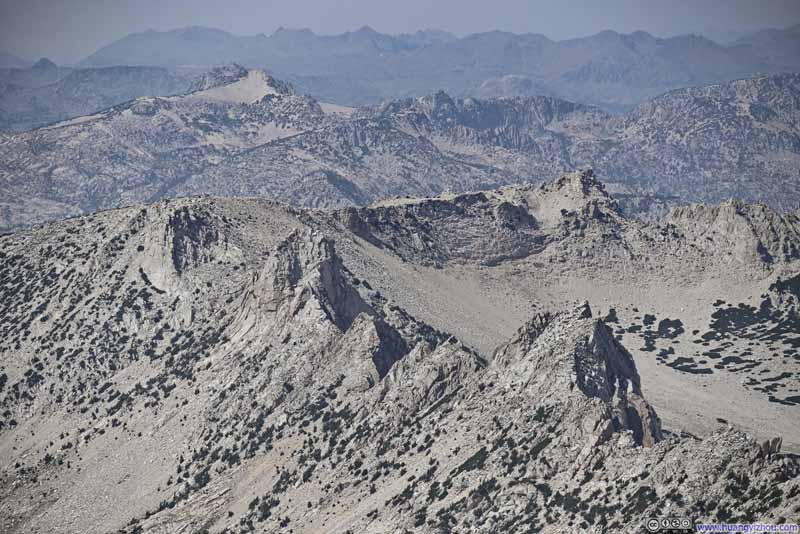 Northwestern Part of Sawtooth Ridge
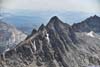
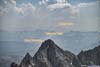
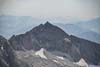
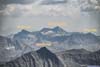
Click here to display photos from the summit of Matterhorn Peak.

Whorl Mountain
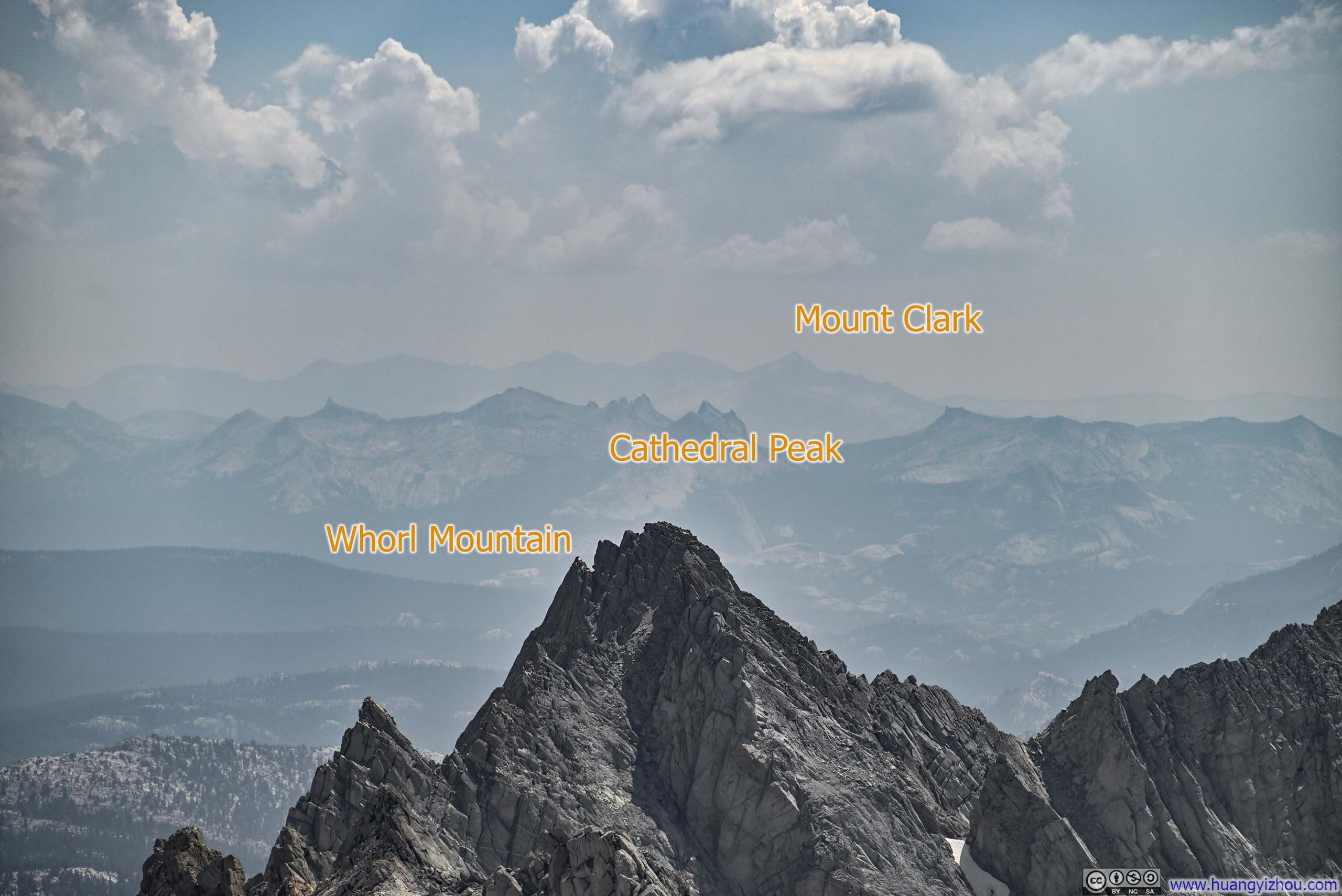
Mountains to the South
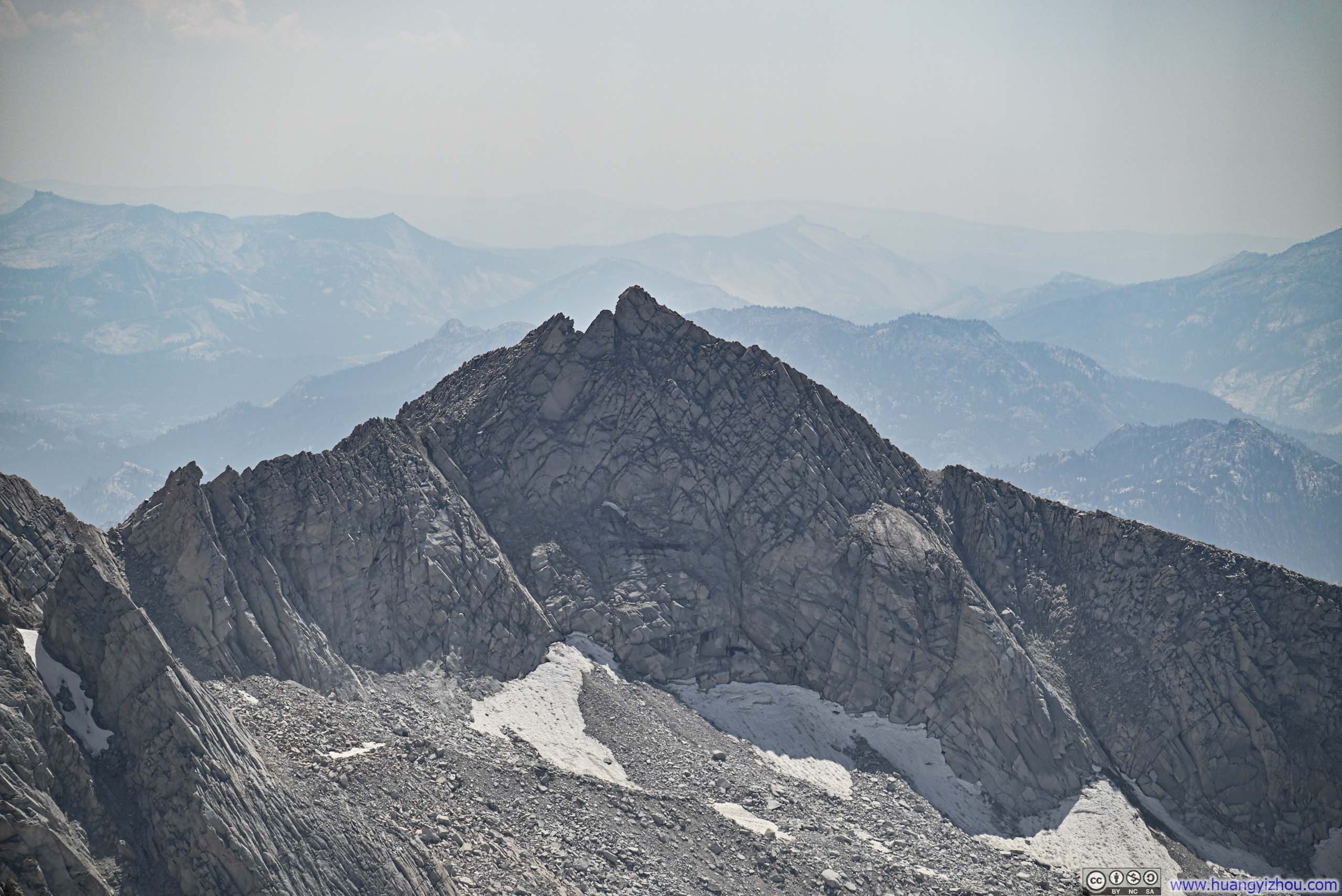
Peak 12000
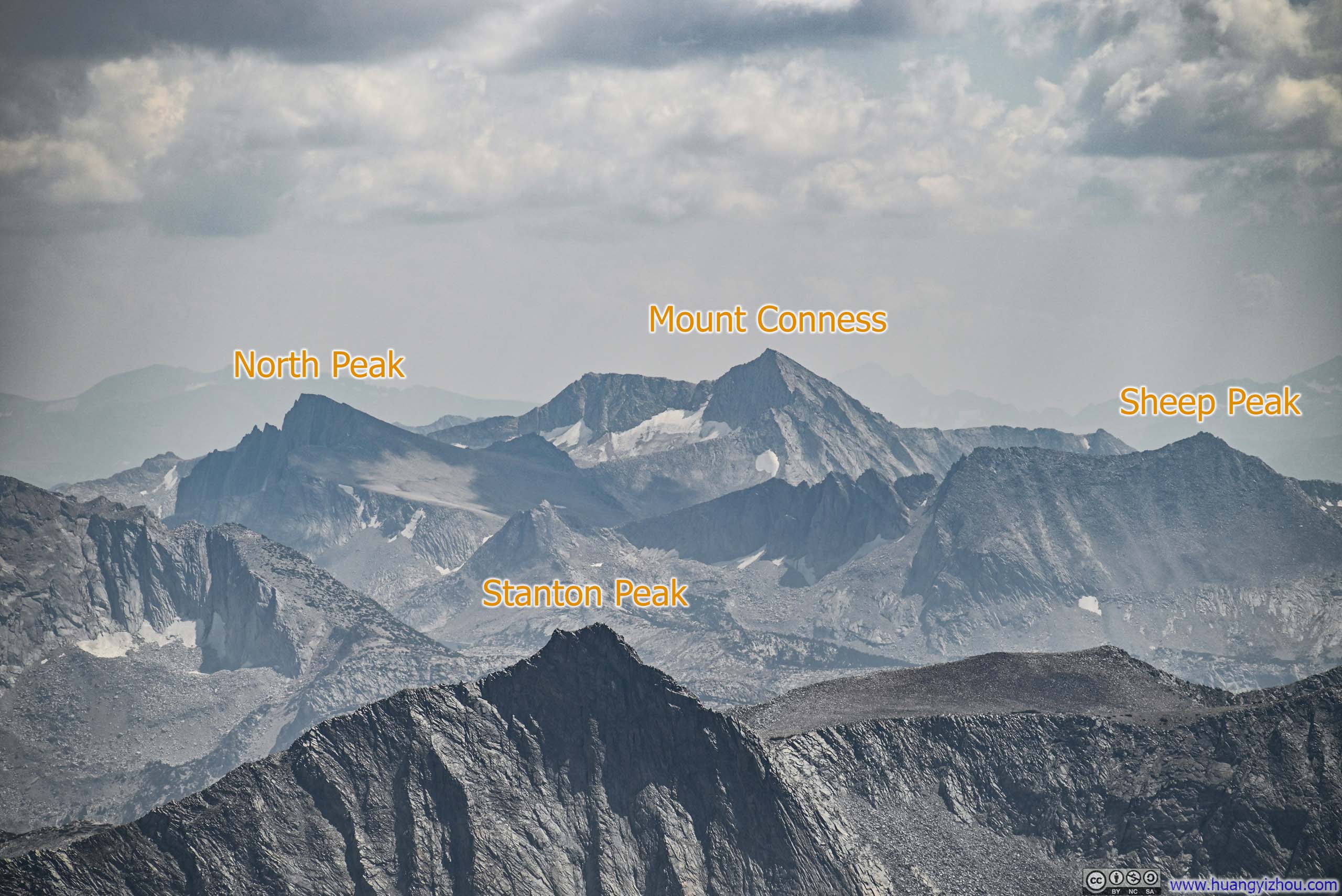
Mountains to the South
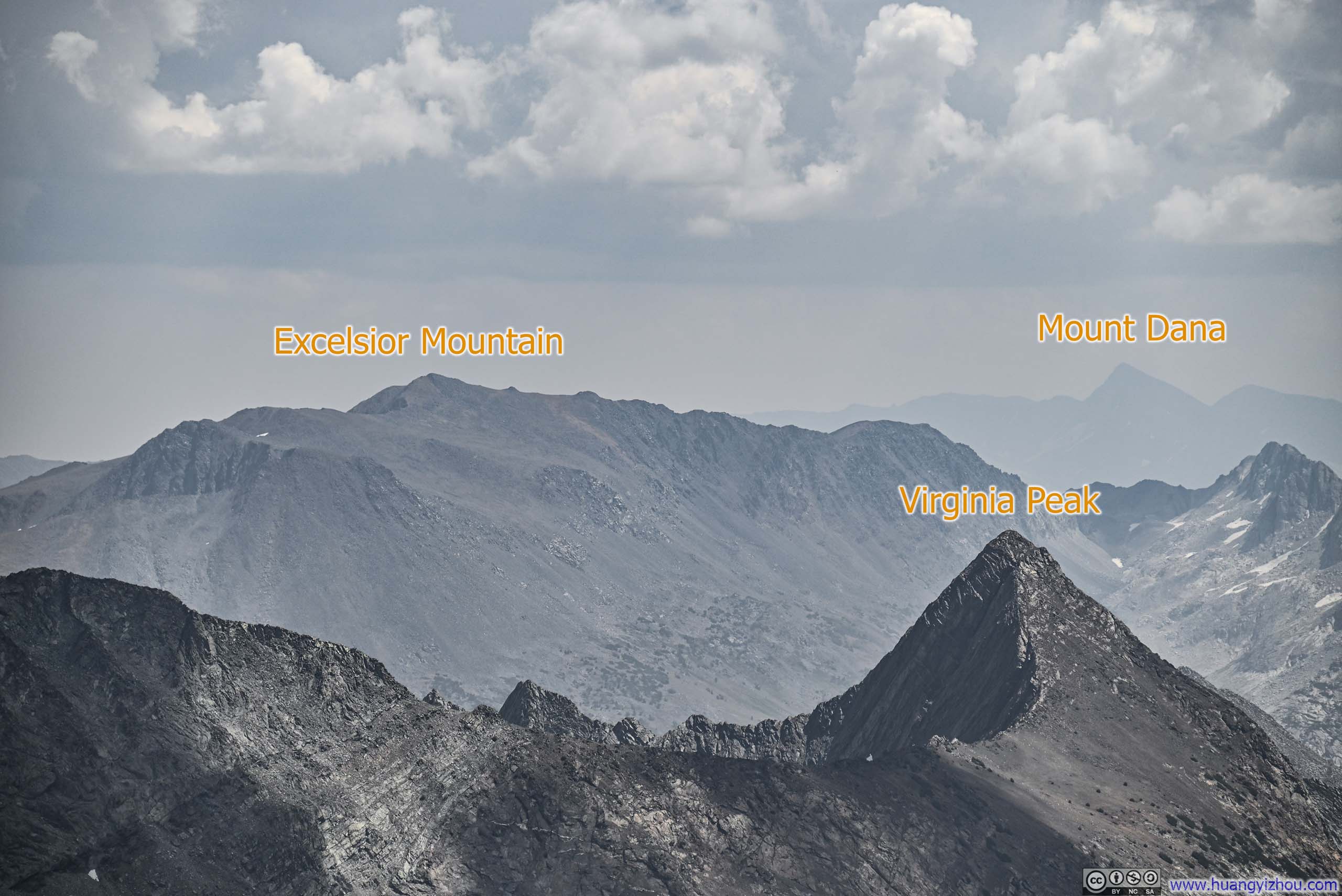
Mountains to the Southeast

Mountains to the South
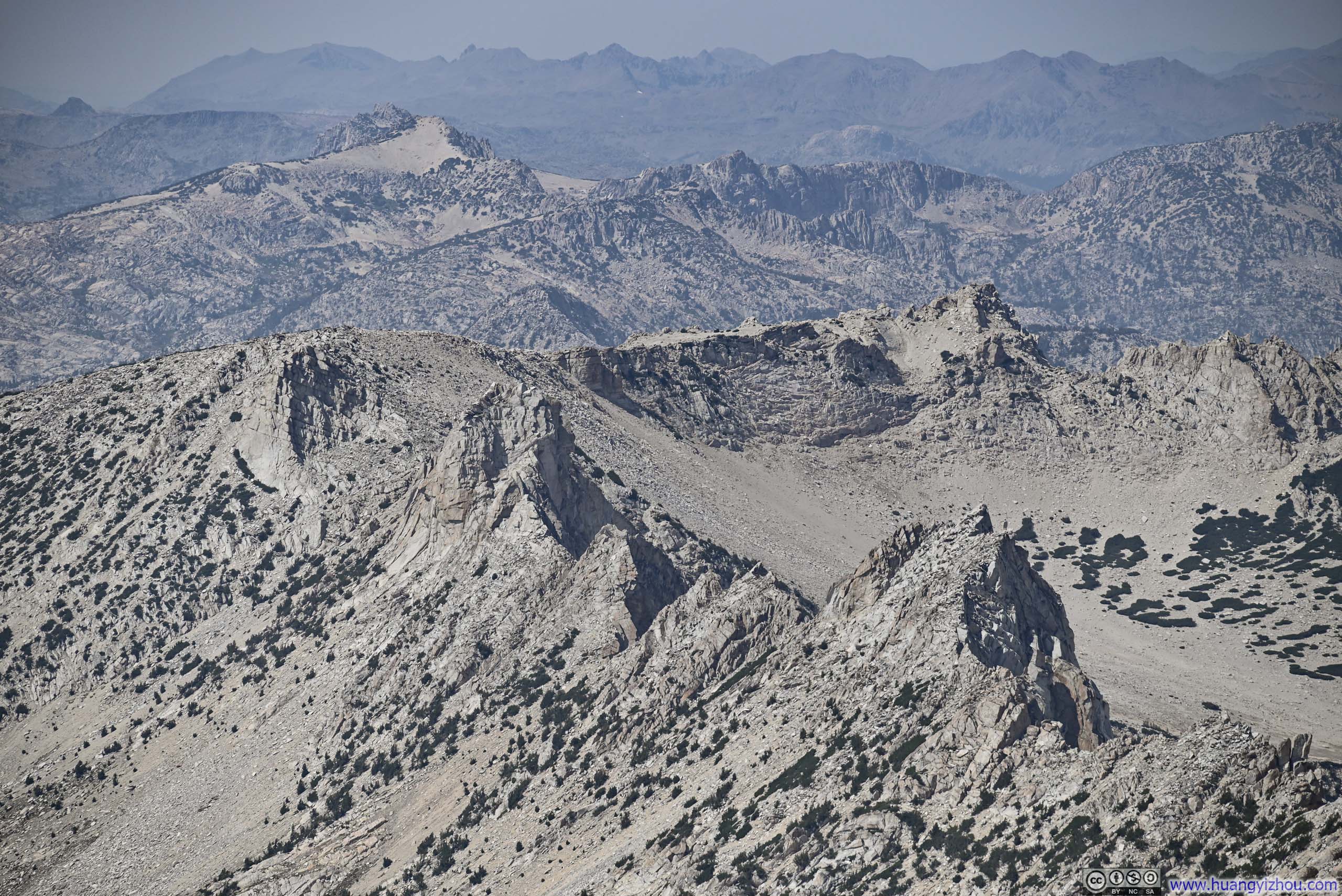
Northwestern Part of Sawtooth Ridge
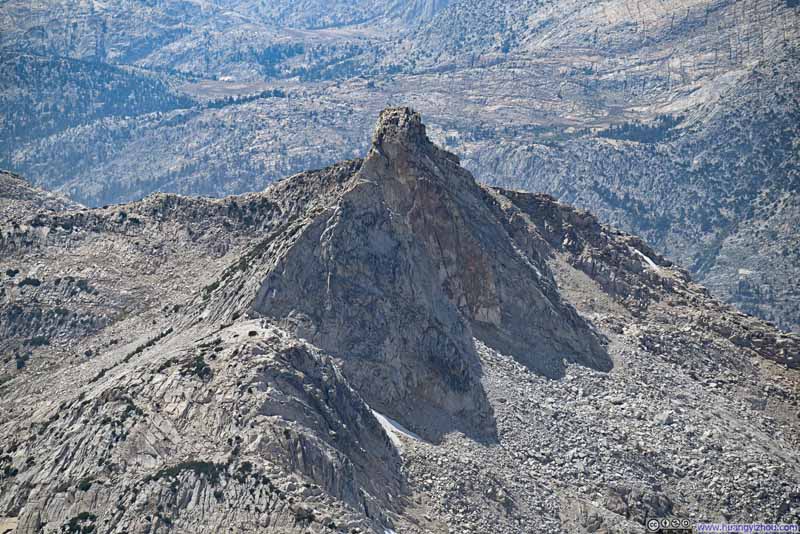 Finger Peaks
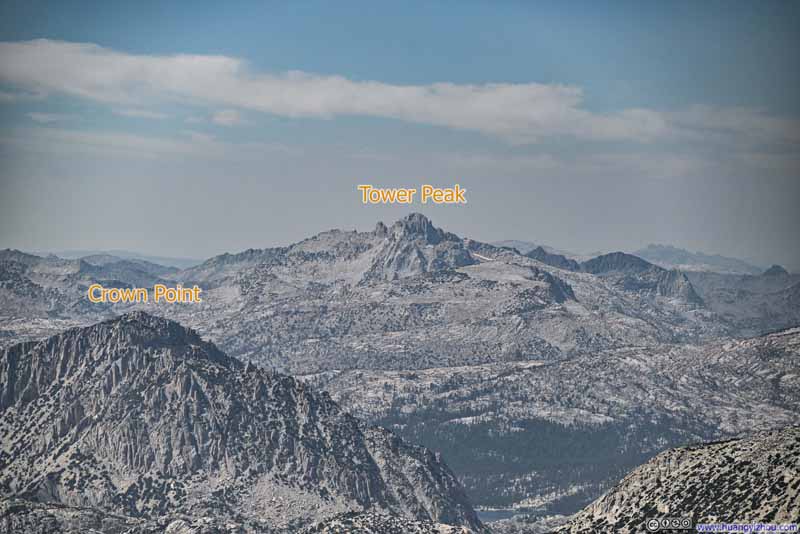 Mountains to the West
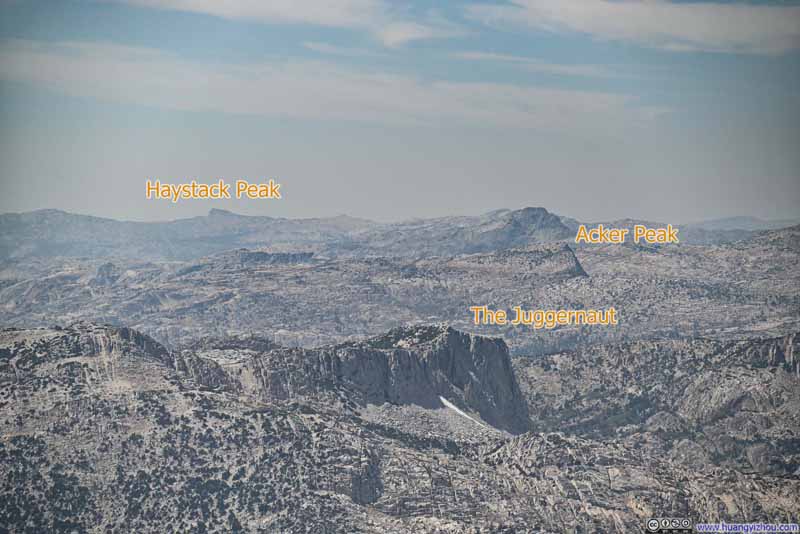 Mountains to the West
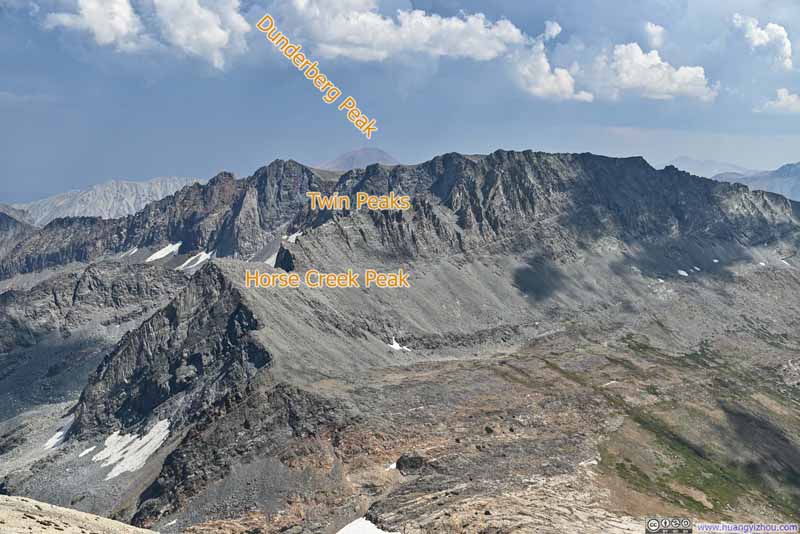 Mountain to the East
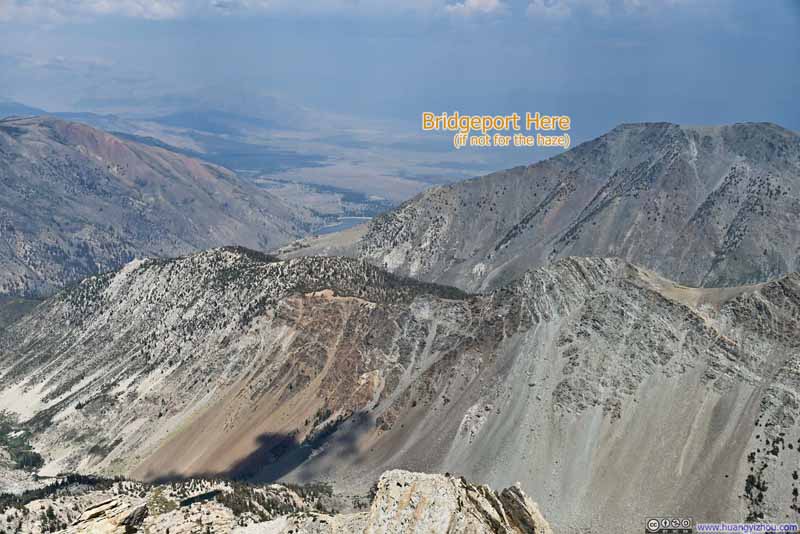 Fields to the Northeast
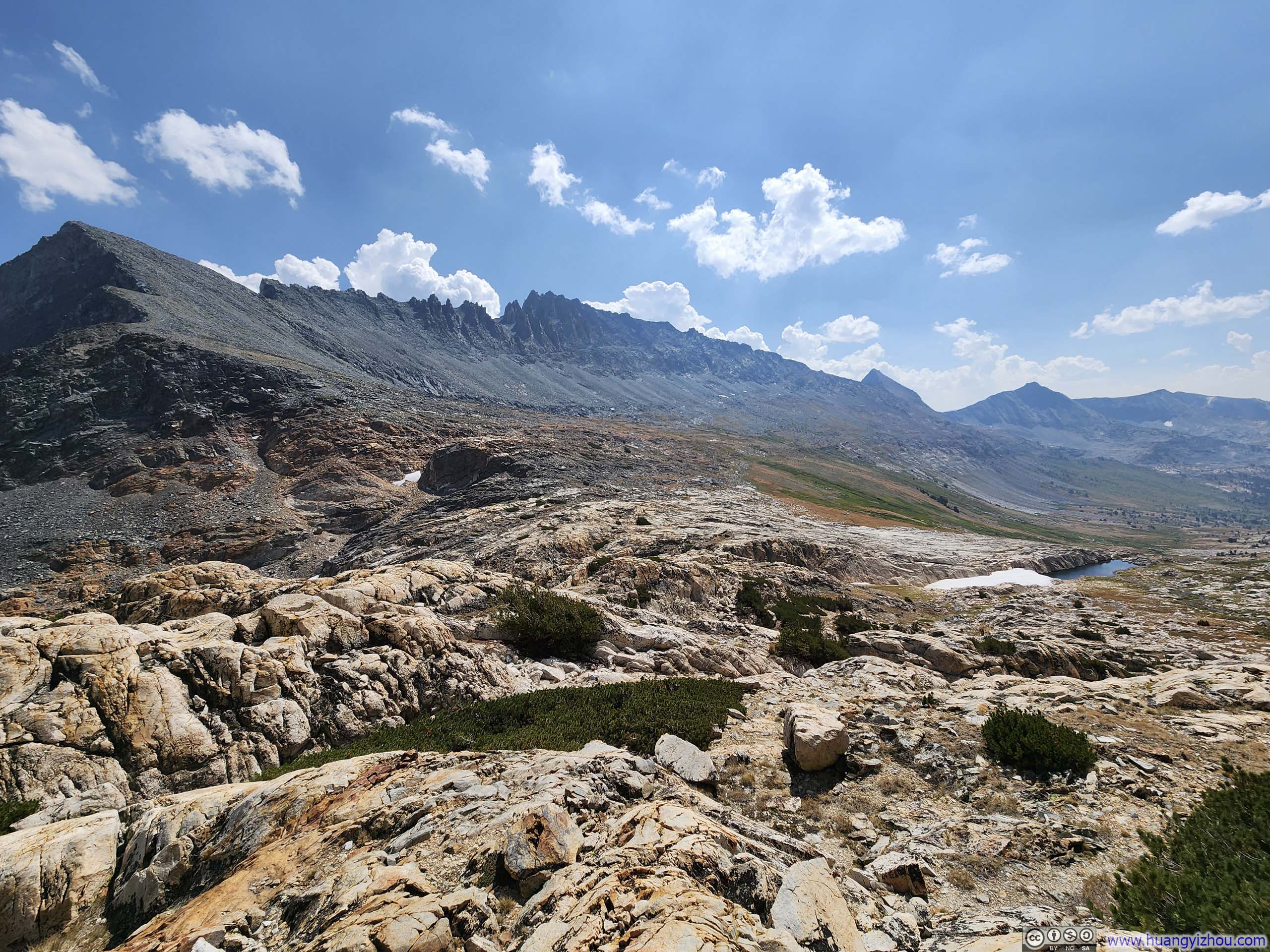
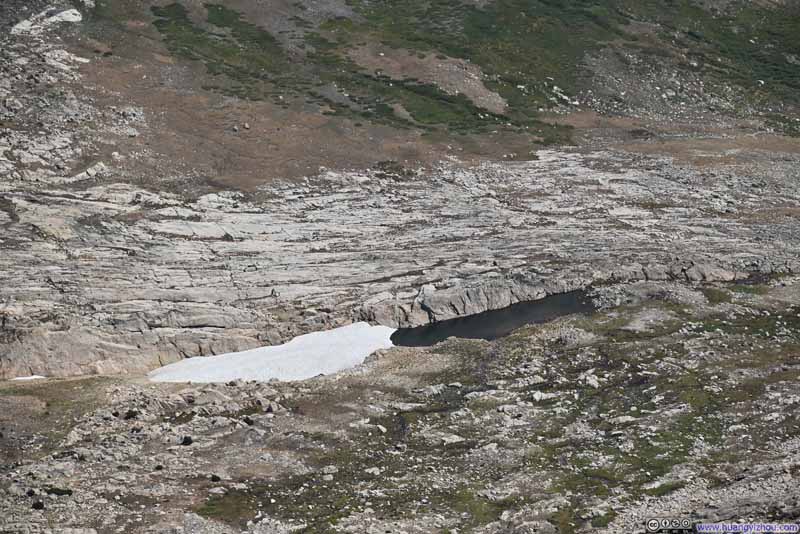 Snow Patches near Horse Creek Pass
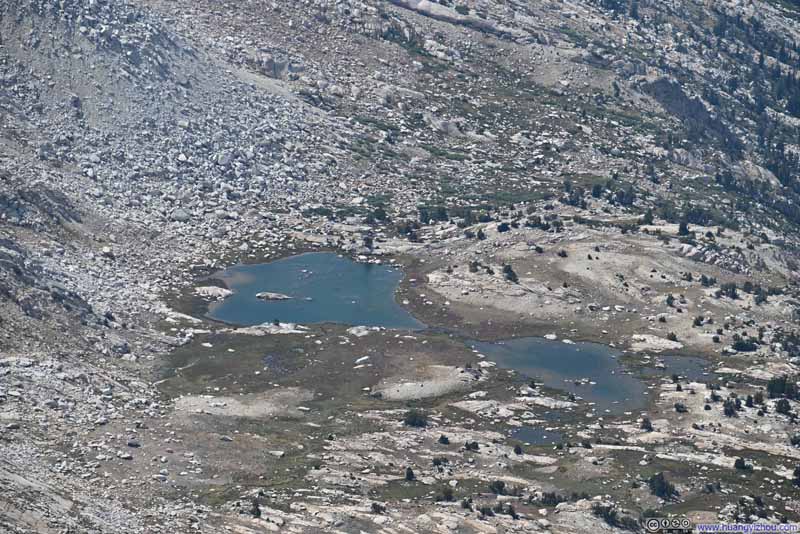 Alpine Ponds
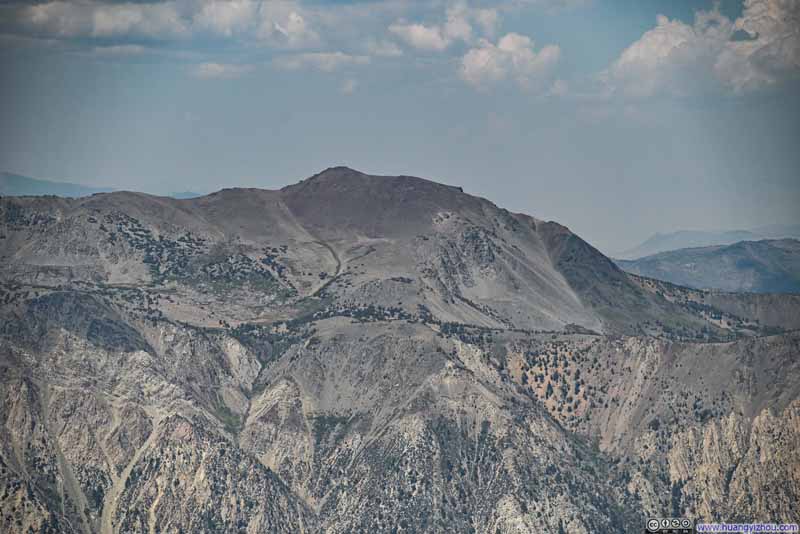 Eagle Peak
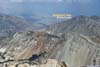
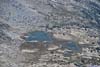
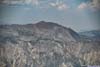
Click here to display photos from the summit of Matterhorn Peak.
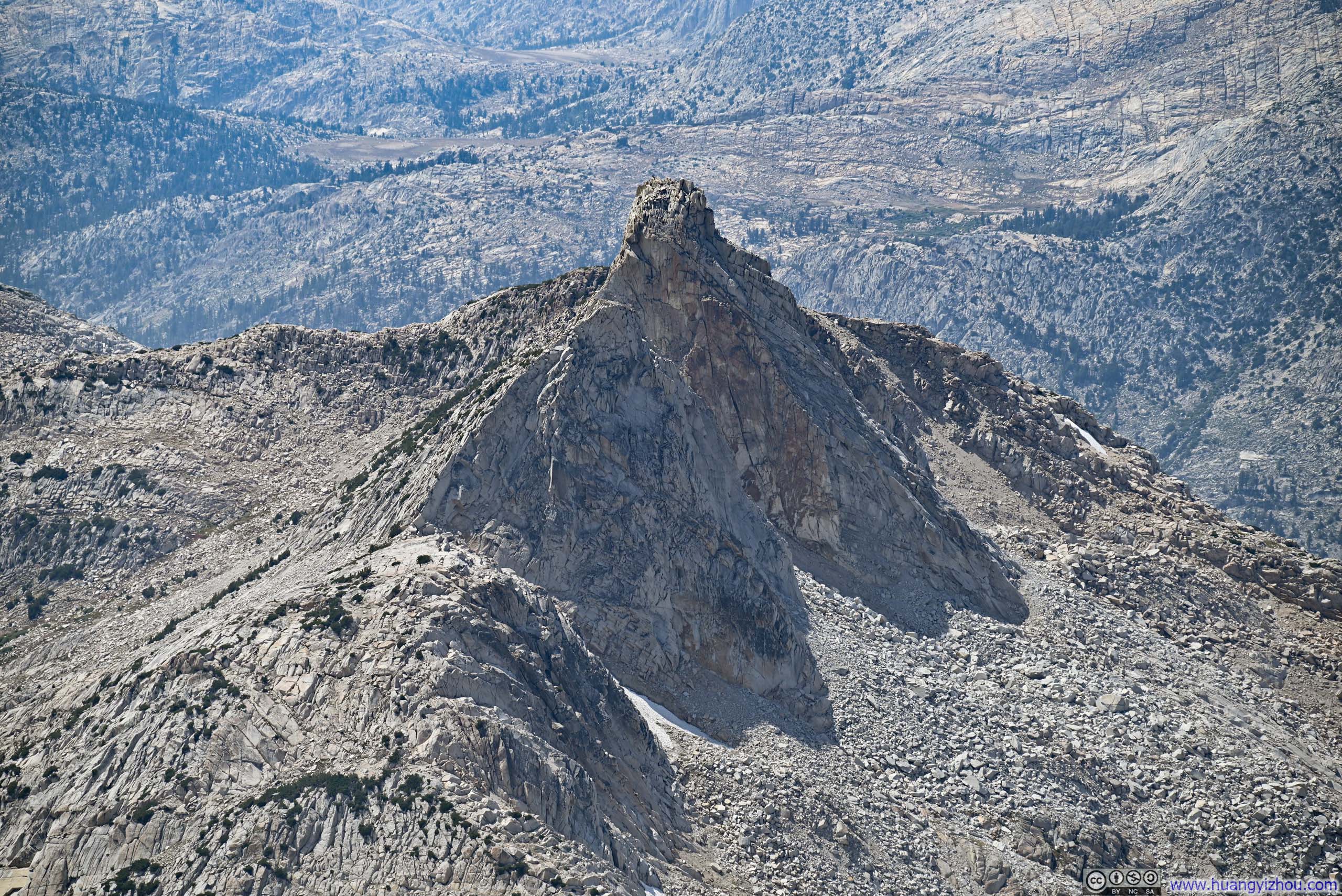
Finger Peaks

Mountains to the West

Mountains to the West
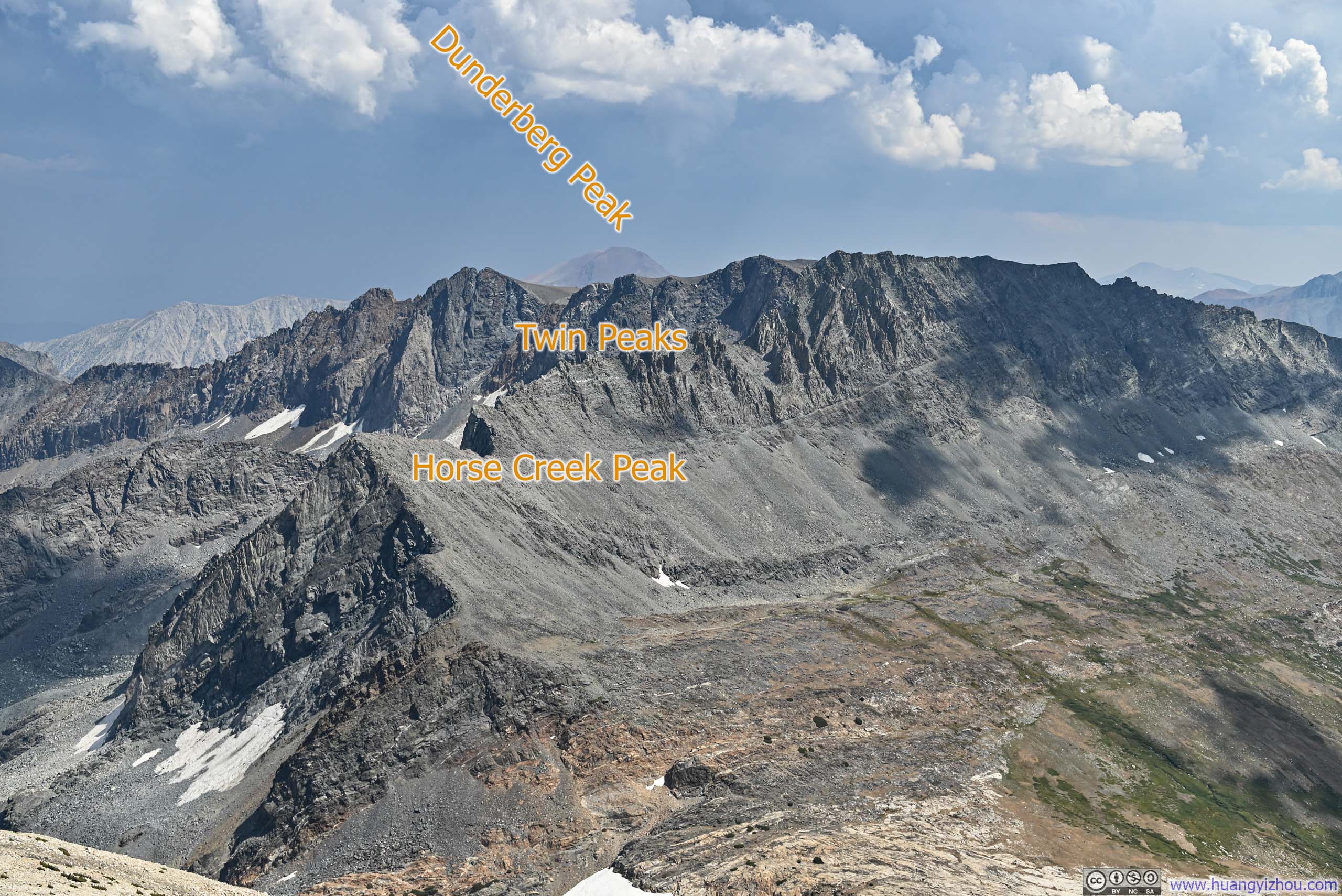
Mountain to the East
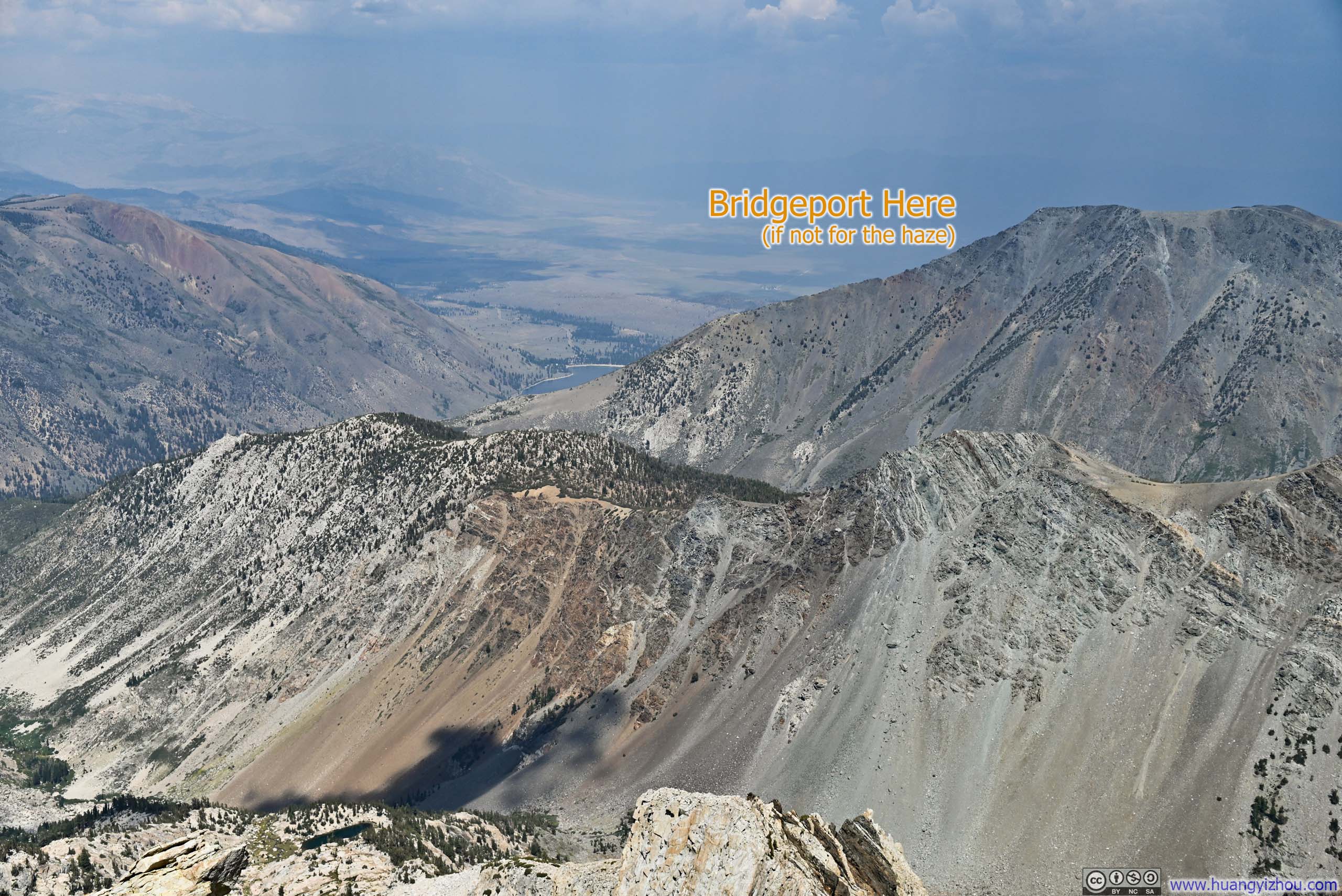
Fields to the Northeast
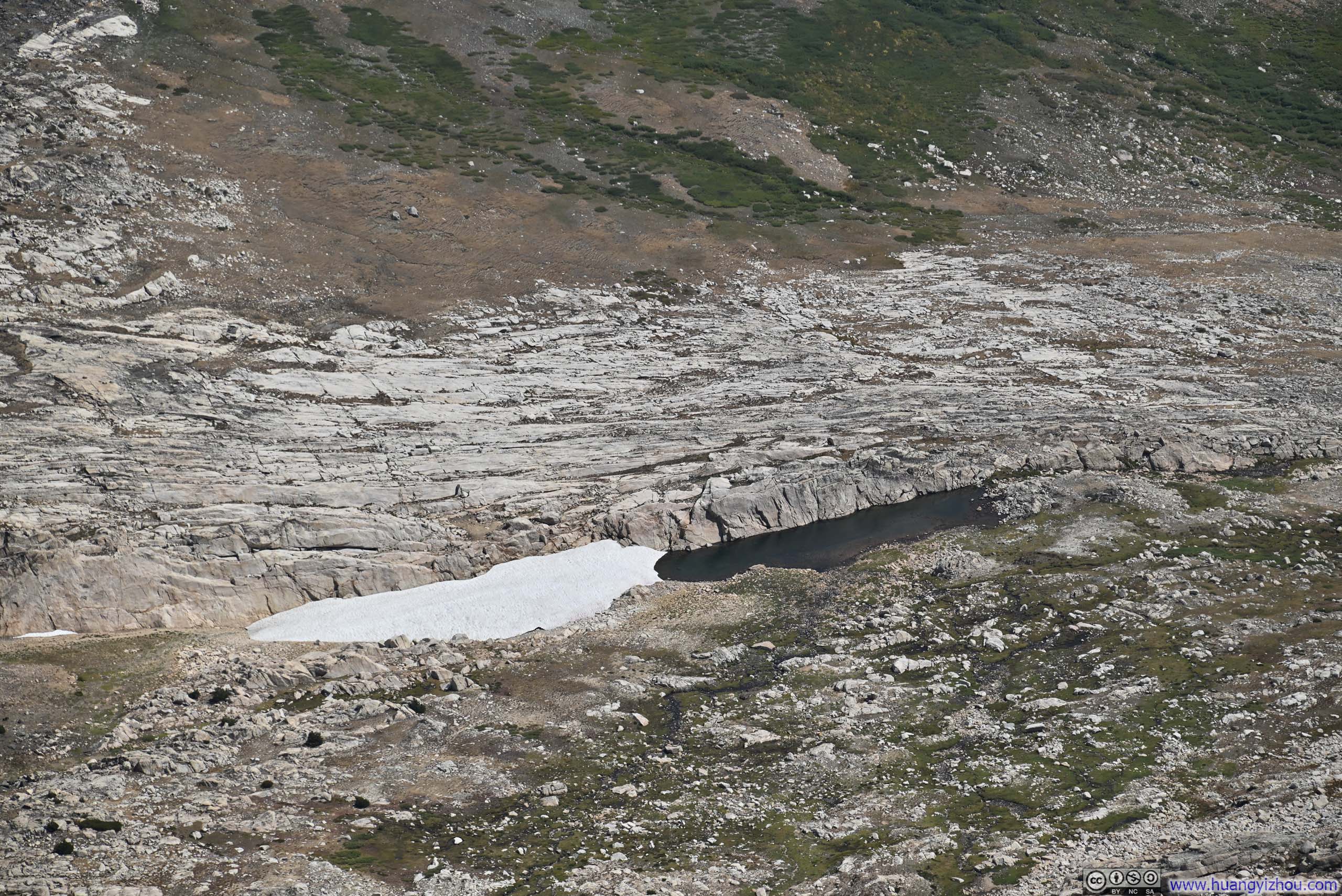
Snow Patches near Horse Creek Pass
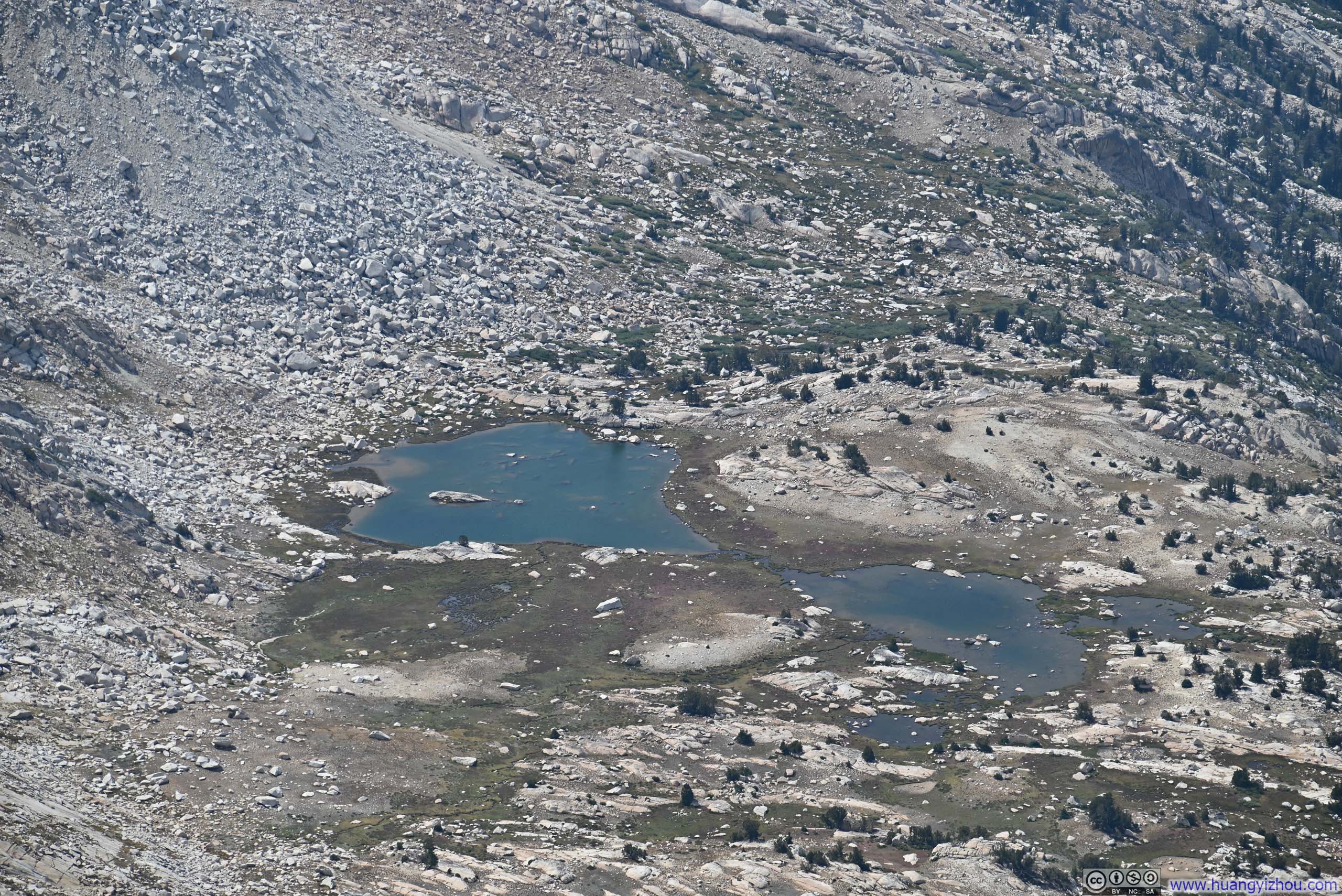
Alpine Ponds
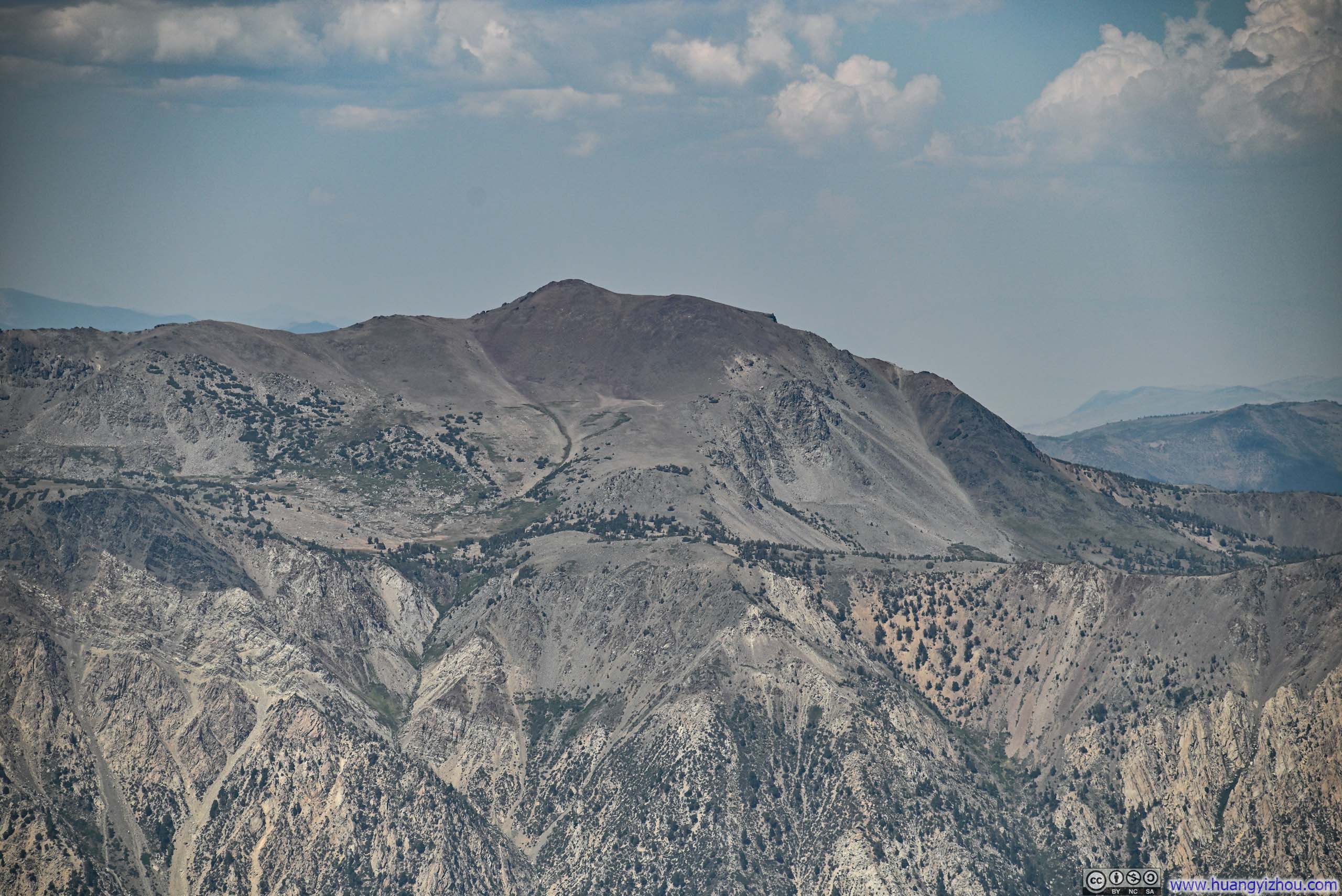
Eagle Peak

View from Matterhorn Peak Summit
As usual, there was video to commemorate the moment:
15 seconds, 2160p60fps, H265 only, 20Mbps/40MB file size.
I stayed on the summit of Matterhorn Peak for about half an hour before starting my descent at 2:10pm.
While descending from Matterhorn Peak, I noticed the eastern skies darkening ominously. My concern deepened as the rumble of thunder reached my ears, prompting me to expediate my descent. (This caught me somewhat off guard, as the weather forecast had indicated minimal chances of rain/storm that day.) The clouds loomed menacingly to the east, roughly over Excelsior Mountain and Mt Conness, the other two candidates for my hike that day. Fortunately, the wind never pushed the clouds in my direction, and I remained dry throughout the remainder of my descent.
I combined most of the photos taken during my descent into the slideshows earlier. So fast forward to the end of the day, where I felt the tranquil waters of Twin Lakes and the mountains across them bathed in soft twilight colors deserved an exhibition of their own.
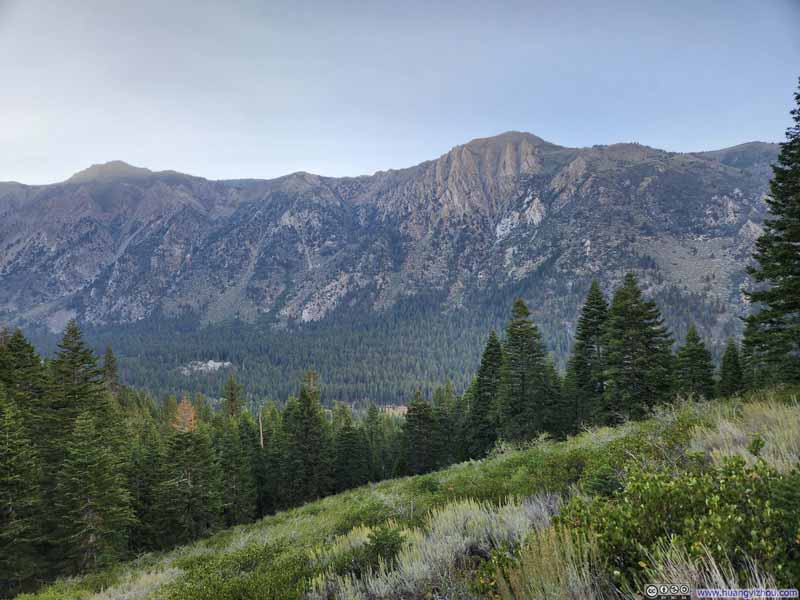 Mountains across Robinson Creek Valley
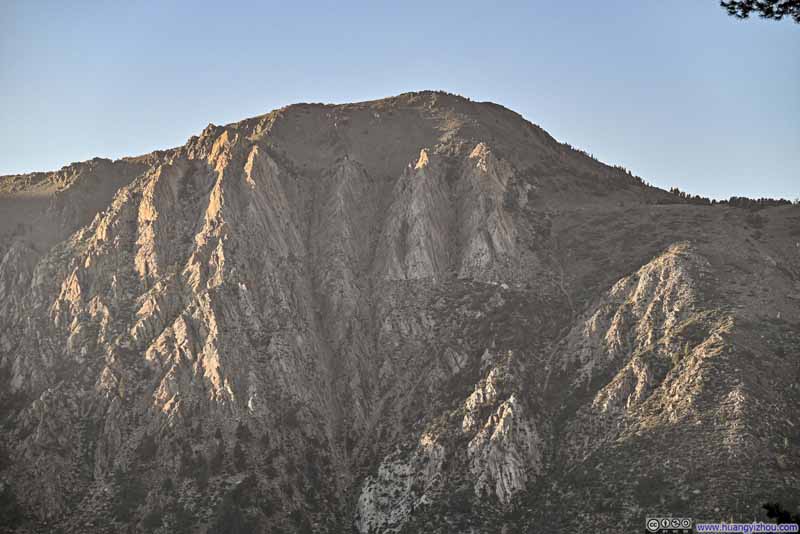 Mountains across Robinson Creek ValleyGlowing against the setting sun.
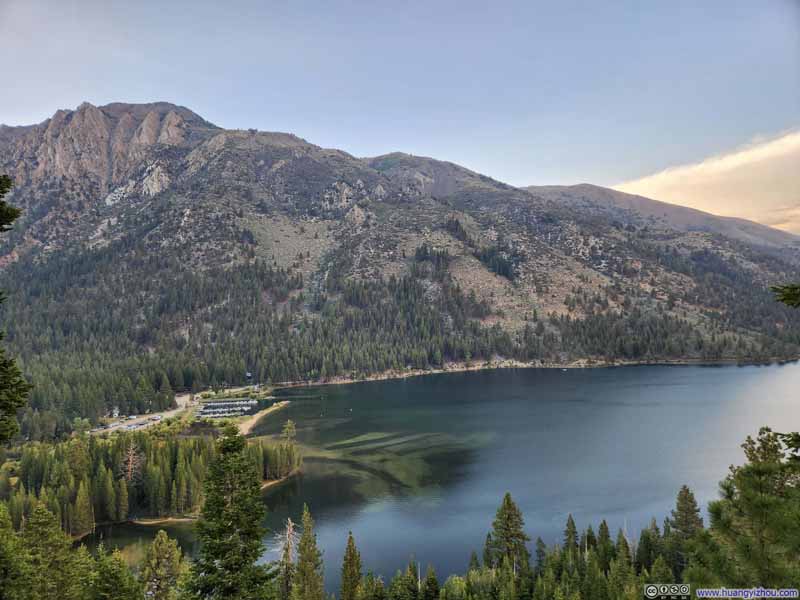 Upper Twin Lake
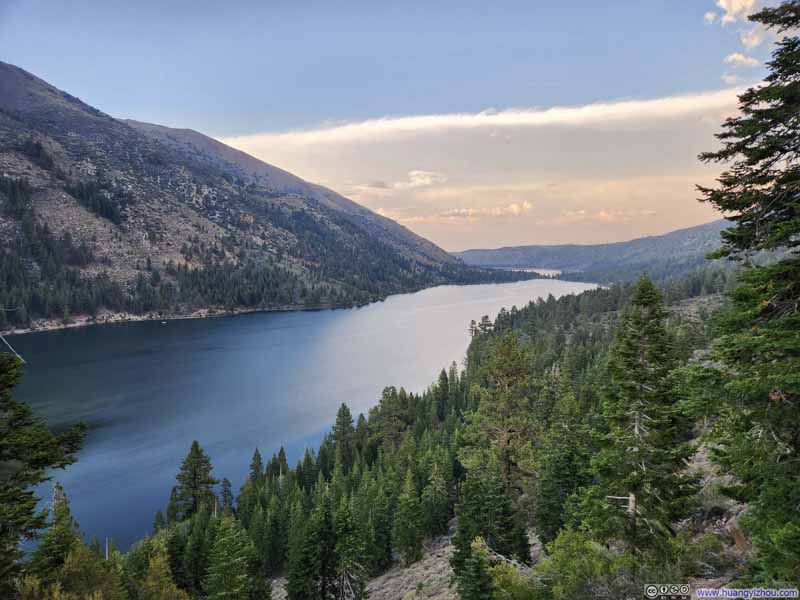 Twin Lakes
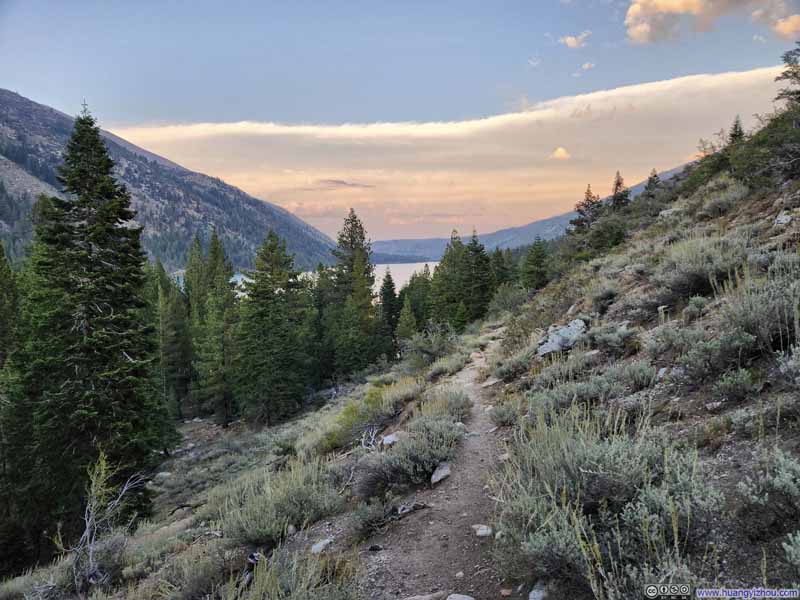 Trail against Glowing Horizon
Click here to display photos of the slideshow
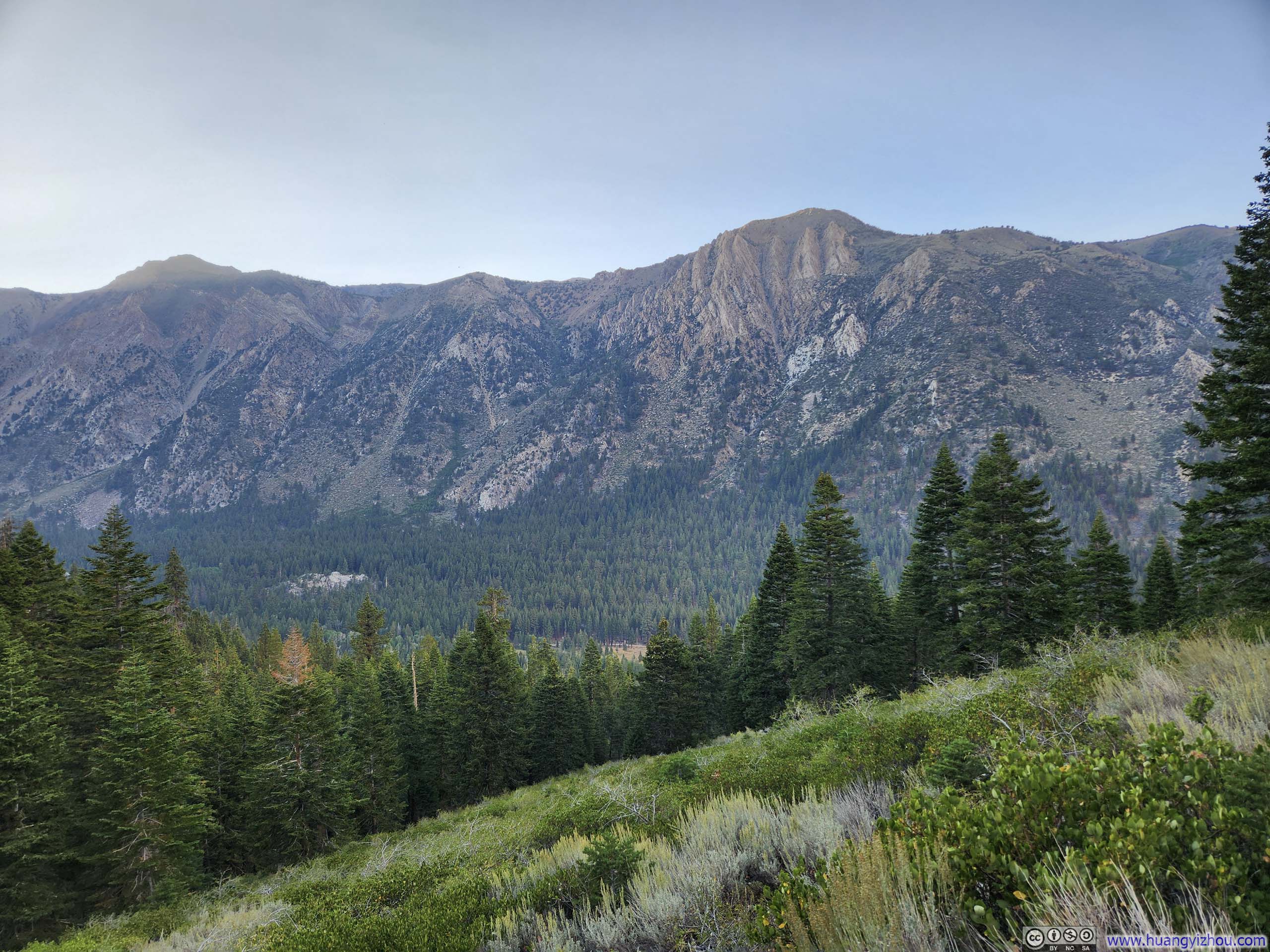
Mountains across Robinson Creek Valley
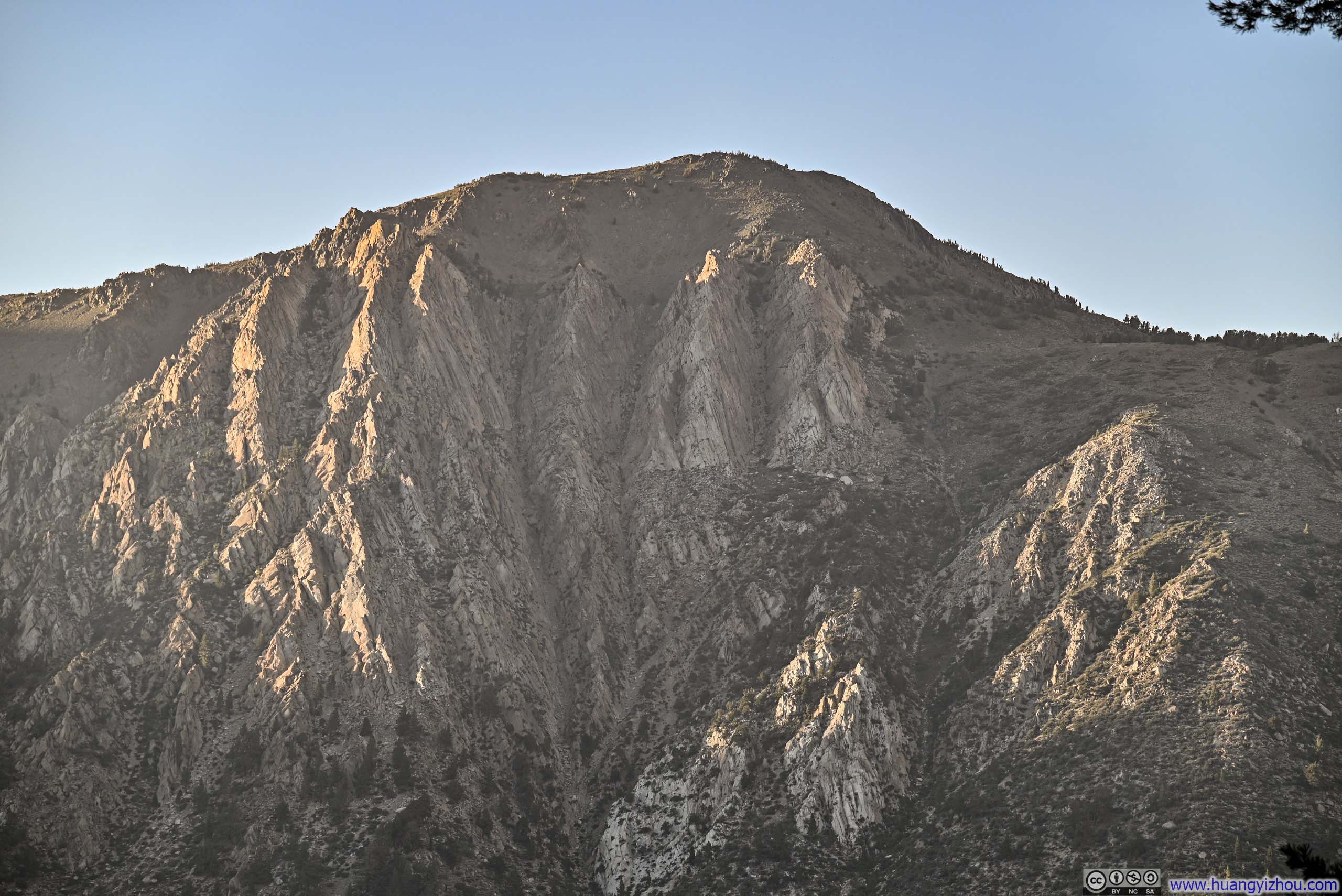
Mountains across Robinson Creek ValleyGlowing against the setting sun.
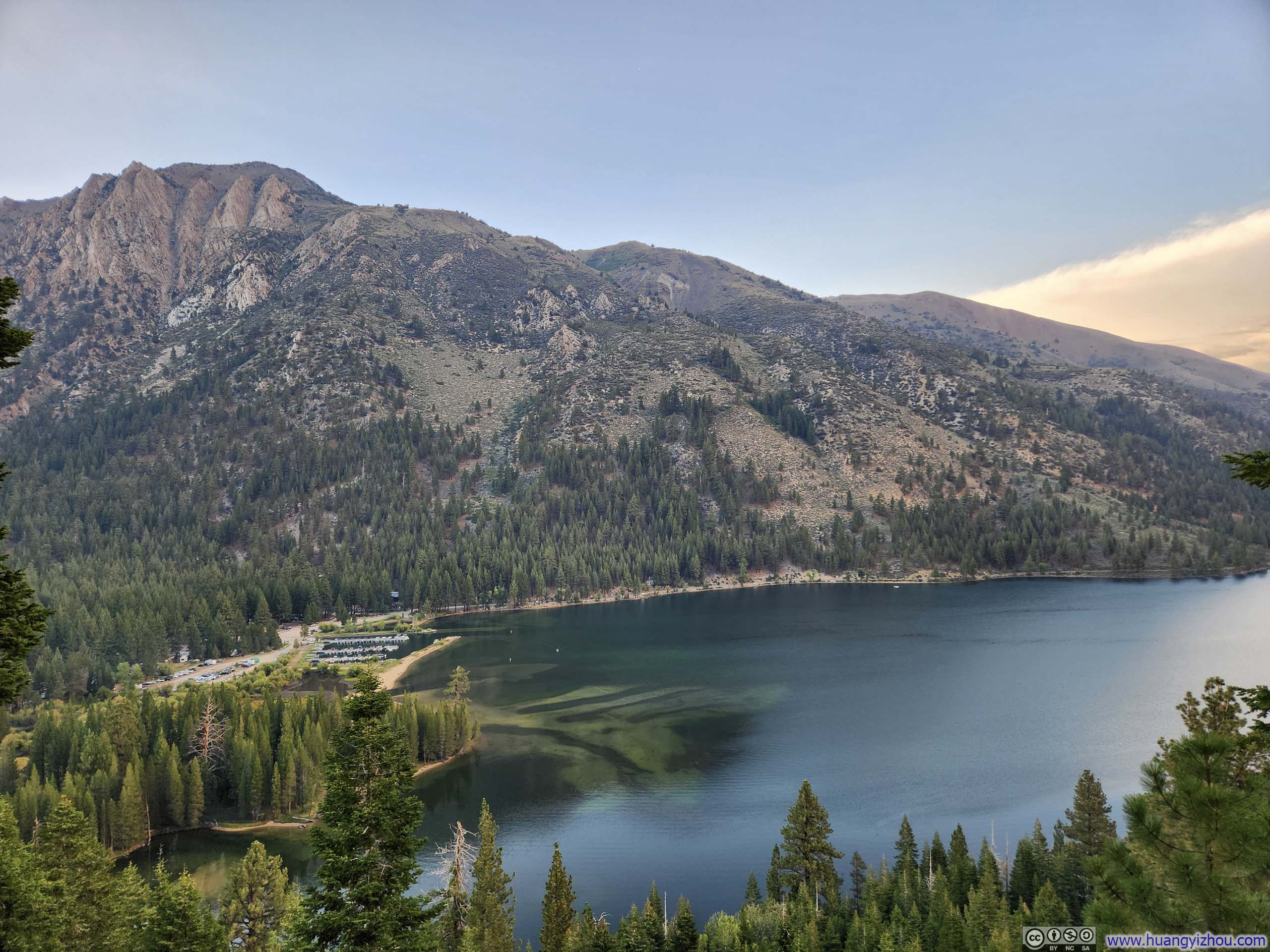
Upper Twin Lake
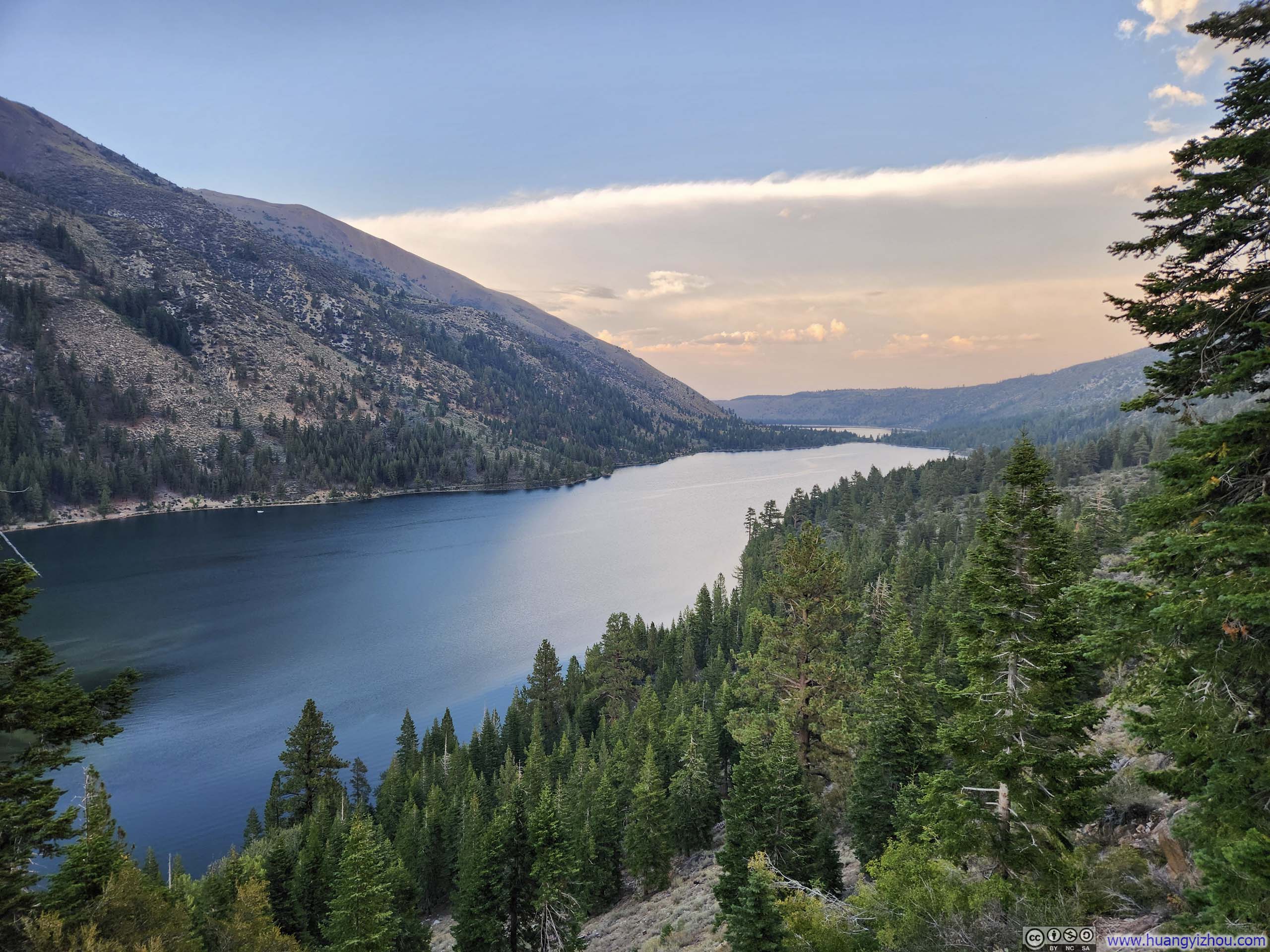
Twin Lakes
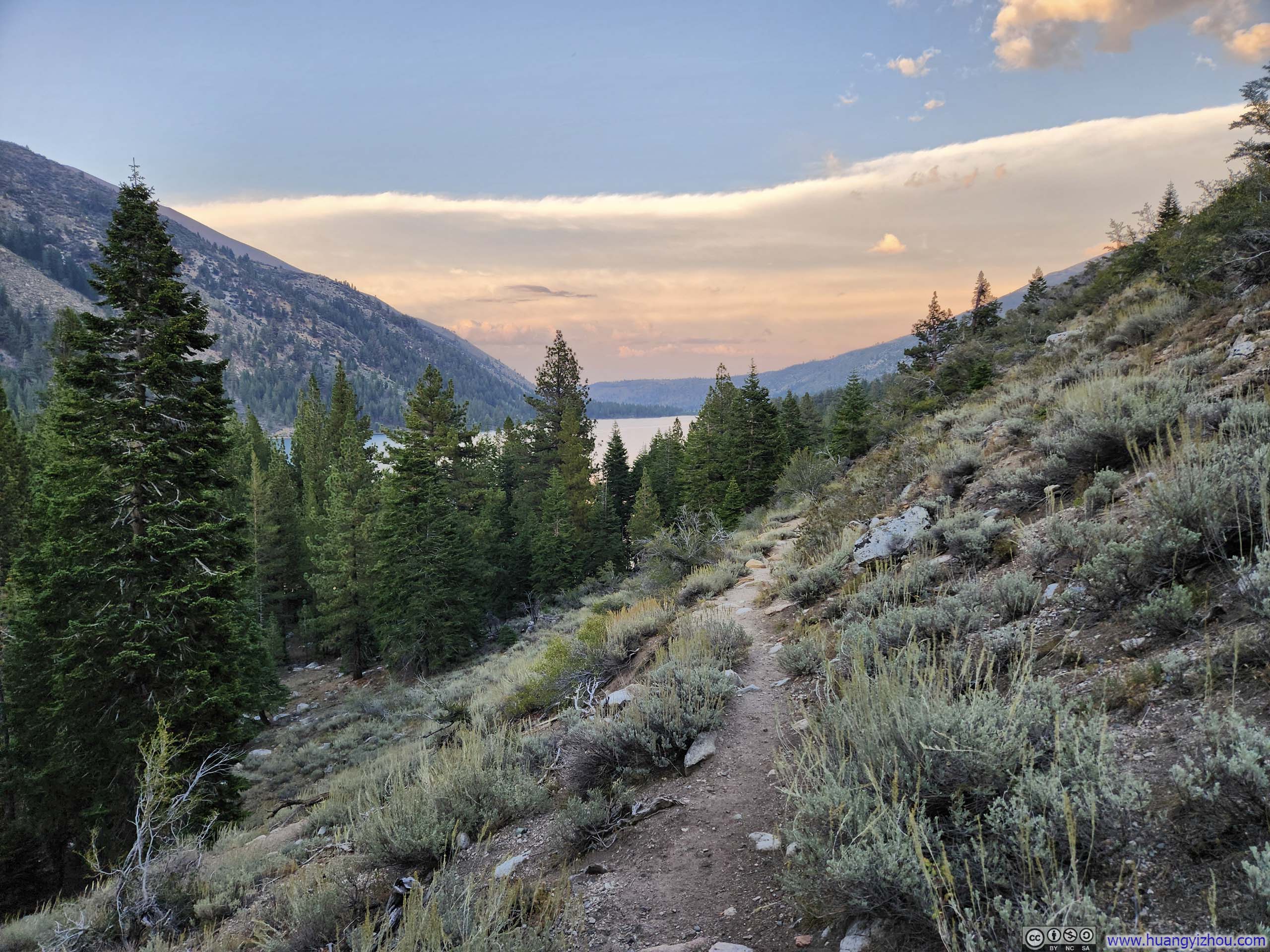
Trail against Glowing Horizon
Finally, I got back to the trailhead at 7:17pm, concluding the hike in 11.5 hours.
September 6: Driving back to San Francisco
I didn’t have much planned for the next day, September 6, except driving back to the San Francisco Bay Area from Bridgeport. This drive was expected to take 4 hours through Stanislaus National Forest, affording me ample opportunities to pause along the way and savor the scenery. However, I found that Stanislaus National Forest offered fewer notable attractions than the Tioga Road I had taken through the Sierra Nevada two days prior. so I combined this day’s activities with the previous day’s post.
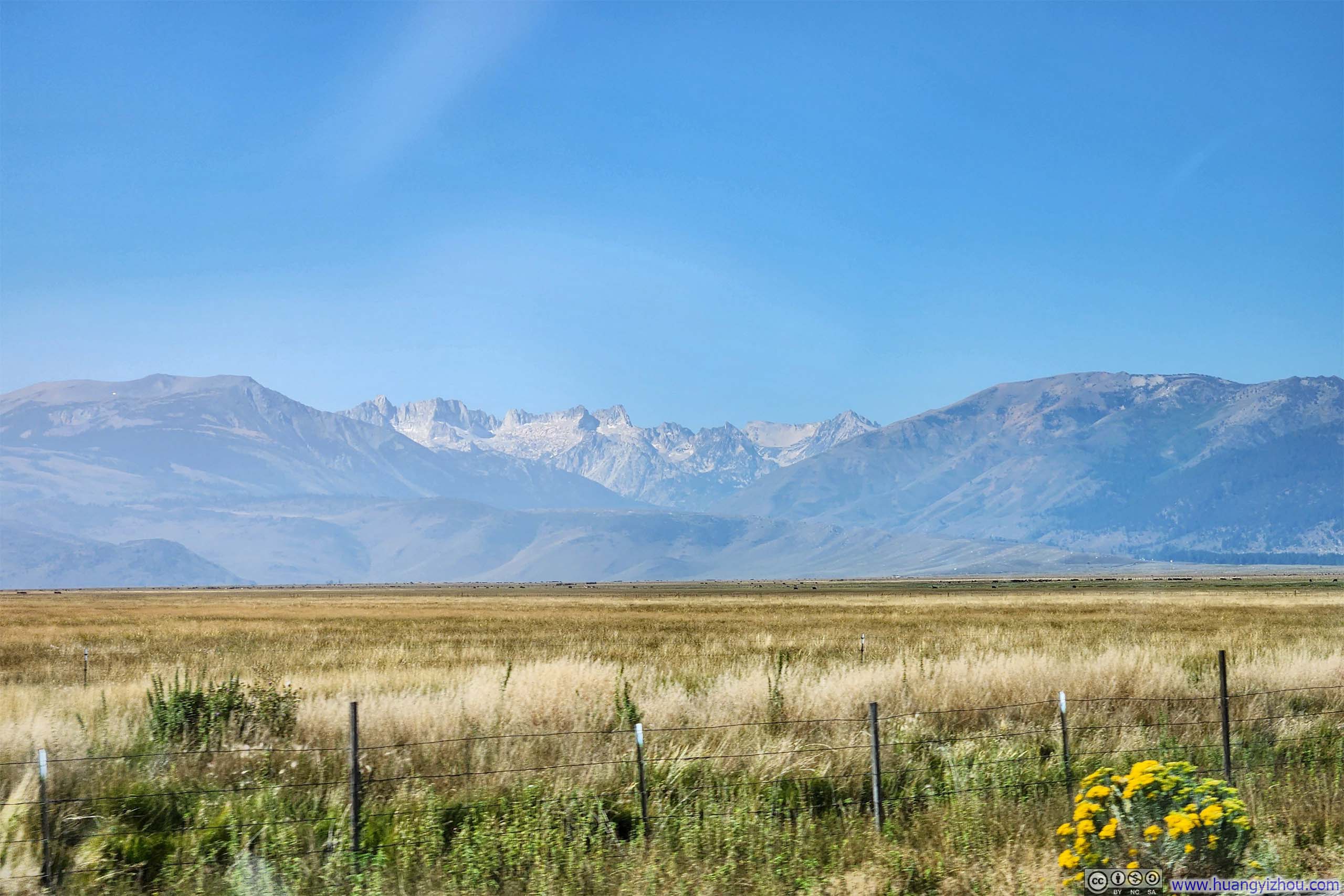
 Sierra Nevada Mountains from Road
The most notable attraction along the way was undoubtedly Leavitt Falls, a striking multi-tiered waterfall complete with its own observation deck. Upon stepping out of the car, I initially overlooked the observation deck and instead followed a faint trail through the woods to a clearing above a cliff that offered an excellent view of the waterfall and the pond below it (left). On my return, I discovered the observation deck, which provided an altogether different perspective—revealing additional tiers of the falls visible upstream (right).
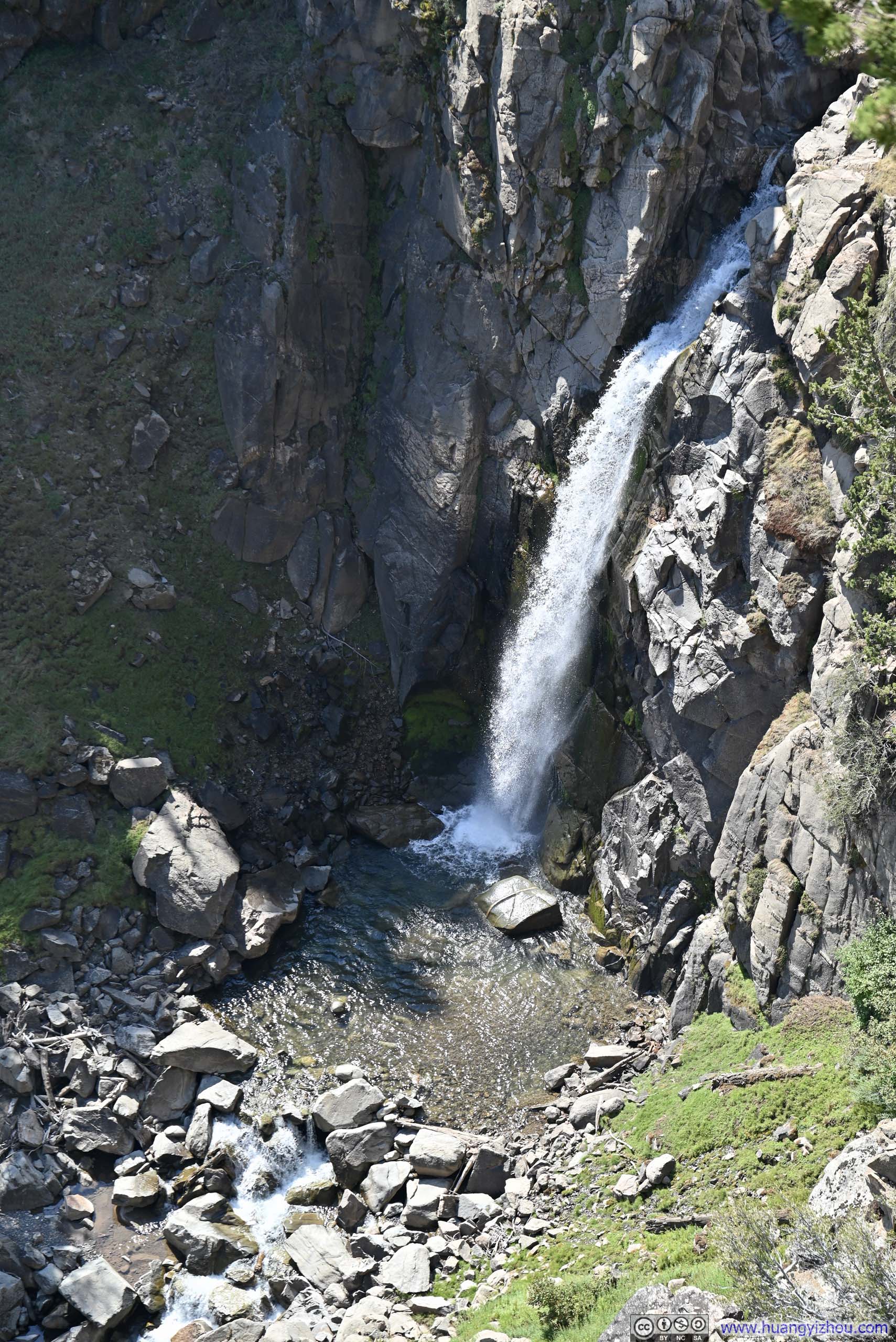
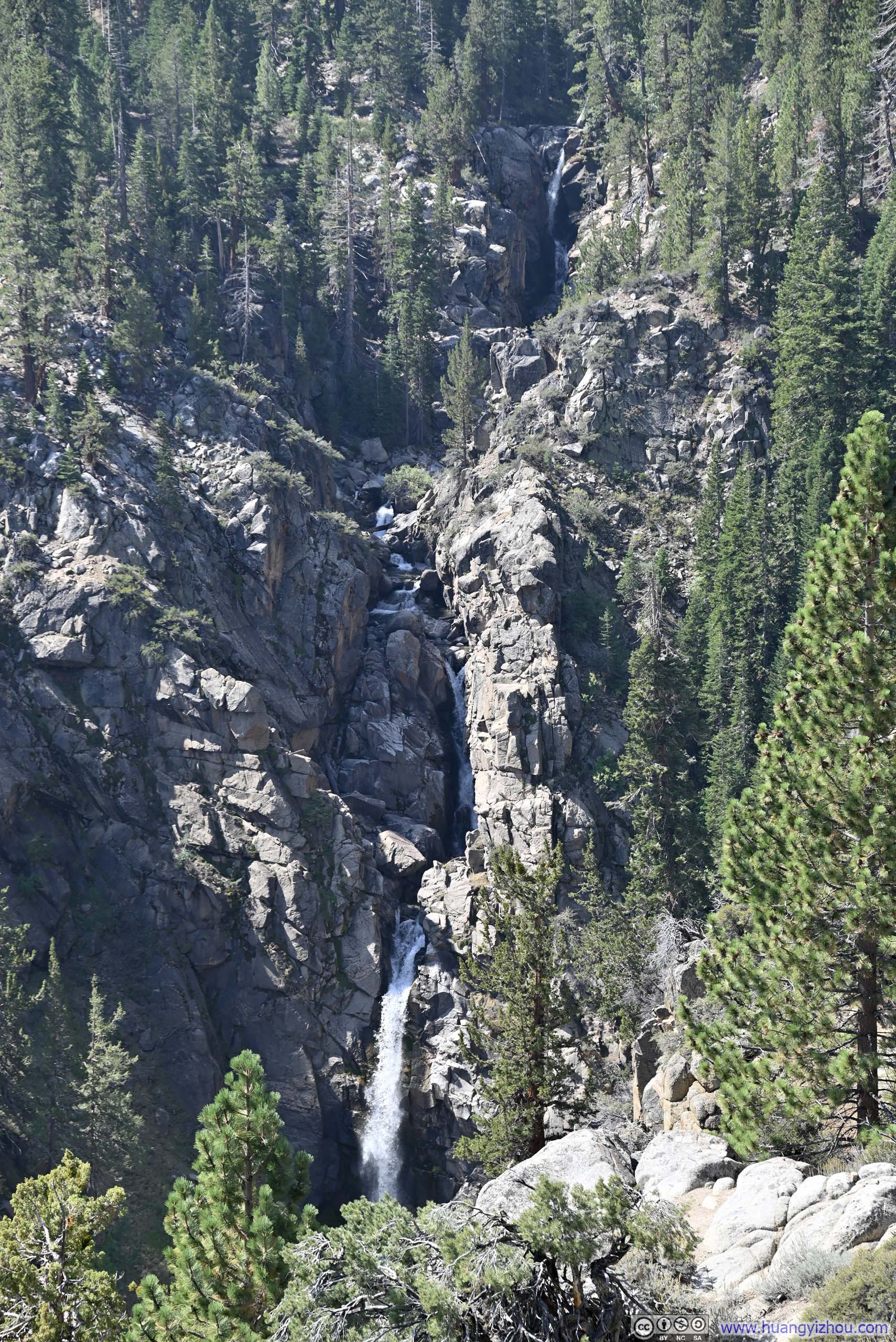 Leavitt Falls
 Leavitt MeadowAdditionally, the observation deck offered views of Leavitt Meadow below.
Continuing on, the next attraction was “Column of the Giants,” a columnar basalt formation accessible via a short trail. These formations were created when a lava flow was blocked by a natural dam. As the lava cooled, internal forces produced hexagonal fissures throughout the rock. Two distinctive layers of basalt were visible: the bottom layer displayed more regular, perpendicular columns, while the upper layer featured columns pointing in more random directions. This variation likely resulted from two separate lava flows occurring at different times.
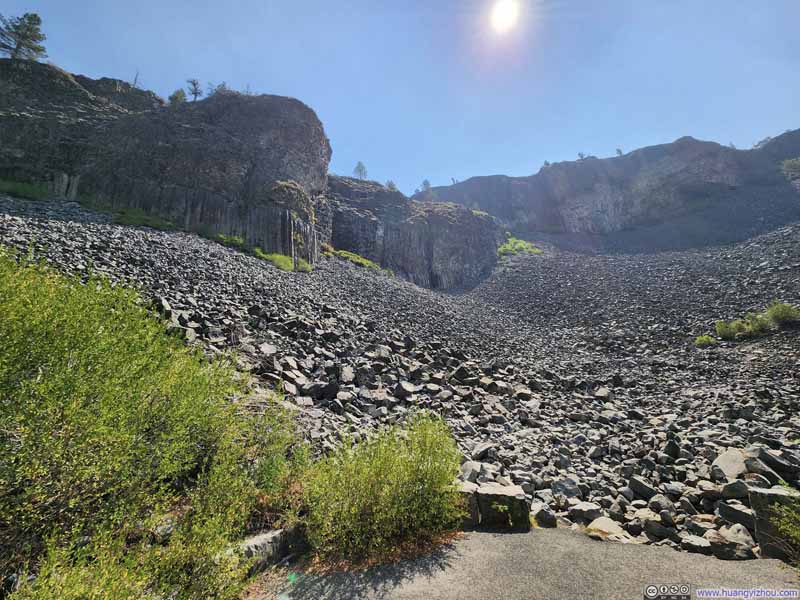 Columns of the Giants
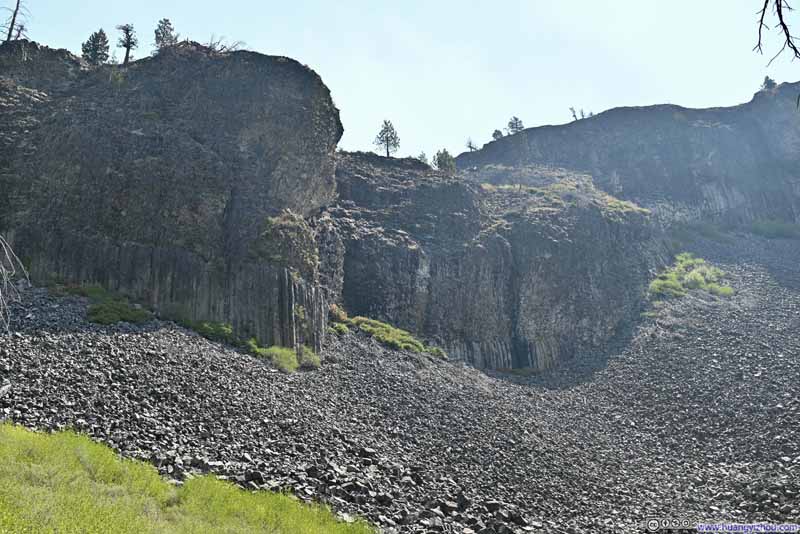 Columns of the Giants
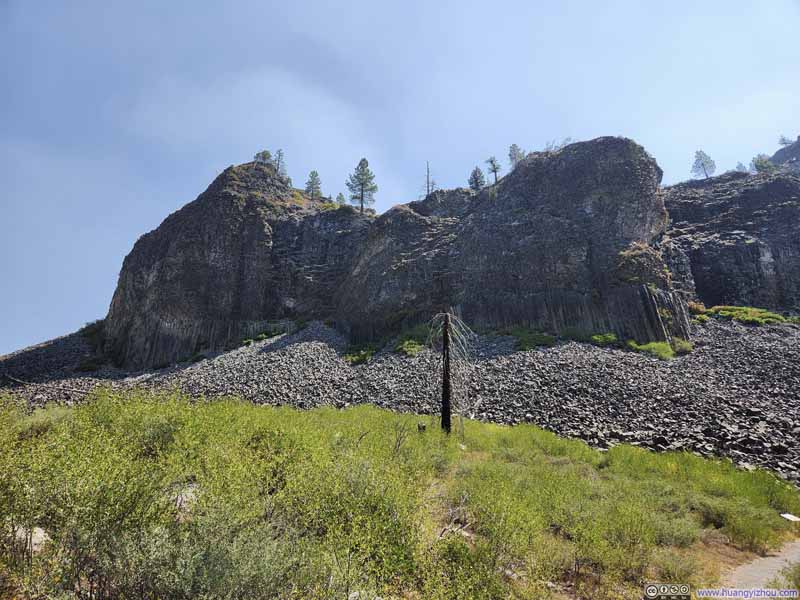 Columns of the Giants
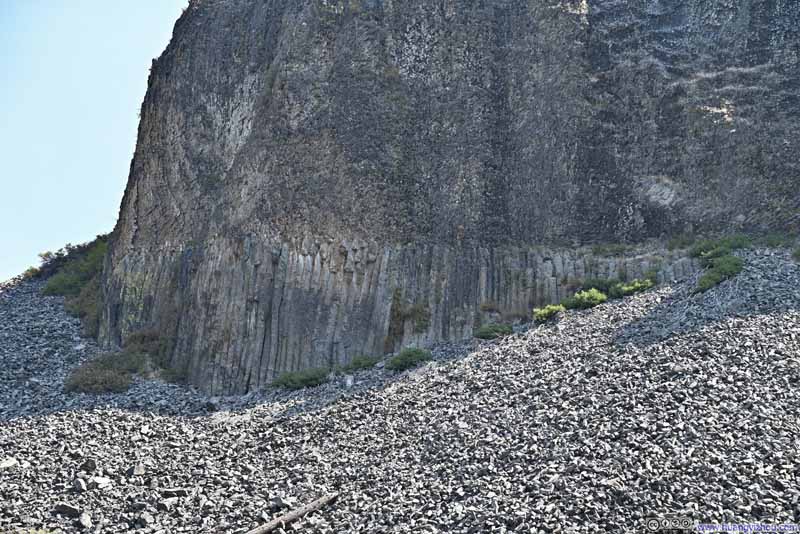 Rock Columns
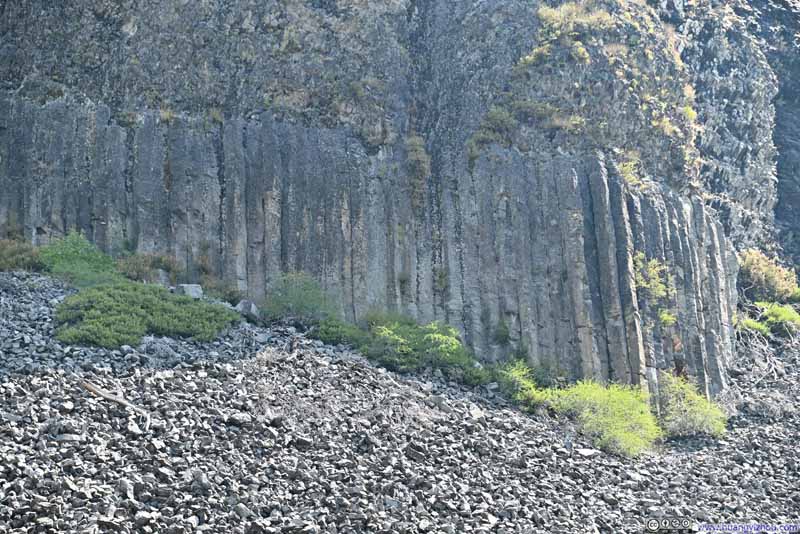 Rock Columns
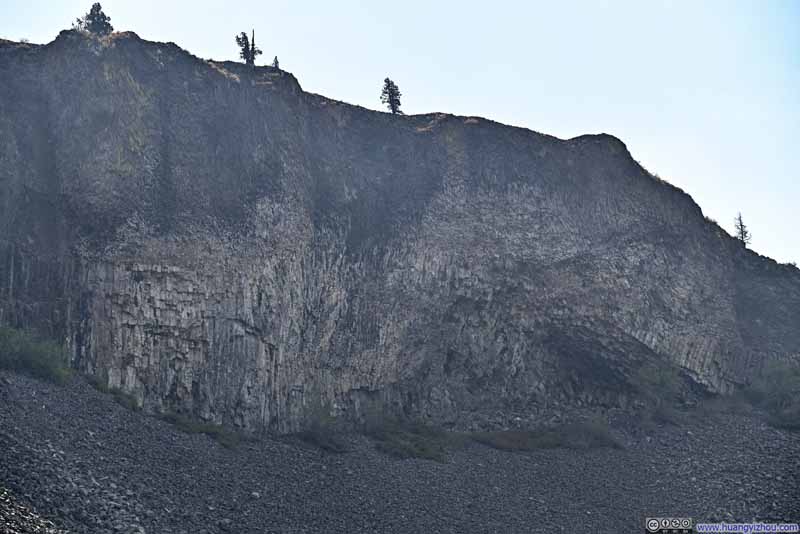 Columns of the Giants
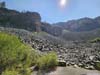
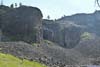
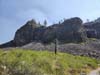
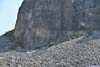
Click here to display photos of “Column of the Giants”.
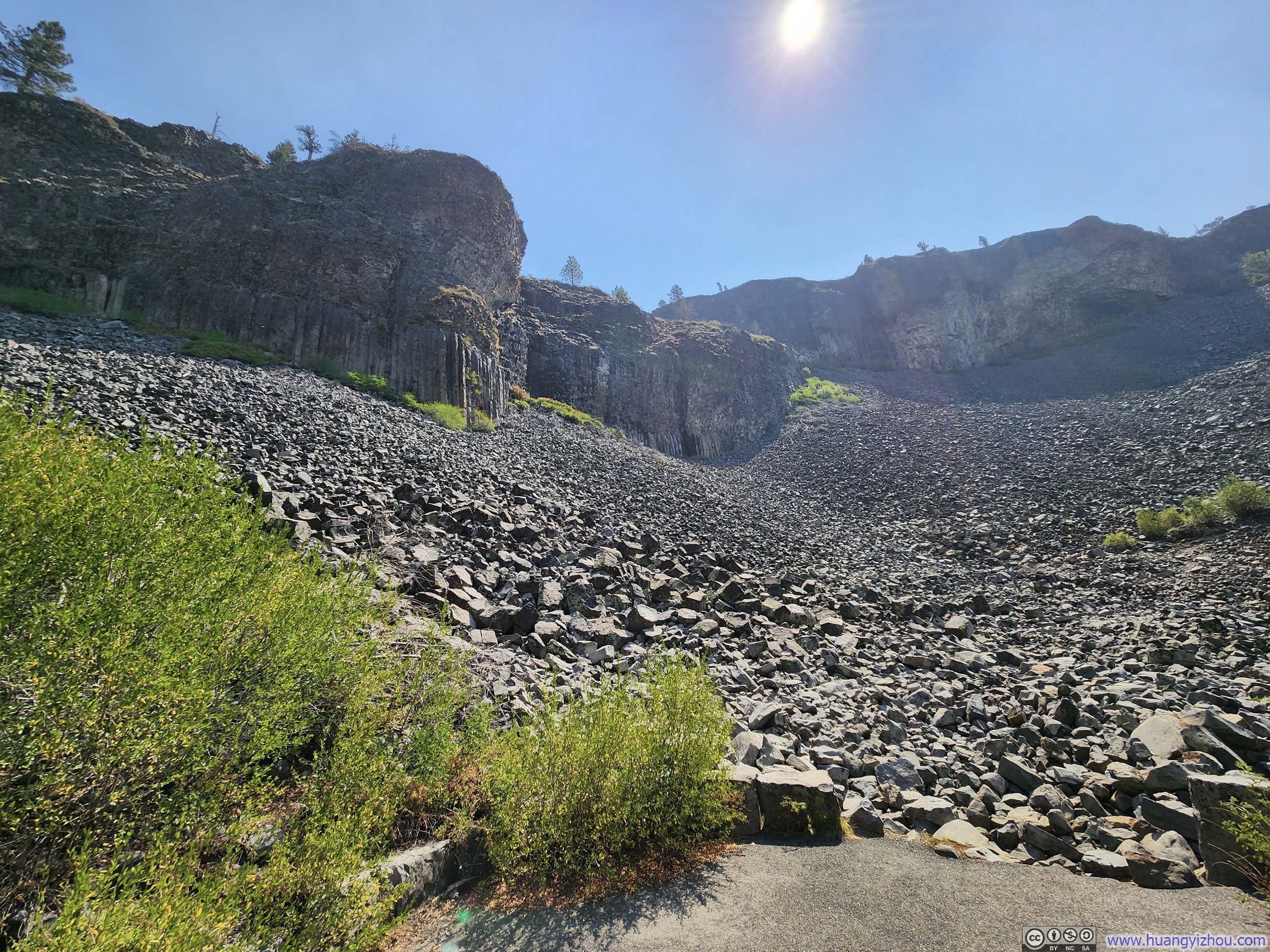
Columns of the Giants
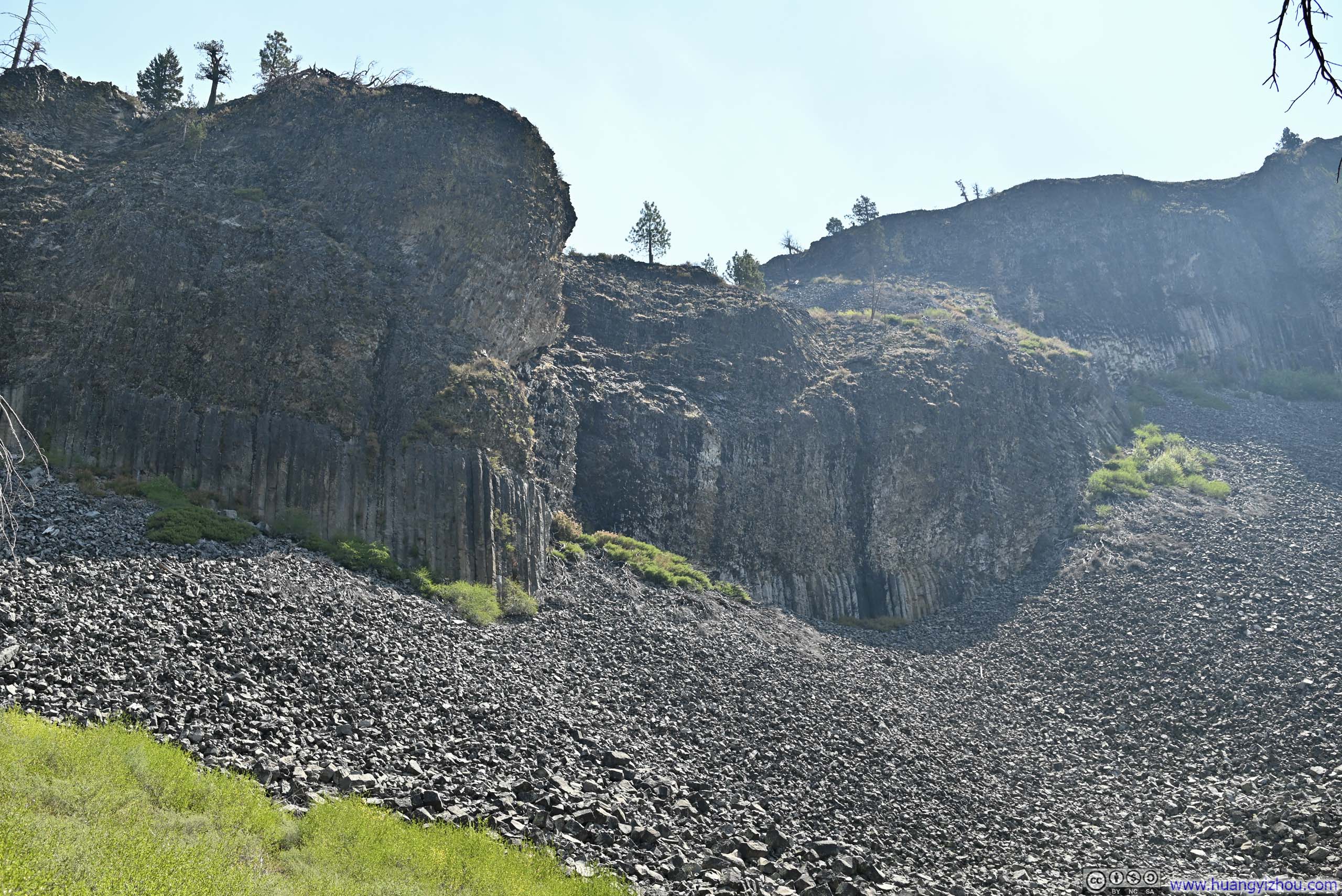
Columns of the Giants
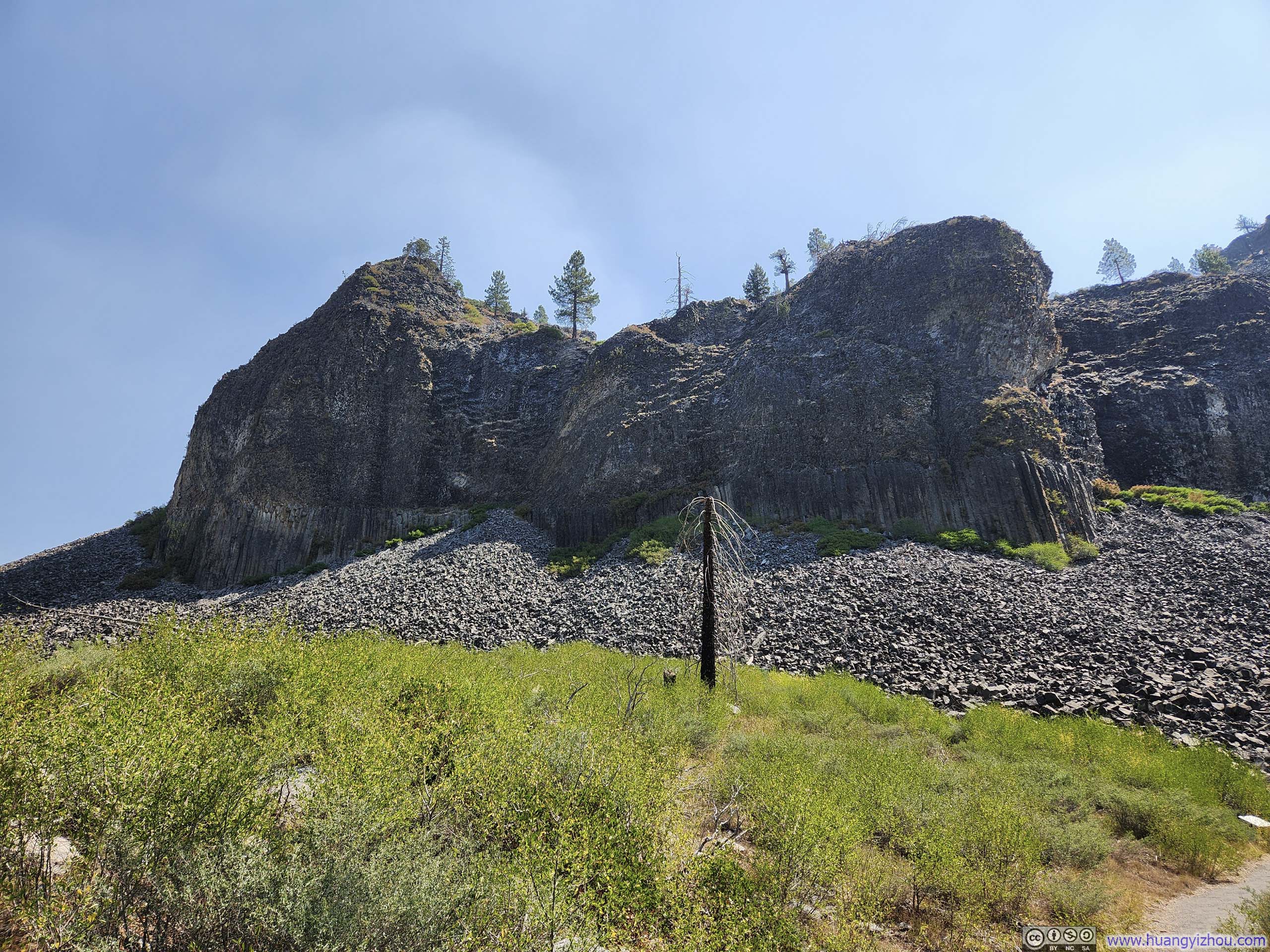
Columns of the Giants
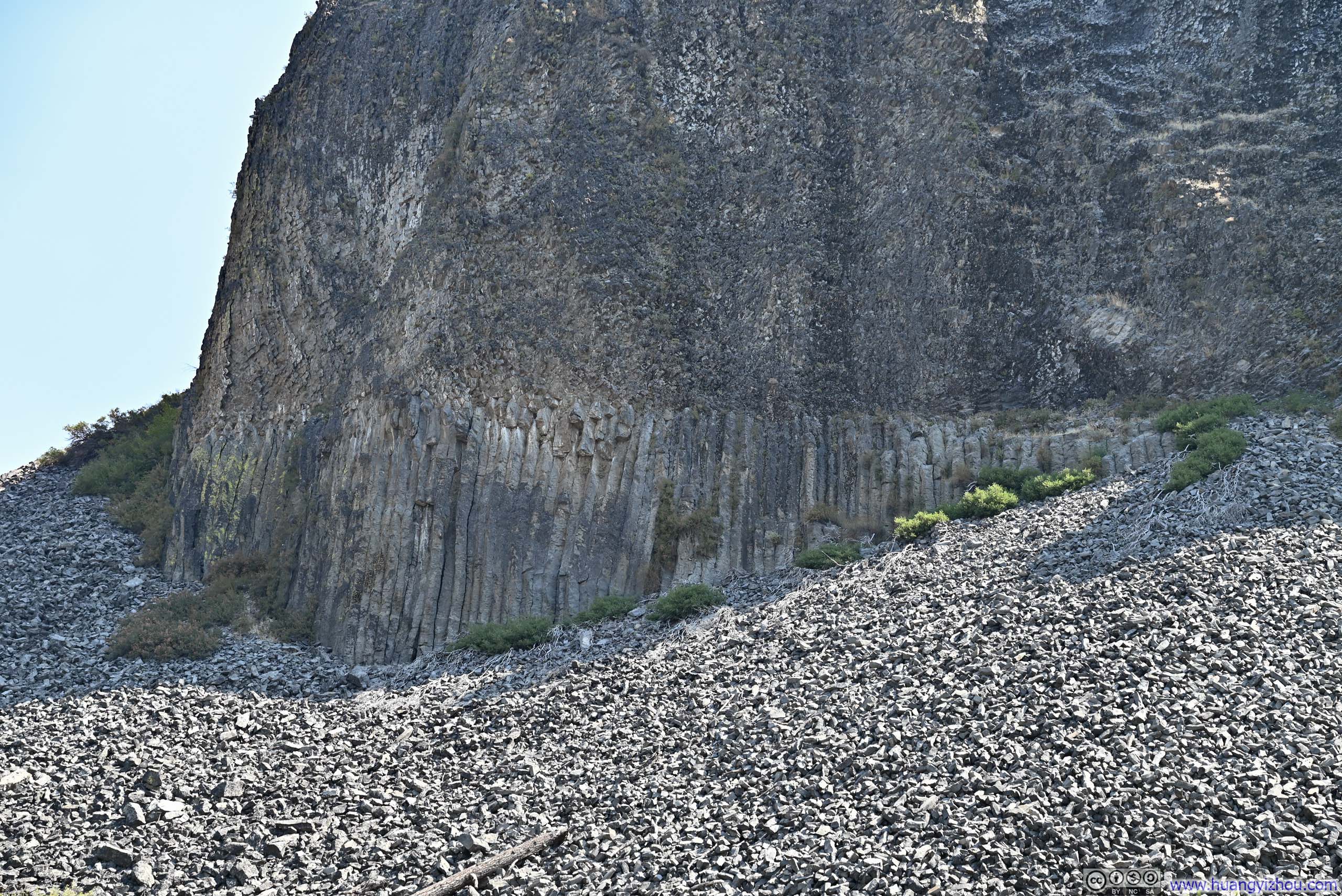
Rock Columns
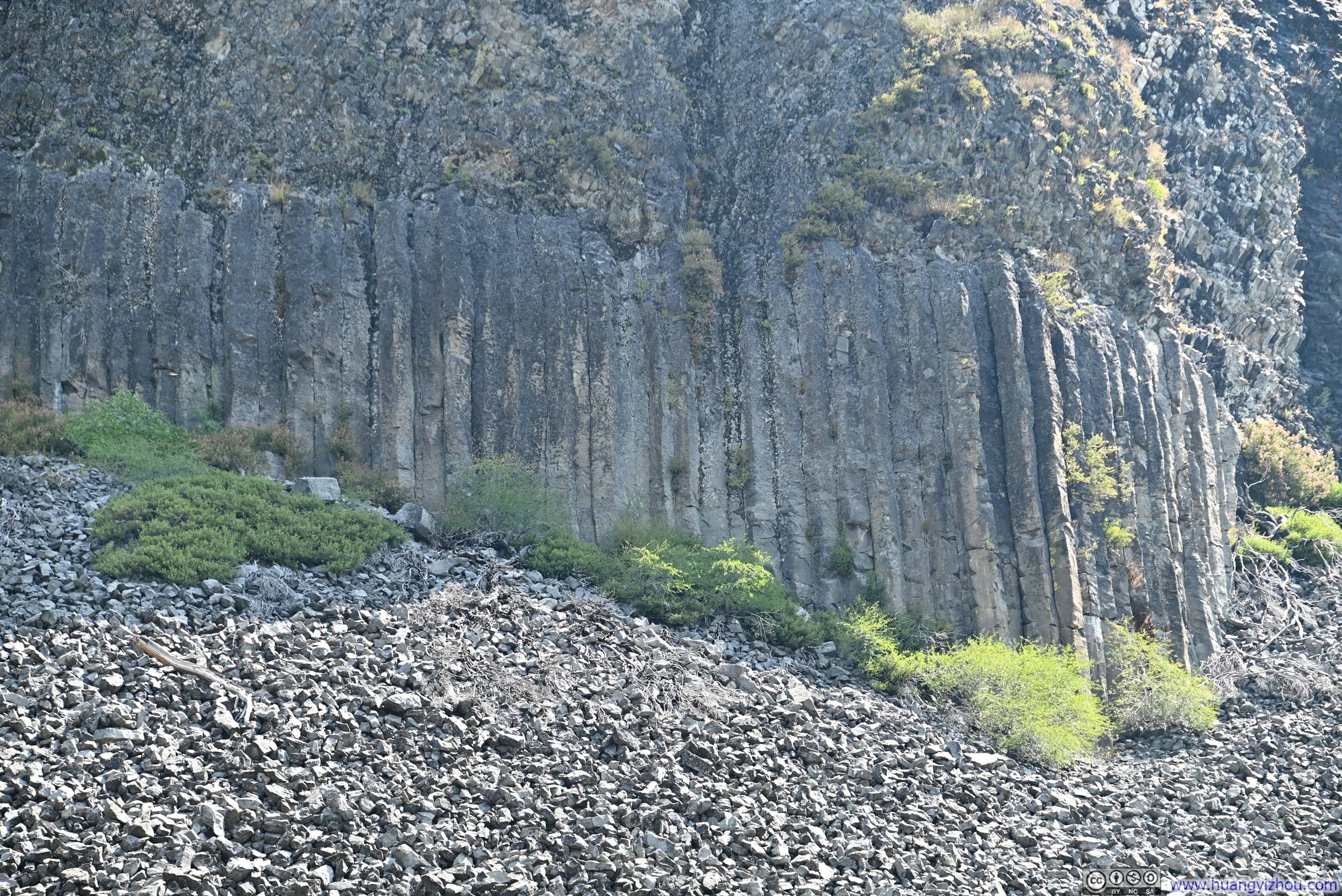
Rock Columns
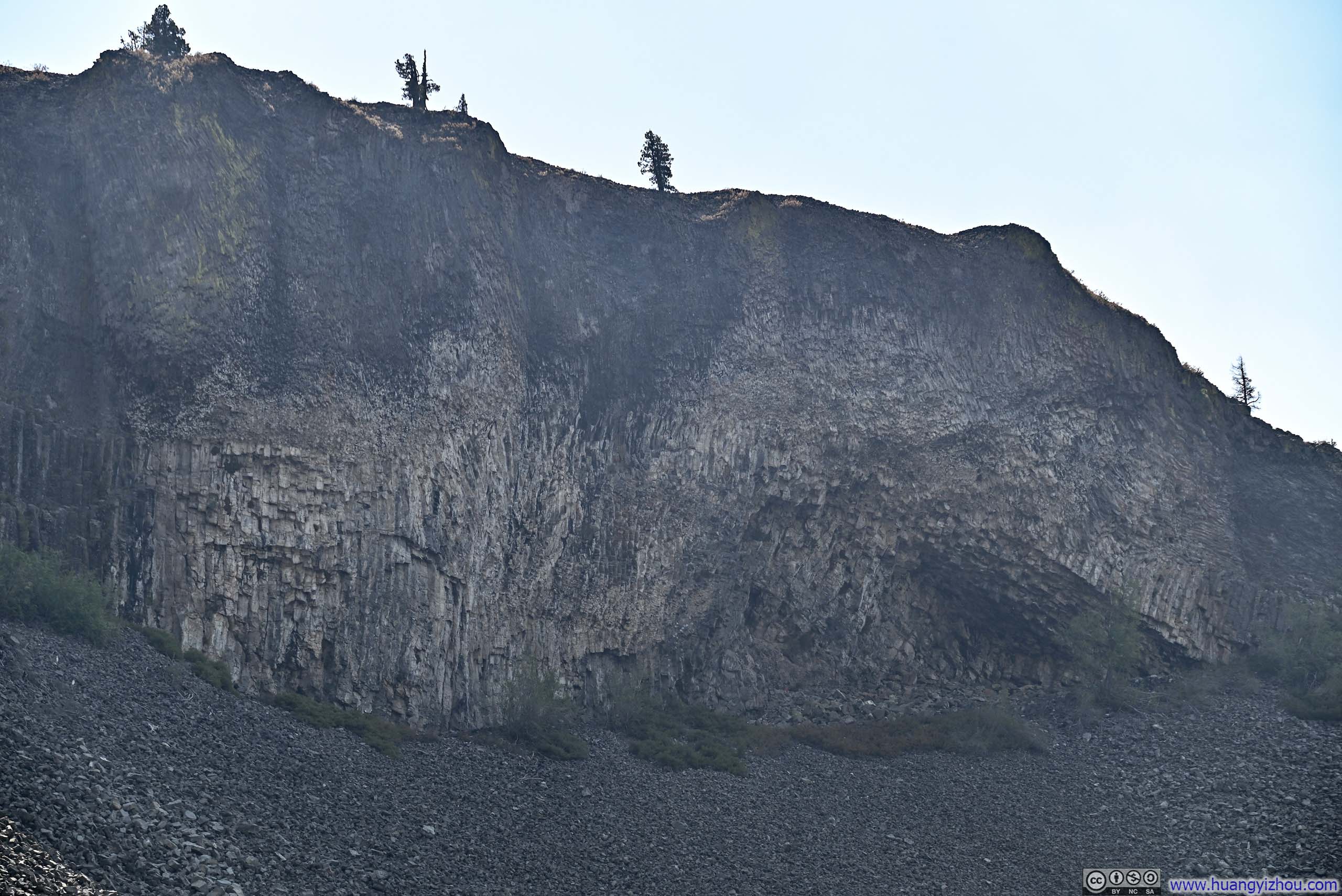
Columns of the Giants
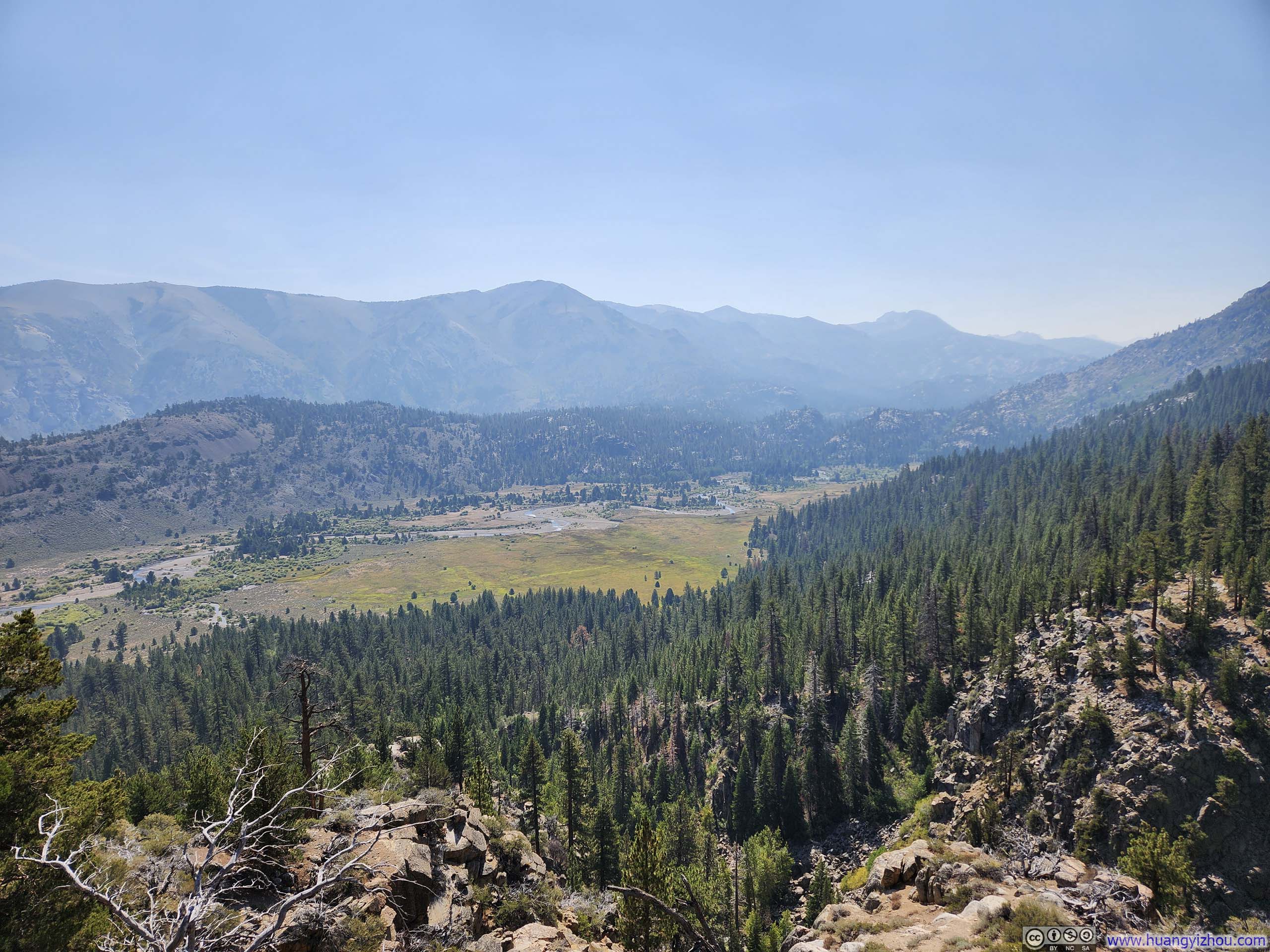
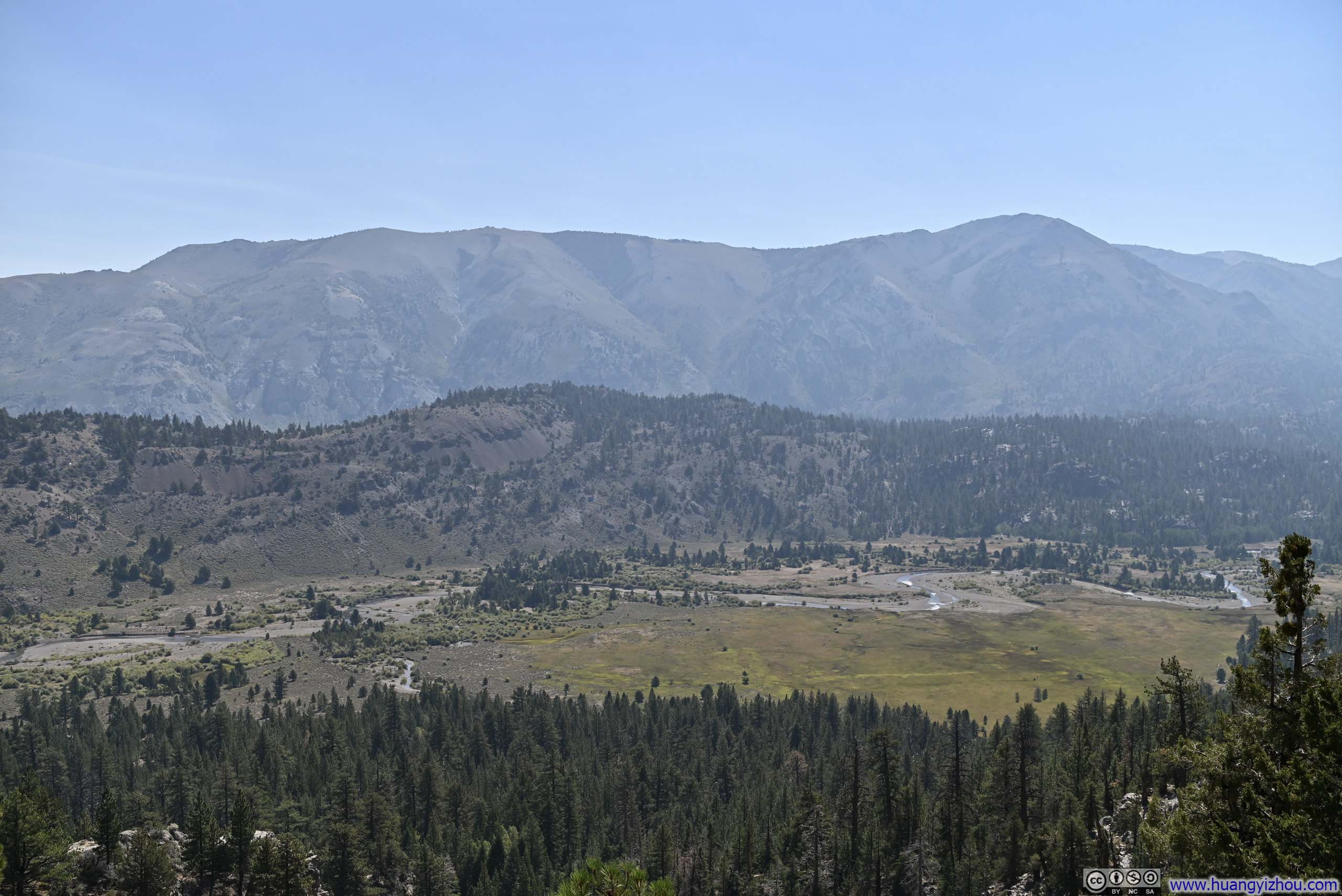
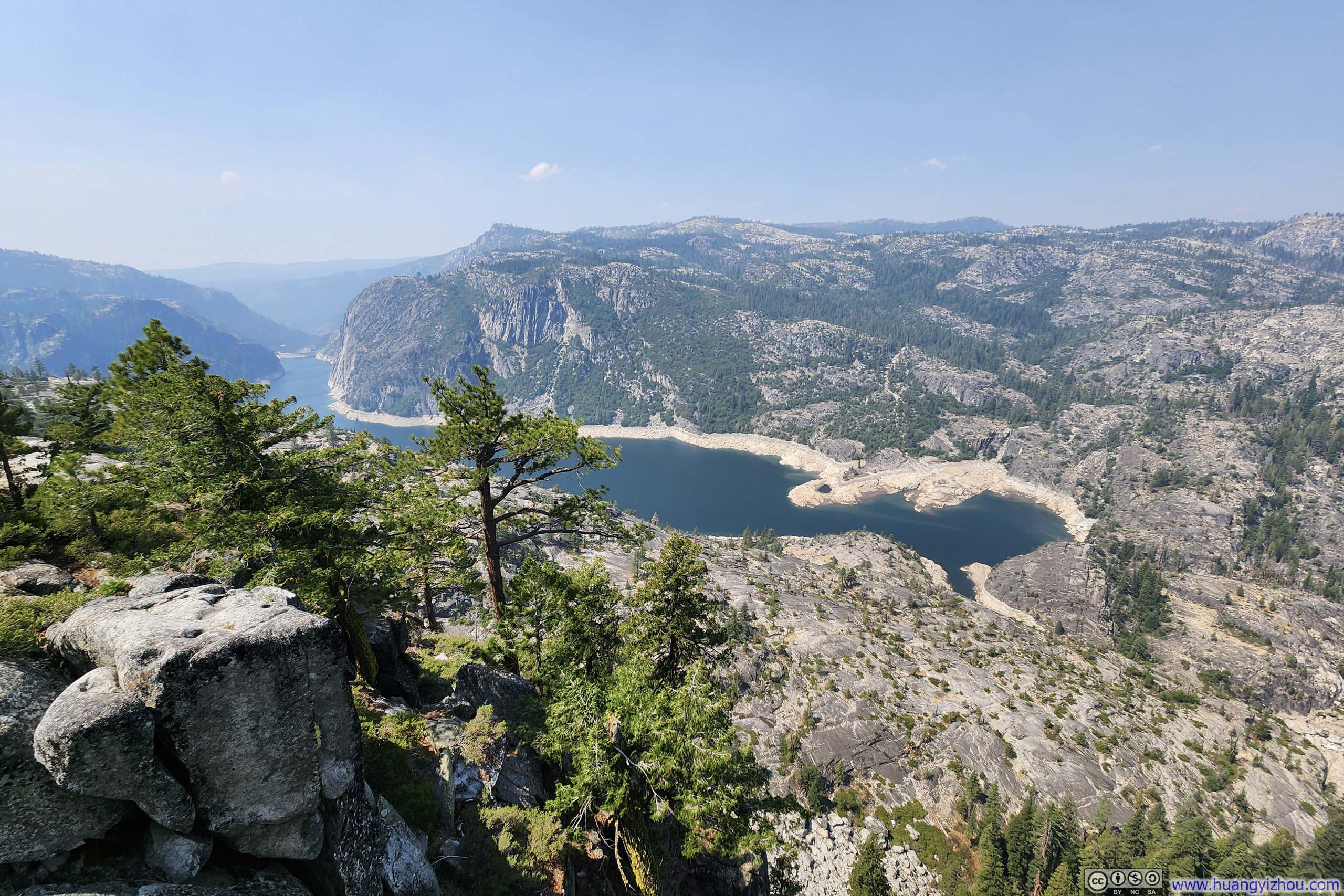
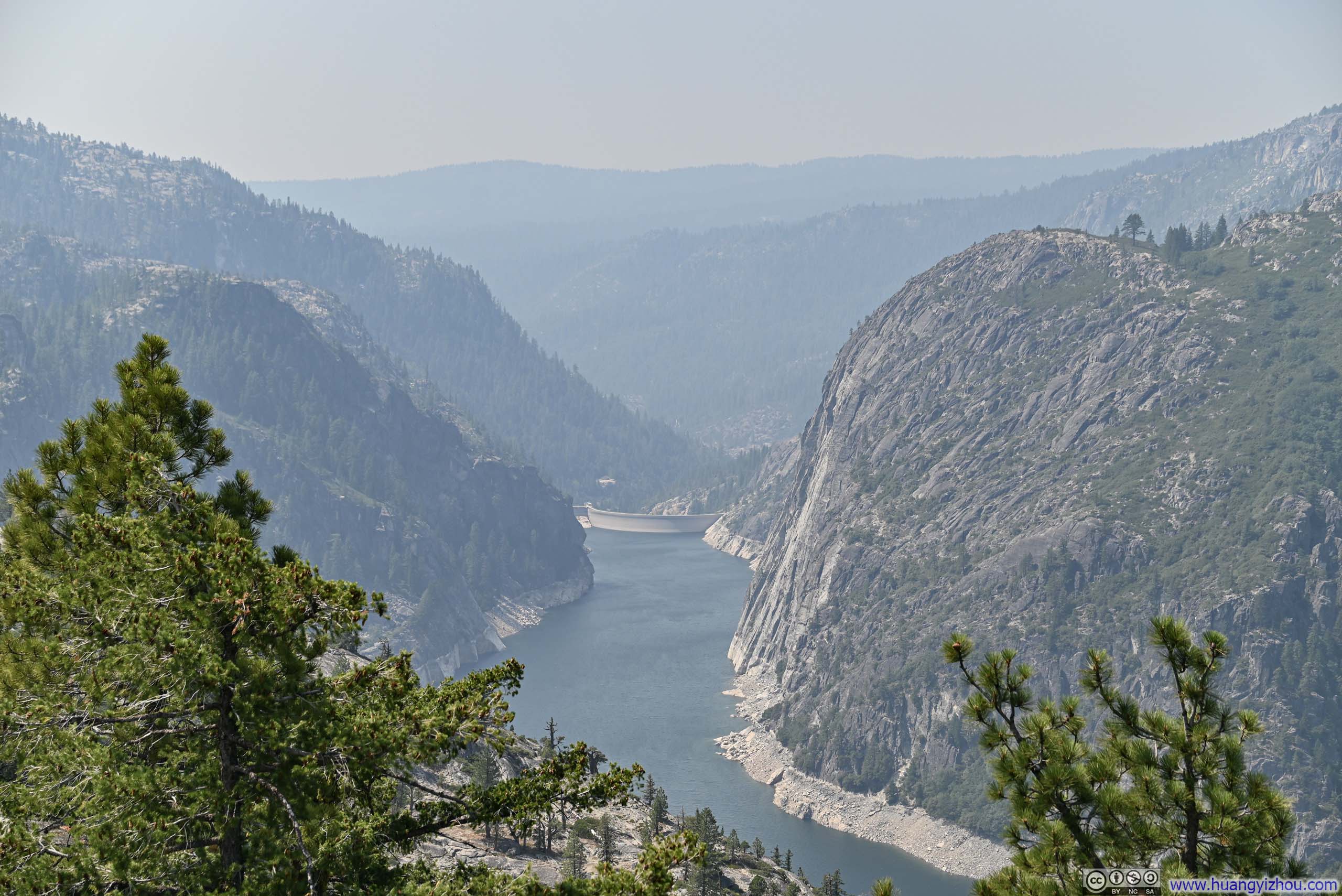
Finally, I made another stop at Donnell Vista. Though it hadn’t been part of my original itinerary, a “scenic overlook” sign along the road piqued my curiosity, and I’m glad I followed it—the views did not disappoint. After a brief walk from the parking lot, the vista revealed Donnell Lake, a reservoir formed by a dam, its shores lined with granite cliffs that bore some degree of resemblance to Yosemite Valley.
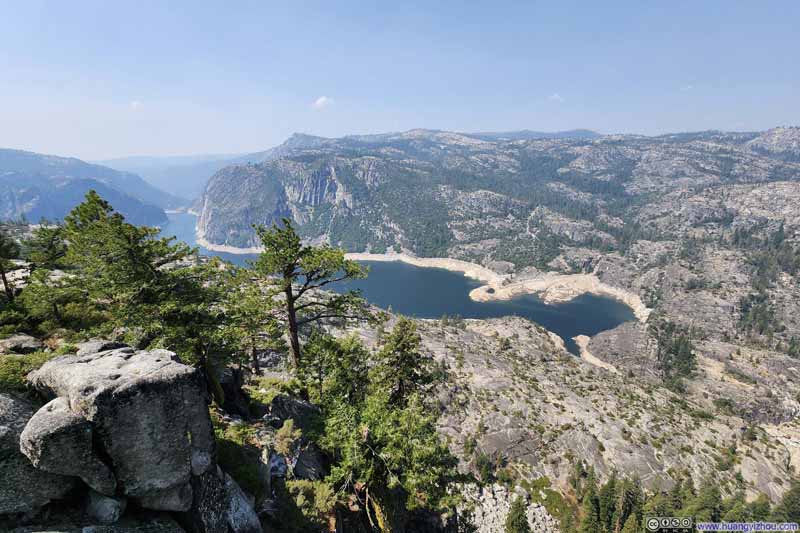 Overlooking Donnell Lake
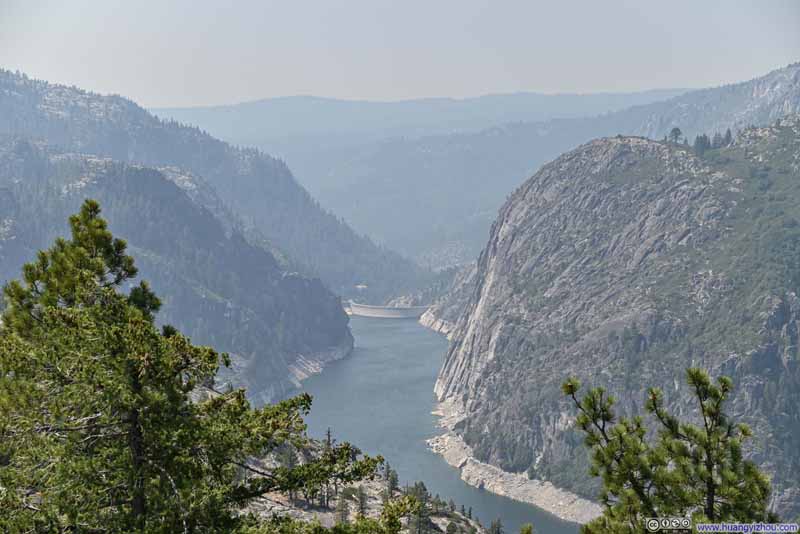 Donnell Dam
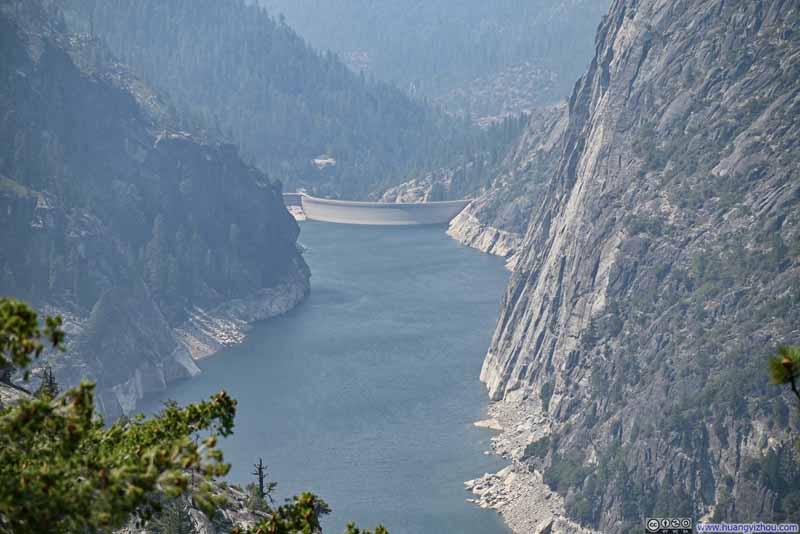 Donnell Dam
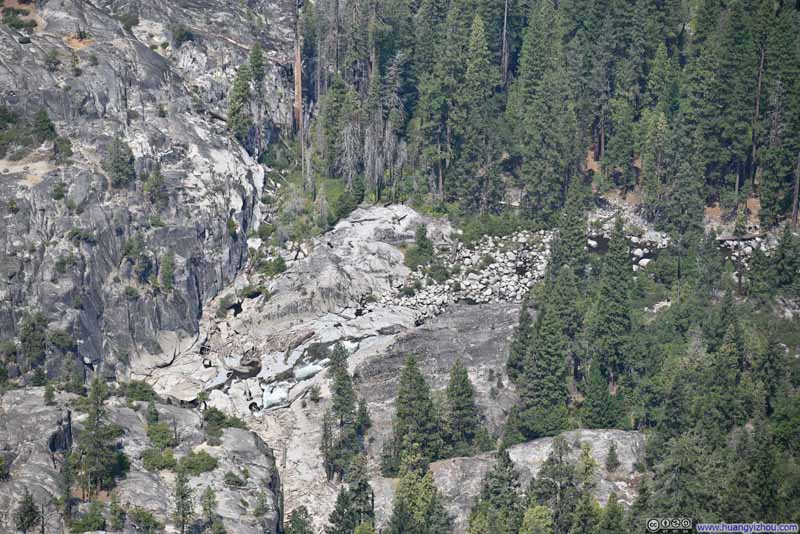 Cascades along Middle Fork Stanislaus River
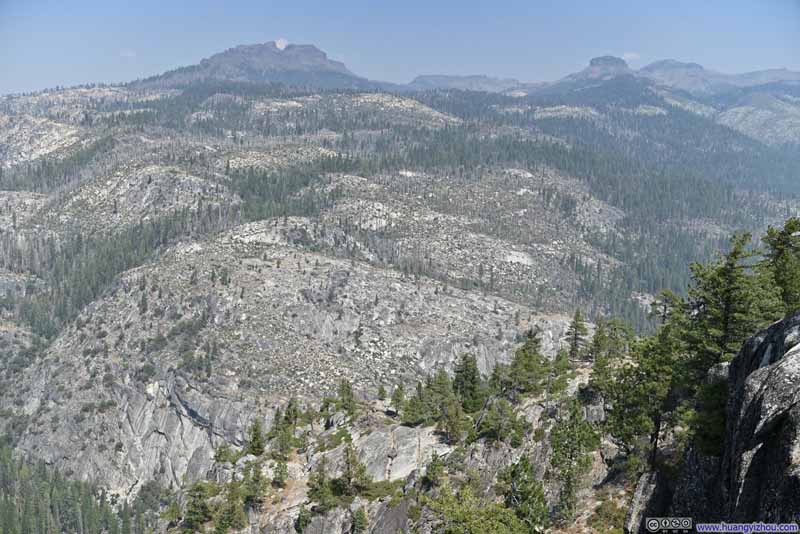 Dardanelles Mountains
Click here to display photos of the slideshow
Overlooking Donnell Lake
Donnell Dam
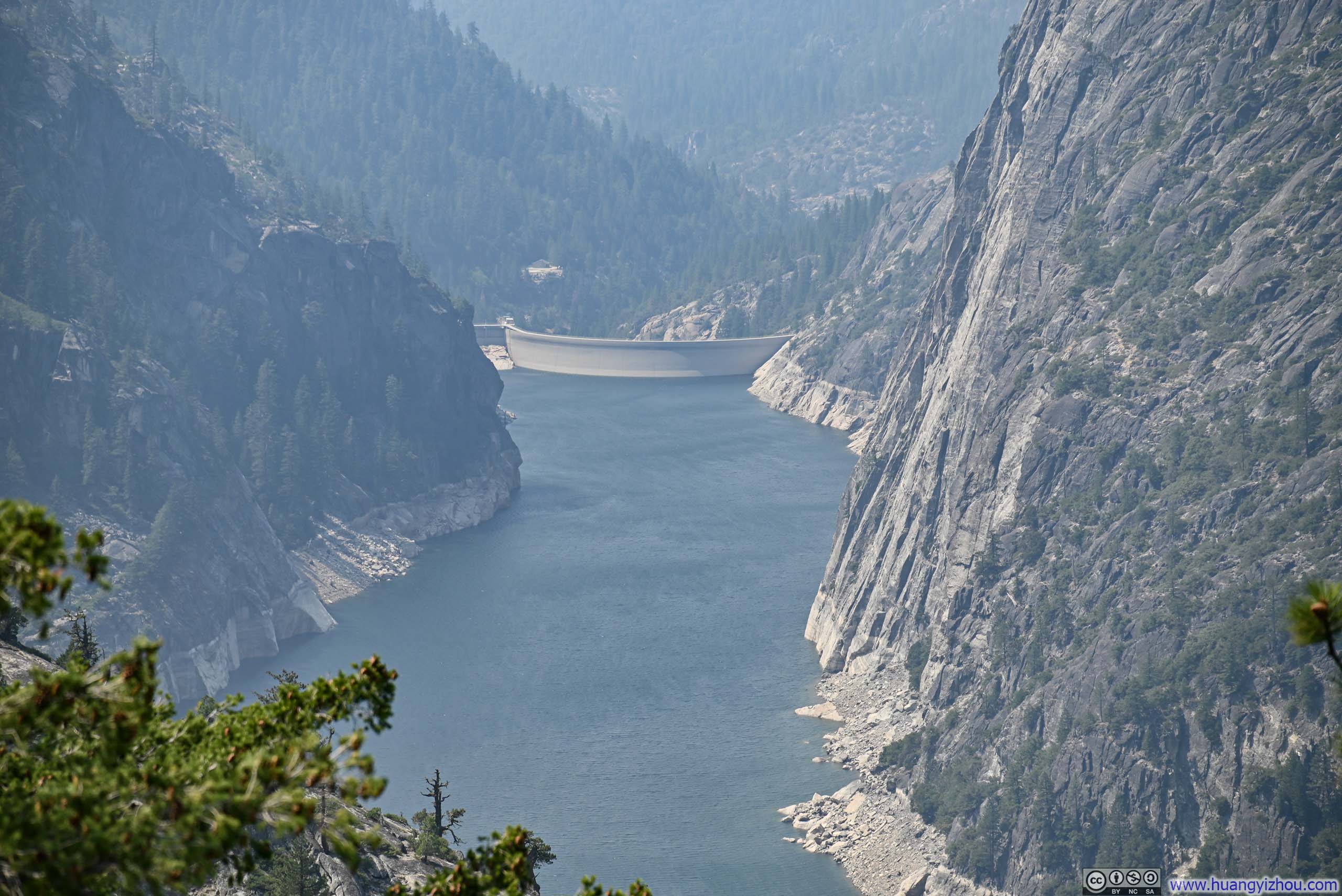
Donnell Dam
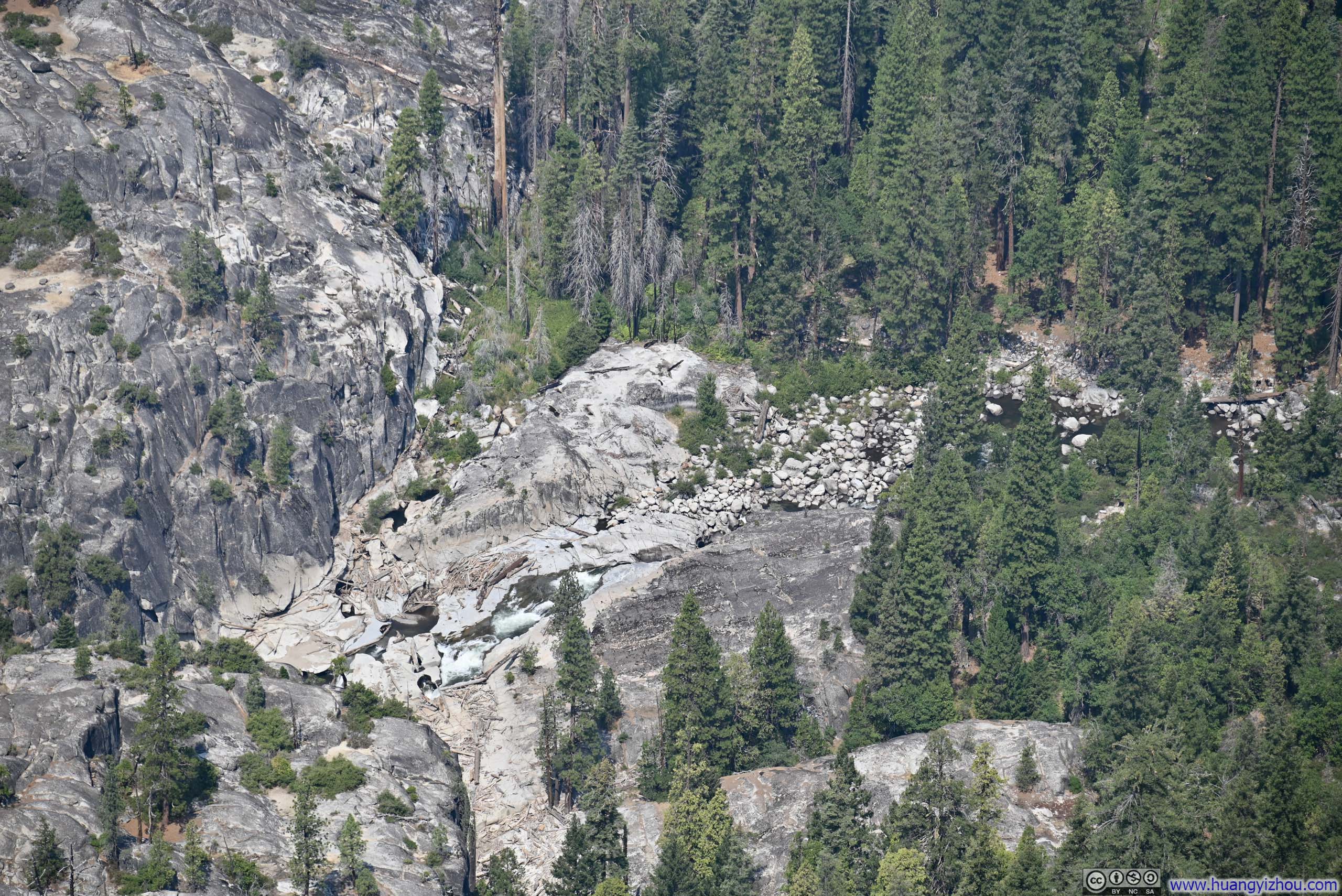
Cascades along Middle Fork Stanislaus River
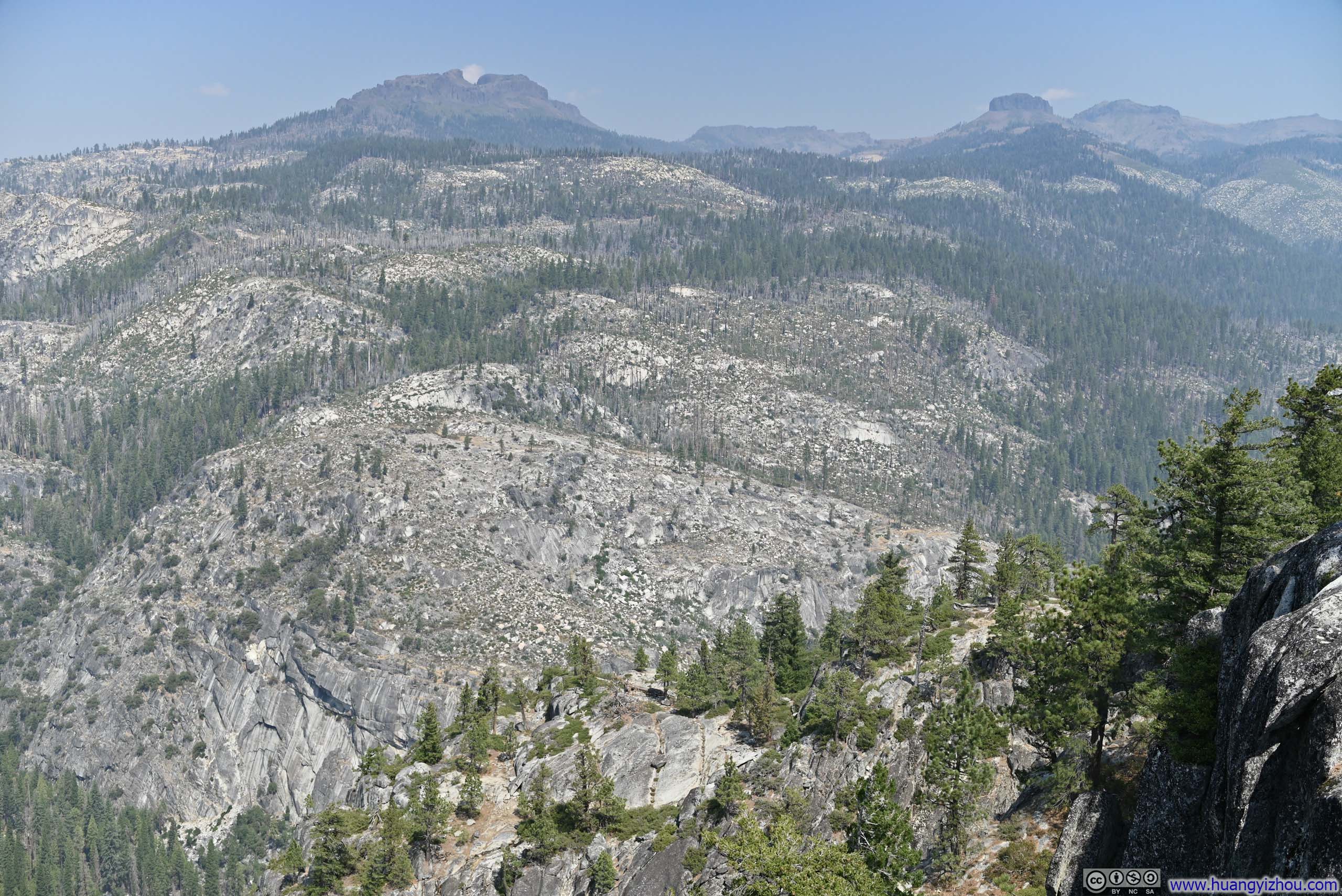
Dardanelles Mountains
That was the end of the (remotely) scenic part of my drive. After that, I continued driving towards the coast and reached the Bay area just in time for a dinner with some friends, after which I made it to the airport for the flights home.
END
 Day 5 of 2025 Labor Day Trip to California, Matterhorn Peak of Sierra Nevada by Huang's Site is licensed under a Creative Commons Attribution-NonCommercial-ShareAlike 4.0 International License.